
The Art of Sauces: Tentsuyu

A few years ago we were looking for a restaurant in Kyoto. We had difficulty in finding one (due to our lack of understanding of the language and the characters) but finally we found a tempura-beer-bar. Perhaps not ideal, but the menu came with helpful pictures. We enjoyed delicious tempura, fried to perfection, made with vegetables, with mushrooms, prawns and even with chrysanthemum leaves.

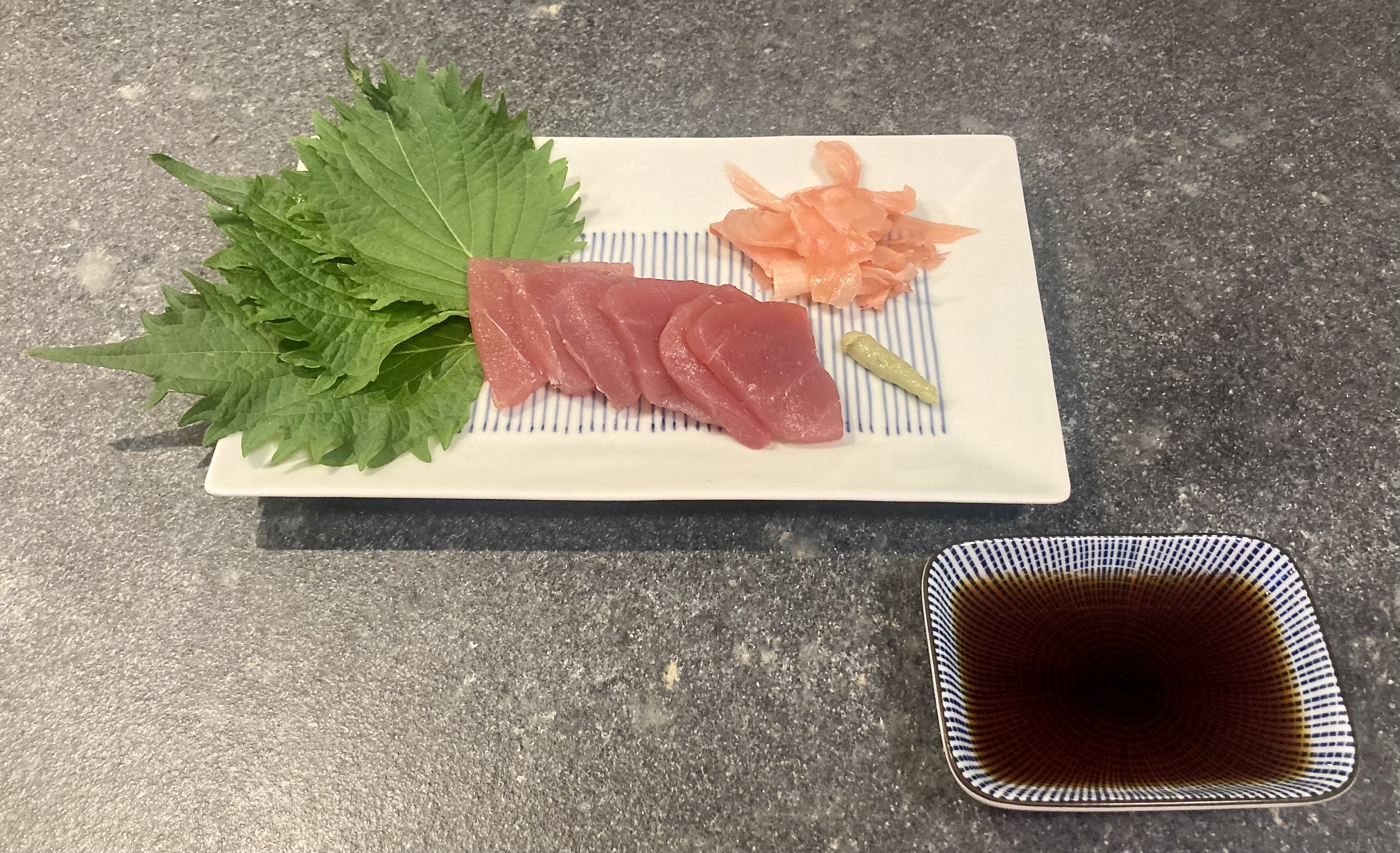
Tempura is served with a dipping sauce called Tentsuyu. Just before serving, the sauce is combined with grated daikon. It’s a light, umami rich sauce with subtle presence of soy sauce. We think it’s also a great dipping sauce for sashimi because it will not overpower the fish, something standard soy sauce will do.

Drink Pairing

A beer obviously! We paired our sashimi of tuna with our favourite sake: Junmai Taru Sake as produced by Kiku-Masamune. This elegant sake is matured in barrels made of the finest Yoshino cedar. The aroma has indeed clear hints of cedar. The sake will cleanse your palate, allowing to taste the tuna even better.

What You Need
  • 4 parts of Dashi
  • 1 part Soy Sauce (preferably with less salt)
  • 1 part Mirin
What You Do
  1. Prepare dashi
  2. Add dashi, soy sauce and mirin to a pan
  3. We use less mirin because we prefer the sauce to be less sweet.
  4. Bring to nearly boiling
  5. Leave for one or two minutes
  6. Remove from the heat and allow to cool
  7. Store in the refrigerator; it will keep for maximum one week
PS
  • Why not combine the ingredients as they are and store immediately you wonder? One reason could be that heating the combination helps the flavours to integrate. Another reason is that Japanese mirin may contain alcohol and it needs to evaporate.
  • We serve the tuna with shiso leaves (ohba or perilla leaves), wasabi and pickled ginger. Shiso leaves can be purple or green. Its taste is difficult to describe. It’s vibrant, citrusy, herbaceous and refreshing. It goes very well with the fat in tempura or in salmon and tuna.
Tataki

Over the years tataki has become increasingly popular: beef, tuna, salmon, trout and even veal and deer tataki. But what is tataki actually? And what is tataki sauce?

Tataki originates from the Kōchi prefecture in Japan. The original dish is called katsuo-no-tataki. Katsuo (also known as Oceanic Bonito or Skipjack Tuna) is an important ingredient in the Japanese kitchen, for instance raw as sashimi and dried as katsuobushi (the flakes you need when making dashi).

The fish is seared very briefly in a huge rice straw fire. This way the fish becomes nicely coloured, the centre remains raw, and the flavour will be enhanced with smokiness. It is then sliced and served with a garlic, lemon (ponzu), soy and onion sauce, making Katsuo-no-tataki very different from other sashimi.

Unfortunately, most of us don’t have a straw fire at home, so you need a very hot pan to sear the fish. Bonito is not widely available where we live, but tuna is a great alternative. Beef is a good idea, salmon is a possibility, veal and trout are definitely not good alternatives.

What You Need
  • Bonito (or Tuna or Beef Tenderloin)
  • Light Soy Sauce (Tentsuyu)
  • Mirin
  • Rice Vinegar
  • Lemon
  • ½ Garlic Clove
  • Sesame Seeds
  • Spring Onion
  • Olive Oil
What You Do
  1. We added lightly roasted sesame seeds to the dish, they are not included in the original katsuo-no-tataki so feel free to leave them out
  2. Combine light soy sauce, mirin and rice vinegar (ratio 3:1:1)
  3. Add some lemon juice and the grated garlic
  4. The garlic must be grated; it should nearly dissolve in the sauce
  5. Quickly sear the bonito (tuna, beef) in a hot non-stick pan with just a touch of oil
  6. When ready transfer to an ice bath
  7. Wait for a minute or so
  8. Remove from the water and use kitchen paper to dry the fish or beef
  9. Slice, serve on a plate, drizzle with the dressing
  10. Add thinly sliced white spring onion
  11. Drizzle with sesame seeds (if using)
  12. Finish with some dressing.
PS

And the answers are: tataki is a method to sear katsuo (or in general fish or beef) in a straw fire (or over a grill or in a hot pan). Tataki Sauce doesn’t actually exist; it may refer to the sauce that is served with katsuo-no-tataki.

Tataki (Tuna) ©cadwu