Salad with Truffle and Asparagus

Sometimes a dish is all about seasonal products, for instance the combination of white asparagus, morels and wild garlic. Sometimes it’s about a winning combination, for instance truffle and potato, or truffle and egg. This dish has a bit of both aspects because this year the end of the Dutch white asparagus season coincides with the beginning of the summer truffle season. And since both combine very well with egg, why not make an extravagant salad?

Wine Pairing

The salad has a velvety, rich mouthfeel. You will taste subtle truffle, some bitterness and sweetness of the asparagus and a hint of acidity thanks to the mayonnaise. The salad will combine very well with a Chardonnay with subtle oak. We enjoyed our salad with a glass of Mâcon-Bussières, produced by Thierry Drouin. The white wine is made from 100% chardonnay grapes and comes with a touch of oak, aromas of apple and citrus and a rich flavour with hints of toast and butter. An excellent wine and a perfect accompaniment of the salad.

What You Need
  • 3 Eggs
  • 12 Asparagus (tips only)
  • (home-made) Mayonnaise
  • 30 grams of Summer Truffle
  • 1 or 2 teaspoons of Excellent White Truffle Oil
  • White Pepper
What You Do

Cook or steam the eggs until slightly runny. We steamed the eggs for 9 minutes. Peel and leave to cool. Steam the tips of the asparagus for 9 minutes. No need to peel them. Leave to cool. Mix two tablespoons of mayonnaise with one or two teaspoons of truffle oil. Roughly chop the eggs and crunch the truffle. Gently combine the asparagus tips, the truffle, the eggs and some white pepper with the mayonnaise. Transfer to the refrigerator for one or two hours.

Salad with Truffle and Asparagus ©cadwu

Mushroom Salad

White Button Mushrooms and Cremini can be eaten raw, but we think they are tastier when fried or marinated, which is exactly what we do for this salad. A tasty accompaniment that will bring umami and depth to your dish. We combined the salad with carrots prepared in butter, lemon and lamb chops. The meat was fried in olive oil and seasoned with chopped thyme and black pepper. A delicious and light combination.

Wine Pairing

The salad comes with some acidity, but not too much. The main aspects in the dish are the sweetness and the velvety coating of the carrots, the aromatic lemon and thyme, the deepness of the salad and the richness of the lamb. We decided to open a bottle of Macon, a red wine from East-Central France. The region is well known for its white wines, Pouilly-Fuissé for instance. Most white wines in this region are made from Chardonnay grapes. This red wine is made from Gamay grapes. The wine has a beautiful ruby red colour, and it comes with aromas of black cherries and strawberries. A balanced wine with a touch of spiciness and nice tannins. Not too difficult and great with the various aspects of the dish. In general, we would suggest a red wine with fruit, freshness and character but not too complex. 

What You Need
  • 250 grams of Button Mushrooms or Cremini
  • Olive Oil
  • White Wine Vinegar
  • Parsley
  • Garlic Clove
  • Black Pepper
What You Do

Clean the mushrooms with kitchen paper. Slice the mushrooms, heat a heavy iron skillet and fry the mushrooms for a few minutes. Leave to cool. Combine excellent olive oil and white wine vinegar. Chop some parsley. Finely chop a garlic clove. Combine the mushrooms, the dressing, the parsley and the garlic. Add some black pepper. Leave in your refrigerator for 24 hours. Feel free to stir a few times.

Mushroom Salad ©cadwu

Kalette – Kale Sprouts

Saturday morning, when chatting to our greengrocer, we noticed purple, small vegetables. Some looked like mini Brussels Sprouts, others more like mini Kale. Let’s give it a try, so we bought 150 grams of Kale Sprouts, also known as Kalettes, Lollipops or Flower Sprouts.
When eaten raw they taste like Brussels Sprouts and we could imagine using the smaller ones in a salad. Many recipes suggest cooking the Kale Sprouts but why would you? They are very small so stir frying them is a much better option because then you’ll have all the flavours. When fried their taste is very similar to the taste of kale or in general cabbage. We could imagine using them in Cabbage Stew. We decided to be a bit more adventurous and combine the Kale Sprouts with Gurnard.

Wine Pairing

We enjoyed our Kale Sprouts with a glass of Austrian Grüner Veltiner, produced by Markowitsch. It’s a full bodied, elegant white wine with aromas of apples and a touch of spiciness. One that was great with the more intense flavours of the Kale Sprouts and the gurnard.

What You Need

  • 150 grams of Kale Sprouts
  • 25 grams of Pancetta
  • Olive Oil
  • Black Pepper

What You Do

Wash the sprouts carefully. Dry. Trim the ends, if necessary. Halve the ones that look like mini kale. Heat a pan (a wok will be great), add olive oil, add the diced pancetta, leave for one minute and then add the sprouts. Fry for 5 minutes, taste and decide to serve or fry a bit longer. Add some fresh black pepper.

Cucumber and Potato Salad

For many years we enjoyed the weekly Schnitzel evening at Café Heider in Potsdam, Germany. A traditional veal schnitzel served with a lukewarm cucumber and potato salad and (in autumn) with cranberry compote. The very thin meat is dusted with flour, then coated with egg and finally with breadcrumbs made from Kaiser rolls. The schnitzel is fried very quickly in rapeseed oil and then transferred to a second pan to be fried in clarified butter. The result is crispy and absolutely delicious. A dish to be enjoyed with a nice beer or a glass of white wine (Sylvaner).

The lukewarm salad was equally tasty, so one we wanted to prepare at home. Our first try was not even close to the one served at Café Heider. It was just cucumber with potato and a dressing. Obviously, we needed to do a bit of research. The result is a light, flavourful, refreshing salad, one that goes very well with Wiener Schnitzel (as you would expect) but also with Haddock, Cod Cheeks or Chicken à la Milanese.

If you happen to be in Berlin or Potsdam, please visit Café Heider. During the DDR years this was the only privately owned bar/café/restaurant in Potsdam. A place where people would go to meet and talk, although the much-feared Stasi (the state security service of the DDR) was never far away.

What You Need

  • (Organic) Cucumber
  • One Waxy Potato
  • White Wine Vinegar
  • Olive Oil
  • Dill
  • Chives
  • Vegetable Stock
  • Black Pepper

What You Do

The taste of the salad very much depends on the cucumber, so make sure you buy one that is tasty and not watery. Another key ingredient is the vegetable stock (onion, leek, carrot, celery, bouquet garni). If possible, please don’t use cubes; in general stock made with cubes is salty with very little aroma and flavour.

Cook the unpeeled potato until just done. Let cool. Make a dressing by combining olive oil, vegetable stock and vinegar, ratio 1:2:2. When marinating the cucumber in the dressing it will be enhanced by juices from the cucumber. Peel the cucumber, slice thinly and add to the dressing. Slice the potato, preferably as thin as the cucumber and add to the dressing. We’re not too keen on potatoes, so our salad is more about cucumber than about potatoes. Add coarsely chopped dill and chives to the salad. Mix and transfer to the refrigerator and allow to cool for a few hours. Don’t forget to mix every hour, taking care not to crumble the potato. Add some fresh black pepper and dill just before serving.

PS

Perhaps you wonder what happed to lukewarm. That’s achieved by adding lukewarm vegetable stock to the cucumber salad (at room temperature) just before serving. We prefer the cool, integrated version!

Cucumber and Potato Salad ©cadwu

Carrot Salad with Fennel Seeds

Inspired by the Portuguese and Moroccan cuisine we make a very tasty, quick and easy carrot salad. Ideal to accompany fish or a rich stew. The salad is full of flavours: fennel and carrot obviously, but you could also taste chervil and perhaps tarragon. Light, refreshing and the texture of the carrot is inviting.

We prefer preparing the salad with winter carrots because they seem to have more flavour and structure than the regular ones.
We use fennel seeds in this recipe. Alternatively, you could use cumin (always great with carrots) or coriander (cilantro) seeds.

What You Need

  • One Winter Carrot
  • Olive Oil
  • White Wine Vinegar
  • One Garlic Clove
  • Fennell Seeds
  • Parsley
  • Black Pepper

What You Do

Prepare 24 hours before serving.
Clean and thinly peel the carrot. Cook for 5-10 minutes until al dente. Let cool. Quarter lengthwise and slice. Make a dressing by combing olive oil and vinegar (ratio 2:1 or 3:1). Peel the garlic clove and finely chop. Take ¼ teaspoon of fennel seeds and use a mortar to crush the seeds until you have powder. Add the fennel seed powder and the garlic to the dressing and combine. Taste and adjust. Chop a nice amount of parsley. Add the carrots and the parsley to the dressing and combine. Use cling film to seal the bowl and transfer to the refrigerator. Gently mix the salad every 2-4 hours.
Just before serving add some fresh black pepper.

Leek with Truffle

This winter truffles are even more expensive than usual, due to a warm and dry season in the Italian and French truffle regions. The number of truffles is limited and the ones that are harvested are small. Bad news for the truffle-lover.

The first to talk to us about truffles were Fred and Yolanda de Leeuw. Not only did they run a very special butcher in Amsterdam, they also imported truffles and truffle related products. 
Their shop was the only place in Amsterdam where you could buy Wagyu beef before it became popular, foie gras, quails, Spanish veal, bread from Paris, oysters with wasabi sabayon, capon, home-made pastrami and black pudding. Expensive, delicious and always of the highest quality.

Fred and Yolanda contributed to various cookbooks with recipes for truffle-based dishes. In 1999 chef Alain Caron and author Lars Hamer published a book about the shop, the meat, the patés, the sausages, the salads and the dishes they prepared. One of these recipes is for a leek salad with summer truffle and Jus de Truffe. The truffle juice is obtained after maceration of the truffles for six months to one year in the juice of the first cooking process for conserved truffles. Jus de Truffe has the deep earthy aromas and flavour of fresh truffle.

We prepared the leek salad as a tribute to two people who were genuinely passionate about what they did, what they sold and what they prepared.

Wine Pairing

The dish comes with a range of flavours: the leek is buttery with a hint of onion and the vinaigrette earthy and fresh with a touch of bitterness. Wine wise we suggest a Soave, a white wine made with garganega grapes, because it goes very well with the citrus and the aromatic leek flavour. 

What You Need

  • Young Thin Leek
  • Lemon
  • Olive Oil
  • Jus de Truffe
  • Mustard

What You Do

Clean and wash the leek. Slice in three, making sure all slices have the same length. Cook in hot water for 20-30 minutes until they have a soft, creamy texture. Cool quickly and set aside. Make a dressing by adding jus de truffe to a bowl. Add half a teaspoon of mustard, a few drops of lemon juice and half a teaspoon of excellent olive oil. Now it’s a matter of adjusting. It all depends on the intensity of the jus de truffe, the tartness of the lemon and flavour of the olive oil. Dry the leek carefully, whisk the dressing and serve. And if you can afford it, add some freshly grated truffle.

Salad of Small Artichokes

The season of artichokes varies depending on the variety and where you are based. In Italy it’s from mid-winter until early spring, in other countries from March to June, or September and October. And in other countries they peak in August. Best is to decide based on quality and price. An artichoke should feel heavy, look fresh and the leaves should be closed. If the leaves are wide open, the artichoke is older and it could be dry with lots of choke (the hairs) and dry inner leaves.

Don’t cook artichokes in boiling water. They must cook for 45+ minutes and during the long cooking process they will lose most of their flavour. Best is to steam artichokes.

Serve large artichokes as a relaxing starter or use them to make Artichoke Barigoule or a Pie. We use smaller ones to make a salad.  You can serve it to accompany an aperitif, or with some bread as a starter. Make sure you have plenty of dressing!

Wine Pairing

It’s not straightforward to pair artichokes with wine. According to various researchers this is due to cynarin, a chemical especially found in the leaves of the artichoke. When the wine and the cynarin meet in your mouth, the natural sweetness of the wine is enhanced, making it taste too sweet. So you have to pair freshly cooked or steamed artichokes with a bone-dry, crisp, unoaked white wine with clear, present acidity. For instance, Sauvignon Blanc, Grüner Veltliner or Albariño.
We enjoyed a glass of Château Pajzos Tokaj Furmint 2019. This dry, white wine made from the well-known Hungarian Furmint grape is fresh, clean and slightly floral. It supports the Salad of Artichokes beautifully.

What You Need

  • 6 small Artichokes
  • Olive Oil
  • Vinegar
  • Mayonnaise
  • Mustard
  • Garlic
  • Thyme
  • Black Pepper

What You Do

Remove the stem of the artichokes and steam the artichokes for 45 – 60 minutes, depending on the size. Remove and let cool. Peel of the first layers of the outer leaves. Make the dressing by turning the mustard and the crushed garlic into a smooth paste. Then gently add the other ingredients and whisk well to make it really smooth, thick dressing. Cut the artichokes in 6 or 8 parts. Add to the dressing, mix well, coating all artichokes. Sprinkle lots of thyme and mix again. Put in the refrigerator for at least 3 hours. Mix again, taste, add some more thyme and serve!

Walnut Sauce

Michelin Award winning Japanese chef Akira Oshima is author of Yamazato, Kaiseki Recipes: Secrets of the Japanese Cuisine. The book contains recipes from the kitchen of the Yamazato restaurant in Amsterdam. It is amongst our favourite cookbooks. The recipes can be very challenging and time consuming as is getting hold of the right ingredients.
One of the recipes is for Takiawase, a mouth-watering combination of vegetables and fish. Every ingredient requires its own preparation and is simmered in its own dashi-based stock. The recipe of chef Oshima combines kabocha, eggplant, okra and shrimp. Indeed: four different kinds of homemade stock.

When shopping at Amazing Oriental we saw Garland Chrysanthemum, which made us think of another tasty dish, a combination of walnut sauce, chrysanthemum and shiitake called Shungiku Kurumiae. It’s actually two recipes, one for walnut sauce and one for chrysanthemum. The walnut sauce is a combination of roasted and blended walnuts, white miso, dashi, sake, light soy sauce and mirin (in that exact order). Very tasty with lots of umami and depth. It serves as a vinaigrette for the salad which is a combination of blanched and in dashi marinated chrysanthemum and grilled shiitake.

Yamazato, Kaiseki Recipes: Secrets of the Japanese Cuisine is available via the well-known channels, both in English and Dutch, second hand. The Dutch version is available via the webshop of the publisher for €34,50.

Drink Pairing

We prefer a glass of sake with our Shungiku Kurumiae, for instance a Junmai sake with fresh aromas and good acidity. The sake must be dry and well-balanced with a clean finish. You could enjoy a glass of white wine with the dish, provided it’s dry and mineral.

PS

We made too much walnut sauce for the salad, so we stored what was left in the refrigerator. But we were out of garland chrysanthemum (we wanted to use the remainder for our Matsutake dish) so what to do? The next day we fried some excellent organic pork belly and served it with Brussels sprouts and walnut sauce. Lovely combination!

Matsutake with Garland Chrysanthemum

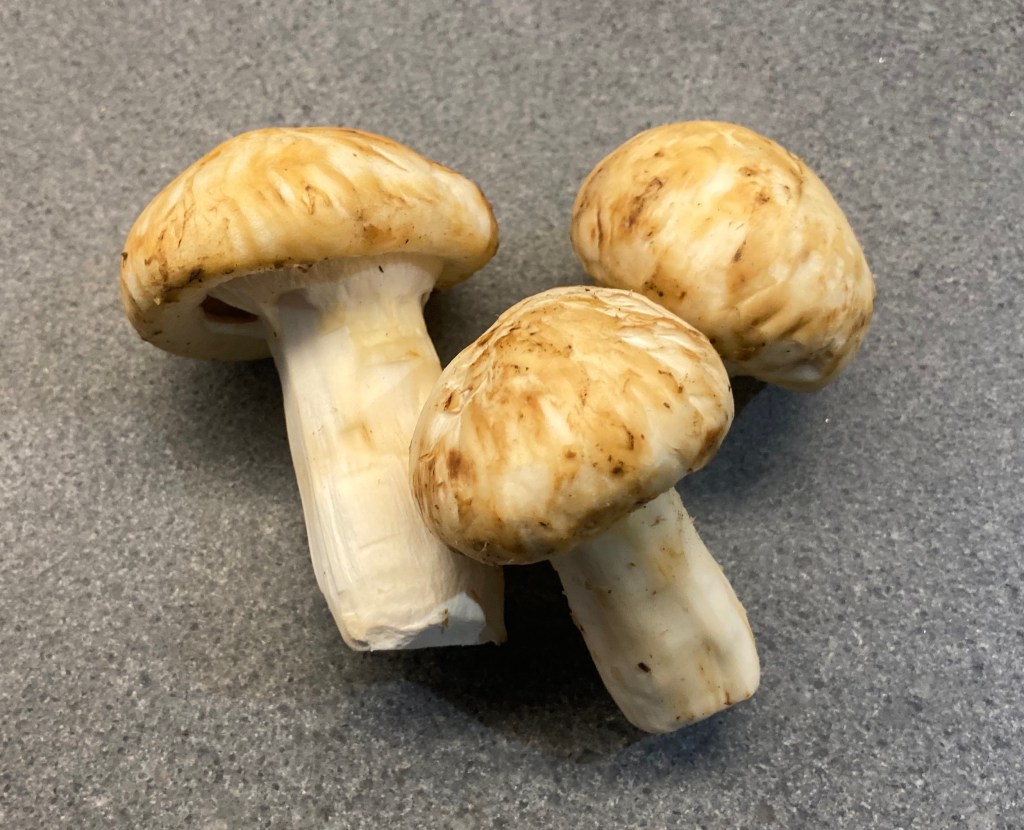
A very special mushroom, to say the least. Matsutake smells like a pine wood forest and its taste is intense and unique. It’s also expensive and rare. If you happen to find it, be sure to buy it.

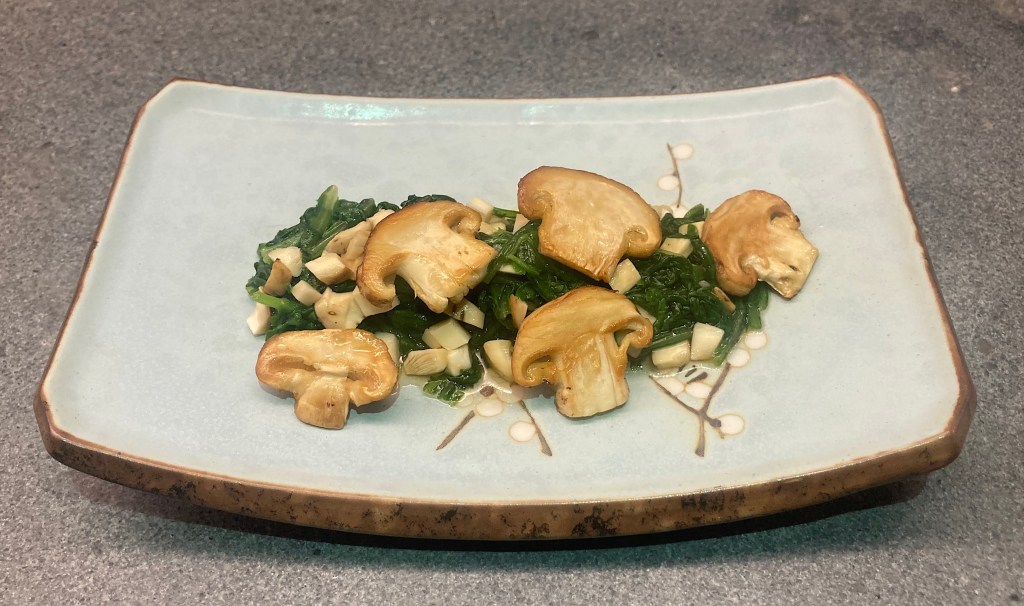
Earlier we used Matsutake to make a soup and we combined it with spinach and ginger. In this recipe we combine Matsutake with Garland Chrysanthemum (Glebionis coronaria) also known as Tong Ho or Shungiku. It is a widely used vegetable in Japan, China, Vietnam and Korea. Its taste is delicate, a touch bitter and different (unless you’re familiar with chrysanthemum tea); one that goes very well with dashi, sesame seeds, mushrooms, mirin and soy sauce. If the vegetable is young, you can eat the stalks and the leaves. Also great as tempura. We use the leaves only for making a salad.

Wine and Sake pairing

We enjoyed a glass of Camino de Caza Almansa Sobre Lías Verdejo 2021. An organic white wine produced by Bodegas Piqueras and made with selected verdejo grapes from the Almansa region in Spain. It’s an aromatic, fresh wine with flavours that will make you think of yellow fruit (peach) and it has a welcome touch of bitterness.
The combination of the intense Matsutake and the intriguing Chrysanthemum begs for a dry, white wine with character.
You could also serve a glass of a cold, not too crispy sake, for instance a Taru Sake (a sake aged in barrels made of Japanese cedar).

What You Need

  • 75 grams of Matsutake
  • 200 grams of Garland Chrysanthemum
  • 150 ml Dashi
  • 3 teaspoons Light Soy Sauce
  • 3 teaspoons Mirin
  • Walnut Oil
  • Olive Oil

What You Do

Make 150 ml of dashi. Let cool. Add light soy sauce and mirin. Mix. Remove the stems of the Chrysanthemum. Wash the leaves in water. Add to a pan with boiling water and blanch for 45 seconds. Transfer the leaves to a basin with cold water. When the leaves are cold, gently remove the excess water and transfer to the dashi mixture. Leave in the refrigerator for one hour.
Clean the matsutake. Take your time to do this. Remove the lower half of the stem. Slice the mushrooms, chop the stem. In a non-stick pan heat a little olive oil, just enough to gently fry the mushrooms. When ready, remove the leaves from the mixture, combine with the chopped mushroom, mix. Add the salad to a plate, decorate with the fried slices of matsutake and add a small drizzle of walnut oil.

  • Matsutake with Chrysanthemum ©cadwu
  • Cleaned Matsutake ©cadwu
  • Matsutake on the market ©cadwu

Lamb Gascogne

It was not your ordinary butcher, not your ordinary delicatessen, it was something very, very special. It said slagerij (butcher) on the window, but it was so much more, so very special. It was the only place in Amsterdam where you could buy Wagyu and truffles before they became popular, foie gras, quails, Spanish veal, bread from Paris, oysters with wasabi sabayon, Iberico pork, capon and home-made black pudding and pastrami. Expensive, delicious and always of the highest quality. Owners Yolanda and Fred de Leeuw and their staff were clearly passionate about what they did, what they sold and what they prepared. And if it wasn’t busy, they would gladly tell you how to prepare sweetbread or how to make sure you got the perfect cuisson for your bavette.

Expensive? Yes. But as Fred explained, quality meat was, is and will always be expensive, so it’s better to enjoy quality once a week than to eat industry produced meat 7 days per week. “And if you want to know why”, they said in 1999, “just read the papers”.
Which is, unfortunately, still very true in 2022.

In 1999 chef Alain Caron and author Lars Hamer published a book about the shop, the meat, the patés, the sausages, the salads and the dishes they prepared on a daily basis. 

Truffle Salad

One of our favourite recipes is for Yolanda’s truffle-egg salad. Beautiful, intense flavours and so much better and tastier than the ready-made misery that’s being sold today. Her salad is easy to make and only requires mayonnaise, eggs, truffle oil and yes, of course, lots of summer truffle!

Another great recipe is for Lamb Cascogne-style. The anchovies add saltiness and umami to the meat, the garlic brings lovely aromas and the spring onion sweetness. Use the cooking liquid to make a simple jus and you have a perfect meal. Some recipes suggest coating the lamb with tomato puree, others suggest making a tomato sauce with carrots, celeriac and the cooking liquid, but we prefer serving the lamb with tomato confit.

Het Vleesboek (Dutch only) by Alain Caron and Lars Hamer is out of print. A second-hand copy will probably cost around 10 euro.

Wine Pairing

We enjoyed a glass of Pontificis, a red wine produced by Badet Clément in France. It is made of the classic combination of Grenache, Syrah and Mourvèdre grapes (GSM). In general you’re looking for an aromatic red wine, with tones of red fruit and a touch of oak. Medium bodied and well balanced.

What You Need

  • Leg of Lamb (boneless)
  • Anchovies
  • Young Garlic
  • Spring Onion
  • Olive Oil
  • Tomato Confit

What You Do

Slice the meat, allowing you to press bits of anchovies, garlic and onion into the meat. Heat your oven to 180 °C or 355 °F. Fry until the centre is 60 °C or 140 °F. Allow to rest under aluminium foil for at least 10 minutes.

PS

You may think this is a rather low temperature. In the US it seems that 145 °F is the bare minimum for leg of lamb. The temperature in the centre will of course increase during the resting period. Feel absolutely free to go for 145 °F before removing the meat from your oven. Fred and Yolanda sold only the very best of meat, so serving it a touch seignant was never a problem.