Petits Farcis

Not only do they look delicious, but they also taste delicious: Légumes Farcis or Petits Farcis. Easy to make and always a pleasure to serve. You could buy them ready made from your delicatessen or butcher, but why would you? Prepare them at home the way you personally prefer them, perhaps with some extra shallot, herbs or garlic.

Let’s talk a bit about the farce, the stuffing of the vegetables. It should fill the vegetable, obviously, and remain connected to the vegetable, also when cooked. Its texture must be loosely. This is where most recipes go wrong when they tell you to add panko or breadcrumbs to the farce. Follow this instruction and you will notice that during the cooking process the filling will become smaller and firmer. There you are: a meatball in a tomato. That’s not what you want. Not at all! Lesson learned, no panko, no breadcrumbs.

The meat should be nicely fat, not too finely minced and preferably a combination of porc and veal. Tasty, sufficiently fat and elegant. You could also use sausage meat. When in doubt, ask your butcher.

Wine Pairing

Keep it simple! A dry white wine, a rosé or a nice beer will be perfect. Serve what you think is best with this tasty, juicy and heart-warming food.

What You Need

  • Vegetables such as Tomatoes, Courgette, Red Bell Pepper
  • Minced Meat or Sausage Meat
  • Shallot
  • Parsley
  • Garlic
  • Black Pepper

What You Do

Finely chop the shallot, the garlic and the parsley. Additionally you could use thyme, rosemary or oregano. Combine the meat with the shallot, the garlic, the herbs and black pepper. Cut off the top of the tomato and use a knife and a teaspoon to hollow out the tomato. Keep the pulp and the seeds. Slice the bell pepper lengthwise and remove the seeds and the ribs. Discard. Cut off the top of the courgette and use a teaspoon to hollow out the courgette. Keep the pulp. Add the farce to the vegetables. Close the tomatoes and the courgettes with the caps. Transfer to a baking dish, add some olive oil, the pulp and the seeds of the tomatoes and the courgette to the dish. You could add some extra shallot. Cook in the oven for 45 minutes (depending on the size) on 180 °C or 355 °F.
Enjoy hot or lukewarm (with some of the cooking liquid), perhaps with a simple green salad or rice.

Petits Farcis ©cadwu

Pork with Clams

A delicious classic dish from the Portuguese Alentejo region. A region known for its long coastal line, its beautiful nature and very small villages. Loved by sun seeking holiday makers and those who want to escape from busy metropolitan areas. A region not known for its culinary tradition except for Porco Alentejana, a very tasty combination of pork and clams, supported by red bell pepper paste, white wine and onion. Forget about those unlikely surf and turf combinations and enjoy Porco Alentejana!

Wine Pairing

Combining clams (and shellfish in general) with red wine is not the best idea. The tannins in the red wine can cause a metal-like taste, which is not very pleasant. Best is a full-bodied white wine with some acidity. We opened a bottle of Chateau Mourgues Du Gres Rosé. A wine with an intense pink colour, aromas that made us think of strawberries and lemon and with a fruity, long taste with a hint of pepper. The wine is made from syrah, grenache en mourvèdre grapes.

What You Need (for 4 persons)

  • 800 grams of Organic Pork with lots of lovely Fat (Tenderloin or Sirloin)
  • 1 Large White Onion
  • Red Bell Pepper Paste
  • White Wine
  • 2 Bay Leaves
  • 2 Garlic Cloves
  • 800 grams of Clams or Vongole
  • Cilantro
  • Olive Oil

What You Do

Cut the pork into 2-centimetre cubes. Finely chop the garlic. In a bowl combine the garlic, four tablespoons of red bell pepper paste, white wine, bay leaf and pork. Cover and transfer to the refrigerator for 24 hours. Gently mix every 2 – 4 hours.
The next day coarsely chop the onion. Use a slotted spoon to remove the meat from the marinade. Heat olive oil in a large pan and fry the meat until nicely brown. Remove the meat and add the chopped onion to the pan. Glaze.  Return the meat to the pan, add the marinade and leave to simmer for two or three hours, depending on the meat. Taste and perhaps add more red bell pepper paste. When the meat is ready, check the clams, discard broken ones and ones that remain open. Take a large pan, add some water and a tablespoon of red bell pepper paste. When the water is boiling, add the clams to the pan, close the lid and cook until the clams are open, perhaps 2 minutes. Use a slotted spoon to transfer the clams to the other pan. Use a large spoon to add some of the cooking liquid of the clams to the stew. Taste carefully; the liquid could be very salty and you don’t want to ruin the stew by adding too much. Decorate with cilantro and serve with crusted bread. We enjoyed a carrot salad with fennel seeds as a side dish.

Pork with Clams ©cadwu

Red Bell Pepper Paste

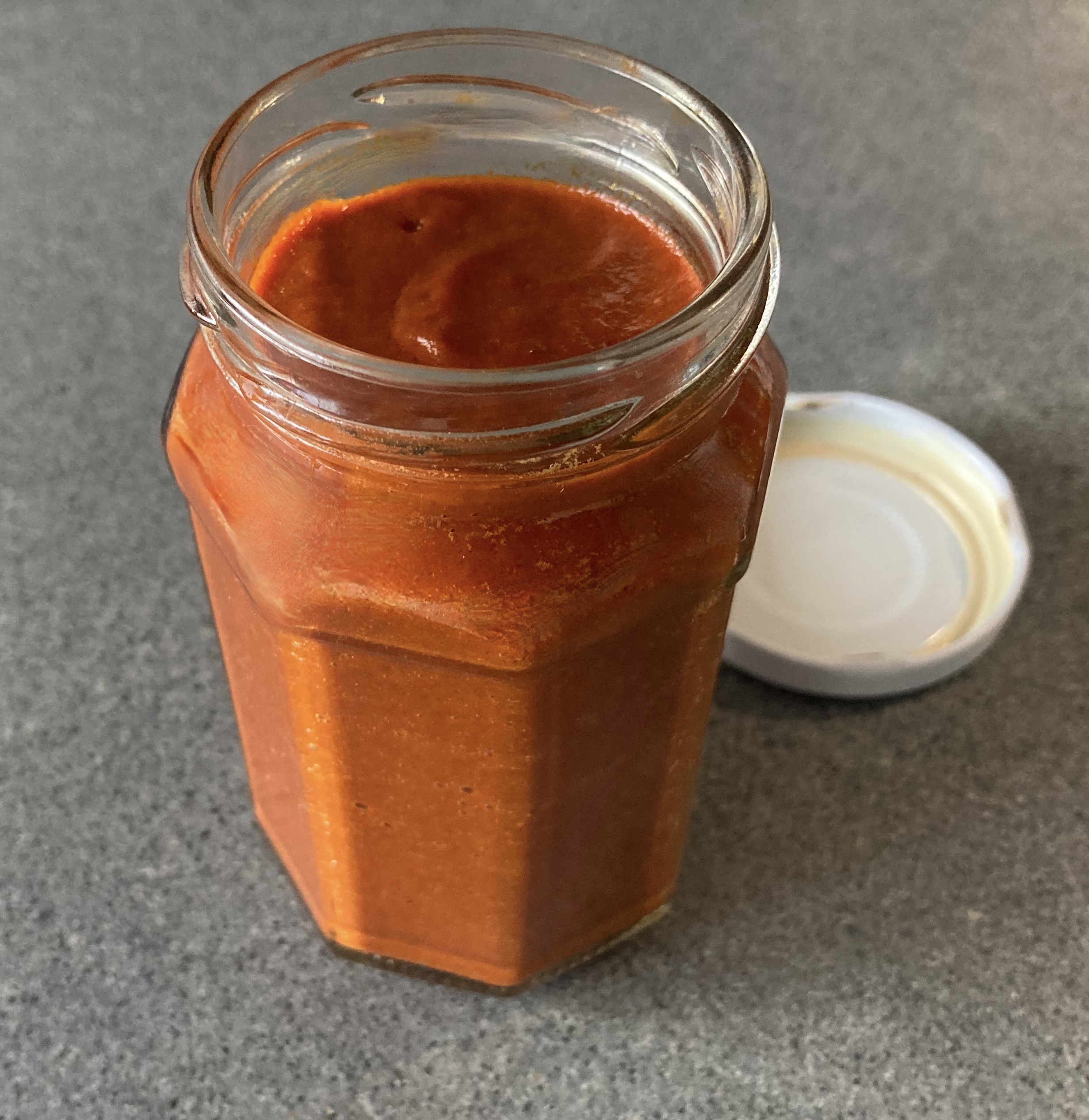
Sweet, smokey, mild, umami: red bell pepper paste is a great condiment when you’re making a pasta sauce with tomatoes, marinating pork or chicken for a stew or looking for a basis for a spread or dip. Very popular in the Portuguese kitchen (Pasta de Pimiento Rojo).

You could make the paste with red bell peppers only; you could add a pinch of salt or perhaps some garlic. Our alternative has a deeper colour and more intense flavours, thanks to the shallot, garlic and red wine. 

Red Bell Pepper Paste keeps very well in the refrigerator, especially when you store it in a jar under olive oil.

What You Need

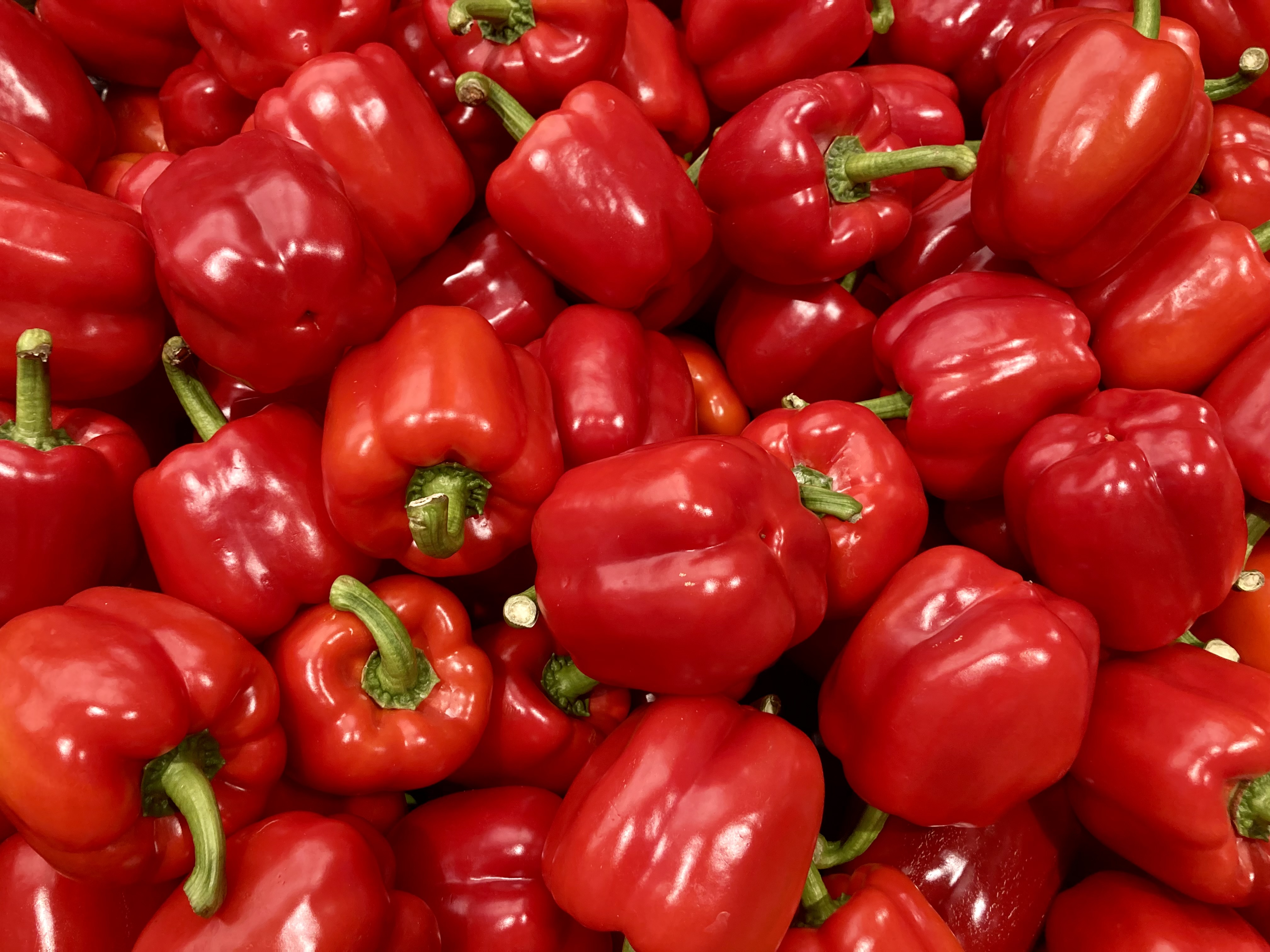
  • Red Bell Peppers
  • Optional: Salt, Garlic

What You Do

Clean the bell peppers, remove the seeds and the veins; cut in 4. Transfer to the oven and grill or roast for 10 minutes or until well charred. When still hot, put the bell peppers in a plastic container and close it. After one hour it’s easy to remove the skin of the bell pepper. Chop and blender until smooth and thick. You could add a pinch of salt or some grated garlic.

What You Need (Alternative)

  • Red Bell Peppers
  • Shallot
  • Garlic
  • Red wine
  • Olive Oil

What You Do

Clean the bell peppers, remove the seeds and the veins; cut in 4. Transfer to the oven and grill or roast for 10 minutes or until well charred. When still hot, put the bell peppers in a plastic container and close it. After one hour it’s easy to remove the skin of the bell pepper. Chop the shallot, the bell pepper and the garlic. Add olive oil to a pan, glaze the shallot. Add the garlic. After a few minutes add the chopped red bell pepper and any remaining liquid. Add some red wine and reduce. Repeat this step two or three times. Transfer the content to the food processor and blend until smooth and thick.

PS

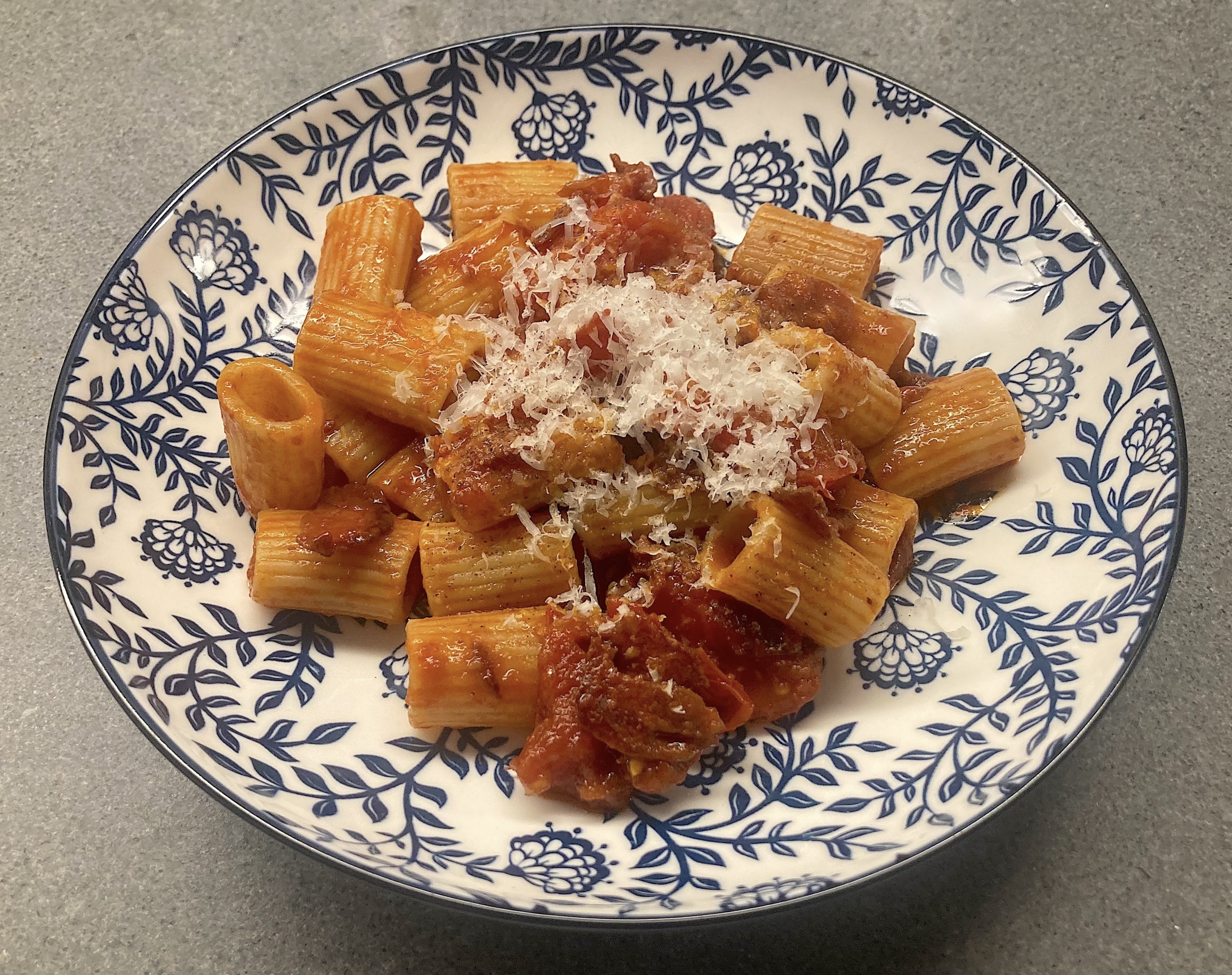
We used our red bell pepper paste for a pasta dish with tomato confit.

Ratatouille

Think summer vegetables, think Ratatouille! Which is also the title of a film released in 2007 about a rat called Remy with a passion for cooking. If you want to see how he prepares ratatouille then simply go to YouTube (or buy the DVD if you’re old fashioned like us).
Ratatouille brings back memories of summer, of the South of France, of the Mediterranean. It combines very well with a simple sausage, with lamb, with grilled chicken.
However you prepare your ratatouille, be sure to prepare it a day ahead. The taste becomes much more integrated after a day (or two) in the refrigerator. Unfortunately it doesn’t freeze well due to the eggplant.

Our recipe is very much the recipe of a dear friend. She taught us how to make ratatouille in her summer kitchen, overlooking the pool and the garden with herbs and vegetables. Indeed, fond memories.
To our surprise she added cilantro (you would expect thyme or basil) and many years later we are still grateful for this twist. The cilantro enhances the feeling of summer and it supports the various vegetables in a beautiful way.

Wine Pairing

We enjoyed our ratatouille with a glass of simple, red wine with lots of red and black fruits. Spicy with subtle tannins. A wine that brings summer to your glass.

What You Need (4 people)

  • 1 Eggplant or Aubergine
  • 1 Courgette or Zucchini
  • 1 Red Bell Pepper
  • 1 Chili Pepper
  • 4 Excellent Tomatoes
  • Cilantro
  • Olive oil

What You Do

Start by cutting the aubergine in small but not too small chunks. Drizzle with salt and mix. Let the mixture rest for a few hours, allowing for the aubergine to loose water and become firm. Best way to do this is by putting the aubergine in a sieve and let it rest above a bowl.
The tomatoes require some attention as well. You could peel them, but that’s optional. What is not optional is to separate the tomato meat and juices from the pits. First step is to remove the internal hard bits and the pits and put these aside. You now have the outer part of the tomato, which you can slice. Cut the remainder of the tomatoes roughly, add to a sieve and by using the back of a spoon make sure you capture the juices. Be surprised about the volume of tomato juice and the small amount of tomato bits and pits that remain in your sieve.

Cut the bell pepper into long slices and fry these in the pan with olive oil. Peel the courgette, slice in the way you sliced the aubergine and add to the pan. Continue frying. Add the finely chopped chilli pepper (not the seeds of course). Add the firm aubergine after having removed the remaining salt with water. After a few moments add the tomato chunks, fry a bit more, add the tomato juice and leave on low to medium heat for 60 minutes. Try not to stir too much; otherwise you risk creating mashed vegetables. Cool, set aside and store in the refrigerator.
The next day: if you have excess liquid, remove the vegetables from the liquid, reduce it until thickened and transfer the vegetables back into the pan. Otherwise gently warm the ratatouille, add some chopped cilantro, mix gently and add more cilantro just before serving.

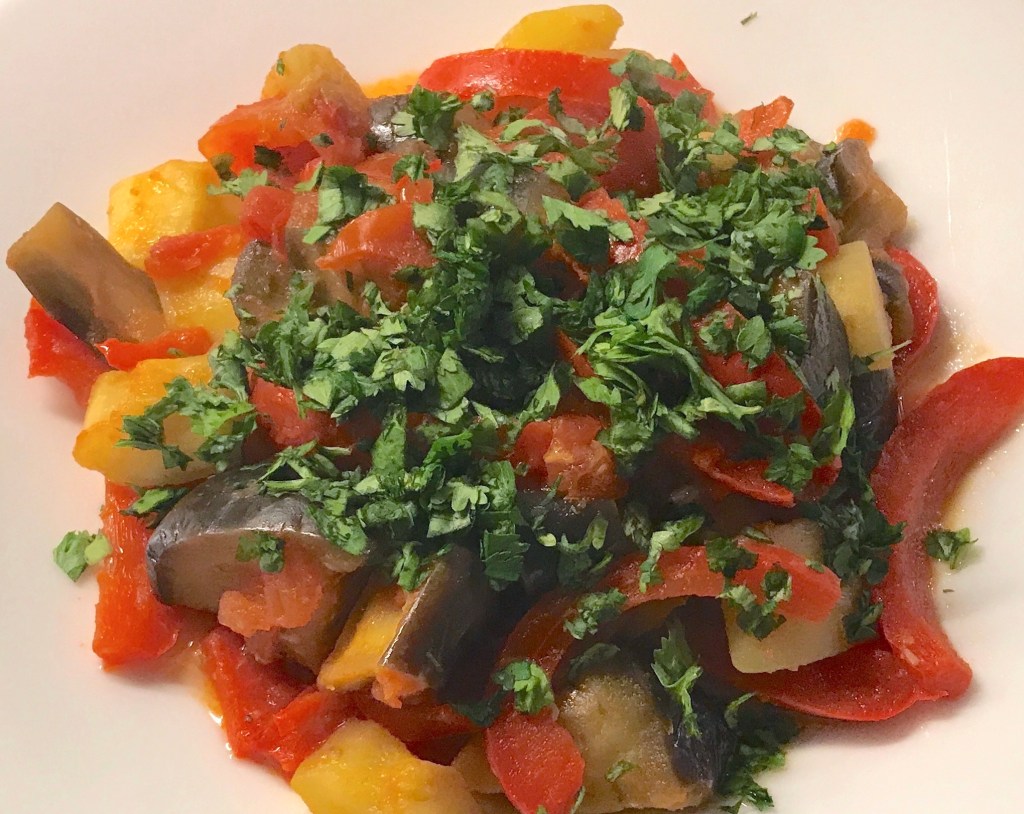
Ratatouille ©cadwu
Ratatouille ©cadwu

Daube Provençale

On a warm summer’s evening, sitting on your terrace, relaxing and sipping rosé, you wonder what to eat. Perhaps something that will make you think of the beautiful Cote d’Azur, with the chirping of cicadas and aromas of pine trees? A Salade Niçoise or something more substantial?
That’s the moment to dive into your freezer and look for that last portion of Daube Provençale. Excellent beef, stewed in red wine and packed with flavours, olives and mushrooms.

Fortunately preparing Daube Provençale is not too much work (and it keeps well in the freezer). You can also be fairly flexible with the recipe. Well known chef Hélène Barale (La Cuisine Niçoise, Mes 106 Recettes) uses beef, veal and pork with tomatoes and dried mushrooms, Hilaire Walden (French Provincial Cooking) suggests marinating the beef in red wine and also adds orange peel and olives whereas the classic La Cuisinière Provençale published in 1897 and written by Jean-Baptiste Reboul suggests adding vinegar to the marinade but doesn’t use tomatoes, mushrooms or olives.

Wine Pairing

We prepared our daube with red wine from France, made from Cabernet Franc grapes and produced by La Tour Beaumont. In general you need a full bodied, fruity red wine, with a good structure. You could of course enjoy the daube with the same red wine, but the daube is flexible. Just remember that the flavours and aromas are intense. 

What You Need (2 portions for 2)

  • 750 grams of Excellent Marbled Beef (Blade Steak for instance)
  • ½ Carrot
  • Shallot
  • 3 Garlic Gloves
  • 250 grams of Mushrooms
  • 50 grams of Black Olives (Kalamata or Taggiasca)
  • Olive Oil
  • Bouquet Garni (Bay Leaf, Thyme, Oregano, Rosemary, Parsley, Chives and/or Sage)
  • 500 ml Red Wine

What You Do

Start by slicing the meat into nice, big cubes. Heat a heavy large pot through and through, add olive oil and fry the meat until brown. Probably you need to do this in two batches. Set the meat aside and fry the chopped shallot, the carrot and the garlic until smooth. Transfer the meat to the pot, stir well, add the red wine, the (halved) olives and the bouquet garni. Keep on low heat for 2 hours. Clean the mushrooms and add these to the pan. Keep on low heat for another two hours. Check if the meat is soft and tender. Quickly cool the pot and transfer the content to the refrigerator.

The next day label off some of the fat (we prefer not to do this, but feel free to do so). Divide the daube in two portions. One for the freezer, the other one to enjoy today. Warm the (halved) daube and remove some of the bigger mushrooms and four tablespoons of cooking liquid. Blender the liquid and mushrooms very fine and transfer back to the pan. This mixture will thicken the cooking liquid. Leave the daube to gently simmer for an hour. If the sauce has not yet reached the right consistency, then transfer cooking liquid to a separate pan and reduce on medium to high heat. Transfer back to the main pan and combine.

Serve with red bell pepper salad, pasta, polenta or boiled potatoes.

  • Daube Provençale ©cadwu
  • Ingredients of Daube Provençale ©cadwu
  • Daube Provençale ready to be stewed ©cadwu