Partridge with Sauerkraut and Parsley Root

Partridge is perhaps the most delicate of game birds. Tasty, aromatic, mild. It is also one of the most vulnerable birds, given it is under threat from loss of habitat. Especially the grey partridge is becoming scarce. They are also expensive (we paid 10 euro per partridge) and the best part of the season (September-November) is relatively short, so don’t wait too long if you want to enjoy partridge once a year, like we do.

The meat of a partridge is lean and tends to become very dry when preparing it. So what to do? Of course! Put a strip of bacon on each breast and transfer the partridge to a hot oven.
Not really. The bacon will impact the delicate taste of the partridge. And placing such a small, lean bird in a hot oven is a massive risk. Just a few minutes too long (simply because something else you are preparing takes a bit longer) and the meat is bone dry. Stuffing the partridge doesn’t help either; the filling will be moist, but the meat will be dry anyway.

The key to an excellent partridge is to be brave enough to use an oven on a really low temperature, meaning on the temperature the meat should have when it’s served, which is 70 °Celsius or 160 °Fahrenheit.  Dutch chef Peter Lute presents this method in two highly recommended videos.

Partridge combines very well with a range of vegetables and herbs. You could celebrate the end of summer by enjoying your partridge with a thyme-courgette cake. Easy to make and full of flavours. This year we decided to combine our annual partridge with Sauerkraut (Elzas-style) and Parsley Root Puree. 

Wine Pairing

We enjoyed our Partridge with a glass of Riesling, produced by Markus Molitor. A classic Moselle Riesling from Germany. Clear mineral aromas, also fruit, herbal, delicate and pure. Excellent with the flavors of the partridge and the sauerkraut.
In general you’re looking for an aromatic white wine, with perhaps a touch of sweetness.

What You Need
  • For the Partridge
    • Two Partridges
    • Two Garlic Cloves
    • Bay Leaf
    • Butter
    • Olive Oil
  • For the Sauerkraut
    • 250 grams of Sauerkraut
    • 50 grams of Bacon
    • One small Shallot
    • Bay Leaf
    • Caraway (Cumin)
    • Pink (or Red) Peppercorns
    • Juniper Berries
    • White Wine
    • Butter
  • For the Parsley Root Puree
    • Parsley Root
    • Cream
    • White Pepper
    • Nutmeg
What You Do
  1. Start with preparing the sauerkraut
  2. Slice the bacon and chop the shallot
  3. Fry the bacon in some butter in a small iron skillet
  4. After a few minutes add the shallot
  5. Mix sauerkraut, pink peppercorns, crushed juniper berries, crushed caraway, white wine and a splash of olive oil
  6. Add the sauerkraut to the skillet, add bay leaf, some butter, cover with foil and transfer to the oven (110° Celsius or 230° Fahrenheit)
  7. Leave in the oven for 4-6 hours
  8. Check the sauerkraut every hour, mix and add water if needed.
  9. A very helpful instruction (in Dutch) how to prepare partridge is presented and demonstrated by Peter Lute in two excellent videos. Please watch them and see how it should be done.
  10. In summary: prepare the partridge by carefully cutting off the two legs and removing the lower part of the back of the bird (the tail bone area)
  11. Warm a heavy iron pan and add butter
  12. Coat the birds with butter, making sure they have a very light brown colour
  13. Transfer the pan to a warm oven: 70° Celsius or 160° Fahrenheit
  14. Leave in the oven for 50-60 minutes
  15. Since the oven is on the ideal temperature for the meat, it doesn’t really matter if you leave them in the oven longer.
  16. Set aside.
  17. Peel the parsley root, chop and put in a pan with water and bring to a boil
  18. When the parsley root is halfway remove the water and add cream
  19. Let cook on low heat until tender
  20. Use a blender to create a puree. Add white pepper and nutmeg. You could also use a fork for a more structured puree
  21. Add a touch of olive oil to a non-stick pan, and quickly brown the meat, skin side only
  22. Just before serving separate the tenderloin from the breast and remove the fleece before serving the breasts
  23. If all is well you will see a beautiful pink colour, indicating your cuisson is perfect and your partridge as tasty and delicate as possible
Partridge with Sauerkraut and Parsley Root ©cadwu

Weever

Fish and Chips, such a tasty combination, especially when the fish is fried with beer-based batter and served with triple-cooked chips, mushy peas and tartare sauce. Commonly it is made with cod or haddock. We prefer haddock because of its flavour and more importantly its texture. Both haddock and cod are expensive and in these days of high inflation we are keen to find a cheap alternative.

That’s why we recently tried this dish with weever, also known as Pieterman in Dutch and Vive in French. We were not disappointed, not at all. Excellent texture, taste a bit stronger compared to haddock but nevertheless yummy.
Weever is actually a really interesting fish. Weevers hide in the sand, waiting for prey. Their defence is based on a poisonous dorsal fin which makes it very painful when you step on it or want to get gold of them. Therefore it is unpopular with anglers, making it bycatch. And because of that, weever is not expensive. Great combination: save money and enjoy delicious food!

Drink Pairing

A nice, cold beer will go very well with this dish. Wine wise the choice is yours: unoaked Chardonnay, Semillon, dry Riesling, Rueda, Chenin Blanc or Picpoul de Pinet. The wine must be fresh, a touch citrussy and have balanced acidity.

What You Need
  • For the Haddock, Cod or Weever
    • Boneless Fillet
    • All Purpose Flour
    • Breadcrumbs (see below)
    • Egg
    • Butter
    • Olive Oil
    • Black Pepper
  • For the Pickled Radish
    • Red Radishes
    • Shallot
    • White Wine Vinegar
    • Sugar
  • Mayonnaise
What You Do – Pickled Radish
  1. Take a cup of white wine vinegar, add it to a bowl, add sugar, perhaps some water (depending on the acidity of the vinegar), mix very well and taste
  2. The mixture should be both sweet and sour
  3. Slice the radishes and the shallot
  4. Add to the mixture, stir and leave in the refrigerator for a few hours
  5. Over time the colours will blend
  6. The vegetables will keep well for a few days
  7. Feel free to use the same approach with other (firm) small vegetables
What You Do – Haddock, Cod or Weever
  1. Pat the fillet dry with kitchen paper
  2. Check if there are really no bones
  3. Take three plates, one with flour, one with beaten egg, one with breadcrumbs
  4. Coat the fillet with flour, then dip it into the egg mixture and finally coat with the crumbs
  5. Fry in hot butter (with olive oil) until lovely golden brown
  6. Serve immediately on a warm plate
What You Do – Breadcrumbs
  1. Also known as chapelure
  2. Use old, stale but originally very tasty bread. Obviously, we use our home-made bread
  3. Toast the bread and let cool
  4. Cut in smaller bits and then use a cutter or blender to make the crumbs
  5. They keep very well in the freezer, so best to make in advance, when you have some left over bread

The Art of Sauces: Cameline

Welcome to the Middle Ages, welcome to the world of bread sauces and strong flavours. Already in the thirteenth century Sauce Cameline was very popular and in the fourteenth century it could be bought ready-made from vendors. It was used as accompaniment with fish, wild boar, chicken and it was served warm or cold.

Different from béchamel, velouté, Hollandaise or other modern sauces, a bread sauce has a very specific structure. In the United Kingdom a bread sauce with milk, onion, cloves, bay leaf and peppercorns is served with turkey as part of the traditional Christmas dinner.

Recipes for Sauce Cameline are included in several books, for instance in Two Fifteenth Century Cookery by Faulke Watling and Thomas Austin, 1888 and in The Viandier of Taillevent: An Edition of All Extant Manuscripts by Terrence Scully, 1988. Both books are available via the well-known channels.

The Viandier of Taillevent is very much a historical research into the origin of 5 manuscripts with recipes, all ranging from probably the same source, but all different. The oldest is from the second half on the thirteenth century. Taillevent, also known as Guillaume Tirel (ca. 1310 – 1395), was cook to the court of France (Charles V and many others). As the dates suggest it’s not very likely that he is the author of the oldest version of the recipes but on the other hand no other name is mentioned.

Terence Scully explains in wonderful detail the background of the manuscripts and the recipes. He also includes a modern version of 220 recipes, based on his historical and culinary interpretation of all manuscripts. A very impressive book.
The Viandier of Taillevent is also the inspiration for many other historical cookbooks.

There is no original recipe for Sauce Cameline. Our impression is that it must contain vinegar, bread, cinnamon, cloves, grains of paradise, mace and ginger. 

Food Pairing

We would suggest pairing it with chicken. Depending on your choice of ingredients you could combine it with pork or wild boar. We enjoyed Sauce Cameline with small chicken roulades, stuffed with chopped raisins and rosemary.

What You Need

  • Old White Bread
  • Red Wine Vinegar
  • Cinnamon Powder
  • Ginger Powder
  • Mace
  • Clove
  • Grains of Paradise
  • Optional
    • Nutmeg
    • Raisins
    • Almonds
    • Black Pepper
    • Salt 

What You Do

Soak the bread in red wine vinegar (and water). In a mortar combine cinnamon, ginger and other spices. When using raisins, make sure to soak them.
The first option is to strain the bread and then combine it with the mixture.
We didn’t think that worked very well, so we drained the bread, added the mixture to the liquid and added some of the bread. We used a blender to create a sauce. We added a bit more bread and cinnamon to make it tastier and thicker.
The third option is to cook and reduce the mixture. According to the Viandier it should be a cold sauce, but others claim a warm sauce was served during winter.
Regardless the way you prepare it, keep in mind it should be a fairly acidic sauce with a dominant cinnamon taste.

PS

Grains of Paradise? New to me!
The grains are common to the North and West African cuisine. They were brought to Europe in the thirteenth century.
The taste is supposed to be hot, peppery and fruity. Unfortunately, we couldn’t find them and we didn’t feel the need to order the grains online. We substituted them with freshly grounded black pepper. The other flavours were sufficiently intense!

Saffron Milk Cap with Squid and Tomatoes

It’s nearly the end of the season for this delicious mushroom. And what better idea than to close the season with a new recipe! Normally we would combine Saffron Milk Cap with Chorizo and roasted Bell Pepper. Thinking more about Spain and its markets (the one in Valencia is our all-time favourite) we came up with the idea of combining the mushroom with fish? Or gambas? Or perhaps squid?

Wine Pairing

We opened a bottle of Domaine Font-Mars Picpoul de Pinet 2021. Picpoul de Pinet (Son terroir c’est la mer) is a white wine from the South of France between Narbonne and Montpellier. The terroir (think calcareous soil) is influenced by the sea, which is reflected in the mineral taste of the wine. The story is that Picpoul could be read as pique poul which translates into something like ‘stings the lip’; a nice reflection of the high acidity of the grapes. This acidity guarantees a refreshing white wine, which is exceptional given the warm climate. The wine is bright yellow with a very subtle touch of green. It’s aromatic, floral and fruity. The taste has notes of citrus and apple.
In general we suggest drinking a refreshing, unoaked white wine that goes well with seafood.

What You Need

  • For the Squid
    • 150 grams of Squid
    • 4 Tomatoes
    • One Garlic Clove
    • Red Wine
    • Thyme
    • Olive Oil
  • 150 grams of Saffron Milk Cap
  • Parsley and or Celery Leaves
  • Cayenne Pepper
  • Olive Oil

What You Do

The day before serving: clean the squid. Slice (not too thin). Peel, seed and dice the tomatoes, use a strainer to get as much tomato juice as possible. Chop the garlic finely. Heat a skillet, add olive oil and add the sliced squid. Fry for a few minutes, add the garlic and the tomatoes. Reduce the heat. After a few minutes add the tomato juice, half a glass of red wine and thyme. Leave to simmer for 2 hours or until the squid is ready both in flavours and texture. Cool and transfer to the refrigerator.

The next day clean the mushroom and slice (not too thin). Chop the parsley and or celery leaves. Heat a skillet, add olive oil and add the sliced mushroom. Fry for one minute, then reduce heat. Add the squid mixture and cook for a few minutes. Taste and add cayenne pepper. You’re looking for a fairly sharp, spicy taste. Add half of the chopped parsley/celery. After a few minutes serve the mixture and garnish with parsley/celery. The idea is to have a mixture (not a sauce) of squid and mushrooms, coated with tomatoes. 

Matsutake with Garland Chrysanthemum

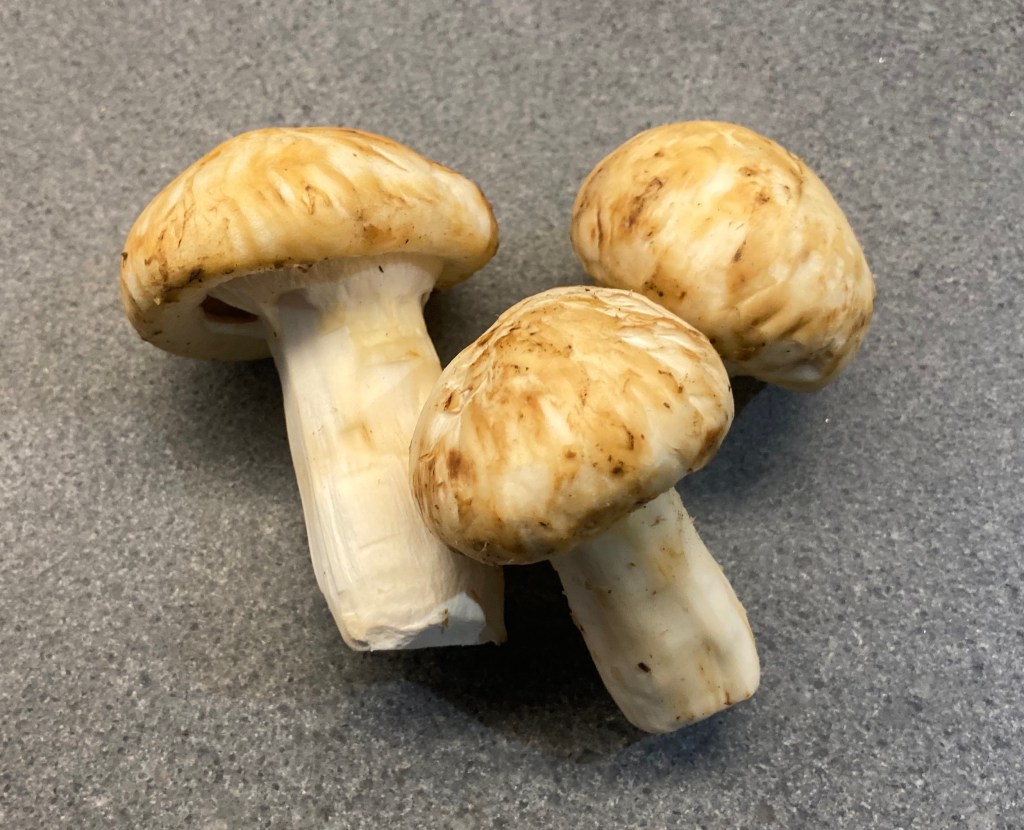
A very special mushroom, to say the least. Matsutake smells like a pine wood forest and its taste is intense and unique. It’s also expensive and rare. If you happen to find it, be sure to buy it.

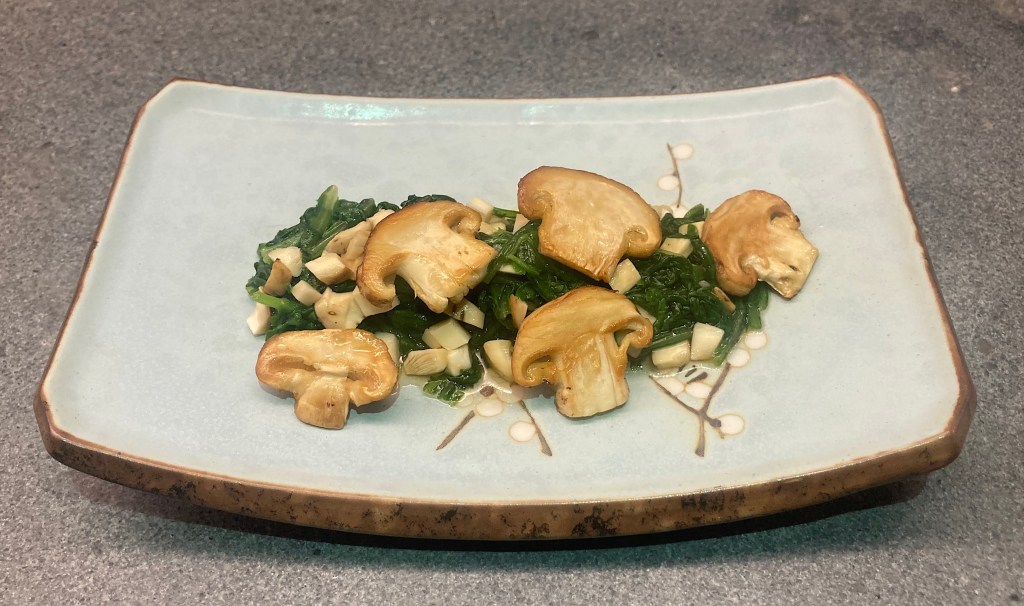
Earlier we used Matsutake to make a soup and we combined it with spinach and ginger. In this recipe we combine Matsutake with Garland Chrysanthemum (Glebionis coronaria) also known as Tong Ho or Shungiku. It is a widely used vegetable in Japan, China, Vietnam and Korea. Its taste is delicate, a touch bitter and different (unless you’re familiar with chrysanthemum tea); one that goes very well with dashi, sesame seeds, mushrooms, mirin and soy sauce. If the vegetable is young, you can eat the stalks and the leaves. Also great as tempura. We use the leaves only for making a salad.

Wine and Sake pairing

We enjoyed a glass of Camino de Caza Almansa Sobre Lías Verdejo 2021. An organic white wine produced by Bodegas Piqueras and made with selected verdejo grapes from the Almansa region in Spain. It’s an aromatic, fresh wine with flavours that will make you think of yellow fruit (peach) and it has a welcome touch of bitterness.
The combination of the intense Matsutake and the intriguing Chrysanthemum begs for a dry, white wine with character.
You could also serve a glass of a cold, not too crispy sake, for instance a Taru Sake (a sake aged in barrels made of Japanese cedar).

What You Need

  • 75 grams of Matsutake
  • 200 grams of Garland Chrysanthemum
  • 150 ml Dashi
  • 3 teaspoons Light Soy Sauce
  • 3 teaspoons Mirin
  • Walnut Oil
  • Olive Oil

What You Do

Make 150 ml of dashi. Let cool. Add light soy sauce and mirin. Mix. Remove the stems of the Chrysanthemum. Wash the leaves in water. Add to a pan with boiling water and blanch for 45 seconds. Transfer the leaves to a basin with cold water. When the leaves are cold, gently remove the excess water and transfer to the dashi mixture. Leave in the refrigerator for one hour.
Clean the matsutake. Take your time to do this. Remove the lower half of the stem. Slice the mushrooms, chop the stem. In a non-stick pan heat a little olive oil, just enough to gently fry the mushrooms. When ready, remove the leaves from the mixture, combine with the chopped mushroom, mix. Add the salad to a plate, decorate with the fried slices of matsutake and add a small drizzle of walnut oil.

  • Matsutake with Chrysanthemum ©cadwu
  • Cleaned Matsutake ©cadwu
  • Matsutake on the market ©cadwu

Saffron Milk Cap with Red Bell Pepper and Chorizo

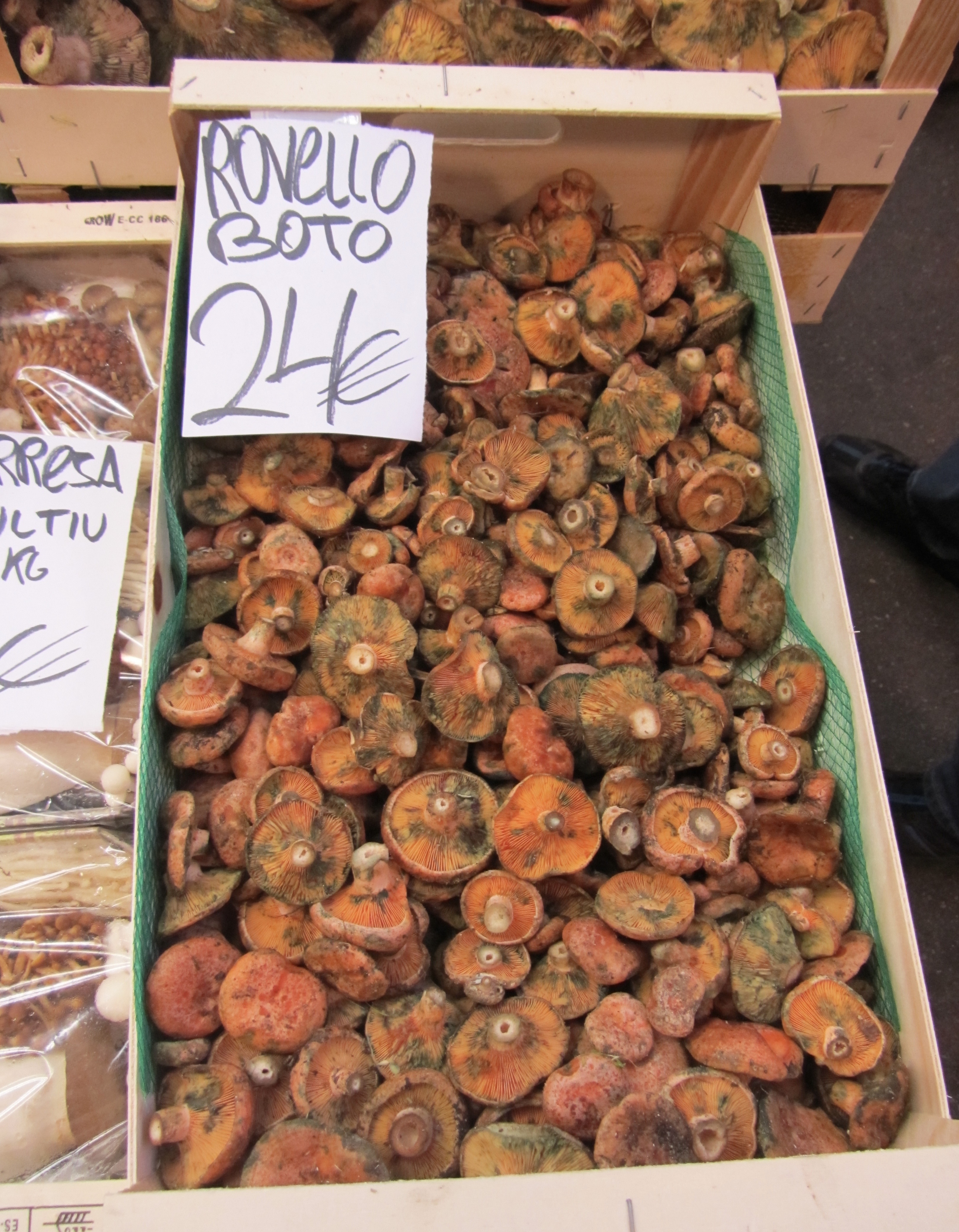
This mushroom is absolutely delicious, which is reflected in its Latin name Lactarius deliciosus. When you cut a thin slice of the stem, you will see the intense, orange colored milk of the mushroom.
The mushroom may be a bit green, which is the result of bruising, so nothing to worry about. Cleaning it may require rinsing with cold water because leaves and mud may be stuck to the cap.

It is a popular mushroom in Spain, Portugal, Turkey, Scotland, Poland, Russia and many other countries. In Spain they are combined with garlic and parsley, in Turkey with spinach to make börek or used in a rich tomato stew and in Poland and Russia they are salted with herbs such as dill and caraway.

Many recipes suggest blanching the mushrooms for 2, 3 or even 10 minutes, but that’s not necessary. Much better idea is to use them in stew like recipes, allowing for the flavours to integrate. Talking about flavours, Saffron Milk Cap is a touch nutty, sweet and mild.

The season is relatively short, from August until October, November. Which in a way makes the joy of buying and preparing these delicious mushrooms even greater!

Wine Pairing

We very much enjoyed a glass of Portuguese Segredos de São Miguel, a full bodied, warm red wine, made from grapes such as Alicante Bouschet, Aragonez, Touriga Nacional and Trincadeira. You will taste lots of fruit and a touch of toast.

In general you’re looking for a full bodied wine, with some acidity and smooth tannins. A glass of Malbec will also be a good choice.

What You Need

  • 150 grams of Saffron Milk Caps
  • Roasted Red Bell Pepper
  • 50 grams of Sliced Chorizo
  • Parsley
  • One Garlic Glove
  • Black Pepper
  • Olive Oil

What You Do

Clean the mushroom and slice (not too thin). Chop the garlic. Peel the skin of the roasted bell pepper and slice. Warm a skillet, add olive oil and gently add the sliced Spanish chorizo (yes, we know, it seems a bit odd. You would expect us to use fresh chorizo, which is great when you want to create something like a sauce or ragu, but we like the idea of being able to taste all three main elements, on their own and in combination). Add the garlic. After a minute or so add the mushrooms and the bell pepper. Fry gently. After 5 or 10 minutes add some chopped parsley. Leave on low heat. Add some more parsley. Just before serving add the remaining parsley and some black pepper.

PS

Roasting a red bell pepper before using it, is such a good idea. Simply slice the bell pepper in 4, put on the highest rack in the oven and grill for 10 minutes or until truly burned. Remove from the oven, put in a container, close it and wait for an hour or so. Remove the skin of the bell pepper and it’s ready to use. Roasted bell peppers are sweet and intense, with only a touch of smokiness.

Mackerel Paté

A late afternoon, you’re in a rush, on your way to the supermarket, something to eat for dinner plus something to enjoy with crackers and a glass of white wine. That’s the moment to be tempted to buy ready-made tapenade, guacamole or fish paté. It’s easier, much quicker and you don’t need to worry about ingredients and recipes. Very true. On the other hand, we also know that most of these ready-made products contain far too much salt plus additives you simply don’t want to eat.

Making your own guacamole is simple, making your own mackerel paté is even simpler.

What You Need

  • 1 Smoked Mackerel Fillet
  • Greek Yoghurt
  • Mayonnaise
  • 5 Cornichons
  • Black Pepper
  • Lemon Juice

What You Do

If you use the brown fat of the mackerel, then your paté will be a touch bitter and you’ll still taste mackerel hours after you’ve eaten it. Therefore, we remove the brown fat and disgard it. Use a fork to divide the fillet in smaller chunks, remove any bones left. Add to a bowl. Thinly slice the cornichons. Add cornichons, a splash of lemon juice, black pepper, one small tablespoon of yoghurt and two small tablespoons of mayonnaise and mix, using a fork. Taste and adjust. Use cling foil to seal the bowl, transfer to the refrigerator and let cool. Serve with thinly sliced bread or crackers.

Mackarel Paté ©cadwu

Ragù Napoletano

Ragù Napoletano is all about beef and tomatoes. Combining these two creates umami, one of the five tastes, because the tomatoes contain amino acid glutamate and the beef inosinate
Whereas Ragù Bolognese is made with finely chopped meat, Ragù Napoletano is prepared with whole cuts of beef, seasoned and rolled up. Best is to use Blade Steak (or Top Blade), Rump Cap or Top Rump. Our butcher suggested using Knuckle Side Roast (or Knuckle Plate Muscle) which is rather lean so a touch dry after simmering for many hours. On the other hand, it kept its structure and flavours very well. Best is to ask your butcher for advice.
Many recipes suggest adding pork ribs to the dish, but we wanted to focus on the combination of beef and tomato. We did however add a bit of fatty bacon.
Tomato-wise you need lots of tomatoes: fresh ones, passata, puree and/or canned.
Best to prepare one day ahead.

Wine Pairing

A red, full bodied wine from Italy made with Sangiovese grapes will be a great accompaniment for both the starter and the main dish. We opened a bottle of Les Petits Rigolos, a red wine from the Tolosan region in south western France made with Merlot and Cabernet Sauvignon. A round wine with notes of strawberry and blackcurrant. A touch spicy, which worked very well with the rich flavours of the Ragù Napoletano.

What You Need
  • For the Beef
    • 2 slices of Beef
    • Parmesan Cheese
    • Raisins
    • Fresh Parsley
    • Fresh Oregano
    • 1 small Garlic Clove
    • Optional: Pine Nuts
    • Olive Oil
  • For the Sauce
    • Small Onion or Shallot
    • Olive Oil
    • Bacon (or better: Lardo)
    • 250 ml of White Wine
    • Fresh Tomatoes
    • Tomato puree
    • ½ can of Tomatoes
    • Passata
  • For the Starter
    • Rigatoni
    • Parmesan Cheese
  • For the Main Course
    • Vegetables
What You Do
  1. Soak the raisins in water for an hour
  2. Drain
  3. Chop parsley, oregano, raisins and garlic
  4. In a bowl, combine raisins, garlic, oregano, parsley and freshly grated cheese
  5. Flatten the meat if it’s difficult to roll up
  6. Scatter the mixture over the meat, roll the meat up and tie with two strings of kitchen twine.
  7. If using fresh tomatoes, peel and seed them. Chop coarsely
  8. Chop the onion and slice the bacon
  9. Heat a large saucepan, add olive oil, add onion and bacon
  10. Leave on low heat for some 10 minutes or until the onion is glazed
  11. Add the two rolls and fry them on all sides until evenly golden brown
  12. Take you time to do this
  13. Add the wine, let the alcohol evaporate and reduce
  14. Add the tomatoes, the passata and the puree
  15. Leave the stew on low heat and turn the meat occasionally. This stage is about stewing the meat as gently as possible and reducing the sauce. If you feel it’s going too fast, then put a lid on the pan, but only partially.
  16. Once the meat is ready (this may take 4+ hours) remove the meat from the sauce, keep it warm (an oven at 50 °C or 120 °F will be perfect) and allow the sauce to reduce even more, as slowly as possible.
  17. Wait for the sauce to become dark and shiny
  18. For the first course: serve the sauce with pasta and freshly grated Parmesan cheese (we used Rigatoni because of the ridges)
  19. For the second course: warm the meat in the remaining sauce, slice it and serve with sauce and vegetables.

PS

We would probably be kicked out of Naples (and Italy) with our version of Ragù Napoletano (oregano? French wine?). It is, however, a very tasty two course meal with lots of umami, as expected.

Mushroom Fricassee

A few weeks ago, we wrote about History on Our Plate (2019) written by food historian and award-winning author Peter G. Rose. She writes about America’s Dutch past and the influence of the Dutch settlers on today’s American food. She explains how the founders of New Netherland (1609 – 1664, currently the states of New York, Delaware, Connecticut and New Jersey) brought Dutch recipes, tools, herbs and fruit to the US. Most recipes are based on publications like Een Notabel Boecxken van Cokeryen (a Notable Little Book of Cookery, 1514) and the 13thcentury publication Le Viandier de Taillevent. Peter Rose includes both the original and a modern version, allowing you to recreate food from the 17th century. 

Two Recipes

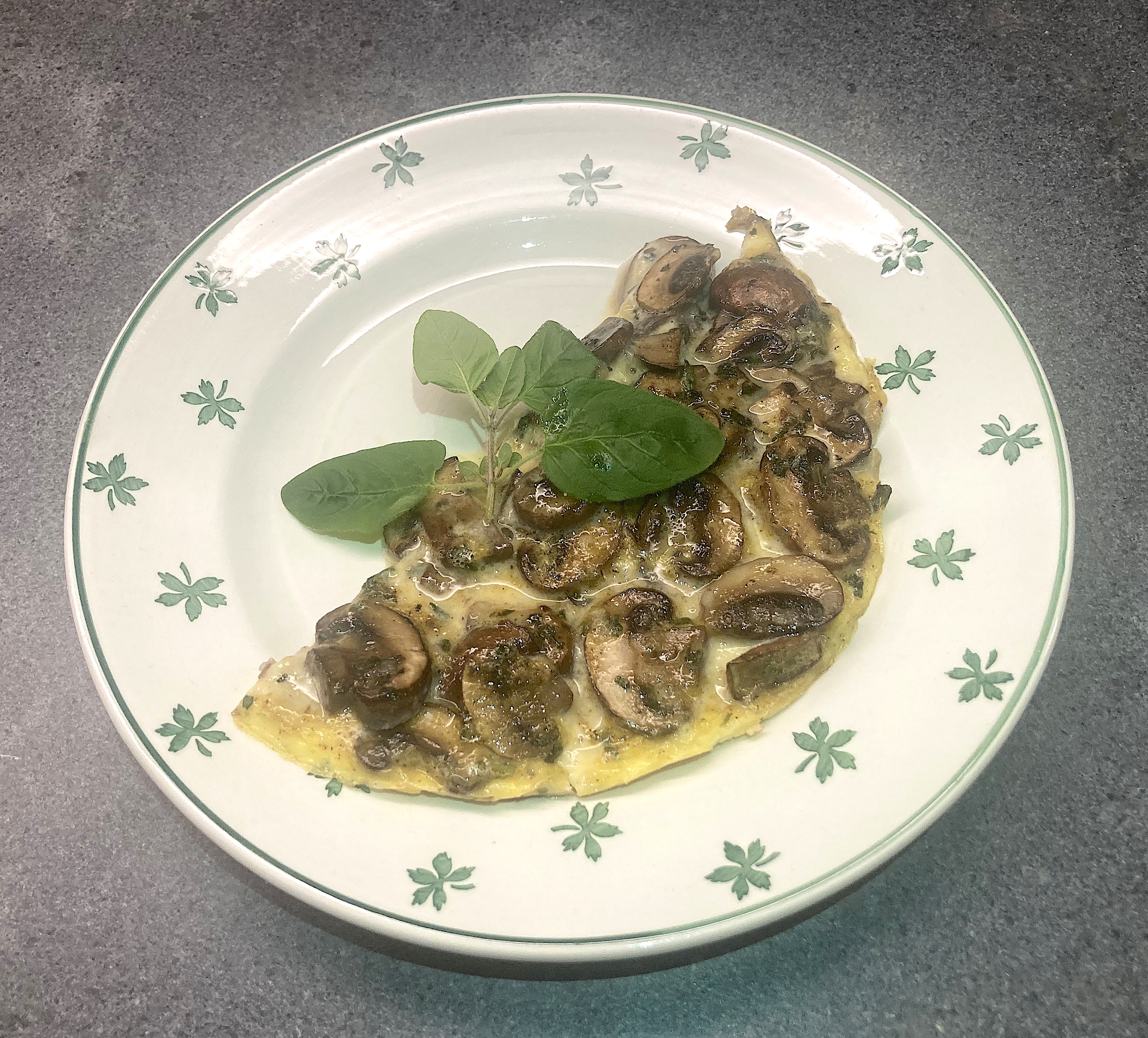
We were intrigued by a recipe for Mushroom Quiche without a Crust that made us think of a savoury clafoutis. We were also intrigued by another mushroom recipe, called Mushroom Fricassee, partly because of the unusual combination of eggs, mushrooms, onion, marjoram, thyme, orange juice, sherry, nutmeg and (optional) beef juice. The recipe is included in a manuscript written by Anne Stevenson Van Cortlandt (1774- 1821). She was married to Pierre Van Cortlandt, a well-known influential family with Dutch origins. Anne Stevenson was born in Albany, a city linked to Dutch settlers until the British took over in 1664.
We tried this imaginative combination of ingredients and prepared an omelette. The result was tasty and beautifully balanced, with a nice twist thanks to the herbs, sherry and orange juice. Peter Rose suggests preparing it like scrambled eggs, which is probably a better idea. Turning the mixture into an omelette was a bit of a challenge.
You’ll find a detailed recipe in History on Our Plate.

Wine Pairing

We enjoyed our Mushroom Fricassee with a glass of Conde Valdemar Tempranillo Blanco Rioja DOCa 2020, produced by Bodegas Valdemar. Its colour is slightly yellow with greenish tones. The wine has notes of tropical fruit (pineapple) and its taste is fresh and pleasantly persistent. A beautiful, unoaked white Rioja made with 100% tempranillo blanco grapes.
In general, you’re looking for a lean, dry, slightly fruity white wine with notes of lemon, melon and/or pineapple, preferably with a long finish.

Buy The Book

History on Our Plate is available via the well-known channels and your local bookstore for approximately 15 euro or 10 US$.

Guacamole

It’s very tempting to buy ready-made tapenade, guacamole, mayonnaise or fish paté. It’s easier, much quicker and you don’t need to worry about ingredients and recipes. Very true. On the other hand, we also know that most of these ready-made products contain far too much salt plus additives that shouldn’t be in there. For instance, we found a trout paté with rapeseed oil, vinegar, egg, salt, lemon juice, sugar and paprika. The ingredients in a jar with guacamole included mascarpone, cellulose gum, sugar (again) and coconut oil.

The good news is that making your own guacamole is very simple. The only challenge is to buy ripe and tasty avocados. When in doubt, ask your greengrocer.
Guacamole combines very well with nachos, chips and toast, but also with baked potatoes, fried fish and smoked salmon. We like to enjoy it with our beloved (Flemish) grey small shrimps.

Wine Pairing

If you serve guacamole with small shrimps as a starter, then we suggest a refreshing white wine, for instance a glass of Viognier. You could also serve a glass of dry rosé.

What You Need

  • 2 Ripe Avocados
  • Small Red Onion or Shallot
  • Small Garlic Clove
  • Red Chili Pepper
  • Lemon
  • Soy Sauce
  • 100 grams Small (Grey) Shrimps
  • Black Pepper
  • Cilantro (optional)

What You Do

Peel both avocados, remove the seeds and chop coarsely. Finely chop the shallot, the garlic clove and some red chilli pepper. How much you use depends on the spiciness of the pepper and your preference. Add one avocado to the beaker of your blender. Add the shallot, garlic and chili pepper. Add a small splash (start with half a teaspoon) of soy sauce and a bigger splash of lemon juice. Add the remaining avocado and blender until smooth. Taste and decide if you want to add more lemon juice or soy sauce. Transfer to the refrigerator.
Serve with small shrimps, black pepper and cilantro.

PS

We know, we start by mentioning that ready-made guacamole contains odd ingredients like mascarpone and then we suggest adding soy sauce to this typical Mexican dish. Inconsistent to say the least. Well, guacamole needs a pinch of salt. You could (of course) add regular salt, but by adding a drop of fish sauce or soy sauce, you also add some umami, which seems to work well with the avocado and the shrimps. 

Guacemole ©cadwu
Guacamole ©cadwu