Ratatouille Niçoise

It’s always hard to say what the original version of a dish is, assuming it even exists. In most cases recipes evolve over time, influenced by people, availability of ingredients and culinary trends. Ratatouille is a good example: it originates in the Provence, or more precisely: in the Niçoise region. Its local name is ratatolha. Ingredients are typical for this area: tomatoes, onions, garlic, zucchini, eggplants and herbs like thyme and marjoram. Meaning that we don’t really know what the ingredients were before the introduction of tomatoes and bell peppers in the region.

In 1976 chef Michel Guerard in his book Le Cuisine Minceur introduced Confit Bayaldi, a variation whereby the vegetables (and mushrooms) are thinly sliced and baked in the oven.
In 1999 chef Thomas Keller added a piperade and a vinaigrette to the Confit Bayaldi. This is the ratatouille that features in the classic film Ratatouille.

When reading the recipe for Ratatouille Niçoise, we noticed that the vegetables are fried separately, the onions are caramelised and the tomatoes are used to make a sauce that is added to the other vegetables towards the end.
The result is a very tasty, rich and powerful dish. Thanks to the way it’s prepared you will be able to taste the individual flavours and the combination. Making your ratatouille this way is perhaps a bit of work, but’s it’s not difficult and it’s worth the effort.
We served our Ratatouille Niçoise with grilled lamb chops.

Wine Pairing

We decided to enjoy a glass of red wine from the French Languedoc-Roussillon area, made with Syrah grapes by Les Jamelles. The wine has an intense dark colour and aromas of dark berries and a touch of vanilla. The flavour is a combination of some spiciness, dark fruit and mild tannins. In general, we suggest a not too complex red wine with some oak, dark fruit and character.

What You Need
  • 1 Zucchini (Courgette)
  • 1 Eggplant (Aubergine)
  • 4 Tomatoes
  • ½ Green Bell Pepper
  • ½ Red Bell Pepper
  • 1 large White Onion
  • 4 small Garlic Cloves
  • Olive Oil
  • Bouquet Garni (Thyme, Marjoram, Rosemary, Oregano)
  • Black Pepper
What You Do
  1. Clean the vegetables
  2. Coarsely chop the zucchini, the eggplant and the bell peppers
  3. Slice the onion
  4. Peel the tomatoes (heat a pan with water, dip 1 tomato in the hot water for 10 seconds and use a sharp knife to peel. If it doesn’t come off easily, dip for another 10 seconds)
  5. Chop the tomatoes
  6. Warm a Dutch oven, add olive oil and fry the onion until golden
  7. Add the chopped tomatoes, one crushed garlic clove, the bouquet garni and black pepper. Leave on low heat, no lid required. The sauce must become thick and smooth. This will take some time!
  8. In parallel: heat a skillet, add olive oil and fry the zucchini. When nicely coloured reduce the heat and add 1 crushed garlic clove and some black pepper. After a few minutes transfer to a plate and set aside
  9. In parallel: we used the same skillet to repeat step 8 twice, first with the bell peppers and then with the eggplant
  10. Once the vegetables are fried and the sauce is ready: warm a second Dutch oven, add the vegetables and combine with sauce
  11. Leave on low heat for one hour. No lid required
  12. Set your oven to traditional and 180 °C or 355 °F
  13. Transfer the pan to the oven for 30 minutes, leaving the door slightly open
  14. Just before serving remove the bouquet garni
PS

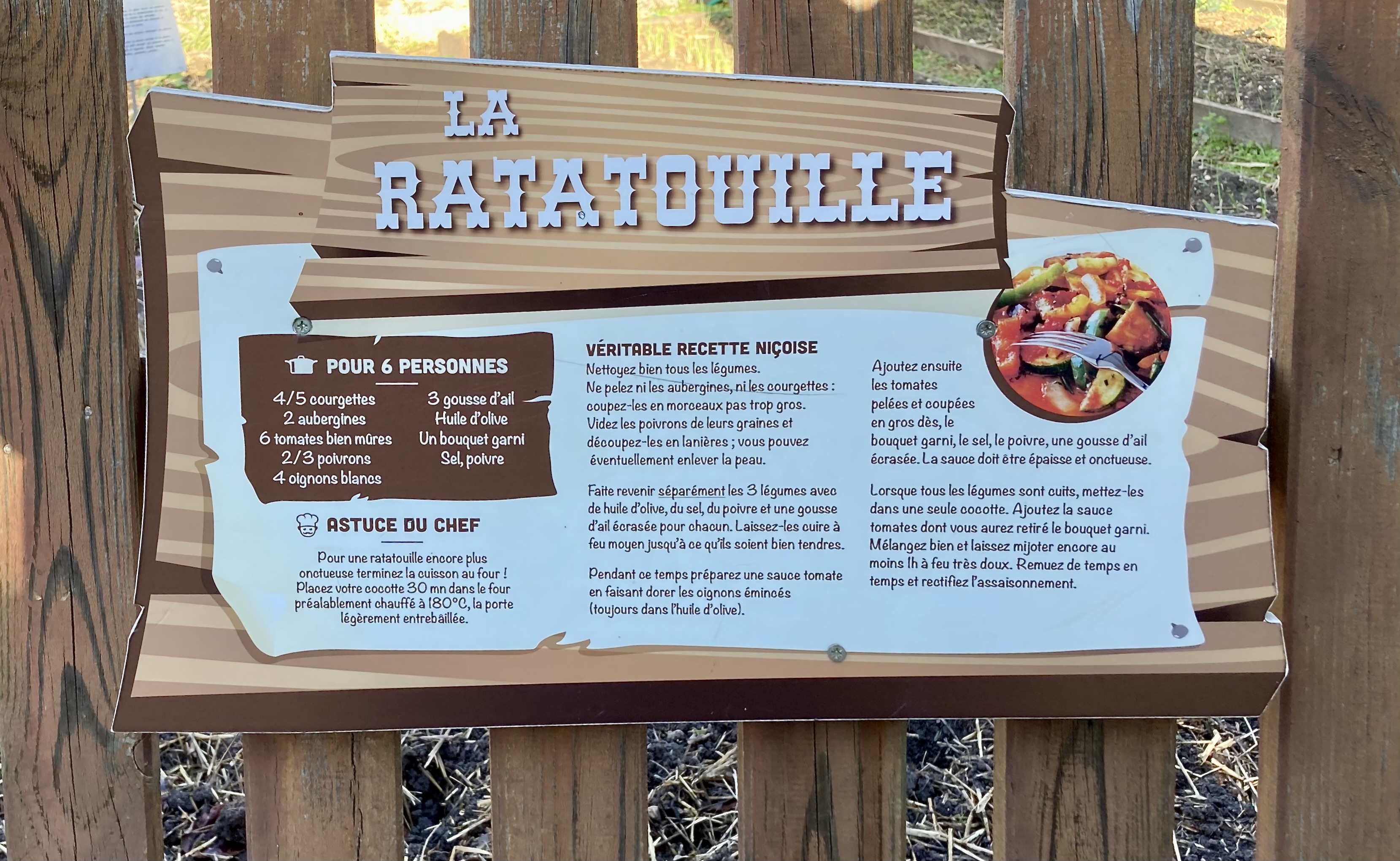
The recipe is on display in Parc Phoenix in Nice, so it must be the original! 
Guineafowl with Ras el Hanout

Preparing guineafowl can be a bit of a challenge: easily overcooked and quickly dry. Guineafowl has more structure and less fat compared to chicken plus it’s much firmer. The good news is that guineafowl has lots of flavour, perhaps a bit gamey, but not overpowering. So great to combine with nice ingredients such as morels or with grappa, junipers, sage, white wine and pancetta (as included in The River Cafe Classic Italian Cookbook, written by Rose Gray and Ruth Rogers).

Ras el Hanout is a mix of some twenty plus spices such as coriander, cumin, cinnamon, nutmeg, fenugreek, fennel, cardamom, turmeric and many more. Ras el Hanout is complex, layered, warm, a touch sweet and bitter. It works beautifully with the guineafowl and the various vegetables. 

Wine Pairing

Enjoy your guineafowl with a not too complex, medium bodied, fruity red wine. Grapes such as Grenache, Carménère, Carignan. We enjoyed a glass of Merlot, produced by Les Ormes de Cambras from the French Pays d’Oc region. A round, fruity wine with aromas of berries and subtle tannins. Also available as Bag in Box!

What You Need

  • Guineafowl
    • Guineafowl (Supreme preferred, but Leg is also fine)
    • Teaspoon of Ras el Hanout
    • 2 Garlic Gloves
    • Olive Oil
    • White Onion or Shallot
  • Vegetables
    • 1 Sweet Potato
    • 1 Carrot
    • Cinnamon
    • Olive oil
    • Teaspoon of Soy Sauce
  • Ratatouille

What You Do

Crush the two garlic gloves and mix with some olive oil and ras el hanout. Rub the meat with the mixture and leave to marinate in the refrigerator for a few hours.
Pre-heat the oven to 180 ˚C or 355 ˚F. Add the two legs of guineafowl to a shallow dish with generous olive oil and chopped onion. Cook for 10 minutes. Turn the legs upside down and cook for another 10 minutes. Turn them a second time, skin up, for 10 more minutes. If you want a bit more colour, then set the oven to 200 ˚C or 390 ˚F.
In parallel peel the potato and the carrot. Dice and slice. Cook separately (the carrot needs more time) until tender but firm. Combine the vegetables, add olive oil, a teaspoon of grated cinnamon and a teaspoon of soy sauce. Mix well, making sure the vegetables are nicely coated. Leave on very low heat for 10 minutes. This will help integrate the flavours. (You wonder why we add soy sauce? Its umami will bring the flavours of the potato and the carrot together plus the saltiness will give the dish the required push. And because it’s one teaspoon only, you will not be able to recognise it).
The ratatouille is optional. Make it the day before, with relatively small slices and cubes of vegetables, add some tomato puree, making it nearly paste like.

Guineafowl with Ras el Hanout ©cadwu

Lamb with Rosemary, Garlic and Anchovies

A powerful and uplifting combination, one that works very well on a summer’s evening, eating al fresco. Using anchovies is not a semi-modern twist (the Surf and Turf cliché), it’s a way of adding flavor and salt to the dish. It made us think of the Roman Garum or Liquamen, a sauce made with fish and salt. The recipe for Garum is simple: just combine fish, lots of salt and leave to ferment for a couple of weeks, until you have a clear liquid. This fish sauce (but it doesn’t taste like fish) will bring umami and depth to the dish. In this case the anchovies will have a similar effect. During the cooking process they will practically dissolve and what is remains is flavor.
We enjoyed our lamb with Ratatouille. Make sure you prepare it one day ahead.

Wine Pairing

This combination requires a red wine that will not be blown away. We enjoyed a glass from the Corbières region in France, produced by Château Coulon and made from Syrah, Mourvedre, Carignan and Grenache grapes. Flavors such as cassis, black fruit with a hint of pepper. The wine is dark red, with a liquoricey edge, a touch of smokiness, firm but supple tannins and a minerally character.

What You Need

  • For the Lamb with Rosemary, Garlic and Anchovies
    • 400 gram Leg of Lamb
    • 1 Rosemary Sprig
    • 4 Garlic Gloves
    • 2 Anchovies
    • Olive Oil
  • For the Ratatouille
    • 1 Red Bell Pepper
    • 1 Red Pepper
    • 1 Courgette
    • 1 Aubergine
    • 4 Excellent Tomatoes
    • Thyme
    • Cilantro
    • Olive oil

What You Do

The day before prepare the Ratatouille.
Make 4 slices in the meat, preferably in the fatty part. Remove the needles from the rosemary and chop very fine (using a herb chopper). Peel the gloves and press them. In your mortar, mix the garlic and chopped rosemary with some olive oil, creating a paste. Cut the anchovies in 4. Add paste and anchovies to slices. Cover with foil and leave to rest for at least 12 hours. Remember to remove it from the refrigerator one hour before cooking.

Heat the oven to 235 °C or 455 °F. Transfer the meat to the oven for 10 to 15 minutes, until it has the right colour. Open the oven, allow to cool and set the oven to a low temperature. You could go for 80 °C or 175 °F. We set it to 140 °C or 285 °F. Remove from the oven when the internal (core) temperature is 60 °C or 140 °F. Cover with foil (not tight) and allow to rest for 10 minutes. In parallel warm the ratatouille. Slice the meat at a right angle to the direction of the stuffed slices, mix the ratatouille with lots of fresh cilantro and serve on a warm plate.

Ratatouille

Think summer vegetables, think Ratatouille! Which is also the title of a film released in 2007 about a rat called Remy with a passion for cooking. If you want to see how he prepares ratatouille then simply go to YouTube (or buy the DVD if you’re old fashioned like us).
Ratatouille brings back memories of summer, of the South of France, of the Mediterranean. It combines very well with a simple sausage, with lamb, with grilled chicken.
However you prepare your ratatouille, be sure to prepare it a day ahead. The taste becomes much more integrated after a day (or two) in the refrigerator. Unfortunately it doesn’t freeze well due to the eggplant.

Our recipe is very much the recipe of a dear friend. She taught us how to make ratatouille in her summer kitchen, overlooking the pool and the garden with herbs and vegetables. Indeed, fond memories.
To our surprise she added cilantro (you would expect thyme or basil) and many years later we are still grateful for this twist. The cilantro enhances the feeling of summer and it supports the various vegetables in a beautiful way.

Wine Pairing

We enjoyed our ratatouille with a glass of simple, red wine with lots of red and black fruits. Spicy with subtle tannins. A wine that brings summer to your glass. A glass of Syrah from the Languedoc-Roussillon are will be perfect.

What You Need (4 people)
  • 1 Eggplant or Aubergine
  • 1 Courgette or Zucchini
  • 1 Red Bell Pepper
  • 1 Chili Pepper
  • 4 Excellent Tomatoes
  • Cilantro
  • Olive oil
What You Do
  1. Cut the aubergine in small but not too small chunks
  2. Drizzle with salt and mix
  3. Let the mixture rest for a few hours, allowing for the aubergine to loose water and become firm. Best way to do this is by putting the aubergine in a sieve and let it rest above a bowl
  4. The tomatoes require some attention as well. You could peel them, but that’s optional. What is not optional is to separate the tomato meat and juices from the pits. First step is to remove the internal hard bits and the pits and put these aside. You now have the outer part of the tomato, which you can slice. Cut the remainder of the tomatoes roughly, add to a sieve and by using the back of a spoon make sure you capture the juices. Be surprised about the volume of tomato juice and the small amount of tomato bits and pits that remain in your sieve.
  5. Cut the bell pepper into long slices and fry these in the pan with olive oil
  6. Peel the courgette, slice in the way you sliced the aubergine and add to the pan. Continue frying
  7. Add the finely chopped chilli pepper (not the seeds of course)
  8. Add the firm aubergine after having removed the remaining salt with water
  9. After a few moments add the tomato chunks, fry a bit more, add the tomato juice and leave on low to medium heat for 60 minutes
  10. Try not to stir too much; otherwise you risk creating mashed vegetables
  11. Cool, set aside and store in the refrigerator
  12. The next day: if you have excess liquid, remove the vegetables from the liquid, reduce it until thickened and transfer the vegetables back into the pan. Otherwise gently warm the ratatouille, add some chopped cilantro, mix gently and add more cilantro just before serving

PS

Many years later we found the ‘original’ recipe of Ratatouille in Nice.

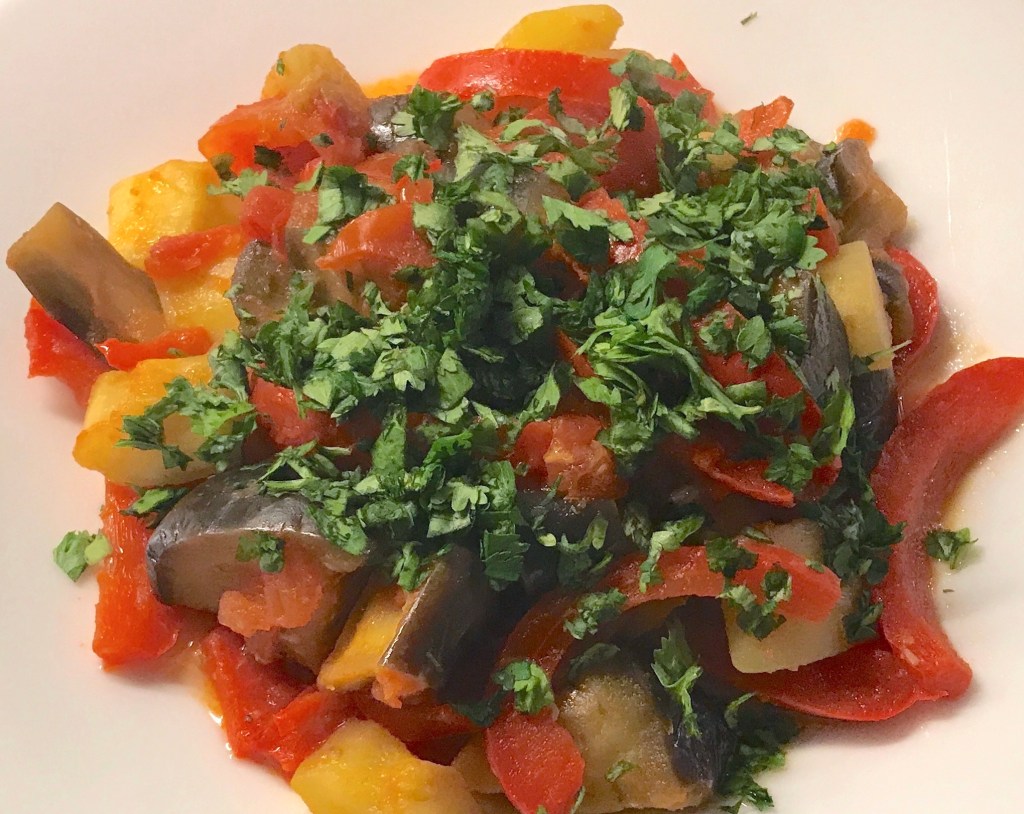
Ratatouille ©cadwu
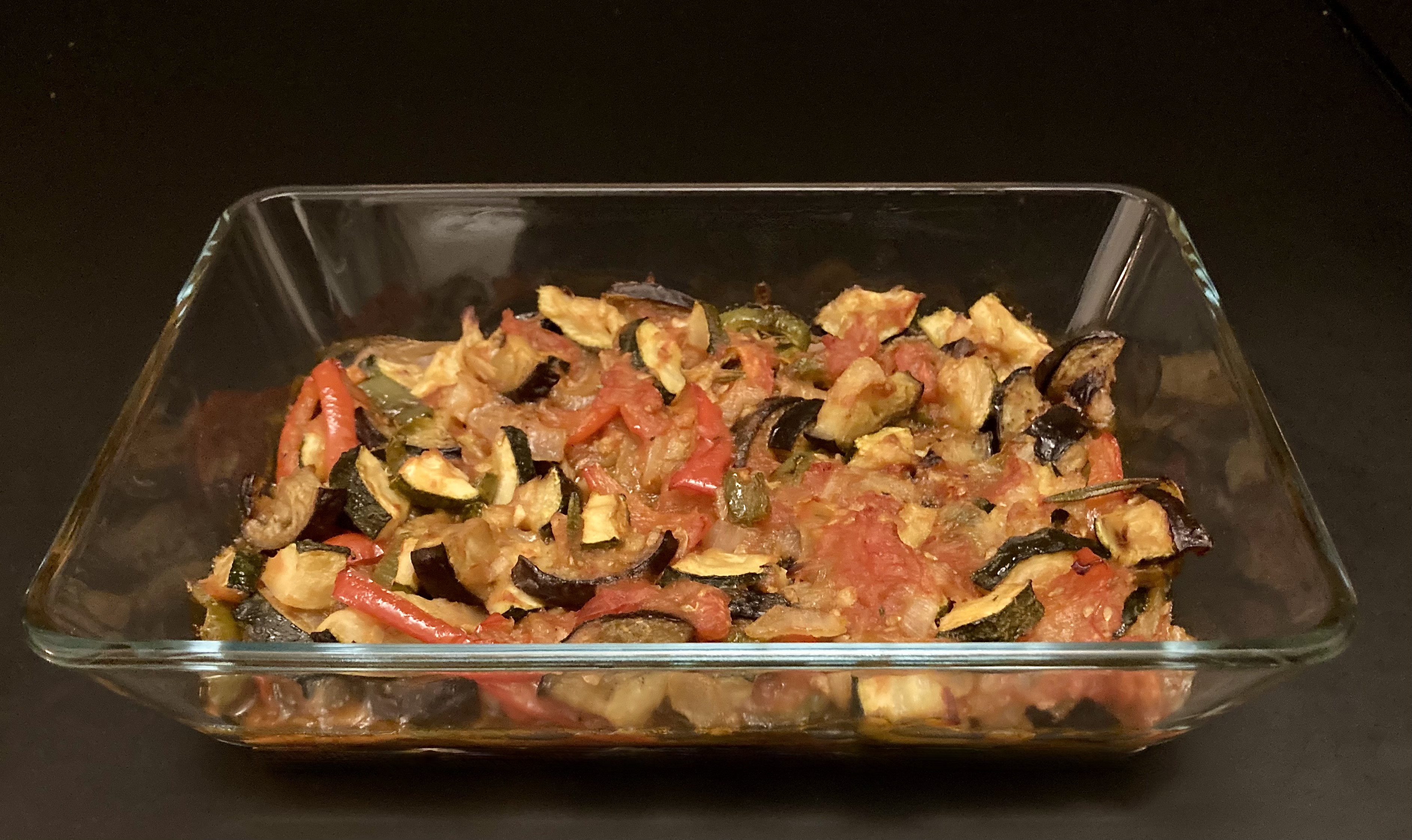
Ratatouille ©cadwu

A Classic for you – 1

Ratatouille

Think summer vegetables, think Ratatouille! Which is also a comedy released in 2007 about a rat called Remy with a passion for cooking. If you want to see how he prepares ratatouille then simply enter Remy cooks ratatouille as search term in YouTube (or buy the DVD if you’re old fashioned like us).
Ratatouille brings back memories of summer, of the South of France, of the Mediterranean. Or for some, of their youth. It combines very well with a simple sausage, with lamb, with grilled chicken.
However you prepare your ratatouille, be sure to use courgette or zucchini, aubergine or eggplant, tomato and bell peppers. Also make sure you prepare it a day ahead. The taste becomes much more integrated after a day (or two) in the refrigerator.
Our recipe is very much the recipe of a dear friend. She taught us how to make ratatouille in her summer kitchen, overlooking the pool and the garden with herbs and vegetables. Indeed, fond memories.
To our surprise she added cilantro (you would expect thyme or basil) and many years later we are still grateful for this twist. The cilantro enhances the feeling of summer and it supports the various vegetables in a beautiful way.

We enjoyed our ratatouille with a glass of simple, red wine with lots of red and black fruits. Spicy. A wine that brings summer to your glass.

Here is what you need:

  • Aubergine
  • Courgette
  • Red Bell Pepper
  • Chili Pepper
  • Tomatoes
  • Cilantro
  • Garlic (optional)
  • Olive oil

If you combine 1 of each, with the exception of 3 tomatoes, this will serve 4 people.
Start by cutting the aubergine in small but not too small chunks. Drizzle with salt and mix. Let the mixture rest for a few hours, allowing for the aubergine to loose water and become firm. Best way to do this is by putting the aubergine in a sieve and let it rest above a bowl.
The tomatoes require some attention as well. You could peel them, but that’s optional. What is not optional is to separate the tomato meat and juices from the pits. First step is to remove the internal hard bits and the pits and put these aside. You now have the outer part of the tomato, which you can slice. Cut the remainder of the tomatoes roughly, add to a sieve and by using the back of a spoon make sure you capture the juices. Be surprised about the volume of tomato juice and the small amount of tomato bits that remain in your sieve.
Peel the courgette, slice in the way you sliced the aubergine and fry over medium heat in olive oil. In the mean time cut the bell pepper into long slices and add these to the pan. Continue frying. Add the finely chopped chilli pepper (not the seeds of course). Add the firm aubergine after having removed the remaining salt with water. After a few moments add the tomato chunks, fry a bit more, add the tomato juice (and the optional garlic) and leave on a medium heat for 30 minutes. Try not to stir too much; otherwise you risk creating mashed vegetables. Cool, set aside and store in the refrigerator.
The next day gently warm the ratatouille, add some chopped cilantro, mix and add more cilantro just before serving.