Easy Mushroom Pie

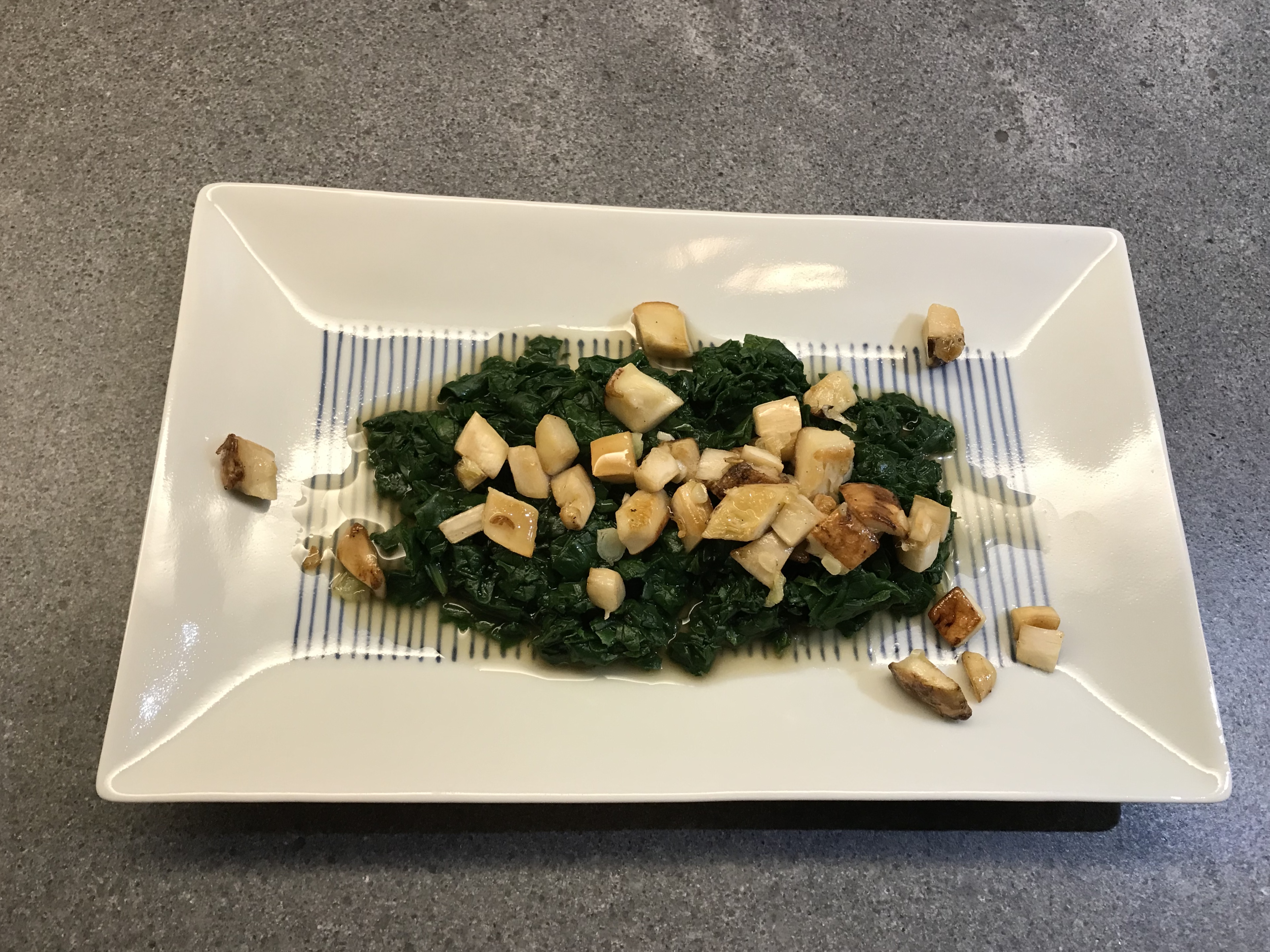
Hurray! The mushroom season has started! Last Friday we bought beautiful golden chanterelles (girolles) and white beech mushrooms (shimeji). It’s the time of year to enjoy wonderful dishes such as Cèpes à la Bordelaise or Salad with Mushrooms and Smoked Duck. Will there be bay boletes this year? Or the intriguing Japanese Matsutake? It’s been some time since we last saw these on the market, and we would really love to make Matsutake with Spinach and Ginger again.
We decided to celebrate the start of the season by making an easy Mushroom Pie, packed with rich flavours, nuttiness and a touch of autumn.

Wine Pairing

We treated ourselves to a bottle of Pinot Noir from the Elzas region, made by Sophie Schaal. She produces wine in France and South Africa. The grapes are handpicked and then naturally fermented before ageing in French oak barrels for 10 months. The result is a wine with a deep ruby colour. The aromas suggest black fruit and a touch of vanilla. The taste is well balanced with soft tannins and length.
In general, you’re looking for a wine with red fruit and refined tannins. Some earthiness will match very well with the mushrooms and the taleggio.

What You Need
  • For the Pastry
    • 100 grams of Flour
    • 50 grams of Water
    • 10 grams of Olive Oil
    • 1 gram of Salt
  • For the Filling
    • 250 grams of firm Mushrooms (shiitake, golden chanterelles, beech mushrooms, button mushrooms)
    • 1 Organic Egg
    • 50 grams of Taleggio
    • 50 ml Double Cream
    • Thyme
    • 1 small Garlic Clove
    • Black Pepper
    • Olive Oil
    • 2 slices of Bacon (optional)
What You Do
  1. Combine flour, salt, water and olive oil
  2. Kneed for a minute and store in the refrigerator for at least 30 minutes.
  3. Clean the mushrooms and slice if necessary
  4. (Optional) Fry the bacon, let dry on kitchen paper and crumble. Add to the egg mixture (step 11)
  5. Lightly fry the mushrooms in a heavy iron skillet
  6. Transfer the mushrooms to a plate and let cool
  7. After 30 minutes: preheat the oven to 180 ˚ C or 355 ˚ F
  8. Combine the egg with the cream
  9. Add lots of thyme and black pepper
  10. Add grated garlic
  11. Add the mushrooms
  12. Slice small cubes of taleggio
  13. Add the cheese to the mixture
  14. Roll out the dough with a rolling pin on a lightly floured surface.
  15. Coat a 22 cm or 9-inch round baking tin with oil or butter
  16. Place the dough in the baking tin
  17. Add the mixture and distribute evenly
  18. Transfer to the oven for 35-40 minutes or until nice and golden
  19. Allow to cool for a few minutes
  20. Remove from the tin and let cool on a wire rack
  21. Serve lukewarm
PS

It tastes even better the next day!

An easy to make mushroom pie with rich flavours
Mushroom Pie ©cadwu

Beef and Black Garlic

This is the first of two recipes with black garlic, which is made by fermenting fresh garlic in a controlled environment (humidity, temperature) for 6 to 12 weeks. The flavour and aroma of black garlic differ from fresh garlic. Black garlic has notes of liquorice and caramel. Its taste is long, intense and rich in umami. The consistency is paste-like which makes it easy to use in sauces and dressings. Black garlic is also supposed to be very healthy thanks to the amount of antioxidants it contains.
Black garlic is becoming more popular, so your greengrocer or health food store should have it. If not, you can also order it online via the usual channels.
We combine excellent beef with a mixture of black olives, shallot, thyme, rosemary, tomato purée and black garlic. A very powerful and intense combination, with sweetness, bitterness, umami and lots of aroma thanks to the herbs.

Wine Pairing

To balance the intense sauce, we suggest drinking a glass of dry red wine, one with some earthy notes, aromas of black fruit, limited tannins and clear acidity. We enjoyed a glass of Pinot Noir from La Cour Des Dames. A very nice pinot noir with sufficient earthiness and dark fruit.

What You Need
  • Excellent Beef
  • Olive Oil
  • Black Pepper
  • For the Sauce
    • Shallot
    • Scallion
    • Thyme
    • Rosemary
    • One Clove of Crushed Black Garlic
    • Teaspoon of Tomato Purée
    • Ten Black Olives
    • Vegetable Stock
    • Teaspoon of Mustard
What You Do

The beef must be at room temperature. Halve the olives. Slice the scallion in 1-cm or 1-inch chunks. Finely chop the thyme and the rosemary. Coarsely chop the shallot. Heat a heavy iron skillet and quickly fry the meat. Transfer and keep warm. Reduce heat and gently fry the shallot. Add scallion, thyme, rosemary and black garlic. Add some vegetable stock. Combine with tomato purée and mustard until it’s a velvety sauce. The black garlic should be dissolved. Add more stock if necessary. Add liquid from the meat. Thinly slice the beef, add some black pepper and serve with the sauce. 

End of the Asparagus Season

Only a few days left before the end of the asparagus season on June 24th! So dash off to your greengrocer and buy some lovely asparagus, white, green, purple, it’s all fine and great, as long as they are locally farmed and fresh.

Last year our favorite way to prepare them was with scrambled eggs and shrimps. A delicious combination. This year our favorite was with Truffle Butter and Egg. A combination that very much relies on the quality of the truffle butter. Other favorites this year were steamed asparagus with kimizu (the beautiful, light, golden Japanese sauce made with egg yolks and rice vinegar), à la Flamande (mimosa of egg, butter, parsley and nutmeg), as a salad and of course as a Charlotte.

Truffle Butter

Products with truffle (oil, tapenade, purée) can be very disappointing. The vast majority is based on oil that has been artificially flavoured using a synthetic agent such as 2,4-dithiapentane. Not a truffle in sight. In case of truffle purée or tapenade the mixture is often dominated by (button) mushrooms, dried cèpes, salt, garlic and again, synthetical flavored oil.
In this recipe we use white truffle oil. The two main white truffles are Bianchetti (Tuber Borchii Vitt) and Alba (Tuber Magnatum Pico). Bianchetti is a powerful and remarkable truffle (we use it in combination with oysters) but it is not as expensive and special as an Alba truffle. A Bianchetti truffle will cost you 10 euro per 10 grams whereas an Alba truffle will be priced at 70 euro per 10 grams. When buying a truffle product, make sure you read the label and check which truffle is used.

Asparagus with Truffle Butter ©cadwu

A dear friend gave us a jar of white truffle butter and a small bottle of white truffle oil, both produced by Il Mondo Del Tartufo. The butter was fantastic and so was the oil. Both are made with Alba truffle. Later we combined normal butter with truffle oil (and perhaps a pinch of salt) to recreate the truffle butter.

Wine Pairing

The obvious choice is a glass of Pinot Blanc, although we actually prefer a dry Muscat in combination with a classic preparation such as à la Flamande. Depending on the dish it could also be a Verdicchio, an Albariño or perhaps even a Portuguese Vinho Verde.
We combined our Asparagus with Truffle Butter with a Dutch wine, produced by Hoeve Nekum. The winery was founded in 1988 but the history of the actual farm (hoeve in Dutch) goes back to the 14th century. We enjoyed their Rivaner, a white wine with a light color, a floral aroma and a fresh delicate taste with some acidity. The combination with the rich, buttery slightly bitter asparagus was excellent. In general you’re looking for a fresh, gentle wine, not too complex and one that you would also enjoy as an aperitif.

What You Need
  • 14 White Asparagus
  • 1 Egg
  • some Butter
  • White Truffle Oil
  • White Pepper
What You Do

We use our Russel and Hobbs food steamer to prepare the asparagus. An essential kitchen aid for only 50 euro or US dollar. 
Towards the end of the season the asparagus can be fairly thin, hence the 14. Clean and peel the asparagus. Put butter in a cup. Start by steaming the egg. After 2 minutes add the asparagus. 3 Minutes later turn the egg upside down and place the cup in the steamer basket. Another 5 minutes later everything is ready. Peel the egg and mash with a fork, creating a ‘mimosa’ of egg. Add two or three teaspoons of truffle oil (depending on your taste and the quantity of butter) to the butter and mix. Add some white pepper to the mimosa. Spoon the butter over of the asparagus and decorate with mimosa.
PS If you make this dish earlier in the season, then steam the asparagus for 20 minutes, the egg for 5+5 minutes and the butter for 5 minutes.

Chicken with Fennel and Sage

We start 2024 with a series of simple and tasty recipes. It’s such fun to prepare delicious food with only a handful of ingredients. James Tanner is author of Takes 5: Delicious Dishes Using Just 5 Ingredients with over 90 recipes, ranging from Roasted Red Bell Peppers with Anchovies to Scones. Short shopping lists, easy recipes and tasty results: what more can you ask for!

This dish combines fennel with chicken, pancetta and sage. The mild anise flavour of the fennel works very well with the pancetta. The aromatic, slightly bitter flavour of sage is great with the chicken. And believe it or not, after having simmered in butter for some 15 minutes the dish comes together. Rich, fresh and uplifting.

Wine Pairing

A light to medium bodied red wine will be great with the dish. Unoaked, fruity, not too complex: a wine made with Pinot Noir, Tempranillo or perhaps a red wine from the Beaujolais.

What You Need
  • Organic Chicken Thighs (boneless)
  • Small Fennel
  • 6 Leaves of Sage
  • Pancetta
  • Butter
  • Black Pepper
What You Do
  1. Halve the thighs and fry in butter
  2. In the meantime dice the fennel
  3. When the chicken is nicely coloured, add the fennel
  4. Combine, wait for a few minutes
  5. Dice the pancetta
  6. Devein and chop the sage
  7. Add pancetta and sage to the pan and allow to simmer on low heat for some 15 minutes
  8. Add black pepper just before serving
  9. You could decorate with some fennel leaves.

PS

Takes 5: Delicious Dishes Using Just 5 Ingredients was published in 2010 and is available (probably second hand) via the well-known channels for something like 20 US dollar or Euro.

Farfalle with Saint George’s Mushroom, Oregano and Pancetta

Nearly the end of the season for the Saint George’s Mushroom (at least, where we live). So far it’s been a great year for this mushroom and the Fairy Ring Mushroom. Unfortunately, it’s been a poor year for another of our spring favourites: the morel.

Saint George’s Mushroom have a strong, not very pleasant aroma (it disappears when you heat the mushrooms) and a long lasting, earthy taste. Famous chef, author and mushroom expert Jane Grigson wasn’t a fan. In her classic book The Mushroom Feast she wrote “I have omitted one or two which our mushroom books follow each other in praising too highly. One of these is the Saint George’s Mushroom.” Obviously, we humbly disagree with her. It’s a bit of a puzzle to find the right combination of ingredients when one is the Saint George’s Mushroom but isn’t that part of the fun?
Earlier we wrote about an omelette with Saint George’s Mushroom and a starter with udon. This recipe is a combination of fat, moist, slightly sweet pancetta and earthy mushrooms, with the egg sauce and the oregano making it into a delicious dish.

Wine Pairing

We matched the rather intense flavours with a Pinot Noir, made by La Cour Des Dames. In general you’re looking for a red, medium bodied wine with aromas of berries, floral notes and delicate wood. The tannins should be soft or well-integrated. 

What You Need

  • 100 grams of Saint George’s Mushroom
  • 100 gram of Pancetta (slab preferred)
  • Fresh Oregano
  • Two eggs
  • Freshly grated Parmesan Cheese
  • Black Pepper
  • Farfalle

What You Do

  1. Start by cleaning the mushrooms with kitchen paper. Slice.
  2. Dice the pancetta. We used pancetta produced by Fumagalli. Sustainable, organic, ecological etcetera.
  3. Use a heavy iron skillet and fry the pancetta on medium/high heat. No need to add olive oil.
  4. When nicely coloured transfer the pancetta to a plate, remove most of the fat and gently fry the mushrooms.
  5. After a few minutes transfer the pancetta back to the pan.
  6. Add fresh oregano leaves, bigger ones shredded.
  7. Add the farfalle to a pan of boiling water and cook until al dente.
  8. In the meantime, beat two eggs and add some parmesan cheese.
  9. When the farfalle is ready, taste the mixture in the pan, perhaps add some extra oregano and transfer the farfalle to the pan.
  10. Wait for a minute or so until the excess water has evaporated.
  11. Move the pan away from the heat, add the egg mixture and combine (like you would do with Spaghetti Carbonara).
  12. Add black pepper and some extra Parmesan cheese before serving.
Farfalle with Saint George’s Mushroom, Oregano and Pancetta ©cadwu

Asparagus!

Only a few days left before the end of the asparagus season on June 24th! So dash off to your greengrocer and buy some lovely asparagus, white, green, purple, it’s all fine and great, as long as they are locally farmed and fresh.

The classic way of preparing asparagus is to cook (or better: steam) them. You can pair the steamed asparagus with kimizu (the beautiful, light, golden Japanese sauce made with egg yolks and rice vinegar) Hollandaise, morels or scrambled eggs with shrimps. Classic way to serve them is à la Flamande (mimosa of egg, butter, parsley and nutmeg). You could add boiled eggs, ham and new potatoes to have a nice dinner. Or if you want to spent more money, then you serve them with summer truffle or with Sauce Périgueux.

Grilling the asparagus is also possible, simply serve them with excellent olive oil and grated Parmesan cheese.

Parhaps as a salad on a summers evening? Of course, with a delicious dressing made of white wine vinegar, olive oil, a touch of honey and lots of chervil.

A more exotic way of is to fry the asparagus with black olives and basil. Goes very well with lamb.

Wine Pairing

The obvious choice is a glass of Pinot Blanc, although we actually prefer a dry Muscat in combination with a classic preparation such as à la Flamande. Depending on the dish it could also be a Verdicchio, an Albariño or perhaps even a Portuguese Vinho Verde. Feel free to experiment; yesterday we enjoyed our asparagus with a glass of wine made of muscat and picpoul grapes. Delicious combination! The wine comes from the Pont Du Gard region (near Nimes, France) and is produced by Château Mourgues du Grès.
A more serious rosé is a perfect choice when you grill the asparagus, for instance a glass of Domaine Vico Corse Le Bois du Cerf Rosé 2021. This exceptional rosé from Corsica is made of grenache and sciacarello grapes. It is medium bodied and fresh with aromas of red fruit with a complex, long and fruity taste.
A pinot noir or grenache based wine is great when you fry the asparagus, depending on the preparation of the meat.

Asparagus ©cadwu
Asparagus ©cadwu

Roulade of Turkey with Mushrooms and Chestnuts

We love to eat this very tasty, juicy, rich combination during winter. We use meat from the leg of the turkey (the thigh) because it has lots of flavours and a great texture.
You could of course make your own chestnut butter, crème or spread; we prefer using Clément Faugier’s Chestnut Spread. It’s nutty, sweet (but not too sweet) and earthy.

Wine Pairing

A medium bodied, red wine will be a great accompaniment of the roulade. In general you’re looking for a red wine with aromas of black fruit, floral notes and delicate wood. The tannins should be soft or well-integrated. We enjoyed a glass of Spätburgunder (Pinot Noir) as produced by Von der Mark-Walter. The winery is located in Baden, Germany, at the foothills of the Black Forest.

What You Need (Filling)

  • Shallot
  • Olive Oil
  • 150 grams of Mushrooms
  • Thyme
  • Chestnut Spread
  • Black Pepper

Chop the shallot and glaze in a pan with olive oil for 5 minutes. Clean the mushrooms and cut into smaller chunks. Add the mushrooms and allow to simmer for 10 minutes. Add a generous amount of thyme. Transfer from the pan and allow to cool. Once lukewarm, use a kitchen knife to create a lovely duxelles. Add a teaspoon of chestnut spread. Taste and adjust by adding more chestnut spread and black pepper.

What You Need (Roulade)

  • One Turkey Thigh
  • Pancetta or Bacon
  • Filling
  • Kitchen twine and needle
  • Butter
  • Olive Oil
  • Cream
  • Black Pepper
  • Brussels Sprouts
  • Nutmeg

Remove the bone (if any) and ‘unfold’ the meat by slicing the thicker part, making it longer. Make a strip of pancetta from left to right, without covering the lower and upper part of the meat. Put the filling on top of the strip and then spread it out, making sure the top and bottom remain not covered. Put 4 or 6 strings of kitchen twine underneath the roulade and start rolling. Not too tight. Use one longer string of kitchen twine to close the sides (so the two strings are at right angles to each other). You may need a needle to close the roulade. Wrap the roulade in plastic foil and keep in the refrigerator.
Ready to cook? Fry the roulade in lots of butter and olive oil to give it a nice colour and then transfer it to the oven at 160 ˚C or 320 ˚F. It’s ready when the centre has reached a temperature of 70 ˚C or 160 ˚F. Transfer from the oven and wrap in aluminium foil. Leave to rest for 15 minutes.
Add some chicken stock to the pan and deglaze. Transfer to the blender and create a smooth, thick sauce. Transfer back to the pan and leave on low heat. Add some cream, taste and leave for 10 minutes or so. In the mean time steam the Brussels sprouts. When ready coat with some olive oil.
Serve two or three slices of turkey roulade per person with the sauce and some Brussels sprouts. A touch of black pepper on the turkey and some fresh nutmeg on the sprouts.

Carpaccio

Carpaccio has evolved into an anything-goes combination of something sliced (beef, veal, (smoked) salmon, beetroot) with a dressing and garnished with for instance pine nuts, cheese, lettuce, capers, tomatoes, spring onion etcetera, which is a pity because the original Carpaccio is actually rather perfect.
We’re not culinary puritans but nevertheless we were slightly shocked when we found the next version of Carpaccio in our local supermarket: with wasabi mayonnaise, teriyaki glaze and roasted sesame seeds. Help?

Original Version

Let’s go back to the original Carpaccio as it was created (in 1950) by chef Giuseppe Cipriani of Harry’s Bar in Venice for one of his regular guests, the Contessa Amalia Nani Mocenigo. Her doctor had ordered her to eat uncooked food, especially raw, red meat. Most likely she suffered from anemia. The poor Contessa was used to excellent food, so something raw on a plate wasn’t very appealing. Chef Cipriani created a special dish for her, which he named after, indeed, the Venetian painter Vittore Carpaccio. Some say this was a tribute to the whites and reds as used by Carpaccio.

Sauce

The sauce is a very clever combination of mayonnaise, Worcester sauce, lemon juice, white pepper and milk. The velvety mayonnaise works very well with the lean meat, the acidity of the lemon is a perfect match for the sweetness of the beef and the Worcester sauce brings umami and depth. The milk gives the sauce the right consistency.

Next time when you think about preparing Carpaccio, why not try the original version and forget about all the extra’s.

Wine Pairing

We suggest enjoying your Carpaccio with a glass of Pinot Grigio or a Soave. It should be a fruity, not too powerful wine. Carpaccio is about the flavour of the meat. The sauce and the wine should simply support this. You could also go for a Pinot Noir, provided it has a light character.

What You Need

  • 50 grams of Excellent Tenderloin or Sirloin (per person) thinly sliced, cold but not frozen.
  • (Homemade) Mayonnaise
  • Worcester Sauce
  • Lemon
  • White Pepper
  • Milk

What You Do

Take one or two spoons of mayonnaise and add two teaspoons of Worcester sauce, one or two teaspoons of lemon juice and freshly ground white pepper. Taste and adjust until you have the perfect balance. Now add milk, creating a thinner sauce. Remove the meat from the refrigerator, flatten the meat if so required and transfer to a cold plate. Create a nice pattern with the sauce, using a sauce bottle. Serve immediately.

Himmel Und Erde

It’s not often that we write about German cuisine. Actually, we never do. But with the wintery weather it’s time to visit the Bürgerliche KücheHimmel und Erde is a dish you would typically order when you’re at a local German Brewery, enjoying a beer of course. It combines potatoes and onions (Erde) with apples (Himmel), black pudding, bacon and butter. That may sound simple, but actually it’s a bit more work than you would expect. The flavours combine surprisingly well.

The trick is to use two kinds of apples. A sour one that will break down and can easily be combined with the mashed potatoes and a sweet one that will add character to the dish. Without the small chunks of sweet apple the mash becomes bland. Adding strips of fried bacon makes the mash even more tasty.

Drink Pairing

A slightly bitter beer is an excellent choice, but you could also go for a Spätburgunder (Pinot Noir). You’re looking for a medium bodied red wine, with lots of fruit and perhaps a touch of oak.

What You Need

  • Black Pudding or Boudin Noir
  • Mash
    • 1 medium sized Crumbly Potato
    • 1 large, Sweet Apple
    • 1 large, Sour Apple
    • Butter
    • Nutmeg
    • Black Pepper
    • Pinch of Salt
    • Bacon
    • More Butter
  • 1 large Onion
  • Olive Oil

What You Do

Start by peeling the onions. Quarter and slice. Add olive oil to a heavy iron skillet on medium to low heat and fry the onions until brown. This may take a few hours. Take your time for the best result! When the onions are ready it’s time to prepare the other four elements of the dish, all in parallel. Peel and dice the potato and the apples. Cook separately. When the potato is ready, add a generous amount of butter and a pinch of salt. Mash with a fork. Cook the apples with a limited amount of water until the sour one is completely soft. Stir with a spoon. Fry the black pudding until done. Grill the bacon until crispy. Slice the grilled bacon in smaller bits, let’s say 1 cm. Heat the onions to make sure they are a bit crispy. Now it’s time to assemble the dish. Combine potatoes and apples with some extra butter. Be generous! Add some black pepper and freshly grated nutmeg. Taste and when okay, add the grilled bacon. Serve on a hot plate with the fried onions and the black pudding.

Himmel und Erde ©cadwu

Pâté with Mushrooms

Let’s celebrate the season by preparing a Pâté! The combination of a crispy crust, a structured, colourful filling and various flavours is always a pleasure. Making a pâté (or better: a Pâté en Croûte) can be a bit intimidating (especially if you look at the pâté’s prepared during the World Championship!) but that should not stop you from giving it a try. It’s a pleasure to think about the ingredients, work on the construction and enjoy the wonderful aromas from your oven while baking the pâté. And the joy when slicing it: is the pâté as beautiful as you expected it to be?
Feel free to make your own puff pastry, but if you buy ready-made pastry, please check it’s made with butter, flower, salt and water only and not with rapeseed oil, palm oil, yeast etcetera.

Wine Pairing

A red, medium bodied wine will be a great accompaniment of this Pâté en Croûte. In general you’re looking for a red wine with aromas of black fruit, floral notes and delicate wood. The tannins should be soft or well-integrated. We enjoyed a glass of Pinot Noir from La Cour Des Dames

What You Need

  • 150 grams of Cèpes
  • 250 grams of Champignon de Paris
  • 1 small Shallot
  • Handful of Spinach
  • Half a cup of Rice
  • Parmesan Cheese
  • Parsley
  • One Egg
  • Puff Pastry
  • Black Pepper

What You Do

Start by cooking some rice, you will probably need a tablespoon of cooked rice. Clean the cèpes and see how they best fit in the pâté baking mould. Perhaps you need to trim the stems or the caps to have the best result when it’s ready. Set the cèpes aside.
Clean the champignons and wash the spinach. Peel and finely chop the shallot. Warm a heavy iron skillet, glaze the shallot, add the cleaned and lengthwise halved mushrooms (and the leftovers of the cèpes) and cook them on medium heat for 10 minutes or so. In parallel blanch the spinach, drain and squeeze. Also in parallel, coat the mould first with baking paper and then with puff pastry. Make sure you have some extra pastry to create the lids for the chimneys. Chop the cooked mushrooms. Chop the spinach. Add the egg to a large bowl and whisk. Add the cooked mushrooms to the bowl, add some black pepper, chopped parsley and finely grated Parmesan Cheese. Add some spinach, just to have some extra colour. Add the rice. The rice will help absorb additional juices from the cèpes, so how much rice you need is a matter of looking at the mixture and the cèpes.

Now it’s time to build the pâté: start by creating a bottom with the mixture, position the cèpes and add the remainder of the mixture. Make sure the mixture envelops the mushrooms. Close the pâté with the pastry. Make two holes in the roof of the pâté and use baking paper to create 2 chimneys. Transfer to the oven (180 °C or 355 °F) for 45 minutes. Use the remainder of the puff pastry to make 4 mini cookies that will function as lid on the chimney (of course, you only need 2, but baking 4 allows you to choose the best). After 45 minutes add the 4 cookies, bake for another 10 minutes. Mix some egg yolk and coat the pâté and the cookies. Cook for another 5 to 10 minutes. The duration and temperatures very much depend on the shape of the mould and the pastry.

Transfer from the oven, remove the chimneys, glue the lids on the chimneys using some egg yolk and let cool. Once cool, remove from the mould, transfer to the refrigerator and wait until the next day.