Pork with Enoki

It’s nearly the end of the mushroom season in Europe. It’s hard to find chanterelle (girolle), and nearly impossible to buy fresh cèpes. The black winter truffle (Tuber melanosporum) is an exception. It’s available until March, but the price may be prohibitive. Better to focus on cultivated mushrooms, such as enoki, available at your local Asian supermarket. A delicious mushroom with a pleasant texture and aroma. Its flavour is mild, a bit sweet and fruity. You can use it raw in a salad, in a soup or combine it with soba noodles. A few weeks ago, we wrote about an omelette with enoki and a light soy sauce. The result is a lovely sweet, rich and intriguing dish.
Combining enoki with pork is also a great idea. Feel free to adjust the recipe and make the sauce spicier or sweeter or thicker. The result will be tasty given all three elements in the dish bring some kind of sweetness.

Wine Pairing

You could emphasize the Asian influence by serving a glass of Pinot Gris, Riesling, Chenin Blanc or perhaps Soave. In general you’re looking for a light or medium bodied, unoaked, dry white wine with nice acidity. Benefits are minerality and florality. A glass of Côtes de Provence rosé will also be a good choice.
If you want to focus on the flavours of the pork, we suggest a glass of Beaujolais or a glass of wine made with Grenache (France) or Garnacha (Spain) grapes.

What You Need

  • Organic Pork Tenderloin
  • 100 grams of (Golden) Enoki
  • Soy Sauce
  • Light Soy Sauce (we used Tentsuyu)
  • Stock
  • Oyster Sauce
  • Black Bean Sauce (optional)
  • Red Chili Paste (optional)
  • Olive Oil

What You Do

Fry the pork in olive oil until pink. Turn on a regular basis. Remove the stem (bottom) of the enoki. Fry in olive oil for maximum one minute. Add some (vegetable stock), soy sauce, oyster sauce, black bean sauce and red chili paste and create a not overly sweet, intense sauce. We like some spiciness, hence the chili paste. Serve the meat on top of the enoki mixture.

Choucroute

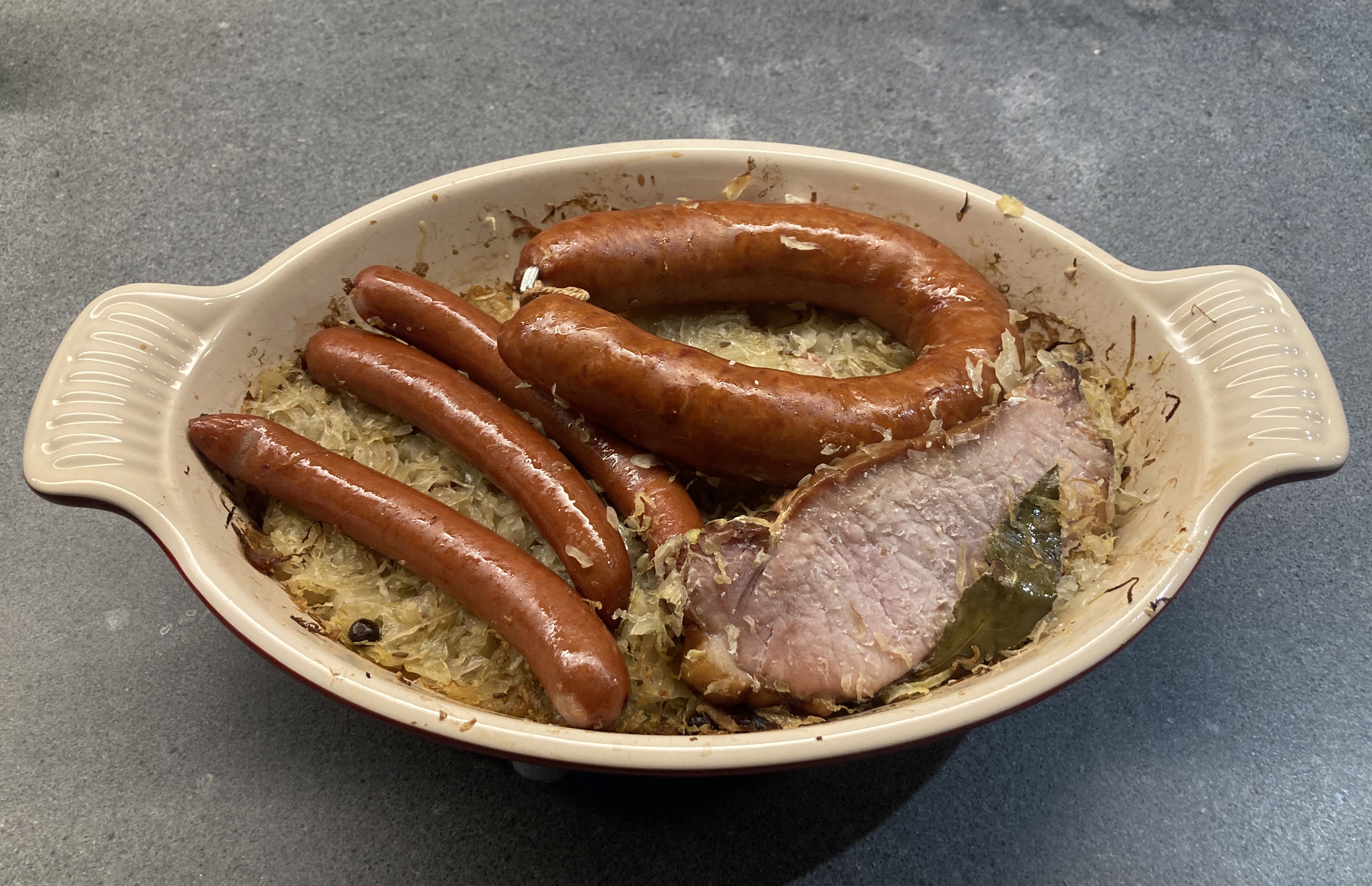
A classic choucroute is a tribute to winter food. You could go for a rich version with confit de canard or pheasant (Choucroute d’Alsa­ce) or for an unexpected combination with fish (Choucroute de la Mer). We decided to make a simple but very tasty version with pork sausages, bacon and pork meat.
The choucroute is moist and soft, the meat comes with some nice fat and a light smoky aroma, the juniper berries are full of flavours. Ah, it makes you love winter.
Preparing choucroute can be done in various ways, including cooking in water. We prefer the slow approach in an oven at 80° Celsius or 175° Fahrenheit during four to six hours.

Some add goose fat to the choucroute to enhance the taste, but that’s too much for us. We actually prefer a light version of the vegetable, allowing the meat to bring fat to the dish and a velvety mouthfeel.

Wine Pairing

The obvious choice is probably a white wine from the Alsace region in France. Which is exactly what we did. We were looking for a refreshing, round white wine and decided to drink a glass of Pinot Gris as produced by Cave de Beblenheim. Perfect with the present flavours of the choucroute.

What You Need

  • 400 grams of Sauerkraut
  • One Shallot
  • Juniper Berries
  • Caraway seed
  • 4 strips of Bacon or Pancetta
  • Dry White Wine
  • Olive Oil
  • Two Bay Leaves
  • Various Sausages and Pork Meat (all organic)
  • Dijon Mustard
  • Optional: a mash made with Parsnip and Parsley Root

What You Do

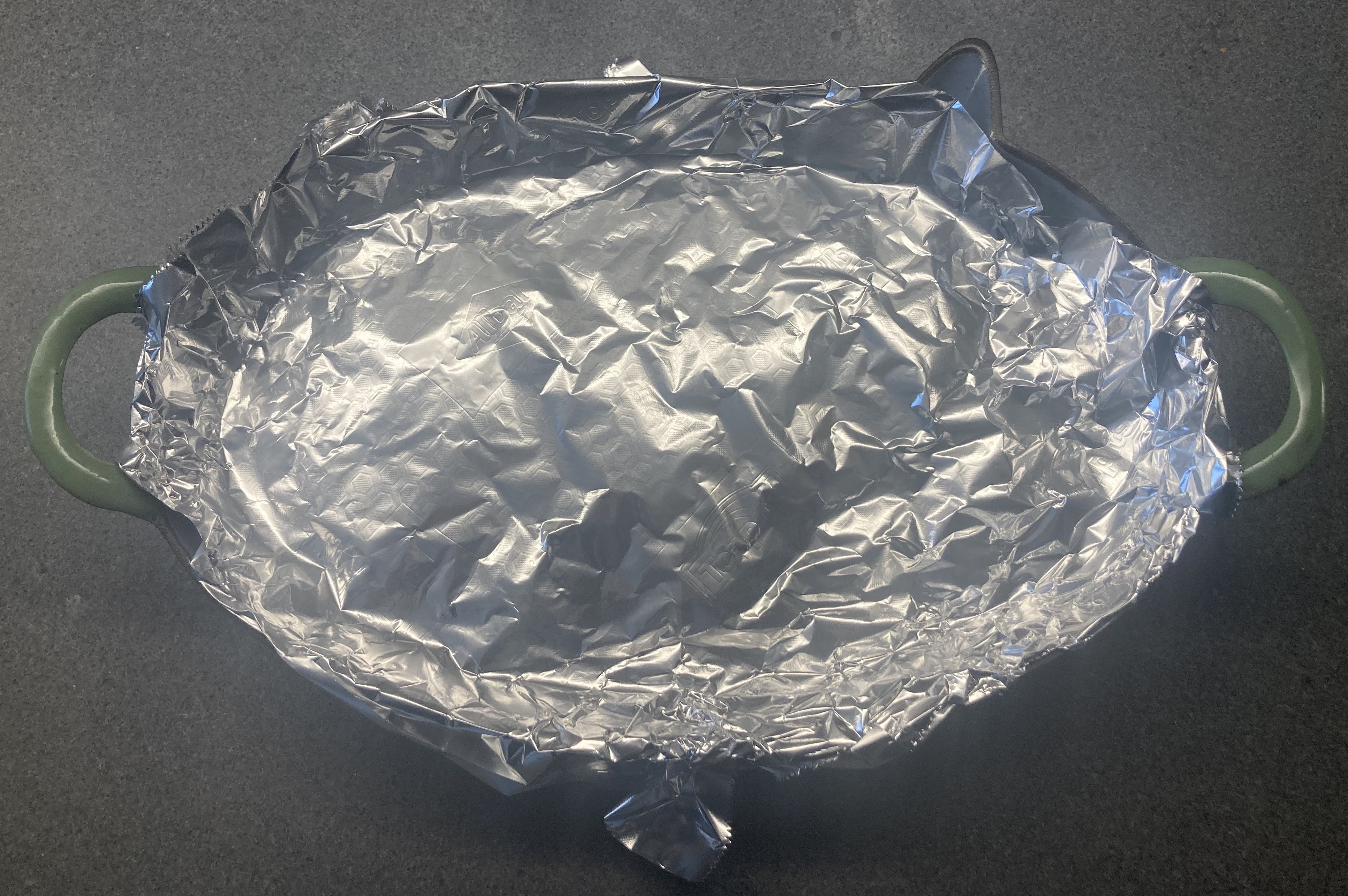
Taste the sauerkraut. If too much acidity, then squeeze and remove some of the liquid. Peel and slice the shallot. Crush the juniper berries and the caraway seed lightly. Slice the strips of bacon or pancetta in 6 or 8. Combine the sauerkraut with the shallot, the caraway seed, the berries and the bacon. Add some white wine, a splash of olive oil and two bay leaves. Transfer the mix to a heavy (iron) oven dish. Put some aluminium foil on top of it, making sure you press it on the sauerkraut (as if it’s a cartouche). Leave for 4 – 6 hours in the oven on 80° Celsius or 175° Fahrenheit. Check the choucroute every hour to make sure it’s sufficiently moist. Also move the slightly browned choucroute at the edge to the centre of the dish. One or two hours before serving add the meat to the dish. Serve with some Dijon mustard.

White Asparagus with Chervil

A salad can be an excellent starter of your lunch or dinner, provided it’s one with lots of flavour and gentle acidity. For instance a Salade Ni­çoi­se, a Salade Caprese or a salad of White Asparagus and Chervil.

Chervil is a very delicate herb. It tastes like anise, but it is much more refined. Chervil looses its taste almost immediately when heated. The salad needs to be prepared well in advance, allowing for the flavours to be well integrated.

Honey can easily ruin a salad (and sugar will always ruin a salad). In this case we use only a touch of honey to create an environment for the sweetness of the white asparagus. The honey should act as a trigger.

The salad is a great example of the complexity of white asparagus: you will taste the sweetness and the freshness of the asparagus. The mouth feel of the salad is very nice, because the asparagus will be both juicy and crispy, with the chervil, honey and vinegar in a supporting role.

After having mixed the salad you will notice that the asparagus and chervil absorb the dressing. During the time in the refrigerator the asparagus will loose some juices, which is actually the beginning of a great dressing.

Wine Pairing

Combining salad and wine is not straightforward. Especially the acidity of the dressing creates a challenge. One solution is to use verjuice and not vinegar. Verjuice is made by pressing unripe grapes. The idea is that verjuice links to wine, whereas classic vinegar or lemon juice would compete with wine. In this case we choose a wine that reflects the flavours of the salad: a hint of anise, a touch of sweetness and florality. Typical notes you will find in a wine from the Alsace region, for instance a Pinot Blanc or a Pinot Gris.

What You Need

  • 2 White Asparagus per person
  • Excellent Olive Oil
  • White Wine Vinegar or Verjuice
  • Lots of Chervil
  • Touch of Honey
  • White Pepper

What You Do

Steam the asparagus for 10 minutes. Let cool. Dry with kitchen paper if needed. Prepare a dressing with the olive oil and vinegar. Chop the chervil and add to the dressing. Add a touch of honey and stir well. Add some white pepper. Taste the dressing: it should be a balance, meaning that none of the ingredients is overly present. Now slice the asparagus in nice chunks, let’s say 3 centimetres long. Mix, cover and transfer to the refrigerator for 6 hours. Mix the salad every two hours. Check the taste after 4 hours, you may want to adjust. Mix the dressing just before serving.

White Asparagus with Ham, Egg, Potatoes and Parsley

Finally, it’s spring. The season of white asparagus, morels and many more primeurs. This dish brings together white asparagus with eggs, excellent ham, butter, small potatoes and parsley. Taste the slight bitterness and sweetness of the asparagus, the umami of the potato and enjoy the velvety feeling on your palate as a result of the butter and the egg.
Don’t be tempted to boil white asparagus in water with butter, lemon, sugar or salt. Steaming is by far the best way to prepare them. We love our Russel Hobbs food steamer! Simple, straightforward and the result is a tribute to spring.

Wine Pairing

Ideally we would serve a dry Muscat from the Elzas with our asparagus. The delicate, slightly sweet but dry taste, the hint of bitterness and the rich aromas work very well with white asparagus. Muscat to us means the smell of fresh fruit. As if you taste the original grape. A wonderful wine and a wonderful combination.
Fortunately asparagus are fairly flexible when it comes to wine: a Pinot Blanc or Pinot Gris will also be fine.

We opened a bottle of Vinho Verde from Portugal. A light and vibrant wine with clear notes of citrus and floral aromas that combined rather well with the flavours of the asparagus. Not the most exquisite combination, but it worked for us.

What You Need

  • 6 or 10 White Asparagus
  • 2 Eggs
  • 100 gram Excellent, Organic Ham
  • Small Firm Potatoes
  • Parsley
  • Butter
  • White Pepper

What You Do

Peel the asparagus and steam them for 20 minutes. Steam the eggs medium (10 minutes), making sure the yolk is firm but not dry. Wash the potatoes and steam them for 15 minutes. Timing depends on the size. Melt the butter. Peel the egg and cut in four. Chop the parsley. Serve the asparagus and eggs on a plate. Coat the potatoes with butter and parsley. Dress the plate with ham (please make sure it has a bit of fat) and potatoes. Poor the remaining melted butter over the asparagus. Sprinkle the parsley over the egg. Add some white pepper.

White Asparagus with Ham, Egg, Potatoes and Parsley ©cadwu