End of the Asparagus Season

Only a few days left before the end of the asparagus season on June 24th! So dash off to your greengrocer and buy some lovely asparagus, white, green, purple, it’s all fine and great, as long as they are locally farmed and fresh.

Last year our favorite way to prepare them was with scrambled eggs and shrimps. A delicious combination. This year our favorite was with Truffle Butter and Egg. A combination that very much relies on the quality of the truffle butter. Other favorites this year were steamed asparagus with kimizu (the beautiful, light, golden Japanese sauce made with egg yolks and rice vinegar), à la Flamande (mimosa of egg, butter, parsley and nutmeg), as a salad and of course as a Charlotte.

Truffle Butter

Products with truffle (oil, tapenade, purée) can be very disappointing. The vast majority is based on oil that has been artificially flavoured using a synthetic agent such as 2,4-dithiapentane. Not a truffle in sight. In case of truffle purée or tapenade the mixture is often dominated by (button) mushrooms, dried cèpes, salt, garlic and again, synthetical flavored oil.
In this recipe we use white truffle oil. The two main white truffles are Bianchetti (Tuber Borchii Vitt) and Alba (Tuber Magnatum Pico). Bianchetti is a powerful and remarkable truffle (we use it in combination with oysters) but it is not as expensive and special as an Alba truffle. A Bianchetti truffle will cost you 10 euro per 10 grams whereas an Alba truffle will be priced at 70 euro per 10 grams. When buying a truffle product, make sure you read the label and check which truffle is used.

Asparagus with Truffle Butter ©cadwu

A dear friend gave us a jar of white truffle butter and a small bottle of white truffle oil, both produced by Il Mondo Del Tartufo. The butter was fantastic and so was the oil. Both are made with Alba truffle. Later we combined normal butter with truffle oil (and perhaps a pinch of salt) to recreate the truffle butter.

Wine Pairing

The obvious choice is a glass of Pinot Blanc, although we actually prefer a dry Muscat in combination with a classic preparation such as à la Flamande. Depending on the dish it could also be a Verdicchio, an Albariño or perhaps even a Portuguese Vinho Verde.
We combined our Asparagus with Truffle Butter with a Dutch wine, produced by Hoeve Nekum. The winery was founded in 1988 but the history of the actual farm (hoeve in Dutch) goes back to the 14th century. We enjoyed their Rivaner, a white wine with a light color, a floral aroma and a fresh delicate taste with some acidity. The combination with the rich, buttery slightly bitter asparagus was excellent. In general you’re looking for a fresh, gentle wine, not too complex and one that you would also enjoy as an aperitif.

What You Need
  • 14 White Asparagus
  • 1 Egg
  • some Butter
  • White Truffle Oil
  • White Pepper
What You Do

We use our Russel and Hobbs food steamer to prepare the asparagus. An essential kitchen aid for only 50 euro or US dollar. 
Towards the end of the season the asparagus can be fairly thin, hence the 14. Clean and peel the asparagus. Put butter in a cup. Start by steaming the egg. After 2 minutes add the asparagus. 3 Minutes later turn the egg upside down and place the cup in the steamer basket. Another 5 minutes later everything is ready. Peel the egg and mash with a fork, creating a ‘mimosa’ of egg. Add two or three teaspoons of truffle oil (depending on your taste and the quantity of butter) to the butter and mix. Add some white pepper to the mimosa. Spoon the butter over of the asparagus and decorate with mimosa.
PS If you make this dish earlier in the season, then steam the asparagus for 20 minutes, the egg for 5+5 minutes and the butter for 5 minutes.

Asparagus with Chervil

One of the classic ways of serving asparagus is à la Flamande (Op Vlaamse wijze) with melted butter, boiled eggs, parsley and nutmeg. The mixture of melted butter and egg is like a sauce, delicious with the asparagus. In this case we add lots of chopped chervil to the mixture of melted butter and eggs, making it a light combination of bitter, crunchy and sweet (the asparagus) and velvety, anise-flavoured and savory (the mixture).

Wine Pairing

Serve the asparagus with a dry, white wine, for instance a glass of Silvaner produced by the German Winery Thörle. The wine comes with freshness, some acidity, minerality and fruit (pear, green apples). Excellent with our asparagus. A dry muscat will also be perfect.
We decided to take a different approach and balance the lightness in the dish with a Portuguese white wine, made from chardonnay grapes and aged for 4 months in oak barrels. It is produced by Casa Ermelinda, a winery some 20 kilometers south of Lisbon in the Setúbal region with over 550 hectares of vineyards and 29 different grape varieties. The barrel aged chardonnay is Intense and comes with a complex bouquet of exotic fruits. The wine is balanced, fresh, elegant and long..

What You Need

  • 4 Asparagus per person
  • 2 Eggs
  • Chervil
  • Butter
  • White Pepper

What You Do

We use our Russel and Hobbs food steamer to prepare the asparagus. An essential kitchen aid for only 50 euro or US dollar. 
Clean and peel the asparagus. Put butter in a cup. Steam them for 10+5+5 minutes. After 10 minutes add the eggs to the steamer basket. After 5 minutes, turn the eggs upside down and place the cup in the steamer basket. Another 5 minutes later everything is ready. Chop the chervil. Peel the egg and mash with a fork, creating a ‘mimosa’ of egg. Combine mimosa and chervil. Add some white pepper. Add the butter to the mixture and combine. Spoon the egg mixture on top of the asparagus.

Asparagus a la Flamande ©cadwu
Asparagus with Chervil ©cadwu

Charlotte Aux Asperges

May is our peak season for white asparagus: great quality and reasonable prices. Which is very helpful because for this relatively small Charlotte you need lots of very tasty asparagus. Our Charlotte has a 16-centimetre diameter, and it requires 18 asparagus. The Charlotte has four components: the bottom made from potatoes and seasoned with nutmeg, the filling made from an asparagus mousse with ham, the side, made from halved asparagus tips and the decoration. The combination of fried potatoes, asparagus (soft in the mousse and with a gentle crunch in the tips) and egg is delicious. 

Wine Pairing

We enjoyed a glass of Pinot Blanc from the German Mosel region made by Dr. Loosen. The wine is dry and fresh with some acidity and minerality. Notes of pear, apple and citrus. It worked very well with the Charlotte. In general you’re looking for a subtle white wine, given the delicate flavors of the Charlotte.

What You Need
  • For the Filling
    • 50 grams Cream
    • 50 grams Ham
    • 13 grams of Gelatine
    • 18 asparagus
  • For the Bottom
    • 1 large Potato
    • Nutmeg
    • Butter
    • Salt
  • For the Decoration
    • Two eggs
    • Parsley
    • Black Pepper
What You Do

The recipe is for a springform with a diameter of 16 cm. The bottom of the Charlotte is a Paillasson de Pomme de Terre. See our post about Alain Passard. Peel and grate the potato. Add salt and nutmeg. Bake in a heavy iron skillet with lots of butter for 15+10 minutes until golden. From time to time you may need to add extra butter. Do this by slipping small dots of butter down the sides of the pan. In parallel peel the asparagus and cut of the tips. Steam the tips for 10 minutes. Steam the eggs for 12 minutes. Allow the tips to cool. Peel the eggs and set aside. Quarter the remainder of the asparagus and cook in water for at least 20 minutes or until very well done. Blender the asparagus chunks with some of the cooking liquid until very smooth. You will need approximately 400 grams of this mixture. Use the back of a spoon to pass the asparagus mixture through a sieve. Transfer the potato to the bottom of the springform. Coat the side of the form with neutral oil. Halve the tips and add these to the form, with the cut to the outside. See picture. Follow the instructions of the gelatine. Whip the cream until thick. Finely chop the ham. Heat some of the asparagus liquid, when warm, add the gelatine. Now it’s time to combine cream, ham and asparagus mixture. Cool the mixture and add gently to the springform. Allow to cool for at least 2 hours. Just before serving make mimosa with parsley and black pepper.

Asparagus!

Only a few days left before the end of the asparagus season on June 24th! So dash off to your greengrocer and buy some lovely asparagus, white, green, purple, it’s all fine and great, as long as they are locally farmed and fresh.

The classic way of preparing asparagus is to cook (or better: steam) them. You can pair the steamed asparagus with kimizu (the beautiful, light, golden Japanese sauce made with egg yolks and rice vinegar) Hollandaise, morels or scrambled eggs with shrimps. Classic way to serve them is à la Flamande (mimosa of egg, butter, parsley and nutmeg). You could add boiled eggs, ham and new potatoes to have a nice dinner. Or if you want to spent more money, then you serve them with summer truffle or with Sauce Périgueux.

Grilling the asparagus is also possible, simply serve them with excellent olive oil and grated Parmesan cheese.

Parhaps as a salad on a summers evening? Of course, with a delicious dressing made of white wine vinegar, olive oil, a touch of honey and lots of chervil.

A more exotic way of is to fry the asparagus with black olives and basil. Goes very well with lamb.

Wine Pairing

The obvious choice is a glass of Pinot Blanc, although we actually prefer a dry Muscat in combination with a classic preparation such as à la Flamande. Depending on the dish it could also be a Verdicchio, an Albariño or perhaps even a Portuguese Vinho Verde. Feel free to experiment; yesterday we enjoyed our asparagus with a glass of wine made of muscat and picpoul grapes. Delicious combination! The wine comes from the Pont Du Gard region (near Nimes, France) and is produced by Château Mourgues du Grès.
A more serious rosé is a perfect choice when you grill the asparagus, for instance a glass of Domaine Vico Corse Le Bois du Cerf Rosé 2021. This exceptional rosé from Corsica is made of grenache and sciacarello grapes. It is medium bodied and fresh with aromas of red fruit with a complex, long and fruity taste.
A pinot noir or grenache based wine is great when you fry the asparagus, depending on the preparation of the meat.

Asparagus ©cadwu
Asparagus ©cadwu

Asparagus à la Flamande

One of the classic ways of serving asparagus is à la Flamande (Op Vlaamse wijze) with melted butter, boiled eggs, parsley and nutmeg. The nutmeg is an essential element of the dish. It enhances the flavour of the asparagus, and it’s a bridge between the egg mixture and the asparagus.
There are two main variations: the first one is to serve the asparagus with small potatoes. Not a great idea, unless you’re hungry, because the potatoes soften, weaken the flavour of the asparagus. The dish is about enjoying asparagus, so why would you add potatoes?
The second variation is to add lemon to the butter and egg mixture. This makes the dish a bit lighter and fresher. If you want to do so, be careful with the wine you serve. You need to balance the acidity in the wine and the food.

Wine Pairing

Serve the asparagus à la Flamande with a dry, white wine. We enjoyed a glass of Silvaner produced by the German Winery Thörle. The wine comes with freshness, some acidity, minerality and fruit (pear, green apples). Excellent with our asparagus.

What You Need

  • 4 Asparagus per person
  • 3 Eggs
  • Parsley
  • Butter
  • Nutmeg
  • White Pepper

What You Do

We use our Russel and Hobbs food steamer to prepare this classic dish. An essential kitchen aid for only 50 euro or US dollar. 
Clean and peel the asparagus. Steam them for 10+5+5 minutes. After 10 minutes add the eggs to the steamer basket. After 5 minutes, turn the eggs upside down. Another 5 minutes later the asparagus and the eggs are ready. If you like your asparagus softer, then steam for 12-15 minutes. The eggs should be hard. Depending on the size you may need to steam them a bit longer. In parallel heat a very generous amount of butter. Chop the parsley. Peel the egg and mash with a fork, creating a ‘mimosa’ of egg. Combine mimosa and parsley. Add some white pepper and freshly grated nutmeg. Add the mixture to the butter and combine. Spoon the egg mixture on top of the asparagus.

Asparagus a la Flamande ©cadwu

White Asparagus with Chervil

A salad can be an excellent starter of your lunch or dinner, provided it’s one with lots of flavour and gentle acidity. For instance a Salade Ni­çoi­se, a Salade Caprese or a salad of White Asparagus and Chervil.

Chervil is a very delicate herb. It tastes like anise, but it is much more refined. Chervil looses its taste almost immediately when heated. The salad needs to be prepared well in advance, allowing for the flavours to be well integrated.

Honey can easily ruin a salad (and sugar will always ruin a salad). In this case we use only a touch of honey to create an environment for the sweetness of the white asparagus. The honey should act as a trigger.

The salad is a great example of the complexity of white asparagus: you will taste the sweetness and the freshness of the asparagus. The mouth feel of the salad is very nice, because the asparagus will be both juicy and crispy, with the chervil, honey and vinegar in a supporting role.

After having mixed the salad you will notice that the asparagus and chervil absorb the dressing. During the time in the refrigerator the asparagus will loose some juices, which is actually the beginning of a great dressing.

Wine Pairing

Combining salad and wine is not straightforward. Especially the acidity of the dressing creates a challenge. One solution is to use verjuice and not vinegar. Verjuice is made by pressing unripe grapes. The idea is that verjuice links to wine, whereas classic vinegar or lemon juice would compete with wine. In this case we choose a wine that reflects the flavours of the salad: a hint of anise, a touch of sweetness and florality. Typical notes you will find in a wine from the Alsace region, for instance a Pinot Blanc or a Pinot Gris.

What You Need

  • 2 White Asparagus per person
  • Excellent Olive Oil
  • White Wine Vinegar or Verjuice
  • Lots of Chervil
  • Touch of Honey
  • White Pepper

What You Do

Steam the asparagus for 10 minutes. Let cool. Dry with kitchen paper if needed. Prepare a dressing with the olive oil and vinegar. Chop the chervil and add to the dressing. Add a touch of honey and stir well. Add some white pepper. Taste the dressing: it should be a balance, meaning that none of the ingredients is overly present. Now slice the asparagus in nice chunks, let’s say 3 centimetres long. Mix, cover and transfer to the refrigerator for 6 hours. Mix the salad every two hours. Check the taste after 4 hours, you may want to adjust. Mix the dressing just before serving.

White Asparagus with Ham, Egg, Potatoes and Parsley

Finally, it’s spring. The season of white asparagus, morels and many more primeurs. This dish brings together white asparagus with eggs, excellent ham, butter, small potatoes and parsley. Taste the slight bitterness and sweetness of the asparagus, the umami of the potato and enjoy the velvety feeling on your palate as a result of the butter and the egg.
Don’t be tempted to boil white asparagus in water with butter, lemon, sugar or salt. Steaming is by far the best way to prepare them. We love our Russel Hobbs food steamer! Simple, straightforward and the result is a tribute to spring.

Wine Pairing

Ideally we would serve a dry Muscat from the Elzas with our asparagus. The delicate, slightly sweet but dry taste, the hint of bitterness and the rich aromas work very well with white asparagus. Muscat to us means the smell of fresh fruit. As if you taste the original grape. A wonderful wine and a wonderful combination.
Fortunately asparagus are fairly flexible when it comes to wine: a Pinot Blanc or Pinot Gris will also be fine.

We opened a bottle of Vinho Verde from Portugal. A light and vibrant wine with clear notes of citrus and floral aromas that combined rather well with the flavours of the asparagus. Not the most exquisite combination, but it worked for us.

What You Need

  • 6 or 10 White Asparagus
  • 2 Eggs
  • 100 gram Excellent, Organic Ham
  • Small Firm Potatoes
  • Parsley
  • Butter
  • White Pepper

What You Do

Peel the asparagus and steam them for 20 minutes. Steam the eggs medium (10 minutes), making sure the yolk is firm but not dry. Wash the potatoes and steam them for 15 minutes. Timing depends on the size. Melt the butter. Peel the egg and cut in four. Chop the parsley. Serve the asparagus and eggs on a plate. Coat the potatoes with butter and parsley. Dress the plate with ham (please make sure it has a bit of fat) and potatoes. Poor the remaining melted butter over the asparagus. Sprinkle the parsley over the egg. Add some white pepper.

White Asparagus with Ham, Egg, Potatoes and Parsley ©cadwu

Omelet with Winter Truffle

Black truffles are harvested from November to March, so be extravagant and buy one before the season ends. When buying a truffle, please ask if it’s okay to smell them, because the aroma will tell you everything you need to know about the quality.
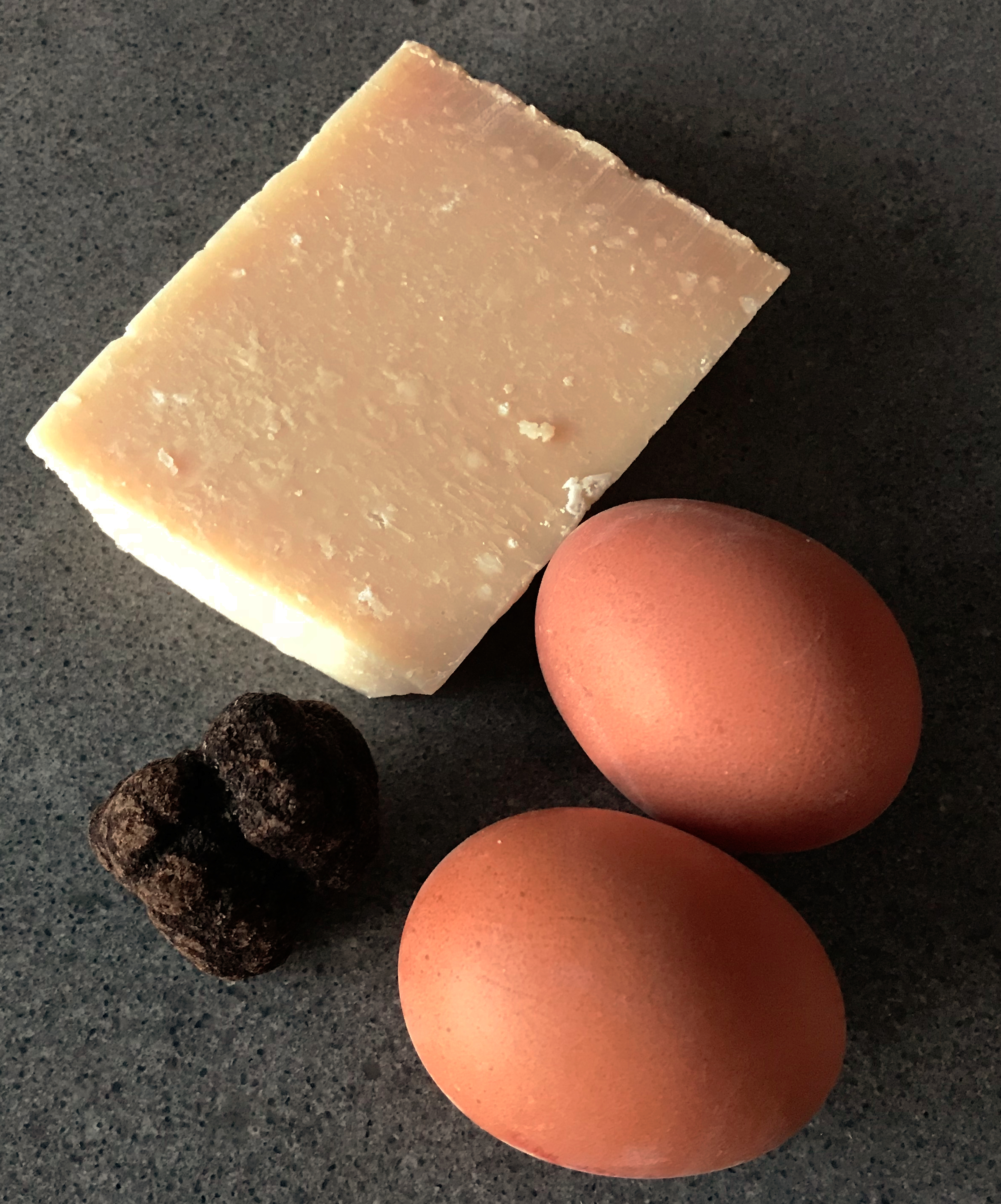
Black truffles combine really well with a warm purée of potatoes, with scallops, risotto and everything eggs. We used our truffle to make one of the simplest and tastiest truffle dishes ever: an omelet with truffle and Parmesan cheese.
If you store a black truffle for a day or so, then please store it in a small box with some rice and an egg. The rice will prevent the truffle of becoming wet and the egg will embrace the aromas of the truffle and become a treat in its own right.

Wine Pairing

A not too complex white wine goes very well with this omelet, best would be a classic Pinot Blanc or Riesling from the Alsace region (for instance produced by Kuentz-Bas). Think fruity aromas, floral characteristics, minerality and a touch of acidity and sweetness.

What You Need

  • 2 Eggs
  • Butter
  • Parmesan Cheese
  • 10 grams or (budget permitting) more Black Truffle
  • White Pepper

What You Do

Clean the truffle if necessary. Take a fairly small iron skillet and make sure the pan is warm through and through but not hot. Using a fork (a spoon is even better) whisk the two eggs together. Add butter to the pan and wait until it is melted. It should not change colour or sizzle. An omelet should not be fried; the bottom must remain yellow. Add the whisked egg to the pan and wait until the egg is beginning to set. Check the consistency with your fingers. There is no alternative to baveuse! Take your time.
Serve the omelet on a warm dish with some freshly grated Parmesan cheese, white pepper and grated black truffle.

White Asparagus with Summer Truffle

Spring and Summer

Time to celebrate! Summer has just begun and the Asparagus season has come to a close. So let’s bring the two together in this slightly extravagant dish. It is earthy, slightly bitter and sweet, velvety and complete.
The Summer Truffle (Tuber Aestivum) is not as intense and overwhelming as the Winter Truffle. It should be used immediately and preferably grated. It loses its taste when heated, so don’t use it for your Tournedos Rossini. This dish should be luke warm, so an excellent environment for a Summer Truffle. Take your time to appreciate the delicate combination in your plate.

Wine Pairing

We drank a glass of Pinot Blanc made by Bott Frères (Ribeauvillé, France) with our Asparagus with Summer Truffle. This dry, fresh wine has a bouquet of well-ripened fruit. It comes with just a touch of sweetness.
A glass of Gewürztraminer is also a good choice with this dish, provided it has a touch of sweetness only.
Parsley is essential because it brings freshness to the dish; nicely balanced with the velvety taste of the egg and butter. And butter is the ideal bridge between egg, asparagus and truffle. So your wine needs to have a certain suppleness.

What You Need

  • 4 Asparagus
  • 2 Eggs
  • 25 grams of Butter
  • 20 grams of Summer Truffle
  • Parsley
  • Black Pepper

What You Do

Cook or steam the asparagus. Make sure they are just done. Cook the eggs for 8-9 minutes. The yolk should not be completely firm. Cool the eggs in cold water, peel and mash with a fork. Add the finely chopped parsley and some black pepper. Taste. Melt the butter.
Put two asparagus per person on the plate, pour the warm butter over the asparagus, making sure they are fully covered, add the egg and finish by sprinkling the grated truffle. Poor a glass of excellent Pinot Blanc and enjoy the start of summer by eating the very last of this years asparagus.

Omelet with Black (Winter) Truffle

Omelet with Black (Winter) Truffle with a glass of Kuentz-Bas Alsa­ce Pi­not Blanc

It’s mid March so still some time left to enjoy tasty winter food. Treat yourself to Choucroute with pork, sausage and Confit of Duck. Or pumpkin soup with ginger and jus de truffes.
Talking about truffles, black truffles are harvested from November to March, so be extravagant and buy one before the season closes. The one we bought was 17.6 grams, so you could imagine how happy we were to find it. When buying truffle, please ask if it’s okay to smell them, because the aroma will tell you everything you need to know about the quality.
Black truffle combines really well with warm purée of potatoes, risotto and egg.
Hint: if you need to store a black truffle for a day or so, please store it in a small box with some rice and an egg. The rice will prevent the truffle of becoming too wet and the egg will embrace the aromas of the truffle and become a treat in its own right.
We used our truffle to make one of the simplest and tastiest truffle dishes ever: an omelet with truffle and Parmesan cheese.

A white wine goes very well with this omelet, best would be a classic Pinot Blanc or Riesling from the Alsace region (for instance Kuentz-Bas AOC Alsa­ce Pi­not Blanc Tra­di­ti­on). Think fruity aromas, floral characteristics, minerality and a touch of sweetness. If you want to drink a red wine, then go for a blend like Feteasca Neagra with Syrah as produced by Radacini from Moldavia. Sounds a bit exotic, so if you can’t find it go for a fruity (ripe cherry, plum), spicy red wine with a velvety structure; serve it slightly cooled.

Here is what you need

  • 2 Eggs
  • Butter
  • Parmesan Cheese
  • 10 grams or (budget permitting) more Black Truffle
  • White Pepper

Clean the truffle if necessary. Take a fairly small iron skillet and make sure the pan is warm through and through but not hot. Using a fork (a spoon is even better) whisk the two eggs together. Add butter to the pan and wait until it is melted. It should not change colour or sizzle. An omelet should not be fried; the bottom must remain yellow. Add the whisked egg to the pan and wait until the egg is beginning to set. Check the consistency with your fingers. There is no alternative to baveuse! Take your time.
Serve the omelet on warm dishes with some freshly grated Parmesan cheese, white pepper and grated black truffle.