A few weeks ago we were reading Monch Wellers food and lifestyle blog. He writes about Via Mare, a Filipino restaurant that opened its doors 50 years ago. In his blog Monch writes about the food Via Mare offers, for instance Spanish Hot Chocolate, Bibingka (rice cake), Crab Omelette with Banana Ketchup, Lumpiang Ubod (spring rolls made with heart of palm) and Puto Bumbong, a glutinous rice dyed violet and steamed in bamboo tubes. We learn so much about the Filipino food culture thanks to Monchs excellent blog!
Why Bananas?
Maria Orosa (1893–1945) was born in the Philippian province of Batangas, some 100 kilometres south of Manilla. She studied food chemistry and pharmacology in the US. She returned to the Philippines in 1922. She was a food chemist, innovator and war hero. She saw the potential of many local products, for instance bananas and soy, and used these to empower the Philippines. She invented Soyalac (a protein-rich powdered soybean product), Darák (bran rice powder rich in vitamins) and Tiki-Tiki cookies. The powders and cookies saved many lives during wartime food shortages in the Philippines.
One of her more frivolous inventions is Banana Ketchup. Why rely on imported tomatoes when it’s possible to make an equally tasty condiment using local bananas?
We loved the philosophy behind the ketchup and began searching for recipes. We noticed that tomato paste is often added, to give the ketchup a more familiar and appetizing colour. We didn’t do this. Afterall, the idea was not to use tomatoes. Plus: what’s wrong with the colour?
Food Pairing
The Banana Ketchup is smooth, its taste long, tangy, spicy and uplifting. The bananas give the ketchup natural sweetness and depth. They also support the spices. A condiment to love.
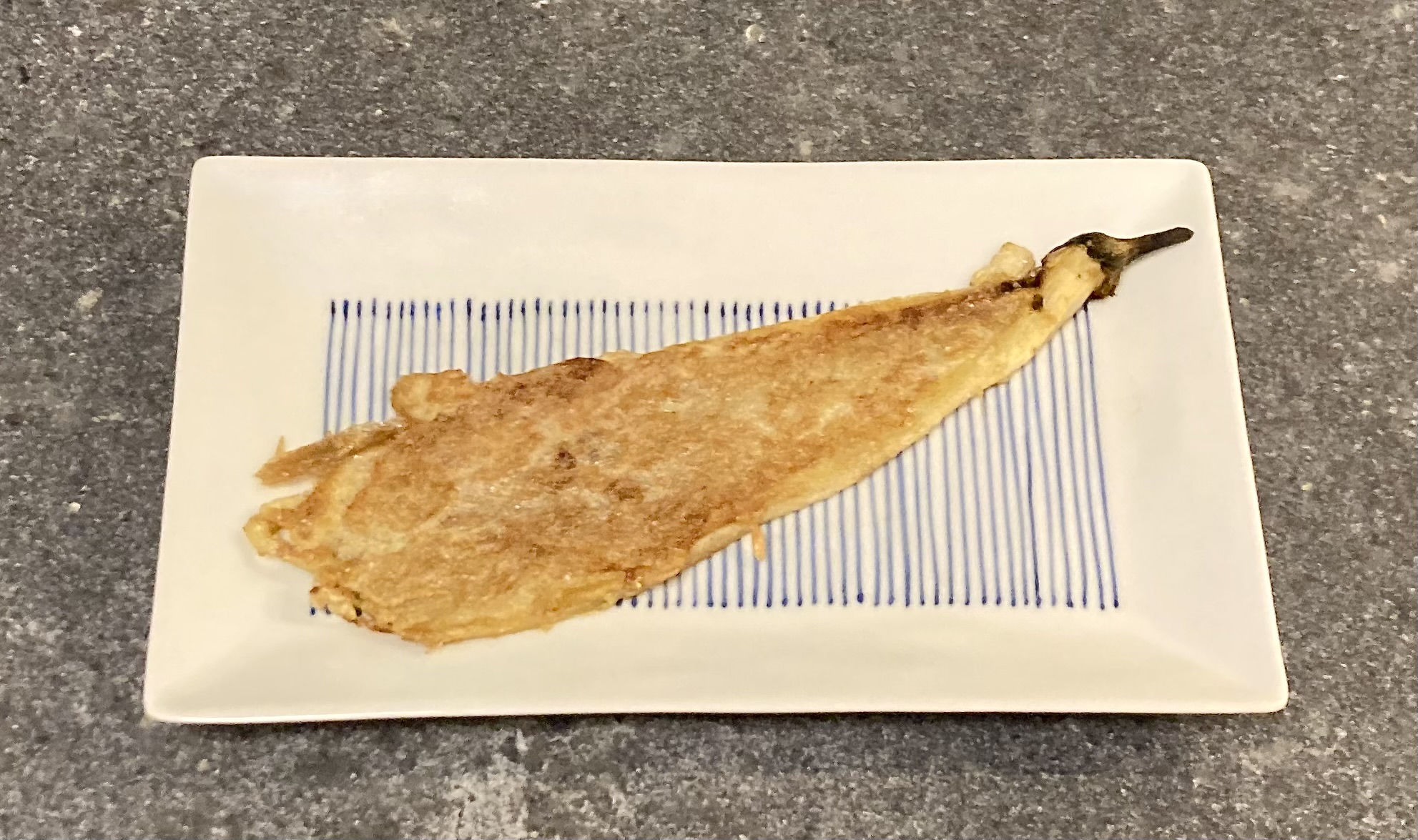
We asked Monch for his favourite combination. He wrote us: It’s often paired with fried food here in the Philippines – spring rolls (both meat and vegetable versions), fried chicken, and eggplant omelette (which was No. 2 in TasteAtlas’ 50 Best Egg Dishes). We tried it with eggplant omelette and vegetable spring rolls. The ketchup paired perfectly with the moist and more delicate flavours of the omelette.
Thanks Monch for introducing us to this unknown, delectable sauce!
What You Need
- 2 small ripe Bananas
- ½ Shallot
- 2 cloves of Garlic
- 20 grams fresh Ginger
- ½ Kashimiri Pepper
- 1/8 cup Brown Sugar
- ¼ cup Rice Vinegar
- ¼ cup Water
- ¼ teaspoon Turmeric
- Dash of Cinnamon and Nutmeg plus 1 Clove (replacing dash of All Spice)
- Oil
What You Do
- Chop onion, garlic and ginger
- Mash the bananas
- Heat oil in a heavy iron skillet
- Add chopped onion and glaze, about 5 minutes
- Add garlic and ginger
- Leave on medium heat, stirring constantly
- Add bananas and combine
- After a few minutes add vinegar, water, sugar, spices and Kashmiri pepper
- When the mixture begins to simmer, reduce heat to low
- Leave for 15-20 minutes, stir regularly
- Remove from heat and let cool for 10 minutes
- Transfer to a food processor and blend until smooth. This may take one or two minutes
- Pass through a sieve to get the right velvety smoothness
- Leave to cool before transferring the ketchup to the refrigerator
- Serve with eggplant omelette (recipe next week!)
- The ketchup will remain tasty for up to 3 days.
PS
In general, we find tomato ketchup too sweet, too salty and bland. Have we ever considered making our own tomato ketchup? No, we haven’t. We’re okay with a small bottle of Heinz Tomato Ketchup Zero, in case we have an irresistible craving for ketchup. Heinz doesn’t add sugar and salt to the Zero Ketchup. They add more tomatoes than usual (great) and a sweetener (pity). The taste? Well, still typically tomato ketchup. Fortunately, Banana Ketchup has far more flavour, spiciness and complexity.




 Cook and Drink