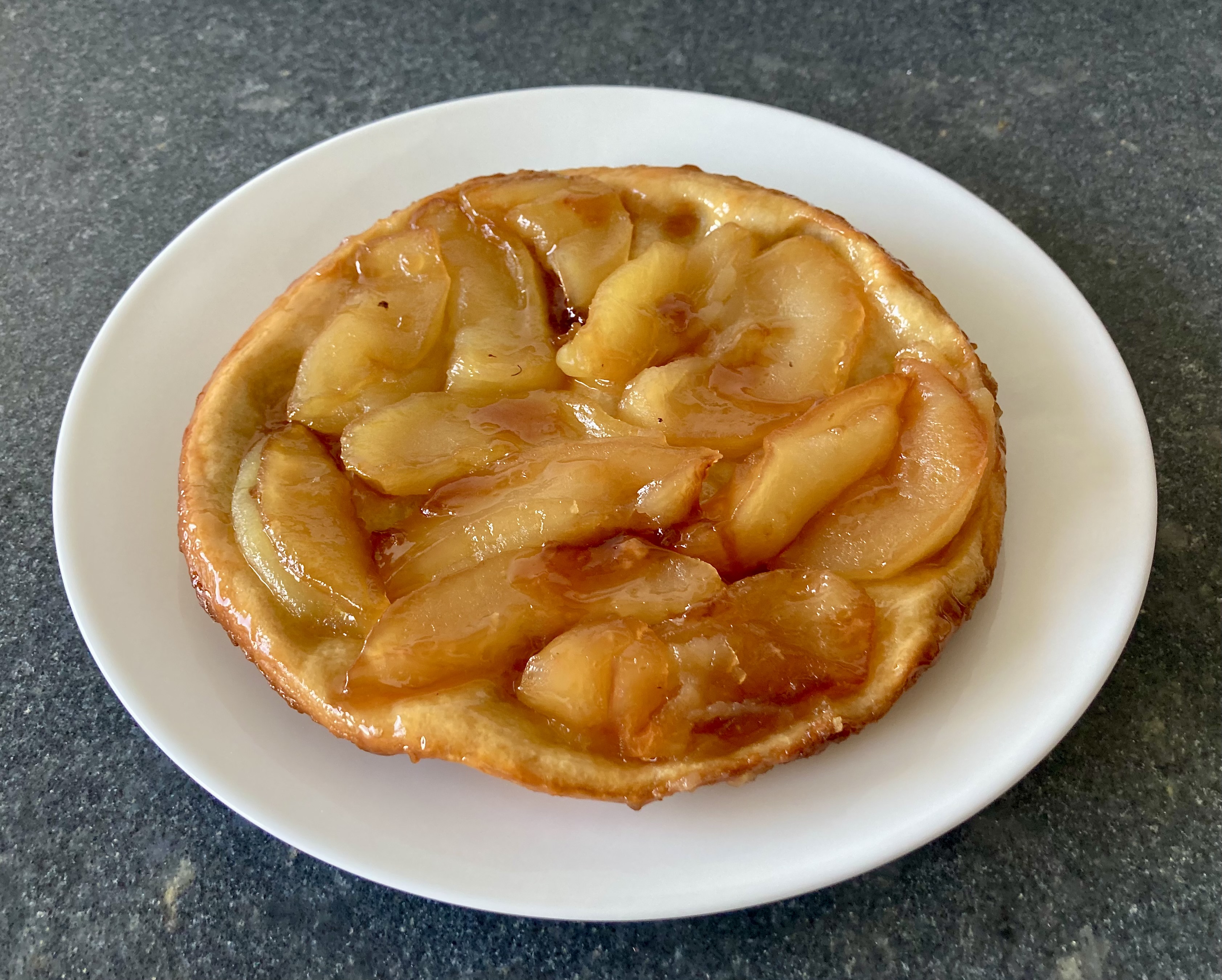
Tarte Tatin
The story behind the Tarte des demoiselles Tatin is well known. In the 1880’s the Tatin sisters ran a hotel-restaurant in a village called Lamotte-Beuvron, in the (then) Sologne canton, some 175 kilometers south of Paris.
One of the sisters started working on a traditional apple pie, forgot all about it until she recognised the smell of burning sugar and butter. She quickly put pastry on top of the caramalized apples and returned to one of her many other duties. Just before serving she turned the pie upside down and presented it to her customers, who loved it.
Nice story, but not very realistic. Would you serve a pie with burned apples and blackened, bitter caramel to your guests? Probably not.
Those days in the Sologne region tarts were baked in copper pans over coal or wood fire. Fruit was caramelised in the pan, pastry was put on top of the fruit and the pan was closed with a lid. Hot coal or wood was placed on top of it. The result is called a Tarte Solognote. Most likely the Tatin sisters based their tarte on this local tarte.
Baking a Tarte Tatin requires apples that are very tasty and remain firm. They should not loose too much of their juices, otherwise the caramel will become runny. Sour apples will break down into a mushy apple sauce. We used Jonagold apples.
The pastry is also worth thinking about. Some use puff pastry, but it’s unlikely the busy Tatin sisters used it. Better choices are pâte brisée (butter, sugar, flour, water and salt) or pâte sucrée (butter, sugar, flour, eggs and salt). We prefer the latter because it’s firmer and easier to handle.
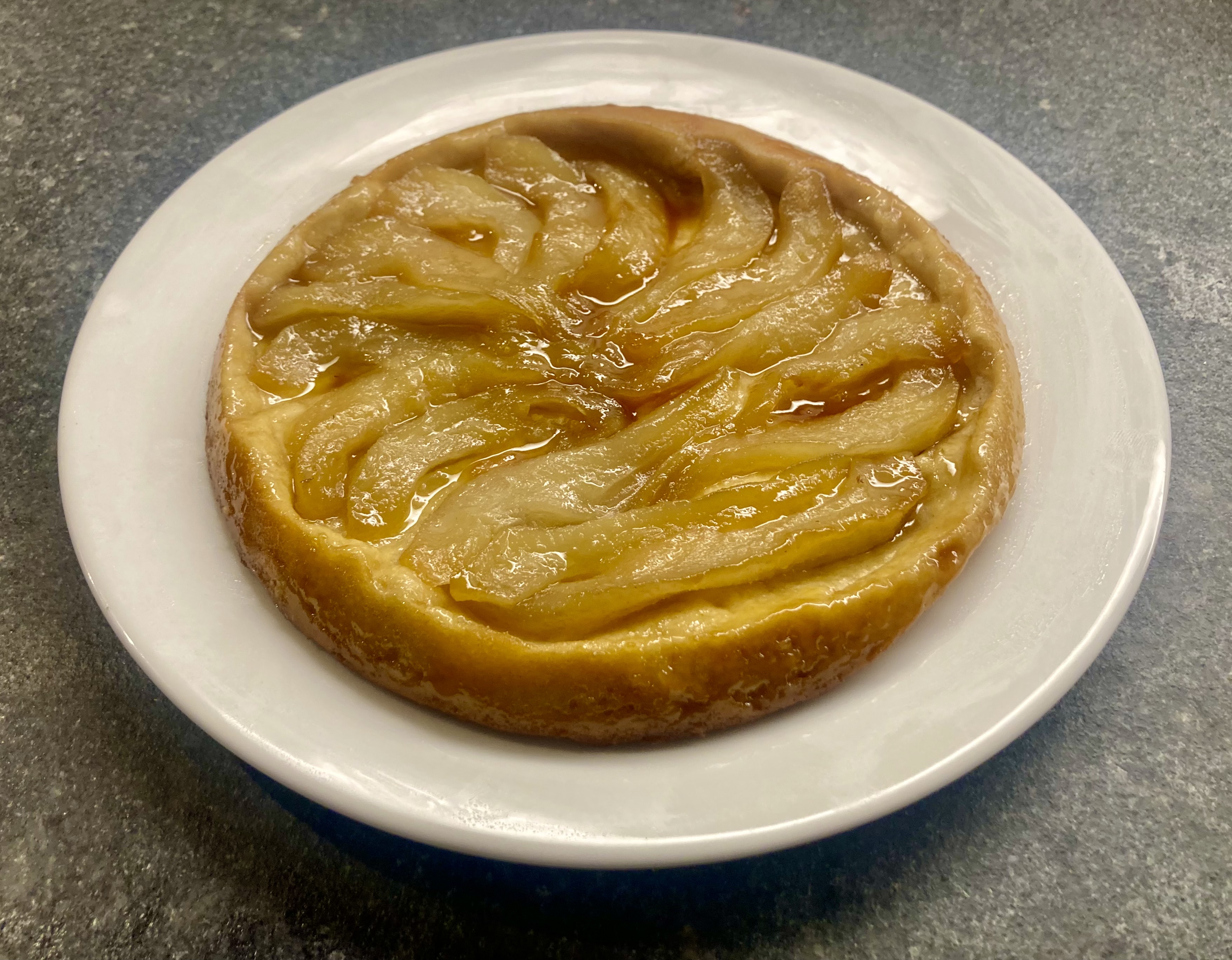
The Sologne region was well known for its apples and pears, so feel free to prepare a tart with pears.
What You Need
- For the Filling
- 25 grams of Sugar
- 30 grams of Butter
- 2 firm, sweet Apples (smaller ones preferred)
- For the Pastry
- 100 grams of Butter
- 250 grams of Flour
- 80 grams of Sugar
- Pinch of Salt
- 1 Large Egg
What You Do
- Star by preparing the pastry
- Combine flour, salt and sugar
- Add cubed butter and combine
- Beat the egg and combine
- Use your hands to make the dough. It should not be sticky, so it must be easy to make a ball. If too dry, add just a bit of water. If too wet, add some flour.
- When done, remove from the bowl and wrap in kitchen foil. Store in the refrigerator for at least two hours. It can be stored for a few days.
- Peel the apple
- Slice, quarter or halve
- Heat a heavy iron skillet
- Add butter and sugar
- Once you see caramel, add the apples
- (Optional) after 5 minutes flip the apples
- After in total 10 minutes (depending on colour and smell) transfer to the kitchen top and allow to cool
- Preheat the oven to 190 °C or 375 °F (conventional)
- Roll out the pastry: it must be slightly bigger than the pan; 4 mm is best
- Cover the apples with the pastry and tuck it in
- Bake for 20-30 minutes or until golden brown
- Transfer from the oven and leave for 5-10 minutes
- Flip the tart onto a serving plate
- If you flip too early, you risk losing (runny) caramel
- If you flip too late, you risk a tart that sticks to the pan
- Serve lukewarm, with vanilla ice cream or (cold) vanilla sauce.
PS
The sisters didn’t call it a Tarte Tatin and as far as we know they never published the recipe or any other recipe. The name was created many years later, perhaps to distinguish it from other apple pies.