Cacio e Pepe

It takes only four ingredients to create an international culinary incident: a classic Italian recipe, a well-known British food website, Parmesan cheese and butter. What happened? BBC Good Food published a recipe for a quick and easy lunch meal, called Cacio e Pepe, with Spaghetti, Butter, Black Pepper and Parmesan Cheese. Claudio Pica, president of the Fiepet Confesercenti Roma (an association representing restaurants in Italy) couldn’t disagree more and expressed his astonishment in several letters, including one to the UK Ambassador.

Cacio e Pepe is a traditional, Italian classic, typical for the Lazio region, made with Tonnarelli or Spaghetti, Water, Salt, Pecorino Romano and Black Pepper. No cream, no butter, no olive oil, no Parmesan cheese. And it may seem simple to prepare, but serving Cacio e Pepe requires skills, passion and experience, according to Claudio Pica.

The incident made us think of Sophia Loren adding cream to her Spaghetti Carbonara and Jamie Oliver putting chorizo on his Pizza. Don’t mess with Italian traditions!

Now that we agree on the ingredients, we need to understand how to prepare the dish. The heart of the dish is a sauce made with pasta water and pecorino. We found various ways of making this sauce, ranging from adding pepper and grated cheese to the pasta just before serving (no sauce, just sticky pasta) to a scientific one whereby the sauce is made au bain marie (complicated).

We think the main points of the recipe are:

  • Use less water than usual, because you need starchy water to create the sauce
  • Use less salt in the pasta water because the Pecorino cheese is rather salty
  • The Pecorino must be relatively young, older cheese may make the sauce lumpy
  • The Pecorino must be very finely grated

We humbly present our version of this delicious Italian classic dish.

Wine Pairing

We enjoyed a glass of Pima Luna Frascati with our Cacio e Pepe. This is a white wine from the Lazio region, or to be more precise: from the hills overlooking Rome. The wine is made by wine maker Mauro Merz with malvasia bianca di candia and trebbiano grapes. It’s a light and refreshing wine with hints of green apple and citrus. Notes of slightly bitter almond on the finish. Its freshness matched very well with the creamy Cacio e Pepe. The aroma of the wine comes with a hint of butter, which is a nice connection to the Pecorino.

What You Need
  • 130 grams of Spaghetti
  • 70 grams of Pecorino cheese
  • 2 grams of Black Pepper
  • 1 litre of Water
What You Do
  1. Heat the water in a large pan and add the spaghetti
  2. Warm your plates (50 °C or 120 °F)
  3. Cook the spaghetti for a few minutes. Our spaghetti needed 11 minutes in total; we cooked it for 7 minutes in the pan.
  4. Crush the peppercorns
  5. Roast them in a pan over medium heat until they become very aromatic
  6. Reduce heat and wait for the spaghetti to be somewhat cooked
  7. Add some pasta water to the pan with the toasted pepper
  8. Increase the heat
  9. Transfer the pasta to the pan and combine
  10. Add a large spoon of pasta water to the pan
  11. Leave to cook
  12. Repeat steps 10 and 11 until the pasta is al dente. At this moment the pan should be nearly dry
  13. In parallel add some pasta water to the finely grated pecorino and make a smooth paste
  14. When the pasta is al dente remove the pan from the heat
  15. Allow to cool for perhaps one minute
  16. Quickly add the paste and combine everything in the pan
  17. Add pasta water to reach the right consistency
  18. Serve immediately on warm plates
  19. No need to add pepper or cheese
PS

The Good Food website mentioned they would be happy to post the original recipe. We looked for it, but couldn’t find it. We did however find a recipe for Cacio e Pepe with Gnocchi (and butter and Parmesan cheese, obviously).
Perhaps another letter to the Ambassador? Or one to the Prime Minister?

Oyster Mushrooms with Parmesan Cheese

An easy to make and delicious vegetarian starter with only five ingredients! We combine oyster mushrooms with Parmesan cheese, nutmeg, black pepper and olive oil. The oyster mushroom is a common, edible and often cultivated mushroom. Its texture is firm, meaty and moist, its taste mild, nutty and slightly creamy. Some website mention flavours like anise and seafood, flavours we don’t recognize.

The other main ingredient is nutmeg. Its sweetness and spiciness combine very well with Parmesan cheese and the oyster mushroom. The dish looks simple and we were tempted to add some greens, but the result is intense, tasty and uplifting.

Wine Pairing

We enjoyed our mushrooms with a glass of white wine made with Verdejo and Sauvignon grapes byPiqueras Almansa. This is a dry white wine with lots of aroma and a slightly spicy, fruity aroma. A balanced wine that goes very well with the various flavours in this dish. In general, we would suggest a white wine with clear aromas, not too much acidity and present flavours.

What You Need
  • 200 grams of Oyster Mushrooms
  • Olive Oil
  • Freshly grated Parmesan Cheese
  • Freshly grated Nutmeg
  • Black Pepper
What You Do

Grate a generous amount of Parmesan cheese, add some black pepper and nutmeg. Combine and taste. The nutmeg should be clearly present. Add the olive oil to a heavy iron skillet, quickly fry the mushrooms, sprinkle with cheese and transfer the skillet to the oven. Allow to grill for 8 – 10 minutes. Divide in two and serve on a hot plate. You could serve it with some crusted bread.  

Other Recipes

Our favorite with oyster mushrooms is Alla Milanese. Another tasty recipe is this salad.

Farfalle with Fennel and Zucchini

It was our last evening in Paris and we wondered what to do? Book a table at a nice local restaurant? Or enjoy drinks and dinner in our lovely apartment? Obviously, we decided to stay in. We looked in our refrigerator, did some shopping and sat down with a nice glass of Pinot Blanc and some shrimps. The plan was to make a rich, creamy pasta dish with fennel, zucchini and pancetta.
Thanks to the mild aniseed flavour of the fennel, the dish has a surprisingly uplifting taste. The (peeled) zucchini also benefits from the aniseed flavour and remains tasty and present.

Wine Pairing

Being in France we opened a bottle of Côtes du Rhône produced by Maison M. Chapoutier. This is a red wine made with Grenache, Mourvèdre and Syrah grapes. The wine has some fruit, a touch of pepper and mild tannins. A traditional French red wine.

If you prefer an Italian wine with the pasta, then we would suggest a glass of Bardolino, for instance the one produced by Monte del Frà. The wine has a beautiful deep red colour, and the aromas made us think of red fruit and perhaps pepper. The wine is medium bodied with some acidity. It will combine very well with both the lightness in the dish and the creaminess.
In general, you’re looking for a fruity red wine with a touch of acidity, for example Chianti Classico, Montepulciano or Barbera.

What You Need

  • 1 small Fennel
  • 1 small Zucchini (Courgette)
  • 1 Shallot
  • 80 grams of organic Pancetta
  • 1 Garlic Clove
  • 1 Bay Leaf
  • Piment Doux
  • Cream
  • Parmesan Cheese
  • Black Pepper
  • Olive Oil
  • Farfalle

What You Do

Finely chop the shallot and the fennel. Add olive oil to a warm skillet and gently fry the shallot and the fennel. Peel the zucchini, slice and quarter. Dice the pancetta. Chop the garlic. Now add the zucchini and the pancetta to the pan. Increase the heat and fry for one or two minutes, just to add colour. Reduce the heat, add the garlic, the bay leaf and the piment doux. Add the farfalle to the boiling water and cook according to the instruction on the package. Leave the pan on low heat for a few minutes. Now add the cream and the Parmesan cheese. Stir and taste. When the farfalle is ready, add it to the pan. Combine and add some cooking liquid to the sauce if needed. Remove the bay leaf, add some fresh black pepper and serve. We decorated the dish with a slice of grilled pancetta.

Farfalle with Fennel and Zucchini ©cadwu

Zucchini with Oregano and Parmesan Cheese

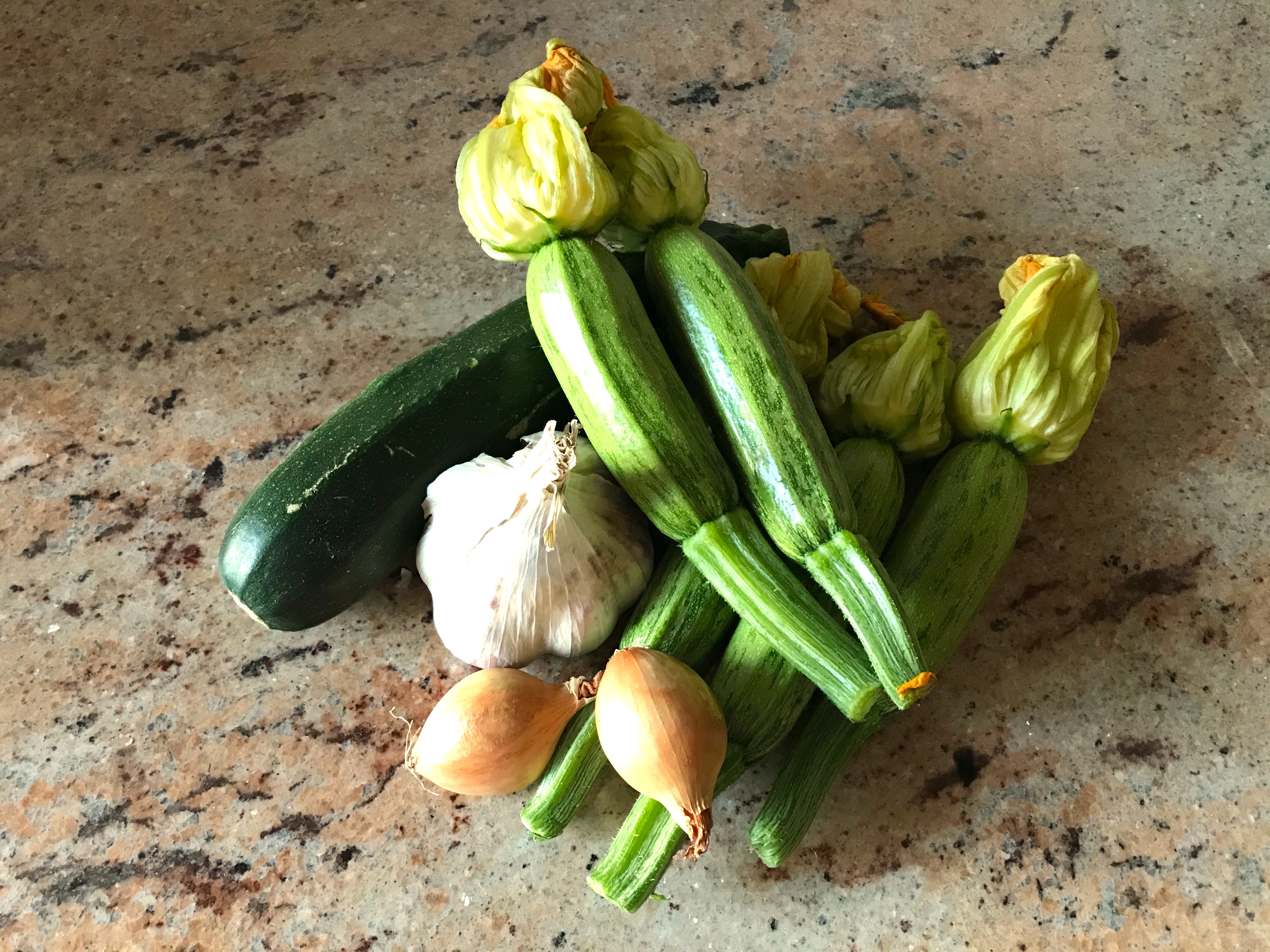
Recently a friend who lives in Liguria, north-western Italy, gave us a Trombetta d’Albenga. This is a zucchini, shaped like an antique trumpet. What makes it interesting is related to its shape: the seeds of this kind of zucchini are in the bell of the trumpet only, meaning that most of the zucchini is free of seeds. Which makes it ideal for a salad or for frying, especially when it’s young. Older trombettas tend to be yellowish and firmer; more pumpkin-like.

It’s wonderful to prepare this starter with Trombetta d’Albenga, however they are hard to find outside of Liguria, so we prepared this dish both with a trombetta and with a young normal zucchini. The trombetta is firmer and its taste creamier, nevertheless in both cases it’s a healthy, very tasty, vegetarian starter, one to share and enjoy with friends. It’s crunchy, salty, full of flavours, soft and slightly bitter.

Wine Pairing

The most popular grape in Liguria is Vermentino, which is used to produce white wines. Don’t worry if you can’t find a wine made with vermentino. In general a glass of rosé or white wine will be nice with the zucchini, provided the wine is fresh, with a touch of acidity and notes of citrus or green apples.

What You Need

  • One Trombetta or Young Zucchini
  • Breadcrumbs or Panko
  • Dried Oregano
  • Parmesan Cheese
  • Olive Oil

What You Do

Wash and slice the vegetable. If using a zucchini, drizzle with salt and mix. Let the mixture rest for two hours, allowing for the zucchini to lose water and become firm. Best way to do this, is by putting the zucchini in a sieve and let it rest above a bowl. Wash the zucchini.
If the dried oregano is not very fine, then use a kitchen knife to make the dried leaves smaller. Mix breadcrumbs or panko with a generous amount of freshly grated Parmesan cheese and Oregano. Heat a non-stick pan with olive oil. Coat the slices of zucchini with the mixture and fry quickly until golden. When ready, leave for a minute or two and serve the trombetta warm.

Artichoke Pie

A few days after we published our recipe for Tourte de Blette a friend told us about the great taste of artichoke pie and how popular this dish is in Italy, especially in Liguria. Since we love artichokes, we dived into our cooking library, looking for recipes.
Interestingly most recipes refer to canned or marinated artichokes. But wouldn’t it be much better to use fresh, young artichokes? Other ingredients are cheese (Prescinsêua, or a combination of Parmesan or Pecorino and Ricotta, perhaps some Crème fraîche or even Feta), herbs (parsley, thyme or oregano) and eggs.
We like the combination of artichoke and thyme (as we did in our salad), but we could imagine oregano to be a good choice as well.
We remained close to Tourte de Blette and prepared a rustic, open pie, but feel free to create one with pastry on top.

Wine Pairing

It’s not straightforward to pair artichokes with wine. According to various researchers this is due to cynarin, a chemical especially found in the leaves of the artichoke. When the wine and the cynarin meet in your mouth, the natural sweetness of the wine is amplified, making it taste too sweet. So you have to pair freshly cooked or steamed artichokes with a bone-dry, crisp, unoaked white wine with clear, present acidity. For instance Sauvignon Blanc, Grüner Veltliner or Albariño.
We enjoyed our Artichoke Pie with a glass of Château Pajzos Tokaj “T” Furmint, a dry, bright, fresh wine with zesty, nutty and mineral flavours made from the Hungarian Furmint grape. A unique wine and perfect in combination with the artichokes.
Cynarin and wine are not a match made in heaven but the good news is that cynarin seems to protect your liver and even helps it regenerate.

What You Need

  • For the Dough
    • 100 gram of Flour
    • 50 gram of Water
    • 10 gram of Olive Oil
    • 1 gram of Salt
  • For the Mixture
    • 4-6 young Artichokes
    • One Shallot
    • Olive Oil
    • 30 grams of Rice
    • 2 Eggs
    • Fresh Thyme
    • 20 gram Freshly Grated Parmesan Cheese
    • Black Pepper

What You Do

Cook the rice and leave to rest.  Combine flour, salt, water and olive oil. Make the dough, kneed for a minute or so and store in the refrigerator for at least 30 minutes.
Clean the artichokes, steam for 30-45 minutes depending on the size and let cool. Chop the shallot. Warm a heavy skillet, add olive oil and gently fry the shallot. Transfer to a plate and let cool. Using a spoon remove the ‘meat’ from the leaves (bracts) of the artichokes. Chop the hearts in four. You may need to remove the centre choke (the hairs). Strip a generous amount of thyme.
Whisk two eggs and combine with the artichokes, the shallot, the rice, the thyme and the freshly grated Parmesan cheese. Add some black pepper.
Roll out the dough with a rolling pin on a lightly floured surface. Coat a 15 cm or 6 inch round baking form with oil (or use a sheet of baking paper). Place the dough in the baking form and add the filling. Transfer to the oven for 40-50 minutes on 180˚-200˚ Celsius or 355˚-390˚ Fahrenheit. Immediately after having removed the pie from the oven, brush the outside with olive oil. This will intensify the colour of the pastry. Let cool and enjoy luke warm.

Tagliatelle with Artichokes, Pancetta and Parmesan Cheese

The Joy of Artichokes

We’re true fans of artichokes. Although available throughout the year, we especially love them in Summer. They come with various structures and flavours, an interesting shape and a beautiful flower. Have you noticed that the heart and the leaves have a similar yet different taste?
Artichokes also come with a challenge: how to serve them in an elegant way? One way of serving the small ones is as a salad; another way is using them as an ingredient in a pasta dish.
Let’s talk briefly about Pancetta: this is cured and dried pork meat, so not smoked. You could replace it with traditional bacon, but be careful not to use something heavy oak smoked.

Wine Pairing

We enjoyed our pasta with a glass of Italian Corvina from the Verona region. This is a fruity wine, think red fruit (strawberries, cherries), only a hint of acidity, not too much tannins. We bought a bottle from Torre del Falasco. Great buy!

What You Need

  • 4 Small Artichokes
  • 75 gram of Pancetta
  • 1 Garlic Glove
  • Thyme
  • 100 gram of Fresh Tagliatelle
  • Parmesan Cheese
  • Black Pepper

What You Do

Steam or cook the small artichokes. Let them cool, peel them and cut of the upper half. Cut the remainder in 6 or 8 chunks. Cut the pancetta in slices. Take a large skillet and warm. Add some olive oil and glaze the pancetta. It’s not the idea to fry the meat, the fat should not melt, only glaze. Now add the thinly chopped garlic and warm until the garlic is slightly soft. This may take a few minutes so an occasional stir is required. Now add the artichokes and the thyme. Stir very gently because the idea is that the artichokes remain intact.
Cook the tagliatelle (probably 4 minutes) and drain but keep some of the cooking liquid. Sprinkle a bit of Parmesan cheese over the artichokes, stir, very gently, add one or two spoons of the cooking liquid, add more Parmesan cheese and more liquid. Now add some olive oil and the tagliattele. Check if this looks fine to you. If not add more liquid. Add a generous amount of black pepper. Serve on a warm plate with some extra Parmesan cheese.

Stuffed Courgette or Zucchini Flowers

A Tempting Flower

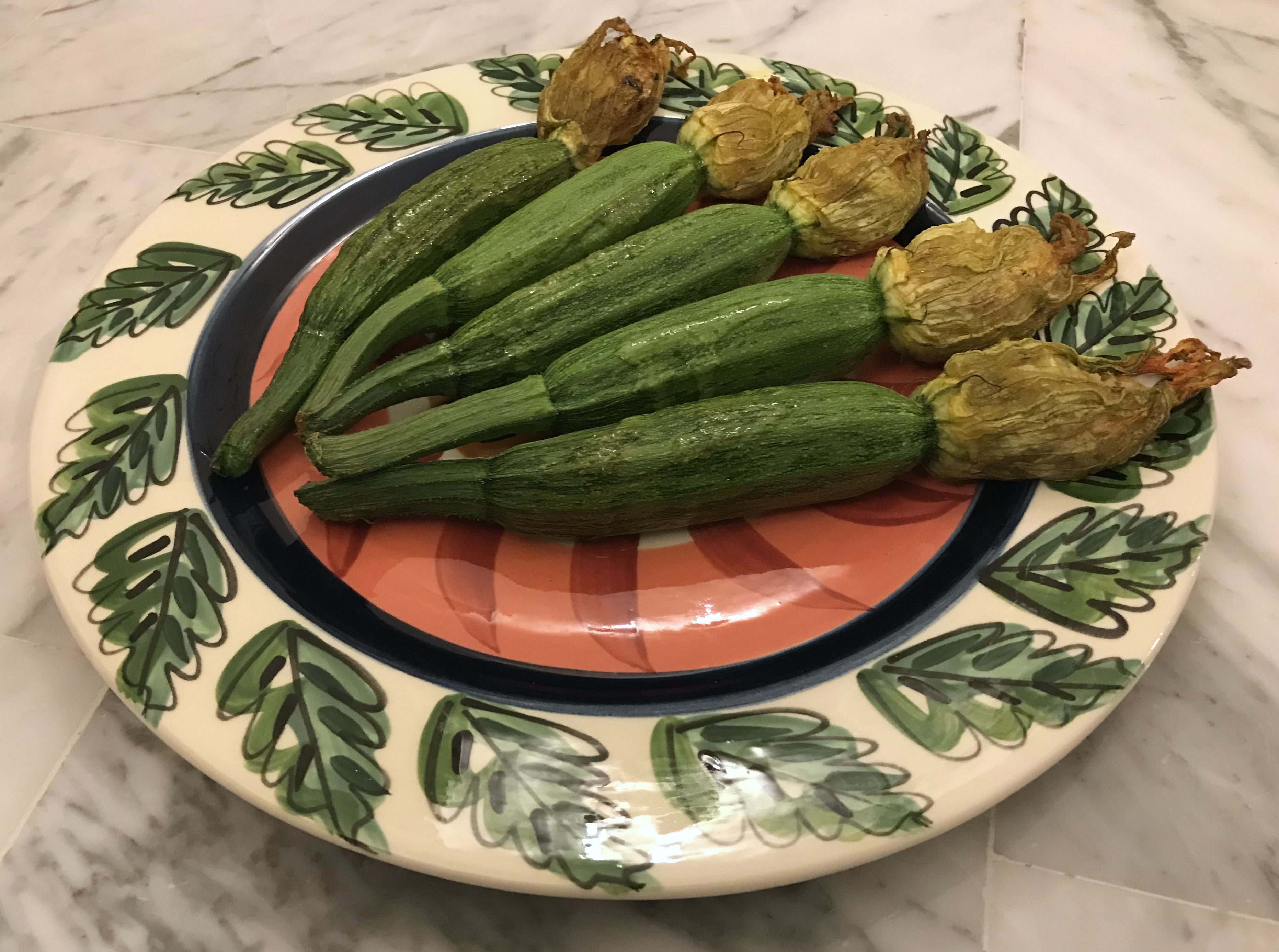
Such a pleasure to see courgette flowers in your garden or at the greengrocers. The young courgette is firm and tasty; the flowers a beautiful yellow. Simply stuff the flowers, fry in a pan or cook in the oven and you have a great side dish or starter. And then you start wondering: ‘Stuff with what? Cheese? Salmon? Tomatoes? Egg? And how to make a filling that remains inside the flower and isn’t too firm?‘.
We prefer a simple approach: stuff the flowers with a perfect combination: courgette, thyme, shallot, garlic and Parmesan cheese. Firm, tasty and all about zucchini. Enjoy as a starter or combine the stuffed flowers with grilled lamb or chicken.

What You Need

  • Small Courgettes with their flower
  • One Courgette (small and firm; you need 1 small courgette to stuff 4 flowers)
  • One Shallot
  • One Garlic Clove
  • Olive Oil
  • Parmesan Cheese
  • Thyme or Herbes de Provence
  • Black Pepper

What You Do

Remove the stamens from the flowers. Peel the additional courgette, slice the shallot and the garlic very thinly. Warm a heavy iron pan and gently glaze the shallot. After a few minutes add the garlic. Remove the seeds from the courgette and grate coarsely. When the shallot and the garlic are sufficiently glazed, add the grated courgette and the thyme or Herbes de Provence. Mix and warm for 15-20 minutes, making sure the liquid evaporates. Try to keep the structure of the coarsely grated courgette. Add finely grated Parmesan cheese, mix and taste. Adjust with cheese, black pepper and thyme or Herbes de Provence. Set aside and let cool.
Heat your oven to 180° Celsius or 360° Fahrenheit. Stuff the flowers, close them and transfer to the oven, sprinkle with olive oil and cook for 15 – 20 minutes. Depending on your oven you may need to use ‘traditional’ or a combination with a small grill. You want the flowers to become crisp. Allow them to cool for a few minutes before serving.
PS In case the grated courgette looses its structure and the mixture becomes too dense, then beat an egg white until very firm and gently spoon this through the cold mixture before stuffing the flowers.


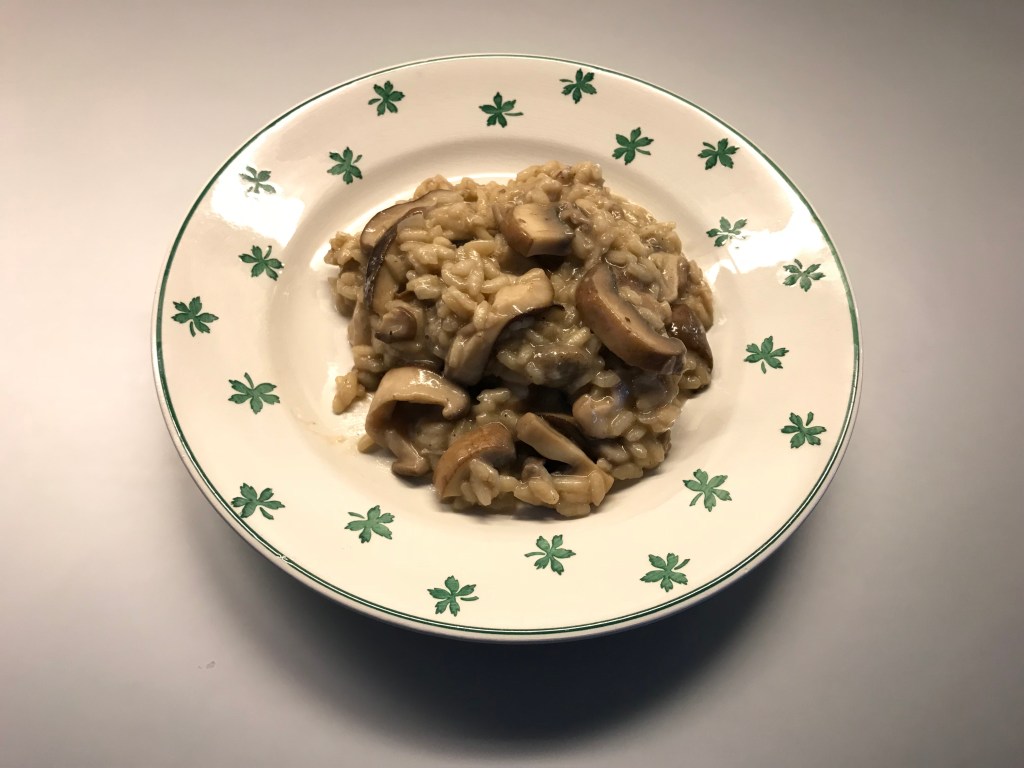
Risotto with Mushrooms

And on the 8th day he remembered he had forgotten to create food. So he quickly created something so simple, so tasty, so fulfilling that he knew people would still enjoy it, many, many years later. He called it Risotto.

Five Challenges When Making Risotto

We’re always too busy! We are tempted to buy risotto rice that cooks quickly and can be served in under 10 minutes.
Never rush a risotto. And by the way, what is so important that you don’t have 34 minutes to cook your own lovely, genuine, risotto? Why would quick be more important than tasty?

And since we are too busy anyway: why look for fresh cèpes if you can buy a pack of risotto rice with cèpes. Second mistake. You will not taste cèpes but a series of nasty E numbers and salt. Just look at the package! It will probably contain 0,01% of cèpes.

We think risotto is too basic, so we prepare a luxurious version! Let’s add tomatoes, or salmon, or spinach and pumpkin, or chicken, or saffron, shrimps and peas.
Please don’t. It will only ruin the lovely combination of rice, butter, stock and Parmesan cheese. With or without mushrooms, that’s your only choice.

Risotto is too heavy, let’s use Crème fraîche and not butter, or Mozarellla and not Parmesan and butter, or let’s simply skip the butter. Fourth mistake: butter and Parmesean cheese are essential, for the taste, the mouthfeel and the consistency.

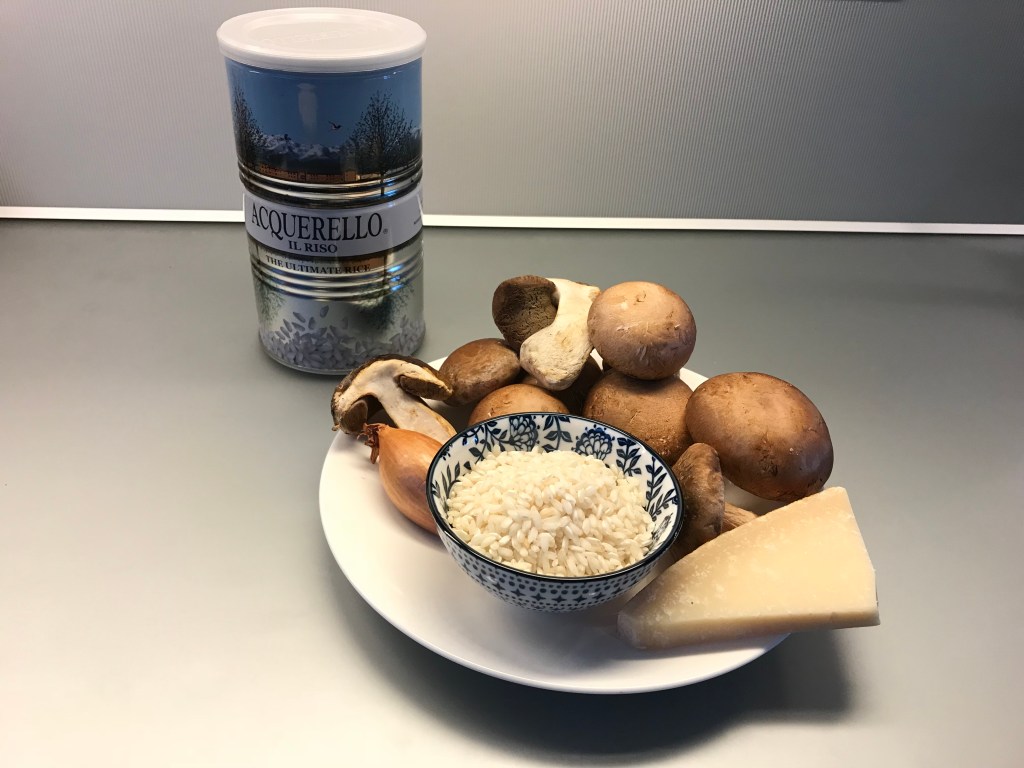
We buy risotto-rice without checking if it’s the right rice. We use beautiful Carnaroli rice, superfine quality, produced by Acquerello. It doesn’t come cheap (we pay € 11,95 per kilo) but why would you not treat yourself to the best risotto rice? It has all the right qualities and the taste is outstanding.

Wine Pairing

We enjoyed our Risotto with a glass of Soave. Some acidity, touch of bitterness, nicely balanced with the butter and the cheese. It’s light and fruity; it elevates the risotto.

What You Need

  • 70 grams of Acquerello rice
  • 1 Shallot
  • Butter
  • Olive Oil
  • 100 gram of Shiitake
  • 200 gram of mushrooms, for instance Chestnut Mushrooms
  • optional: 100 gram of Cèpes
  • Chicken Stock
  • Parmesan Cheese

What You Do

Peel and chop the shallot. Add butter and olive oil to the pan and glaze the shallot. In parallel clean and slice the various mushrooms. Feel free to use other mushrooms as well. We think the Shiitake is an important one because it adds depth to the taste. Bring the stock to a boil. After 5 minutes add the mushrooms to the pan and fry gently for 5 minutes. Add the rice to the pan and coat the rice for 2 minutes.
Start adding the stock, spoon by spoon and stir the rice frequently. When using Acquerello rice it takes 18 minutes. Check the rice. When okay, transfer the pan to the kitchen counter top and leave to rest for 2 minutes.
Add chunks of butter, stir, add a bit more butter and the grated Parmesan cheese. Stir, a bit of black pepper, add more butter or Parmesan cheese if so required. Serve immediately.

Caesar’s Mushrooms with Udon

Caesar’s mushroom (or Amanita Caesarea) is a true delicacy, especially when eaten very young. And raw. Since the young ones have the shape of an egg, they are called ovoli in Italian. It is not recommended to pick these young ones yourself, unless you’re an expert. The young Caesar’s mushroom looks very similar to young Fly Agaric, Death Cap or Destroying Angels. Ones we would not like to see on (y)our plate. The mature Caesar’s mushroom looks very distinct from these very dangerous mushrooms, so fewer risks involved.
When you’re in North America, you will probably be able to buy Amanita Jacksonii or Amanita Arkansana, which seem to be very similar, but not completely. As far as we know eating cooked Amanita Caesarea and Arkansana is not a problem; eating them raw could be.

The classic recipe for ovoli is to include them in a salad, with shaved white truffle, parsley, olive oil and parmesan cheese. Another option is to add them to your risotto.

In this recipe we combine the delicate flavour of the Caesar’s mushroom with lots of thyme, rosemary, bay leaf, a touch of garlic, Parmesan cheese and olive oil. Best would be to use Calamintha Nepeta, but using thyme will also do the trick. A garlic glove must be added because the garlic will turn black if your mushrooms are poisonous (not a story to rely on).

Ideally served with Japanese udon because the noodles will be nicely coated with the cooking juices, but feel free to use good pasta as an alternative. One of the benefits of udon is that it is really white, allowing for the yellow of the mushroom to be more present.

We enjoyed our Caesar’s mushrooms with a glass of traditional Burgundy wine from France (100% pinot noir). The wine should have delicate fruit aromas (black cherries, plum) and some earthiness. The wine should be medium bodied and have a crisp acidity. Not too much oak, because oak will overpower the mushrooms. The pinot noir should also be relatively light, allowing for herbal and floral tones.
Pinot Noir wines from the new world are in general rounder and higher in alcohol, making these wines more like Syrah or Malbec. We don’t recommend these wines, however tasty, in combination with the dish.
A glass of Chardonnay is also an option provided it’s fresh with just a touch of oak and butter.

Here is what you need

  • 200 grams of Caesar’s mushrooms
  • Olive Oil
  • Thyme
  • Rosemary
  • Bay Leaf
  • Garlic glove
  • Parmesan cheese
  • Japanese Udon (for instance from Hakubaku)

Clean the Caesar’s mushrooms and remove the white veil (or volva). Make a bouquet garni with lots of thyme, rosemary and a bay leaf. Start by making flavoured olive oil by warming the olive oil in a large skillet and adding the herbs and the garlic glove. Not too hot, you only want the flavours and essential oils to be added to the olive oil. After 15 minutes or so remove the garlic and the bouquet. Now add the sliced Ceasar’s mushrooms and very gently fry them. Just cooked is perfect. In parallel cook the udon. When ready (12 minutes in our case, you don’t want the udon to be al dente), drain the udon but keep some of the cooking liquid. If there is too much starch on the pasta, then think Japan and wash your pasta with cold water. This will remove the starch and allow for a better result. Remove the Caesar’s mushrooms from the pan and keep warm. Add the pasta to the pan, stir and make sure the pasta is fully coated. Add a spoonful or two of the cooking liquid to the pan. Add some grated Parmesan cheese and black pepper. Transfer the Caesar’s mushroom back to the pan and stir very gently, making it into one yellow, tasty mixture. Just before serving sprinkle with extra Parmesan cheese.

Omelet with Black (Winter) Truffle

Omelet with Black (Winter) Truffle with a glass of Kuentz-Bas Alsa­ce Pi­not Blanc

It’s mid March so still some time left to enjoy tasty winter food. Treat yourself to Choucroute with pork, sausage and Confit of Duck. Or pumpkin soup with ginger and jus de truffes.
Talking about truffles, black truffles are harvested from November to March, so be extravagant and buy one before the season closes. The one we bought was 17.6 grams, so you could imagine how happy we were to find it. When buying truffle, please ask if it’s okay to smell them, because the aroma will tell you everything you need to know about the quality.
Black truffle combines really well with warm purée of potatoes, risotto and egg.
Hint: if you need to store a black truffle for a day or so, please store it in a small box with some rice and an egg. The rice will prevent the truffle of becoming too wet and the egg will embrace the aromas of the truffle and become a treat in its own right.
We used our truffle to make one of the simplest and tastiest truffle dishes ever: an omelet with truffle and Parmesan cheese.

A white wine goes very well with this omelet, best would be a classic Pinot Blanc or Riesling from the Alsace region (for instance Kuentz-Bas AOC Alsa­ce Pi­not Blanc Tra­di­ti­on). Think fruity aromas, floral characteristics, minerality and a touch of sweetness. If you want to drink a red wine, then go for a blend like Feteasca Neagra with Syrah as produced by Radacini from Moldavia. Sounds a bit exotic, so if you can’t find it go for a fruity (ripe cherry, plum), spicy red wine with a velvety structure; serve it slightly cooled.

Here is what you need

  • 2 Eggs
  • Butter
  • Parmesan Cheese
  • 10 grams or (budget permitting) more Black Truffle
  • White Pepper

Clean the truffle if necessary. Take a fairly small iron skillet and make sure the pan is warm through and through but not hot. Using a fork (a spoon is even better) whisk the two eggs together. Add butter to the pan and wait until it is melted. It should not change colour or sizzle. An omelet should not be fried; the bottom must remain yellow. Add the whisked egg to the pan and wait until the egg is beginning to set. Check the consistency with your fingers. There is no alternative to baveuse! Take your time.
Serve the omelet on warm dishes with some freshly grated Parmesan cheese, white pepper and grated black truffle.