Oysters With Tarragon

Enjoying oyster begins by deciding which oysters to buy. Should they be small or large, should the taste be creamy and sweet or lean and juicy? If an oyster looks creamy (opaque) then it will taste creamy.

Next decision: raw or cooked? We think the best way to eat an oyster is to eat it raw. You will taste the saltiness, the texture and all of its flavours. The usual way to counter the saltiness is by adding a bit of lemon or mignonette but you could also go for something spicy like Tabasco, horseradish or perhaps wasabi. Don’t add something sweet because the oyster has its own sweetness.
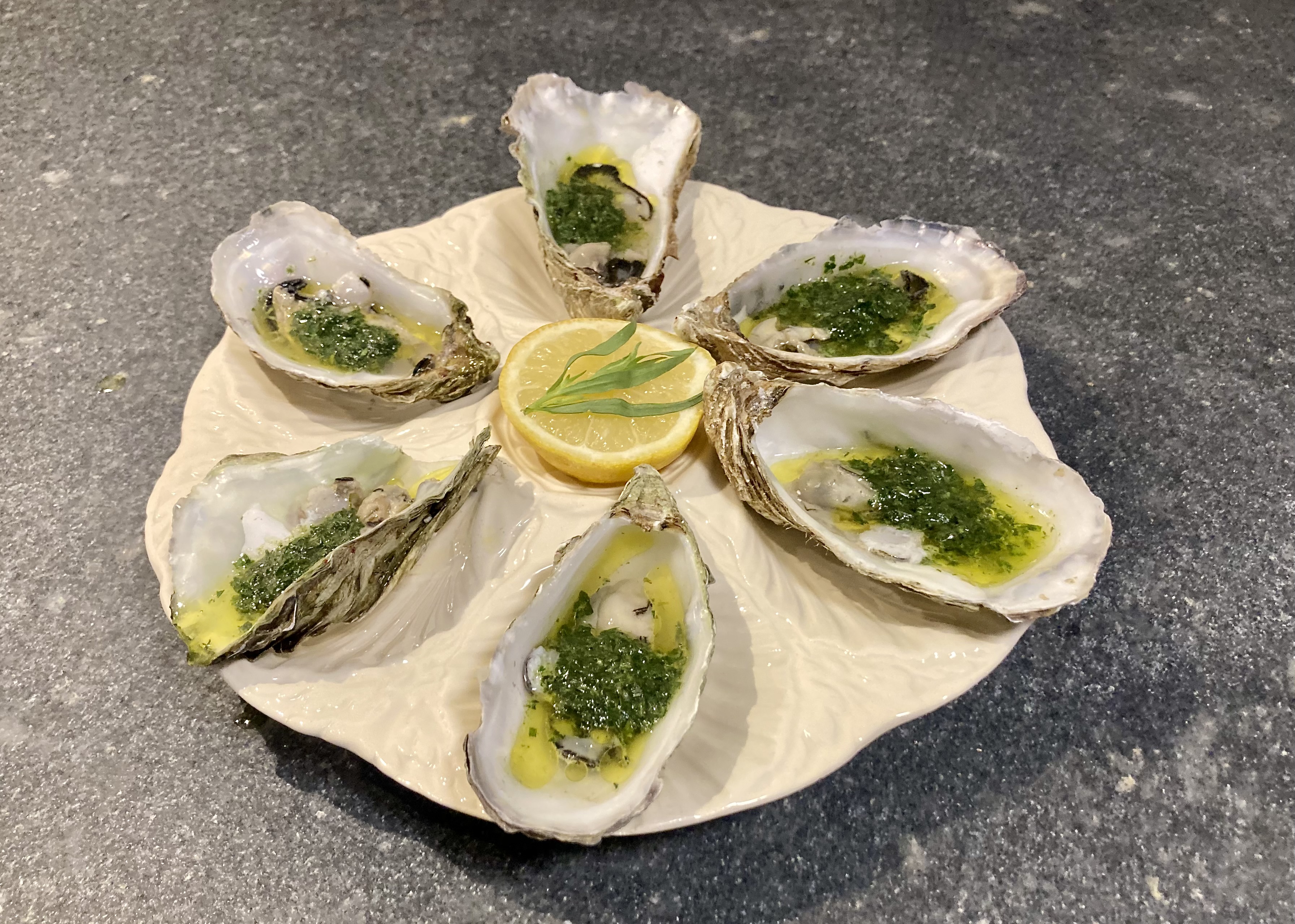
In most cases cooked or steamed oysters are covered with lots of overwhelming ingredients, in an attempt to hide the taste of the oyster. Most likely the oyster will be overcooked and its structure rubbery and nasty. If you trust the chef, go for Steamed Oysters with Black Bean Sauce or for Oysters Rockefeller. Or even better: prepare our quick and easy Oysters with Tarragon, a delicious combination of warm (but not cooked) oyster and velvety anise flavours.

And finally: how to eat an oyster? Eating means chewing and tasting. Please don’t “drink” an oyster. If you do, you will only taste sea water.

Wine Pairing

When eating oysters, your wine must have some minerality. Think Chablis, Picpoul de Pinet, Sancerre or Sylvaner. We enjoyed a glass of Pommery Royal Brut champagne. The wine is elegant and uplifting, it comes with subtle notes of brioche and apple, a fine mousse and the perfect acidity with the oysters. Its freshness works very well after the intense taste of the oyster and the tarragon.

What You Need
  • 6 or 12 Oysters
  • Butter
  • Lots of Tarragon
  • White Pepper
  • Lemon Juice
What You Do
  1. Buy lean (not creamy) oysters, for instance the ones from the Île de Ré
  2. Combine butter and finely chopped tarragon with some white pepper
  3. Taste and add more tarragon
  4. Store in the refrigerator
  5. Scrub each oyster under cold, running water
  6. Open the oyster
  7. Use your knife or a spoon to detach the muscle underneath the oyster from the bottom shell
  8. Remove any small bits of broken shell or sediment
  9. Remove some of the liquid
  10. Add one or two drops of lemon juice to every oyster
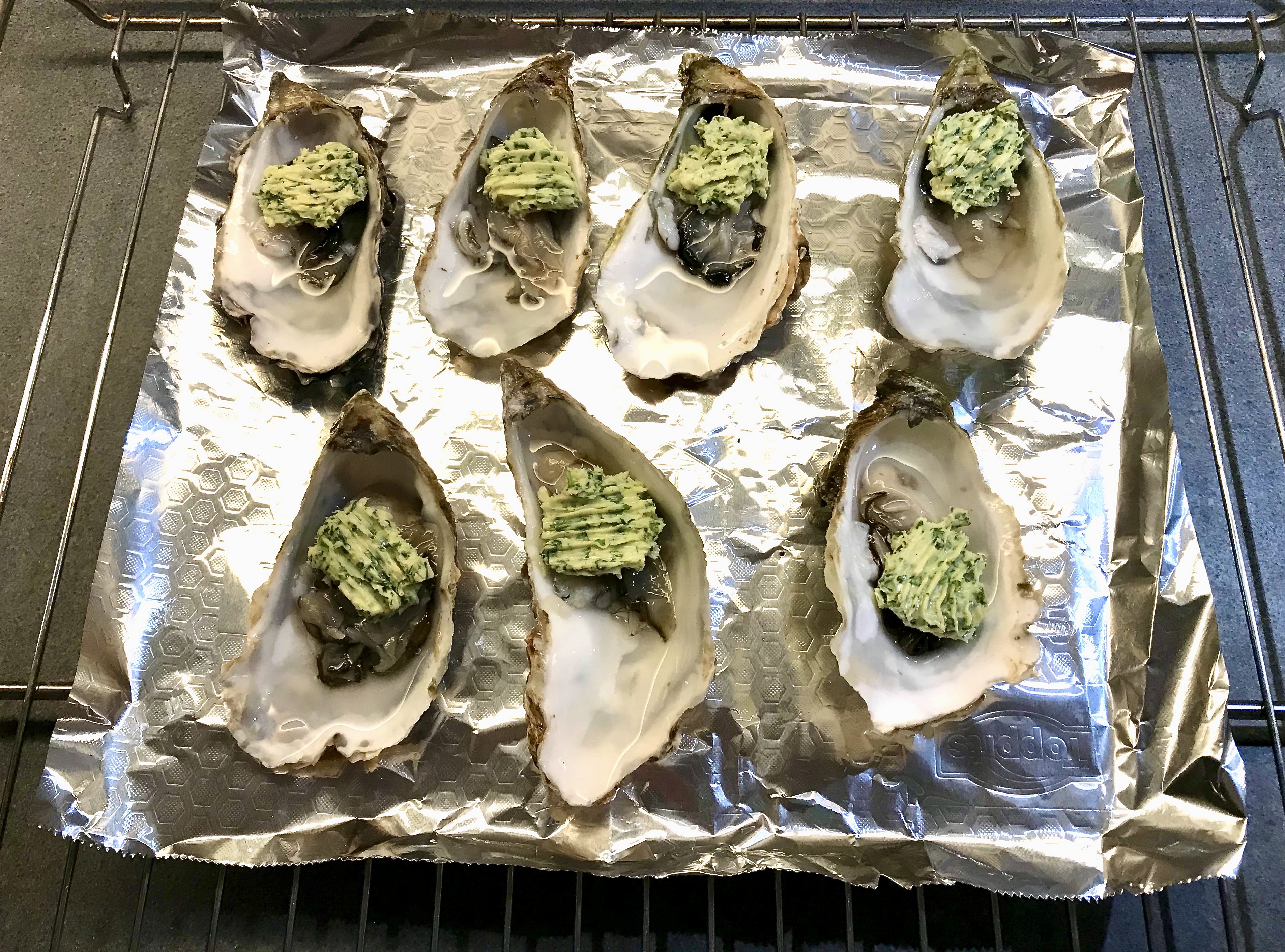
  11. Top with a teaspoon of tarragon butter
  12. Make sure you have everything ready (plate, tongs, wine, guests)
  13. Transfer the oysters to the oven and place as close to the grill as possible
  14. Set your oven to grill or broil and leave the oysters for 3 or 4 minutes in the oven
  15. Transfer the oysters to a plate and serve immediately
  16. 🥂Happy New Year!🥂


Umami

Sweet, sour, bitter, salty and umami are the five basic tastes. The term umami originates in Japan; it’s probably close to savoury. Recognizing sweet or bitter is something we learn as a child, recognizing umami is not something we have learned and that’s perhaps why some people in the past argued that umami is not a taste in its own right. It’s now clear that we have taste receptors that respond to the components that make umami.

Science

Danish professor emeritus in biophysics at the University of Southern Denmark, Ole G. Mouritsen, writes about the gastronomical, historical, scientific and cultural aspects of umami in his book Umami: Unlocking the Secrets of the Fifth Taste (available via your local bookstore or the well-known channels for approximately 40 US$). He also published cookbooks, for instance about seaweeds. Several scientific studies were conducted, trying to unravel the secrets of umami. One of the findings is that umami is the result of two components: glutamate and nucleotide. Bringing them together creates synergy and the umami taste is amplified.

Three Examples

Classic Japanese dashi is a combination of kombu (seaweed) and katsuobushi (bonito flakes). Kombu contains amino acid glutamate and Katsuobushi contains nucleotides inosinate and guanylate. Together they create a synergy, and the result is the clear taste of umami in dashi.
Same story for oysters and champagne. The oysters contain both glutamate and nucleotides (meaning that they are full of umami) and the champagne, due to the way it’s produced, contains glutamate, making oysters and champagne into a very tasty, umami rich combination.
Also the same story for tomatoes (amino acid glutamate) and beef (inosinate). Combining them should create the beautiful synergy of umami.

Ragù

Enough chemistry for one day. We decided to prepare Ragù Napoletano. It is one of the great dishes of Italy, or to be more precise of Campania. It is a combination of rolled up well marbled beef (rump cap, rump tail), an intense tomato sauce and hours of careful slow cooking and reducing. 
The result is a two-course meal: the sauce is served with pasta as a starter and the sliced meat with some sauce and vegetables as a main. 
Will you able to taste the umami? The answer is yes, absolutely, especially when you prepare the dish one or two days ahead.

Recipe for Ragù Napoletano in our next post.

Antonio Carluccio’s Oysters with Bianchetto

Last Saturday we were extremely lucky. Not only did we buy the very first fresh morels of the season, we also bought a small bianchetto. This affordable white truffle is available from mid January to the end of April. It is also called March truffle (marzuolo).

In his book Complete Mushroom Book, Italian chef Antonio Carluccio combines fresh oysters with a white wine sabayon and white truffle: Ostriche con zabaglione e tartufo bianco. The result is spectacular. The combination of the distinct aroma of the white truffle with the oyster is intriguing. The sabayon brings everything together in terms of taste, consistency and structure. And just to show you how clever Carluccio’s combination is: the sabayon in itself is not pleasant. We prepared the dish with bianchetto. Maybe less subtle than when prepared with a white truffle, but the result is nevertheless wonderful.

Wine Pairing

With such a great dish you many want to drink a glass of Chablis or Champagne. We enjoyed a glass of Crémant de Bourgogne, produced by Vitteaut-Alberti. A refined wine, soft and with delicate fruit. The bubbles are small and pleasant.

Oysters a la Carluccio © cadwu
Oysters à la Carluccio © cadwu

Oysters à la Antonio Carluccio

When It’s Spring

Combining ingredients and creating something new and tasty is difficult. On the one hand we have known combinations (tomatoes and basil, duck and thyme, macaroni with ham and cheese), on the other hand we want to be surprised by new combinations. Unfortunately many chefs don’t really have the required creative talent but they serve their unlikely combinations (gnocchi with kale, piccalilli, smoked oyster and black pudding) anyway.

Antonio Carluccio‘s combination of fresh oysters with a white wine sabayon and white truffle is spectacular. The combination of the distinct aroma of the white truffle with the oyster is intriguing. The sabayon brings everything together in terms of taste, consistency and structure. And just to show you how clever Carluccio’s combination is: the sabayon in itself is not pleasant.

Carluccio uses white truffles in his recipe, but given the costs we decided to go for the more affordable bianchetto. This truffle is available from mid January to the end of April, that’s why it is also called March truffle (marzuolo). Maybe less subtle, but the result is nevertheless wonderful.

The recipe (Ostriche con zabaglione e tartufo bianco) can be found in his Complete Mushroom Book. Best to use oysters with a mineral flavour and a mild brininess. Definitely not creamy oysters, given the richness of the sabayon.

Wine Pairing

With such a great dish you many want to drink a glass of Chablis or Champagne. We enjoyed a glass of Crémant de Bourgogne, produced by Vitteaut-Alberti. A refined wine, soft and with delicate fruit. The bubbles are small and pleasant.

Oysters a la Carluccio © cadwu
Oysters à la Carluccio © cadwu

Antonio Carluccio’s Oysters with Zabaglione and White Truffle

Carluccio’s Caffè

This year we celebrate 20 years of Carluccio’s Caffè. Over 80 restaurants in the UK to enjoy breakfast, lunch or dinner and enjoy the food that Antonio Carluccio loved. With their integrated food shop the Caffè’s make the Italian gastronomy available to all. Antonio Carluccio was chef, author and ambassador of Italian Food. His many books will continue to be an inspiration.

Luxury Item

He once mentioned that white truffles were his luxury item. In The Complete Mushroom Book (published in 2001) he included a wonderful recipe for Oysters with Zabaglione and White Truffle. The oysters are served with a zabaglione made from butter, white wine, egg yolks and truffle oil with thinly sliced white truffle on top of the sauce. The dish is a true miracle because of the umami, the saltiness and the earthiness; its exquisiteness and mouthcoating feel in combination with the dryness of the oysters.

We prepared the dish with fresh Bianchetti truffles. A bit more outspoken than the white Alba truffle, but very, very nice in this dish. We used our favourite île de Ré oysters because they are lean and fresh (not creamy).

Remember Bianchetti truffles are harvested and sold between January 15th and April 30th, so don’t wait too long!