Black Pearl

Remember the Black Pearl, the ship captained by Jack Sparrow, portrayed by Jonny Depp? The ship had black sails and it was faster than the infamous Flying Dutchman. Films such as the Curse of the Black Pearl and At World’s End, characters such as Davy Jones and captain Barbossa, all good. We lost track when watching the third film and, in the end, we gave up on the series, despite the hilarious eccentricity of Jack Sparrow.

When shopping at our favourite mushroom stall, we noticed a cultivated mushroom, one we hadn’t seen before, called Black Pearl
The background of the Black Pearl mushroom (or Shimofuri) is as confusing as the story line of the Pirates-movies. According to some it’s a Japanese hybrid between King Trumpet and Black Oyster Mushrooms, others claim it’s a hybrid between a European and an Asian Oyster Mushroom and some say it’s a combination with Pearl Oyster mushrooms. Or perhaps a Marbled Oyster Mushroom? In all cases the Latin name seems to be Pleurotus Ostreatus, which is the name of the common oyster mushroom. 

Let’s forget about the background and enjoy its earthy, sweet, slightly peppery flavour and its firm texture. We combined the mushroom with an omelette, inspired by Tamagoyaki, the rolled Japanese omelette. We added Kashimiri pepper to the mushrooms, to emphasize their spiciness.

Drink Pairing

We enjoyed a glass of our favourite sake: Junmai Taru Sake as produced by Kiku-Masamune. The sake matured in barrels made of the finest Yoshino cedar, which is reflected in its aroma and flavour.
An aromatic, fresh and fruity white wine, with aromas of citrus and apple will also pair very well. The wine should be uplifting and juicy with a light character.

What You Need
  • 100 grams Black Pearl
  • 1 scallion, white only
  • 1/3 Kashmiri Pepper
  • 2 Eggs
  • ½ teaspoon Dashi Powder
  • teaspoon Mirin
  • teaspoon Soy Sauce
  • Olive Oil
What You Do
  1. Serve the omelette with the mushrooms on a warm plate
  2. Clean the mushrooms and cut in 2 or 4
  3. Thinly slice the white of the scallion
  4. Combine egg, dashi, mirin and soy sauce
  5. Warm a small heavy iron skillet
  6. Add some olive oil
  7. Add the egg mixture to the pan and bake a bavuese omelette
  8. In parallel: heat a small heavy iron skillet
  9. Crush pepper
  10. Add olive oil to the pan and fry the pepper, for a minute or so
  11. Reduce heat
  12. Add mushrooms to the pan
  13. Just before serving add the scallion
  14. Slice the omelette in two
Black Pearl Mushrooms served with an omelette. the omelette is flavored with dashi, soy suace and mirin. we also added crushed Kashmiri pepper ©cadwu
Black Pearl Mushrooms ©cadwu

King Oyster Mushrooms

The King Oyster Mushroom (Pleurotus Eryngii, also known as EryngiKing Trumpet MushroomPleurote de Panicaut and Seta de Cardo) is a very tasty, large oyster mushroom with a great meaty texture. 
One of its Dutch names is intriguing: Kruisdisteloesterzwam. The name consists of two parts: the second half is obvious, but why the reference to a plant called Kruisdistel? The King Oyster Mushroom is a parasite on the roots of plants, in general on herbaceous plants and especially on the roots of the Kruisdistel (Eryngium campestre) which brings us nicely back to the name Eryngi.
We often buy Eryngi at our local Asian Supermarket, so we assumed the mushroom is native to China or Japan. Much to our surprise it turns out to be a native to the Mediterranean, the Middle East, and North Africa. Its Italian name is Cardoncello and it’s common in regions such as Calabria and Puglia. Cardoncello is combined with tomatoes and served with orecchiette. Sounds like a delicious dish to us!
But it does raise the question why they’re often sold in Asian supermarkets and why so many recipes combine it with Asian ingredients. Anyone?
We decided to combine Eryngi with very different ingredients, including fried polenta and grilled pancetta. The result is a delicious combination with lots of textures and flavours.

Wine Pairing

We enjoyed the combination with a glass of Rosé, produced by Lionel Osmin, from the Fronton area just north of the French city of Toulouse. The grape used to make this wine was the négrette, a grape that has been used to produce red and rosé wines in the Fronton region since perhaps the 12th century. The wine was low in acidity and had aromas such as violet and strawberry. It was a supple, fruity, balanced wine. In general we would suggest a relatively easy wine, but the wine must have sufficient character, thinking of the different flavours in the dish.

What You Need
  • For the Mash
    • Green Peas
    • Parsley
    • Olive Oil
    • White Pepper
    • Pinch of Salt
  • For the Fried Polenta
    • Polenta
    • (optional) Parmesan Cheese
    • (optional) Vegetable Stock
  • For the Mushrooms
    • King Oyster Mushrooms
    • Olive Oil
    • Black Pepper
  • Pancetta or Speck
What You Do
  1. Cook the polenta (in vegetable stock) according to the package until ready. You could add Parmesan Cheese.
  2. Pour the polenta onto a plate and smooth it into an even layer (1,5 centimetres) with a spatula.
  3. Cool to room temperature.
  4. Cover with plastic foil and transfer to the refrigerator for use the next day.
  5. Cook the peas for one or two minutes in water or vegetable stock (preferred). They should have a bite.
  6. Chop the parsley and combine drained peas with parsley, white pepper and a pinch of salt.
  7. Blender. Add olive oil and mix. Taste and adjust. The mash can be prepared in advance.
  8. Turn out the polenta onto a cutting board.
  9. Cut it into a shape you like (strips, triangles, circles).
  10. Fry in a generous amount of relatively hot olive oil in a non-stick pan until golden, probably 2*3 minutes. 
  11. In parallel clean the mushroom and slice (not too thin). Some suggest slicing the mushroom horizontally, but then you lose its impressive shape.
  12. Fry in olive oil until golden brown, probably 2*5 minutes.
  13. Add just a hint of black pepper before serving.
  14. Warm the mash.
  15. Also in parallel: grill speck or pancetta for 3 minutes until crispy.
  16. Assemble and serve on a warm plate. 

Mushrooms and Miso

Shiitake is becoming more and more available. It has a unique flavour, savoury, meaty, earthy and it is rich in umami. The name is a combination of shii (a tree native to Japan and Korea, also known as the Japanese Chinquapin) and take (meaning mushroom, as in matsutake and maitake). The mushroom grows on decaying wood, not only on shii but also on other trees such as oaks and chestnuts. It’s fun to buy a shiitake log and grow your own mushrooms. 
In this dish we combine shiitake and oyster mushrooms. These two have very different structures, which adds value to the dish.

Wine Pairing

Enjoy your Mushrooms with Miso with a lightly oaked chardonnay. The oakiness of the wine will match well with the umami and miso flavours. The richness of the chardonnay will be very nice with the mushrooms.

What You Need
  • 100 grams Shiitake
  • 100 grams Oyster Mushrooms
  • Fresh Ginger
  • One Garlic Clove
  • One Scallion
  • Miso
  • Mirin
  • Soy Sauce (light)
  • Olive Oil
  • Black pepper
What You Do

Remove the stem of the shiitake, slice the caps and tear the oyster mushrooms. Fry in olive oil. Add thinly sliced white of the scallion. Add chopped garlic. Combine a teaspoon of miso with one tablespoon of mirin and one tablespoon of light soy sauce. If using thicker soy sauce, add some water. Mix and taste. It should be both salty and umami. Add some of the mixture to the mushroom. Coat the mushrooms with the miso mixture. Add more mixture if required. Be careful, you don’t want a sauce. When ready to serve add some black pepper, freshly grated ginger, the thinly sliced green of the scallion. Combine and serve. 

PS

Don’t throw the stems away! Simply add them to a pan with water, bring to a boil and leave to simmer for 30-60 minutes. Strain and store the broth. It freezes well.

Oyster Mushrooms with Parmesan Cheese

An easy to make and delicious vegetarian starter with only five ingredients! We combine oyster mushrooms with Parmesan cheese, nutmeg, black pepper and olive oil. The oyster mushroom is a common, edible and often cultivated mushroom. Its texture is firm, meaty and moist, its taste mild, nutty and slightly creamy. Some website mention flavours like anise and seafood, flavours we don’t recognize.

The other main ingredient is nutmeg. Its sweetness and spiciness combine very well with Parmesan cheese and the oyster mushroom. The dish looks simple and we were tempted to add some greens, but the result is intense, tasty and uplifting.

Wine Pairing

We enjoyed our mushrooms with a glass of white wine made with Verdejo and Sauvignon grapes byPiqueras Almansa. This is a dry white wine with lots of aroma and a slightly spicy, fruity aroma. A balanced wine that goes very well with the various flavours in this dish. In general, we would suggest a white wine with clear aromas, not too much acidity and present flavours.

What You Need
  • 200 grams of Oyster Mushrooms
  • Olive Oil
  • Freshly grated Parmesan Cheese
  • Freshly grated Nutmeg
  • Black Pepper
What You Do

Grate a generous amount of Parmesan cheese, add some black pepper and nutmeg. Combine and taste. The nutmeg should be clearly present. Add the olive oil to a heavy iron skillet, quickly fry the mushrooms, sprinkle with cheese and transfer the skillet to the oven. Allow to grill for 8 – 10 minutes. Divide in two and serve on a hot plate. You could serve it with some crusted bread.  

Other Recipes

Our favorite with oyster mushrooms is Alla Milanese. Another tasty recipe is this salad.

Oyster Mushroom Salad

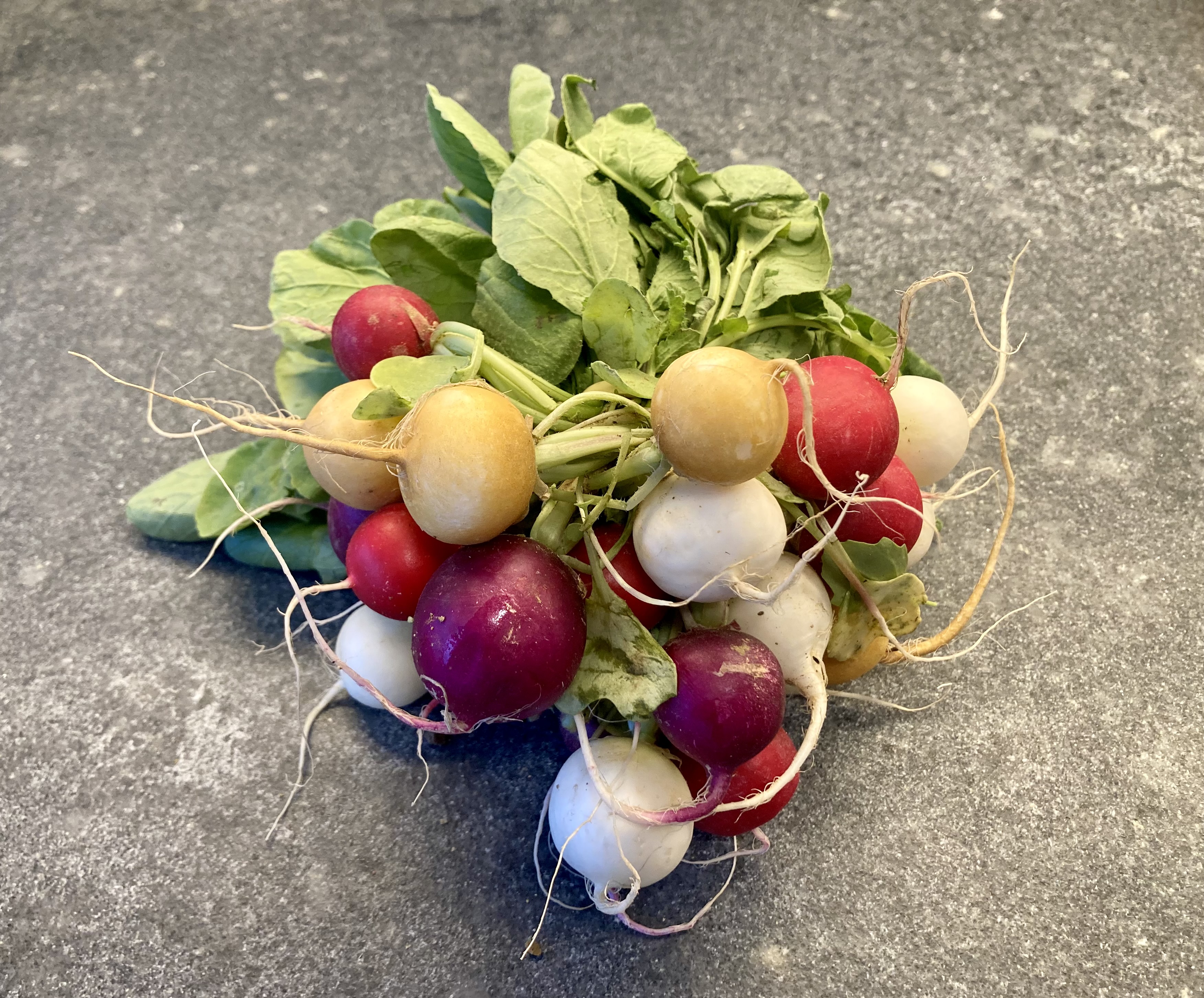
A few weeks ago, we posted a recipe for a salad with fried and marinated white button mushrooms. A rich, velvety salad with some acidity and lots of umami. This mushroom salad combines raw oyster mushrooms with radishes, sesame oil, mirin and cilantro. It’s both colourful and flavourful!
In general eating raw mushrooms is not a good idea. Some mushrooms contain mycotoxin that could be carcinogenic to humans. If you want to be 100% sure, it’s best to cook your mushrooms (and forget about this delicious salad!).
The variety we used is the Golden Oyster Mushroom (Pleurotus Citrinopileatusand its colour makes the salad even more vibrant. This mushroom is native to China, Japan and Russia. The ones we bought are cultivated. Compared to the more common grey oyster mushroom the caps are smaller in size and their taste is sweeter.
Another colourful oyster mushroom is pink (Pleurotus Djamor). Its taste is somewhat bitter. Perhaps not the best choice for a salad. If cooked well, it is supposed to taste like bacon, but by then it has lost all its colour.
Cultivated oyster mushrooms can be eaten raw. If you’re not sure, ask your greengrocer.

Wine Pairing

The salad comes with a range of flavours and obviously some acidity, which is important when choosing your wine. Perhaps a white wine with even more acidity? Or a wine that adds flavours or aromas to the dish? We decided to drink a glass of Vinho Verde with our salad, produced by Adega De Monção. This Portuguese white wine is made from Alvarinho and Trajadura grapes. Some citrus, slightly tropical, with notes of apples and pear. Tasty, elegant and refreshing. In general, you’re looking for a refreshing, easy to drink wine that has some acidity and flavours that make you think of apple, apricot or peach.

What You Need
  • 100 grams Golden Oyster Mushrooms
  • (Coloured) Radishes
  • For the Dressing
    • Excellent Olive Oil
    • Rice Vinegar
    • Mirin
    • Light Soy Sauce (we used Tsuyu)
    • Sesame Oil
  • Cilantro
What You Do

Wash the radishes and slice vertically in eight or six, depending on the size. Make the dressing. Add the sesame oil as the last ingredient because it’s very present. Combine the radishes with the dressing and the thinly sliced cilantro. Leave for a few minutes. Combine with the golden oyster mushrooms and serve immediately.

Mushroom Season

Hurray! The mushroom season has started! Last Saturday we bought delicious cèpes and chanterelles. Such a treat. It does of course mean that summer is over, which makes us a bit sad, but it also means the joy of eating wonderful dishes such as Cèpes à la Bordelaise or Salad with Mushrooms and smoked Duck (see below). Last year we prepared a Pâté with bay boletes, which was both beautiful and delicious. Will we be able to buy them this year? Or perhaps the intriguing Japanese Matsutake? It’s been some time since we last saw them on the market, and we would really love to make Matsutake with Spinach and Ginger again. How about Caesar’s mushroom with Udon?

Books

If you’re looking for useful mushroom recipes, then we suggest Antonio Carluccio’s The Quiet Hunt or Mushroom by Johnny Acton and Nick Sadler. Or look at our list of mushroom recipes.

Wine Pairing

Combining wine and salad is never obvious. In the case of a salad with mushrooms and duck we need to consider umami (mushrooms, duck), a touch of sweetness (smoked or cured meat) and the acidity of the dressing. We choose Domaine de Rimauresq Côtes de Provence Cru Classé rosé. A classic wine from the French Provence with grapes such as grenache noirmourvèdreugni blanc and rolle. The wine comes with delicate fruity, fresh flavours and aromas. It is very well balanced, dry and mouth filling and it combines beautifully with all aspects of the salad.
In general you’re looking for a white or rosé wine that has complexity and length, without being overpowering.

What You Need

  • 150 grams of Mushrooms (Cèpes preferred but also great with Oyster Mushrooms or a mix of Champignon de Paris, Shiitake and others)
  • Mesclun
  • Dried or Smoked Breast of Duck
  • Olive Oil
  • Vinegar (Red Wine, Jerez or Raspberry)

What You Do

Clean and slice the mushrooms. Heat a heavy iron skillet and fry the mushrooms in olive oil. Make a dressing of oil and vinegar. Toss the mesclun and the dressing. Transfer the salad to a plate, add mushrooms and finish with 3 or 5 slices of duck.

The Quiet Hunt

Antonio Carluccio’s The Complete Mushroom book is more than a cookbook. The first part of the book discusses foraging and collecting mushrooms, with clear descriptions of each mushroom and poisonous look-alikes. It’s a pleasure to read, but we’re not brave enough to start our own quiet hunt.

Fortunately, mushrooms are becoming more popular and greengrocers and supermarkets have started selling chestnut mushrooms, button mushrooms and shiitake. Asian supermarkets in most cases sell (king) oyster mushrooms, shiitake, enoki and shimeji.
Don’t be tempted to buy dried mushrooms: expensive, no aroma, nasty taste and not even close to a fresh mushroom.

Recipes

The second part of the book includes some 150 mushroom recipes, ranging from classic Italian dishes to culinary treats. Carluccio’s recipes are well written and informative. You’ll get the feeling that he lets you in on some of his secrets. And given he started foraging mushrooms as a young child, there are a lot of secrets to share!

One of our favourites is a salad made with maitake, fresh scallops, crab and shrimps. It’s an amazing result, with lots of pleasant flavours, also thanks to the cilantro, dill and parsley. Part of the fun is that the scallops are not seared but prepared like ceviche. Maitake is also available as a cultivated mushroom.

Caponata

More favourites? Of course! How about Mushroom Caponata or Tagliolini with black truffle? The caponata is a combination of mushrooms, egg plant and various herbs, so if you can buy button mushrooms and for instance shiitake, you’re ready to go.

Our all-time favourite from this book is the combination of fresh oysters with white truffle (bianchetti). A starter we prepare once or twice a year, depending on the availability of the truffle. Always a pleasure…

The Mushroom Book – the Quiet Hunt was published in 2001. It’s available (in most cases second hand) via channels such as Amazon and e-Bay for prices between 25 and 50 euro.

One of the very best books on mushrooms, written by a true expert.

PS

Later we found an earlier book by Antonio Carlucci called A Passion for Mushrooms, published in 1989. Very little overlap in recipes. A must-have for mushroom lovers!

Earthly Delights

The Mushroom Book by Michael McLaughlin and Dorothy Reinhardt (Illustrator) is a lovely, small book with some 35 recipes and 60 very delightful full-colour wood-cut illustrations. Just look at the cover! It’s the kind of book that we bought because it looks good. A book you simply want to have.

Only later did we find out that it discusses the history and other interesting back ground information of various mushrooms, including information on choosing, storing and preparing them. The book offers an introduction to the joy of cooking with mushrooms such as button mushrooms, morels, oyster mushroom, truffle, trompette de la mort, chanterelle, shiitake, cèpes and huitlacoche, a Mexican mushroom that grows on corn.
Michael McLaughlin is also known as co-author of The Silver Palate Cookbook with recipes from Manhattan’s celebrated gourmet food shop.

Amongst our favourite recipes are Mushroom Tapenade and Raw Mushroom, Fennel and Provolone Salad.

The Mushroom Book was published in 1994. It’s available (in most cases second hand) via channels such as Amazon and e-Bay for something like 15 euro. Ii is an ideal and friendly introduction to the world of earthly delights. 

The Mushroom Book
The Mushroom Book

Fried Oyster Mushrooms

Cotoletta alla Milanese and Wiener Schnitzel are based on a similar concept: breaded and pan fried thin slices of veal or pork, served with a slice of lemon. The most obvious variation is Pollo alla Milanese which is made with chicken. A very special variation is Cotoletta di vitella di latte alla Milanese, as described in 1891 by Pelligrino Artusi (1820-1911) in his book La Scienza in Cucina e l’Arte di Mangiar Bene (The Science in the Kitchen and the Art of Eating Well). The book is a must have for every serious food lover, so buy the book! It is very well written and contains over 700 recipes from Italy. Before breading the meat Mr. Artusi coats one side of the veal with a mixture of finely chopped fat ham, parsley, grated Parmesan cheese and truffle. Delicious no doubt!

The variation we prefer is made with Oyster Mushrooms, so Cotolette di Funghi Pleurotus alla Milanese. It is very tasty and the juicy and meaty structure of the oyster mushroom in combination with the crispy crust makes it into a much-loved starter. No need to deep fry: a hot pan with olive oil and butter is all you need.

The key to an excellent Alla Milanese are the breadcrumbs. Make your own breadcrumbs with yesterday’s bread and compare the result with the cardboard crumbs you can buy. Flavour! Texture!

Wine Pairing

A fresh, not too complex white wine will be great with the fried oyster mushrooms. Soave, Burgundy, Loire: all good.

What You Need
  • 150 grams of Oyster Mushrooms
  • One Egg
  • Three Slices of Yesterday’s Bread
  • Olive Oil
  • Butter
  • Black Pepper
  • Lemon Juice
  • Parsley (optional)
What You Do

We begin by making the breadcrumbs. Toast the slices of bread and let cool. Cut in smaller bits and then using a cutter or blender make the crumbs. Whisk the egg. Feel free to add some water if you need more volume. Remove the stems from the mushrooms. Make sure your pan is hot, add the oil, the butter and start breading (coat the mushroom with egg, then with breadcrumbs) and frying. When nearly ready remove the pan from the heat, add some lemon juice and move the mushrooms in the pan. The idea is to add a touch of lemon to the taste and to keep the mushrooms crispy. Add black pepper and serve immediately on a warm plate. We don’t serve with additional lemon because adding lemon juice later on will make the wonderful crunchy crust of the soft oyster mushrooms soggy. Sprinkle with chopped parsley (optional)

Salad of Oyster Mushrooms and Smoked Breast of Duck

The Loire

One of France’s most beautiful and interesting rivers. It flows from the Massif Central to the Atlantic Ocean and its valley is linked to towns like Nantes, Blois, Tours and Saumur and castles like Chambors and d’Azay-le-Rideau. Its banks are rich, just think of the many vineyards, farms and orchards. So much history, so much gastronomy. The river inspired many, including Hilaire Walden who wrote Loire Gastronomique in 1993. She followed the river and describes its gastronomy in this travelogue. The book features the typical food of the region and the recipes are authentic, easy to follow and delicious. Highly recommended!

Saumur is also a wine region and well-known for its sparkling wine. Another wine made in the region is Saumur Champigny, made from Cabernet Franc. Smell your Saumur Champigny and think of sharpening a pencil. Graphite, cedar wood. Exactly. That’s the specific aroma of Cabernet Franc. The Saumur Champigny wines are typically light or medium-bodied, have a crisp acidity, are easy to drink and they come with flavours and aromas of berries.

Food pairing

Saumur Champigny Les Hauts Buis, 2017, has a red colour with a touch of violet. Soft aromas that made us think of raspberries and cherries. Easy to drink, fresh acidity and soft tannins. Earthiness, lots of red fruit and cherries; with a nice finale with more red fruit. This is a well-balanced wine. Ideal to combine with charcuterie as apéro, a salad and perhaps with couscous. We decided to combine the wine with a salad. A salad that would bring juiciness, nuttiness and sweetness. Gently fried Oyster Mushrooms, smoked Breast of Duck and perhaps Quail Eggs. A few days later we combined the wine with roasted chicken. Again, very nice, light and inspiring.

What You Need

  • Oyster Mushrooms
  • Mesclun
  • Shallot
  • Smoked Breast of Duck
  • (Optional) Quail Eggs
  • Olive Oil
  • Vinegar
  • Black Pepper

What You Do

Tear the oyster mushrooms into smaller bits, following the lamellae. Don’t use a knife to do so. Make sure the mesclun is ready to be eaten. Slice the breast of duck into smaller bits if so required. Gently fry the oyster mushrooms in olive oil, just to give them warmth and colour. Cook the quail eggs until just set. Make the vinaigrette with olive oil, white wine (or cider) vinegar, black pepper and the thinly chopped shallot.
Create the salad by tossing the mesclun and the vinaigrette. Serve with the mushrooms and the breast of duck on top of the salad. Serve with crusted bread and of course a generous glass of Saumur Champigny.