Saffron Milk Cap with Octopus and Tomatoes

Saffron Milk Cap with Chorizo and roasted Bell Pepper is one of our favourites. More recently we followed a recipe by Antonio Carluccio for a combination with Halibut. Another great combination. They can also be combined with Squid, with gamba and with Potatoes and Eggplant.
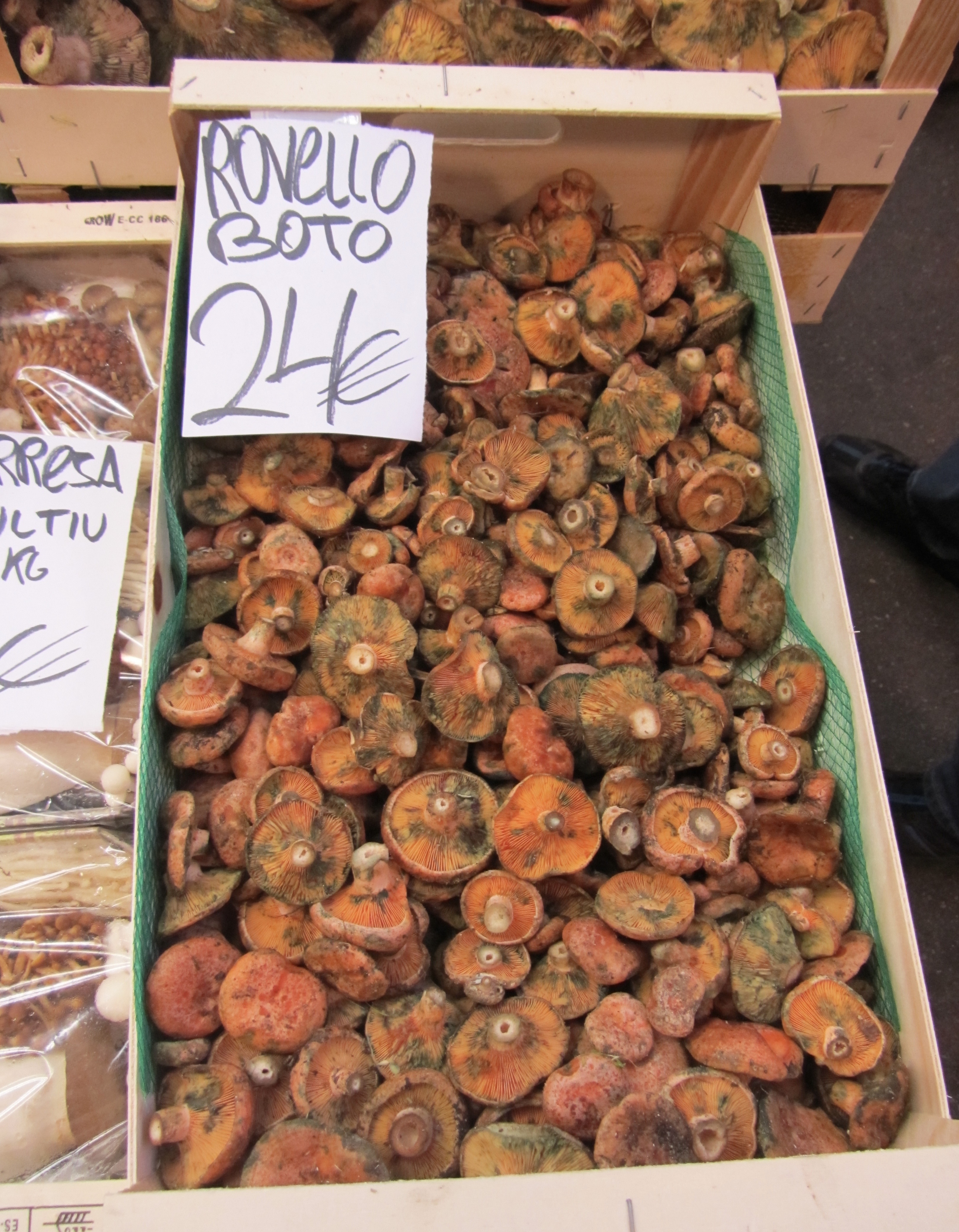
Saffron Milk Caps (Rovelló de Botó) are very popular in Spain. The picture below shows fresh Saffron Milk Caps on the Mercado Central in Valencia. Thinking about Spain we came up with the idea of combining the mushroom with octopus.

Wine Pairing

We opened a bottle of Domaine Font-Mars Picpoul de Pinet. Picpoul de Pinet (Son terroir c’est la mer) is a white wine from the South of France between Narbonne and Montpellier. The terroir (think calcareous soil) is influenced by the sea, which is reflected in the mineral taste of the wine. The story is that Picpoul could be read as pique poul which translates into something like ‘stings the lip’; a nice reflection of the high acidity of the grapes. This acidity guarantees a refreshing white wine, which is exceptional given the warm climate. The wine is bright yellow with a very subtle touch of green. It’s aromatic, floral and fruity. The taste has notes of citrus and apple.
In general we suggest drinking a refreshing, unoaked white wine that goes well with seafood.

What You Need

  • For the Sauce
    • 4 Tomatoes
    • 1 Shallot
    • 1 Garlic Clove
    • Red Wine
    • Thyme
    • Olive Oil
  • 150 grams of Saffron Milk Cap
  • 200 grams of pre-cooked Octopus Tentacles
  • Parsley
  • Cayenne Pepper
  • Olive Oil

What You Do

  1. Peel, seed and dice the tomatoes.
  2. Don’t discard the skin and the seeds: use a strainer to get as much tomato juice as possible
  3. Chop the shallot
  4. Chop the garlic finely
  5. Heat a skillet, add olive oil and add the shallot.
  6. Fry for a few minutes
  7. Add garlic and tomatoes
  8. Reduce heat
  9. After a few minutes add the tomato juice, half a glass of red wine and thyme
  10. Leave to simmer on low heat for 2 hours or until the sauce is ready both in flavour and texture
  11. Cool and transfer to the refrigerator
  12. The next day clean the mushrooms and slice (not too thin)
  13. Chop the parsley
  14. Heat a skillet, add olive oil
  15. Add the sliced mushroom
  16. Fry for one minute
  17. Reduce heat
  18. In parallel grill the pre-cooked octopus tentacles (4-6 minutes)
  19. Add the tomato mixture to the pan with mushrooms and cook for a few minutes
  20. Taste and add cayenne pepper. You’re looking for a fairly sharp, spicy taste
  21. Add parsley to the mixture and combine
  22. Slice the octopus
  23. After a few minutes add octopus to the mixture without combining,

Peaches with Lavender

The cookbook review project hosted by Bernadette has come to an end, unfortunately! It was inspiring to read cookbooks from chefs that were new to us, like Patricia Wells and Nagi Maehahi. It was fun preparing dishes for our esteemed panel and sharing their views with you. Thank you so much Bernadette, for running the project!

José Pizarro - Basque

Our suggestion to the cookbook review team was a book mentioned by Sheree: José Pizarro’s book Basque: Spanish Recipes from San Sebastián & Beyond, published in 2016. It’s a beautifully designed and edited book with a range of diverse dishes, for instance Veal Chops with Black-Eyed PeasPan Fried Cèpes with Egg Yolk and Cream Cheese Ice Cream with Blackcurrant and Camomile Syrup. The book is recommended by Claudia Roden (‘José Pizarro is an amazing cook who has brought us the best of Spanish food’) and Rick Stein (‘José’s recipes take us to the very heart of the best Spanish cooking’).

José Pizarro was born in the Extremadura region in Spain. Currently he owns seven restaurants in the UK and one in Abu Dhabi. He published six Spanish cookery books, received various awards and is often credited with making Spanish food popular in the UK.

We decided to make two dishes from the book, Grilled Octopus with Peppers and Aubergine and Roasted Lavender Peaches with Baked Custard. As a main dish we served Pork Belly with Sherry, Chickpeas and Chestnuts, following a recipe published in the Guardian. Our panellist Jan and Anton were happy to provide their feedback.

Grilled Octopus ©cadwu

The starter: Anton mentioned the octopus was tasty, with the right texture and nicely grilled. Jan was also pleasantly surprised by the octopus and its flavours. We all felt the dish as a whole could do with a bit more flavour and some acidity. We also expected the parsley oil to bring the various components together, but that didn’t really happen.

We enjoyed our starter with a glass of Portuguese Vinho Verde, made by Cazas Novas. It comes with floral and fruity notes, has some acidity and a medium body with a good texture and a fresh aftertaste. In general, you’re looking for a wine with freshness, minerality and some acidity.

Pork with Chestnuts, Chickpeas and Sherry ©cadwu

The dish with the pork belly strips was nice. Jan would have preferred the pork to be crispy. Perhaps prepare the stew and the pork separately? Anton enjoyed the chickpeas in the rich combination with sherry, onions, spinach and thyme. Surprisingly flavourful.

The recipe suggests leaving the pot in the oven for 30 to 40 minutes. The next day we decided leaving the leftovers in a warm oven for a few hours. The result was a very nicely integrated stew; a tribute to all ingredients. Next time we will prepare the vegetables a day ahead with some of the pork, perhaps allow for more time in the oven and serve with crispy fried pork.
We enjoyed the dish with a glass of Portuguese red wine, produced by Vidigal. The wine is made with aragonez, castelão and cabernet grapes. The wine has a nice red colour and aromas of fruit and herbs. Its taste is light, with some tannins and a touch of oak. In general, you’re looking for a smooth, easy to drink red wine with character.

Peaches, Lavender and Custard ©cadwu

Time for dessert. Peaches with Lavender? Four peaches and a tablespoon of lavender? Served with custard? We were intrigued.
We looked at the list of ingredients and noticed Patxaran, a sloe flavoured liqueur from the Basque country, normally served as a digestif.
Even more intriguing.

The combination of peaches, lavender, patxaran and custard was a winner. One night we served it with vanilla ice cream, which was a nice and tasty combination. We served our panel the peaches with home-made custard, following the recipe of José Pizarro. It’s a delicious combination. Rich, smooth, silky custard with uplifting, sweet and aromatic peaches. The sauce is a mixture of honey, patxaran and peach juice. Like us you would probably expect the lavender to be over the top, but it worked brilliantly. A winner! Our panel was very pleased and enjoyed the combination.
“Lovely custard, great way to prepare peaches, interesting how the lavender is supporting the fruit, present, never overwhelming, could I have another glass of patxaran?”
Of course you can!

Bernadette final review-question was: should this book be on your shelf? Our answer would be yes, because of the inspirational recipes, the use of ingredients and the beautiful pictures of food and the Basque country.

Basque: Spanish Recipes from San Sebastián & Beyond is available via your local bookshop or the usual channels for 15 euro or 40 US dollar. You can also enjoy the recipes José Pizarro publishes on a monthly basis in the Guardian.

Bistro Cooking

Recently we reviewed Bistro Cooking by Patricia Wells as part of the ongoing cookbook review project by Bernadette. The book made us think about a lunch we enjoyed years ago in Paris. It was a nice small bistro in a small street, off centre, 15th arrondissement, nothing fancy and not a Michelin star in sight. We entered the restaurant and ordered today’s dish, the plat du jour. It turned out to be a generous helping of lentils with two fried sausages, mashed potatoes and mustard. A beer worked beautifully with it. After having enjoyed our lunch, we talked about the joy of good food, French mustard and the beauty of lentils. Time for coffee.

It’s the kind of dish you would expect in a book called Bistro Cooking by. In the book we found two recipes with lentils, one salad and one soup with smoked sausages, the delicious Montbéliard.

Salad

When going through the index we spotted a recipe for a salad with squid, tomatoes, thyme and red wine vinegar. Unfortunately, our fish monger is on holiday, so we had to use pre-cooked octopus as an alternative. The salad is colourful, tasty and uplifting. A great starter, especially when enjoyed with a glass of rosé.

Salad with Octopus ©cadwu
Flo

For many years Brasserie Flo was not only the name of an excellent brasserie in Paris, it was also a chain of restaurants in Nice, Metz, Barcelona and of course Paris (JulienTerminus NordLa Coupole and many more). In 2018 the original Brasserie Flo was renamed Floderer, after one of its founders.

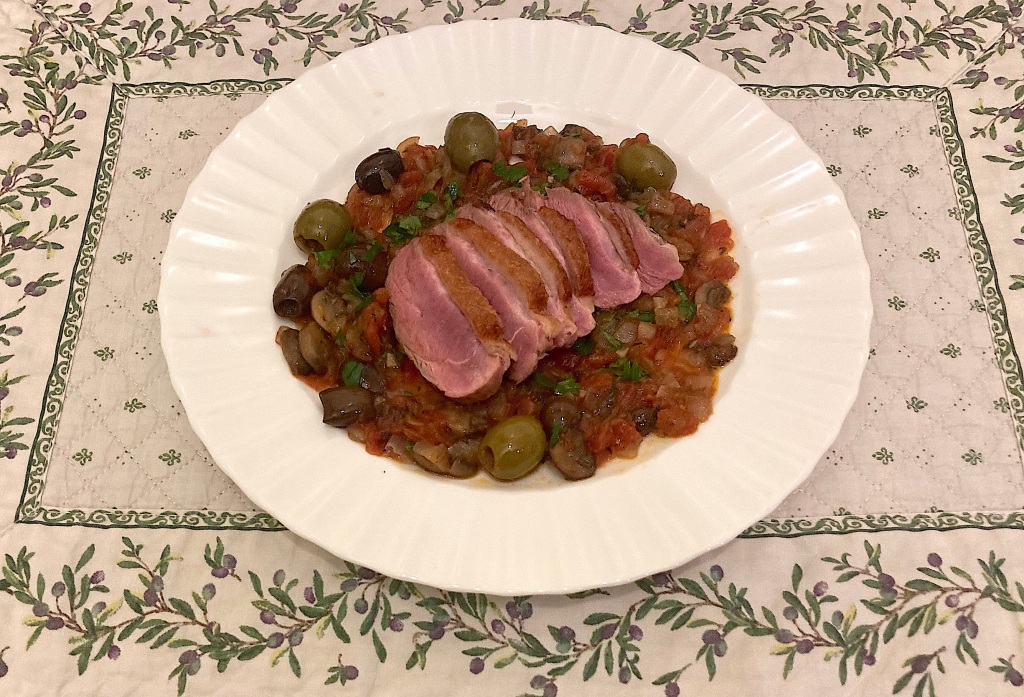
One of the recipes in Bistro Cooking is called Brasserie Flo’s Roast Duck. The name caught our attention and we decided to prepare it. The main ingredient is a whole duck, roasted in the oven. A bit too much for the two of us so we decided to combine the vegetable sauce with pan fried breast of duck. We expected the sauce to be fairly simple (tomatoes, mushrooms, onions, Herbes de Provence) but the result was delicious and a great accompaniment of the duck.

Patricia Wells serves her duck with a glass of Julienas, a cru from the Beaujolais. Very good choice. We opened a bottle of Gamay made by Domaine La Tour Beaumont from the Loire region.

Brasserie Flo’s Duck ©cadwu

The Book

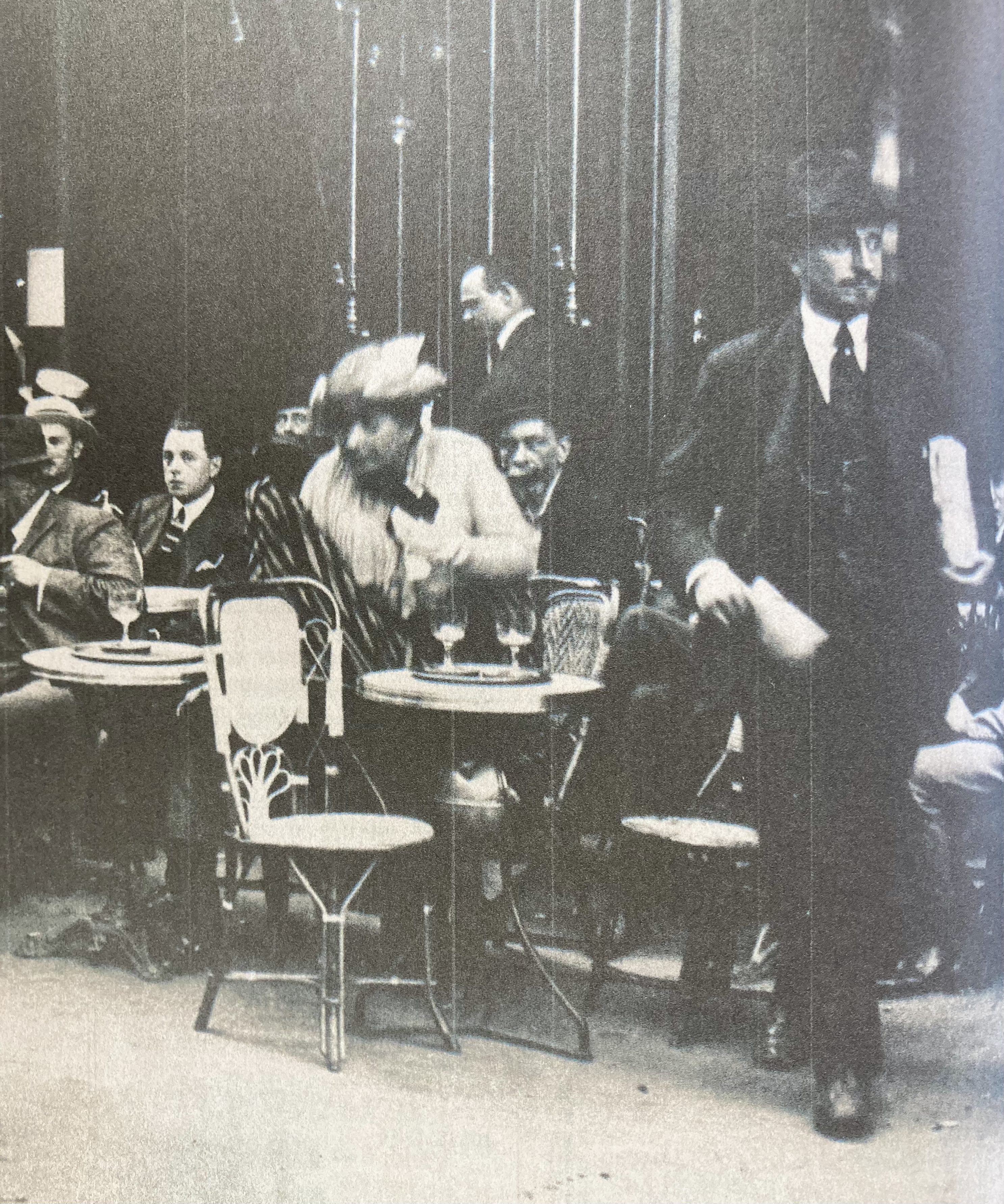
Bistro Cooking includes pictures of typical Bistro scenes showing waiters serving food, people reading their paper and enjoying a small coffee or guests sitting on a small terrace drinking an aperitif while chatting with friends. The pictures illustrate the typical bistro atmosphere and show France like it was and sometimes, if you’re lucky, still is. 
All recipes benefit from a nice introduction, discussing the origin of the recipe or one of the ingredients.

Both recipes can be found on Bernadette’s New Classic Recipe.

Bistro cooking is available via your local bookstore or the usual channels for 25 Euro or US dollar.


Pasta with Tomatoes and Octopus

Happy New Year! Let’s start 2023 with a flavourful pasta dish, inspired by the Portuguese cuisine. A cuisine that is all about food with great flavours, such as bacalhauCaldo Verde, octopus, cuttlefish, and the well known chicken piri-piri and pastel de nata. Octopus is very tasty and it comes with a great texture. The suction cups may be a bit unappealing, but don’t worry, the taste will make up for it.
In this case we use Orecchiette, small ear shaped pasta. The mixture of tomato and octopus is not like a sauce, so the paste should function as a carrier (a mini spoon) of the mixture. Enjoy quality pasta with slightly acidic tomatoes, rich octopus and refreshing parsley.

Wine Pairing

A Portuguese white wine will be a great idea, for instance a Vinho Verde. You could also go for a Spanish Verdejo from Rueda. Look for characteristics like fresh, fruity, clear acidity, subtle bitterness, minerality and full bodied. We enjoyed a glass of Pazo das Tapias Finca os Cobatos, from Monterrei in Spain made with Godello grapes.

What You Need

  • 2 Octopus Tentacles (cooked)
  • 2 Large Tomatoes
  • 2 Gloves of Fresh Garlic
  • Parsley
  • Jerez Vinegar
  • Black Pepper
  • Olive Oil
  • Pasta (Orecchiette)

What You do

Quarter the tomatoes, slice the garlic (not too small) and fry gently in a warm pan with olive oil. Set to low heat. In parallel heat a heavy iron skillet. Remove the gelatinous substance from the tentacles, dry them, coat with olive oil and fry. Cook the orecchiette according to the pack. With only 5 minutes to go for the pasta, slice the octopus in small chunks (depending on the size of the pasta), add the octopus to the tomato mixture and add half of the chopped parsley. Just before serving the dish, add some Jerez vinegar to the mixture. Add the remaining parsley and black pepper. Drain the pasta, keep some of the cooking liquid and add the pasta to the mixture. Combine, decide if you want to add some cooking liquid or perhaps some olive oil. Serve immediately on a hot plate.

Pasta with Tomatoes and Octopus ©cadwu

Spicy Grilled Octopus

We have all experienced chewy, fibrous and tasteless octopus, so how to make sure your octopus is juicy, tender and full of flavours?

Since octopuses don’t have bones, they have very tough connective tissue (collagen) between the muscles. When heating the octopus for a few hours, the collagen will break down into soft gelatine and the meat will become tender and juicy, just as you would like it to be.

‘How to speed up the process’, you wonder?
You could add vinegar to the cooking liquid, you could prepare the octopus by storing it in brine for a few hours, you could beat and pound the flesh, you could freeze the octopus for a few days, you could try adding a wine cork to the cooking liquid (hilarious!).
Unfortunately none of these short cuts make a significant difference.

The best method is to stew the octopus in a large pot or in the oven. This may take 4 hours or more. Octopuses contain a fair amount of juices and you want to capture these and their lovely flavours, which is exactly what you do when stewing an octopus.
Cooking an octopus in water for hours means losing these flavours; not something you want to do.

There is only one alternative to slow cooking: buy (frozen) baby octopuses. Marinate them for a few hours, grill them for 2 minutes and enjoy with a glass of wine or a nice cold beer.

What You Need

  • 6 Baby Octopuses
  • For the Marinade
    • Neutral Oil
    • Soy Sauce
    • Sweet Soy Sauce (Kecap Manis)
    • Fresh Ginger
    • One Garlic Glove
    • Teaspoon of Cumin
    • Tablespoon of Chilli Bean Sauce (Toban Djan)
    • Water (optional)
  • Chinese or Japanese pickles

What You Do

Clean the octopuses and remove the beak. Grate the ginger, chop the garlic and combine with the other ingredients. You’re looking for a powerful marinade with lots of chilli and (sweet) soy sauce. Allow the octopuses to marinate for a few hours.
Heat your grill, dry the octopus and grill for 2*1 minute. We prefer using a non-stick contact grill. Cut of the mantle and slice the tentacles in two. Serve on a warm plate with pickles and share.