
Oyakodon
Hope you enjoyed Netflix’s The Makanai: Cooking for the Maiko House as much as we did. Two friends (Kiyo and Sumire) move from rural Japan to Kyoto, following their dream of becoming maiko’s. Once in Kyoto it turns out that their dreams are very different. Kiyo is passionate about food and becomes the person to prepare the makanai, the food for the people living in the Maiko house. Every episode shows Japanese food, from dumplings in red bean soup to baked sweet potato and onigiri (rice balls).
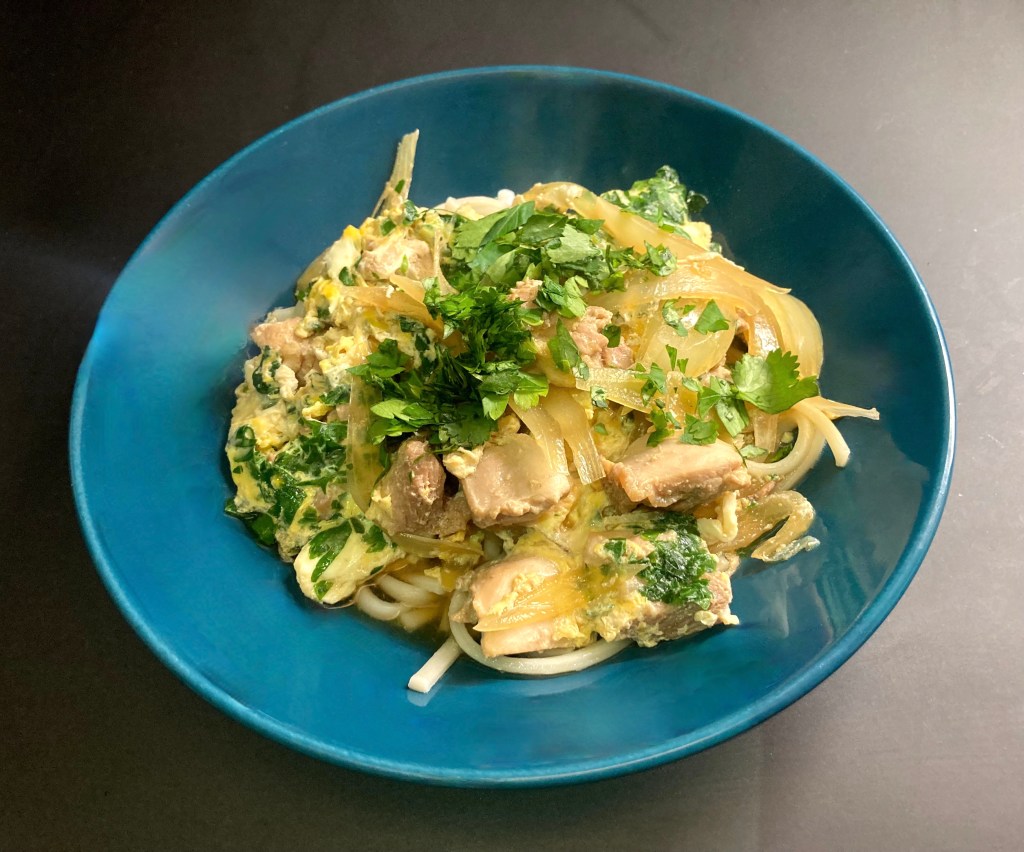
The first dish Kiyo prepares for the house is Oyakodon, a rice dish with egg and chicken, a popular dish in Japan. Easy to make, nutritious and the flavours and aromas are very satisfying. On Cooking With Dog you’ll find a helpful video showing you how to make Oyakodon.
San Francisco based chef Namiko Hirasawa Chen (founder of Just One Cookbook, an award winning blog about food) was brave enough to cook all the food shown in the series. Obviously you’ll find all makanai recipes on their website.
What You Need
- 100 grams of Chicken Breast (skin off)
- 1 medium White Onion
- 2 Eggs
- 100 ml Dashi
- 2 tablespoons Mirin
- 2 tablespoons Soy Sauce
- Mitsuba (or a mix of Parsley and Cilantro)
- Rice
What You Do
Make sure your dashi is full of flavours, perhaps a bit stronger than usual. Make a broth with mirin and soy sauce. Peel the onion and slice from top to bottom (banana shaped slices). Chop the chicken breast in comfortable slices. Add the onion and the chicken to the broth, cover the pan with a lid and cook until nearly done. Add half of the mitsuba (or the combination of parsley and cilantro). Add the eggs to a bowl and lightly beat the eggs but don’t mix. You should be able to distinguish the white and the yolk easily. Add the first half to the broth and use chopsticks to distribute the combination in the pan. Wait for a few moments and add the second half. Serve over a bowl of warm rice. Decorate with mitsuba.
PS
Perhaps you noticed that we used udon for our oyakodon, basically because we love udon, but it should be served with rice. Most (all?) recipes suggest adding sugar. We think the mirin brings sufficient sweetness to the dish, but feel free to add just a bit of sugar.

 Cook and Drink