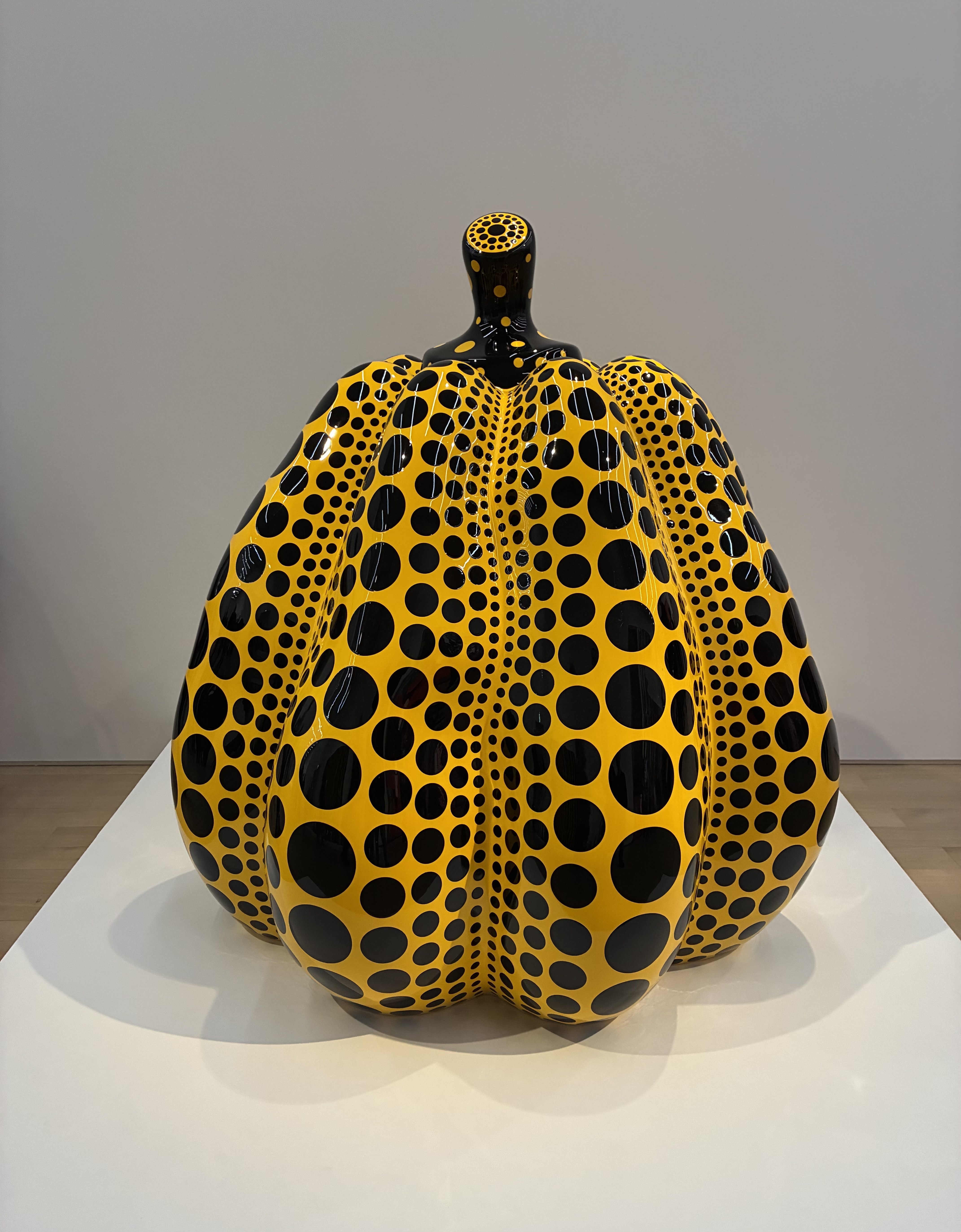
For the Love of Pumpkins

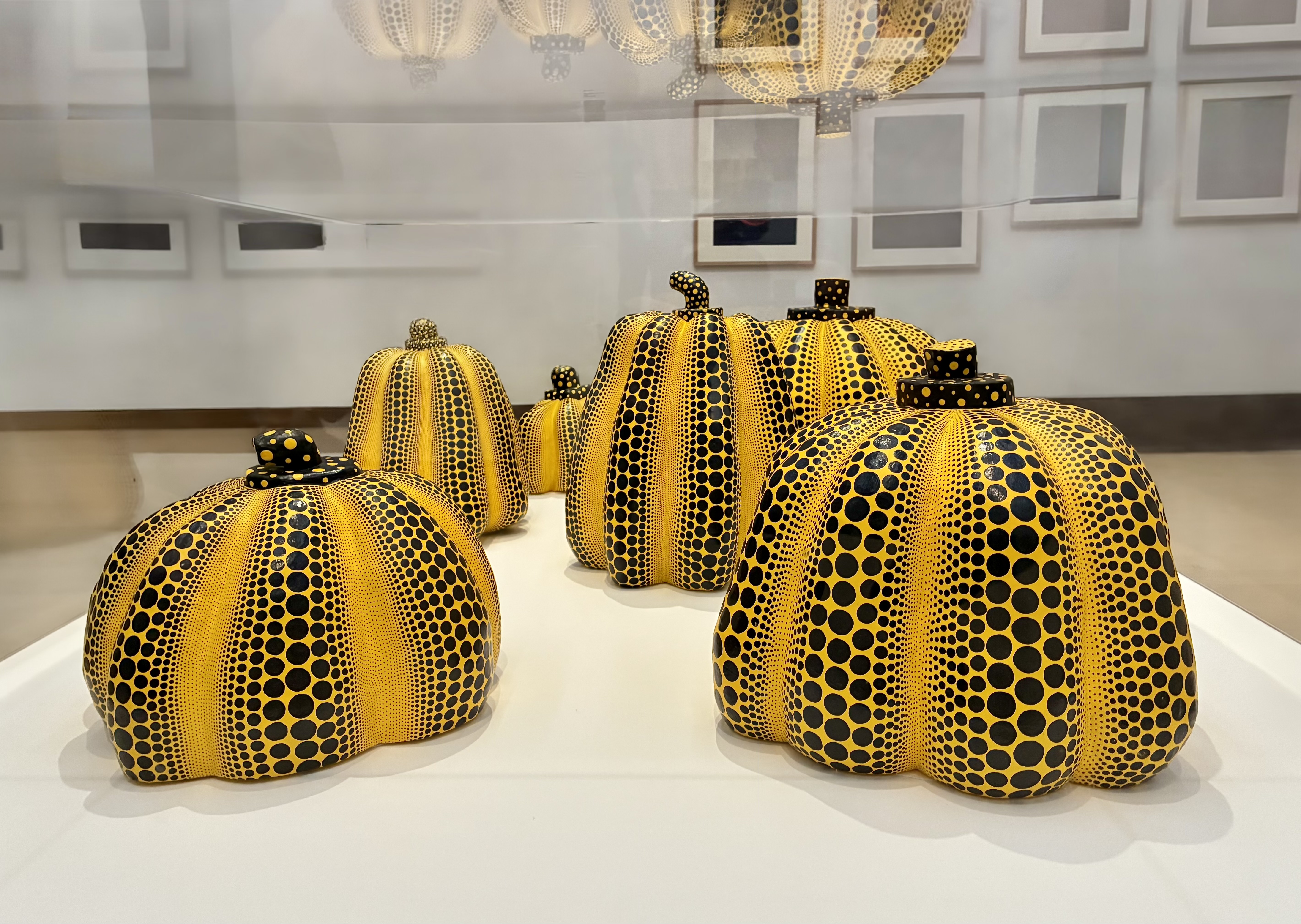
Until January 17th 2027 on view in the Stedelijk Museum in Amsterdam is the retrospective of Yayoi Kusama, one of the most influential and pioneering artists of the 20th and 21st centuries. She was born in 1929 in Matsumoto (Japan). As a child she began painting pumpkins, dots, flowers and patterns. The dots transformed into her famous polka dots, the net of self-obliteration. Pumpkins continued to inspire her throughout her life. In 2015 she said in an interview “I love pumpkins because of their humorous form, warm feeling, and a human-like quality”.

This is a comprehensive video about Yayoi Kusama and this article provides background information about her pumpkins.

Eating pumpkins was perhaps not something Yayoi Kusama would do, but we simply love them. In autumn they bring warmth and comfort to the table. Both dishes are made with kabocha, the Japanese pumpkin.
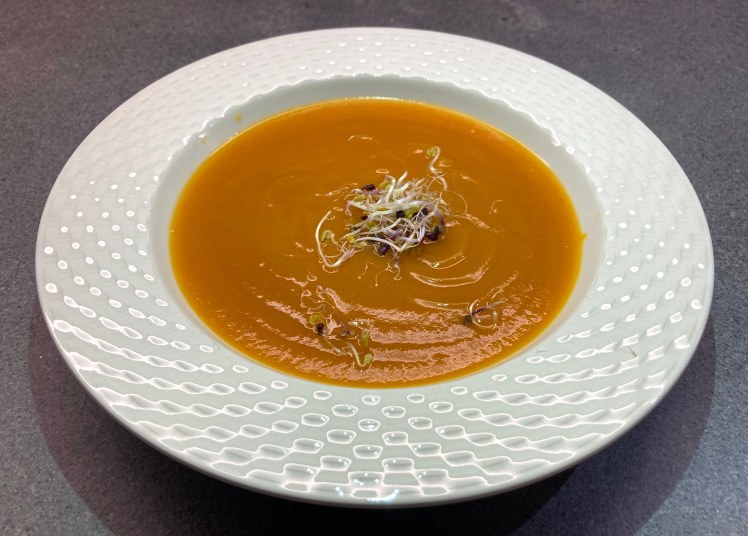
Pumpkin Soup (with Kabocha) ©cadwu
Pumpkin Soup

A vegetarian soup made with kombu dashi, meaning its basis is made with dried kelp only. Soy sauce is added to the soup, bringing saltiness and umami, which combines very well with the exceptional sweetness of the pumpkin and the mirin. You could prepare the soup with an unpeeled kabocha, but we love the intense orange colour of the inside.

Pumpkin with Shrimps

The shrimps are marinated in sake for a few hours and then fried. The pumpkin is simmered in dashi with tentsuyu and mirin. The pan is deglazed with dashi, mirin and tentsuyu. The shrimps are coated with the sauce and served with three slices of kabocha and pickled cucumber.
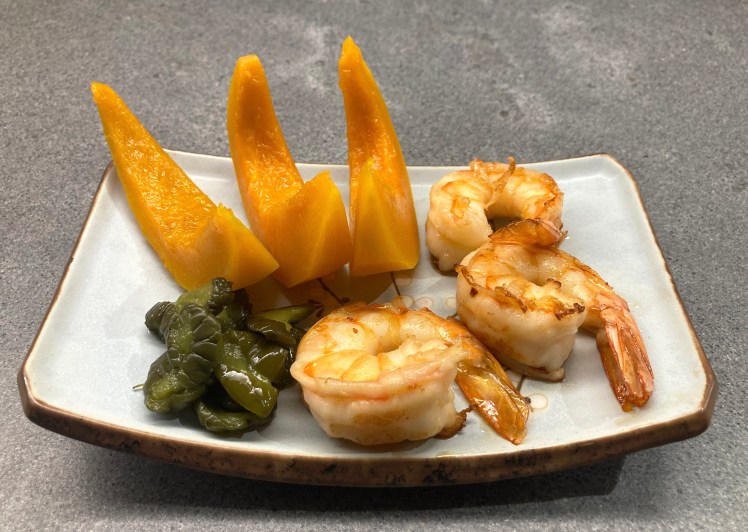
Japanese Pumpkin (Kabocha) with Shrimps ©cadwu

Japanese Pumpkin with Shrimps

The traditional Japanese way of preparing Kabocha (Japanese Pumpkin) requires a bit of work but is not overly complex. The result is a combination of delicate, fresh pumpkin flavours with clear umami as a result of simmering the pumpkin in a dashi-based stock. You could replace the Japanese Pumpkin with a more common winter squash or with a red Hokkaido pumpkin.

Combining shrimps and pumpkin seems a bit odd, but it’s actually very nice. The combination is colourful and the various flavours come together nicely, also thanks to the dashi.
The first time we enjoyed this combination was when we prepared Takiawase, following the recipe from author and Michelin Award winning chef Akira Oshima. The recipe is included in his book Yamazato, Kaiseki Recipes: Secrets of the Japanese Cuisine. It’s a mouth-watering dish but unfortunately fairly difficult to prepare. Typically, Takiawase is a combination of vegetables and fish. Every ingredient requires its own preparation and is simmered in its own dashi-based stock. Indeed: four different kinds of homemade stock. The recipe of Akira Oshima combines kabocha, eggplant, okra and shrimp.

Drink Pairing

We prefer a glass of sake with our Kabocha with Shrimps, for instance a Junmai sake with fresh aromas and good acidity. The sake must be dry and well-balanced with a clean finish. You could enjoy a glass of white wine with the dish, provided it’s dry and mineral. Or a more adventurous choice: a glass of Manzanilla or Fino sherry. Manzanilla is a dry sherry with a flowery bouquet, a delicate palate and subtle acidity. It works beautifully with the dashi and the sweetness of both the kabocha and the shrimps.

What You Need                                                                         
  • For the Dashi
    • 10 grams of Kelp
    • 10 grams of Katsuobushi
  • For the Kabocha
    • Mirin
    • Light Soy Sauce (Usukuchi)
    • Sake
  • For the Shrimps
    • Sake
    • (Olive) Oil
    • Mirin
    • Light Soy Sauce (Usukuchi)
  • Pickled Cucumber
What You Do
  1. Start by preparing 500 ml of dashi
  2. Peel and devein the six shrimps, we prefer to leave the tail on
  3. Transfer the shrimps to a bowl, add some sake and transfer to the refrigerator for a few hours
  4. Peel the Kabocha, remove the seeds
  5. Halve and then slice in 6 equal parts
  6. Combine 400 ml of dashi with 25 ml of mirin, 25 ml of light soy sauce and a tablespoon of sake
  7. Add the slices of kabocha and let is simmer for some 10 minutes or until nearly done
  8. In parallel heat a heavy iron skillet, add oil, dry the shrimps with kitchen paper and then fry them quickly, let’s say 4 minutes
  9. Transfer to a warm oven
  10. Remove the oil from the pan with kitchen paper
  11. Reduce the heat to low
  12. Mix 50 ml of dashi with 25 ml of mirin and a small spoon of light soy sauce
  13. Deglaze the pan and let the mixture reduce
  14. Transfer the shrimps back the pan and coat them quickly with the mixture
  15. Serve the slices of kabocha with the fried, coated shrimps and the pickled cucumber