Three Winter Soups

A few weeks ago, we enjoyed a delicious vegan dinner at Lokaal, a small restaurant in the centre of Gent, Belgium. Friendly service, relaxed atmosphere and nice music. One of the specialties of Lokaal is fermentation, for instance homemade Tempeh from Bulgur. Lots of umami and length. We loved it!
Our dinner at Lokaal started with a nice winter soup made with kale and kohlrabi. We’re not the biggest fans of kale, but in this case it worked very well. The kohlrabi gave a nice, uplifting touch to the soup.

It made us think of other winter soups, like parsnip and Jerusalem artichoke soup, and parsley root soup. Ah, those forgotten vegetables! They bring us new flavours and combinations.

We used vegetable stock for all three soups. It is made with Carrot, Onion, Leek, Celery and Black Pepper (and optional a bouquet garni). Easy to make and lots of flavour. It freezes well, which makes it an even more important asset.

What You Need (Kale and Kohlrabi soup)
  • 500 ml Vegetable Stock
  • 200 grams of Kohlrabi
  • 50 grams of Kale
  • French Mustard
What You Do
  1. Clean the vegetables
  2. Devein the kale
  3. Peel the kohlrabi
  4. Coarsely chop the vegetables
  5. Warm the stock
  6. Add the kohlrabi
  7. Leave to simmer for 10 minutes
  8. Add the kale
  9. Leave to simmer for 10 minutes
  10. Use a blender to make a relatively smooth soup
  11. Add mustard to taste
  12. Serve
  13. PS The soup doesn’t keep well, so not one for the refrigerator
What You Need (Parsnip and Jerusalem Artichoke soup)
  • 500 ml Vegetable Stock
  • 200 grams Parsnip
  • 200 grams Jerusalem Artichokes
  • White Pepper (optional)
What You Do
  1. Clean, peel and coarsely chop the vegetables
  2. Warm the stock
  3. Add the vegetables
  4. Leave to simmer for 15 minutes or until the vegetables are done
  5. Use a blender to make a smooth and creamy soup
  6. Depending on the Jerusalem Artichokes the soup can become fairly thick. Add some stock if so required
  7. Taste (optional: add some white pepper)
  8. Serve
  9. PS You can also enjoy the soup the next day, it keeps well in the refrigerator
What You Need (Parsley Root soup)
  • 500 ml of Vegetable Stock
  • 200 grams Parsley Root
  • 1 small Shallot
  • ½ Leek (white only)
  • 1 small clove Garlic
  • Butter
  • Parsley
What You Do
  1. Warm butter in a pan
  2. Peel and coarsely chop parsley root
  3. Coarsely chop leek and onion
  4. Glaze onion and leek in butter
  5. Add parsley root
  6. Add garlic
  7. Leave on low heat for 5 minutes
  8. Add stock
  9. Simmer for 20-30 minutes or until the parsley root is soft
  10. Blender
  11. Pass through a sieve
  12. Simmer for 10 minutes
  13. Cool
  14. Serve the next day
  15. Decorate with chopped parsley leaves
Kale and Kohlrabi Soup made with vegetable stock. An intriguing combination. The kohlrabi gives this winter soup an uplifting flavour. ©cadwu
Kale and Kohlrabi Soup ©cadwu

Helianthus with Blue Cheese

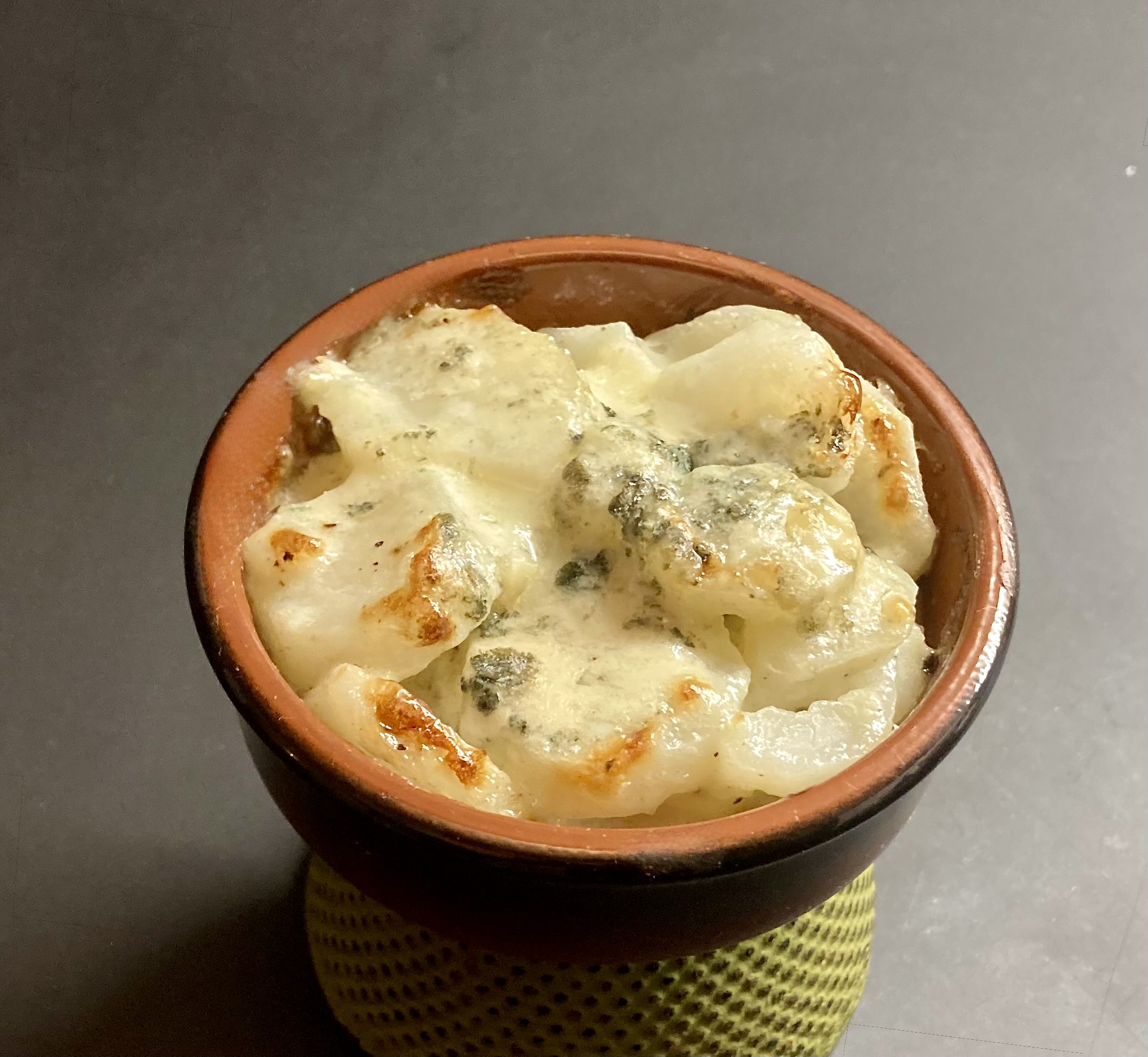
Always fun to shop at our organic supermarket and see what forgotten vegetables they have. This week they offered oca, Jerusalem artichoke (Helianthus Tuberoses), parsnip, black radish and helianthus, which was new to us. We bought a few of the helianthus roots and when at home we started thinking about ways to prepare them. Both Jerusalem artichoke and the helianthus roots are a touch sweet and nutty. A purée perhaps? We then noticed a recipe for a tartelette with blue cheese. Great idea, but not so sure about the combination with pastry. After a few minutes we came up with the recipe below. The helianthus roots are creamier than the Jerusalem artichokes and this worked very well in the combination with blue cheese and crème fraîche.The dish is rich with a touch of freshness.

Wine Pairing

In general, we suggest a full bodied, well balanced red wine, with aromas of black fruit, perhaps liquorice and with supple tannins. 

What You Need
  • Roots of the Helianthus Strumosus
  • Crème Fraîche
  • Roquefort
What You Do

Clean the roots and cook in boiling water for perhaps 5 minutes. They become soft very quickly. Drain and let cool. In parallel use a fork to combine equal parts of crème fraîche and Roquefort. Slice the roots and combine with the mixture. Place in ramekins and transfer to the oven at 200 °C or 390 °F for a few minutes, until hot and golden. You can also place them under the grill for a few minutes.

PS

Interested? Find out more about forgotten vegetables!

More PS

As Dorothy suggested (see below) it’s a great idea to fry or roast them with onions. We also added some garlic. Delicious!

Maitake

Legend has it that maitake got its nickname The Dancing Mushroom because foragers danced with happiness when finding it. It still is a much loved culinary mushroom, with a very specific aroma, interesting texture and intense flavours.
Nowadays maitake can be wild or cultivated. Both are fine; we actually prefer the cultivated one because it’s milder. Make sure you cook maitake through and through, otherwise you may upset your stomach (and other parts of your body). 

Maitake combines very well with beef and thyme. It is also great when combined with shrimps, crab, scallops, coriander, dill and parsley; a salad created by Antonio Carluccio and published in 2003 in the Complete Mushroom Book. Our Maitake soup, made with dashi, ginger and rice, is a gentle soup, with some umami and bitterness. 

In this case we combine fried maitake with various other ingredients to create a well-balanced (vegetarian) meal.

Wine Pairing

A flavourful dish! Sweetness in the tomatoes, umami in the maitake, freshness in the mash et cetera. Wine wise you have lots of options. We preferred a not too complex pinot noir, because it’s supportive and combines very well with the various flavours.

What You Need

  • 200 grams of Maitake and Olive Oil
  • Parsley Root, Jerusalem Artichoke, Crème Fraîche, White Pepper and Nutmeg
  • Small Ripe Tomatoes, Thyme, Rosemary, Garlic and Olive Oil
  • Lentils, Shallot, Parsley, Vegetable Stock and Black Pepper
  • Celeriac, Butter, Caraway Seed, Fennel Seed and Black Pepper

What You Do

For the lentils: slice the shallot and gently fry it in olive oil. After a few minutes, add the washed lentils (check for pebbles!), coat them with oil, add vegetable stock and cook until ready. Perhaps 20 minutes. Drain but keep some of the liquid, add chopped parsley and black pepper.
For the tomato confit, see an earlier post.
For the mash: clean and chop 2 parsley roots and 1 Jerusalem artichoke. Cook for 10 minutes or so in water until nearly done. Drain. Add a generous spoonful of crème fraîche and warm on low heat for 10-20 minutes. The idea is for the vegetables to absorb some of the crème fraîche. Blender the mixture, pass through a sieve and serve with white pepper. A touch of freshly grated nutmeg will be great. If you like more color on your plate, then add some chopped parsley to the mash.
The celeriac is cooked in the oven with a coating of fennel and careway seed. The recipe from Dutch chef Yvette van Boven is available via YouTube. She combines it with a home-made citrus marmalade, but that’s not necessary for this dish. Use the YouTube settings if you want to have subtitles in your own language.
Slice the maitake and fry in olive oil until done and slightly crunchy.
Serve on a colourful plate.

Jerusalem Artichokes

So much to tell about this plant! It originates from North America (so nothing to do with Jerusalem), its flowers are beautiful and resemble sunflowers, its tuber contains inuline (hence the sweetness) and the taste does make you think of artichokes. Other names include earth apple, topinambour (such a mysterious name!) and sunroot. Once a popular, cheap, nutritious vegetable, now nearly forgotten.
Most people cook or steam the tuber and turn it into a mash. Works well, especially when you add some excellent olive oil or some crème fraiche. Jerusalem Artichokes only contain a very limited amount of starch, so you could use a blender, but we prefer using a fork and passing it through a sieve because the mash becomes glue easily. A better idea is to quarter the Jerusalem Artichokes and cook them gently in olive oil with nutmeg, onion and garlic. When nearly ready add a glass of white wine and some stock, reduce the liquid and serve as a stew.
Jerusalem Artichokes can be used in many ways, you can eat them raw, use them as a basis for a soup, combine them with other seasonal vegetables in the oven, et cetera. We treated them as potatoes and served them with excellent beef and Brussels sprouts.

Wine Pairing

Your choice of wine is of course much influenced by the way you prepare the tubers and what you serve with them. In our case we suggest a Valpolicella Ripasso: red fruit, cherries, not too much tannins, fresh and zesty. Works very well with the sweetness of the Jerusalem Artichokes and the slightly nutty taste of the Brussels sprouts. Or should we say the slightly nutty taste of the Jerusalem Artichokes and the sweetness of the Brussels sprouts?

What You Need

  • Jerusalem Artichokes
  • Olive Oil
  • Butter

What You do

Wash the tubers and steam them for 20 minutes or so, depending on the size. You could also cook them, but be careful since they overcook easily. Another option is to put them in the oven for an hour or so on 80° Celsius or 175° Fahrenheit (for instance when you are preparing Choucroute). Let cool. Peel and slice the tubers. Warm a non-stick pan, add olive oil and perhaps some butter. Fry the slices gently. Take your time and watch carefully, the fructose in the Jerusalem artichokes burns easily.

Jerusalem Artichokes ©cadwu

Bay Bolete

What’s In A Name?

We are all familiar with the white (button) mushroom, also known as Champignon de Paris. The Chestnut Mushroom is the same mushroom, just with a light brown, chestnut coloured cap. Its taste and texture are more intense compared to the classic white mushroom.
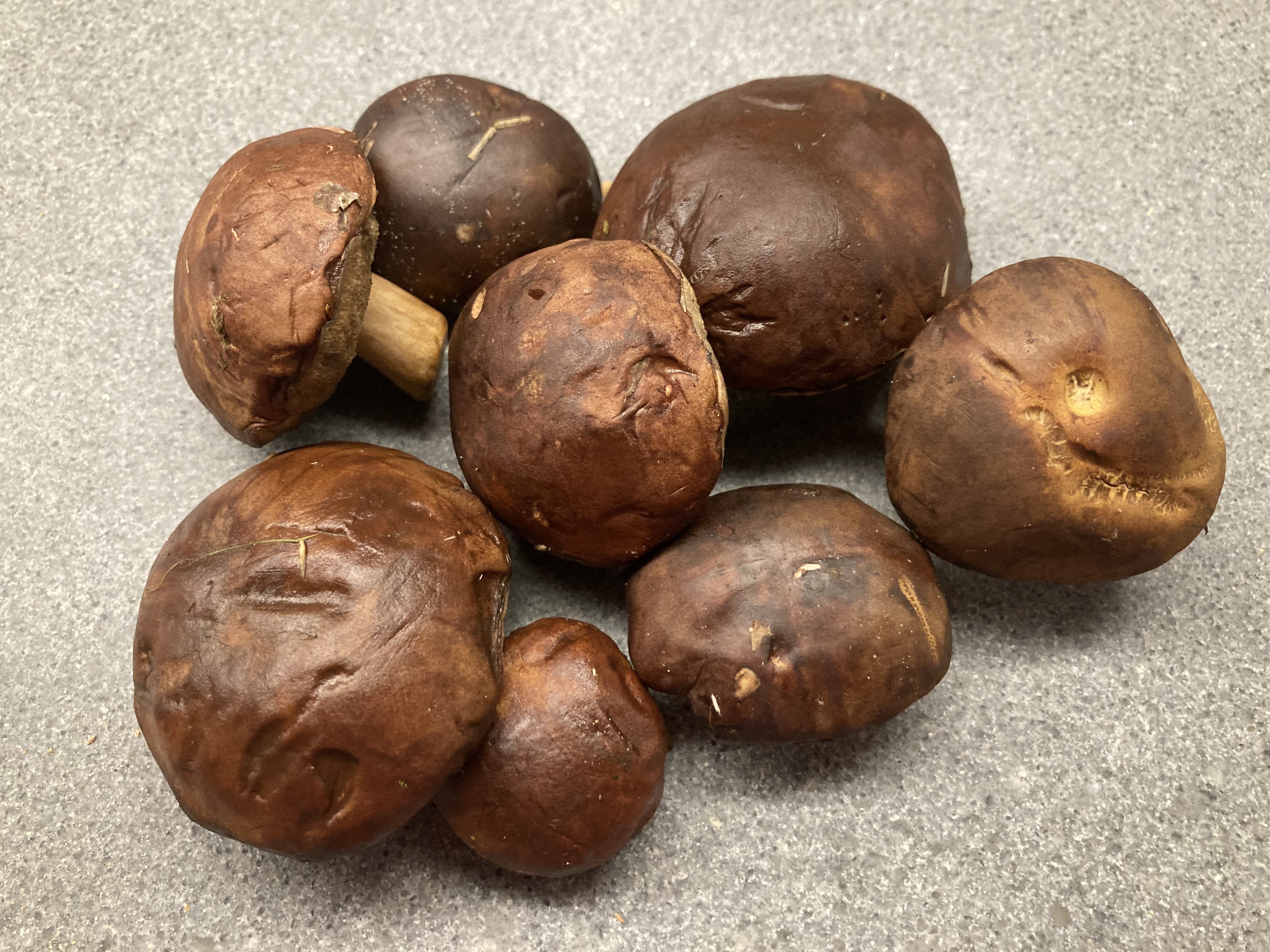
A Chestnut Bolete is a different kind of mushroom. It is small, chestnut coloured when young and beige when older. The German name of the Chestnut Bolete refers to rabbits, the Dutch name to cinnamon and the French name to chestnuts.
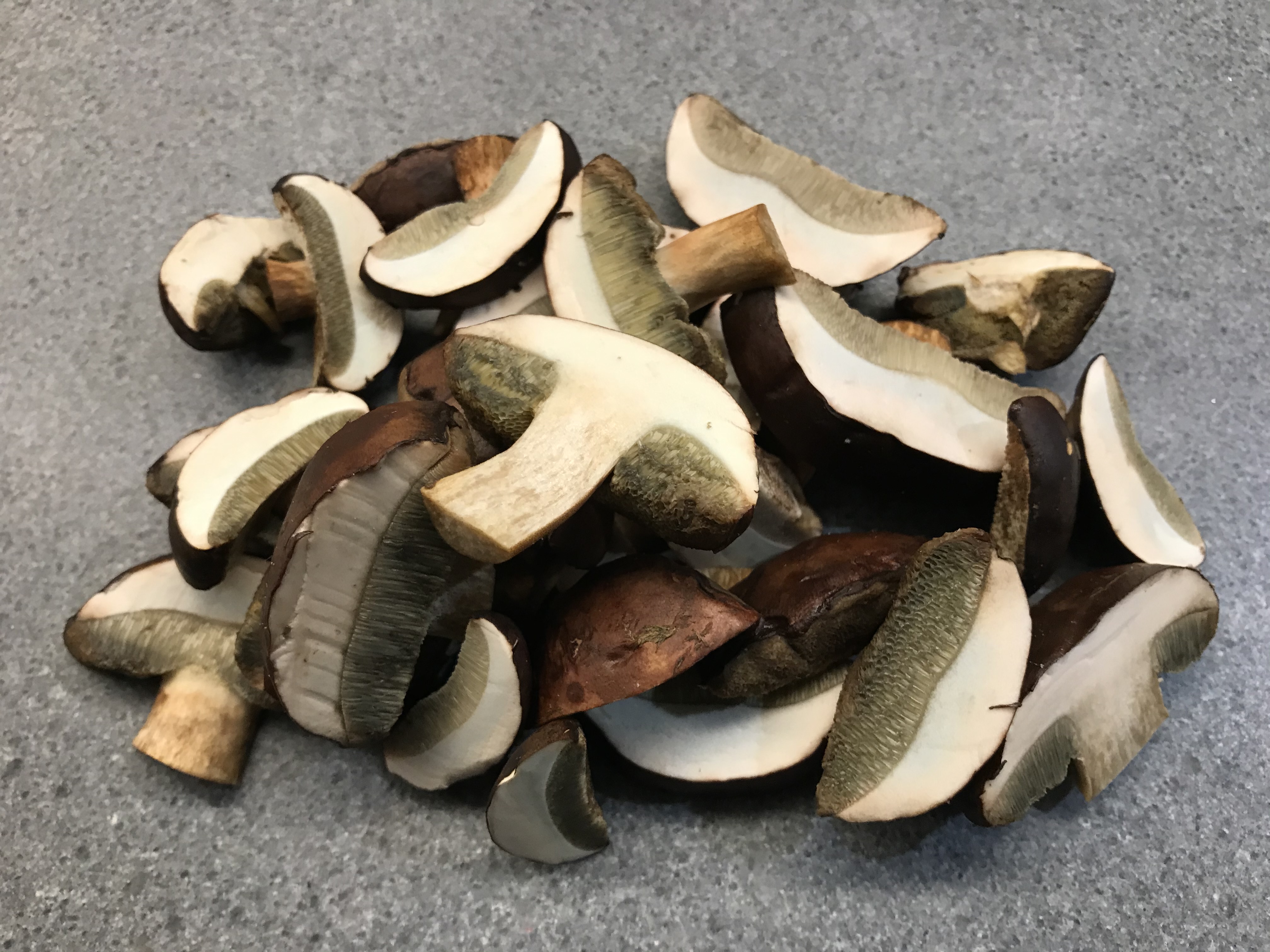
The overall colour of a Bay Bolete is brown and its cap is bay, the reddish brown colour of many horses. Or is it chestnut? In German and Dutch the name of the Bay Bolete refers to chestnuts; in French it refers to bay. The official name of the Bay Bolete is Imleria badia, but also Boletus Badius because it’s related to Boletus Edulis, also known as cèpes or Porcini.

Let’s talk about flavours and aromas, that’s probably more interesting. Bay Boletes are as tasty as cèpes. The texture is a bit softer and the mushroom itself more moist. It’s actually a very common mushroom in Europe, China, Mexico and North America. Sadly, this very tasty, not expensive bolete is hard to find in shops and on markets. So if you see them, buy them immediately.
Following the recipe for Cèpes à la Bordelaise is a good idea.

Wine Pairing

Enjoy with a glass of medium bodied red wine with aromas like berries and plums, for instance a Beaujolais Côte de Brouilly. It’s such a pity that the appreciation of Beaujolais wine is dominated by the (faded) popularity of Beaujolais Primeur and the idea that Beaujolais is a simple and light wine. It’s not. When you have the opportunity, taste a glass of Régnié, Morgon or one of the other 10 crus of the Beaujolais. Welcome to the divers and exciting world of Beaujolais wines!

What You Need

  • 200 gram of Bay Boletes
  • Shallot
  • Red Meat (Deer in our case)
  • Jerusalem Artichokes
  • Chicken Stock
  • Olive Oil
  • White and Black Pepper
  • Excellent Olive Oil

What You Do

Clean the Jerusalem artichokes and cook them for 10 minutes or so until tender. Mash with a fork or spoon and pass through a sieve. Don’t use a blender, unless you enjoy eating starch. Cool and set aside.
Clean the bay boletes with kitchen paper and slice them (not too thin). Chop the shallot. Add olive oil to a relatively hot heavy iron skillet. Reduce the heat and fry the boletes for 10 minutes. Add the chopped shallot. Cook on medium heat for 5 minutes. Stir and add fresh black pepper.
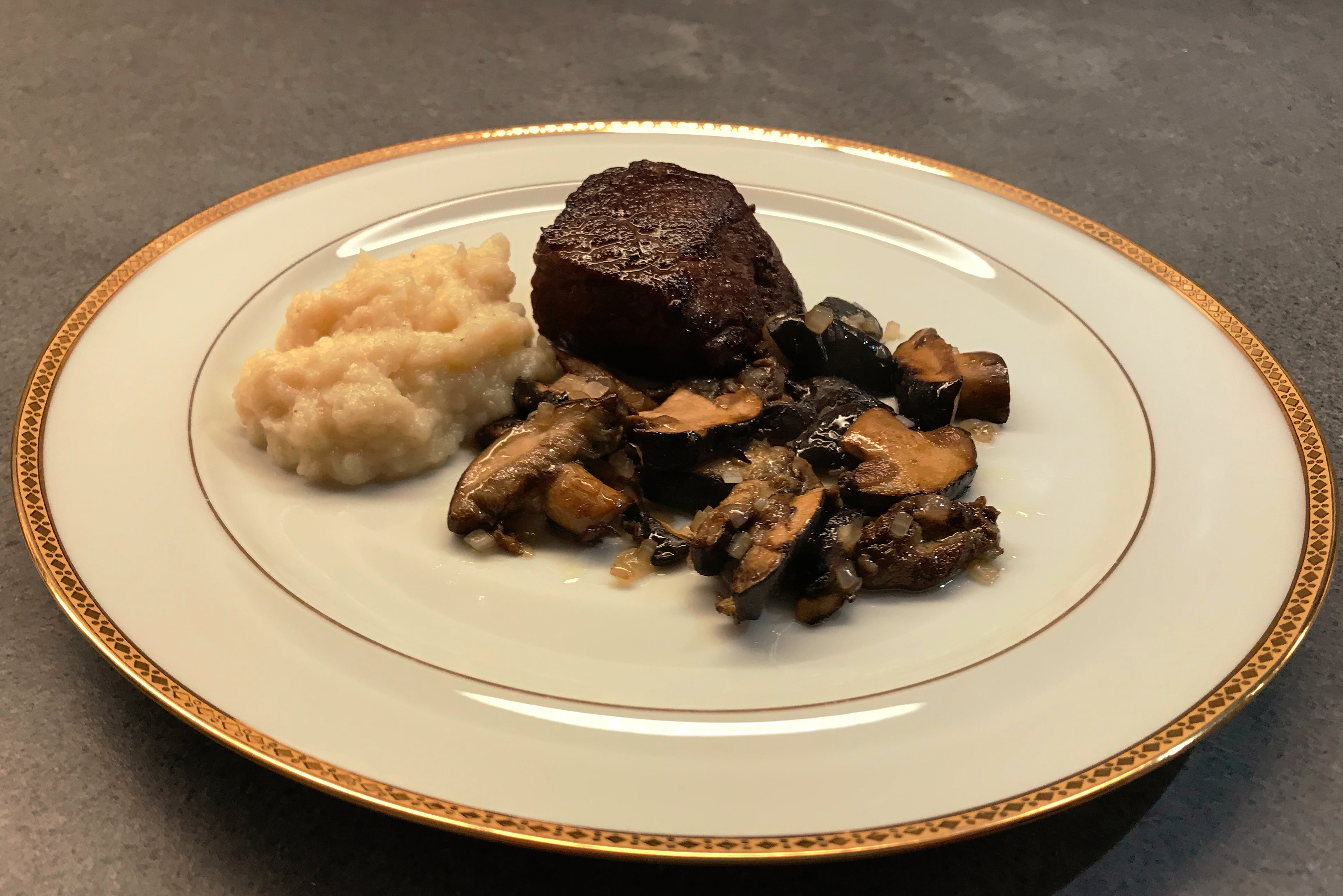
In parallel fry the meat very quickly in a hot skillet and let rest for 10 minutes. Warm the purée of Jerusalem artichoke, add a tablespoon of chicken stock, some white pepper and a drizzle of excellent olive oil. Mix with a spoon. Serve on a hot plate.

Let’s Mash!

We do like our mashed potatoes, for instance with a nice, hearty stew or with a wintery Choucroute. But isn’t it a bit too obvious, mashed potatoes?
Of course it is! Especially during the colder months your green grocer offers a range of vegetables that are ideally suited for making a purée.

A purée of Jerusalem Artichokes is savory, sweet, delicate and nutty. Great with game, pork stew and choucroute.
The mash of Celeriac and Lemon is a great accompaniment of many a dish. It’s fresh and light. Simply serve it whenever you think ‘let’s serve with mashed potatoes’. Give it a try when you want to eat roast cod.
A purée of Parsley Root and Parsnip has an intriguing taste. Yes, definitely parsley, but more complex, more lasting. Excellent when combined with a stew or roasted pork-belly.

Jerusalem Artichokes and Parsnips contain (like potatoes) a significant amount of starch, however different from potatoes you can use a blender when preparing the purée.

What you need

  • Jerusalem Artichokes and white pepper
  • Or Celeriac, four slices of Lemon and nutmeg
  • Or Parsley Root, Parsnip and white pepper
  • Cream

What you do

Clean and dice the vegetables and cook (with the lemon) until nearly soft. Drain (and remove the lemon) and add some cream to the pan. Leave on very low heat for 10 minutes or so. The idea is that the vegetables will absorb some of the cream. Mash (or blender) until smooth and pass through a sieve to make it perfect. Serve with white pepper and nutmeg (if required).

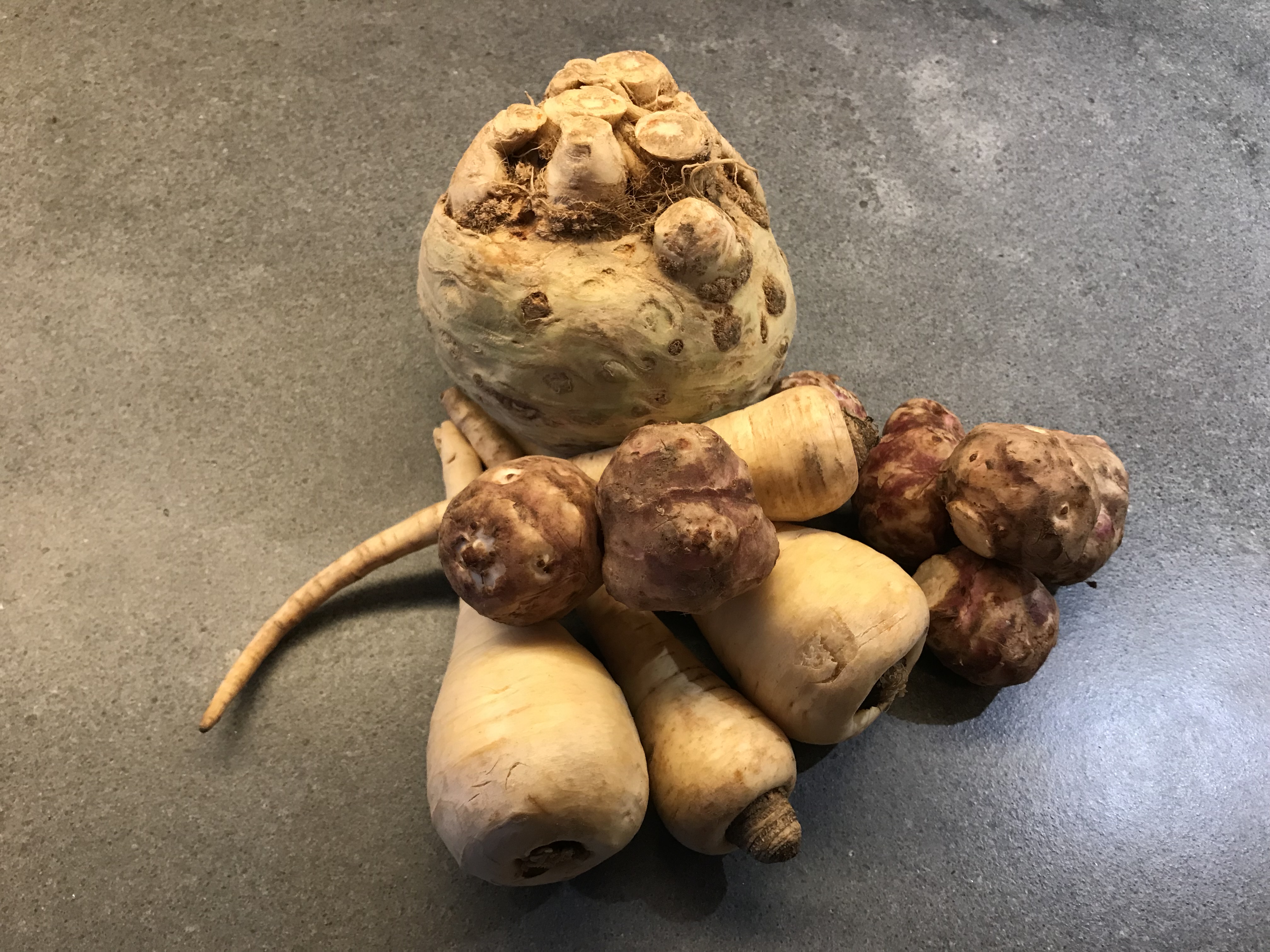
Parsnip, Celeriac, Parsley Root and Jerusalem Artichoke © cadwu


Salad of Small Artichokes

Love Your Artichoke

Artichokes are not very popular, with the exception of marinated artichokes hearts in a jar. Pity! These hearts are simply not as tasty as freshly made ones. They are all about marinade, vinegar, sugar and some unidentified spices. Whereas our artichokes are about taste and texture. Remember it’s a thistle you’re eating and not something white and fluffy from a jar.
Bigger artichokes are a wonderful, relaxing starter and the smaller ones are great when turned into a salad. One thing is important: take your time to cook the artichokes. The small ones should be cooked 30 minutes or so, which means they lose most if not all of their flavour. So it should read: take your time to steam the artichokes. Then the artichokes are ready to eat and keep their original taste.
Key to the salad is the combination of artichokes and thyme. Lots of thyme!

Wine Pairing

You can serve this salad to accompany an aperitif, or with some bread as a starter. Make sure you have plenty of dressing.

What You Need

  • 6 small Artichokes
  • Olive Oil
  • Vinegar
  • Mayonnaise
  • Mustard
  • Garlic
  • Thyme
  • Black Pepper

What You Do

Remove the stem of the artichokes and steam the artichokes for 45 minutes, depending on the size. Remove and let cool. Peel of the first layers of the outer leaves. Make the dressing by turning the mustard and the garlic into a smooth paste. Then gently add the other ingredients and whisk well to make it really smooth, thick dressing. Cut the artichokes in 6 or 8 parts. Add to the dressing, mix well, coating all artichokes. Sprinkle lots of thyme and mix again. Put in the refrigerator for at least 3 hours. Mix again, taste, add some more thyme and serve!