Artichoke Pie

A few days after we published our recipe for Tourte de Blette a friend told us about the great taste of artichoke pie and how popular this dish is in Italy, especially in Liguria. Since we love artichokes, we dived into our cooking library, looking for recipes.
Interestingly most recipes refer to canned or marinated artichokes. But wouldn’t it be much better to use fresh, young artichokes? Other ingredients are cheese (Prescinsêua, or a combination of Parmesan or Pecorino and Ricotta, perhaps some Crème fraîche or even Feta), herbs (parsley, thyme or oregano) and eggs.
We like the combination of artichoke and thyme (as we did in our salad), but we could imagine oregano to be a good choice as well.
We remained close to Tourte de Blette and prepared a rustic, open pie, but feel free to create one with pastry on top.

Wine Pairing

It’s not straightforward to pair artichokes with wine. According to various researchers this is due to cynarin, a chemical especially found in the leaves of the artichoke. When the wine and the cynarin meet in your mouth, the natural sweetness of the wine is amplified, making it taste too sweet. So you have to pair freshly cooked or steamed artichokes with a bone-dry, crisp, unoaked white wine with clear, present acidity. For instance Sauvignon Blanc, Grüner Veltliner or Albariño.
We enjoyed our Artichoke Pie with a glass of Château Pajzos Tokaj “T” Furmint, a dry, bright, fresh wine with zesty, nutty and mineral flavours made from the Hungarian Furmint grape. A unique wine and perfect in combination with the artichokes.
Cynarin and wine are not a match made in heaven but the good news is that cynarin seems to protect your liver and even helps it regenerate.

What You Need

  • For the Dough
    • 100 gram of Flour
    • 50 gram of Water
    • 10 gram of Olive Oil
    • 1 gram of Salt
  • For the Mixture
    • 4-6 young Artichokes
    • One Shallot
    • Olive Oil
    • 30 grams of Rice
    • 2 Eggs
    • Fresh Thyme
    • 20 gram Freshly Grated Parmesan Cheese
    • Black Pepper

What You Do

Cook the rice and leave to rest.  Combine flour, salt, water and olive oil. Make the dough, kneed for a minute or so and store in the refrigerator for at least 30 minutes.
Clean the artichokes, steam for 30-45 minutes depending on the size and let cool. Chop the shallot. Warm a heavy skillet, add olive oil and gently fry the shallot. Transfer to a plate and let cool. Using a spoon remove the ‘meat’ from the leaves (bracts) of the artichokes. Chop the hearts in four. You may need to remove the centre choke (the hairs). Strip a generous amount of thyme.
Whisk two eggs and combine with the artichokes, the shallot, the rice, the thyme and the freshly grated Parmesan cheese. Add some black pepper.
Roll out the dough with a rolling pin on a lightly floured surface. Coat a 15 cm or 6 inch round baking form with oil (or use a sheet of baking paper). Place the dough in the baking form and add the filling. Transfer to the oven for 40-50 minutes on 180˚-200˚ Celsius or 355˚-390˚ Fahrenheit. Immediately after having removed the pie from the oven, brush the outside with olive oil. This will intensify the colour of the pastry. Let cool and enjoy luke warm.

Panna Cotta with Raspberry Coulis

Cream, Cream and More Cream

Such a lovely and simple dessert! Provided of course it’s made the right way. So no milk, no yoghurt, no cream cheese, no whipped cream and most certainly no whipped egg white! Just cream. Cooked Cream. And preferably cream with lots of fat because then you will need less gelatine. 
Fresh raspberries are preferred, but no worries, the frozen ones are also very tasty and suitable for making a coulis.

What You Need (for 4)

  • For the Panna Cotta
    • 500 ml fresh Cream
    • 3,5 leaves of Gelatine (5,25 grams)
    • 1 Vanilla Bean
    • 25 gram Sugar
  • For the Raspberry Coulis
    • 250 grams of Raspberries
    • 25 grams of Sugar
    • 1 tablespoon of Water

What You Do

The recipe is for 4 panna cotta (actually we should say 4 panne cotte). Slowly bring the cream to the boil. Add the seeds of the vanilla but also add the remainder of the bean. Now keep close to boiling for 15 minutes. Stir when necessary. Remove from the heat and while stirring add the sugar until totally dissolved. Now pass through a sieve to make sure you remove all the bits you don’t want. Follow the instruction of the gelatine and add the leaves. Stir well until homogeneous. Cool the liquid somewhat before filling the forms. We used a silicone mold. Nice and easy! The only thing you need to do is to make the mold a bit moist with water. Let the panna cotta cool and then store in the refrigerator until set. Don’t forget to seal with cling foil, otherwise your panna cotta will absorb aromas from other food in the refrigerator.
Heat the raspberries with the sugar and water. Cook gently for 5 minutes. Pass through s sieve (if necessary twice) making sure you apply some pressure but not too much. You don’t want pips in your coulis! Let cool for 30 minutes before transferring to the refrigerator.

Panna Cotta with Raspberry Coulis © cadwu

Tagliatelle with Artichokes, Pancetta and Parmesan Cheese

The Joy of Artichokes

We’re true fans of artichokes. Although available throughout the year, we especially love them in Summer. They come with various structures and flavours, an interesting shape and a beautiful flower. Have you noticed that the heart and the leaves have a similar yet different taste?
Artichokes also come with a challenge: how to serve them in an elegant way? One way of serving the small ones is as a salad; another way is using them as an ingredient in a pasta dish.
Let’s talk briefly about Pancetta: this is cured and dried pork meat, so not smoked. You could replace it with traditional bacon, but be careful not to use something heavy oak smoked.

Wine Pairing

We enjoyed our pasta with a glass of Italian Corvina from the Verona region. This is a fruity wine, think red fruit (strawberries, cherries), only a hint of acidity, not too much tannins. We bought a bottle from Torre del Falasco. Great buy!

What You Need

  • 4 Small Artichokes
  • 75 gram of Pancetta
  • 1 Garlic Glove
  • Thyme
  • 100 gram of Fresh Tagliatelle
  • Parmesan Cheese
  • Black Pepper

What You Do

Steam or cook the small artichokes. Let them cool, peel them and cut of the upper half. Cut the remainder in 6 or 8 chunks. Cut the pancetta in slices. Take a large skillet and warm. Add some olive oil and glaze the pancetta. It’s not the idea to fry the meat, the fat should not melt, only glaze. Now add the thinly chopped garlic and warm until the garlic is slightly soft. This may take a few minutes so an occasional stir is required. Now add the artichokes and the thyme. Stir very gently because the idea is that the artichokes remain intact.
Cook the tagliatelle (probably 4 minutes) and drain but keep some of the cooking liquid. Sprinkle a bit of Parmesan cheese over the artichokes, stir, very gently, add one or two spoons of the cooking liquid, add more Parmesan cheese and more liquid. Now add some olive oil and the tagliattele. Check if this looks fine to you. If not add more liquid. Add a generous amount of black pepper. Serve on a warm plate with some extra Parmesan cheese.

Risotto with Beetroot and Gorgonzola

Contemporary Classic

Enrico Bartolini (Castelmartini, Italy, 1979) is an extremely talented chef with restaurants in Italy, Hong Kong and Dubai. He is the only chef to have been awarded four Michelin stars at the same time. In his restaurant Mudec in Milan he showcases his motto Contemporary Classic by exploring new worlds and new flavours, without forgetting origins and traditions. One of his many signature dishes is Risotto with Beetroot and Gorgonzola (Risotto alle rape rosse e salsa al gorgonzola). An intriguing combination because beetroot can be very sweet which could easily ruin the taste of the risotto. Which is exactly what happened the first time we prepared this dish. We did more research only to read recipes we didn’t like because the beetroot was added at the beginning of the preparation process (giving the risotto a gluey texture) or honey, mint, balsamic vinegar, oranges or salty goat cheese (to balance the sweetness of the risotto!) was added.

We decided to take a different approach and see this as a combination of two dishes with the gorgonzola as connection. Now we could focus on preparing a savoury beetroot puree that would be tasty in its own right and create a brilliant combination with the risotto.

Wine Pairing

We enjoyed our risotto with a glass of Bianco di Custoza 2018, made by Monte del Frà from Italy. It is a well-balanced, dry white wine, with a fruity nose. Its colour is straw yellow, with pale green highlights. In general you’re looking for a light, aromatic dry white wine.
You could also serve a glass of Chardonnay; one that has a touch of oak and vanilla plus a lightly buttery finish. Our choice would be the Chardonnay of La Cour des Dames

What You Need

  • For the Risotto
    • 70 gram Carnaroli Rice (for instance from Acquerello)
    • (Vegetable) Stock
    • 1 Bigger Shallot
    • Parmesan Cheese
    • Butter
  • For the Beetroot Puree
    • 1 Fresh Beetroot
    • 2 Tablespoons of White (Cider) Vinegar
    • 1 Tablespoon of White Wine
    • 3 Freshly Grated Cloves
    • Black Pepper
  • For the Sauce
    • Gorgonzola Dolce
    • Milk

What You Do

The day before wash the beetroot and wrap in aluminium foil. Leave in the oven on 180° Celsius (or 355° Fahrenheit) for 60+ minutes. Cool and store in the refrigerator.
Thinly chop the shallot and glaze in butter. In parallel peel the beetroot and chop. Combine a third of the shallots with the beetroot, the white wine, the vinegar and finely grated clove. Blend until smooth. Taste and adjust. In the mean time prepare the risotto. With a fork combine the soft Gorgonzola Dolce with the milk until it’s smooth and has the consistency of custard. Depending on the ‘blue’ in the cheese you may want to use a blender. Warm both the beetroot puree and the Gorgonzola sauce in the microwave or Au Bain Marie.
Time to start assembling the dish. Add butter and Parmesan to the risotto. Add more Parmesan than usual to create the right balance. Now start adding the beetroot puree, spoon for spoon. You’re looking for a balanced taste and a bright red colour. Perhaps add a drop of lemon and some black pepper. Transfer to the plate and using a spoon or a small sauce bottle add the sauce (drop-wise).

Risotto with Beetroot and Gorgonzola © cadwu

Stuffed Courgette or Zucchini Flowers

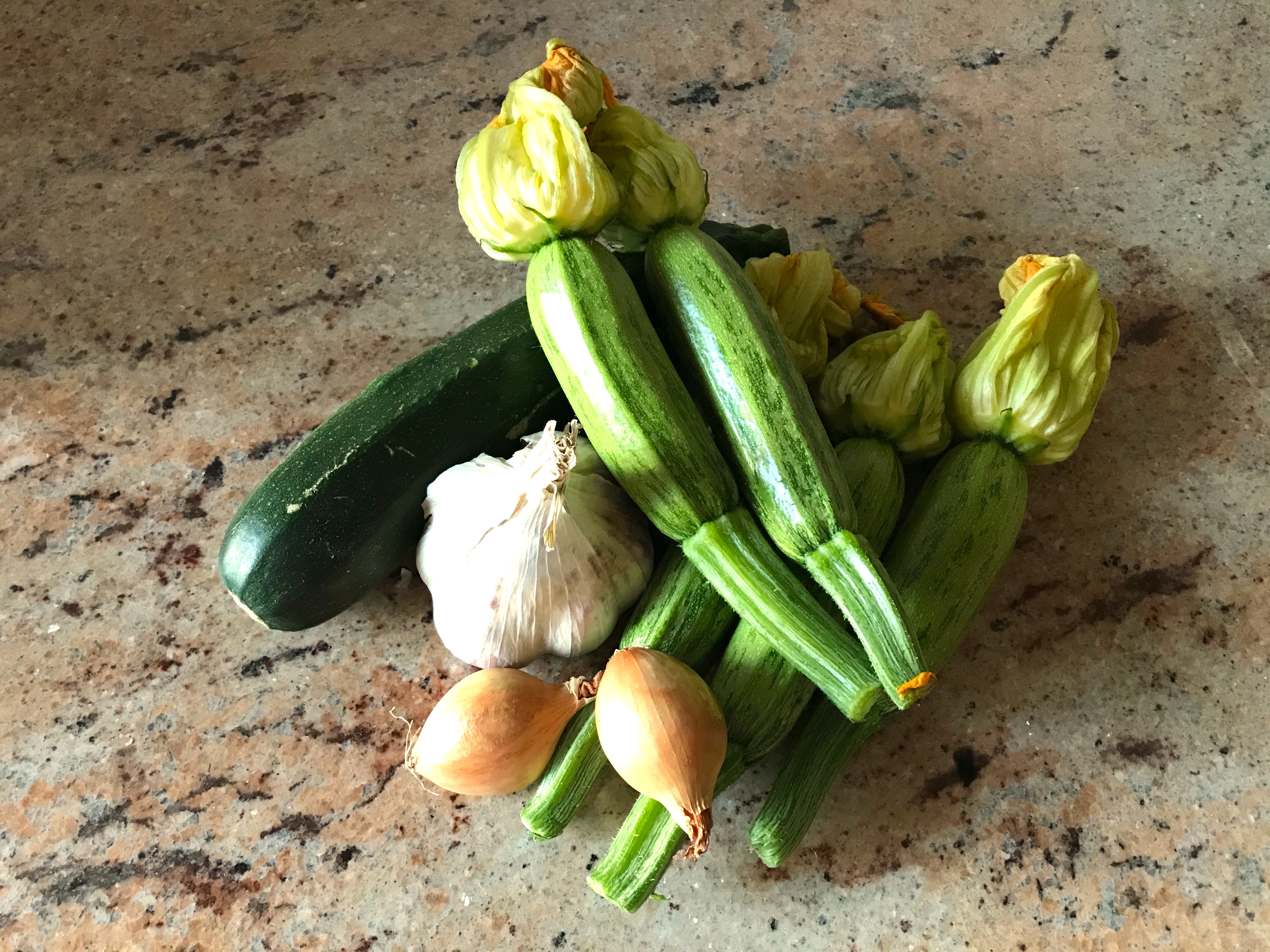
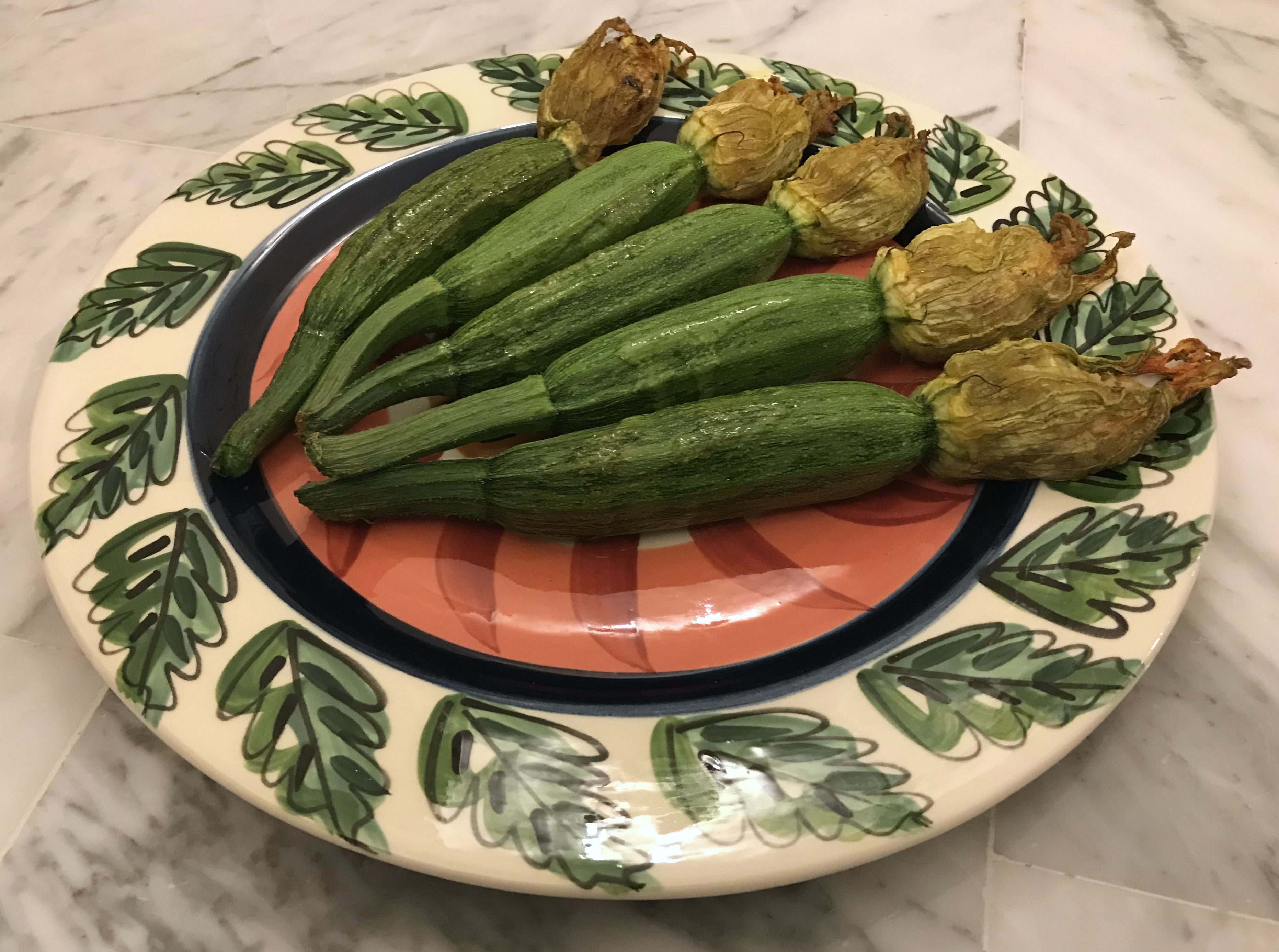
Such a pleasure to see courgette flowers in your garden or at the greengrocers. The young courgette is firm and tasty; the flowers a beautiful yellow. Simply stuff the flowers, fry in a pan or cook in the oven and you have a great side dish or starter. And then you start wondering: ‘Stuff with what? Cheese? Salmon? Tomatoes? Egg? And how to make a filling that remains inside the flower and isn’t too firm?‘.
We prefer a simple approach: stuff the flowers with a perfect combination: courgette, thyme, shallot, garlic and Parmesan cheese. Firm, tasty and all about zucchini. Enjoy as a starter or combine the stuffed flowers with grilled lamb or chicken.

What You Need
  • Small Courgettes with their flower
  • One Courgette (small and firm; you need 1 small courgette to stuff 4 flowers)
  • One Shallot
  • One Garlic Clove
  • Olive Oil
  • Parmesan Cheese
  • Thyme or Herbes de Provence
  • Black Pepper
What You Do
  1. Remove the stamens from the flowers
  2. Peel the additional courgette, slice the shallot and the garlic very thinly
  3. Warm a heavy iron pan and gently glaze the shallot
  4. After a few minutes add the garlic
  5. Remove the seeds from the courgette and grate coarsely
  6. When the shallot and the garlic are sufficiently glazed, add the grated courgette and the thyme or Herbes de Provence
  7. Mix and warm for 15-20 minutes, making sure the liquid evaporates.
  8. ry to keep the structure of the coarsely grated courgette
  9. Add finely grated Parmesan cheese, mix and taste
  10. Adjust with cheese, black pepper and thyme or Herbes de Provence
  11. Set aside and let cool.
  12. Heat your oven to 180° Celsius or 360° Fahrenheit
  13. Stuff the flowers, close them and sprinkle with olive oil
  14. Transfer to the oven and cook for 15 – 20 minutes
  15. Depending on your oven you may need to use ‘traditional’ or a combination with a small broiler. You want the flowers to become crisp
  16. Allow them to cool for a few minutes before serving.
PS

In case the grated courgette looses its structure and the mixture becomes too dense, then beat an egg white until very firm and gently spoon this through the cold mixture before stuffing the flowers.


Risotto With Squid

A Tasty Bonus

Combining rice with squid is an excellent idea. Just think about Arroz Negro, the black rice from Valencia. We combine rice (Acquerello, of course!) with fresh (or frozen) squid. Cleaning squid can be a bit intimidating, but it’s not difficult at all. The result is much better than the already cleaned frozen tubes you can buy plus you get the tentacles as a tasty bonus. Becky Selengut’s video is very helpful. This is how we do it:

  • Start by removing the head from the body. When you do this gently, you will also remove most of the internal organs of the squid. You may want to secure the ink for later use.
  • Just below the eyes, cut off the tentacles using a knife or scissors. Remove the beak (located at the base of the tentacles). Discard internal organs and beak. Transfer the tentacles to a bowl.
  • With your fingers remove the cartilage (this is the part that looks like it is made of plastic).
  • Now you have a choice: you could leave the skin on; it does add extra colour to the stew. But you could also remove the skin of the tube and fins. Best is to start in the middle and then gently pull the skin towards the top and bottom.
  • Remove the fins and transfer to the bowl.
  • Turn the tube inside out by pushing the top into the tube. This allows you to remove all internal organs and the membrane.
  • Turn the tube outside in by pushing the top into the tube. Transfer to the bowl.
  • Wash the tube, fins and tentacles with cold water.

Wine Pairing

Best is to combine this seafood risotto with a light, aromatic white wine. One that is fresh and dry. We enjoyed our risotto with a glass of Bianco di Custoza 2018, made by Monte del Frà in Italy. It is a well-balanced, dry white wine, with a fruity nose. Its colour is straw yellow, with pale green highlights. It is made from a variety of grapes: Garganega, Trebbiano Toscano, Trebbianello and Cortese. An excellent combination with the seafood risotto.

What You Need

  • For the Squid Stew
    • 500 grams of Squid (to be cleaned)
    • Olive Oil
    • Shallot
    • 2 Garlic Gloves
    • 200 grams of Tomatoes (peeled, seeded and cut in chunks)
    • 1 Red Chilli
    • Red Wine
    • Two Fresh Bay Leaves
  • For the Risotto
    • 100 gram of Risotto Rice (Acquerello)
    • Fish Stock
    • Shallot
    • Butter
    • Parmesan cheese
    • Black Pepper
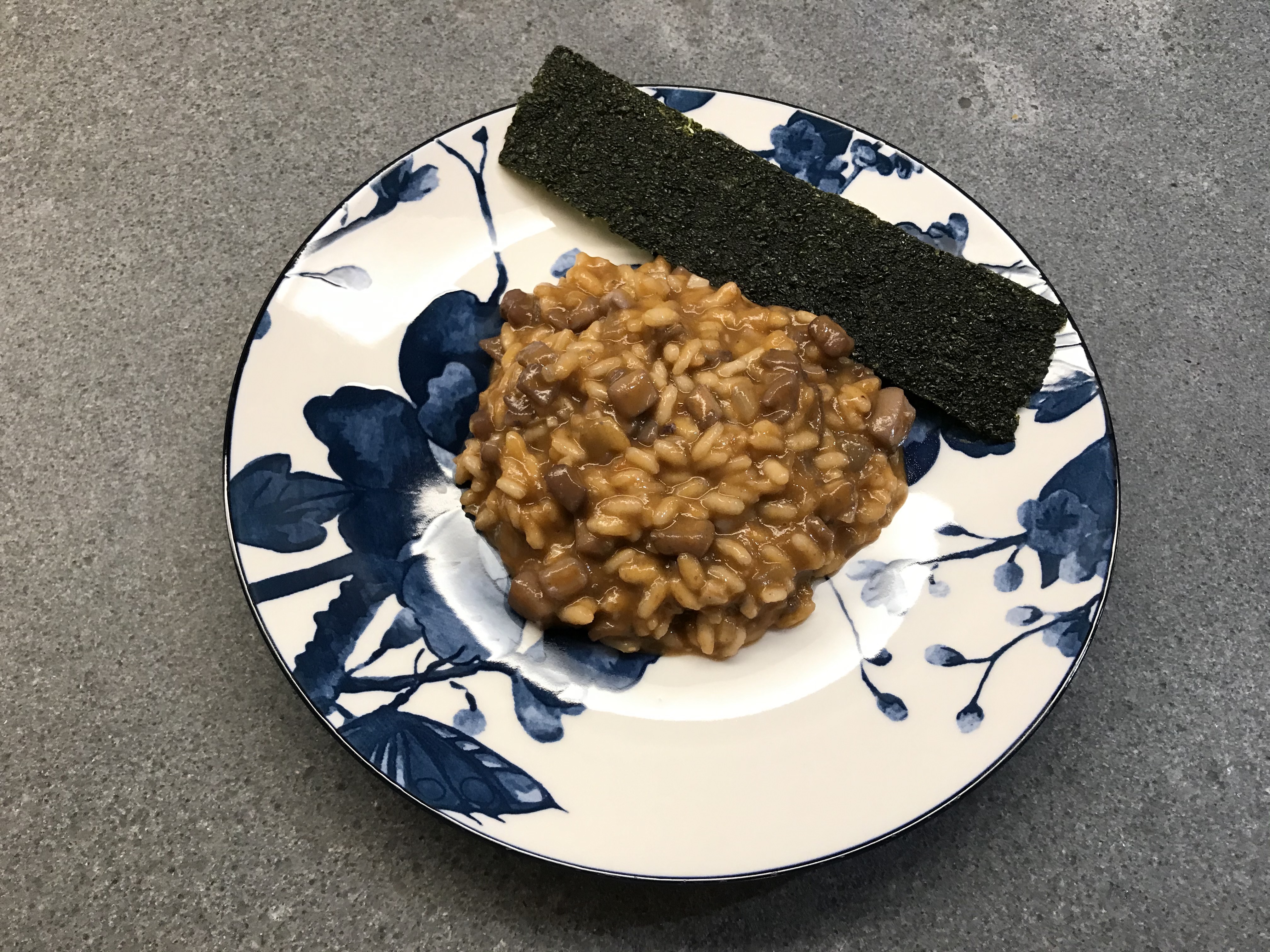
    • Crispy Japanese Seaweed

What You Do

A day before serving the risotto, prepare the stew: use a heavy, iron skillet. Cut the shallot in small bits and glaze gently in olive oil. Once the shallot is glazed add the garlic and the deseeded, chopped red chilli. After a few minutes add the squid (chopped tube and fins, tentacles ). Fry for a few minutes, add the tomatoes, a glass of red wine and the bay leaf. Allow to simmer for 4 hours. If necessary add a splash of water. Stir every 15 minutes. Remove the bay leaf, cool and store in the refrigerator.

The next day start by peeling and chopping the shallot. Add butter and olive oil to a pan and glaze the shallot. In another pan bring the light fish stock to a boil. After 5 minutes add the rice to the pan with the shallot and coat for 2 minutes. Add the squid stew and mix. Start adding the stock, spoon by spoon and stir the rice frequently. When using Acquerello rice it takes 18 minutes. Check the rice. When okay, transfer the pan to the kitchen counter top and leave to rest for 2 minutes. Add chunks of butter, stir, add a bit more butter and grated Parmesan cheese. Stir, a bit of black pepper, add more butter or Parmesan cheese if so required. Serve immediately with some crispy Japanese seaweed.

Risotto with Squid © cadwu

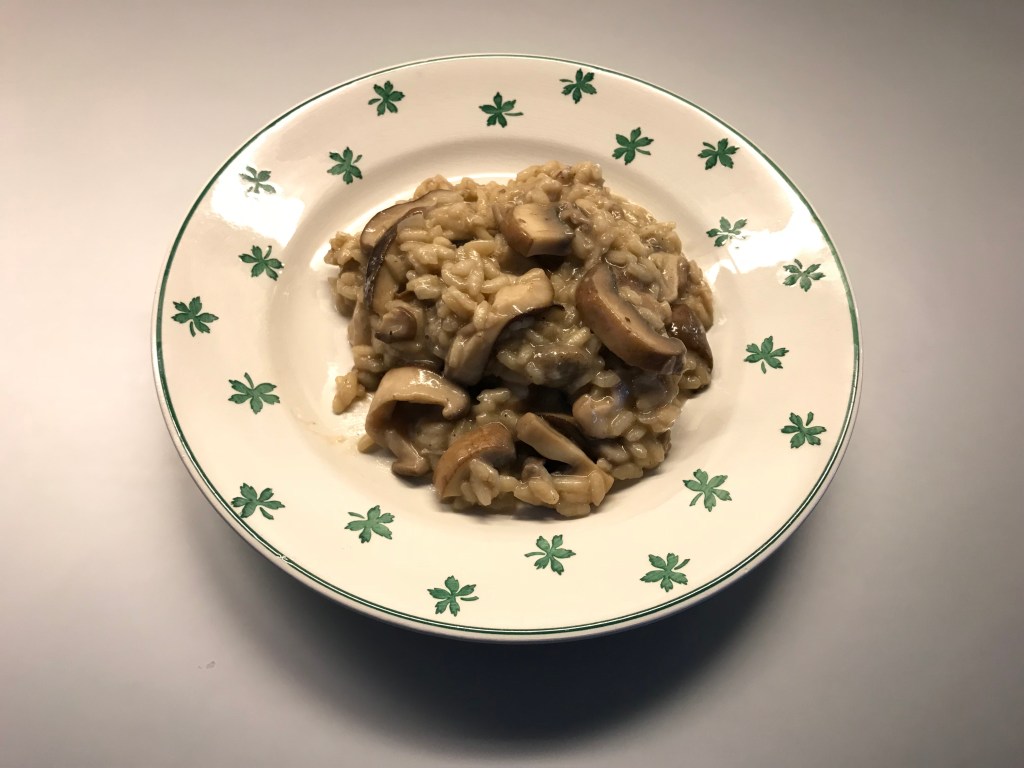
Risotto with Mushrooms

And on the 8th day he remembered he had forgotten to create food. So he quickly created something so simple, so tasty, so fulfilling that he knew people would still enjoy it, many, many years later. He called it Risotto.

Five Challenges When Making Risotto
  1. We’re always too busy! We are tempted to buy risotto rice that cooks quickly and can be served in under 10 minutes. Never rush a risotto!
    And by the way, what is so important that you don’t have 34 minutes to cook your own lovely, genuine, risotto? Why would quick be more important than tasty?
  2. And since we are too busy: why look for fresh cèpes if you can buy a pack of risotto rice with cèpes. Second mistake. You will not taste cèpes but a series of nasty E numbers and salt. Just look at the package! It will probably contain 0,01% of cèpes.
  3. We think risotto is too basic, so we’ve decided to prepare a luxurious version. Let’s add tomatoes, or salmon, or spinach and pumpkin, or chicken, or saffron, shrimps and peas. Please don’t. It will only ruin the lovely combination of rice, butter, stock and Parmesan cheese.
  4. Risotto is too heavy, too rich. Let’s use crème fraîche or Mozzarella and not Parmesan and not butter, let’s simply skip the butter. Fourth mistake: butter and Parmesan cheese are essential, for the taste, the mouthfeel and the consistency.
  5. Buy risotto-rice without checking if it’s the right rice. We use beautiful Carnaroli rice, superfine quality, produced by Acquerello. It doesn’t come cheap (we pay € 11,95 per kilo) but why would you not treat yourself to the best risotto rice? It has all the right qualities and the taste is outstanding.
Wine Pairing

We enjoyed our Risotto with a glass of Soave. Some acidity, touch of bitterness, nicely balanced with the butter and the cheese. It’s light and fruity; it elevates the risotto.

What You Need
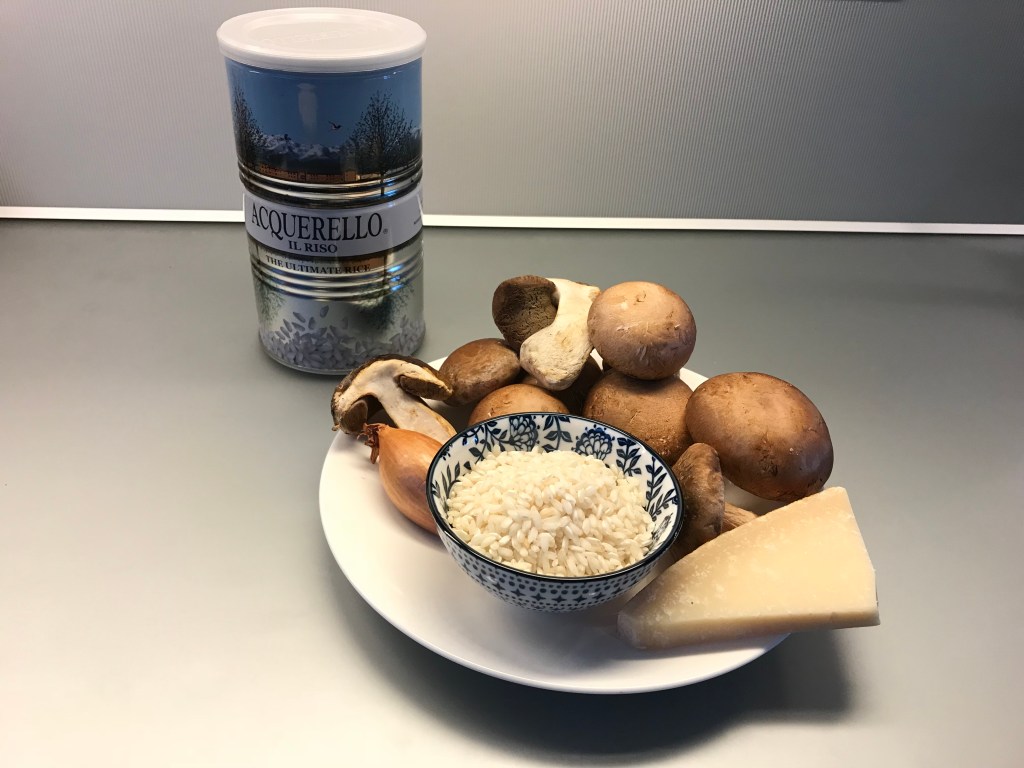
  • 70 grams of Acquerello rice
  • 1 Shallot
  • Butter
  • Olive Oil
  • 100 gram of Shiitake
  • 200 gram of mushrooms, for instance Chestnut Mushrooms
  • optional: 100 gram of Cèpes
  • Chicken Stock
  • Parmesan Cheese
What You Do
  1. Peel and chop the shallot
  2. Add butter and olive oil to the pan and glaze the shallot
  3. In parallel clean and slice the various mushrooms. Feel free to use other mushrooms as well. We think the Shiitake is an important one because it adds depth to the taste
  4. Bring the stock to a boil
  5. After 5 minutes add the mushrooms to the pan and fry gently for 5 minutes
  6. Add the rice to the pan and coat the rice for 2 minutes
  7. Start adding the stock, spoon by spoon and stir the rice frequently
  8. When using Acquerello rice it takes 18 minutes
  9. Check the rice
  10. When okay, transfer the pan to the kitchen counter top and leave to rest for 2 minutes.
  11. Add chunks of butter, stir, add a bit more butter and the grated Parmesan cheese
  12. Stir, a bit of black pepper, add more butter or Parmesan cheese if so required
  13. Serve immediately.

Insalata Caprese

Tomatoes

In 2013 the German culinary press characterised Dutch tomatoes as ‘wasserbomben’, let’s say ‘water balloons’. And they were right. Even more so, many tomatoes were, and still are, tasteless and watery. And since the Netherlands are in the top 3 of tomato exporting countries, you run the risk of buying a red balloon. Which is of course not what you want to do. So if you plan to make one of the simplest and tastiest starters ever, you have to find the best tomatoes ever. Or grow your own of course.

Mozzarella

Meaning Buffalo mozzarella, made from the milk of the Italian buffalo. Since 1993 it’s a DOP (Denominazione di Origine Protetta) and protected under EU law. It’s a young, moist, tasty cheese with a lovely soft, elastic but not chewy texture and it comes with a skin as a result of the shaping and pickling. The taste is more robust than mozzarella made from cow milk and it’s ideal for a salad. The cow version is best used for cooking. The smoked version should be ignored.

Basil

Someone should write ‘The Case of the Dying Basil’. A whodunit in which a clever detective will reveal why the basil plant you buy from the green grocer or supermarket will very likely die within 3 days, regardless what you do. And since they always die on us, we buy ‘fresh’ leaves.
The most used variety of basil is sweet or Genovese basil. Others are Thai basil (slightly spicy with a hint of anise) and red (or purple) basil (similar to sweet basil but more powerful). Alain Passard’s book Collages et Recettes includes a recipe for purple carrots with purple basil and cinnamon. Wonderful colours and a delicate taste.

Insalata Caprese

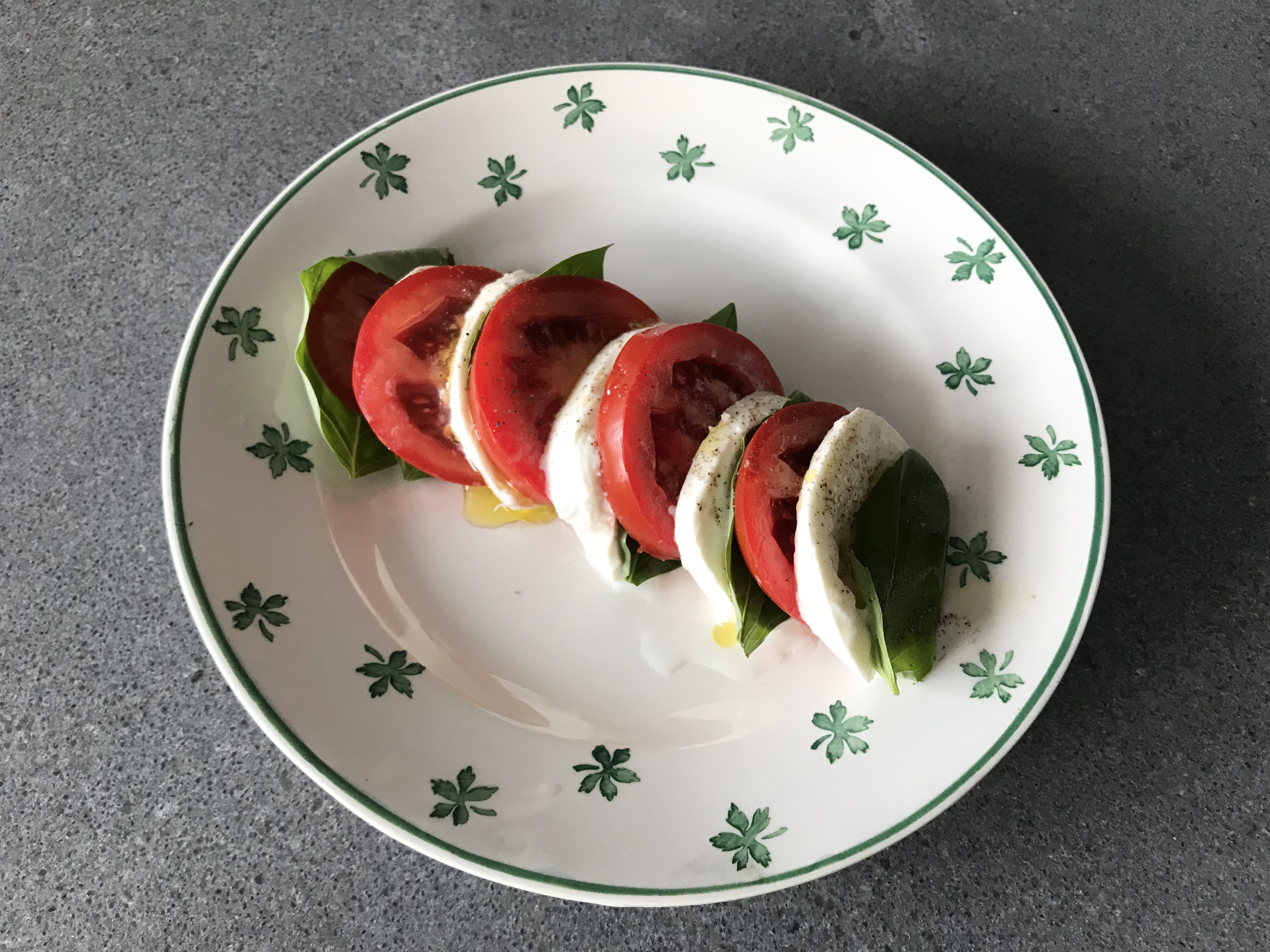
This salad stands or falls on the quality of the ingredients. And it requires the talent to keep things simple, so you have to stick to the 5 (five!) ingredients, meaning tomatoes, mozzarella, basil, olive oil and pepper. The salad does not come with balsamic vinegar, lettuce, pineapple nuts, salt, honey, croutons, oregano, mustard or a vinaigrette. Five ingredients. That’s it.
You wonder why? Because this way the Insalata Caprese is at its best. Tasty, sweet, rich, moist, fresh and a reflection of Italy and of summer. Adding an ingredient will worsen the concept of the salad and reduce its taste.

Wine Pairing

We suggest an excellent rosé, one with flavour and depth. For instance Monte del Frà Bardolino Chiaretto 2018. You’re looking for a wine with delicate scents of berries accompanied by light and refreshing hints of green apples and subtle spicy tones. On the palate the wine should reveal juicy sensations of red berries along with an appealing and refreshing acidity.

What You Need

  • Two Excellent Ripe Tomatoes, chilled
  • One Ball (125 gram) of Excellent Buffalo Mozzarella
  • Fresh Basil
  • Excellent Olive Oil
  • Fresh ground Black Pepper

What You Do

Slice the (chilled) tomatoes, slice the mozzarella and create the ‘tricolore’. Add fresh black pepper and drizzle generously with olive oil.

Insalata Caprese © cadwu

Panna Cotta

Such a lovely and simple dessert! Provided of course it’s made the right way. So no milk, no yoghurt, no cream cheese, no whipped cream and most certainly no whipped egg white! Just cream. Cooked Cream. And preferably cream with lots of fat because then you will need less gelatine.
You can serve the panna cotta after a few hours (or the next day) with a rich strawberry or raspberry sauce, but we prefer to enjoy the panna cotta with a bit of candied orange zest, simply because we want to balance the sweetness and richness of the panna cotta with the acidity and bitterness of the orange. Home made is preferred, see the recipe for an Orange Flan.

What You Need (For 4)

  • 500 ml fresh Cream
  • 3,5 leaves of Gelatine (5,25 grams)
  • 1 Vanilla Bean
  • 25 gram Sugar
  • Candied Orange

What You Do

The recipe is for 4 panna cotta (actually should we say 4 panne cotte).
Slowly bring the cream to the boil. Add the seeds of the vanilla but also add the remainder of the bean. Now keep close to boiling for 15 minutes. Stir when necessary. Remove from the heat and while stirring add the sugar until totally resolved. Now pass through a sieve to make sure you remove all the bits you don’t want. Follow the instruction of the gelatine and add the leaves. Stir well until homogeneous. Cool the liquid somewhat before filling the forms. We used a silicone mold. Nice and easy! The only thing you need to do is to make the mold a bit moist with water. Let the panna cotta cool and then store in the refrigerator until set. Don’t forget to seal with cling foil, otherwise your panna cotta will absorb aromas from other food in the refrigerator.

Panna Cotta © cadwu
Panna Cotta © cadwu

Antonio Carluccio

Inspiration

Sadly Antonio Carluccio passed away this week on Wednesday November 8th 2017. To us he has been a true inspiration, especially when it comes to mushrooms. Thanks to him we started to explore a wide variety of mushrooms, such as Ceaser’s mushrooms and Pied Blue. His books on mushrooms showed us the world beyond the classics mushroom recipes. Every year we prepare his oysters with sabayon and white truffle. Pure magic.

Carluccio also showed us that you need to be a chef to create Michelin star worthy food, and that you need to be a decent cook to create tasty and healthy daily food. A combination of olives, pancetta, cheese, artichokes and a glass of red wine is a great way to start your meal and will only take you a bit of shopping and 5 minutes to present the food. And reading his books: you can learn how to be a decent cook.

MoF MoF

He said his motto was “mof mof” – minimum of fuss, maximum of flavour. No doubt a lot of hard work is required to reach that level, but let us assure you: it’s a great motto for daily cooking.