Tourtes de Blettes Sucrée

A sweet pie with vegetables, Parmesan cheese and black pepper? It does sound a bit odd but actually the pie is very tasty and the savoury ingredients support the sweet character of the pie.
The pie is made with Blette, also known as Swiss ChardLeaf BeetSilver BeetSpinach BeetBietola (Italy), Bléa (France), Acelga (Spain), Krautsteil (Germany, Switzerland) and Snijbiet (the Netherlands). Once a popular vegetable, it can be hard to find or expensive. When preparing a savoury Tourte de Blettes we used Water Spinach (also known as Kang Koen or Ong Choy) which is a very popular vegetable in Asia. The leaves have lots of structure and the (hollow) stems are tasty and crunchy. 

As you would expect with a classic pie like this, recipes vary, Very often the tourte is made with sweet shortcrust pastry (butter, eggs, sugar and sometimes orange blossom water). The filling contains chard, Parmesan cheese, sugar, eau de vie, raisins, eggs, apples and pine nuts. We’re not keen on using pine nuts, so we didn’t add these to our filling. We thought it would be nice to add the orange blossom aroma to the filling, not to the pastry.

What You Need (Pastry)
  • 50 grams of White Caster Sugar
  • 100 grams of soft Unsalted Butter
  • ½ Egg (beaten)
  • 1 gram of Salt
  • 150 grams of All Purpose Flour
  • Cold Water (if the pastry is dry)
What You Do

Adding egg to the dough makes its flavour richer and easier to handle when lining the baking tin. Start by combining the sugar and the butter. Use a hand mixer with kneading hooks. When mixed, add halve of the beaten egg. Combine salt and flour. Pass through a sieve and add to the mixture. Use the kneading hooks to mix. When done, remove from the bowl and wrap in foil. Store in the refrigerator for at least two hours. The dough freezes well, so it’s a great idea to make a bit extra.

What You Need (Filling)
  • 500 grams of Chard
  • Handful of Raisins
  • 25 grams of Parmesan Cheese
  • 50 grams of Sugar
  • 1 or 2 teaspoons of Orange Blossom Water
  • Black Pepper
  • 1 Egg
  • Olive Oil
  • ½ Sour Apple (Bramley, Goudrenet)
What You Do
  1. Wash the chard, remove and discard the stems.
  2. Coarsely slice the leaves.
  3. Whisk the egg.
  4. Soak the raisins for 15 minutes in water (or rum). Pat dry.
  5. Peel and slice the apple into small cubes.
  6. Combine chard, raisins, grated cheese, sugar, orange blossom water, black pepper and a splash of olive oil. Be generous with the black pepper and the cheese. Mix.
  7. Add the beaten egg and mix.
  8. Divide the pastry in two.
  9. Line a baking tin with the pastry, prick holes in the pastry using a fork (docking).
  10. Add the filling, sprinkle with apple cubes, top with the remaining pastry and close.
  11. Prick holes in the pastry. Or apply the method of Cornish pasty, as we did.
  12. Bake in the oven at 180 °C or 355 °F for 30 minutes.
  13. Allow to rest on an oven rack.
  14. Best to be enjoyed the next day, so you must be a little patient.
  15. Dust with icing sugar.
PS

We must admit we took a short cut by using readymade Pâte Brisée. This is shortcrust pastry, without sugar. Perhaps it’s a good idea to reduce the amount of sugar in the pastry or skip it all together!

Together: Our Community Cookbook

Food is much more than just food, it’s about culture, about being with friends, family, about learning from other cultures, about talking and sharing memories, about emotions, about special days and celebrations. It brings people together and enhances our understanding of others.

We take part in Jo Stacy’s BKD Cookbook Club and this month the focus is on Christmas recipes for us all to make and share. Our choice is a recipe for a Casserole from Together: Our Community Cookbook.

The book is written by a group of residents, gathering in the aftermath of the Grenfell Tower tragedy in London to cook food for their families, friends and neighbours. They began using the kitchen at the Al-Manaar Muslim Cultural Heritage Centre and used the kitchen for two days per week, preparing food and eating together. Gradually more local women began to join in, embracing the community and supporting their neighbours. This was the beginning of the Hubb Community Kitchen (‘hubb’ meaning ‘love’ in Arabic).
In 2018 the group published Together: Our Community Cookbook with 50 simple and tasty recipes from the Middle East, North Africa, Europe and other countries.
Food that brings people together, food you prepare for your loved ones.

The book features mouthwatering recipes including Shakshouka (Algeria), Potato Fritters with Cilantro (India), Spicy Peanut Dip (Uganda), Green Rice (Iraq), Fennel and Orange Salad (Italy) and many more.

Food that helped restore hope and provided a sense of home.

Casserole

We decided to prepare Tepsi Baytinijan. To quote Intlak Alsaiegh, the author of this recipe: “Tepsi translates as ‘casserole’ and this is a traditional Persian dish of meatballs in tomato sauce with eggplant. It’s quite rich. You could make it with less oil, I suppose, but then it wouldn’t be so traditional—or taste so good.”

The dish is indeed a rich, tasty combination of small meat balls (ground beef, garlic, curry powder), fried egg plant, fried potatoes, onion, green pepper, tomatoes, tomato paste and tamarind paste, served with basmati rice or crusted bread.
The detailed recipe can be found in Together: Our Community Cookbook or on Food52.

Together: Our Community Cookbook is dear to us, because it shows us that food can unite people. Preparing food from this book will bring you closer to the hope and strength of the Grenfell community.

The book is available via the usual channels and your local bookstore. A portion of the proceeds from the sales will help the Hubb Community Kitchen to strengthen lives and communities through cooking.

We wish you Happy Holidays and a Wonderful 2025!
Mr. Cook and Mr. Drink

Roasted Bell Peppers

The recipe of Peperoni alla Piemontese goes back to 1954 when Elizabeth David published it in her (third) book Italian Food. The dish is a true classic. Super simple, tasty, uplifting and a tribute to summer.  The recipe as published by Elizabeth David was popularised by Delia Smith in her TV series and her book Summer Collection, published in 1993. A helpful video is available via her website.
Bell peppers are popular in Piemonte and it seems they were originally prepared with anchovies and parsley only. It was probably Elizabeth David who came up with the idea to add tomatoes. Later others added tuna, which we think takes away the lightness of the dish. Another option is to replace the anchovies with black olives, making it a vegetarian dish.
We prefer using sweet long bell peppers. They combine very well with the flavour of the tomatoes and the juices. Delia Smith uses quartered, peeled tomatoes which helps to brings the flavours and textures together. Our alternative is a bit more work: we use tomato confit. The tomatoes are very tasty with hints of garlic, rosemary and thyme.

Wine Pairing

Enjoy the roasted peppers with a crisp white wine or rosé. If you want to spend some money, then buy a bottle of white Piemonte wine, made with the arneis grape. The wine is made in the Roero area close to the village of Canale. A wine with a bright, intense yellow colour, present aromas of ripe fruit (especially apples), very fragrant. The taste is delicate and fruity with good acidity and a long finish.

What You Need
  • 2 Sweet Bell Peppers
  • 8 Tomato Confit
  • 4 Anchovies
  • 1 Clove of Garlic
  • Black Pepper (optional)
  • Olive Oil
What You Do

Preheat your oven to 180 °C or 350 °F. Halve the bell peppers lengthwise. Slice the garlic. Chop the anchovies. Use a shallow baking dish. Add 2 tomatoes, some garlic, some anchovies and a generous amount of olive oil (and/or cooking juices of the confit) to each halved bell pepper. Transfer to the oven. The peppers will be ready in 30+ minutes. Enjoy with crusted bread. No need to serve with basil!

Panna Cotta with Agar

A few days ago Suzanne’s Mom wrote about Piper McAloon. At 17 she became Pastry Chef at Foglia, an award-winning plant-based restaurant located in Bristol, Rhode Island. A truly inspiring story!
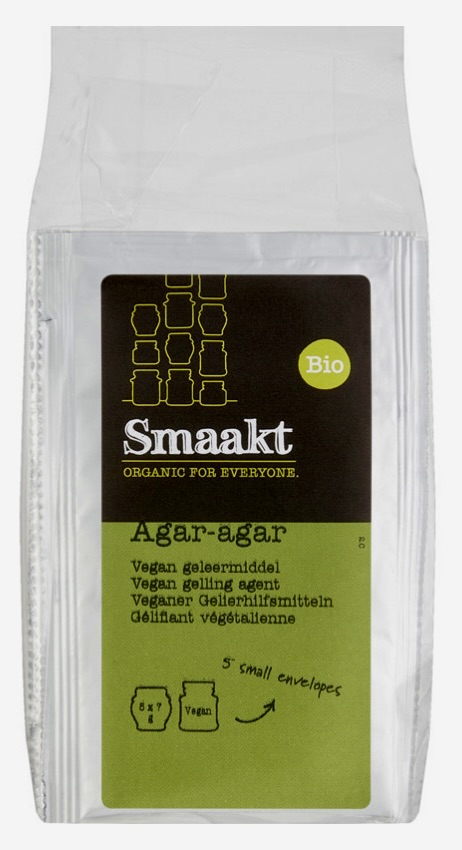
When asked what she is making right now, she mentioned Panna Cotta. At Foglia she makes a gluten-free version with agar. Which was something we wanted to do for a long time. We love Panna Cotta, but using gelatine (made from animals from the meat industry) is far from ideal. Agar is made from the cell walls of red algae. Popular throughout Asia and fortunately also available where we live.
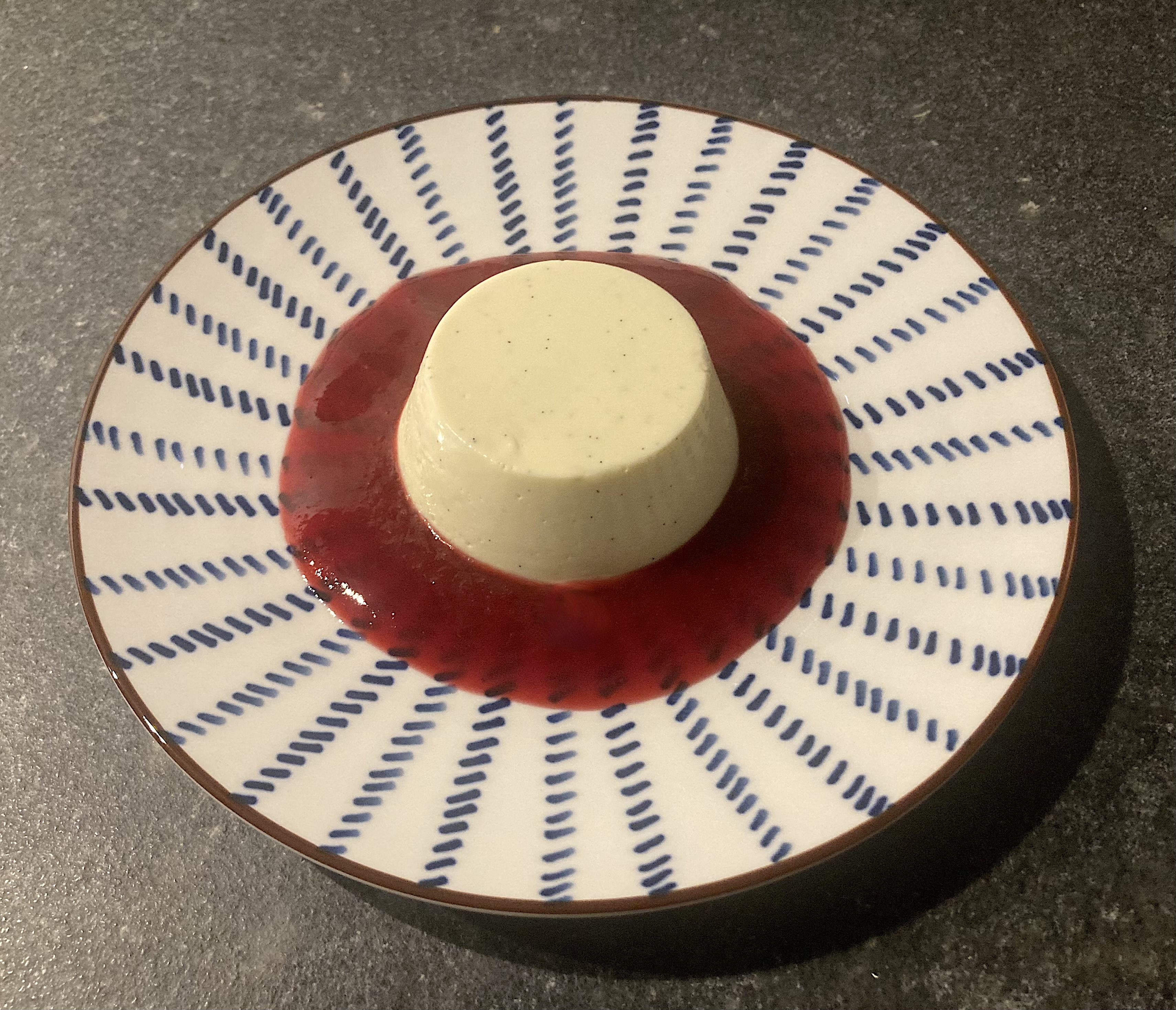
We served our Panna Cotta with a coulis of red berries. Very tasty, but was it a real Panna Cotta? It didn’t seem as creamy as the version with gelatine. The texture was certainly different. The version with gelatine was smoother and firmer; more how we think panna cotta should feel in your mouth. We were happy with the result, but we’re not sure if we will use agar next time we’re preparing Panna Cotta. To be continued!

What You Need (for 4)
  • 500 ml fresh Cream
  • 1,5 grams of Agar (powder)
  • 1 Vanilla Bean
  • 30 grams of Sugar
What You Do

Add the agar, the seeds of the vanilla bean and the sugar to the cream. Mix very well, the agar must to be completely dissolved. Bring to the boil on slow/medium heat. Stir frequently. Keep close to boiling for 1 or 2 minutes. Continue stirring. Transfer to a water bath with cold water. Cool the liquid somewhat before filling the forms. This is where you need to be careful. Gelatine gels at a lower temperature than agar. You need to transfer the mixture when it’s relatively warm.  Use silicone molds; they work very well panna cotta. Let cool and then store in the refrigerator. Don’t forget to seal with cling foil, otherwise your panna cotta will absorb aromas from other food in the refrigerator. 

PS

Cook the red berries in some water for perhaps 5 to 10 minutes. Transfer to a sieve and use the back of a spoon to squeeze out the liquid. Add sugar and lemon juice to taste. Reduce the liquid somewhat. Let cool. You could also start by blending the berries. This makes squeezing out the liquid easier plus you will get a richer taste and some bitterness.

Caponata

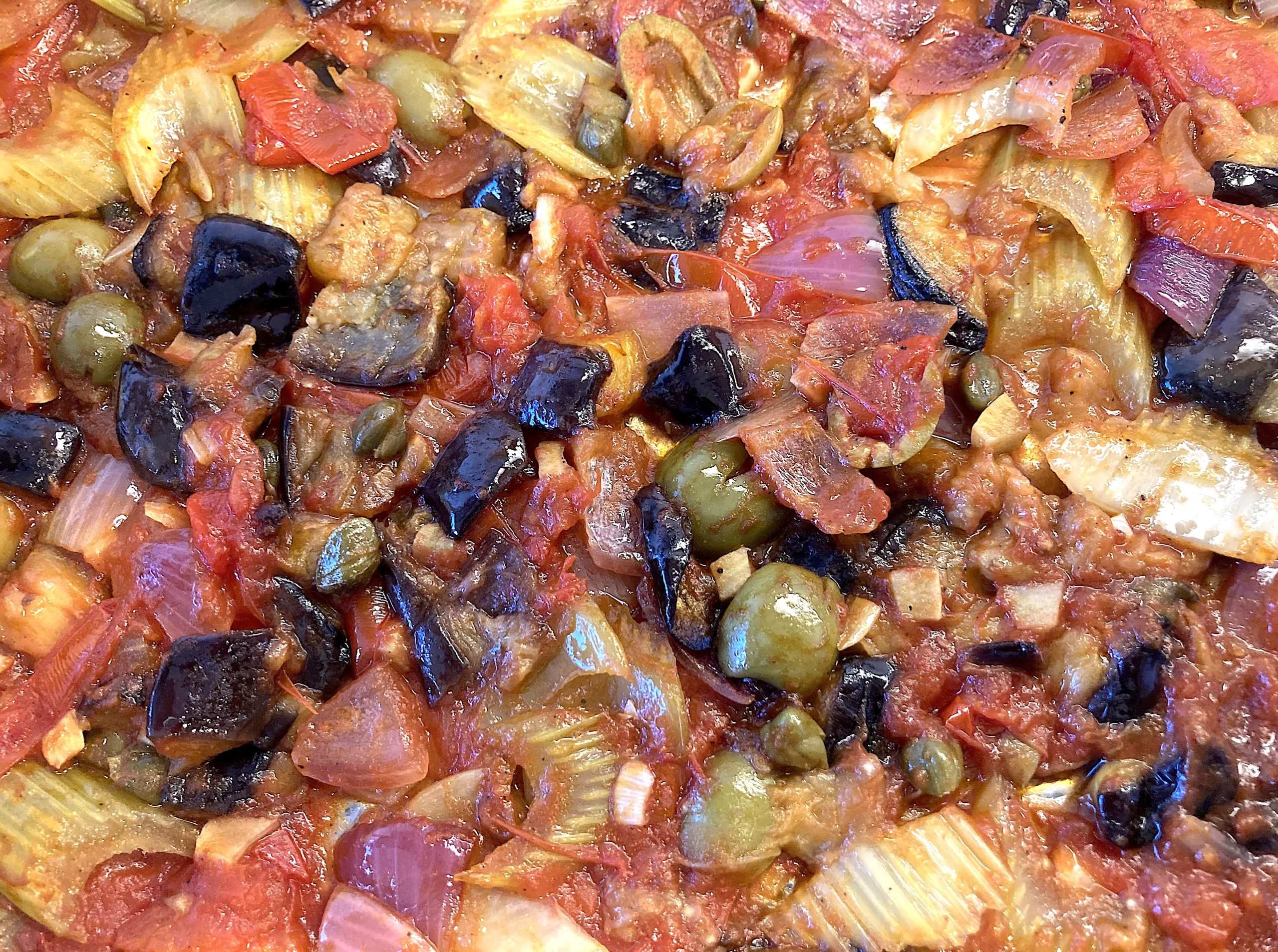
This very tasty dish originates from Sicily and is a mixture of chopped and fried vegetables. Eggplant (Aubergine), Tomatoes, Celery, rRed Onion and Green Olives are the main ingredients. The vegetables are prepared and served in an agrodolce sauce, so sweet and sour. Although we’re not keen on using sugar in a salad, in this case the combination of sugar and vinegar is perfect.
Perhaps the ingredients make you think of Ratatouille. Caponata and Ratatouille are very different dishes. Capanota is about fried vegetables, about crunchy celery, about sweet and sour.

Food and Wine Pairing

We served our Caponata with a roulade of pork with sage, rosemary, pancetta, black olives and black garlic. A dish we enjoyed with a glass of Barbera del Monferrato 2022, produced by Livio Pavese. In general, we suggest a full-bodied red wine with perhaps a touch of oak. Some acidity to balance the caponata and dark fruit (plums, blueberries).

The next day we served the Caponata with a roulade of chicken with pancetta, Parmesan Cheese and sage. A dish we enjoyed with a glass of Spätburgunder from the Pfalz area in Germany. In general, we suggest a medium bodied red wine with aromas of red fruit. Medium tannins and balanced acidity. Its taste dry, aromatic, fruity, juicy with a touch of strawberry.

You could also add some canned tuna (in olive oil) and serve the Caponata with crusted bread as a starter, perhaps accompanied with charcuterie and a glass of Crémant or Prosecco.

What you Need (recipe for 4)
  • 2 Aubergines
  • 400 grams excellent ripe Tomatoes
  • 10 Green Olives
  • Capers
  • 30 grams Tomato Puree
  • 4 cloves of Garlic
  • 4 small Red Onions
  • 3 stalks Celery
  • Tablespoon of Caster Sugar
  • Tablespoon of White Wine Vinegar
  • Black Pepper.
What You Do

Best to prepare Caponata one day ahead.

  1. Wash the vegetables.
  2. Slice the eggplant lengthwise in 8 and then in chunks. Drizzle with salt and mix. Put the chunks in a sieve and let rest above a bowl for one or two hours.
  3. Coarsely chop the onion.
  4. Quarter the tomatoes. Remove the internal hard bits and the pits and put these aside. Slice the outer part of the tomato lengthwise in three.
  5. Roughly cut the remainder of the tomatoes, add to a sieve and use the back of a spoon to capture the juices.
  6. Coarsely chop the garlic.
  7. Halve the olives.
  8. Use a knife to peel the back of the celery stalks, or ribs. Slice.
  9. Combine the tomato puree, black pepper, the caster sugar, the vinegar and the tomato juice.
  10. Set your oven to 140 °C or 285 °F.
  11. Discard the liquid of the eggplants, wash of the salt, dry with kitchen paper and fry the chunks in a generous amount of olive oil until golden.
  12. Transfer to a baking tray in your oven.
  13. Fry the onions and the celery until somewhat translucent. Add these to the baking tray.
  14. Now add the olives, the capers, the garlic, the tomato mixture and the tomatoes. Mix. Perhaps add a splash of water.
  15. Cover the baking tray with aluminium foil.
  16. After 20 minutes it’s time to mix the vegetables. Check if you need to add extra water.
  17. After another 20 minutes, remove and discard the foil, mix and increase the temperature to 160 °C or320 °F.
  18. Now you need to keep an eye on the mixture. It may take 10 to 20 minutes for the liquid to somewhat evaporate, but you don’t want the dish to become dry.
  19. When ready, let cool and transfer to the refrigerator.

Small Artichokes (Carciofo Violetto)

The season of artichokes depends on the variety and where you are based. In Italy it’s from mid-winter until early spring, in other countries from March to June, or September and October.
An artichoke should feel heavy, look fresh and the leaves should be closed. If the leaves are wide open, the artichoke is older and it could be dry with lots of choke (the hairs) and dry inner leaves.
The artichokes we use in this recipe are special. Not only are they vibrant purple, they are also small with hardly any choke. In Italy they are called Carciofo Violetto. Tasty as you would expect from an artichoke and easy to eat because the texture of the leaves is not stringy.

Wine Pairing

It’s not straightforward to pair artichokes with wine. According to various researchers this is due to cynarin, a chemical especially found in the leaves of the artichoke. When the wine and the cynarin meet in your mouth, the natural sweetness of the wine is enhanced, making it taste too sweet. Pair artichokes with a bone-dry, crisp, unoaked white wine with clear, present acidity. For instance, Sauvignon Blanc, Grüner Veltliner or Albariño.
The Carciofo Violetto artichoke in combination with the olive oil, Parmesan cheese and browned garlic (bitter, nutty) is less demanding when it comes to wine. We enjoyed it with a nice glass of Côtes de Provence rosé.

What You Need
  • Small purple Artichokes
  • Olive Oil
  • 2 Cloves of Garlic
  • Parmesan Cheese
What You Do

Preheat your oven to 180 °C or 355 °F. Cook the artichokes for 5 minutes in boiling water. Allow to cool and remove the outer leaves. Be generous, it’s better to remove too many! Halve the artichokes and place them in a shallow oven dish. Drizzle with olive oil. Transfer to the oven for 5 minutes. In the meantime, grate Parmesan cheese, chop the garlic and mix. Spread the mixture on top of the artichokes. Wait for the cheese and the garlic to colour, perhaps 5 minutes. Serve immediately.

PS

Other recipes with artichokes you may like:

Thank you Fred!

In 1965 Yolanda and Fred de Leeuw took over Slagerij De Leeuw, previously owned by his father. They turned it into not only the best butcher in Amsterdam, but also the place to go for excellent home-made pastrami, the most delicious Bresse chicken and their smoked sausages. They started importing truffles for Urbani, had the best US beef and later the prestigious Kobe beef. Every Christmas they would have a brochure with an overview of culinary products (all home-made) and exceptional food. How about Chapon de Bresse (en demi-deuil) or Pauillac Lamb?

For Fred and Yolanda it was not about extravagance or running an expensive shop. It was about quality. About offering the very best to their customers. And yes, it was expensive, but it’s better to enjoy excellent pork once a week than eating mediocre meat every day of the week from poor animals stuffed with antibiotics. They retired in 2000, but their philosophy continues to be important.

In an interview with Fred and Yolanda, published last year, they make a number of interesting comments, for instance: “It’s better for everybody to grow less animals on more ground during a longer period. Better for the farmer, better for the animal and better for the consumer.”

We couldn’t agree more. Such a pity we continue to rush to supermarkets, the cheapest salmon, the cheapest chicken, more for less, without worrying too much about animal welfare, quality, taste and the impact on the environment and the climate.

We can hear you thinking: “So you’re saying the poor should eat beans and turnips, leaving the meat for the rich and well to do?”

Of course we don’t.

We’re saying that we all should understand that meat is an expensive product. And that three chicken wings for just €2,90 is only possible if the chickens live an awful life.

We are part of a vulnerable eco-system and we should help protecting it.

Fred de Leeuw passed away on October 21st 2023. We will remember him for his passion for quality and we thank him and Yolanda for sharing it with us. The last time we met, summer 2023, Yolanda and Fred talked with so much enthusiasm about a new restaurant they discovered, a restaurant focused on vegetables.
Fred said: “We’re butchers and we will always be butchers, but you won’t believe how delicious their food is.”

Your Favourites in 2023

Happy New Year! Let’s begin the new year with the 2023 highlights. Your favorite post was No-Knead Bread, We have been baking our own bread for several years, based on the method of no-knead bread (see Jim Lahey’s book My Bread for more detail) and using the ingredients (Blue Poppy Seeds, Linseed) of the French Talmière. The result is delicious!

Another very popular post is the one showing you how to make Kimizu. This is a classic, golden sauce from Japan, made with Egg Yolks, Rice Vinegar, Water and Mirin. We also have a version with Tarragon, let’s say the Béarnaise version of Kimizu. The recipes for Kimizu and Kimizu with Tarragon continue to be very popular. Although this is a classic sauce, we use a microwave to prepare it. An easy and very effective way of managing temperature and consistency.

We love mushrooms. Cultivated ones, like Shiitake, Oyster Mushrooms, Enoki and Champignons de Paris and seasonal ones, such as Morels, St. George’s mushroom, and Caesar’s Mushroom. One of the most popular posts is about Cèpes à la Bordelaise. You can also use more available mushrooms for this great combination. Always a pleasure to serve, with eggs, with meat, with more present fish.
Last year we had lots of Bay Boletes, which was such a pleasure. It’s a fairly common mushroom, as tasty as Cèpes, but much more affordable.

And finally The Queen’s Soup. We didn’t expect too much of this post, but the soup turns out to be very popular.

We were of course very pleased and honored to receive an award for our Pear and Almond pie in the Great Bloggers’ Bake Off.

Let’s start cooking!

Your Favourites in 2023 ©cadwu

Farfalle with Fennel and Zucchini

It was our last evening in Paris and we wondered what to do? Book a table at a nice local restaurant? Or enjoy drinks and dinner in our lovely apartment? Obviously, we decided to stay in. We looked in our refrigerator, did some shopping and sat down with a nice glass of Pinot Blanc and some shrimps. The plan was to make a rich, creamy pasta dish with fennel, zucchini and pancetta.
Thanks to the mild aniseed flavour of the fennel, the dish has a surprisingly uplifting taste. The (peeled) zucchini also benefits from the aniseed flavour and remains tasty and present.

Wine Pairing

Being in France we opened a bottle of Côtes du Rhône produced by Maison M. Chapoutier. This is a red wine made with Grenache, Mourvèdre and Syrah grapes. The wine has some fruit, a touch of pepper and mild tannins. A traditional French red wine.

If you prefer an Italian wine with the pasta, then we would suggest a glass of Bardolino, for instance the one produced by Monte del Frà. The wine has a beautiful deep red colour, and the aromas made us think of red fruit and perhaps pepper. The wine is medium bodied with some acidity. It will combine very well with both the lightness in the dish and the creaminess.
In general, you’re looking for a fruity red wine with a touch of acidity, for example Chianti Classico, Montepulciano or Barbera.

What You Need

  • 1 small Fennel
  • 1 small Zucchini (Courgette)
  • 1 Shallot
  • 80 grams of organic Pancetta
  • 1 Garlic Clove
  • 1 Bay Leaf
  • Piment Doux
  • Cream
  • Parmesan Cheese
  • Black Pepper
  • Olive Oil
  • Farfalle

What You Do

Finely chop the shallot and the fennel. Add olive oil to a warm skillet and gently fry the shallot and the fennel. Peel the zucchini, slice and quarter. Dice the pancetta. Chop the garlic. Now add the zucchini and the pancetta to the pan. Increase the heat and fry for one or two minutes, just to add colour. Reduce the heat, add the garlic, the bay leaf and the piment doux. Add the farfalle to the boiling water and cook according to the instruction on the package. Leave the pan on low heat for a few minutes. Now add the cream and the Parmesan cheese. Stir and taste. When the farfalle is ready, add it to the pan. Combine and add some cooking liquid to the sauce if needed. Remove the bay leaf, add some fresh black pepper and serve. We decorated the dish with a slice of grilled pancetta.

Farfalle with Fennel and Zucchini ©cadwu

Orecchiette alla Barese

A traditional dish from the city of Bari in Puglia, Italy. The main ingredients are orecchiette and rapini.
Orecchiette is an ear shaped pasta, typical for this region. Its surface is a bit rough, and the centre (the dent) is thinner than the edge. Its shape makes it ideal for a sauce with structure.
Rapini (Cime di rapa) will no doubt make you think of broccoli, which is not our favourite vegetable. Rapini has more bitterness and character. It is completely edible, including the stem and the leaves. If broccoli is about the florets, rapini is about the stem. If your greengrocer doesn’t sell rapini, then feel free to go for bimi or broccoli and make sure to add bitterness (we added one anchovy to the sauce).
As more often with traditional dishes, it’s not completely clear what the other ingredients are. Anchovies? Italian Sausage? Breadcrumbs? Peccorini? Tomatoes? Garlic?

Wine Pairing

A wine from Puglia will of course combine very well with this dish. Red wines in this region are made from the primitivo grape (also known as zinfandel). In general the wines are fuller bodied, with some acidity, good structure and lots of sunny flavours (blackberries, perhaps chocolate).

What You Need

  • 200 grams of Rapini
  • 150 grams of Italian Sausage
  • ¼ teaspoon Chilli Flakes
  • Orecchiette
  • One Anchovy
  • Parmesan Cheese
  • Olive Oil

What You Do

Steam or blanch the rapini. Drain and chop (1 centimeter or inch pieces is fine). Heat a pan, add some olive oil and the sausage meat. Fry until nicely brown. Remove the meat from the pan. Add some oil and the anchovy. Cook on low heat until the anchovy dissolves (a fork may be useful). Add the orecchiette to a pan with boiling water and cook until al dente. In parallel prepare the sauce by adding the meat, the chilli flakes, and the vegetables to the pan with the anchovy. Mix. Happy with the sauce? Remove the pasta from the water and transfer to the sauce. Combine. You may need to add some cooking liquid to the pan.
We served our orecchiette with some freshly grated Parmesan cheese (optional) on warm plates.

Orecchiette alla Barese ©cadwu