Fennel

The bulb, the seeds, the leaves: fennel is such a generous plant! The bulb (the swollen base of the stem) can be cooked, grilled, stewed, used in salads or steamed. The leaves are great for decoration or in a salad and the crushed seeds can be used on their own or in a combination like five-spice powder. Overall fennel has an anise-flavoured, warm, sweet taste. 

We slow cook the bulb, capturing all the lovely flavours and creating a soft, fibrous texture. You could add star anise or some orange peel to the stew. We prefer adding a splash of pastis, because it adds depth to the fennel. We recommend pastis as produced by Henri Bardouin, because of its excellent, delicate taste.

We prepare the fennel using a cartouche. This way you get the tastiest moist fennel ever.

What You Need

  • Fennel Bulb
  • Pastis
  • Butter

What You Do

Use baking paper to make a cartouche. Remove the outer leave(s) of the fennel if so required. Slice the fennel in 4, from top to bottom. Slice every quarter in 3 to 6 segments, from top to bottom. The idea is that every segment looks a bit like a fan. Trim of parts that don’t look nice, but don’t remove the bottom. If you do remove it, the fan will fall apart.

Warm a heavy pan, add a very generous amount of butter, a splash of pastis and the sliced fennel. Cover tightly with the cartouche and leave on low heat for an hour or so, perhaps longer. Feel free to stir gently every 15 minutes. The fennel should be soft, sweet, anise-flavoured and rich. When serving, poor the remaining liquid over the fennel.
We served our fennel with Confit de Canard and enjoyed it with a glass of Bardolino.

Lamb Gascogne

It was not your ordinary butcher, not your ordinary delicatessen, it was something very, very special. It said slagerij (butcher) on the window, but it was so much more, so very special. It was the only place in Amsterdam where you could buy Wagyu and truffles before they became popular, foie gras, quails, Spanish veal, bread from Paris, oysters with wasabi sabayon, Iberico pork, capon and home-made black pudding and pastrami. Expensive, delicious and always of the highest quality. Owners Yolanda and Fred de Leeuw and their staff were clearly passionate about what they did, what they sold and what they prepared. And if it wasn’t busy, they would gladly tell you how to prepare sweetbread or how to make sure you got the perfect cuisson for your bavette.

Expensive? Yes. But as Fred explained, quality meat was, is and will always be expensive, so it’s better to enjoy quality once a week than to eat industry produced meat 7 days per week. “And if you want to know why”, they said in 1999, “just read the papers”.
Which is, unfortunately, still very true in 2022.

In 1999 chef Alain Caron and author Lars Hamer published a book about the shop, the meat, the patés, the sausages, the salads and the dishes they prepared on a daily basis. 

Truffle Salad

One of our favourite recipes is for Yolanda’s truffle-egg salad. Beautiful, intense flavours and so much better and tastier than the ready-made misery that’s being sold today. Her salad is easy to make and only requires mayonnaise, eggs, truffle oil and yes, of course, lots of summer truffle!

Another great recipe is for Lamb Cascogne-style. The anchovies add saltiness and umami to the meat, the garlic brings lovely aromas and the spring onion sweetness. Use the cooking liquid to make a simple jus and you have a perfect meal. Some recipes suggest coating the lamb with tomato puree, others suggest making a tomato sauce with carrots, celeriac and the cooking liquid, but we prefer serving the lamb with tomato confit.

Het Vleesboek (Dutch only) by Alain Caron and Lars Hamer is out of print. A second-hand copy will probably cost around 10 euro.

Wine Pairing

We enjoyed a glass of Pontificis, a red wine produced by Badet Clément in France. It is made of the classic combination of Grenache, Syrah and Mourvèdre grapes (GSM). In general you’re looking for an aromatic red wine, with tones of red fruit and a touch of oak. Medium bodied and well balanced.

What You Need

  • Leg of Lamb (boneless)
  • Anchovies
  • Young Garlic
  • Spring Onion
  • Olive Oil
  • Tomato Confit

What You Do

Slice the meat, allowing you to press bits of anchovies, garlic and onion into the meat. Heat your oven to 180 °C or 355 °F. Fry until the centre is 60 °C or 140 °F. Allow to rest under aluminium foil for at least 10 minutes.

PS

You may think this is a rather low temperature. In the US it seems that 145 °F is the bare minimum for leg of lamb. The temperature in the centre will of course increase during the resting period. Feel absolutely free to go for 145 °F before removing the meat from your oven. Fred and Yolanda sold only the very best of meat, so serving it a touch seignant was never a problem.

Escargots à la Bordelaise

For some reason we had booked a hotel in Coutras, some 65 kilometres from Bordeaux. A nice enough city, on the borders of the river Dronne, but not as interesting as nearby city Libourne with its castles, parcs and rivers (the Dordogne and the Isle). In all fairness, we could easily have forgotten our stay at Coutras, if it wasn’t for the dinner at La Table Du Buffet. It was a warm welcome, a nice plat du jour made with lots of local products and served with very nice local wine, obviously.
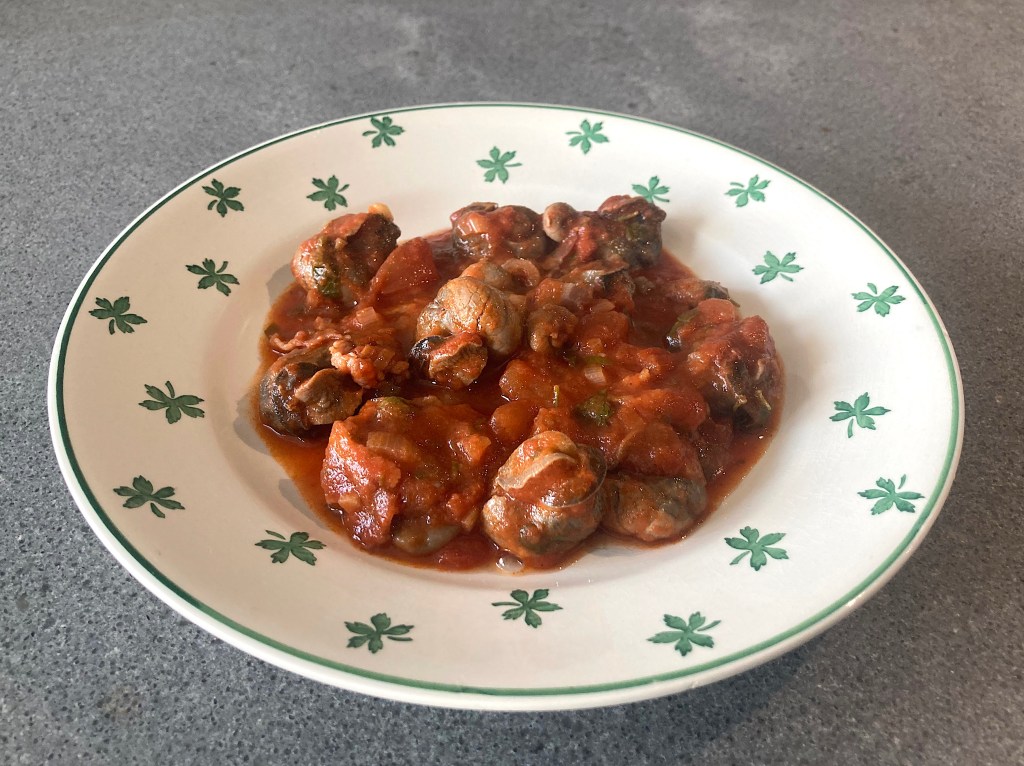
One of the dishes was Escargots à la Bordelaise, made with small snails. The taste was great although we think the snails could have been cleaner, but that’s a minor detail. The dish was a revelation: not the standard combination of snails, butter, garlic and parsley, but a rich tomato and wine sauce that supported the snails perfectly. Delicious with some crusted bread. We decided to prepare the dish as soon as we were back home.

Snails

Buying the right snails is not simple at all. The snail used for the classic Escargots de Bourgogne is called Helix Pomatia. Excellent taste, expensive and hard to find.
There are three alternatives: Helix Aspera (either the small one called Petit Gris or the large one called Gros Gris) and Helix Lucorum. The last one is considered to be less tasty than the other three, but when prepared well, it’s a very nice, affordable alternative.

Sometimes it simply says ‘Escargots’ and ‘Gros’ on the tin. Sounds good, doesn’t it? In most cases these ‘escargots’ are cooked and chopped large (sea) snails. The term ‘Gros’ is supposed to make you think of the Gros Gris. Don’t be fooled: these ‘escargots’ are rubbery, tasteless and a waste of money (and snail).

Fast Snails

And now for the sad part: as you know snails are slow. Very slow. And during winter they are even slower. They simply sleep 3 to 5 months before becoming active again. Some (most?) farmers are not that patient, so they turn up the light and the heat, pushing the snails towards a faster life, forcing them to skip hibernation and become fast snails.
Even the poor snails are turned into manageable products.
Let’s focus on the honest exception: some farms allow the snails to be slow, to sleep through winter, to be their natural self. Hurray!

Wine Pairing

Given the name of the dish (and the flavours of course) we suggest a red Bordeaux wine. Not too complex, not too expensive. We enjoyed a Côtes de Bordeaux produced by Château Cap Saint Martin in Blaye. In general you’re looking for a red wine with grapes such as Merlot, Cabernet Sauvignon, Cabernet Franc and Malbec. Rich in fruit, limited in tannins and acidity.

What You Need
  • 12-18 Snails
  • 50 grams of Pancetta (bacon is also fine)
  • 1 Shallot
  • 1 Garlic Clove
  • Parsley
  • Tomato Sauce
  • Red Wine
  • Olive oil
  • Black pepper
  • Crusted Bread
What You Do
  1. Chop the shallot, the garlic and the parsley
  2. Slice the pancetta
  3. Warm a heavy iron skillet
  4. Gently fry the shallot
  5. After a few minutes add the garlic
  6. Add the pancetta and fry for a few minutes
  7. Add the tomato sauce, some red wine, the chopped parsley
  8. Allow to reduce, thicken and integrate, let’s say 15 minutes. Longer is fine; the consistency of the sauce is important
  9. Add snails and cook for 10 minutes on a very low heat
  10. Serve immediately with crusted bread
Escargots à la Bordelaise ©cadwu

Tartelette aux Framboises

A few weeks ago, we made lemon curd using makrut or Thai limes. The curd is sweet, smooth, rich, tart and slightly floral. It made us think of tarte au citron, or even better of tartelette aux framboises. What a delicious idea! Lemon and raspberries are a match made in heaven.

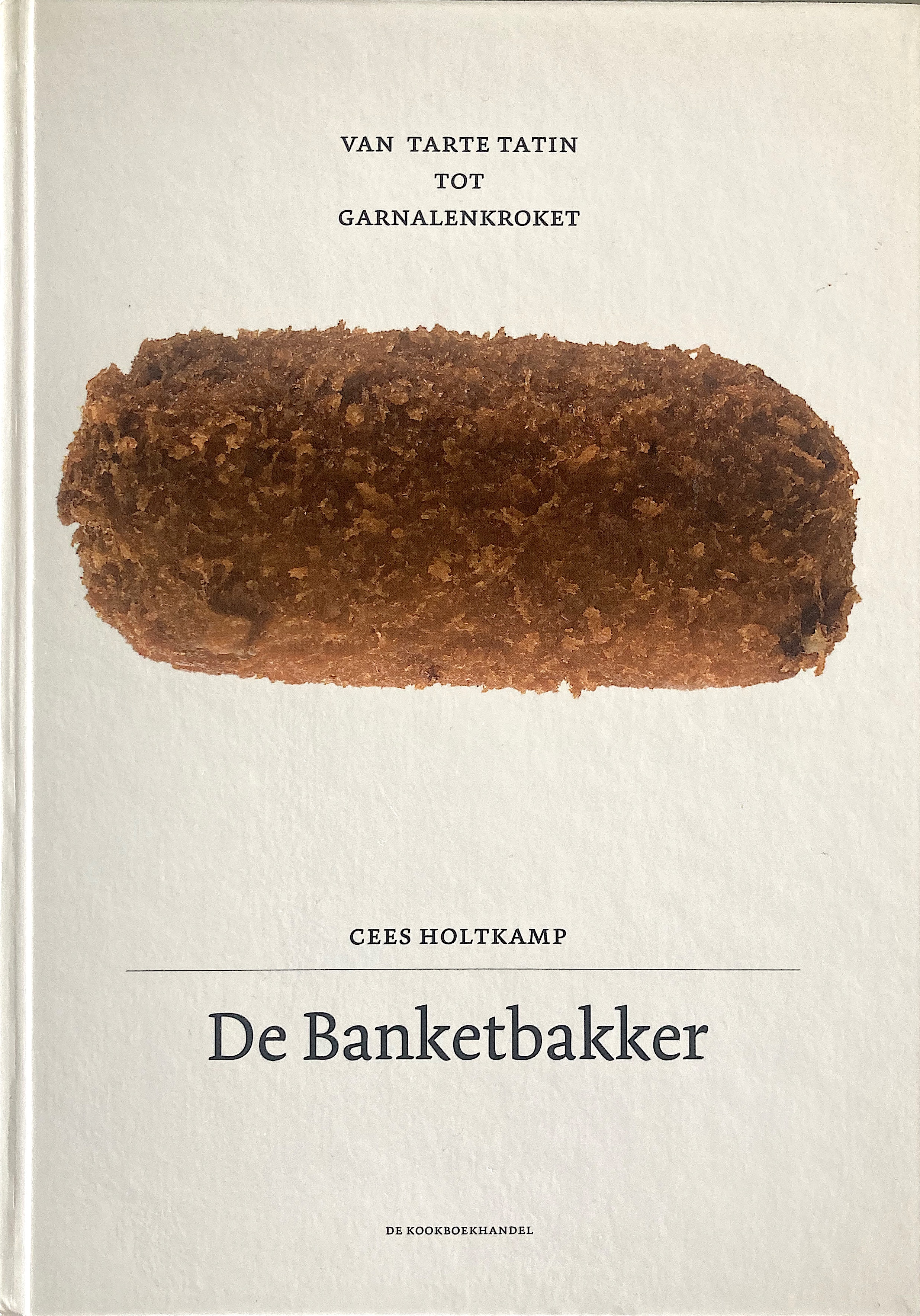
However, we must admit, we’re not too familiar with patisserie. We searched the internet a bit, opened a few cookbooks and to our surprise we found a range of suggestions for the dough of the tartelette. Typical the moment to make life simple and rely on the choice of an expert. In our case Dutch patissier Cees Holtkamp. Renowned for his excellent patisserie and his truly delicious croquettes. If you ever have an opportunity to visit the shop in Amsterdam, please, please do so. His book (in English it’s called Dutch Pastry) is available via the well known channels.
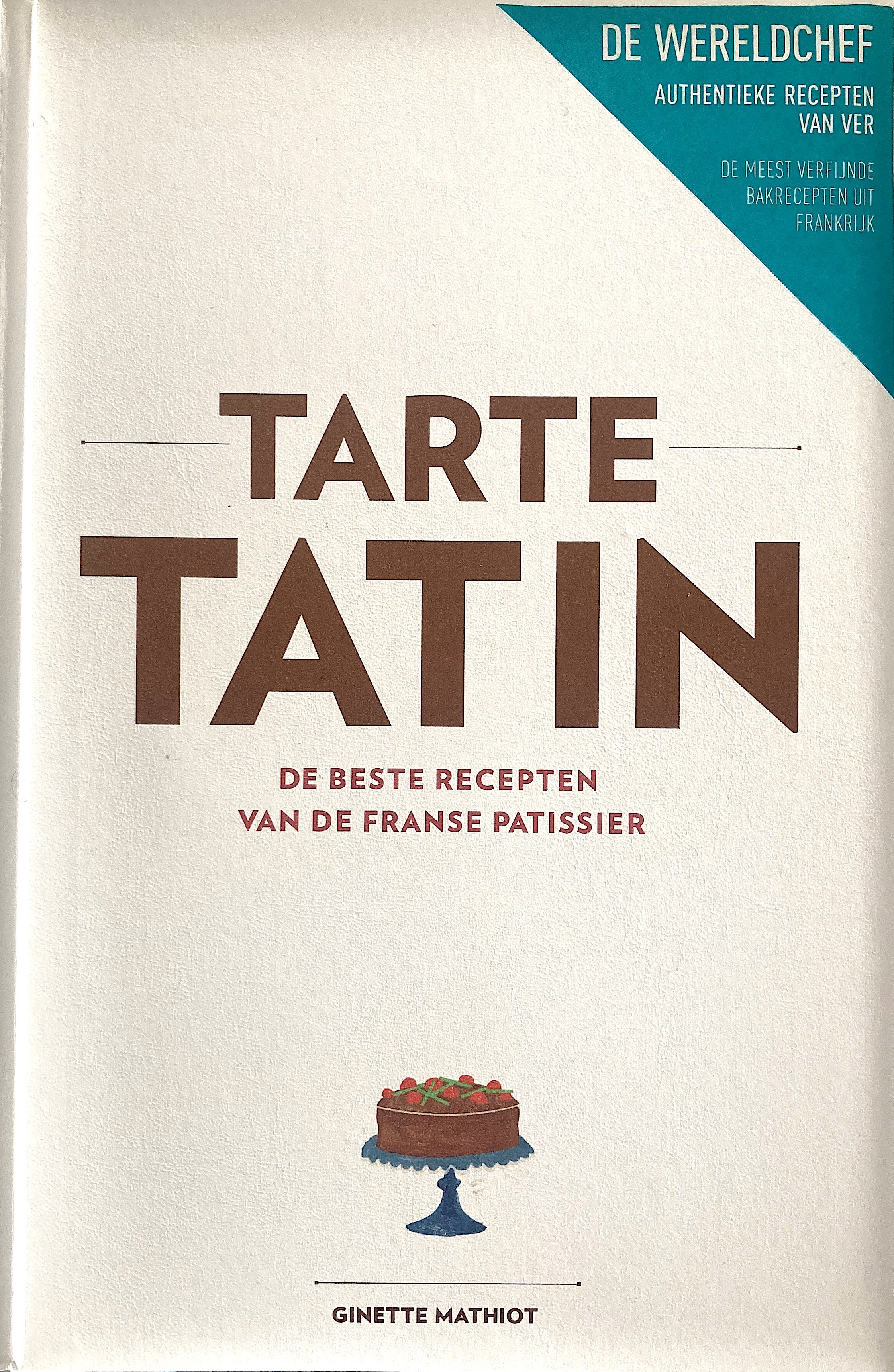
You could of course also rely on a French classic, for instance Tarte Tatin by Ginette Mathiot.

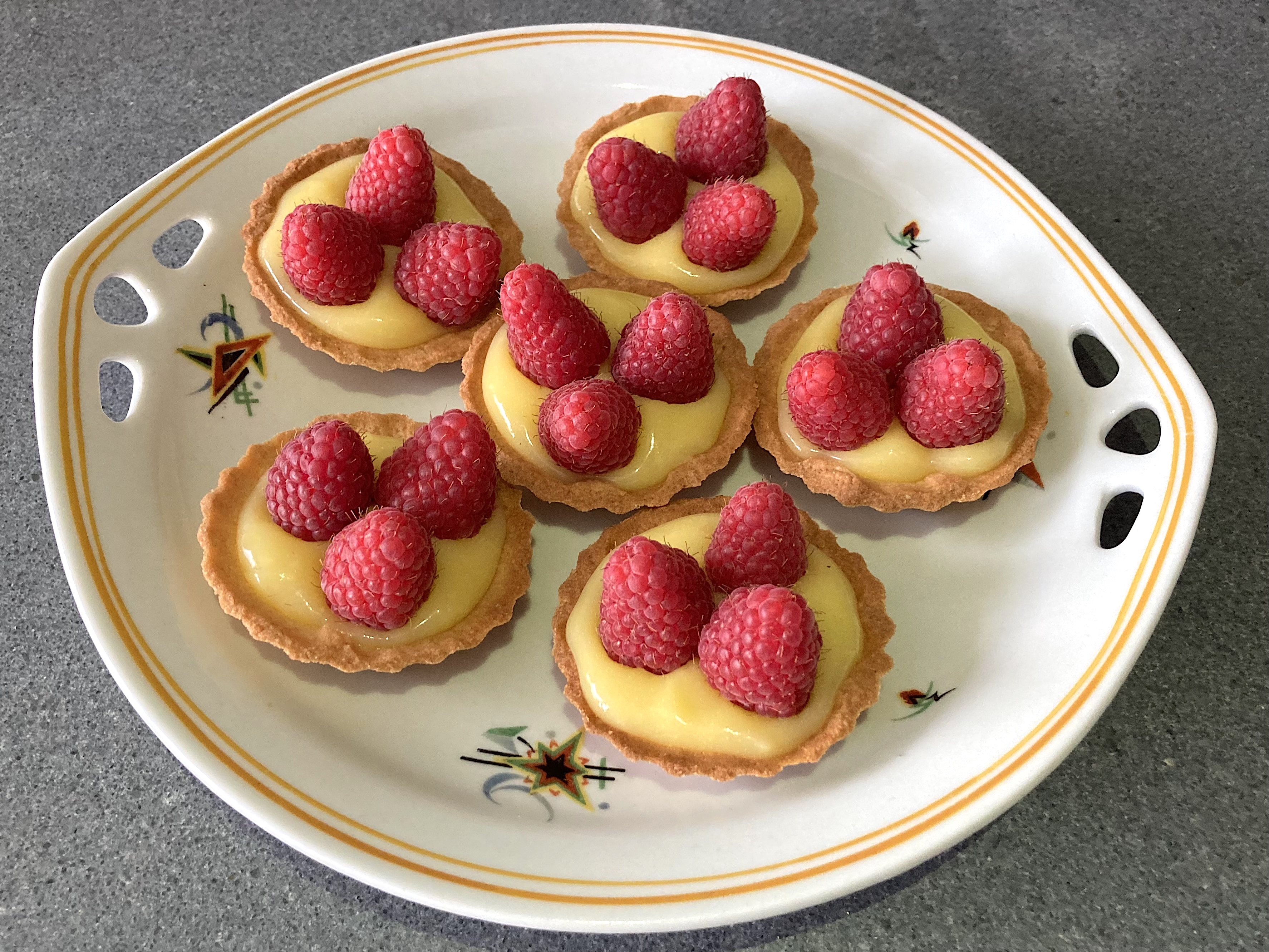
Back to our plan: we made pâte sucrée for our tartelette with fresh raspberries. The result looks good and tastes even better.

What You Need

  • Pâte Sucrée
    • 125 grams of Butter
    • 125 grams of Flour
    • 40 grams of Sugar
    • Pinch of Salt
    • 1 Egg
  • Lemon Curd
  • Fresh Raspberries

What You Do

We use tartelette moulds with a diameter of approximately 7 centimetres (2,75 inches). The butter must be soft but not warm (18 °C or 65 °F). Beat the egg. Combine flour, sugar and salt. Dice the butter and knead with the mixture. When well mixed, add the egg and knead until you have a nice dough. Leave to rest in the refrigerator for at least two hours.

Coat the moulds with butter. Remove the pastry from the refrigerator. Place it on a floured surface and roll it out with a rolling pin. Perhaps dust the dough with flour. Divide the dough into 6 portions and make small circles. Press the pastry onto the bottom and to the sides. Cut of overhanging dough. Transfer to the refrigerator for at least 30 minutes.
Preheat the oven to 175 °C or 350 °F.
Line with parchment paper and use dry beans to fill the moulds. Blind bake for 10 minutes. Remove the paper and the beans. Bake for another 10 minutes. When golden brown, remove the tartelette from the mould and let cool on a grid.
When cool, add the lemon curd and decorate with the raspberries.

Omelet with Artichoke

We love artichokes! It’s such fun to serve a steamed artichoke with a nice dipping sauce made of mayonnaise, whole grain mustard and some lemon juice. Thoroughly relaxing food. And when we have time on our hands, we prepare them à la barigoule.
Recently we wrote about la Cuisine Niçoise d’Hélène Barale. In this very informative book about the traditional food of Nice, you will find a recipe for an omelet with artichokes. We liked the idea, did our shopping and followed the instructions. Unfortunately, sorry Madame Barale!, we were not too happy with the result. The recipe suggests frying the omelet on medium heat on both sides. We think that’s a bit too much: in our case the flavours of the fried egg overwhelmed the subtle taste of the onion, artichoke and garlic. We tweaked the recipe (see below) but that shouldn’t stop you from buying the book and preparing the original.

The taste of the omelet is sweet thanks to cynarine, an intriguing chemical especially found in the leaves of the artichoke. Cynarine will enhance even the slightest trace of sweetness, in this case the sweetness of the onions and the cooked garlic. The taste of the artichoke is also nutty and bitter in a gentle way, which works really well with the eggs.

Wine Pairing

The cynarine will also enhance any sweetness in your wine, so you need a bone-dry, crisp, unoaked white wine with clear, present acidity. For instance a Sauvignon Blanc, Grüner Veltliner or Albariño.

What You Need

  • 1 Large Artichoke
  • 1 Shallot
  • 1 Garlic Clove
  • 2 Eggs
  • Olive Oil
  • Black Pepper

What You Do

Clean the artichoke, steam for 45 minutes depending on the size and let cool. Use a spoon to remove the ‘meat’ from the leaves (bracts) of the artichokes. Use a fork to make a chunky mash of the heart. Set aside.
Chop the shallot. Warm a heavy iron skillet, add olive oil and gently fry the shallot. Add the artichoke, mix and leave for 10 minutes on low heat. Mash the cooked garlic and add to the mixture. Add some black pepper. Beat two eggs, a bit longer than usual. Add the eggs to the mixture and allow to set, very slowly, making sure the omelet is baveuse (moist, warm and soft).

La Cuisine Niçoise

There are not many cities that can rightfully claim to have their own ‘cuisine’. The French city of Nice is one of them. Just think about Salade Niçoise, Bagna Caude, Tourte aux Blettes and Socca. Strongly influenced by Italian cuisine it is flavourful, rich and varied.

Hélène Barale was owner and chef of the restaurant Chez Hélène in the Rue Beaumont, number 39 in Nice. Here she prepared delicious, regional and traditional food. Ravioli à la Niçoise, gnocchi’s, panisses, pissaladière, ragout de mouton, loup grillé, pattissoun, everything freshly cooked in her kitchen for 150 guests per day.

Three examples

Panisses are made with chickpea flour, water, salt and olive oil. You make a hot dough, allow it to cool and set, then cut it into chips and deep fry. Serve with black pepper. Delicious.
Obviously you also want to know what Pattissoun is! If you search for it, you will find references to a nicely shaped squash, but Hélène Barale’s recipe is for a cake. She makes it with flour, yeast, sugar, raisins, orange zest, rum and eau de fleurs d’oranger (orange flower water). Sounds absolutely lovely.
Another very tasty recipe is for an omelette with artichokes. It’s a combination of onions, garlic, artichoke and eggs. Straightforward recipe, yummy result.

Retirement

She retired at the age of 88 in 2004. For a few years the restaurant was a museum, but it is now closed. Thankfully her daughter Paule Laudon wrote down 106 recipes of his mother’s cuisine. Her style is very clear so it’s not too difficult to prepare the dishes. The book looks like a cahier and it is edited with much love and care. It comes with an interesting introduction by Paule Laudon, the text of Nissa La Bella, which is the unofficial anthem of the city (O la miéu bella Nissa/Regina de li flou/Li tiéu viehi taulissa/Iéu canterai toujou/etcetera, meaning something like O my beautiful Nice/Queen of all flowers/Your old rooftops/I will always sing of you/etcetera) and pictures of the restaurant. The book does not contain pictures of the dishes.

La cuisine Niçoise d’Hélène Barale (in French only) was first published in 2006 and is now in its 11th edition. You can buy it via the usual channels and the French publisher for € 15,90.

Artichoke à la Barigoule

It’s the time of year to enjoy artichokes: steamed, as a salad, in a pie or perhaps à la Barigoule. This is a rather intriguing recipe from the French Provence region. There are lots of variations, so we looked in books like La Cuisinière Provençale and La Cuisine Niçoise d’Hélène Barale to find the ‘original’ recipe.

Obviously you want to know what ‘barigoule’ means. According to Hélène Barale ‘barigoule’ means thyme, which is odd because she doesn’t add thyme to her Artichoke à la Barigoule. Is it perhaps derived from the Latin word mauruculai (meaning morel according to some and saffron milk cap to others) as the Larousse suggests? But what is the link between artichokes and mushrooms?

Three Versions

We found three different ways of preparing Artichoke à la Barigoule: cooked with onions, white wine and carrot, stuffed and preserved with lots of citrus. The stuffed one is probably the original version because the artichoke is stuffed with a mixture of mushrooms, thyme and garlic. Which makes the Larousse explanation more likely.

Preparing Artichokes a la Barigoule is quite a bit of work and the result, we must admit, looks like an old fashioned underbaked meatball. We could imagine you serve the artichoke halfway the recipe. If you do, best is to use smaller artichokes.

Wine Pairing

It’s not straightforward to pair artichokes with wine. According to various researchers this is due to cynarin, a chemical especially found in the leaves of the artichoke. When the wine and the cynarin meet in your mouth, the natural sweetness of the wine is enhanced, making it taste too sweet. So you have to pair artichokes with a bone-dry, crisp, unoaked white wine with clear, present acidity. For instance Sauvignon Blanc, Grüner Veltliner or Albariño. 

What You Need

  • Artichokes
  • Cooking liquid
    • Shallot
    • Carrot
    • Olive oil
    • White wine
    • Water
    • Thyme
  • Filling
    • Mushrooms
    • Egg yolk
    • Garlic
    • Shallot
    • 2 Strips of Bacon
    • Thyme
    • Black Pepper
  • Excellent Olive Oil

What You do

Remove outer leaves and stem of the artichokes. Add oil to a large pan, gently fry the chopped shallot and the chopped carrot. After 10 minutes or so add white wine, thyme and some water. Leave to simmer for 10 minutes. Add the artichokes to the liquid, close the pan and allow to cook and steam on low heat for 45-60 minutes or until nearly done. You could decide to stop here and serve the artichoke with the (reduced) sauce.
Let the artichokes cool, remove the leaves and the centre choke (the hairy part).  Use a spoon to remove the ‘meat’ from the leaves (bracts) of the artichokes. Set aside. In a small skillet heat some oil, add chopped shallot, glaze, add sliced bacon, mushrooms, garlic and thyme. Leave for 10 minutes until done. Add the artichoke meat from the leaves, stir, add the egg yolk and mix. Add freshly grounded black pepper. Use a food processor to make the mixture smoother, but not too smooth. Fill the artichokes with the mixture. It should look like an oversized golf ball on top of the bottom of the artichoke. You will probably have too much filling, which is fine. Gently transfer the artichokes to the pan with cooking liquid and allow to steam and warm for 30 minutes. Now transfer the artichokes to a warm oven (60 ˚C or 140 ˚F).  Add the reaming mixture to the liquid, use a powerful blender to create a sauce. Pass through a sieve and blender some more. Set the blender to low speed and add excellent olive oil. Taste and adjust. Serve the filled artichokes on a small plate with the sauce.

Cooking Techniques

We all love reading recipes, trying to prepare something yummy, surprise our friends and create something great. A tasty strawberry jam that makes you think of summer, a choucroute as it could be served in the Alsace, a soup that warms you in winter or asparagus a la Flamande, all delicious.

Recipes basically have two components: the ingredients (what you need) and the actions (what you do). These actions may seem simple but can be challenging, for instance: ‘chop the onion’. Sounds simple, until you see how a chef chops an onion and you compare their result with your own. Another one: ‘poach the egg’.

Reference

When we’re not sure how to do something, we open our copy of Le Cordon Bleu Complete Cooking Techniques by Jenny Wright and Eric Treuille, first published in 1997. It’s such a great book! It describes over 700 cooking techniques and has more than 2,000 pictures to help you understand the techniques. The book includes 200+ recipes, an overview of kitchen aids and utensils plus detailed information about meat, fish, fruit, vegetables, game, nuts etcetera. If you wonder how to slice a pineapple, don’t know how to glace a pie, in doubt how to fry a pork chop, want to prepare your fish en papillotte, then you simply open the book and find the answer.

Institute

Le Cordon Bleu is an exceptional institute. It was founded in Paris in 1895 and today it is a network of culinary and hospitality schools in 20 countries. Le Cordon Bleu combines innovation and creativity with tradition through courses, workshop, educational programs and books. Currently they offer books about ChocolatePastry and Classic Recipes.

Le Cordon Bleu Complete Cooking Techniques is unfortunately a bit expensive (we saw a hardcover for over € 250,00), so you may want to visit a second-hand bookshop when you’re keen to buy it. Don’t be bothered if it looks a bit off, it just means it was often used, which is to be expected with such a helpful book.

I Know How To Cook

We have all been there, you read a recipe, you decide to prepare the dish, only to find that some essential information is missing, that the ingredients are impossible to find or that the result is something completely different. For instance, we once decided to prepare a fairly complex dish. It consisted of four components, one being a popcorn-like version of saffron rice. The steps were not too challenging: cook sushi rice with saffron, dry for 2 days and then fry in oil on 180 °C or 355 °F for 10 minutes until the rice looks like popcorn. Sounds do-able, doesn’t it? Apart from the ‘like popcorn’. All rice turned out fat and golden-brown. Finally, we figured it out: we had to use a neutral oil with a very high smoking point, for instance refined sesame seed or avocado oil. But that information wasn’t provided in the recipe. Why not, we wonder, isn’t the goal of a recipe to help the reader prepare it? So why not provide all the necessary information?

(In case you wonder what the smoking point of oil is, it’s the temperature on which the oil breaks down. That’s when it may release unhealthy, damaging chemicals and nasty flavours. Olive oil has a relative low smoking point which is why you should pay careful attention to your pan when using it for frying.)

Je Sais Cuisinier

Ginnete Mathiot approach to recipes is clearly based on an ambition to educate, to transfer and share knowledge. She was born in 1907 in Paris and pursued a career as a teacher and inspector in home economics and as an author of many cookbooks. She didn’t own a restaurant, she never worked as a chef, she wasn’t a tv-celebrity. She was focused on sharing recipes and useful household and kitchen information. Millions of copies of her cookbooks were sold and many more benefitted from her knowledge and experience.

When she was 25 years old she published her classic Je Sais Cuisinier. Today the book is known as La Cuisine pour Tous. The English version is titled I Know How to Cook. It is a very useful cookbook with recipes that truly help you to prepare a dish. She also wrote excellent books on patisserie and preserves.

When you leave through I Know How to Cook you will notice helpful sections on spices, aromatic vegetables and flavourings, you’ll see a well written glossary of essential cooking terms, seasonal suggestions and many more aspects of food.

Given the time of year we looked for the artichoke-section of the book. Such a delicious vegetable! She includes a recipe for Artichoke Hearts Printanière (artichoke hearts with a filling of mushrooms, shallot, boiled egg, ham and artichoke, grilled in the oven) and for Artichokes à la Barigoule. This is a classic dish from the Provence region. The artichoke hearts are stuffed, wrapped in bacon, fried and then cooked in a sauce with carrots and onion. The artichoke is then served with the (strained) sauce. Next week we will publish our  vegetarian version of this classic.

Her books (in French, Italian and English) are available via your local bookstore and the usual channels.

I Know How To Cook
I Know How To Cook

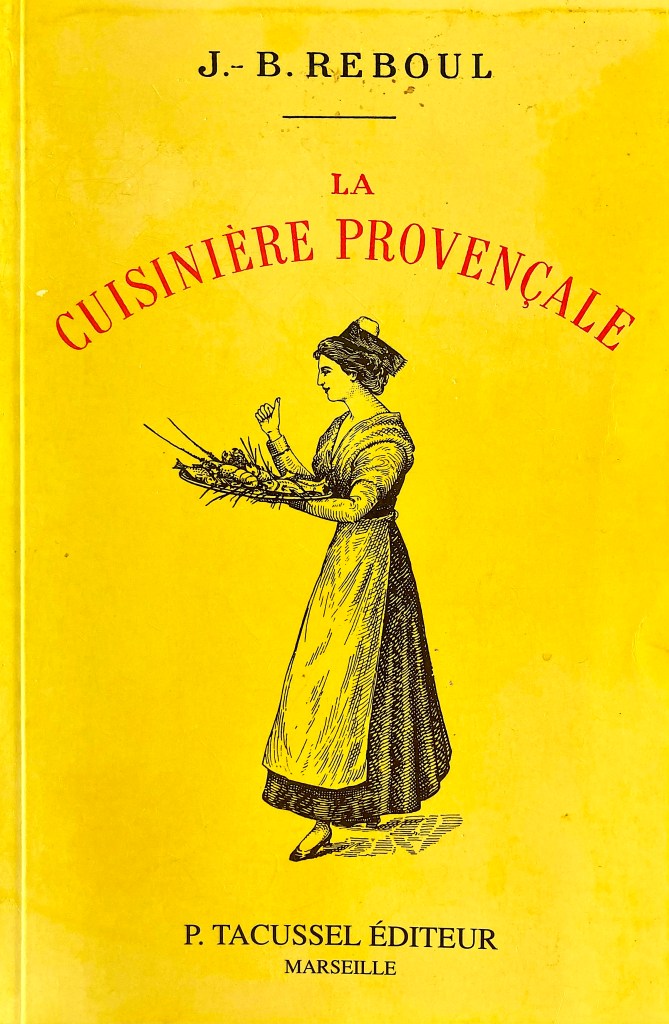
La Cuisinière Provençale

When we’re not completely sure about a sauce or a dish, we search for a recipe and inspiration in La Cuisinière Provençale. This comprehensive cookbook was first published in 1897 and was written by Jean-Baptiste Reboul. It includes 1119 recipes for an enormous variety of dishes and it provides background information on fish, meat and vegetables. It also gives traditional, seasonal, French suggestions for lunch and dinner for every day of the year. For instance for today, the third Monday of May, the two course lunch consists of moules farcies aux épinards et tendrons de veau bourgeoise. Or in English, mussels stuffed with spinach and veal tenderloins with carrots and onions.
You will find chapters about soups, hors d’œuvres, typical Provençal dishes, fish, sauces, mutton, veal, vegetables, eggs, jams and everything else you can think of.

This is one of the few cookbooks that uses the concept of formulas. For example: the recipe for Truite à la Meunière is very short: it simple states a few specific steps and then refers to formula 135, the one for Loup à la Meunière. We like this concept because it supports the idea that you can and should be flexible with ingredients. If for instance you can bake a pie with chard, then it’s probably a similar formula to bake a pie with wild spinach or beet leaves.

The recipes do not come with a separate list of ingredients, so you must make your own shopping list while reading the recipe. Not great, but we got used to it. The advantage is of course that the publisher could squeeze in even more recipes in the book.

Our Favourites

Daube Provençale is one of our favourites from this book. It is not too much work and you can also be fairly flexible with the recipe, as long as you use excellent, marbled beef. Well known chef Hélène Barale (La Cuisine Niçoise, Mes 106 Recettes) uses beef, veal and pork with tomatoes and dried mushrooms, Hilaire Walden (French Provincial Cooking) suggests marinating the beef in red wine and adds orange peel and olives whereas La Cuisinière Provençale suggests adding vinegar to the marinade but doesn’t use tomatoes, mushrooms or olives. We use carrots, shallot, garlic, mushrooms, black olives and red wine to make an intense, heart-warming stew.

La Cuisinière Provençale (in French only) is for sale via your local bookstore or the well known channels for 25 Euro or US dollar.

La Cuisinière Provençale