Your Favourites in 2023

Happy New Year! Let’s begin the new year with the 2023 highlights. Your favorite post was No-Knead Bread, We have been baking our own bread for several years, based on the method of no-knead bread (see Jim Lahey’s book My Bread for more detail) and using the ingredients (Blue Poppy Seeds, Linseed) of the French Talmière. The result is delicious!

Another very popular post is the one showing you how to make Kimizu. This is a classic, golden sauce from Japan, made with Egg Yolks, Rice Vinegar, Water and Mirin. We also have a version with Tarragon, let’s say the Béarnaise version of Kimizu. The recipes for Kimizu and Kimizu with Tarragon continue to be very popular. Although this is a classic sauce, we use a microwave to prepare it. An easy and very effective way of managing temperature and consistency.

We love mushrooms. Cultivated ones, like Shiitake, Oyster Mushrooms, Enoki and Champignons de Paris and seasonal ones, such as Morels, St. George’s mushroom, and Caesar’s Mushroom. One of the most popular posts is about Cèpes à la Bordelaise. You can also use more available mushrooms for this great combination. Always a pleasure to serve, with eggs, with meat, with more present fish.
Last year we had lots of Bay Boletes, which was such a pleasure. It’s a fairly common mushroom, as tasty as Cèpes, but much more affordable.

And finally The Queen’s Soup. We didn’t expect too much of this post, but the soup turns out to be very popular.

We were of course very pleased and honored to receive an award for our Pear and Almond pie in the Great Bloggers’ Bake Off.

Let’s start cooking!

Your Favourites in 2023 ©cadwu

The Art of Sauces: Ravigote

A classic, French sauce, traditionally served with Tête de Veau, but in general great with cold meat and cold, poached fish. A very simple, easy to make sauce with just the right acidity to brighten up your cold starter. The warm version is made with a broth, the cold one with oil, vinegar and mustard, as you would prepare a vinaigrette.
No eggs?
Indeed, no eggs. If you look at the list of ingredients, you could think of Remoulade or Tartare Sauce (both mayonnaise based) or Gribiche (made with hard boiled eggs). Ravigote is different, it’s light and uplifting. Just give it a try next time you serve cold meat or fish as a starter. Forget about the mayonnaise and enjoy this delicious, flavourful sauce.
We served our Ravigote with Pâté de Tête Persillé and crusted bread.

Wine Pairing

We enjoyed a glass of white Pontificis, made with Viognier and Chardonnay grapes by Badet- Clément. This is an oaked dry wine from the Languedoc-Roussillon region in France. It is elegant, with some oak, clear acidity and some bitterness. Creamy, with some vanilla, butter and perhaps tropical fruit. In general you’re looking for a white wine with clear acidity, oak and balance.

What You Need

  • Coarse Mustard (Moutarde à l’Ancienne
  • White Wine Vinegar
  • Oil (Sunflower, Avocado)
  • 3 Cornichons
  • 8 Capers
  • 1 Shallot
  • Parsley
  • Tarragon
  • Chervil
  • Black Pepper

What You Do

  1. Finely chop the shallot, slice the cornichons, halve the capers
  2. Chop the herbs
  3. Combine a spoonful of mustard with the same amount of vinegar
  4. Slowly add the oil until you have the right consistency and flavour
  5. Add more vinegar to get the right acidity
  6. Happy? Add shallot, cornichons and capers
  7. Mix
  8. Add a generous amount of parsley, tarragon and chervil
  9. Finish the sauce with black pepper.

PS

The amount of tarragon depends on the type of tarragon and your personal preference. There are actually three types: French tarragon (intense and aromatic, the one to use in the kitchen), Russian tarragon (limited flavour, no complexity) and Mexican (a touch of anise, but not even close to French tarragon). 

Cèpes, Lentils and Duck

Let’s celebrate the season by preparing a very simple, tasty starter with cèpes, the all-time favourite mushroom of many people. It is great when fried in olive oil with garlic and parsley, wonderful in a risotto and equally tasty when prepared à la Bordelaise. This starter is a bit more complex. It combines the nutty, rustic flavour of lentils with the fatty richness of foie gras and smokiness. The dish is a true appetizer.

Wine Pairing

We would suggest a white wine with some floral notes and only a touch of sweetness. A pinot gris or perhaps a gewürztraminer? Sweetness will go very well with the foie gras and the smoked duck, but it’s not a great match with the cèpes.

We could also imagine opening a bottle of Arbois Savagnin 2018. This complex, white wine is made from the Savagnin grape and is produced in the far east of France, the Jura. It comes with aromas that will make you think of nuts, curry and even umami. When tasting it, you may think the wine is off, given it is slightly oxidized. In this case it’s a good thing. Enjoy the savoury, nutty taste of the wine in combination with the various flavours in the dish.

What You Need

  • 150 grams of Cèpes
  • Du Puy Lentils (from Sabarot)
  • Smoked Breast of Duck
  • Terrine de Foie Gras de Canard
  • Neutral Oil (we used Avocado Oil)
  • Butter
  • Black Pepper

What You Do

Remove the smoked breast of duck from the refrigerator. Wash the lentils and cook for some 20 minutes. Drain and allow to cool. Add one or two teaspoons of oil, to coat the lentils and enhance their flavour. Add some black pepper. Clean the mushrooms and slice. Not too thin, the idea is to have a moist mushroom with a thin crust.  Fry the mushrooms in butter. Plate up by making a circle of lentils and decorate with slices of smoked duck, cèpes and very thin slices of terrine.

PS

Avocado oil seems a bit exotic, but actually it has a very high smoking point so it’s great for frying and baking. When used in a salad, you will notice the oil is light and fresh.

Bistro Cooking

Recently we reviewed Bistro Cooking by Patricia Wells as part of the ongoing cookbook review project by Bernadette. The book made us think about a lunch we enjoyed years ago in Paris. It was a nice small bistro in a small street, off centre, 15th arrondissement, nothing fancy and not a Michelin star in sight. We entered the restaurant and ordered today’s dish, the plat du jour. It turned out to be a generous helping of lentils with two fried sausages, mashed potatoes and mustard. A beer worked beautifully with it. After having enjoyed our lunch, we talked about the joy of good food, French mustard and the beauty of lentils. Time for coffee.

It’s the kind of dish you would expect in a book called Bistro Cooking by. In the book we found two recipes with lentils, one salad and one soup with smoked sausages, the delicious Montbéliard.

Salad

When going through the index we spotted a recipe for a salad with squid, tomatoes, thyme and red wine vinegar. Unfortunately, our fish monger is on holiday, so we had to use pre-cooked octopus as an alternative. The salad is colourful, tasty and uplifting. A great starter, especially when enjoyed with a glass of rosé.

Salad with Octopus ©cadwu
Flo

For many years Brasserie Flo was not only the name of an excellent brasserie in Paris, it was also a chain of restaurants in Nice, Metz, Barcelona and of course Paris (JulienTerminus NordLa Coupole and many more). In 2018 the original Brasserie Flo was renamed Floderer, after one of its founders.

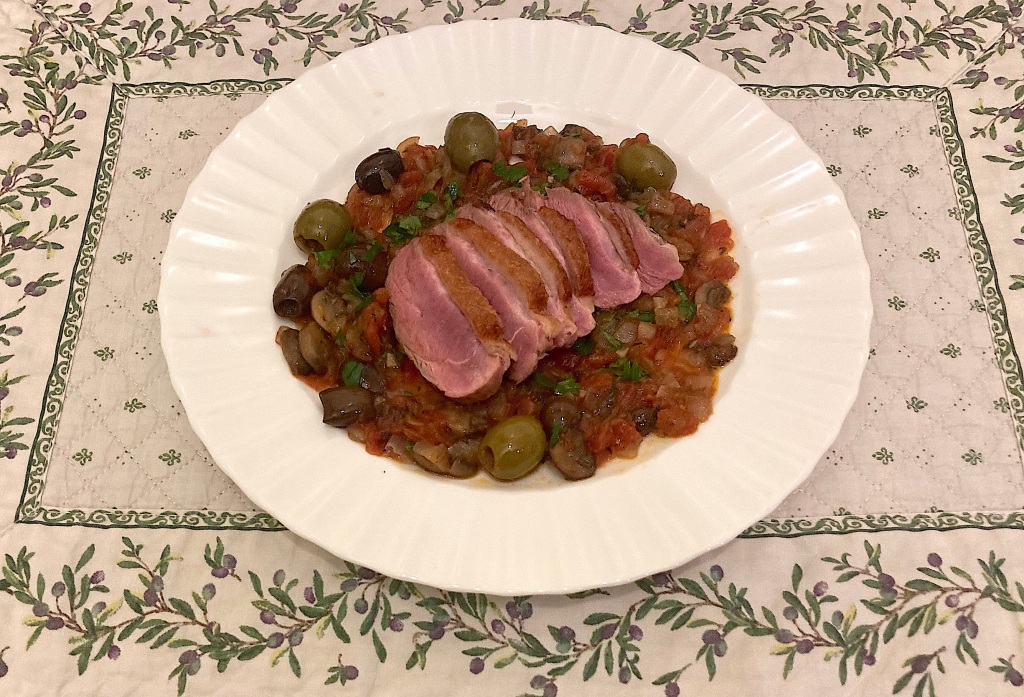
One of the recipes in Bistro Cooking is called Brasserie Flo’s Roast Duck. The name caught our attention and we decided to prepare it. The main ingredient is a whole duck, roasted in the oven. A bit too much for the two of us so we decided to combine the vegetable sauce with pan fried breast of duck. We expected the sauce to be fairly simple (tomatoes, mushrooms, onions, Herbes de Provence) but the result was delicious and a great accompaniment of the duck.

Patricia Wells serves her duck with a glass of Julienas, a cru from the Beaujolais. Very good choice. We opened a bottle of Gamay made by Domaine La Tour Beaumont from the Loire region.

Brasserie Flo’s Duck ©cadwu

The Book

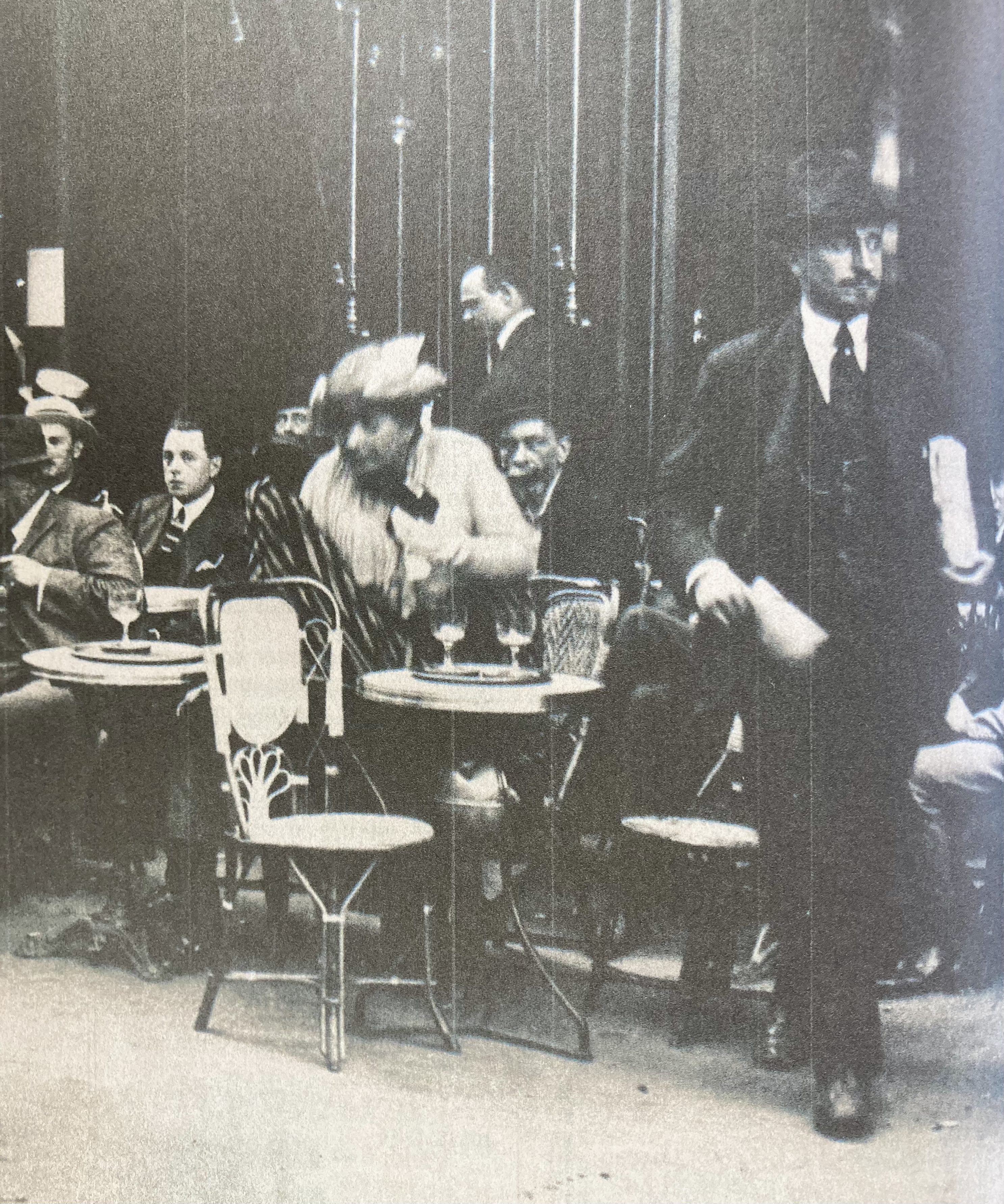
Bistro Cooking includes pictures of typical Bistro scenes showing waiters serving food, people reading their paper and enjoying a small coffee or guests sitting on a small terrace drinking an aperitif while chatting with friends. The pictures illustrate the typical bistro atmosphere and show France like it was and sometimes, if you’re lucky, still is. 
All recipes benefit from a nice introduction, discussing the origin of the recipe or one of the ingredients.

Both recipes can be found on Bernadette’s New Classic Recipe.

Bistro cooking is available via your local bookstore or the usual channels for 25 Euro or US dollar.


Petits Farcis

Not only do they look delicious, but they also taste delicious: Légumes Farcis or Petits Farcis. Easy to make and always a pleasure to serve. You could buy them ready made from your delicatessen or butcher, but why would you? Prepare them at home the way you personally prefer them, perhaps with some extra shallot, herbs or garlic.

Let’s talk a bit about the farce, the stuffing of the vegetables. It should fill the vegetable, obviously, and remain connected to the vegetable, also when cooked. Its texture must be loosely. This is where most recipes go wrong when they tell you to add panko or breadcrumbs to the farce. Follow this instruction and you will notice that during the cooking process the filling will become smaller and firmer. There you are: a meatball in a tomato. That’s not what you want. Not at all! Lesson learned, no panko, no breadcrumbs.

The meat should be nicely fat, not too finely minced and preferably a combination of porc and veal. Tasty, sufficiently fat and elegant. You could also use sausage meat. When in doubt, ask your butcher.

Wine Pairing

Keep it simple! A dry white wine, a rosé or a nice beer will be perfect. Serve what you think is best with this tasty, juicy and heart-warming food.

What You Need

  • Vegetables such as Tomatoes, Courgette, Red Bell Pepper
  • Minced Meat or Sausage Meat
  • Shallot
  • Parsley
  • Garlic
  • Black Pepper

What You Do

Finely chop the shallot, the garlic and the parsley. Additionally you could use thyme, rosemary or oregano. Combine the meat with the shallot, the garlic, the herbs and black pepper. Cut off the top of the tomato and use a knife and a teaspoon to hollow out the tomato. Keep the pulp and the seeds. Slice the bell pepper lengthwise and remove the seeds and the ribs. Discard. Cut off the top of the courgette and use a teaspoon to hollow out the courgette. Keep the pulp. Add the farce to the vegetables. Close the tomatoes and the courgettes with the caps. Transfer to a baking dish, add some olive oil, the pulp and the seeds of the tomatoes and the courgette to the dish. You could add some extra shallot. Cook in the oven for 45 minutes (depending on the size) on 180 °C or 355 °F.
Enjoy hot or lukewarm (with some of the cooking liquid), perhaps with a simple green salad or rice.

Petits Farcis ©cadwu

Guineafowl with Morels

Finally, it’s spring! The time of year to buy fresh Morels and White Asparagus. One of our local greengrocers charged 34 euro per 100 grams for the Morels and 29 euro per kilo for the White Asparagus. That’s clearly too much for our budget! Let’s wait for a few weeks and hope for more reasonable prices. In the meantime we will enjoy dried morels. In general dried mushrooms are expensive and not very tasty. Fortunately dried morels are the exception to the rule: they are as tasty as fresh ones. 

Preparing guineafowl can be a bit of a challenge.  Cooking guineafowl requires some liquid (oil, butter, wine, stock) but not too much. Don’t try making Pintade au Vin and don’t spit roast it. Guineafowl is easily overcooked. You must watch the cooking process carefully. 

This dish is about a full and rich taste, with the guineafowl at the heart of it supported by morels, cream and potato.

Wine Pairing

We enjoyed our guineafowl with a glass of Bergerac, Château De La Vaure. This is a full bodied red wine with some oak, dark fruit and great flavours overall. Made from Merlot, Cabernet Franc and Cabernet Sauvignon. In general you’re looking for a full bodied red wine with flavours of ripe fruit and oak and with a lasting taste

What You Need

  • 2 legs of Guineafowl
  • 10 grams of Dried Morels
  • Butter
  • Olive Oil
  • Chicken Stock
  • Mustard
  • Cream
  • Black Pepper
  • Gnocchi

What You Do

Pre-heat the oven to 180 ˚C or 355 ˚F. Add the two legs of guinea fowl to a shallow dish with butter and olive oil. Cook for 10 minutes. In the mean time add the morels to hot water. Soak for 15 minutes. Turn the legs upside down after 10 minutes. Cook for another 10 minutes. Turn them a second time, skin up. Add the morels to the dish, leaving the skin free. In parallel start preparing the sauce using chicken stock and some morel water, but not too much. Taste the water before adding. The legs should be ready after 30 minutes. Add the cooking juices to the sauce, grill the legs quickly if the skin is not yet nicely coloured and keep the morels warm. Add mustard and pepper to the sauce, stir well, add some cream and allow to heat through and through for 5 minutes. Taste the sauce and if necessary add more mustard or morel water. 
Serve with gnocchi.

Bouchée à la Reine

Crispy, fluffy, flaky puff pastry and a rich, warm filling with mushrooms and parsley, what better way to turn leftovers into a tasty starter. Bouchée a la Reine: a classic in Belgium and France. Not modern at all, but such fun to serve (and eat). You could fill the pastry with poultry, with mushrooms, shrimps, sweetbread, just about anything will go, as long as you use a rich roux as basis.
Making our own puff pastry is a bit too much for us, making your own bouchée is not too difficult, but buying them at the bakery is also fine. 

Wine Pairing

It all depends on the filling of your Bouchée a la Reine. It could be a light red wine if you have some left over veal, if it’s sweetbread then a lightly oaked chardonnay is fine et cetera. In all cases keep in mind that the filling comes with a generous amount of butter.

What You Need

  • 2 Bouchées
  • Some left over Veal or Chicken or Shrimps
  • Mushrooms
  • For the Roux
    • Butter
    • All Purpose Flour
    • Stock
  • Parsley
  • Lemon
  • Black Pepper
  • Butter

What You Do

Chop the (already cooked) meat and the mushrooms. Gently heat some butter in a pan, add the mushrooms and leave them for 10 minutes or so. Add the meat. Taste and add black pepper, perhaps some lemon juice, spices and herbs, definitely lots of parsley. In parallel make the roux. Warm the stock. Add butter to a pan, add the equal amount of flour plus a bit more (remember you also have some butter in the other pan). Softly fry the flour until you begin smelling that typical cookie aroma, then start adding the warm stock, slowly at first, constantly whisking. Add the meat, the mushrooms, some black pepper and the chopped parsley. Don’t turn the roux into a sauce, it must be ragout like. At this stage you could cool the filling for use later on.
Heat the bouchée in an oven at 180 °C or 355 °F for 10 minutes. Transfer from the oven onto a plate, add the filling and serve immediately.

Bouchée a la Reine ©cadeau

Golden Turnips

A forgotten vegetable, ridiculed by Baldrick in the British series Blackadder (remember the Turnip Surprise that he prepared for Blackadder? It contained, obviously, turnip and the surprise? There was nothing else in it except the turnip) and it still not very popular.
To be called a golden turnip and remain forgotten is of course a bit sad.

Let’s give credit to the turnip: it has been around for many years (according to some sources as early as 2000 BC), it is used in many cuisines, from America to Japan, the leaves are also edible and it was once an important vegetable in the four-year-crop-rotation system. Next time you see turnips, just buy them, look for a recipe and enjoy.

The golden turnip has indeed a beautiful yellow colour, its taste is sweet and delicate, the structure smooth. Great to turn into a mash (with butter and perhaps nutmeg). They can be eaten raw (crunchy and the taste is peppery, radish-like). You could also mix them with other vegetables such as Jerusalem artichoke and parsnip (fry in the oven). 

We combined the turnip with a very tasty quail, stuffed with prunes, pancetta and bay leaf.

Wine Pairing

The turnip was cheap, the quail expensive so we decided to spend even more money and bought a bottle of Château de Crémat from the Bellet region near Nice. The wine is made with 75% folle noir and 25% grenache. Folle noir is a grape typical for the Provence region. Once very popular, this grape is now hardly used.
The wine is very balanced with flavours like prune and blackberries, a touch of oak and an aroma that made us think of flowers and dark fruit. In general you’re looking for a full bodied red wine, one that matches the quail and the presence of the bay leaf and the herbs in the pancetta.

What You Need

  • 4 Golden Turnips
  • Black Pepper
  • Nutmeg
  • Olive Oil

What You Do

For the quail see our earlier post. For the turnips: peel these as thinly as possible. Cook for perhaps 5 minutes and let cool. Slice in eight. Heat a pan, add olive oil and colour the turnips quickly. The idea is to add some colour and taste to the turnip and keep its golden colour. Serve with some black pepper and nutmeg.

PS

Use the remainder of the quails to make a very tasty stock. Put in ice cube bags, freeze and use when making sauces.

  • Golden Turnips ©cadwu
  • Golden Turnips with Quail ©cadwu

Dorade

The Gilt-Head (Sea) Bream, better known as Daurade, Dorade (Royale) or Orata is a popular fish in France, Greece, Italy, Spain and many other Mediterranean countries. Delicious when stuffed with herbs such as thyme, rosemary or marjoram, grilled and served with a slice of lemon. The firm, juicy meat is aromatic and a culinary treat.
Serving a whole fish can be a bit uncomfortable. You must remove the head, dissect the fish and look carefully for hidden bones. Serving a fillet makes enjoying fish much easier. The downside is that a fillet is less tasty and perhaps a touch dry. When you buy a fillet, make sure it’s fresh and enjoy it the same day.
We combine the Dorade with typical Mediterranean ingredients. A combination that is both light and tasty.

Wine Pairing

The dish is full of flavours, so we would suggest a glass of Spanish Verdejo or Italian Custoza. In general you’re looking for a full, fragrant dry white wine with a fruity aroma and a round, long, full and dry taste.

What You Need

  • 200 grams of Dorade Fillet
  • 2 ripe Tomatoes
  • 1 Garlic Clove
  • Capers (in brine)
  • Basil
  • Black Pepper
  • Olive Oil

What You Do

Remove the pits from the tomato and dice. Chop the garlic. Coarsely slice the capers. Add olive oil to the pan, heat the garlic for a few seconds, add tomatoes. Leave for a few minutes, add the capers. Taste and adjust. One minute before serving add half of the basil. Add black pepper.
In parallel fry the dorade until golden. Serve on a hot plate and add the remaining basil.
PS When you use salted capers, wash these thoroughly to remove the salt. You need lemon juice to get the right acidity.

Dorade ©cadwu
Dorade ©cadwu

Mousse au Chocolat

Crème Brulée, Ile Flottante, Crêpes Suzette and Mousse au Chocolat: four classic French desserts. It’s tempting to buy them ready-made, especially Mousse au Chocolat is popular in supermarkets, but why not make your own?

From 1992 until 2002 Belgian cook Herwig van Hove and host Dré Steemans (better known as Felice Damiano) had a weekly program on television called ‘1000 seconds’. In these 1000 seconds (just under 17 minutes) Herwig van Hove would prepare a three-course meal. Sometimes he took a short cut by serving cheese as dessert, but very often he would prepare three courses. His recipe for Mousse au Chocolat is quick and easy. The result is a delicious Mousse au Chocolat, one that will keep well for at least 24 hours.

What You Need (for 4)

  • 2 fresh organic Eggs
  • 35 grams of fine Sugar
  • 100 grams of Dark (Cooking) Chocolate
  • 165 grams of Cream
  • Raspberry (to decorate, optional)

What You Do

You will need 2 bowls plus one larger bowl. Start by separating the eggs. Beat the egg white until firm. In the larger bowl beat the egg yolks and the sugar until ‘ruban’ (meaning thick and pale). Whip the cream until firm. This order allows you to use one wire whisk for all three steps in the process.
Melt the chocolate with 65 grams of cream in your microwave on very low power. No rush, the result should be lukewarm. This will take 3 minutes or longer. Use a spoon to mix the cream and chocolate until smooth.
For the next steps you need a spatula. Add the chocolate mixture to the egg yolks and combine. Now fold in the cream using a spatula and then fold in the egg whites. Don’t stir or mix, just fold.
Fill four nice glasses with the mousse, cover with cling foil and transfer to the refrigerator. Just before serving decorate with raspberries and perhaps some freshly whipped cream.

  • Mousse au Chocolat ©cadwu
  • Mousse au Chocolat not decorated ©cadwu