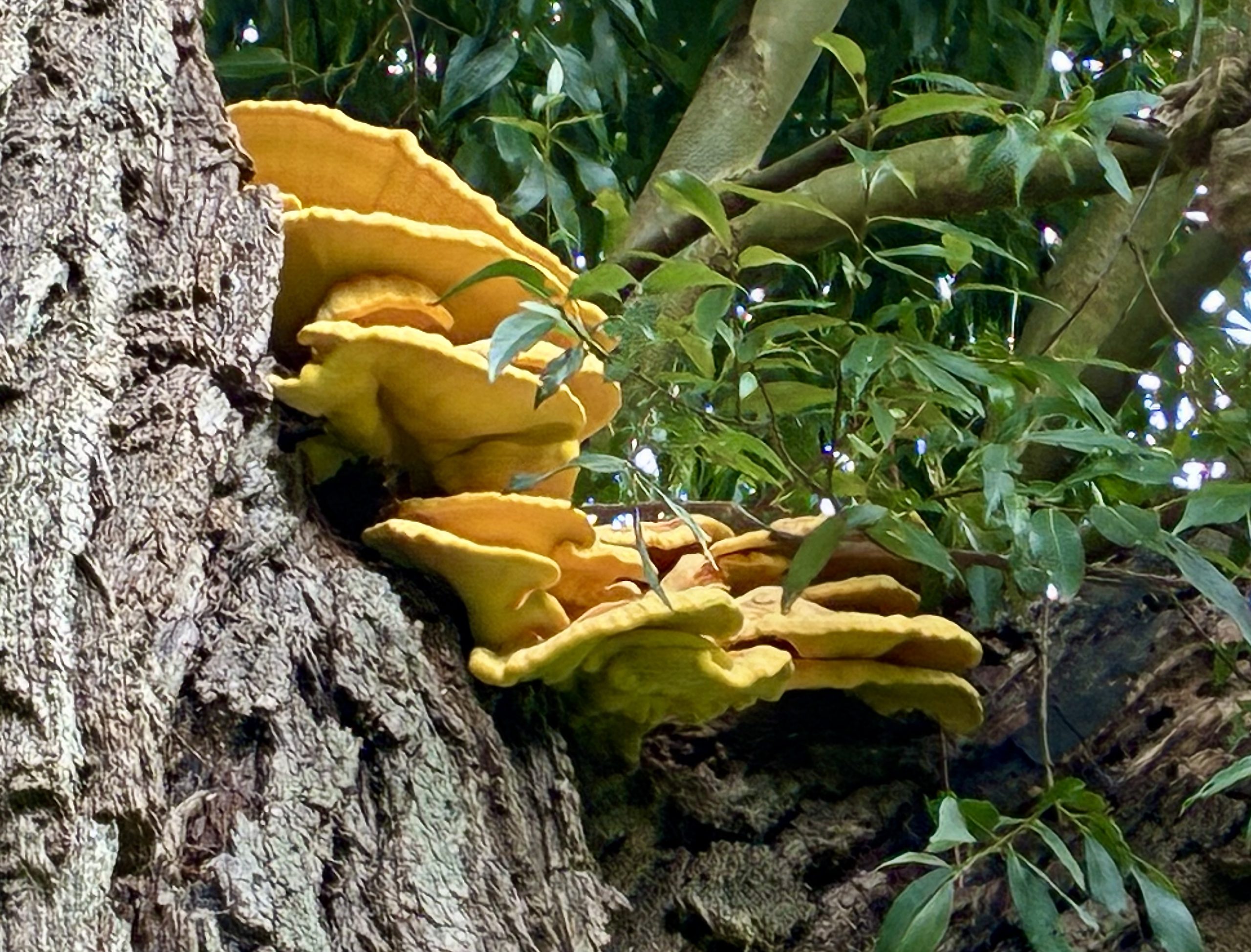
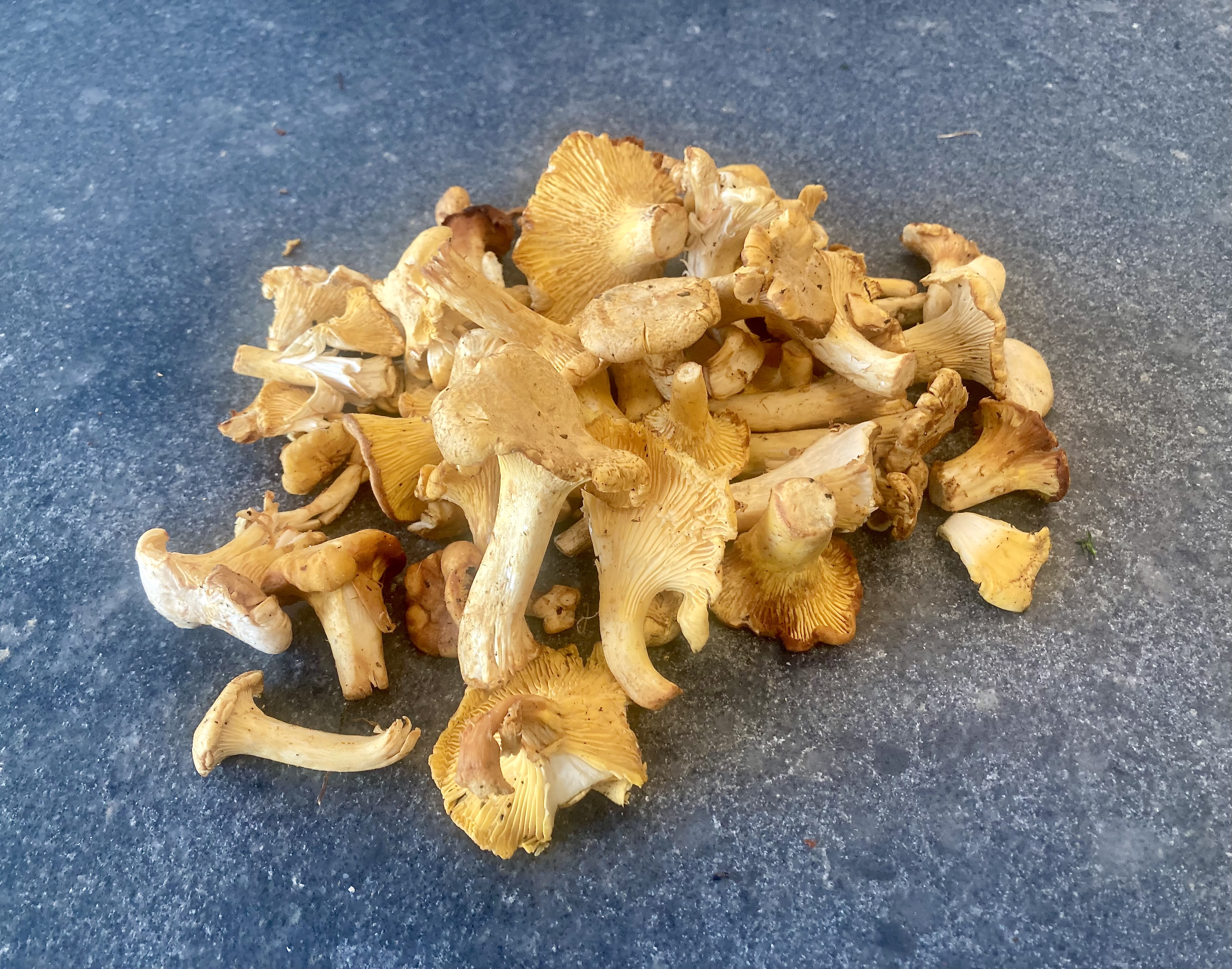
After a warm and dry European summer and some rainy days, it’s fun to see so many mushrooms, like this Chicken of the Wood (that’s what we think it is!). It’s not a mushroom we would buy; it can be chewy and acidic, even after cooking.
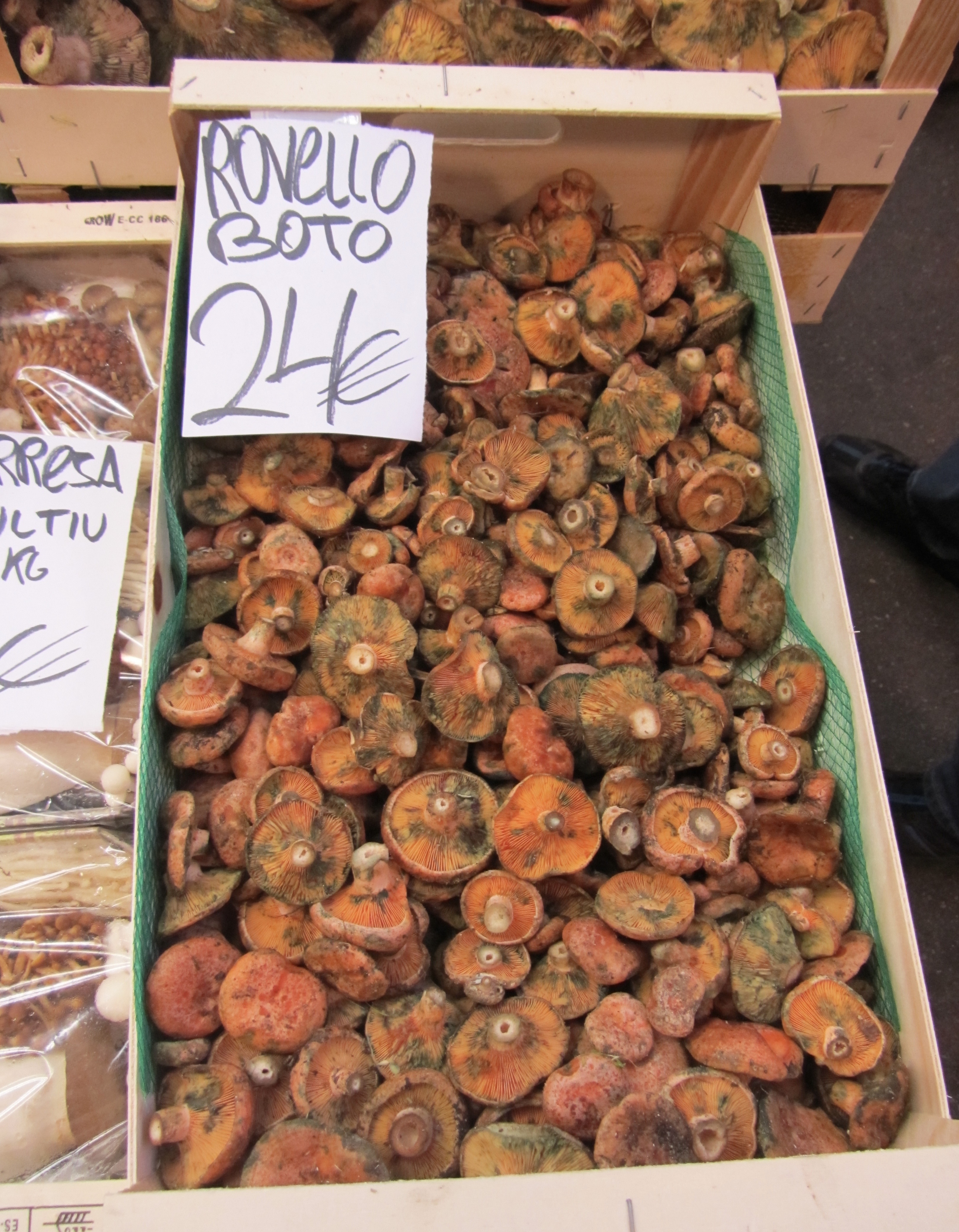
Autumn is clearly peak season for mushrooms. Typical autumn mushrooms are Chanterelle, Hen of the Woods (Mai Take), Saffron Milk Cap and Lion’s Mane. Depending of course on where you live! But actually, there is no off-season for mushrooms. For instance in spring you will be able to buy fresh Morels, St. Georges Mushrooms and Fairy Ring Mushrooms. Winter brings Field Blewit, Truffles and Wood Ear. Cèpes (Porcini, King Bolete) are best in summer.
If you’re looking for useful mushroom recipes, then we suggest Antonio Carluccio’s The Quiet Hunt or Mushroom by Johnny Acton and Nick Sadler. Or look at our list of mushroom recipes.
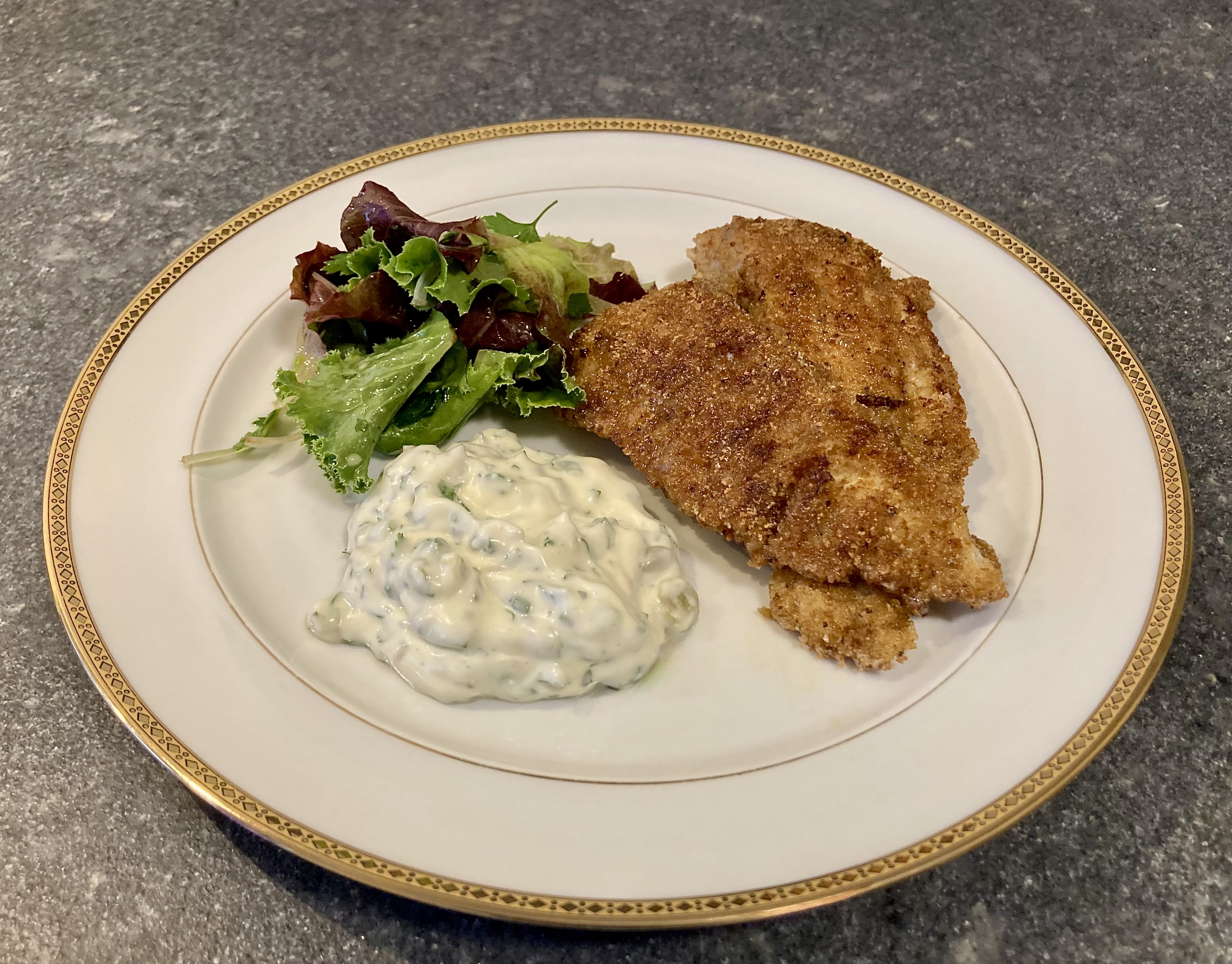
A few months ago we read an article in a Dutch wine magazine about pairing wine with a combination of fried cod, remoulade and a small salad. A nice challenge given the acidity in both the salad and the sauce plus the richness of the fried fish.
Remoulade is a sauce that goes very well with cold meat and fried or smoked fish. It combines mayonnaise with mustard, cornichons, capers, lemon and various herbs. Additional ingredients include anchovies, shallot and horseradish. Herbs could be parsley, tarragon, chives and chervil. Turn it into a traditional French starter by adding celeriac (celery root).
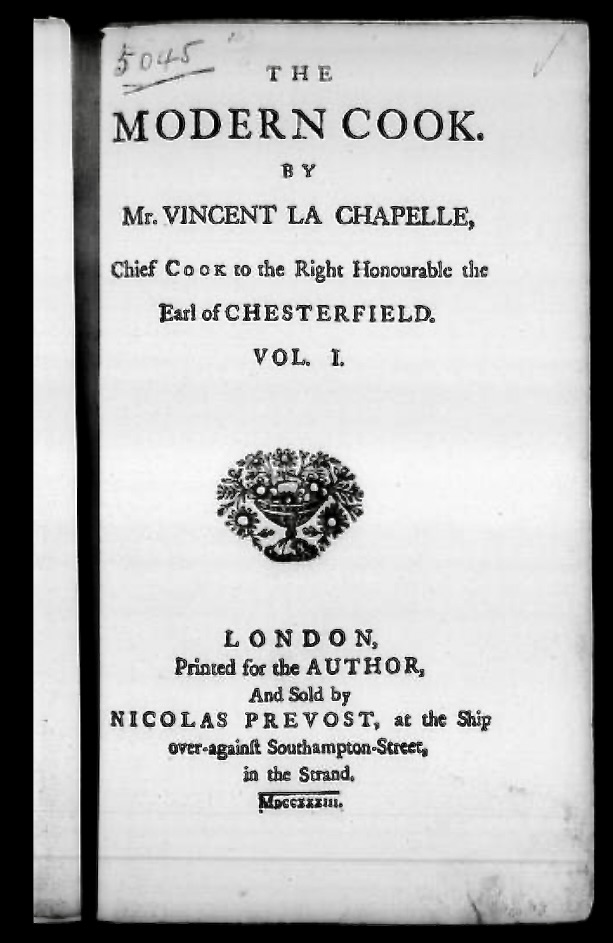
One of the first recipes for remoulade (actually two recipes) was published in London in 1733 by Vincent La Chappelle, chef to the Earl of Chesterfield, in volume 1 of his book The Modern Cook. Both versions contain oil, shallot, garlic, lemon, parsley, mustard, cullis (meat broth) and capers. Other ingredients of the first version (hot remoulade) are gravy, wine and cloves. Additional ingredients of the second version are green onions and anchovies.
Wine Pairing
According to the magazine’s wine expert the flavours in the dish are round and filming. The expert suggests a white wine with some oak or a white wine from a warmer country. We decided to drink a glass of Verdejo made by Castelo de Medina with 100% verdejo grapes. The wine is well balanced, fresh and full bodied. It has a delicate bitterness which works very well with all components in the dish.
What You Need
Remoulade
200 ml Mayonaise
teaspoon of Mustard
2 Cornichons
teaspoon of Capers (in brine)
½ small Shallot
Lemon Juice
2 tablespoons of mixed herbs (Parsley, Chervil and Chives)
Fish
Cod, Hake, Haddock, Weever or another firm white fish
Make a dressing by combining olive oil. lemon and mustard
Toss the salad with the dressing
Serve the fried fish with the remoulade and the salad
PS
Comparing the list of ingredients used by Chef La Chapelle you wil notice that modern remoulade doesn’t contain garlic or cullis. He didn’t use mayonnaise for the simple reason that the first recipe for mayonnaise was published in 1828, nearly one hundred years later.
It’s always a great idea to combine seasonal ingredients: asparagus and morels, strawberries and rhubarb, summer truffle and golden chanterelle. The season of the chanterelle runs from June to December. It’s a firm, bright yellow mushroom with subtle earthy, fruity flavour. It’s native to North America, Europe and Asia. Summer truffles can be found between May and August. Their aroma and taste is very subtle. If slightly warmed, the flavour is more present (a bit nutty). If heated, the truffle loses its flavour.
The combination of chanterelle, truffle and cream is elegant and complex. The chanterelle gains depth from the truffle and vice versa. The pasta and the creamy sauce support the flavours beautifully.
Wine Pairing
We suggest a fruity, dry, red wine, with light tannins, for instance a Pinot Noir or perhaps a Gamay. We enjoyed a glass of Domaine Coudoulet Pinot Noir. This is a light, red wine from the Pays d’Oc in the south of France. It has a nice, light colour, aromas of strawberries, it’s refreshing and has a long finish. To be served somewhat chilled.
What You Need
200 grams of Golden (Yellow) Chanterelle
20 grams of Summer Truffle
1 Garlic Clove
Stock (vegetable or chicken)
Cream
1 teaspoon of Mustard
Parmesan Cheese
Spaghetti
Olive Oil
Butter
Black Pepper
Salt
What You Do
Add olive oil to a heavy iron skillet. Set on low heat
Slice the garlic in 3 or 4 and add to the oil
Leave the oil on very low heat for 10-15 minutes
Clean the chanterelle with a brush. Take your time!
Cut the chanterelle in 2 or 4, depending on the size
Clean the truffle
Grate a quarter of the truffle, slice the remainder
Grate some Parmesan cheese, just to thicken and gently flavour the sauce
Cook the spaghetti in boiling water with some salt until al dente, according to the instruction on the package
Remove the garlic from the pan
Add some butter to the pan and increase the heat
Fry the chanterelle
Reduce heat
Add stock, mustard and cream. Combine
Add Parmesan cheese. Combine
Add the spaghetti to the pan
Taste and adjust
Just before serving add black pepper and grated truffle
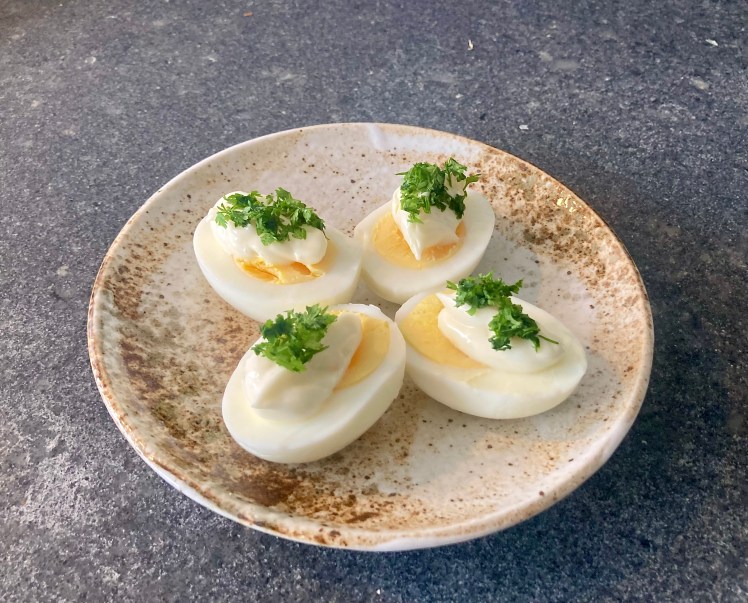
Œufs Dur Mayonnaise is a classic French bistro dish. Beginning of the 20th century the instruction was simple: make mayonnaise (egg yolk, white wine vinegar, oil, salt and white pepper), quarter or halve hard boiled eggs and place these on a layer of mayonnaise. Today’s versions use mayonnaise with mustard. Delia Smith adds garlic to her mayonnaise. Presentation-wise the eggs are topped with mayonnaise and served with lettuce, cornichons or olives. Another possibility is to serve the halved eggs as a dome, covered with mayonnaise.
Œufs Dur Mayonnaise may look simple, and perhaps you think it’s too simple to be a starter on its own. It’s actually very nice, if you use quality ingredients and make your own mayonnaise. Its simplicity doesn’t allow you to cheat (boil the eggs days in advance, overcook them, use cheap eggs, use ready made mayonnaise etcetera).
Today’s recipes suggest leaving the egg yolk slightly creamy. After having tried a number of cuissons (donenesses if that’s a word!) we think it’s best to use hard boiled eggs. We rely on our Emerio egg cooker to create the perfect egg!
Drink Pairing
The taste of Œufs Dur Mayonnaise is savoury, mineral and rich. The mayonnaise gives a velvety mouthfeel. As this is a classic bistro dish, we suggest a simple white wine, nicely cooled, or a beer, or a glass of cold water.
What You Need
fresh, organic Eggs
Mayonnaise
(optional) Chervil
What You Do
Prepare mayonnaise. We suggest adding a bit more mustard and vinegar than usual
Prepare hard boiled eggs
Peel the eggs and let cool
Halve the eggs and add some mayonnaise on top
(optional) decorate with chervil
PS
The number of bistro’s in France went down from some 170.000 in the 1960’s to 35.000 in the 2020’s. Œufs Dur Mayonnaise became unpopular: eggs contain a high amount of cholesterol and mayonnaise is high-fat food and calorie-dense. In 2018 L’Association pour la Sauvegarde de l’Œuf Mayonnaise (the association to protect Œuf Mayonnaise) was founded, to promote the dish and bring it back to the table. The Association organises an annual championship. The 2026 winner of the award was restaurant Au Rêve in Paris (Œufs Mayonnaise is on the menu for 4 euro).
Over the years we wrote about a range of sauces, from very classic Béchamel to intriguing sauces like Kimizu and Cameline. But for some reason we never wrote about mayonnaise! The average Dutch person consumes some 2.2 kilo of mayonnaise per year, same for the US. These figures are based on mayonnaise produced by companies like Hellmann, Kraft, Heinz and many others. They all claim to produce ‘real mayonnaise’.
The historical back ground of mayonnaise is full of anecdotes as you would expect. Its origin could be a sauce from from Bayon (France, Bayonaise), or from Mahón (Spain, Mahónaise) or perhaps it goes back to aioli (another sauce we need to write about!).
In 1828 Antonin Carême published a recipe for magnonaisse in his book Le Cuisinier Parisien, ou l’Art de la Cuisine Française au Dix-Neuvième Siècle. He describes three methods for making the sauce. The first combines two egg yolks, tarragon vinegar, oil (from Aix en Provence), salt and white pepper. Interestingly he suggests making the sauce in a terrine on crushed ice. He also describes what to do if the sauce splits: put a spoonful of cold béchamel with an egg yolk in a bowl, plus a spoonful of the magnonnaise (with the wooden spoon), and you stir this mixture vigorously, which becomes smooth and velvety. You mix in part, the magnonnaise, which by this work becomes again what it was at first.
Mayonnaise is an emulsified combination of egg yolk, oil, vinegar, salt and white pepper. Adding a teaspoon of mustard kickstarts the emulsification. The recipe below is for a neutral mayonnaise. It is velvety, soft and creamy with a subtle, pure flavour. It’s easy to adjust to your taste or to the dish you want to use it for.
We use a hand (immersion) blender to make our mayonnaise. The cup must be slightly larger than the head of the blender. For some reason you have to use a whole egg. We tried it with egg yolk only, which didn’t work.
What You Need
1 organic Egg
2 teaspoons of Mustard
3 teaspoons of White Wine Vinegar
pinch of Salt
300 ml Oil, for instance Rapeseed Oil or Canola Oil
White Pepper
What You Do
All ingredients must be at room temperature
Add egg, mustard, white wine vinegar and salt to the cup
Gentle pour the oil on top
Lower the blender into the cup
Place the head of the blender against the bottom of the cup
Start at the bottom on medium speed
Move the blender upwards, very slowly, this may take 30 – 60 seconds
You may want to increase the speed, going upwards
When ready, add white pepper
Put the mayonnaise to a bowl and transfer to the refrigerator
The mayonnaise will last for 3 – 7 days, provided you use fresh ingredients and you store it at 4 °C (40 °F) or lower. However we suggest eating it within one or two days, because it’s so very tasty!
PS
Hellmann’s original mayonnaise also contains water, sugar, flavourings, paprika extract and antioxidant; Heinz Seriously Good Mayonnaise also contains water, sugar and spice. Kraft’s Real Mayo also contains water, sugar, dried garlic, dried onion, paprika and natural flavor. If you want real mayonnaise, simply make your own!
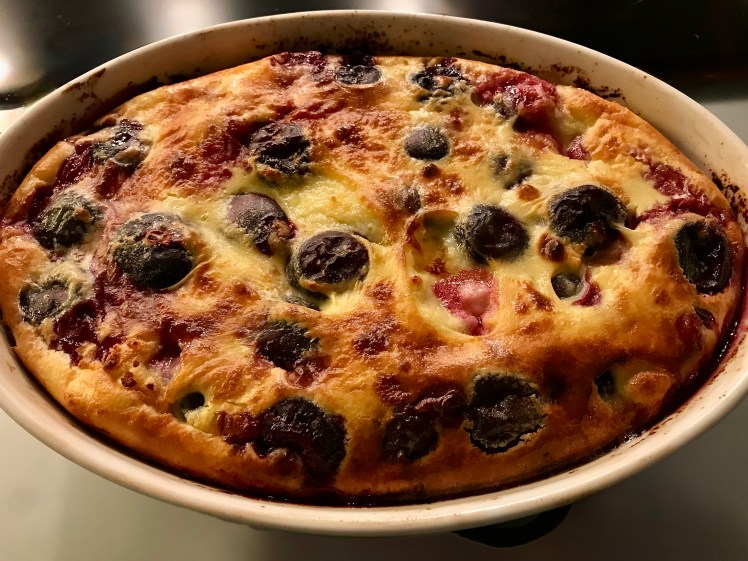
Cherries, cherries, cherries! We love their rich, sweet taste, the touch of tartness and their firm, succulent texture! They just want to be eaten, one after the other. So what better summer dessert than Clafoutis?
Should you use whole cherries or pitted ones? Not removing the pits is less work for you (obviously) and it reduces the risk of a soggy Clafoutis. Unpitted cherries will give a subtle almond flavour to the clafoutis. On the other hand, you don’t want to bite into a pit while enjoying your dessert. Also important: the pits contain amygdalin, a toxic compound that can also be found in almonds, apple seeds and apricot stones. We decided to pit the cherries and compensate for the lack of almond taste by adding some almond flour to the batter. If you decide to remove the pits, make sure you remove all of them!
Finally, yes, you can replace the cherries with fresh apricots, berries, peaches or prunes. The result is called a Flaugnarde. But nothing as tasty as Clafoutis made with fresh cherries!
What You Need
2,5 dl of regular Milk
2 Eggs
30 grams of plain Flour
10 grams of Almond Flour
20 grams of Sugar
500 grams of Cherries, pitted
10 grams of Butter
What You Do
Pre heat the oven to 180° Celsius or 350° Fahrenheit
Whisk together the eggs, plain flour, almond flour and sugar
Bring the milk almost to a boil
Stir the milk into the mixture
Butter a large, shallow baking dish, add cherries to the dish
Make sure the bottom is nicely covered with cherries; no need to have two layers of cherries
Pour the mixture over the cherries
Bake (lower third of the oven) for 20 minutes
Add a few dots of butter
Continue baking for another 20 minutes or until the Clafoutis is golden
Leave to cool for 60 minutes or so, this will enhance the taste
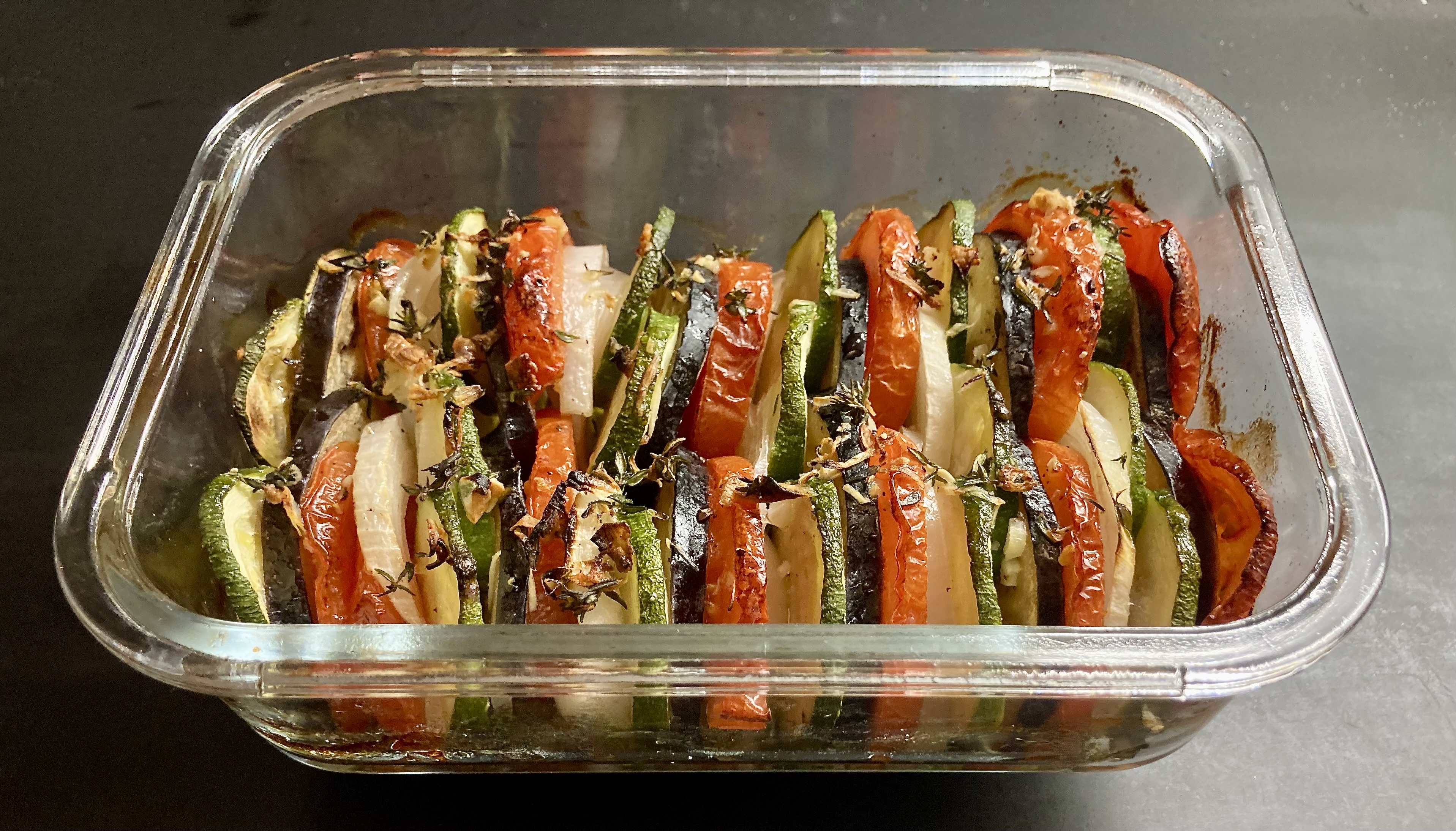
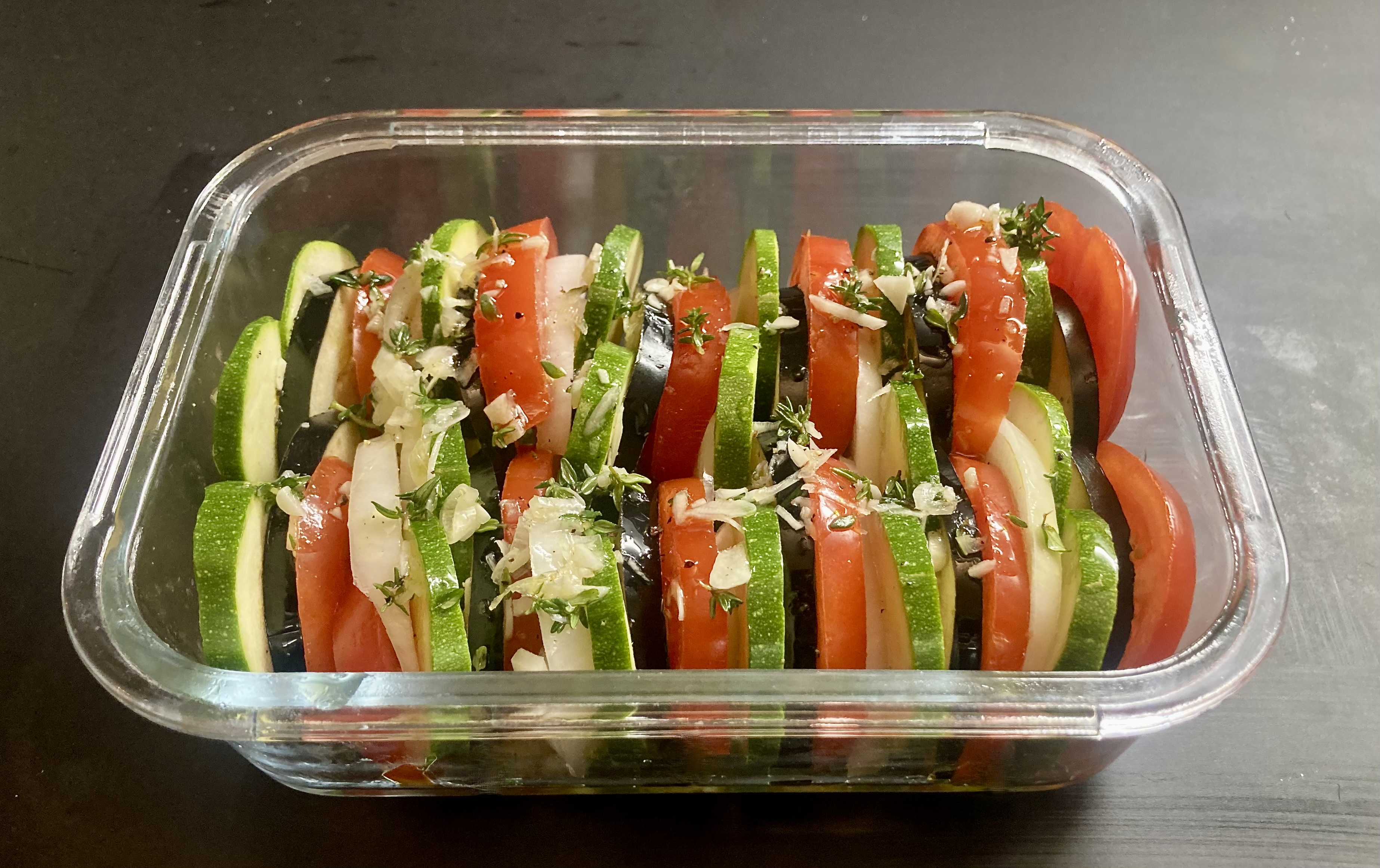
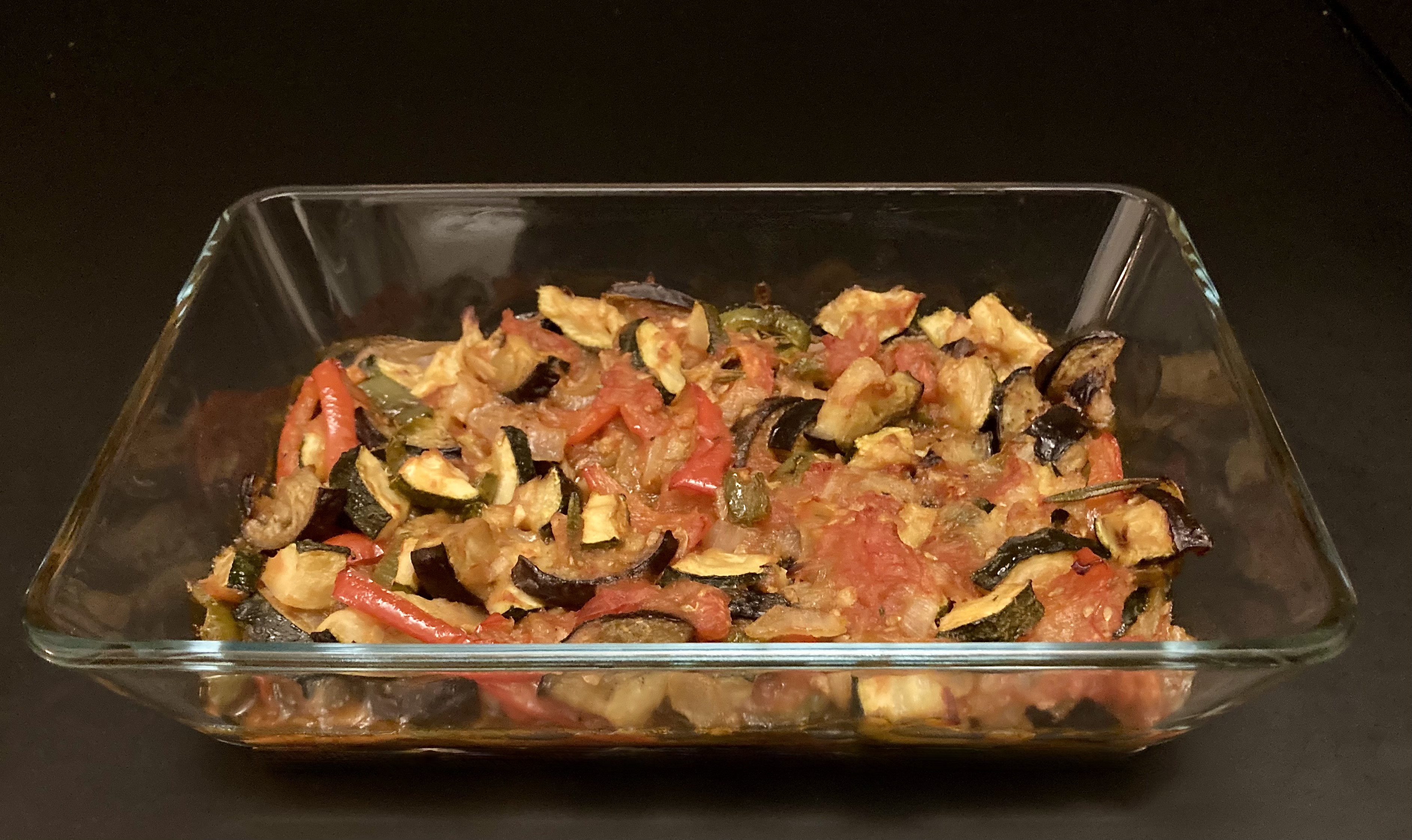
A delicious combination of tomatoes, zucchini, eggplant and onion. Add flavoured olive oil (garlic and Herbes de Provence), assemble and transfer to the oven. That’s all! The result is a Tian, a vibrant and very tasty dish. Thanks to the preperation in the oven, without additional liquid or sauce, the taste and aromas of the vegetables are pleasant and intense.
A few weeks ago, we prepared Ratatouille Niçoise. We read about variations such as Confit Bayaldi and saw beautiful presentations by Remy (Ratatouille) and other chefs. We also came across a recipe for Tian. Then it all made sense: the nouvelle cuisine version of ratatouille combines the ingredients and preparation of a classic ratatouille with the presentation of Tian.
Tian is the name of a ceramic casserole dish used in the Provence and other parts of France. The dish prepared in it is also called Tian. We found lots of versions, including a Tian d’Anchois, in Hélène Barale’s book La Cuisine Niçoise. A combination of a rich tomato sauce, fresh anchovies and bread.
When shopping for our Tian we wondered if we should add onion. Our greengrocer on the Cours Saleya in Nice was clear: white onions are mandatory.
What You Need
1 Courgette or Zucchini
1 Eggplant or Aubergine
Tomatoes
White Onion
2 teaspoons (or more) Herbes de Provence
2 cloves of Garlic
Black Pepper
Olive oil
What You Do
Wash the zucchini, the tomatoes and the eggplant
Heat your oven to 200 °C or 390 °F
Slice the zucchini, the tomatoes and the eggplant into thin, evenly sized pieces.
Cut the eggplant and/or zucchini slices in half to make layering easier.
Slice the onion, but thinner
Crush the garlic
Combine garlic, olive oil and herbes de Provence
Coat the dish with half of the oil
Assemble the dish
Drizzle with the remaining oil-mixture
Add some black pepper
Sprinkle with some extra herbes de Provence
Cover the dish with aluminium foil
Bake for 20 minutes
Remove the cover and continue baking for another 20–25 minutes
It’s always hard to say what the original version of a dish is, assuming it even exists. In most cases recipes evolve over time, influenced by people, availability of ingredients and culinary trends. Ratatouille is a good example: it originates in the Provence, or more precisely: in the Niçoise region. Its local name is ratatolha. Ingredients are typical for this area: tomatoes, onions, garlic, zucchini, eggplants and herbs like thyme and marjoram. Meaning that we don’t really know what the ingredients were before the introduction of tomatoes and bell peppers in the region.
In 1976 chef Michel Guerard in his book Le Cuisine Minceur introduced Confit Bayaldi, a variation whereby the vegetables (and mushrooms) are thinly sliced and baked in the oven. In 1999 chef Thomas Keller added a piperade and a vinaigrette to the Confit Bayaldi. This is the ratatouille that features in the classic film Ratatouille.
When reading the recipe for Ratatouille Niçoise, we noticed that the vegetables are fried separately, the onions are caramelised and the tomatoes are used to make a sauce that is added to the other vegetables towards the end. The result is a very tasty, rich and powerful dish. Thanks to the way it’s prepared you will be able to taste the individual flavours and the combination. Making your ratatouille this way is perhaps a bit of work, but’s it’s not difficult and it’s worth the effort. We served our Ratatouille Niçoise with grilled lamb chops.
Wine Pairing
We decided to enjoy a glass of red wine from the French Languedoc-Roussillon area, made with Syrah grapes by Les Jamelles. The wine has an intense dark colour and aromas of dark berries and a touch of vanilla. The flavour is a combination of some spiciness, dark fruit and mild tannins. In general, we suggest a not too complex red wine with some oak, dark fruit and character.
Coarsely chop the zucchini, the eggplant and the bell peppers
Slice the onion
Peel the tomatoes (heat a pan with water, dip 1 tomato in the hot water for 10 seconds and use a sharp knife to peel. If it doesn’t come off easily, dip for another 10 seconds)
Chop the tomatoes
Warm a Dutch oven, add olive oil and fry the onion until golden
Add the chopped tomatoes, one crushed garlic clove, the bouquet garni and black pepper. Leave on low heat, no lid required. The sauce must become thick and smooth. This will take some time!
In parallel: heat a skillet, add olive oil and fry the zucchini. When nicely coloured reduce the heat and add 1 crushed garlic clove and some black pepper. After a few minutes transfer to a plate and set aside
In parallel: we used the same skillet to repeat step 8 twice, first with the bell peppers and then with the eggplant
Once the vegetables are fried and the sauce is ready: warm a second Dutch oven, add the vegetables and combine with sauce
Leave on low heat for one hour. No lid required
Set your oven to traditional and 180 °C or 355 °F
Transfer the pan to the oven for 30 minutes, leaving the door slightly open
Just before serving remove the bouquet garni
PS
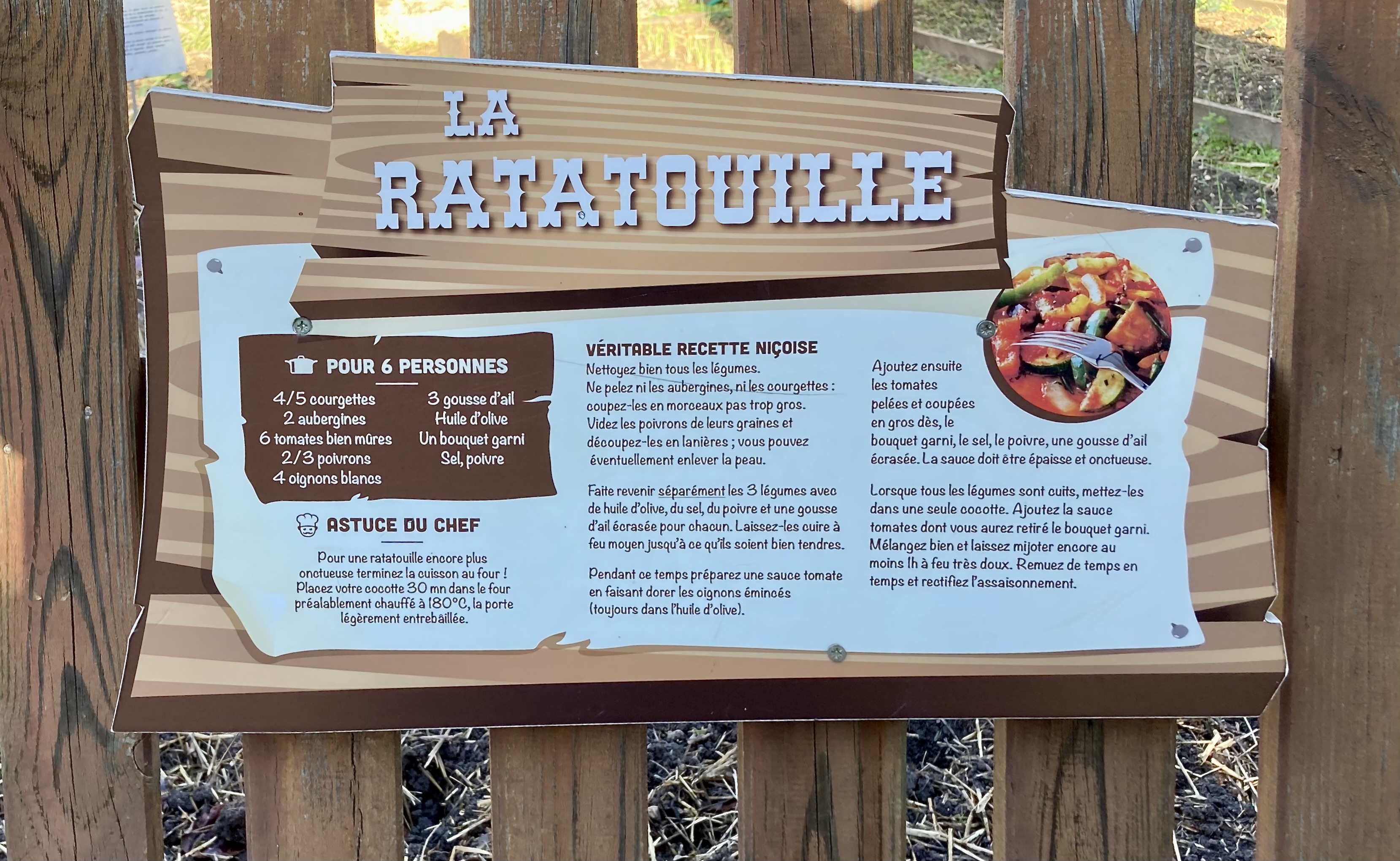
The recipe is on display in Parc Phoenix in Nice, so it must be the original!
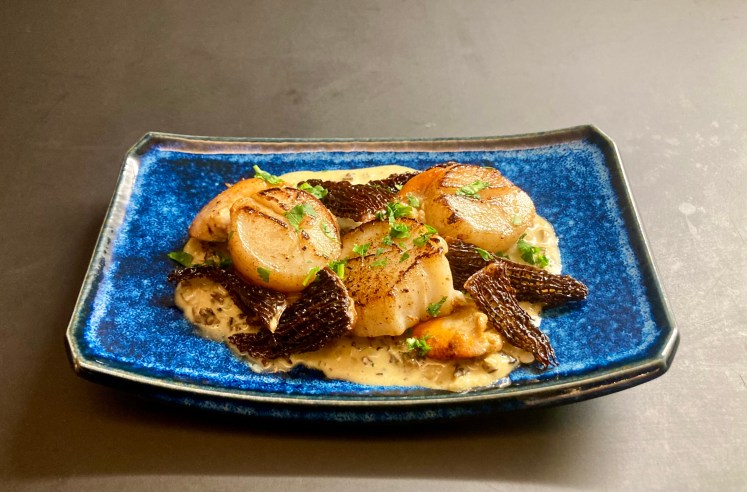
Combining seafood with mushrooms can be magic. We prepared Cod with Horn of Plenty and Beech Mushrooms with Haddock. Both are delicious combinations. We went shopping on the market, looking for fresh or dried morels. After having bought them, we saw great looking scallops. Why not combine these two complimentary products? At home we searched for Coquilles Saint Jacques aux Morilles, assuming we would find lots of suggestions in French. Which we did. It turns out to be a ‘recipe from (grand-) mother’, although we don’t know why because it’s such a refined dish. The scallops are delicate; the sauce rich and the morels have a unique taste. Adding finely chopped morels to the sauce helps bringing the two main ingredients together.
Wine Pairing
We decided to enjoy a glass of lightly oaked chardonnay with our Scallops with Morels, produced by Doudet-Naudin. The wine is fresh with some acidity. Its aromas are floral with some nuttiness. The freshness is nice with the sauce, and the nuttiness is great with the aroma of the fried morels. In general, we suggest a nicely balanced, pleasant white wine with some oak, fruitiness and freshness.
What You Need
10 grams of dried Morels (or 50 grams of fresh Morels)
If using dried morels, then soak the morels in warm water, wait for 30 minutes, remove morels from water, check for dirt and pass the morel-water through a fine sieve if necessary
If using fresh morels: check for dirt
Clean the scallops
Warm 2 skillets
Finely chop shallot
Remove the white stem of the morels
Halve 2/3 of the morels lengthwise
Finely chop 1/3 of the morels
Chop the parsley
Gently fry the sliced morels in butter in one skillet, for a few minutes or until a touch golden
Wrap the fried morels in aluminium foil and transfer morels to the oven on 50 °C or 120 °F
Glaze shallot in the same skillet
After a few minutes add chopped morels
After 5 minutes add some chicken stock, some morel-water, cream and black pepper
Add ½ teaspoon of mustard. The mustard will add flavour and help thicken the sauce
Reduce and taste
Have morel-water and/or stock on stand-by in case you need to be thinning the sauce
Add some chopped parsley
Taste the sauce and adjust
Quickly fry the scallops in olive oil until opaque
Time to assemble: the sauce, the scallops and the halved morels on top. Sprinkle with parsley
Belgian Endive (or Chicory or Witloof) used to be a fairly bitter vegetable. There were two ways of solving this: cook it for a long time in salted water and/or remove the solid part from the stem. Today’s Belgian Endive is not that bitter, so you can happily enjoy all of it and forget about cooking it.
A traditional way of preparing Belgian Endive is to blanch it in boiling water, drain, then wrap the endive in ham, cover it with a béchamel sauce with cheese (sauce mornay) and chapelure. Transfer the dish to the oven until golden. It’s a nice way of preparing Belgian Endive when you want to take a trip down memory lane. Another option is to slice it and make a salad, preferably the one created by Antonio Carluccio. His salad with truffle and truffle oil is brilliant. A much better idea is to caramelise Belgian Endive in a hot skillet. Adding lemon juice will enhance the bitterness of the Belgian Endive and add acidity. And if you bought the right kind of lemon, you will also have a floral touch because of the bergamot.
Enjoy the caramelised Belgian Endive with lamb or pork chops.
Wine Pairing
A simple full-bodied red wine will work very well with the Belgian Endive. Make sure it’s not too subtle!
What You Need
Belgian Endive
Olive Oil
(optional) Butter
Lemon
What You Do
Clean the Belgian Endive by removing the outer leaves and cut in half (top down)
No need to remove the centre core
Heat a skillet
Add olive oil
Place the Belgian Endive in the pan, flat side down
Keep on medium heat for some 10 minutes until caramelised, so really dark brown
Turn the Belgian Endive and continue for another 5 to 10 minutes
Optional: reduce heat and add some butter
When you’re happy with the result, add fresh lemon juice to taste
Leave in the pan for a few seconds
Stir and check the taste
Serve on a hot plate
PS
If you feel inspired by this recipe, then search for Witloof from Belgium by Liesbeth Hobert and Felix Alen. Over 150 pages with suggestions how to prepare Witloof. Pity it’s in Dutch only, despite its title.