
Stuffed Courgette or Zucchini Flowers

A Tempting Flower

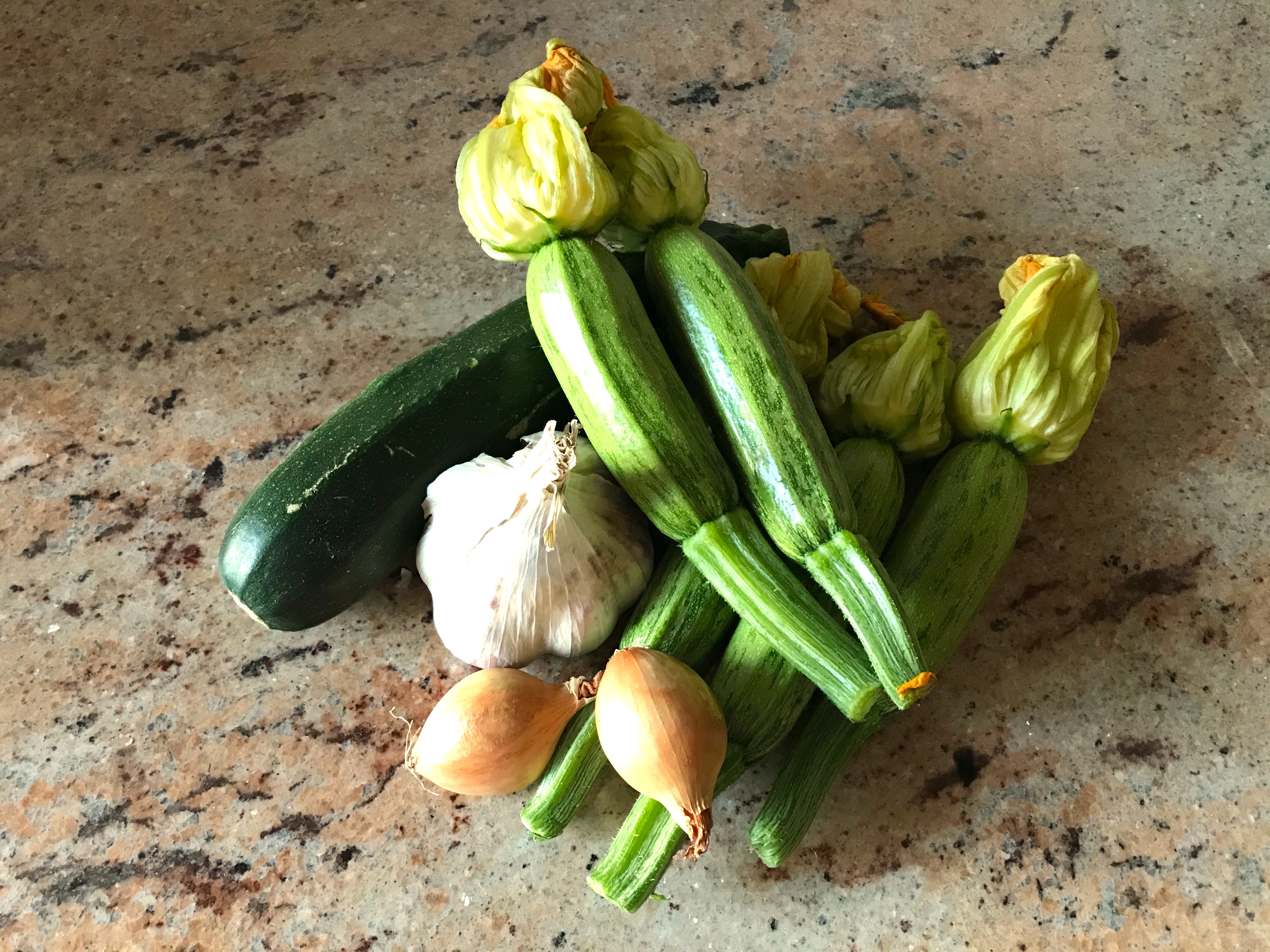
Such a pleasure to see courgette flowers in your garden or at the greengrocers. The young courgette is firm and tasty; the flowers a beautiful yellow. Simply stuff the flowers, fry in a pan or cook in the oven and you have a great side dish or starter. And then you start wondering: ‘Stuff with what? Cheese? Salmon? Tomatoes? Egg? And how to make a filling that remains inside the flower and isn’t too firm?‘.
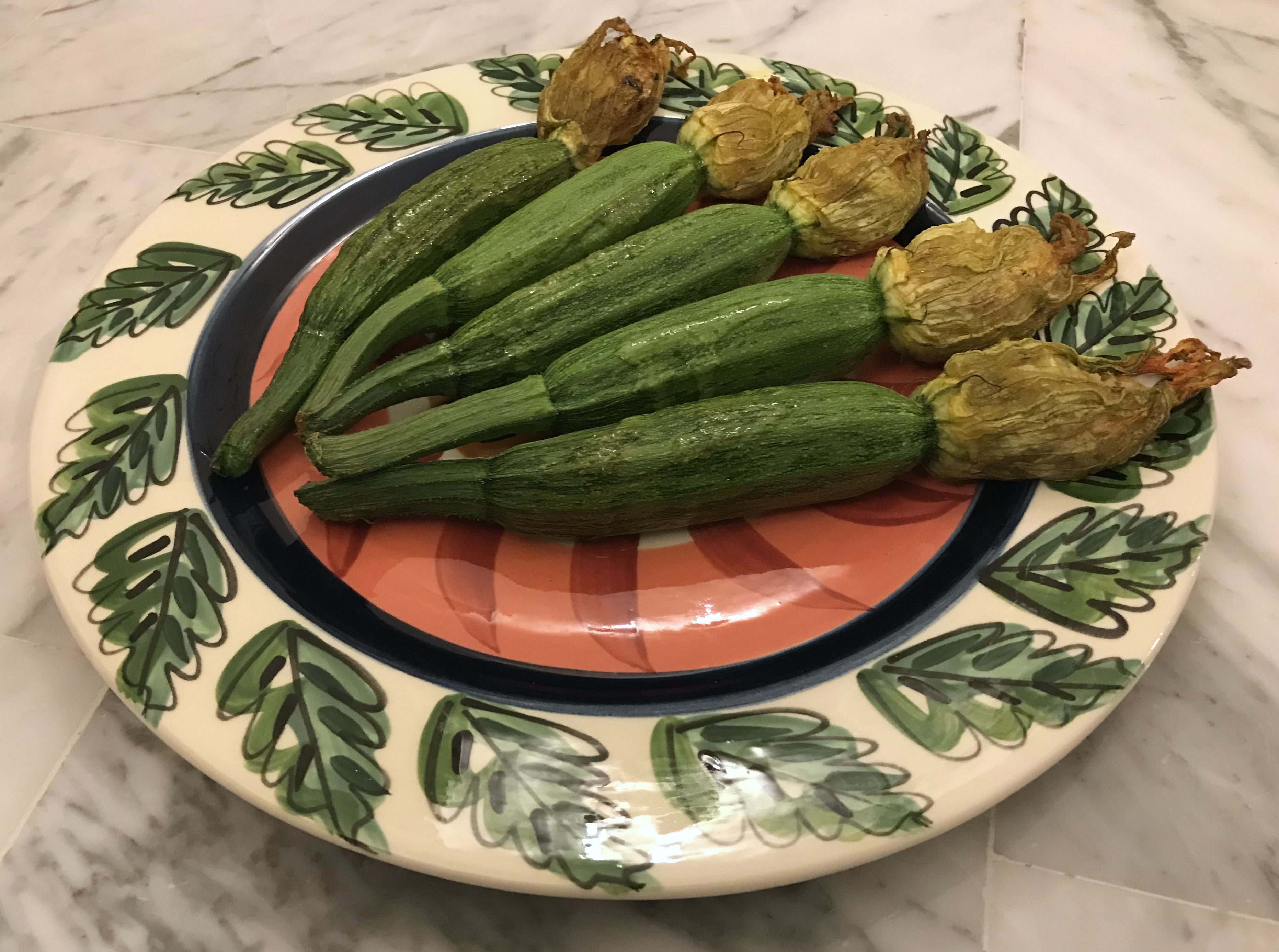
We prefer a simple approach: stuff the flowers with a perfect combination: courgette, thyme, shallot, garlic and Parmesan cheese. Firm, tasty and all about zucchini. Enjoy as a starter or combine the stuffed flowers with grilled lamb or chicken.

What You Need

  • Small Courgettes with their flower
  • One Courgette (small and firm; you need 1 small courgette to stuff 4 flowers)
  • One Shallot
  • One Garlic Clove
  • Olive Oil
  • Parmesan Cheese
  • Thyme or Herbes de Provence
  • Black Pepper

What You Do

Remove the stamens from the flowers. Peel the additional courgette, slice the shallot and the garlic very thinly. Warm a heavy iron pan and gently glaze the shallot. After a few minutes add the garlic. Remove the seeds from the courgette and grate coarsely. When the shallot and the garlic are sufficiently glazed, add the grated courgette and the thyme or Herbes de Provence. Mix and warm for 15-20 minutes, making sure the liquid evaporates. Try to keep the structure of the coarsely grated courgette. Add finely grated Parmesan cheese, mix and taste. Adjust with cheese, black pepper and thyme or Herbes de Provence. Set aside and let cool.
Heat your oven to 180° Celsius or 360° Fahrenheit. Stuff the flowers, close them and transfer to the oven, sprinkle with olive oil and cook for 15 – 20 minutes. Depending on your oven you may need to use ‘traditional’ or a combination with a small grill. You want the flowers to become crisp. Allow them to cool for a few minutes before serving.
PS In case the grated courgette looses its structure and the mixture becomes too dense, then beat an egg white until very firm and gently spoon this through the cold mixture before stuffing the flowers.
 

Amuse-Gueule

Something on a Spoon

A glass of white wine, perhaps a glass of Crémant d’Alsace or maybe even a glass of Champagne; such a great way to start dinner (or lunch when you feel like treating yourself). You enjoy some bread with homemade Tapenade, or a few nice olives. All good. And then suddenly the chef presents you her or his Amuse-Bouche. Something very special and an indication of the chef’s talent. But in most cases it’s something on a spoon and not very special.

A bit of background: amuse-bouche is actually not a French term. Restaurateurs made it up because they think amuse-gueule (the correct term) is a bit harsh. ‘Gueule’ can refer to both humans and animals. And ‘ferme ta gueule’ is far from polite. So restaurateurs started using ‘bouche’, to eliminate the impression that they think their guests have a snout.

So the correct French term is amuse-gueule. Some say the concept of the amuse was invented by the Nouvelle Cuisine in the 1960s. Not really. In 1946 Francis Ambrière, in his book Les Grandes vacances, writes … Une côtelette à midi. Quelques amuse-gueule à l’heure du goûter. Et le soir, ô splendeur, un gigot bien saignant, le premier gigot depuis l’an 40!

Today’s amuse-gueule is a dish in its own right that amuses the mouth, fools your appetite and makes you want to start on the first course. Small, tasty, full of flavours and maybe a bit out of the ordinary.

We use a traditional coddler for this amuse-gueule, but you could also use a small ramequin. No spoon, please.

Wine Pairing

Typically the amuse-gueule is combined with your aperitif. We combined this amuse gueule with a glass of German Sekt, to be more precise with a glass of Reichsrat von Buhl – Pfalz – Sekt – Spätburgunder Brut rosé 2016, which is a superb pale pink wine, made from 100% Pinot Noir and produced by one of the leading wineries in Germany. Think red berries, brioche, a delicate texture with a nice mousse, fresh acidity and a long-lasting aftertaste.

What You Need (for 4)

  • One Egg
  • Four Medium Sized Raw Prawns
  • 75 grams Spinach
  • ½ Shallot
  • A Generous Tablespoon of Crème Fraiche
  • Dill
  • Blue Cheese
  • Chives
  • 4 Edible flowers

What You Do

Start by cleaning the prawns, removing the head, the shell and the vein. We used Argentine red shrimps. The meat is fairly soft and they become beautifully red when cooked. Fry the shrimps is some olive oil for 3 minutes. Remove the shrimps from the pan, set aside and let cool. Gently fry the shallot in the same pan for 10 minutes until glazed. Remove from the pan and let cool. In a different pan quickly cook the (dry and clean) spinach in some olive oil. Keep stirring! Drain if so required, set aside and let cool.
Cut the prawns in smaller bits. Chop the spinach using a large knife. Whisk the egg until completely smooth. Now add the (cool) bits of prawn, the spinach and the shallot. Whisk with a spoon. Add the Crème Fraiche. Add some chopped dill (depending on your taste), a bit of blue cheese (not too much, just to add a dimension to the dish) and a generous amount of chives. Mix. Coat the coddlers or ramequins with butter. Add the mixture to the coddlers or ramequins. Heat your oven to 170° Celsius (or 340° Fahrenheit). Place the coddlers or ramequins in a shallow dish. Add boiling water up to 2/3 of the height of the coddler or ramequin. Close the oven and reduce the temperature to 120° Celsius (or 250° Fahrenheit). After 30 minutes au bain marie your amuse-gueule should be ready. Test with a needle. Let cool.
If using a coddler, remove and dry the lid, add the flower and close.

Amuse-Gueule © cadwu