Spicy Pumpkin Soup

It’s the time of year to enjoy simple, seasonal, rich and flavourful food, for instance spicy pumpkin soup. The trick in this case is in the coconut milk or cream. Coconut milk contains something like 15 grams of fat per 100ml. For this soup you need 25+ grams of fat per 100ml. The fat enhances the coconut flavour and it combines very well with the spicy and aromatic character of the soup (ginger, chili, djeroek poeroet).

What You Need (for 4)
  • Small Pumpkin
  • Large Shallot
  • 2 large Garlic Cloves
  • 4 cm Fresh Ginger
  • Chili Pepper
  • Olive Oil
  • 8 leaves of Djeroek Poeroet  
  • Coconut Cream
  • Cilantro
What You Do

Wash the pumpkin and chop. If the pumpkin is organic, then you don’t need to peel it. Peel and chop the shallot, garlic and the ginger. Ground dried chili pepper. Gently fry the shallot in olive oil. Add chilli pepper. Add ginger. Stir, mix and add pumpkin. Stir and add garlic. Now add the vegetable stock, the djeroek poeroet and allow to simmer for 30 minutes. If the pumpkin is soft, remove the djeroek poeroet and blender the mixture. Taste and adjust. Add 6 spoons of coconut cream, 1 by 1, mix and taste. When you’re happy with the flavours, leave the soup on low heat for 15 minutes. Serve with lots of chopped cilantro.

Spicy Pumpkin Soup ©cadwu

Lamb Shank with Star Anise, Ginger and Djeroek Poeroet

The obvious way to prepare lamb shanks is to fry them briefly in oil en butter and then cook them for hours in red wine with a bouguet garni of rosemary, thyme, parsley, sage and perhaps lavender. Maybe add a small tomato to help the sauce. We take a different approach by adding strong flavors like ginger, cilantro seeds, star anise, soy sauce and the leaves of the Makrut or Thai lime (also known as Djeroek Poeroet or Djeruk Purut). You will get a full, complex sauce in combination with tasty, juicy, tender and aromatic meat.

Wine Pairing

The obvious choice would be a glass of Pinot Blanc or Pinot Gris. We once enjoyed the dish with a glass of Gewurztraminer from the Alsace. A touch of spiciness and sweetness, which worked really well with the star anise and ginger.
Combining the lamb shanks with red wine is more challenging. Our choice was a bottle of Cuvée Equinoxe produced by Domaine d’Arjolle, from the Languedoc region in France. The wine is made with 100% merlot grapes. It has an intense ruby ​​color and aromas of red fruit. The flavour is soft and long, with a touch of sweetness and oak. A soft, not too complex Syrah could also be very nice with the lamb shanks.

What You Need
  • 2 Lamb Shanks
  • Shallot
  • Olive oil
  • Fresh Ginger (4 cm, depending on your taste)
  • 1/2 red Chili
  • 2 Garlic Cloves
  • Noilly Prat
  • teaspoon of Cilantro Seeds
  • 2 Star Anise
  • Low Salt Soy Sauce
  • 6 leaves of Djeroek Poeroet
What You Do

Fry the meat in olive oil, giving it a nice colour. In the mean time cut the shallot, peel the ginger and slice, remove the seeds from the chili and cut the garlic clove (but not too fine). Remove the meat from the pan and glaze the shallot, chili, ginger and garlic. Add the Noilly Prat, crushed cilantro seeds, star anise, some low-salt soy sauce and the djeroek poeroet. Stir. Transfer the meat back to the pan and add some water, perhaps 3 cm. Leave to simmer for 4 – 6 hours in total. Check the pan every hour and add water if so required. After 6 hours remove the shanks from the sauce and cool. Reduce the sauce, let cool and transfer to the refrigerator. The following day remove as much of the fat from the sauce as possible. Warm the sauce together with the shanks, check taste and tenderness.
Serve with steamed Bok Choy tossed with sesame oil or with rice.

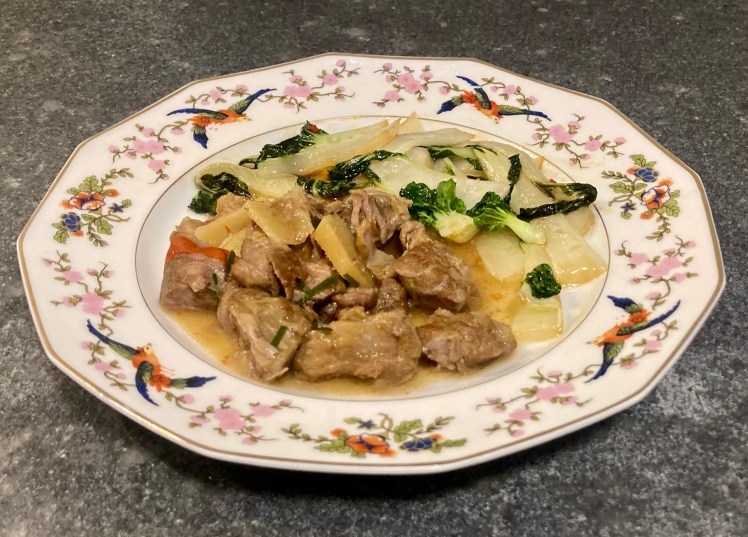
Lamb Shank ©cadwu
Lamb Shank ©cadwu

Beef Stew with Djeroek Poeroet

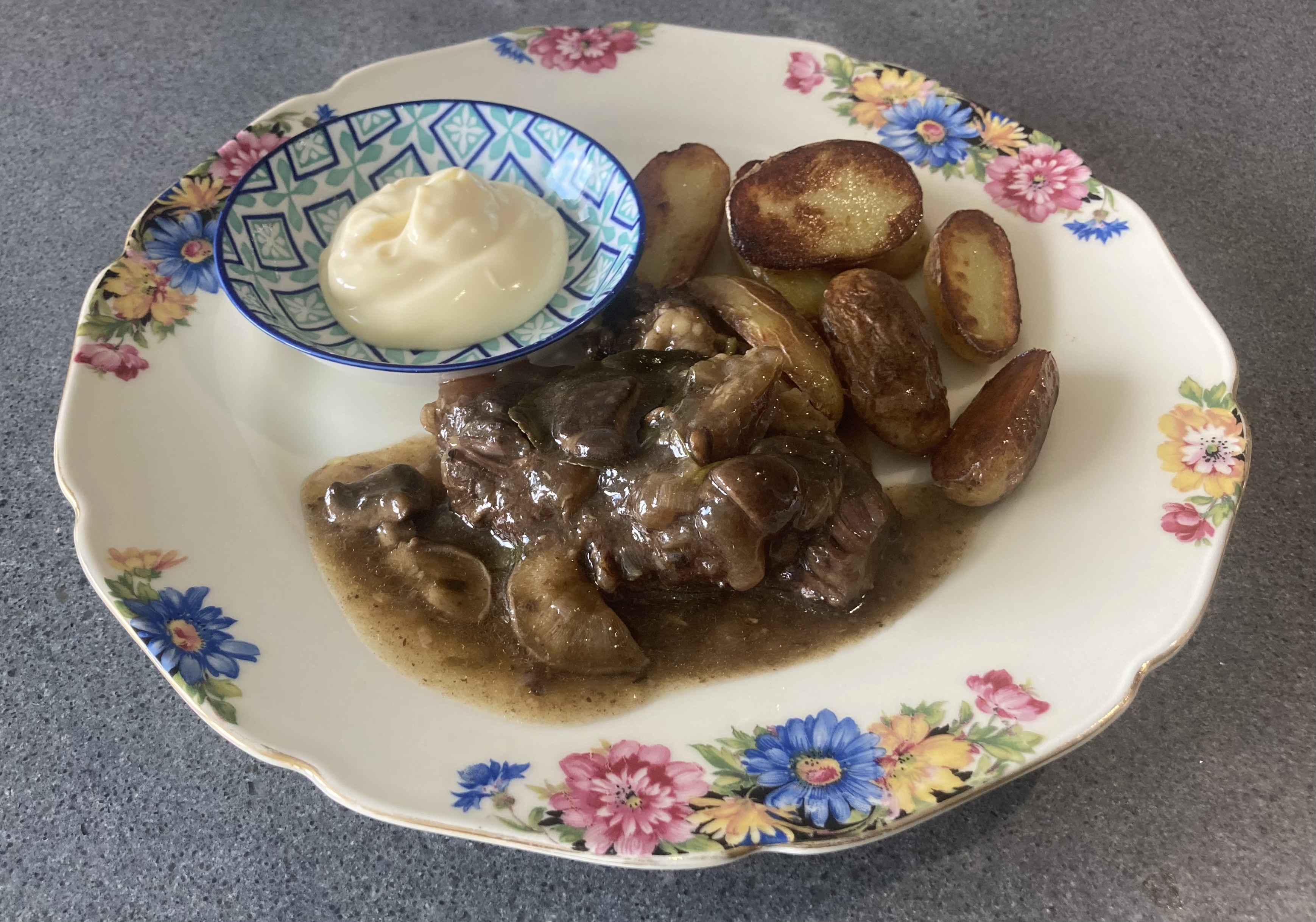
A few weeks ago we were looking for a nice restaurant, one where we could enjoy a quick, tasty meal and a nice beer. We looked at the menu of De Volkslust and decided this was exactly what we’re looking for. The restaurant originates from Antwerp, Belgium. Some 15 minutes later they brought us a Flemish Beef Stew, served with fried potatoes. It looked and smelled great. And it tasted, eh, slightly different? Of course! Chef used Djeroek Poeroet! Interesting, you would expect bay leaf in a Flemish Stew, but this was definitely djeroek poeroet (or jeruk purut, the leaves of the Makrut or Thai Lime). Great idea. Aromatic, refreshing, light. A few days later we made our version of it.
And typical for a good stew: make it a day in advance.

Wine Pairing

The obvious choice is a nice, cold beer. Perhaps the one you used for the stew? We used Affligem Blond, an award winning Belgian Blond beer with pleasant bitterness and fruitiness.
If you go for a glass of red wine, make sure it is full-bodied and rich; a wine with dark fruit and a touch of oak.

What You Need (for 4 persons)

  • 1 kilo of excellent, fat, marbled Beef
  • 2 Shallots
  • 250 grams of Button Mushrooms (Champignon de Paris)
  • Olive Oil
  • 2 bottles (33 cl) of Blond Belgian Beer
  • Bouquet Garni (Thyme, Parsley, Chives)
  • 6 leaves of Djeroek Poeroet (frozen preferred)
  • Black Pepper

What You Do

Slice the meat by following its structure. We prefer bigger parts, so not cubes. They will take longer to cook, but the meat benefits from this approach. Clean the mushrooms and slice the bigger ones in half. Coarsely shop the onion. Heat olive oil in a large pan and fry the meat. You probably will have to do this in 2 or 3 batches. Make sure the meat is nicely colored. Remove the meat from the pan and fry the mushrooms. Remove them when nicely golden, add some more olive oil and caramelize the sliced onions. When ready, add the mushrooms, the beef, the beer, the Bouquet Garni and 6 leaves of djeroek poeroet. Heat through and through. Close the pan and keep on a low heat for 5 to 6 hours. Stir every hour. Check the taste during the cooking process, perhaps you want to remove the djeroek poeroet (or add more!).
When you’re happy withe the cuisson, remove the meat from the pan, discard the bouquet Garni and reduce the sauce. Transfer the meat back into the pan, reheat, then cool and transfer to the refrigerator until the next day.
Serve with unpeeled potatoes fried in olive oil and (homemade) mayonaise.

Lemon Curd

A Lemon Meringue Pie, a Tarte au Citron or Scones with Lemon Curd: tasty, refreshing, bitter, sour, a bit sharp and sweet. We love it! Provided of course that the lemon is more than just juicy and sour.

This has been a bit of an issue over the past years. Similar to the German consumers who complained about the watery and flavourless Dutch tomatoes they bought around 1990, we think that most lemons lack aroma and taste. We tried limes, bought more expensive lemons, added a bit of yuzu, but in the end, we still missed the true taste and aroma of an old-fashioned lemon.

Until one day we bought a Bergamot lemon. Its aroma is intense, floral and long. The juice is sour, deeply citrusy, refreshing and bright. Exactly what we were looking for! We went home and prepared a lovely curd.

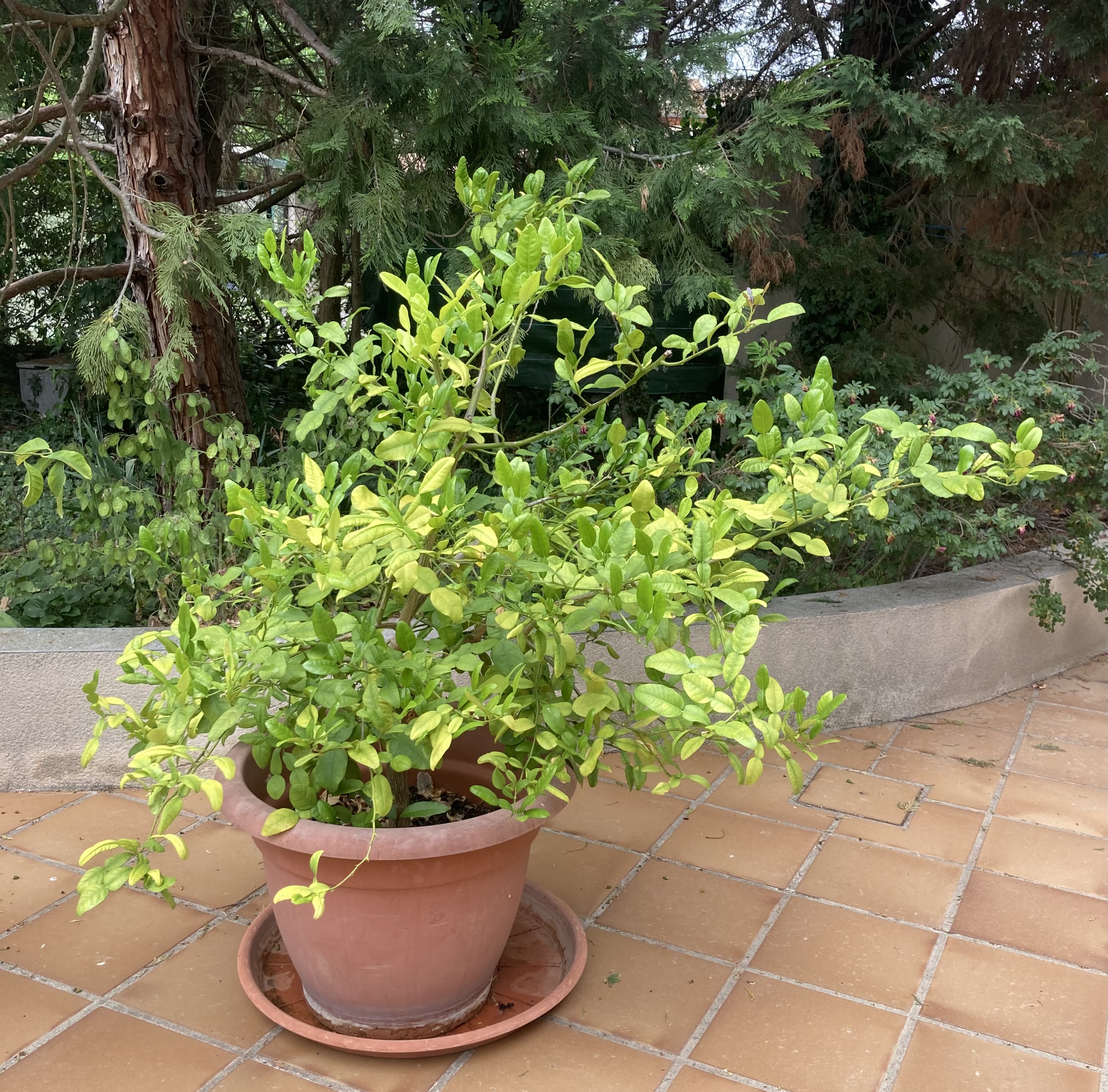
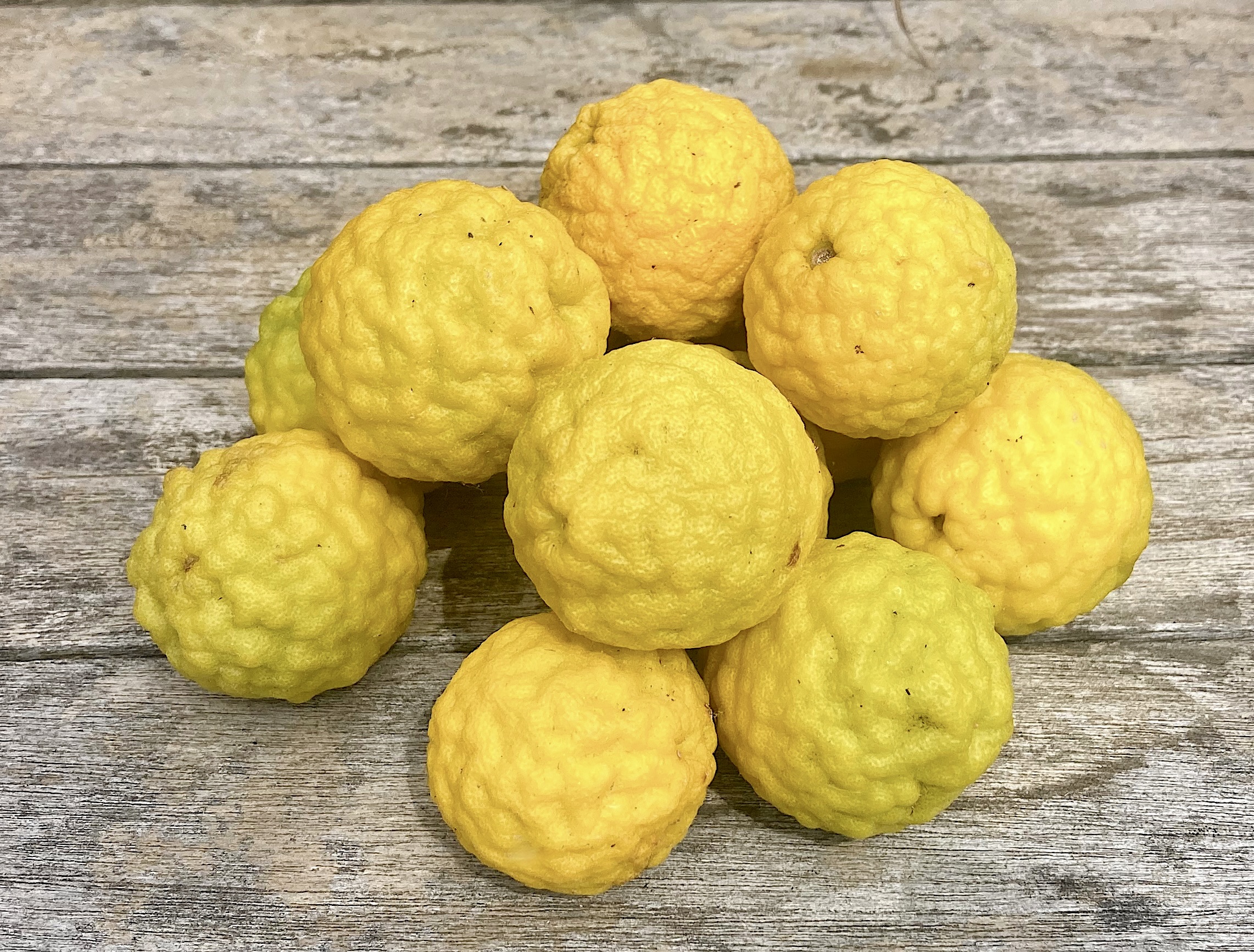
Recently we had a similar experience when we visited a dear friend. She grows a Makrut (or Thai) Lime tree, also known as Makrut Lime, in her garden mainly because she wants to use the fresh leaves in Thai and Indonesian dishes such as Tom Yum, Soto Ayam and various curries. The leaves have a complex citrus flavour with floral notes. We talked about the lovely yellow fruit and how you could use its very aromatic zest as well.
The fruit contains little juice, so when preparing a curd with Makrut limes, you need to add lime, Bergamot or lemon juice.

What You Need

  • 65 ml of Lemon, Lime, Bergamot and/or Makrut Lime Juice
  • 65 grams of Butter
  • 100 grams of Sugar
  • One Egg
  • Zest

What You Do

Beat the egg, melt the butter and combine all ingredients. Make sure the sugar is dissolved. Cook Au Bain Marie until you have the right consistency. Or transfer to your microwave, put it on 50% or 70% power and heat with intervals of 20-30 seconds. Mix between the intervals. This is a very precise way of heating the mixture and it gives you full control over the process. Towards the end of the process you may want to reduce the power or shorten the intervals. The percentage and the duration of the intervals depend on your microwave and the bowl you use. We use a microwave saucepan (£1,29 only) and it works perfectly. The material doesn’t absorb warmth, so the mixture doesn’t get extra heated when you stop the microwave. Pass through a sieve (you don’t want the zest in the curd), cool in a water bassin and store in a jar.
The curd keeps for a week in the refrigerator .

PS

Around 1992 a German television program characterised the Dutch tomatoes as watery and tasteless, and called them ‘wasserbombe’. The short-term impact was enormous: the Dutch tomato went from 50% market share in Germany to something close to zero. Longer term the impact was very different: Dutch producers invested in their product, making their tomatoes tastier, richer and more diverse.

Neck of Lamb with Star Anise, Ginger and Djeroek Poeroet

We can hear you thinking, ‘Shouldn’t that be rack of lamb?’.
Isn’t it interesting how much we are focused on specific parts of an animal? We love our steak, but what to do with an oxtail? We love pork loin, but how about the pig’s nose? And we enjoy grilled rack of lamb, but how about the lamb’s neck?
Supermarkets and butchers know all about our focus. So if you would like to cook pig’s feet (or trotters), kidneys, liver, sweetbread or lamb’s neck: where to go? Try finding a ‘real’ butcher, one that buys the whole animal, not just the parts that can be sold directly.

Lamb’s neck is very underrated, inexpensive and tasty. Some feel it’s okay for your dog only, but we completely disagree. When cooked slowly for hours it is great. Tasty, well structured, juicy and tender.

Feel free to replace the neck of lamb with 2 lamb shanks.

The obvious way to prepare the lamb is to fry it briefly in oil en butter and then cook for hours in red wine with a bouguet garni of rosemary, thyme, parsley and sage. Maybe add a small tomato to help the sauce. We take a different approach by adding strong tastes like ginger, cilantro seeds, star anise, soy sauce and the leaves of the Makrut or Thai lime (also known as Djeroek poeroet or Djeruk purut). You will get a full, complex sauce in combination with lovely, aromatic meat.

We very much enjoyed our Neck of Lamb with a glass of Alsace Gewurztraminer, Cave de Beblenheim, 2016. The wine has a beautiful gold colour, and an expressive nose with rose notes. The palate presents a nice structure with a fruity and spicy association which of course goes very well with the oriental twist to the stew. In general we suggest an aromatic white wine with just a touch of sweetness.

Here is what you need

  • 300 grams Neck of Lamb
  • Shallot
  • Butter
  • Olive oil
  • Fresh Ginger (4 cm, depending on your taste)
  • 1 red Chili
  • 1 Garlic Clove
  • Noilly Prat
  • Cilantro Seeds
  • Star Anise
  • Low Salt Soy Sauce
  • 4 leaves of Djeroek Poeroet

Cut the meat in cubes. Not too small since they will shrink during the cooking process. Fry the meat in butter and oil, giving it a nice colour. If so required, do so in multiple batches. In the mean time cut the shallot, peel the ginger and slice, remove the seeds from the chili and cut the garlic glove (but not too fine). Remove the meat from the pan and glaze the shallot, chili, ginger and garlic. Add the Noilly Prat, crushed cilantro seeds, star anise, some low-salt soy sauce and the djeroek poeroet. Stir. Transfer the meat back to the pan and add some water, making sure the meat is just covered. Leave to simmer for 6 hours in total. Check the pan every hour and add water is so required. Also check if the djeroek poeroet is not overpowering (this very much depends on the quality of the leaves). After 5 hours check the taste, add soy sauce, remove the djeroek poeroet or the star anise if so required. After 6 hours cool the stew and transfer to the refrigerator. You could also decide to transfer it to the freezer for use at a later date.
The following day remove as much of the fat as you prefer. Warm the stew, check taste and tenderness and continue to simmer if so required. When the meat is ready you may want to reduce the liquid.
Serve with steamed Pak Choi, tossed with sesame oil.