
Panna Cotta with Agar
A few days ago Suzanne’s Mom wrote about Piper McAloon. At 17 she became Pastry Chef at Foglia, an award-winning plant-based restaurant located in Bristol, Rhode Island. A truly inspiring story!
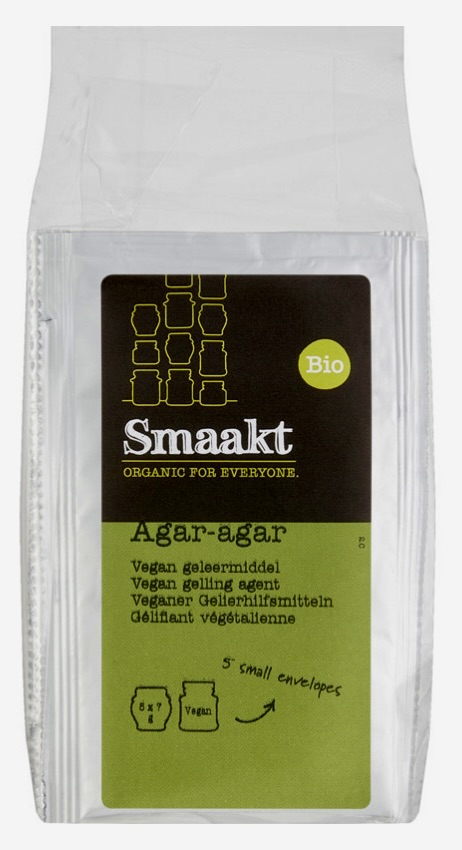
When asked what she is making right now, she mentioned Panna Cotta. At Foglia she makes a gluten-free version with agar. Which was something we wanted to do for a long time. We love Panna Cotta, but using gelatine (made from animals from the meat industry) is far from ideal. Agar is made from the cell walls of red algae. Popular throughout Asia and fortunately also available where we live.
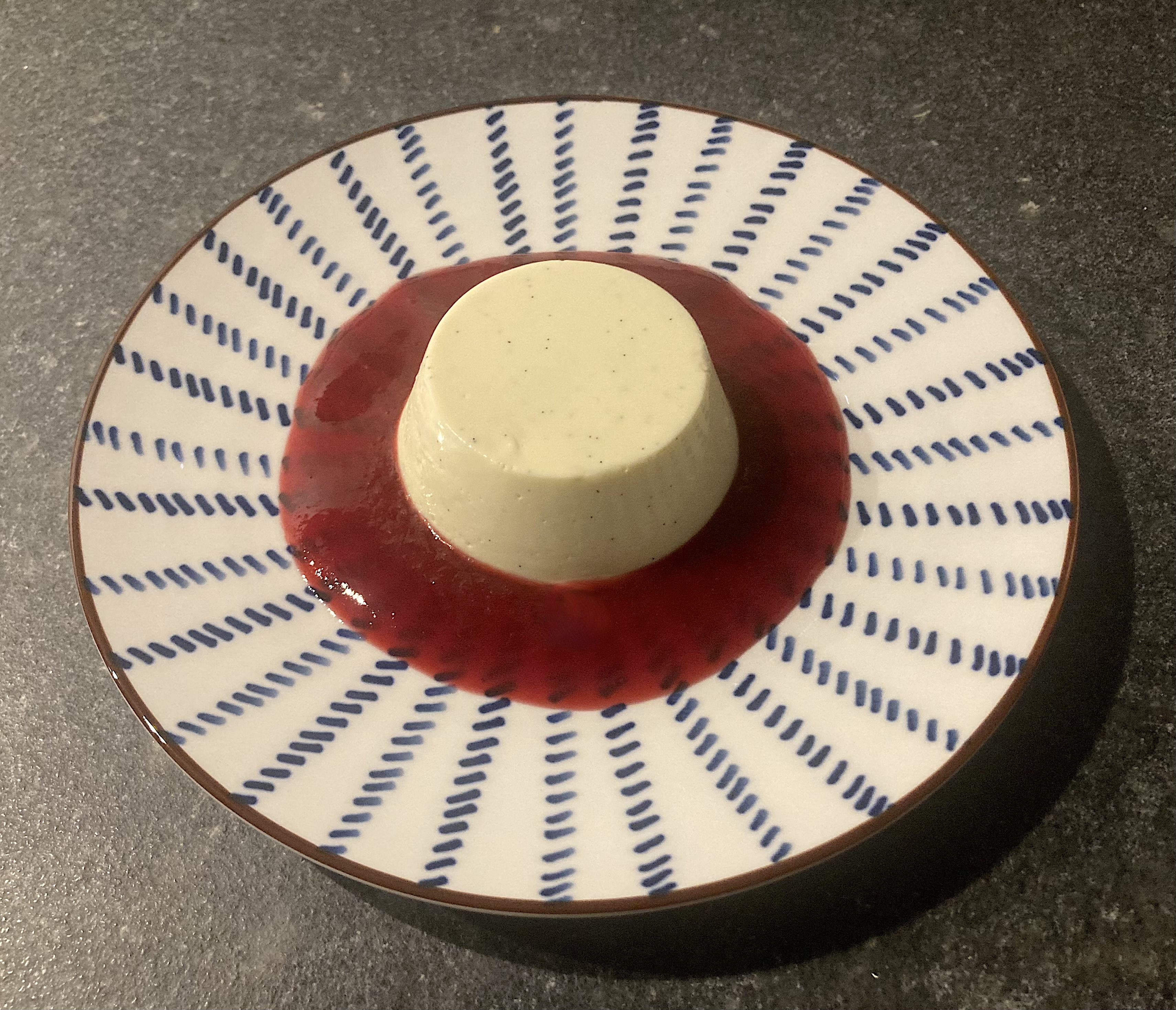
We served our Panna Cotta with a coulis of red berries. Very tasty, but was it a real Panna Cotta? It didn’t seem as creamy as the version with gelatine. The texture was certainly different. The version with gelatine was smoother and firmer; more how we think panna cotta should feel in your mouth. We were happy with the result, but we’re not sure if we will use agar next time we’re preparing Panna Cotta. To be continued!
What You Need (for 4)
- 500 ml fresh Cream
- 1,5 grams of Agar (powder)
- 1 Vanilla Bean
- 30 grams of Sugar
What You Do
- Add the agar, the seeds of the vanilla bean and the sugar to the cream
- Mix very well, the agar must to be completely dissolved
- Bring to the boil on slow/medium heat
- Stir frequently
- Keep close to boiling for 1 or 2 minutes
- Continue stirring
- Transfer to a water bath with cold water
- Cool the liquid somewhat before filling the forms. This is where you need to be careful. Gelatine gels at a lower temperature than agar. You need to transfer the mixture when it’s relatively warm
- Use silicone molds; they work very well panna cotta
- Let cool and then store in the refrigerator
- Don’t forget to seal with cling foil, otherwise your panna cotta will absorb aromas from other food in the refrigerator.
PS
- Cook the red berries in some water for perhaps 5 to 10 minutes
- Transfer to a sieve and use the back of a spoon to squeeze out the liquid
- Add sugar and lemon juice to taste
- Reduce the liquid somewhat
- Let cool
- Alternatively you could also start by blending the berries. This makes squeezing out the liquid easier plus you will get a richer taste and some bitterness.

 Cook and Drink