Claudia Roden – The Book of Jewish Food, part 2

As contributor to the cookbook review project by Bernadette we reviewed The book of Jewish Food, An Odyssey from Samarkand and Vilna to the Present Day. The book combines more than 800 recipes with the stories and histories that have shaped Jewish cooking over the centuries. The book showcases the diversity of Jewish food. It’s about (Jewish) culture, about how food is part of our shared culture, how we are all connected and how food can help us understand history.

We prepared Joodse Boterkoek and Aliyah, a dish that combines chicken, tomato, tamarind, basil and cilantro. We served it with polenta. Both are delicious!

We also very much liked Fish Balls in Tomato Sauce as prepared by John Rieber. The fish balls are a combination of white fish with ginger and nutmeg. The dish originates from Egypt and Morocco. It will perhaps make you think of Gefilte Fish, a traditional appetizer. The recipe is not complex and the result as prepared by John looks great. One we will be making soon!

Jo Tracey prepared a Goulash Soup with beef, sweet paprika and a touch of chilli. She writes: “I first bought the digital version of this book a few years ago but I never got around to reading it or cooking from it until now. And what a treat it’s been.” The soup is rich and one we would cook on a wintery day.

Robbie Cheadle baked a Honey Cake, made with honey, brandy, coffee, cinnamon, cloves, orange zest, almonds and sultanas. Sounds wonderful! According to Robbie: “This cake is delicious, and we all enjoyed it. The orange zest, coffee, and honey create a lovely symphony of flavors.

Bernadette herself chose a recipe from the Ashkenazi section of the book – Holishes or Stuffed Cabbage Leaves; a dish that appeared frequently in her childhood home. The leaves are stuffed with a combination of beef, rice and onion. The sauce is made with tomatoes, lemon, ginger, apple, raisins and honey. Not the most obvious combination! The result looked absolutely yummy.

The book of Jewish Food by Claudia Roden is available via your local bookstore or the usual channels for approximately 50 US$ or 40 euro. Highly recommended!

Claudia Roden – The Book of Jewish Food, part 1

The cookbook review project by Bernadette is a great way to explore cookbooks. The book of Jewish Food by Claudia Roden was not yet on our bookshelf, so we bought a copy of the 25th edition for 40 euro.  Its subtitle is An Odyssey from Samarkand and Vilna to the present day. The book combines more than 800 recipes with the stories and histories that have shaped Jewish cooking over the centuries. The book showcases the diversity of Jewish food. 

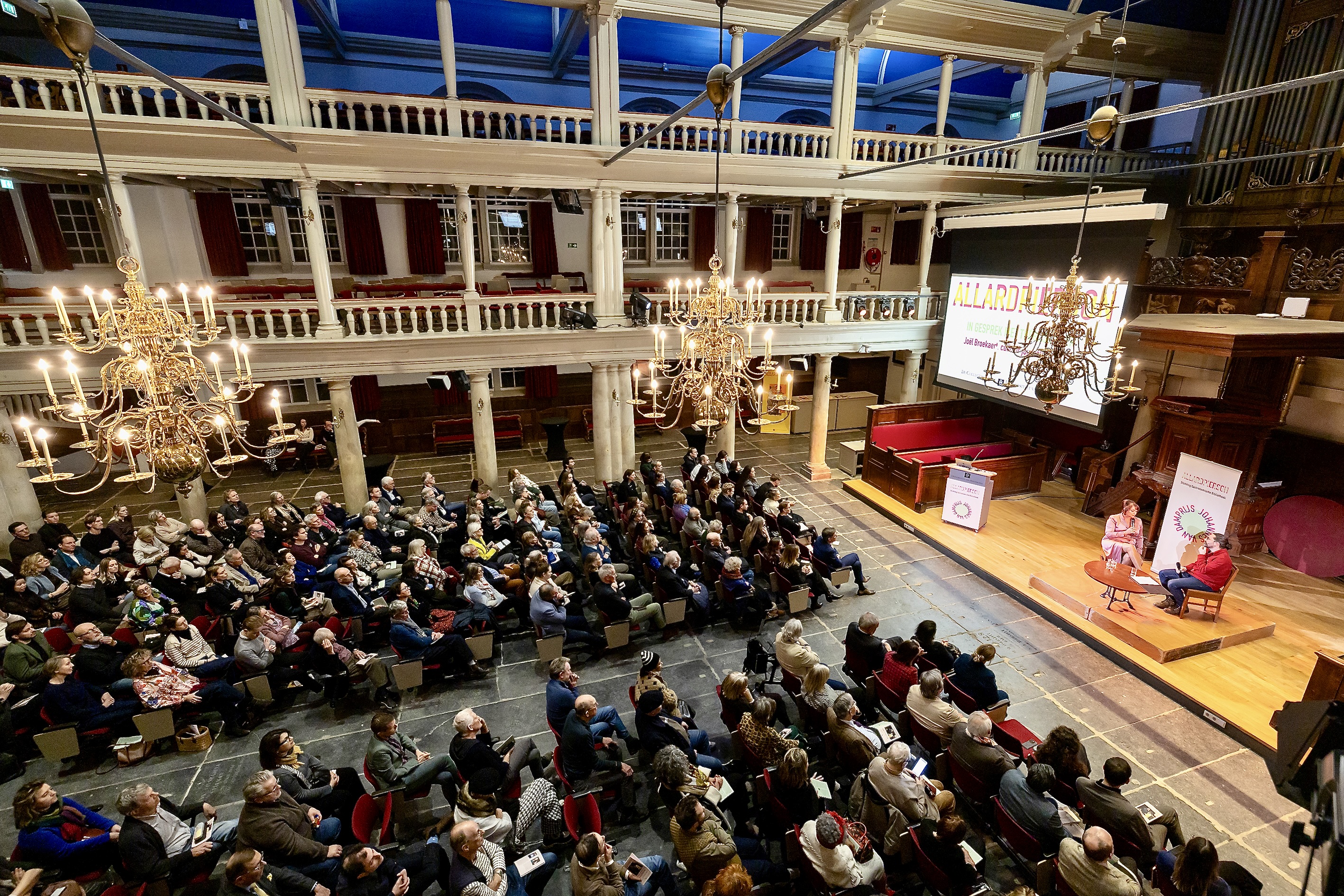
The first time we saw Claudia Roden was during the 2016 Amsterdam Symposium on the History of Food. In 1999 she received the Prince Claus Award in recognition of her exceptional initiatives and achievements in the field of culture. She is author of the classic comprehensive book Food of Italy and member of the jury of the prestigious Johannes van Dam prize, awarded in 2016 to Yotam Ottolenghi. We were far too impressed to actually talk to her. A bit silly, agreed, and we will make up for it in April 2025 during the next Symposium.

The Netherlands

The Dutch Jewish community plays an important role in the Netherlands, and more specifically in Amsterdam. The community was formed in the seventeenth century by people who came from Portugal (Sephardi Jews) and from Germany and Eastern Europe (Ashkenazi Jews). In general the first group was worldly, cultured and well connected to the Dutch upper classes. The second group was poor and unskilled. They worked as market traders, food sellers (for instance pickled vegetables and salted herring with chopped onions, which is still a Dutch treat) and pedlars.

Over the years both groups influenced Dutch cuisine. According to food author and publisher Jonah Freud dishes such as Haringsalade met Bietjes (see here for our version) and Broodje Halfom (a bun with beef liver and salted beef (somewhat similar to pastrami) with white pepper) are typical examples of the Jewish influence on Dutch cuisine. Gemberbolussen (a sweet cake with ginger) and Kugel (a cake with almonds and pears) are still widely available in Amsterdam.

Two Recipes

We decided to make two recipes from the book. Boterkoek is very typical for the Netherlands. A rich combination of lots of butter, sugar, flour and a pinch of salt. Classic and easy to make. We slightly adjusted Claudia Roden’s recipe, inspired by Dutch Pâtissier Cees Holtkamp. Early on during his career he learned how to bake Boterkoek when he worked for a Jewish Bakery. 

The second recipe is for Aliyah, stewed chicken with tomatoes, tamarind, cilantro and basil. An intriguing combination and one we simply had to try. The recipe originates from the Georgian town of Kulashi. This small town was once the home of one of the largest Georgian Jewish communities.

Obviously we decided to enjoy a kosher wine with the Aliyah. We bought a bottle of Barkan Classic Merlot-Argaman 2021. The Argaman grape (an Israeli creation) is combined with Merlot. The result is an intensely coloured red wine with dark fruit, supple tannins and depth. In general, we would suggest a medium to full-bodied red wine with sufficient depth and length.

Your Bookshelf

We think this book should be on your bookshelf. It’s about (Jewish) culture, about how food is part of our shared culture, how we are all connected and how food can help us understand history. It took Claudia Roden 16 years to write it. We can only thank her for this impressive and relevant achievement.

The book of Jewish Food by Claudia Roden is available via your local bookstore or the usual channels for approximately 50 US$ or 40 euro.

Recipes for Joodse Boterkoek and Aliyah on Bernadette’s website.

Quail à la Roden

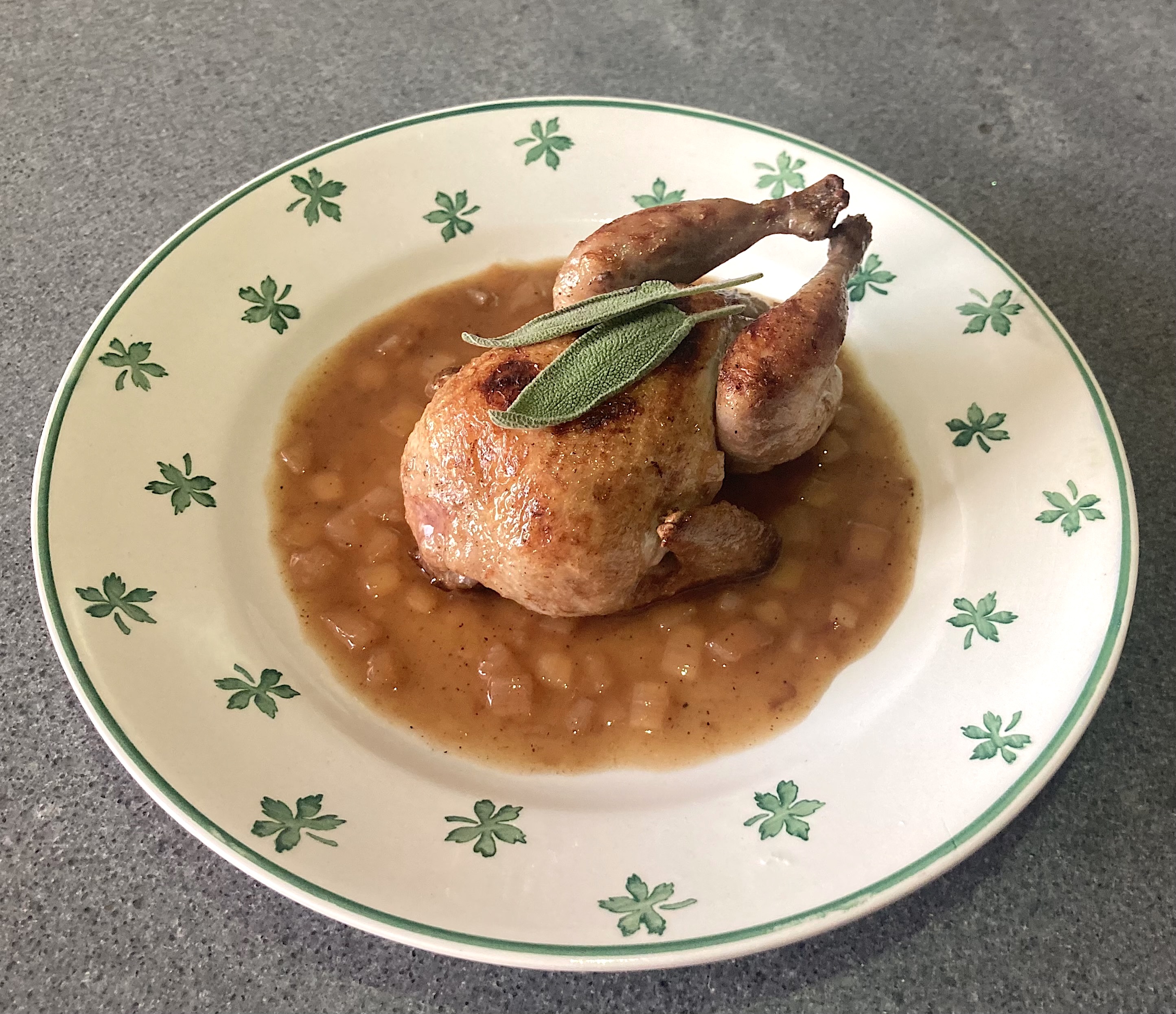
A few excellent ingredients is sometimes all you need to cook a wonderful dish. In this case you need quail, shallot, olive oil, butter, sage and Marsala.
We love the delicate, pleasantly intense flavour of quails. They are great to combine with strong flavours like bay leaf, pancetta and prunes but in this case, we follow a recipe by Claudia Roden, as published in her excellent book The Food of Italy. We tweaked it a bit, so please buy Claudia Roden’s book when you want to make the original.
Marsala is a fortified wine from Sicily. Perhaps you know it as something sold in small bottles, especially for cooking purposes. Never buy this nasty product because it can’t be compared to real Marsala. Same story for the small ‘Madeira’ bottles.
Quails must be sufficiently fat and undamaged. We prefer the French label rouge quails. Not cheap, but a wealth of flavours. 

Wine Pairing

The dish comes with a gentle, intense and slightly sweet taste thanks to the sage, the marsala and the quail. You could go for a medium bodied red wine. We enjoyed a glass of Domaine Vico Corse Le Bois du Cerf Rosé 2021 with our quail. This is an exceptional rosé from Corsica. It is made from grenache and sciacarello grapes. It is medium bodied and fresh with aromas of red fruit. Its taste is complex, long and fruity.

What You Need

  • 2 Quails
  • 1 Shallot
  • Olive Oil
  • Butter
  • 4 Leaves of Sage
  • Dry or Medium Dry Marsala
  • Chicken Stock
  • Black Pepper

What You Do

Clean the inside of the quail with a bit of kitchen paper and remove anything that’s left. Check for remaining feathers and shafts. Gently fry the chopped shallot in butter and olive oil until soft. Remove the shallot from the pan, increase the temperature and fry the quails until golden-brown. Reduce the heat, add shallot and sage. Pour in marsala and stock. Cook the quails for 20 minutes until done, turning them over regularly. Transfer the quails to a warm oven (60˚ C or 140˚ F). Reduce the sauce, taste, add black pepper, perhaps some freshly chopped sage and diced cold butter to thicken the sauce. Serve the quail on top of the sauce.
Claudia Roden serves the quails with risotto. 

The Food of Italy

In 1990 Claudia Roden published The Food of Italy, a book based on her articles in the Sunday Times. She researched Italian cuisine for over a year, traveling throughout the country, visiting cities and villages, talking to people and enjoying their way of preparing food. 

If you open The Food of Italy, you will notice that the table of contents is very much a list of regions. Every chapter begins with an introduction that helps you understand the region. For instance, when she writes about Lombardy, she writes about themes like economy, the countryside (Lago Maggiore, Lago di Como), the cuisine, the renaissance, its main products (rice), meat (Lombardy is known for its pigs), cities (Milan being its main city) and of course its wine (sparkling wine from Franciacorta). After having read the introduction, you will have a much better understanding of the dishes from that region.

Traditional and Local

The book is about traditional local food. When she was once asked why she would write such a book when all the world is changing and cooking is becoming more global and becoming the same all over the world, she answered “What appeals and fascinates and touches the heart is that what distinguishes Italy, which recalls her past and is part of the prestigious heritage and traditions.” We couldn’t agree more!

We prepared a dish from Lombardy, a simple and very tasty combination of Quail, Shallot, Sage, Butter, Oil and (dry) Marsala. It is served with Risotto. In one of our next posts we will describe the dish in more detail.

The Food of Italy is available via your local bookshop or the usual channels for something like 20 euro or US dollar (paperback). A beautifully illustrated hardcover is also available. Other publications by Claudia Roden include books on Mediterranean Food (thus paving the way for chefs like Yotam Ottolenghi), on the joy of Outdoor Eating, on Picnics, Coffee and Spanish Food. 

PS

Marsala is a fortified wine from Sicily. Perhaps you know it as something sold in small bottles, especially for cooking purposes. Never buy this nasty product. It has nothing to do with Marsala. Same story for the small ‘Madeira’ bottles. It’s a bit of a challenge but try to buy dry Marsala for this dish and next time you’re making Tiramisu, use sweet Marsala.

Symposium on the History of Food

Next year on February 11th and 12th, the 7th Amsterdam Symposium on the History of Food will take place in Amsterdam. You can also join online, for € 40,00 only. Lunch not included of course. This year’s theme is Food and the Environment: The Dynamic Relationship Between Food Practices and Nature

Program

The key note will be delivered by Ewout Frankema, Professor of Rural and Environmental History at the Dutch Wageningen University and research fellow of the UK Centre for Economic Policy Research (CEPR). Amongst the speaker are Christian Reynolds on The evolution of “sustainable” and vegetarian recipes from manuscripts and cookbooks to online and Amber Striekwold on The Dutch Alternative Food Movement.

Ceremony

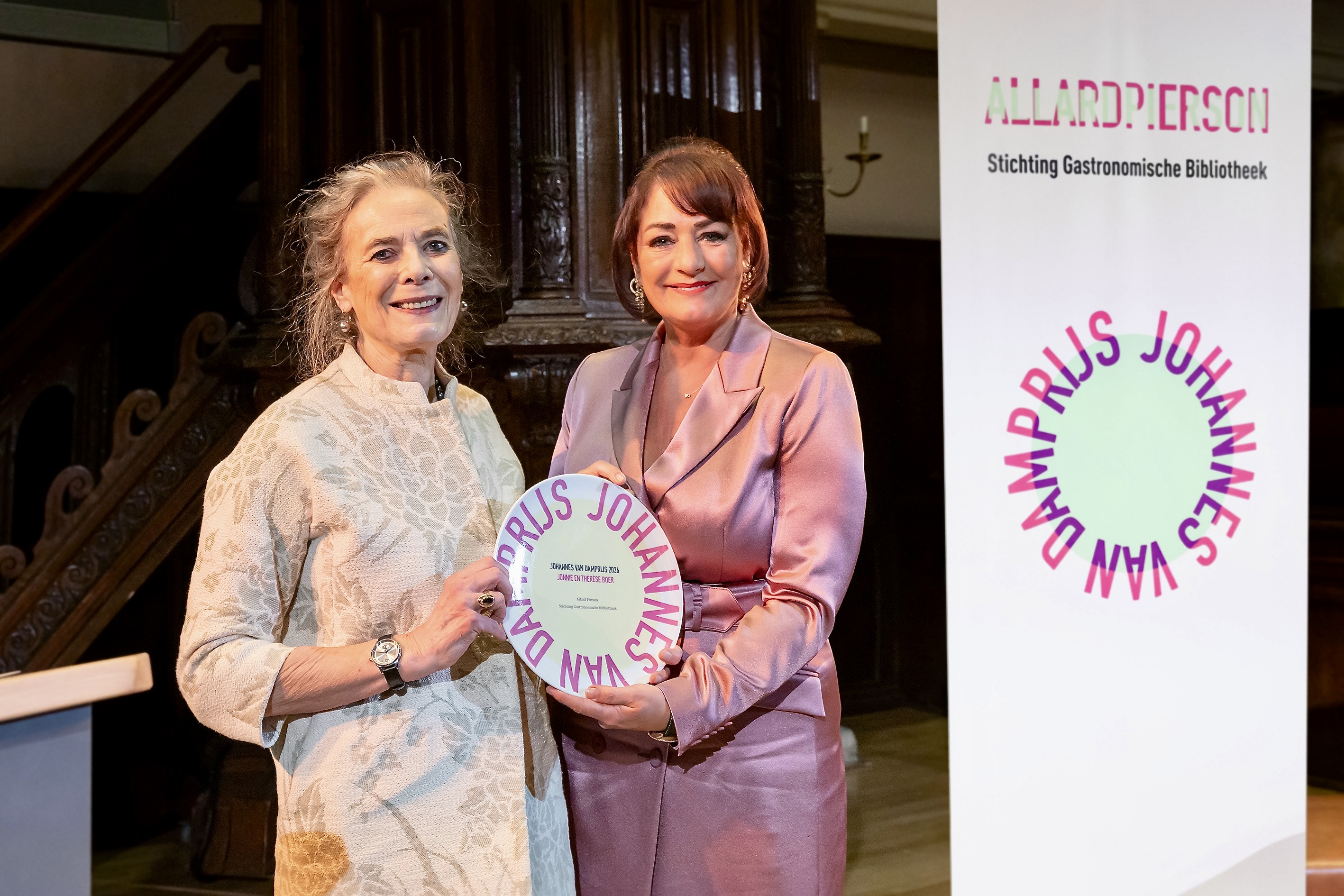
On Friday 11th the program will close with the Prize-giving ceremony of the 2022 Johannes van Dam Prize and the 2022 Joop Witteveen Prize. Previous winners of the prestigious Johannes van Dam Prize include Yotam Ottolenghi, John Halvemaan, Carlo Petrini, Alice Waters, Claudia Roden and Alain Passard (see picture).

Join the Symposium

Additional information and the registration form are available on the website of the symposium.

Alain Passard speeches after having received the Johannes van Dam Prize 2019 © cadwu