Exploring Asma Khan’s Ammu (Part 2)

We continue our review of Asma Khan’s cookbook Ammu, Indian Home Cooking to Nourish Your Soul by preparing two dishes: Pineapple and Chilli Chutney and Eggs in Tamarind Gravy and asking our esteemed panel (André, Joke, Martine and Rutger) for their thoughts. . Earlier we wrote about her Pumpkin and Coconut soup.

Asma Khan is an Indian British chef, cookbook author and restaurant owner. In 2012 her pop-up restaurant started for 12 guests at her home, serving food cooked from traditional family recipes. Today her all-female Darjeeling Express restaurant in London offers Indian Rajput and Bengali home cooking specialties.

In 2024 she won the Johannes van Dam Prize, a lifetime achievement award for an individual who has made an exceptional contribution to the world of gastronomy. Previous winners of the prestigious prize include Yotam Ottolenghi, Carlo Petrini, Alice Waters, Claudia Roden, Jeroen Meus and Alain Passard.

The book is called ‘Ammu’ which translates to ‘Mother’. The stories, the recipes, the whole book is a tribute to the food her mother (and the family’s cook) prepared. But we feel it’s more: it’s also a tribute to original flavours, to people taking time to prepare food, to sharing and enjoying, to communities and heritage.

Wine Pairing

Aska Khan doesn’t include suggestions for drink pairing in the book. As a main we served four dishes: Pineapple and Chilli Chutney, Eggs in Tamarind Gravy, Saffron Lamb and Pulua. We paired this with a red wine called Magenta produced by Domaine de l’Arjolle from the Côtes de Thongue area (west of the French city of Montpellier) made with merlot and cinsault grapes. The wine has a light red colour, and its taste made us think of cherries and red fruit. Excellent light wine that combined very well with the various flavours of Asma Khan’s dishes. In general, we would suggest a light, fruity red wine.
If you would like to enjoy a white wine, we would suggest one with limited acidity, for instance Pinot Gris.

Eggs in Tamarind Gravy
Eggs in Tamarind Gravy ©cadwu

When going through the book, we noticed this delicious looking dish. It made us think of Sambal Goreng Telor, an Indonesian side dishe which combines fried hard-boiled eggs with a sauce made with chillies, lemon grass, shrimp paste and other ingredients.

The recipe for Eggs in Tamarind Gravy is not too difficult, just a bit time consuming. The gravy is made with very thinly sliced onions, garlic, ginger, turmeric, chilli, tamarind extract and water. Once combined it needs to be reduced by half. We read the recipe again and started to wonder why it was called ‘gravy’. The liquid in our pan resembled a watery soup, not gravy. We left it to reduce, on low heat, and we waited patiently. It started to thicken and after two or three hours we knew Asma Khan was right: gravy it was.
We think that the very thinly sliced onion, cooked through and through, worked as a thickener. Ten minutes before serving we made three shallow slits on the surface of each hard-boiled egg, which helps the eggs to absorb the gravy.
The panel loved the combination of subtle flavours: sweet, tangy, sour and rich. The sauce has the texture of old-fashioned gravy and it coated the eggs perfectly.

Pineapple and Chilli Chutney
Pineapple Chutney ©cadwu

We decided to prepare Saffron Lamb because of the intriguing recipe (more in our next review). Asma Khan suggests serving the lamb with Rose, Apricot and Pistachio Pulau and Pineapple and Chilli Chutney, so that’s what we did.

The chutney is made with red chillies (we used Kashmiri red chilies), Indian bay leave (tej patta), ginger, sugar, salt and water. It needs to cook until the chutney thickens and looks glossy. As with the gravy we were slightly worried: after thirty minutes our chutney wasn’t glossy or thick and the pineapple was bright yellow. But after three hours the chutney looked exactly as Asma Khan predicted.
The panel was surprised by the sweetness and gentle spiciness of the chutney. The flavour of the pineapple was clearly present, but in a savoury way. Tasty in its own right, very nice accompaniment with the lamb and the rice.

The Book

Ammu, Indian Home Cooking to Nourish Your Soul by Asma Khan is available via the usual channels or your local bookstore for 35,00 US$ or 26,00 EUR.
Some of her recipes were published by the BBC, other recipes were published by Great British Chefs and these by the Foodnetwork.

Apricot Chutney

It’s the time of the year to benefit from summer fruit, such as peaches, watermelon, raspberries, nectarines, strawberries and of course apricots. With a bit of patience (and sugar, lemon and perhaps nutmeg) you can turn apricots into a delicious jam. But why not make apricot chutney? Great to enjoy with grilled lamb chops or something nice, simple and vegetarian, for instance with rice, lentils and cilantro.
Chutney is a balance of sweet (fresh fruit, onion, garlic, cinnamon), sour (vinegar), bitter (the skin of the apricot or tomato), spiciness (ginger, red chilli, garlic) and depth (cardamom, nutmeg, cumin). Too much sugar will only disturb the balance. Chutney needs to integrate, much more than jam or marmalade. So cook it for an hour or so and leave it in a jar for at least a week before using it.

What You Need

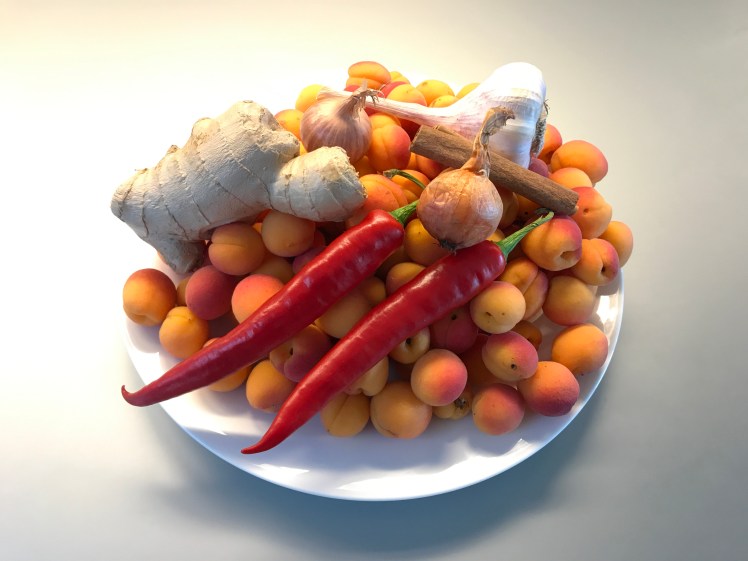
  • 1 kilo stoned Apricots (meaning 1,25 kilo of Apricots)
  • 2 Shallots
  • Olive Oil
  • 4 gloves Garlic
  • 1 Red Chilli
  • 100 ml Vinegar
  • 100 ml Water
  • 100 grams of Sugar
  • Fresh Ginger
  • Spices such as
    • Cardamom
    • Mustard Seed
    • Coriander (Cilantro)
    • Cinnamon
    • Nutmeg
    • Cumin
    • Clove

What You Do

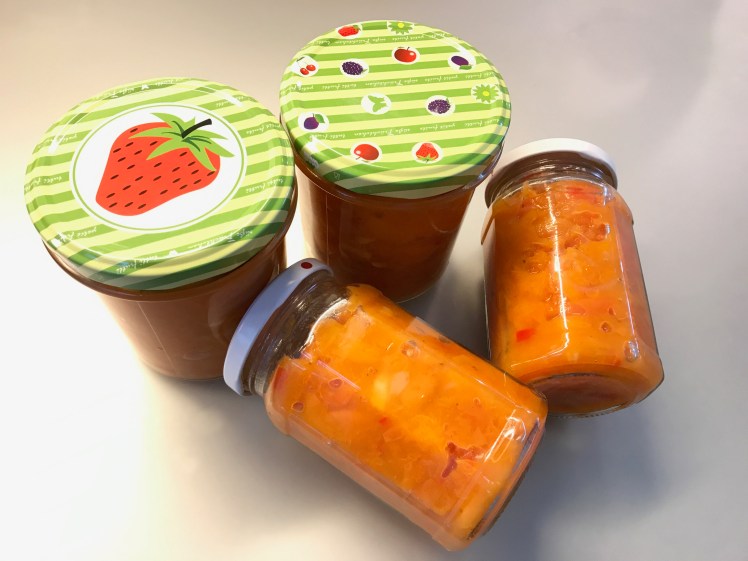
Stone and quarter the apricots. Cut the shallots in 4 and slice (not too thin). Slice the fresh garlic. Same with the seeded red chilli. Cut let’s say 5 cm of ginger in small bits. Start by glazing the shallots for 10 minutes in olive oil, making sure they will enhance the sweetness of the chutney. Then add all other ingredients to the pan, mix, add the grated ginger, the spices of your choice, mix and bring slowly to a simmer. We used vinegar and water given the acidity of our apricots. If your apricots are really sweet and ripe use 200 ml of vinegar. Spice-wise we prefer using cardamom, cinnamon, and a touch of cumin and nutmeg. Leave to simmer for at least one hour. Stir occasionally but gently. After an hour increase the heat and transfer to very, very clean glass jars. Close the jars, leave them to cool a bit, then put in cold water and later on transfer to the refrigerator.

Slide show Apricot Chutney

Fish Cakes by Jean Beddington

Jean Beddington: a culinary, passionate creative! She was chef at five restaurants, owned her own successful restaurant, and still is an inspiration to many. One of her motto’s is ‘seemingly simple’, not with the intention to impress but with the intention to surprise and enhance the sensation when enjoying her food and the way it is presented.

Background

In her book Absolutely Jean Beddington she writes about her background, her youth in England, her eagerness to cook, the holidays with her father when they would stay at budget hotels and eat at Michelin Star restaurants, her travels, her years in Japan and her education (she studied Arts and Chemistry). When she moved to the Netherlands, she decided to become a chef, which is the obvious choice for someone with such a talent. She was one of the first to bring new ingredients to the classic French cuisine. For instance, she began using cilantro and yuzu. She was also inspired by the Japanese way of presenting food: beautifully designed and served on a variety of plates. She began doing this when most guests still expected bread and garlic butter at the beginning of their lunch or dinner.

Books

She published several books. One is dedicated to stock: the basis of soups, sauces and dishes. She explains how to make stock and how to create delicious food, for instance green vegetables in stock with couscous, yogurt and harissa sauce. 

Her book Absolutely Jean Beddington is very dear to us. It has three main chapters: the first one is called Glossy with beautifully presented food, the second one is called Real Time with food as you could expect to eat at her restaurant (which is closed, unfortunately) and our favourite chapter is called Daily. Indeed, recipes that are easy to follow and help prepare tasty, wonderful food, every day.

Fish Cakes

We prepared her fish cakes with a beetroot, ginger, apple and onion chutney. The fish cakes are intriguing and the chutney is the perfect accompaniment. Yummy!

Apricot Chutney

One For The Cupboard

Something you have to have in your cupboard (or refrigerator in our case): chutney. Why? Because once in a while you don’t feel like making a sauce when you eat duck, rib eye or grilled lamb chops. Or because you want to eat something nice, simple and vegetarian, like rice with lentils and, there we are, chutney.
If there would be a top three of main ingredients for chutney it would read mango-tomato-apricot. The basic recipe is the same for all three; it’s a matter of adjusting the quantities and choosing the spices.
Chutney needs to integrate, much more than jam or marmalade. So cook it for an hour or so and leave it in a jar for at least a week before using it. The fact that it needs to integrate will create a hopefully nice surprise when opening the jar. If not, there is little you can do (eat more quickly, give a jar to a not too close friend et cetera).
We use just a bit of sugar so our chutney needs to be stored in the refrigerator. Too much sugar (200 grams on 1 kilo of mango for instance) will only hide the taste of the mango. Chutney is a balance of sweet (fresh fruit, onion, garlic, cinnamon), sour (vinegar), bitter (the skin of the apricot or tomato), spiciness (ginger, red chilli, garlic) and depth (cardamom, nutmeg, cumin). Too much sugar will only disturb the balance. Cooking is about pairing tastes and textures, not about creating a simple, one-dimensional product.
Why would we make apricot chutney if it’s our number 3? Simple: we like the touch of bitterness that comes with the apricot.
When making mango chutney, try using unripe mangos. The chutney will be much tastier and complex!

What You Need

  • 1 kilo stoned Apricots (meaning 1,25 kilo of Apricots)
  • 2 Shallots
  • Olive Oil
  • 2+2 gloves Fresh and Cooked Garlic
  • 1 Red Chilli
  • 100 ml Vinegar
  • 100 ml Water
  • 50 grams of Sugar
  • Fresh Ginger
  • Spices such as
    • Cardamom
    • Mustard Seed
    • Coriander
    • Cinnamon
    • Nutmeg
    • Cumin

What You Do

Stone and quarter the apricots. Cut the shallots in 4 and slice (not too thin). Slice the fresh garlic. Same with the seeded red chilli. Cut let’s say 5 cm of ginger in small bits. Start by glazing the shallots for 10 minutes in olive oil, making sure they will enhance the sweetness of the chutney. Then add all other ingredients to the pan, mix, add the grated ginger, the spices of your choice, mix and bring slowly to a simmer. We used vinegar and water given the acidity of our apricots. If your apricots are really sweet and ripe use 200 ml of vinegar. Spices wise we prefer using cardamom, cinnamon, and a touch of cumin and nutmeg. Leave to simmer for at least one hour. Stir occasionally but gently. After an hour increase the heat and transfer to very, very clean glass jars. Close the jars, leave them to cool a bit, then put in cold water and later on transfer to the refrigerator.