Together: Our Community Cookbook

Food is much more than just food, it’s about culture, about being with friends, family, about learning from other cultures, about talking and sharing memories, about emotions, about special days and celebrations. It brings people together and enhances our understanding of others.

We take part in Jo Stacy’s BKD Cookbook Club and this month the focus is on Christmas recipes for us all to make and share. Our choice is a recipe for a Casserole from Together: Our Community Cookbook.

The book is written by a group of residents, gathering in the aftermath of the Grenfell Tower tragedy in London to cook food for their families, friends and neighbours. They began using the kitchen at the Al-Manaar Muslim Cultural Heritage Centre and used the kitchen for two days per week, preparing food and eating together. Gradually more local women began to join in, embracing the community and supporting their neighbours. This was the beginning of the Hubb Community Kitchen (‘hubb’ meaning ‘love’ in Arabic).
In 2018 the group published Together: Our Community Cookbook with 50 simple and tasty recipes from the Middle East, North Africa, Europe and other countries.
Food that brings people together, food you prepare for your loved ones.

The book features mouthwatering recipes including Shakshouka (Algeria), Potato Fritters with Cilantro (India), Spicy Peanut Dip (Uganda), Green Rice (Iraq), Fennel and Orange Salad (Italy) and many more.

Food that helped restore hope and provided a sense of home.

Casserole

We decided to prepare Tepsi Baytinijan. To quote Intlak Alsaiegh, the author of this recipe: “Tepsi translates as ‘casserole’ and this is a traditional Persian dish of meatballs in tomato sauce with eggplant. It’s quite rich. You could make it with less oil, I suppose, but then it wouldn’t be so traditional—or taste so good.”

The dish is indeed a rich, tasty combination of small meat balls (ground beef, garlic, curry powder), fried egg plant, fried potatoes, onion, green pepper, tomatoes, tomato paste and tamarind paste, served with basmati rice or crusted bread.
The detailed recipe can be found in Together: Our Community Cookbook or on Food52.

Together: Our Community Cookbook is dear to us, because it shows us that food can unite people. Preparing food from this book will bring you closer to the hope and strength of the Grenfell community.

The book is available via the usual channels and your local bookstore. A portion of the proceeds from the sales will help the Hubb Community Kitchen to strengthen lives and communities through cooking.

We wish you Happy Holidays and a Wonderful 2025!
Mr. Cook and Mr. Drink

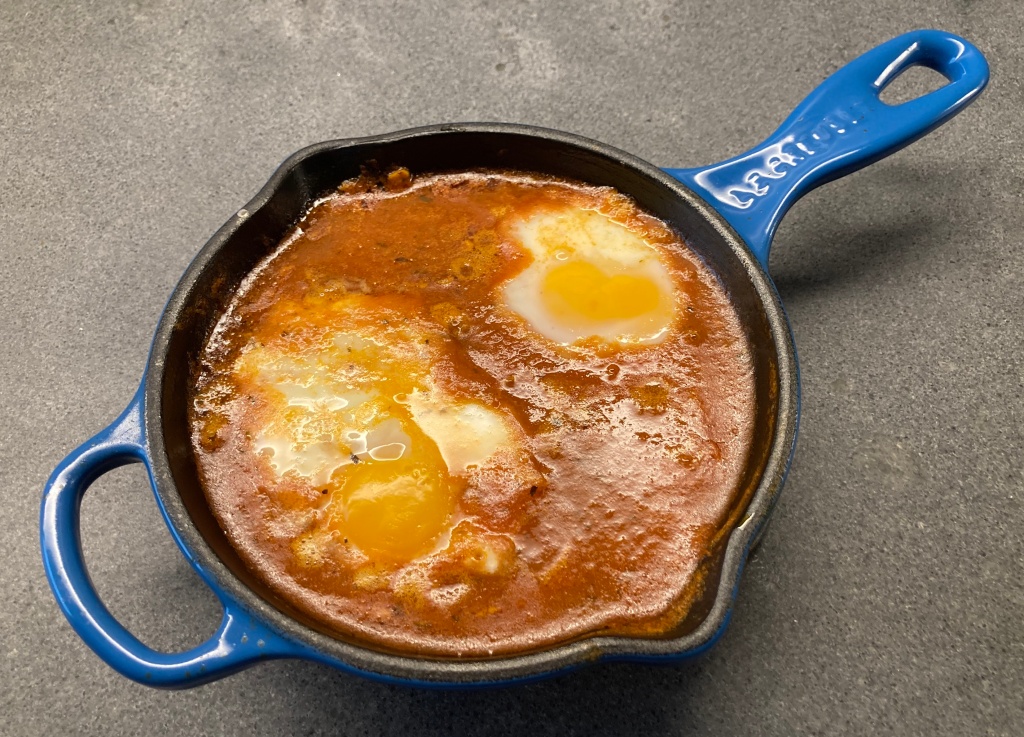
Eggs Poached in Tomato Sauce

Poaching eggs in water requires a bit of technique or a nice tool. Poaching eggs in tomato sauce is slightly different: you want to keep the white close to the yolk, but it should not envelope it: the yolk must remain visible.

The combination of tomato sauce and egg seems to be a bit odd, but the rich, runny egg in combination with the slightly acidic, aromatic tomato sauce is really nice. Great suggestion for lunch or a hearty breakfast. Feel free to create your own version of this dish, for instance by adding some parsley or cheese. Serve with crusted bread.

In most cases the result is shown in a pan. For good reasons: it does not look very attractive when served on a plate. The fun is definitely in the flavours and aromas.

What You Need

What You Do

Warm the tomato sauce and reduce. Increase the heat until the sauce is nearly boiling, gently add the eggs (as you would do when poaching eggs in water) and reduce heat. Using a small spoon make sure the white remains close to the yolk, without covering it. Wait until the white is set. Perhaps add some freshly grounded black pepper.

Eggs Poached in Tomato Sauce ©cadwu

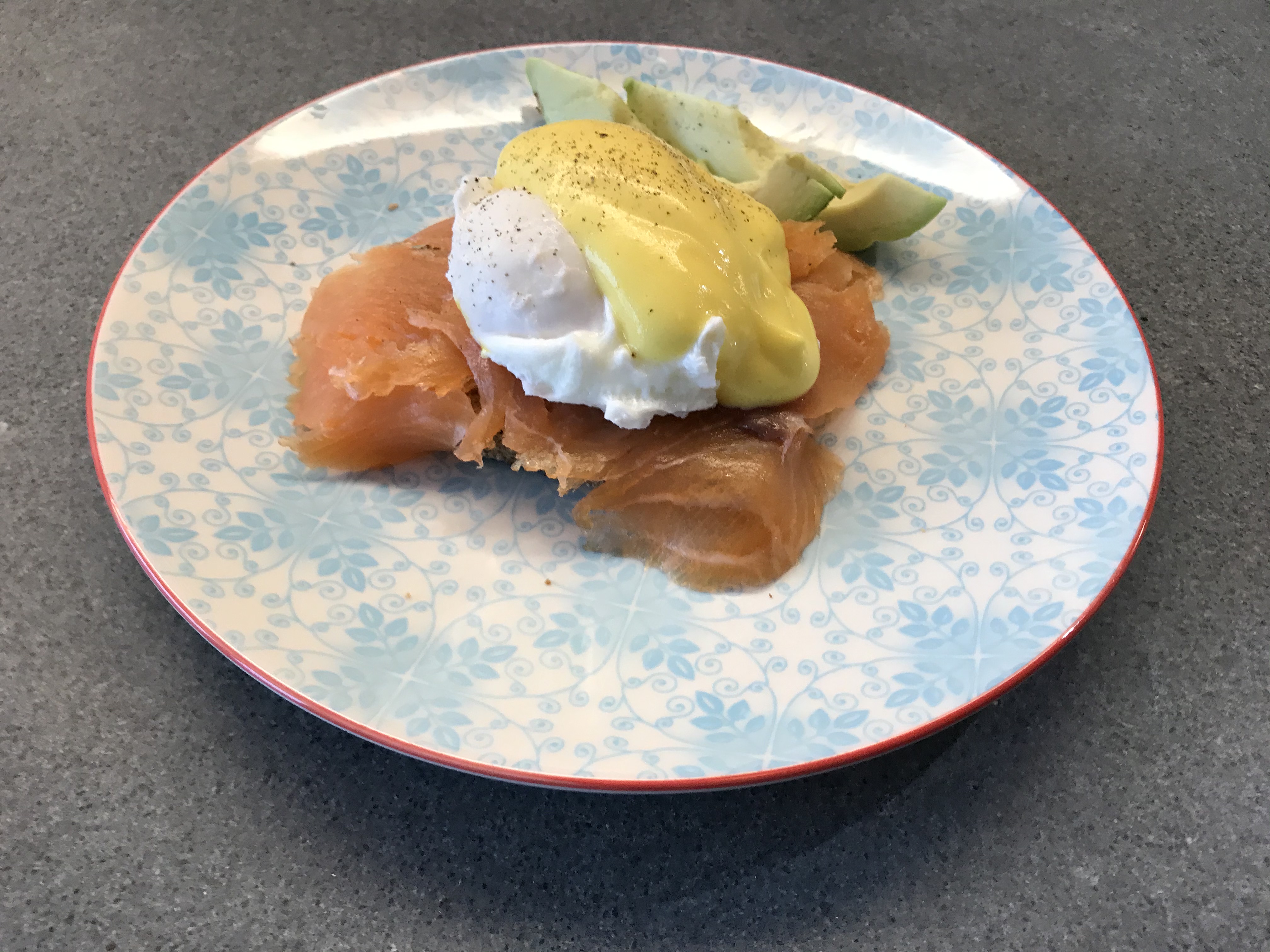
Eggs Benedict with Kimizu

Preparing Eggs Benedict comes with two technical challenges: Hollandaise Sauce (Kimizu in our case) and Poached Eggs.
Poaching an egg seems simple and straightforward when you watch the video made by chef Jacques Pepin, But we know that they’re intimidating to make plus it’s really challenging to get them just right: especially the gooey, liquid yolk.

Chef Pepin makes some very important suggestions: the main protein in egg white is Ovalbumin and it sets at 84,5 °C or 184 °F . According to chef Pepin the egg white becomes rubbery when the water temperature is too high. And he is right! Keep the water hot, but not boiling, when ‘boiling’ or poaching an egg.
He also mentions that the eggs must be cold. Makes sense, because then the yolk will remain runny.
And finally he explains how to store pre-poached eggs, reducing stress in the kitchen.

But the challenge remains: poaching an egg requires skills and experience. Or an OXO good grips egg poacher. Yes, we know, it sounds like another disappointing, expensive, and silly kitchen tool, but it actually works really well. Easy to use, easy to clean and great results, again and again.

What You Need

  • For the Poached Eggs
    • 2 cold, organic Eggs
    • Vinegar
  • For the Kimizu
    • 2 Egg Yolks
    • 1,5 tablespoon of Rice Vinegar (depending on the size of the egg yolks and the acidity of the vinegar)
    • 3 tablespoons of Water
    • 2 teaspoons of Mirin (1 could also be fine, depending on your taste)
  • English muffins or a slice of home made Bread
  • Salmon
  • Avocado
  • Black Pepper

What You Do

Best to make the poached eggs in advance and store them in cold water. Just before serving warm them in a pan of hot water. With the OXO poacher it’s simple: fill a pan with water and add a splash of vinegar. Bring the water to a simmer and crack an egg into the centre of the each poacher. You could also crack the egg into a little bowl or cup and then drop it into the centre of the poacher. After 30 seconds or so you can remove the OXO poacher and use it for another egg. We poached our eggs for 3 minutes maximum. Dry the poached eggs with kitchen paper and trim the egg white if necessary. Serve with toasted muffin or bread, salmon, avocado and of course Kimizu.