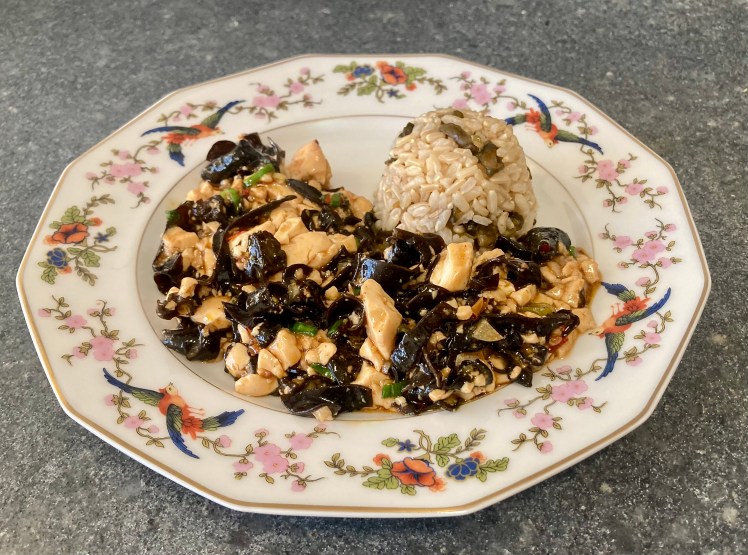
Mapo Tofu with Mushrooms

The aromas and flavours of Mapo Tofu are powerful, also thanks to the use of Sichuan pepper. It gives the dish a floral, citrusy touch. The combination of silky, soft tofu with ground pork, Chili Bean sauce and scallions is very rich. It’s a delicious, heart-warming dish.
In this version we replace the meat with mushrooms (Wood Ear turned out to be the best choice, but Shiitake will also be fine). We think it’s a lighter, equally tasty but different, version of Mapo Tofu.

Sichuan pepper is not related to black pepper or chili. It’s actually not spicy. It causes a pleasant numbing sensation on your tongue and lips, for a few minutes only, which is surprisingly nice when eating spicy food. We recommend lightly toasting the peppers before grinding or crushing them.

Serving Mapo Tofu with rice is a great idea. Or enjoy it with some Bok Choy (Pak Choi) simmered in a combination of oyster and soy sauce.

Drink Pairing

Jasmine tea is an obvious choice. It has a nice aroma and floral taste. The combination with the spices and the Sichuan pepper works really well.

What You Need
  • 100 grams of fresh Wood Ear (or 25 grams dried Wood Ear)
  • 300 grams of Silken Tofu
  • 100 ml Vegetarian Stock
  • 2 tablespoons light Soy Sauce
  • 1 tablespoon Mirin
  • 3 teaspoons Sesame Oil
  • 2 Garlic Cloves
  • 1 small Onion
  • 1 Scallions
  • 3 teaspoons of chopped Fresh Ginger
  • ½ -1 tablespoon Chili Bean Sauce (Douban, Toban-Djan)
  • 1-2 teaspoons Black Bean Sauce (Douchi)
  • 1 teaspoon of Red Sichuan Pepper
  • Oil
  • Cornstarch
  • Rice
  • Pickled Spicy Cucumber
What You Do
  1. Toast the Sichuan peppers lightly in a non-stick pan
  2. Remove the peppers from the pan and let cool
  3. Pre-heat your oven to 65 °C or 150 °F
  4. Cook the rice according to the instruction on the package
  5. Chop the onion, the garlic and the fresh ginger
  6. Slice the scallions and separate the white from the green
  7. Clean and slice the mushrooms
  8. Slice the tofu and make cubes (2 cm, 1 inch)
  9. Warm the stock
  10. Add oil to the pan and fry the mushrooms
  11. After a few minutes, add soy sauce, mirin and sesame oil
  12. Combine and leave to simmer for a few minutes
  13. Remove from the pan and keep warm in the oven
  14. Grind the Sichuan peppers coarsely
  15. Add oil to the pan
  16. Fry the white part of the scallions, the onion, the garlic and the ginger
  17. Add the chili bean sauce and fry. Enjoy the aromas!
  18. Add half of the grounded Sichuan pepper
  19. Add the stock, the tofu, the mushrooms and the black bean sauce
  20. Use a spatula to mix
  21. Allow to simmer for 15 minutes or so until the sauce is nicely reduced and the flavours mixed
  22. In the meantime, finely crush the remaining Sichuan pepper
  23. Use cornstarch to create the right consistency
  24. Just before serving sprinkle with Sichuan pepper and the green of the scallions.
  25. Add spicy pickled cucumber to the rice
  26. Assemble and serve
Mapo Tofu with Mushrooms ©cadwu made with wood ear and Sichuan pepper
Mapo Tofu with Mushrooms ©cadwu

Small-Spotted Catshark with Dashi and Bok Choy

Earlier we wrote about small-spotted catshark, also known as lesser-spotted dogfish or rock salmon. It’s a very common fish, not endangered, it doesn’t have bones (sharks have a cartilaginous skeleton), it’s tasty and the texture of the meat is moist and pleasant. When we tasted the fish with a tomato and red bell pepper stew, we started talking about other ways of preparing it. Perhaps a Portuguese version with piri piri, tomatoes and potatoes? Or a fish stew with shark, mullet, monkfish and clams? Or with dashi, soy sauce, mirin, ginger and lemon?

Wine Pairing

A Pinot Gris or a Sylvaner from the Alsace region will be perfect, dry, floral and a touch of sweetness. In general a light bodied, aromatic, unoaked white wine will be a good choice.

What You Need

  • For the Fish
    • 200 grams of Small-Spotted Catshark
    • Dashi
    • Mirin
    • Light Soy Sauce
    • Sake (optional)
    • Lemon Juice
    • Olive Oil
  • For the Vegetables
    • Bok Choy
    • Oyster Sauce
    • Soy Sauce
    • Fresh Ginger

What You Do

Add some olive oil to a pan and fry the fish. Combine dashi, a teaspoon of mirin, soy sauce and sake. Taste and adjust. You’re looking for a firm, not too sweet mixture. After a few minutes add the mixture to the pan. The idea is to stew the fish in this mixture and when the fish is done (this will take some 20 minutes), reduce the liquid, add a splash of lemon juice and coat the fish with the reduction. In parallel chop the bok choy and simmer the white of the vegetable in a mixture of water, soy sauce and oyster sauce. Just before serving add some grated ginger and the chopped green of the bok choy to the pan. Serve the fish on top of the vegetables.

Small-Spotted Catshark with Dashi and Bok Choy ©cadwu

Veal Cheeks with Pak Choi (Bok Choy)

Joue de Veau

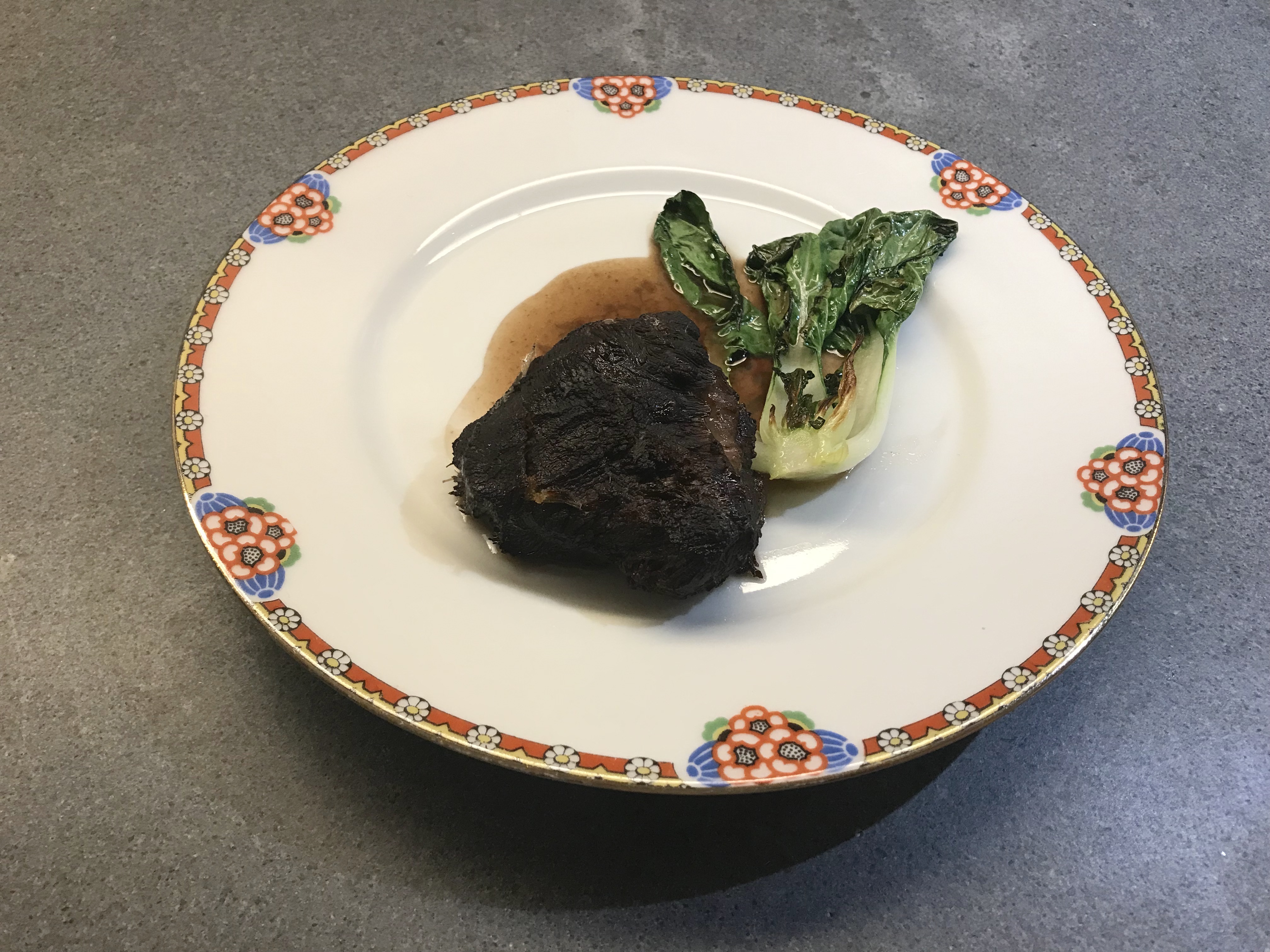
You may have spotted this in a French Boucherie or Supermarket. Probably close to the Ris de Veau, the Collier D’Agneau and the Abats de Porc. Not the most obvious choices, but in reality the Joue de Veau (Veal Cheek) is a true delicacy. The meat requires a few hours to become tender, but it’s worth the wait. When you serve it you will pleasantly surprised: the meat is extremely tender, juicy and a touch of pink on the inside. Which makes it a great idea to serve it sliced, especially because the outside of the meat is deep dark brown.
The Joue or Cheek requires cleaning. Best is to ask your butcher to do this or use a very sharp knife.
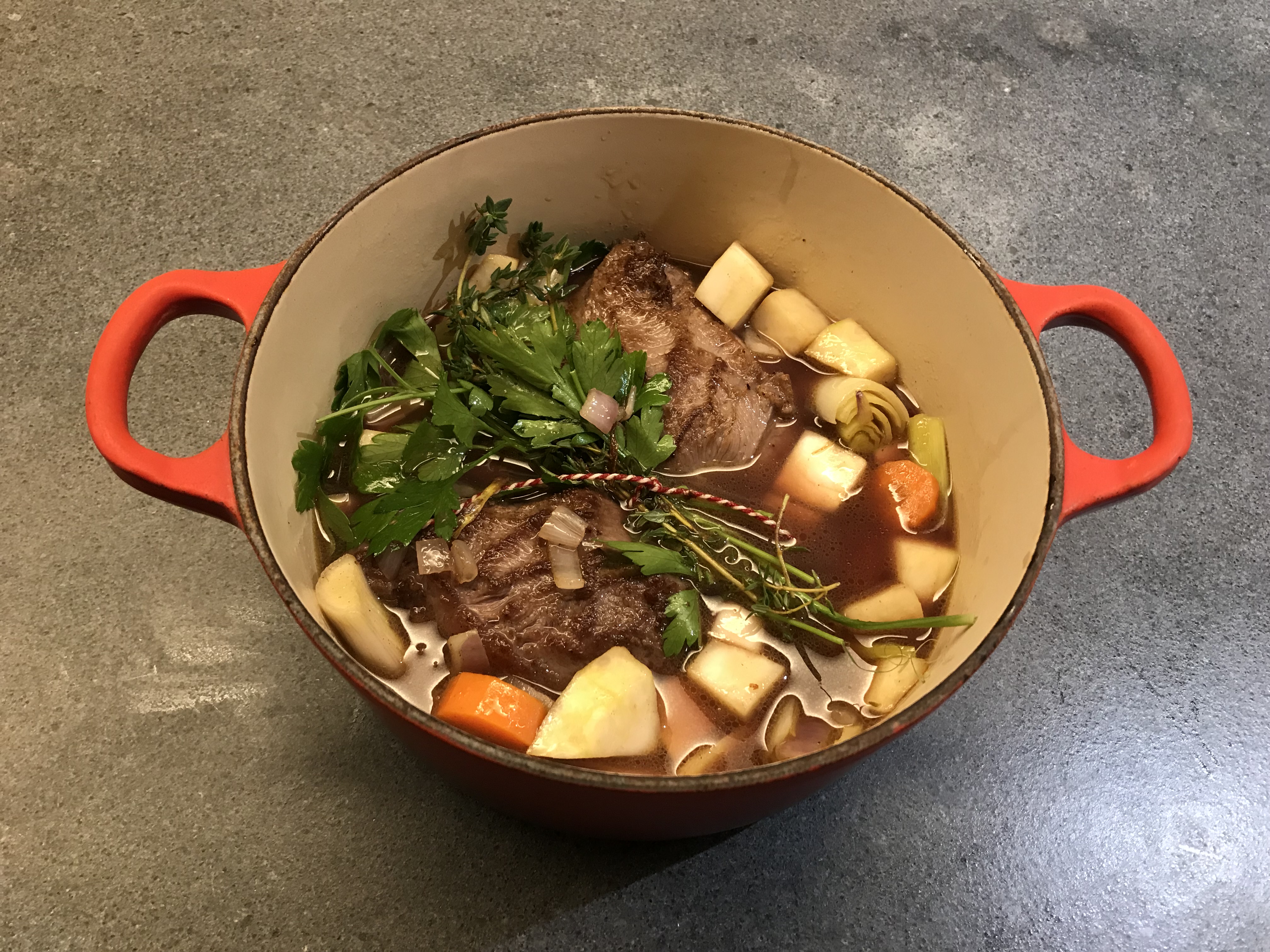
We use a classic combination carrot, onion, leek and celeriac plus red wine and a bouquet garni. Don’t make the bouquet too powerful; the idea is to support the meat, nothing else.
No need to use an expensive wine for the stew. A simple, red wine is fine. Some people will argue that the wine you use for cooking must be the one you serve with the food. Nonsense. Feel free to drink a Baralo (like we did) with the Veal Cheeks, but don’t waste half a bottle of it by using it as a cooking liquid.
The Pak Choi works really well with the Veal Cheeks. It brings the bitterness of cabbage, balancing the sweetness of the meat and the deep taste of the sauce. Plus the fried Pak Choi is a bit crispy, both the leaves and the stem, which is great in combination with the moist, tender meat.

Wine Pairing

A full-bodied red wine with clear tannins, a delicate smell and red fruit aromas will be an excellent choice. Velvety and smooth. As the Veal Cheeks: simple yet complex. We drank a glass of Barolo San Silvestro, Serra Dei Turchi, 2014. A perfect match with the braised veal, the sauce and the cabbage.

What You Need

  • 2 Veal Cheeks (one per person)
  • Carrot
  • Celeriac
  • Onion
  • Leek
  • Olive Oil
  • Bouquet Garni
    • Bay Leaf
    • Thyme
    • Parsley
  • Red Wine
  • Cognac
  • (baby) Pak Choi (Bok Choy)

What You Do

Start by adding oil to the pan. Fry the Veal Cheeks until they have a nice, golden colour. Transfer to a plate. Add more oil and fry the chopped vegetables. Be careful not to add too much carrot or celeriac. Stir for a few minutes and then add the meat. Add wine and the bouquet garni. Leave on a low heat for 4-6 hours until tender. Make sure to turn the meat every hour or so. Cool the stew and transfer to the refrigerator. The next day remove the fat (if any) and warm the stew. When warm, transfer the meat to a plate and keep warm (for instance in an oven of 70 C, the ideal temperature for your plates as well). Remove the vegetables and the bouquet. Reduce the liquid with one-third or more. Taste the sauce. Add a splash of cognac. Black Pepper? Cook a few minutes longer allowing for the alcohol to evaporate.
In a non-sticky pan heat some oil and fry the Pak Choi for 2 times 2 minutes, maximum. In parallel fry the meat in a non-sticky pan, one or two minutes in total. This will give the meat a crispy touch and an even deeper dark brown colour. Serve the Joue de Veau with the sauce, crusty bread and the Pak Choi.