Baba Au Mandarine Napoléon

On April 27th, we celebrate the birthday of the King Willem-Alexander of the Netherlands. The Dutch royal family is also known as ‘de Oranjes’, which is reflected in the use of the colour orange when referring to Dutch royalty. Actually, there is no link between the royal family and the colour. The ‘orange’ in their name refers to the French city of Orange, a Principality one of his ancestors inherited in 1544.

Over the years we prepared Orange Sabayon, Queen’s Soup, Orange and Almond Cake, Bouchée à la Reine, Orange Flan and Canard à l’Orange on this day. What better way to celebrate a birthday than baking a Baba, a flavourful and moist cake? Traditionally a Baba au Rhum (preferably with raisins or currents) is served with a syrup based on brown rum. Today we use a delicious Belgian liqueur: Mandarine Napoléon. It’s a unique mandarin liqueur, made from macerated Sicilian mandarins and cognac. It was originally created in 1892 by Napoleon’s physician. Rich, long, intense en delicious!

What You Need
  • 10 large Baba’s
    • 4 grams of dried Yeast
    • 100 ml Milk
    • 15 grams of Sugar
    • 200 grams All Purpose Flour
    • 2 Egg Yolks
    • 2 Eggs
    • 100 grams of Butter
    • 80 grams of chopped Candied Orange Peel
    • 2 grams of Salt
    • Butter to coat the moulds
    • Finely chopped Candied Orange Peel
  • Syrup
    • 500 ml of Water
    • 200 grams of Sugar
    • 200 ml Mandarine Napoléon
What You Do

The milk should be lukewarm and the butter melted but not hot. Start by combining milk, yeast and sugar. Mix well. Add the sieved flour and mix. Now it’s time to add the eggs and the egg yolks. Use kneading hooks to mix very, very well. This may take 10 minutes. The result should be an elastic, sticky dough. Add the butter, mix and then add the salt. The dough is now even stickier. Coat the moulds with butter. Add the dough to the moulds and let rise for approximately 2 hours. They should double in size. Preheat your oven to 200 °C or 400 °F and bake for 15 minutes depending on the size. Keep an eye on the baba’s, you may want to reduce the heat after 10 minutes.
In the meantime add water and sugar to a pan. Warm the mixture until nearly boiling. Stir and make sure the sugar is completely dissolved. Now add Mandarine Napoléon to taste. Leave to cool. Add an extra splash of Mandarine Napoléon to give the syrup an extra push. Allow the baba’s to cool somewhat, remove from the mould and let them soak in the syrup for a few hours, or longer. A day or two will be perfect, Sprinkle with finely chopped candied orange peel and serve at room temperature.

Baba au Mandarine Napoléon

Belgian Cuisine

Belgian Cuisine is so much more than just beer, waffles and chocolate, it’s about enjoying excellent food with great dishes such as Waterzooi, Moules Meunière, Asparagus with Crevettes Grises and many more.

The five Belgo restaurants in London (from 1992 until 2020) were very successful promoters of Belgian cuisine. The chain, founded by Denis Blaise and Andre Plisnier, celebrated Belgian cuisine and the joy of eating simple, tasty, original food. Fortunately, in 1997 they published a cookbook, allowing us to enjoy their food even after the closure of the chain.

The book includes 20 recipes for mussels (ranging from the classic Mussels with White Wine to Mussels with Roquefort), a chapter on Fries, on Beer and cooking with Beer and a range of traditional Belgian dishes (Shrimp Croquettes with deep fried Parsley, Paling in het Groen (Eel in Green, a stew with eel, potatoes, beer, fish stock, watercress, dill, chives and cream) and of course Filet Americain).

Amongst our favourites from the Belgian kitchen are Asparagus à la Flamande, Tomatoes with Shrimps, Beef stew with Brown Beer and their Chicory and Belgian White Beer Soup. The soup combines the bitter flavours of the chicory and the beer (hops, cilantro, orange peel) with cream, nutmeg and chicken stock. Delicious!

The Belgo Cookbook by Denis Blaise and Andre Plisnier (available in Dutch and English) is available via the well-known channels, perhaps second hand, for 20 US$ or €.

Beef Stew with Djeroek Poeroet

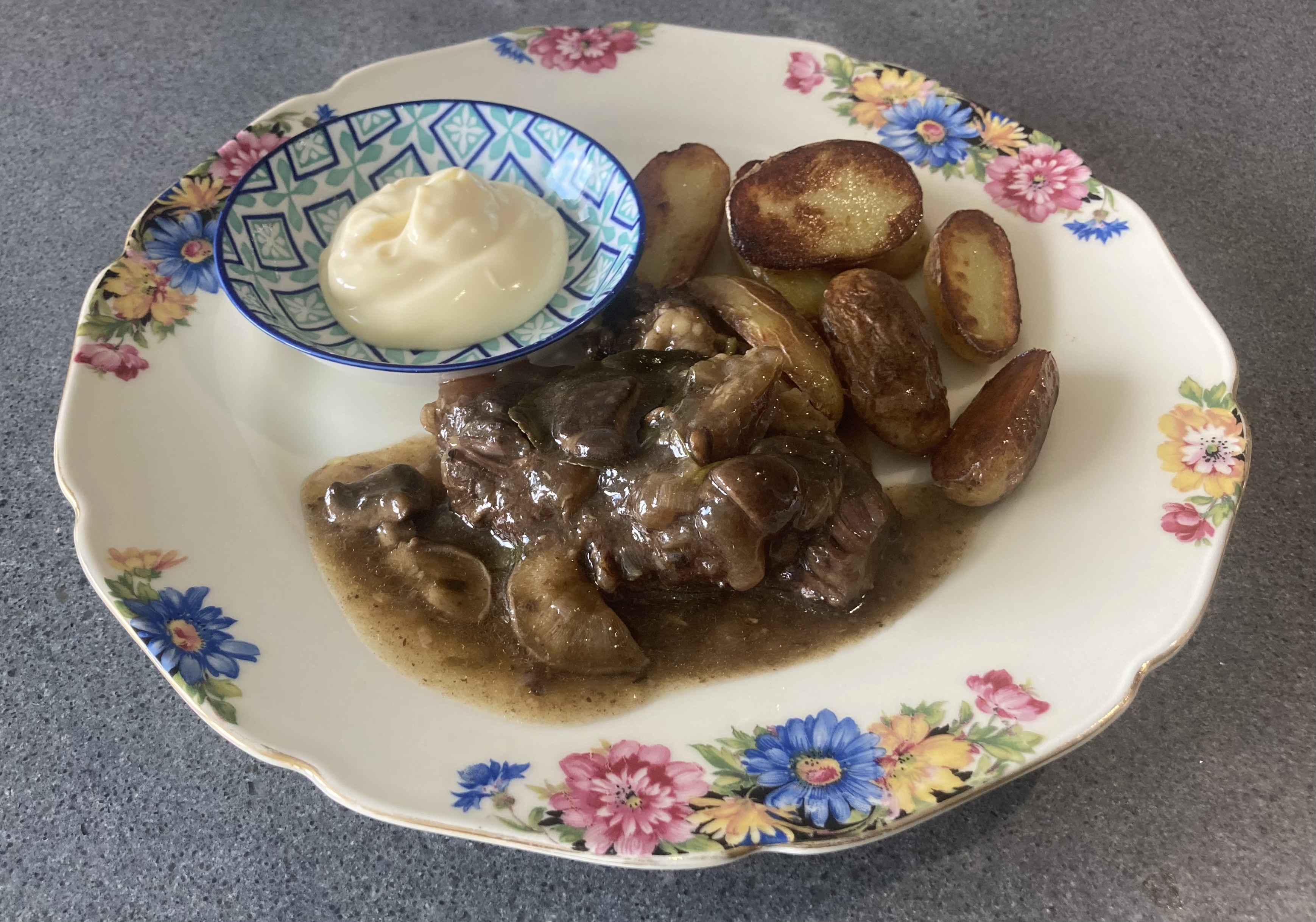
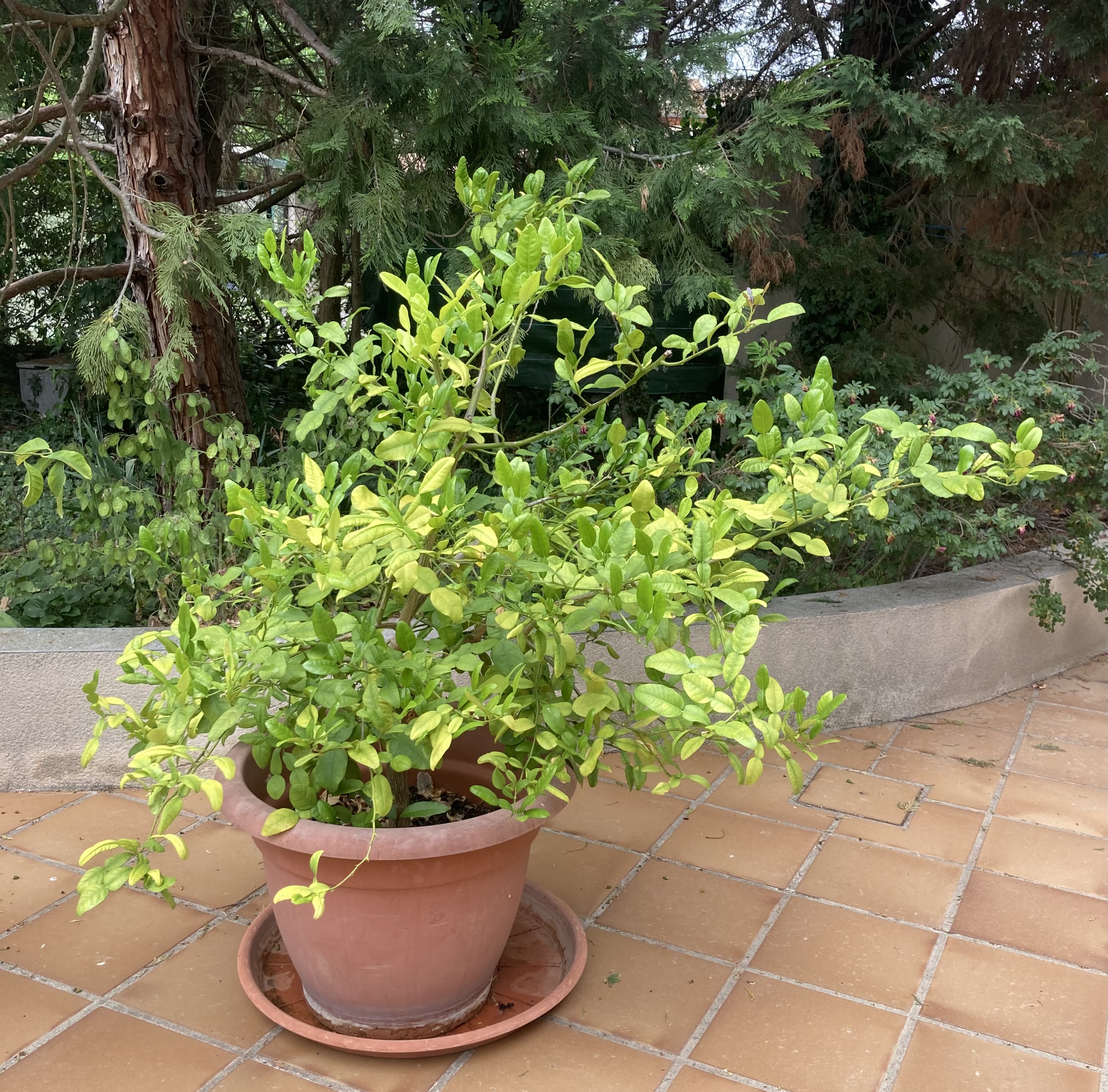
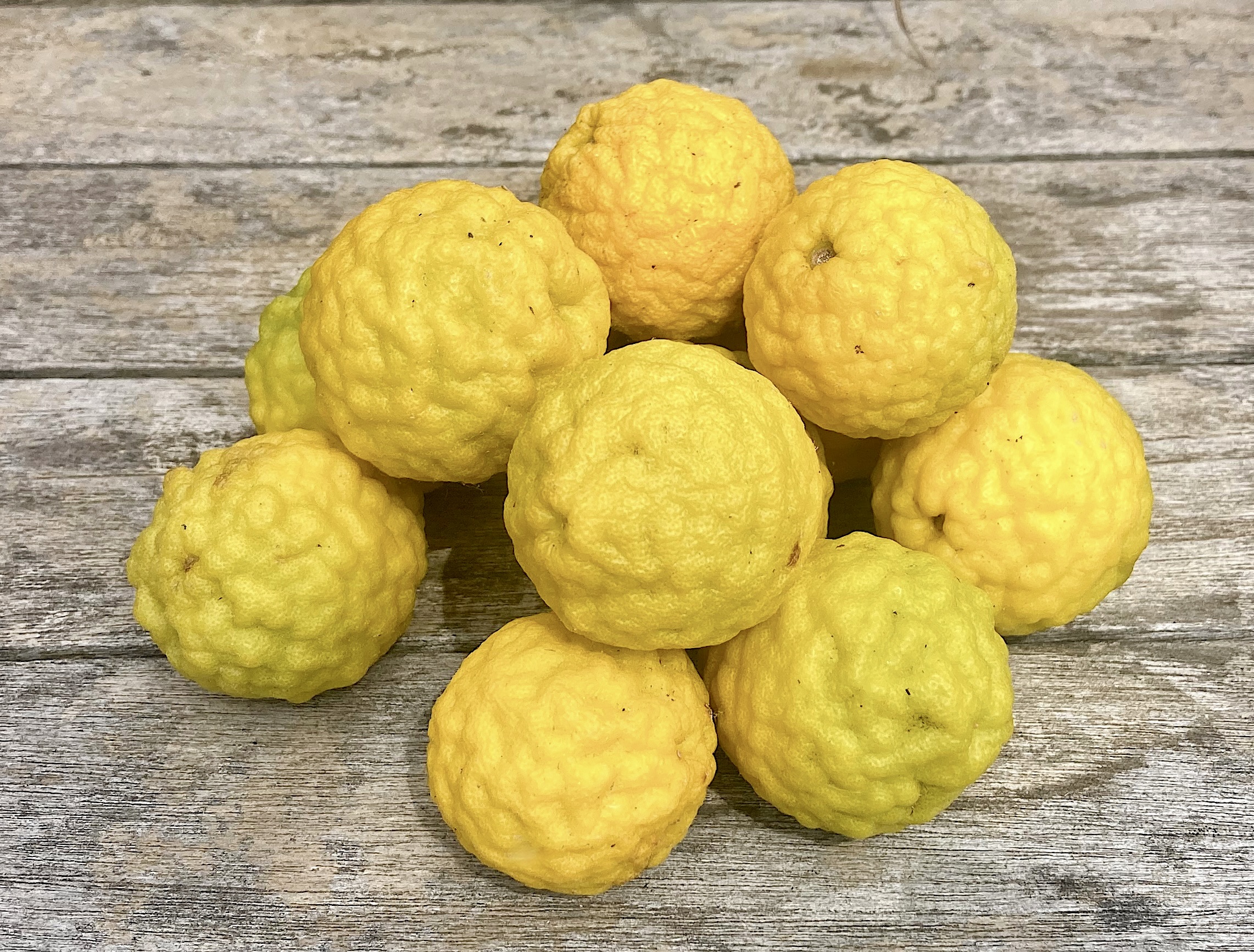
A few weeks ago we were looking for a nice restaurant, one where we could enjoy a quick, tasty meal and a nice beer. We looked at the menu of De Volkslust and decided this was exactly what we’re looking for. The restaurant originates from Antwerp, Belgium. Some 15 minutes later they brought us a Flemish Beef Stew, served with fried potatoes. It looked and smelled great. And it tasted, eh, slightly different? Of course! Chef used Djeroek Poeroet! Interesting, you would expect bay leaf in a Flemish Stew, but this was definitely djeroek poeroet (or jeruk purut, the leaves of the Makrut or Thai Lime). Great idea. Aromatic, refreshing, light. A few days later we made our version of it.
And typical for a good stew: make it a day in advance.

Wine Pairing

The obvious choice is a nice, cold beer. Perhaps the one you used for the stew? We used Affligem Blond, an award winning Belgian Blond beer with pleasant bitterness and fruitiness.
If you go for a glass of red wine, make sure it is full-bodied and rich; a wine with dark fruit and a touch of oak.

What You Need (for 4 persons)

  • 1 kilo of excellent, fat, marbled Beef
  • 2 Shallots
  • 250 grams of Button Mushrooms (Champignon de Paris)
  • Olive Oil
  • 2 bottles (33 cl) of Blond Belgian Beer
  • Bouquet Garni (Thyme, Parsley, Chives)
  • 6 leaves of Djeroek Poeroet (frozen preferred)
  • Black Pepper

What You Do

Slice the meat by following its structure. We prefer bigger parts, so not cubes. They will take longer to cook, but the meat benefits from this approach. Clean the mushrooms and slice the bigger ones in half. Coarsely shop the onion. Heat olive oil in a large pan and fry the meat. You probably will have to do this in 2 or 3 batches. Make sure the meat is nicely colored. Remove the meat from the pan and fry the mushrooms. Remove them when nicely golden, add some more olive oil and caramelize the sliced onions. When ready, add the mushrooms, the beef, the beer, the Bouquet Garni and 6 leaves of djeroek poeroet. Heat through and through. Close the pan and keep on a low heat for 5 to 6 hours. Stir every hour. Check the taste during the cooking process, perhaps you want to remove the djeroek poeroet (or add more!).
When you’re happy withe the cuisson, remove the meat from the pan, discard the bouquet Garni and reduce the sauce. Transfer the meat back into the pan, reheat, then cool and transfer to the refrigerator until the next day.
Serve with unpeeled potatoes fried in olive oil and (homemade) mayonaise.

Bouchée à la Reine

Crispy, fluffy, flaky puff pastry and a rich, warm filling with mushrooms and parsley, what better way to turn leftovers into a tasty starter. Bouchée a la Reine: a classic in Belgium and France. Not modern at all, but such fun to serve (and eat). You could fill the pastry with poultry, with mushrooms, shrimps, sweetbread, just about anything will go, as long as you use a rich roux as basis.
Making our own puff pastry is a bit too much for us, making your own bouchée is not too difficult, but buying them at the bakery is also fine. 

Wine Pairing

It all depends on the filling of your Bouchée a la Reine. It could be a light red wine if you have some left over veal, if it’s sweetbread then a lightly oaked chardonnay is fine et cetera. In all cases keep in mind that the filling comes with a generous amount of butter.

What You Need

  • 2 Bouchées
  • Some left over Veal or Chicken or Shrimps
  • Mushrooms
  • For the Roux
    • Butter
    • All Purpose Flour
    • Stock
  • Parsley
  • Lemon
  • Black Pepper
  • Butter

What You Do

Chop the (already cooked) meat and the mushrooms. Gently heat some butter in a pan, add the mushrooms and leave them for 10 minutes or so. Add the meat. Taste and add black pepper, perhaps some lemon juice, spices and herbs, definitely lots of parsley. In parallel make the roux. Warm the stock. Add butter to a pan, add the equal amount of flour plus a bit more (remember you also have some butter in the other pan). Softly fry the flour until you begin smelling that typical cookie aroma, then start adding the warm stock, slowly at first, constantly whisking. Add the meat, the mushrooms, some black pepper and the chopped parsley. Don’t turn the roux into a sauce, it must be ragout like. At this stage you could cool the filling for use later on.
Heat the bouchée in an oven at 180 °C or 355 °F for 10 minutes. Transfer from the oven onto a plate, add the filling and serve immediately.

Bouchée a la Reine ©cadeau

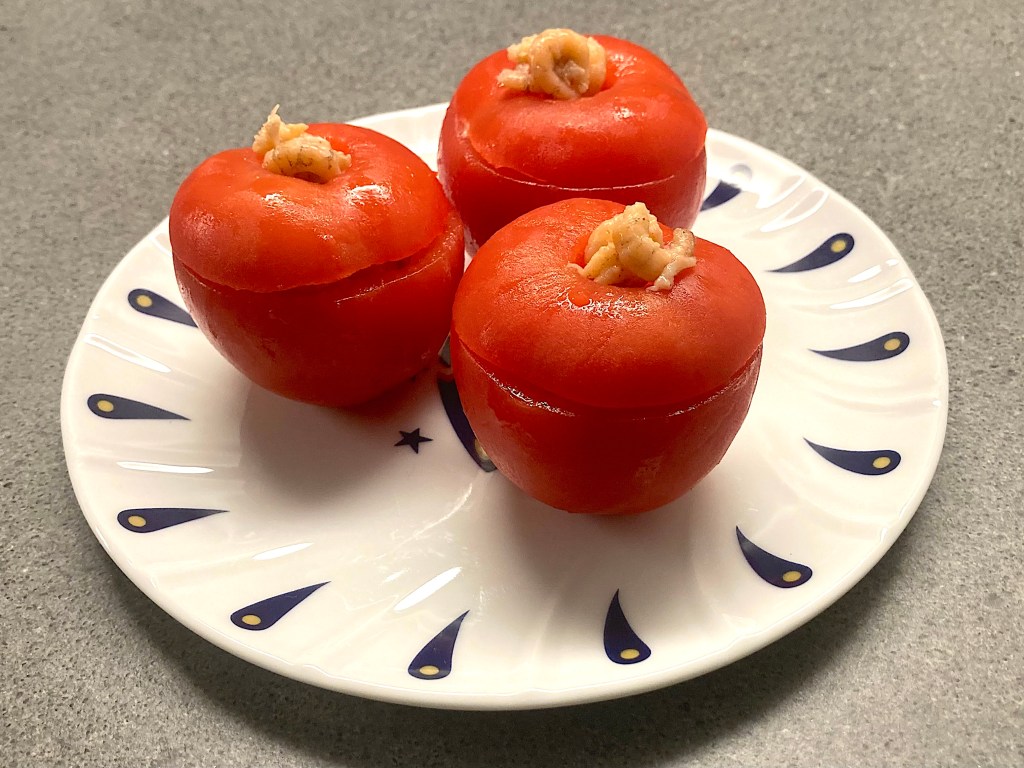
Tomate aux Crevettes

This simple and delicious starter is normally served in Belgium on special occasions. There are three key ingredients: tomatoes, small (grey) shrimps and mayonnaise. The tomato brings sweetness, umami and some acidity, the mayonnaise richness and a velvety mouthfeel and the shrimps saltiness and sweetness. Ideal combination.
We prefer to peel the tomatoes, because it makes it easier to enjoy the dish.
We thought it would be nice to tweak the recipe slightly. These ingredients are listed as optional.

Wine Pairing

We enjoyed our Tomate aux Crevettes with a glass of Muscadet Sevre et Maine sur Lie produced by Domaine Raphael Luneau. This is a very aromatic wine with a strong flavour and a long finish, which goes very well with the taste of the shrimps and the mayonnaise. The term ‘sur lie’ indicates that during a few months the wine stays in contact with the dead yeast cells left over after fermentation. This technique makes the wine more complex.
In general you’re looking for a fresh, light wine with a clear acidity. 

What You Need

  • 6 excellent ripe Tomatoes
  • 100 grams of (grey) small Shrimps
  • Mayonnaise
  • Black Pepper
  • Chervil
  • Optional
    • Ketchup
    • Worcestershire Sauce
    • Lemon
    • Mustard

What You Do

  1. Peel the tomatoes
  2. Cut of the top and remove the green centre,
  3. Remove the inside of the tomato and discard
  4. Dry the inside of the tomatoes
  5. Dry the shrimps
  6. Add some black pepper to the shrimps and mix
  7. Chop the chervil
  8. Classic version: start with a layer of shrimps, then some mayonnaise and chervil, followed by a second layer of shrimps and finish with mayonnaise and chervil
  9. Alternative version: mix the mayonnaise with a squeeze of ketchup, Worcestershire sauce, lemon and mustard. Taste and adjust. Follow step 8
  10. Put the top back on the tomato and decorate with a few shrimps and chervil
Tomate aux Crevettes ©cadwu

And The Winner Is…

The 2022 Johannes van Dam prize will be awarded to Belgian Chef Jeroen Meus during the Amsterdam Symposium on the History of Food on February 11th. Jeroen Meus is well known for his inspiring daily TV program Dagelijkse Kost (Daily Food). In this 15 minutes program he shares the fun of preparing food, for instance crumble pie with pears and raisins, monkfish with a mustard crust or penne with chorizo and red bell pepper. His aim is not to cook on Michelin Star level, his aim is to help everyone prepare tasty, good food, every day of the week. His books and website (in Dutch only) support this goal in a very helpful way.

He is a true TV-chef in the sense that he is in contact with his viewers. He is entertaining, professional, funny and never arrogant. He balances traditional Belgian food with changes in our culture (more focus on vegetables, more variation, different cultures). His food reflects these changes and inspires us to follow his friendly culinary adventures.

The prize is named after culinary writer and critic Johannes van Dam who was not only known for his reviews of restaurants but also for his massive collection of books on food and drinks. The prize is awarded to individuals who have made an outstanding contribution to the dissemination of the knowledge on international gastronomy. Jeroen Meus, through his tv programs, books and website, has clearly done so. His cooking brings people together and broadens our culinary scope.

Previous winners of this prestigious prize include Yotam Ottolenghi, John Halvemaan, Carlo Petrini, Alice Waters, Claudia Roden, Harold McGee and Alain Passard.

Jeroen Meeus Atribution: Arne Aelterman, CC BY-SA 4.0 , via Wikimedia Commons
Jeroen Meus – attribution: Arne Aelterman, CC BY-SA 4.0 , via Wikimedia Commons