Clafoutis

Cherries, cherries, cherries! We love their rich, sweet taste, the touch of tartness and their firm, succulent texture! They just want to be eaten, one after the other. So what better summer dessert than Clafoutis?

Should you use whole cherries or pitted ones? Not removing the pits is less work for you (obviously) and it reduces the risk of a soggy Clafoutis. Unpitted cherries will give a subtle almond flavour to the clafoutis. On the other hand, you don’t want to bite into a pit while enjoying your dessert. Also important: the pits contain amygdalin, a toxic compound that can also be found in almonds, apple seeds and apricot stones.
We decided to pit the cherries and compensate for the lack of almond taste by adding some almond flour to the batter.
If you decide to remove the pits, make sure you remove all of them!

Finally, yes, you can replace the cherries with fresh apricots, berries, peaches or prunes. The result is called a Flaugnarde. But nothing as tasty as Clafoutis made with fresh cherries!

What You Need
  • 2,5 dl of regular Milk
  • 2 Eggs
  • 30 grams of plain Flour
  • 10 grams of Almond Flour
  • 20 grams of Sugar
  • 500 grams of Cherries, pitted
  • 10 grams of Butter
What You Do
  1. Pre heat the oven to 180° Celsius or 350° Fahrenheit
  2. Whisk together the eggs, plain flour, almond flour and sugar
  3. Bring the milk almost to a boil
  4. Stir the milk into the mixture
  5. Butter a large, shallow baking dish, add cherries to the dish
  6. Make sure the bottom is nicely covered with cherries; no need to have two layers of cherries
  7. Pour the mixture over the cherries
  8. Bake (lower third of the oven) for 20 minutes
  9. Add a few dots of butter
  10. Continue baking for another 20 minutes or until the Clafoutis is golden
  11. Leave to cool for 60 minutes or so, this will enhance the taste
  12. Clafoutis should be served luke-warm
  13. You could decorate the clafoutis with icing sugar
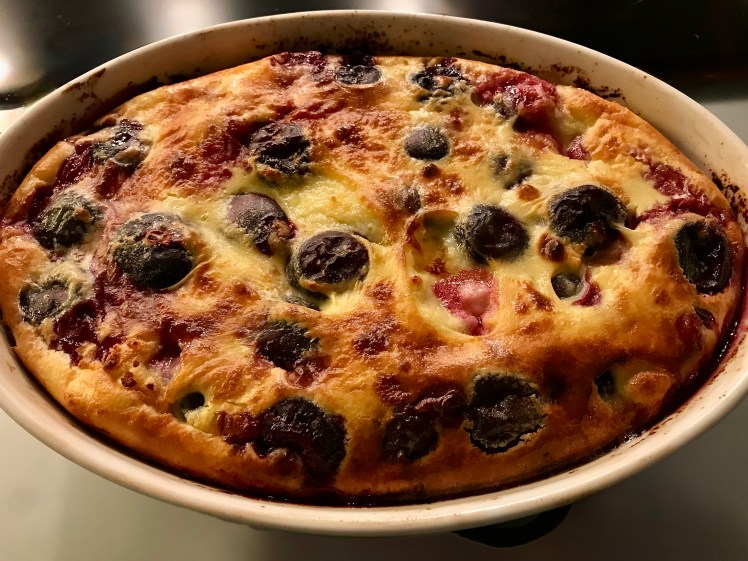
Clafoutis ©cadwu made with fresh cherries, milk, sugar, all purpose flour, butter and almond flour
Clafoutis ©cadwu

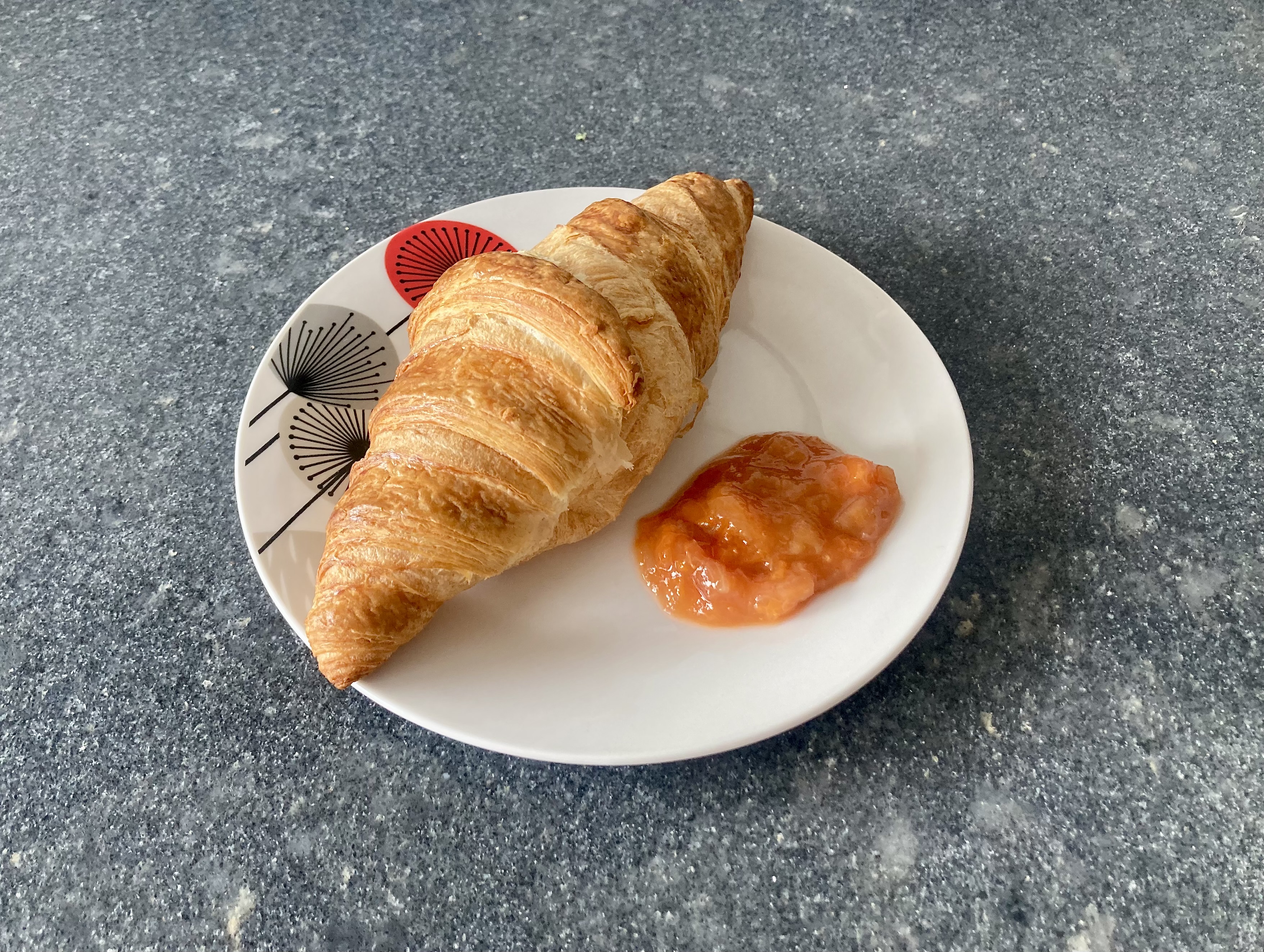
Rhubarb and Apricot Jam

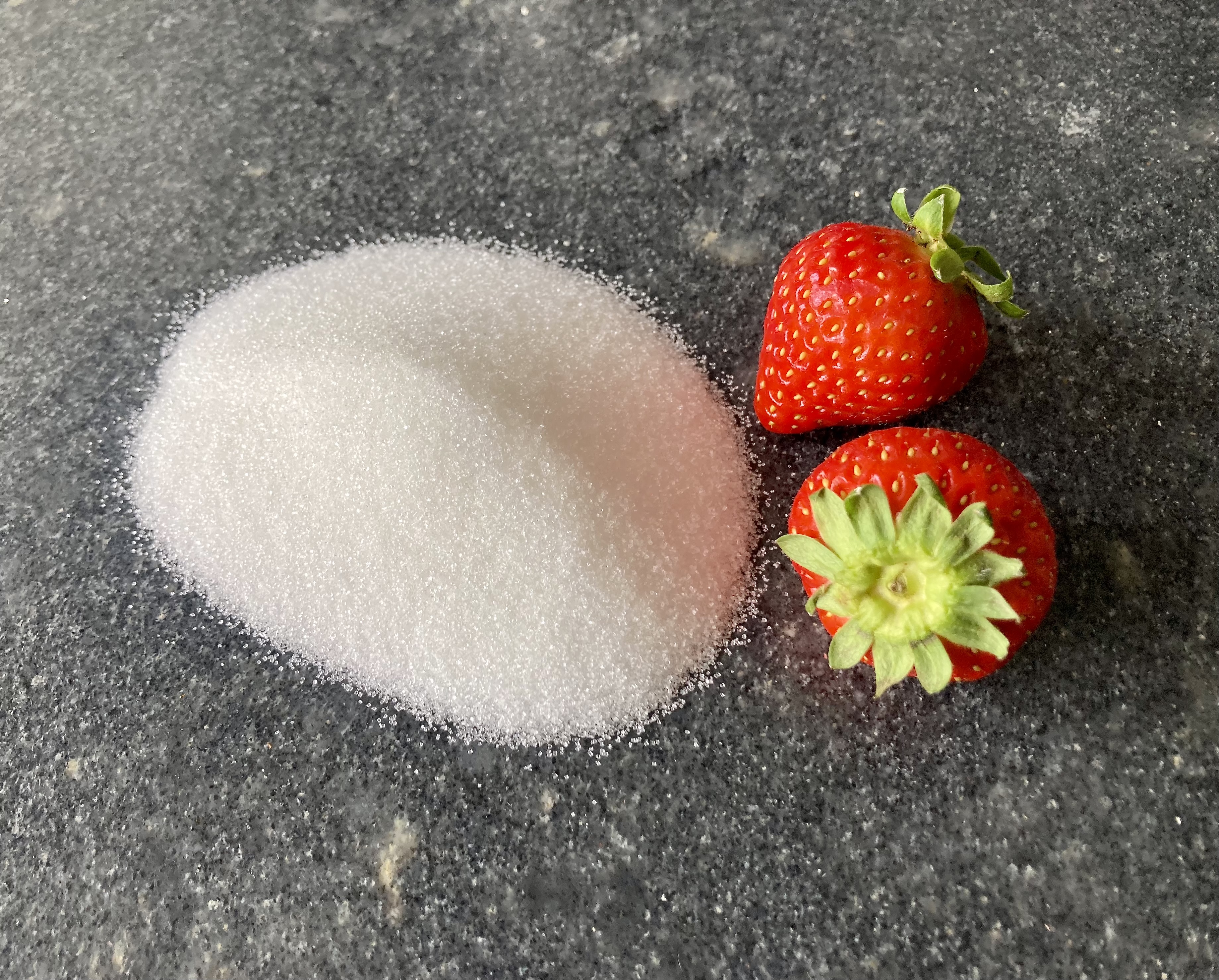
Jam must contain a certain percentage of fruit and sugar in order to be called jam. In Canada for instance fruit jam must have at least 45% fruit. In the EU it’s 35% for jam and 45% for extra jam. So what’s the remaining 55% if it’s not fruit? In most cases it’s a gelling agent (pectin), an acidifying agent (citric acid), a preservative (potassium sorbate) and sugar. Lot’s of sugar! For instance Waitrose’s Essential Strawberry Jam contains (per 100 grams) 63 grams of sugar and it’s made with 45 grams of strawberries. See picture.

If the combination contains less sugar, then it’s no longer jam. Fior di Frutta (as produced by Rigoni di Asiago) uses organic fruit, apple juice and natural pectin to make a fruit spread. Their strawberry not-jam is made with 60% strawberries and contains 36 grams of sugar per 100 grams. The sugar is not added, it’s natural sugar (strawberries and apples). A very tasty and huge improvement, but we can do better by making our own. The trick is not to make too much, store it in the refrigerator and enjoy within a few days.

What You Need
  • 4 Apricots
  • 1 small Orange
  • 2 Rhubarb Stalks
  • 1 tablespoon of Sugar (or less)
What You Do
  1. Wash and dry the apricots and the rhubarb
  2. Slice the rhubarb (0,5 cm or 0.2 in)
  3. Remove the stone of the apricots and cut the apricot in small pieces
  4. Add orange juice to the pan
  5. Add apricot and rhubarb
  6. Heat until boiling, reduce heat
  7. Close the lid and leave for 5-10 minutes
  8. Check if the rhubarb is soft
  9. Pulse once or twice with a blender to smoothen some of the mixture
  10. Add sugar
  11. Mix well
  12. Taste and adjust if necessary
  13. Transfer to 2 very clean jars (2*250 grams)
  14. Close the jars and transfer to a bassin with cold water
  15. Will keep well for a limited time in the refrigerator
PS

Combining rhubarb with strawberries is also a great idea!