Japanese Pumpkin with Shrimps

The traditional Japanese way of preparing Kabocha (Japanese Pumpkin) requires a bit of work but is not overly complex. The result is a combination of delicate, fresh pumpkin flavours with clear umami as a result of simmering the pumpkin in a dashi-based stock. You could replace the Japanese Pumpkin with a more common winter squash or with a red Hokkaido pumpkin.

Combining shrimps and pumpkin seems a bit odd, but it’s actually very nice. The combination is colourful and the various flavours come together nicely, also thanks to the dashi.
The first time we enjoyed this combination was when we prepared Takiawase, following the recipe from author and Michelin Award winning chef Akira Oshima. The recipe is included in his book Yamazato, Kaiseki Recipes: Secrets of the Japanese Cuisine. It’s a mouth-watering dish but unfortunately fairly difficult to prepare. Typically, Takiawase is a combination of vegetables and fish. Every ingredient requires its own preparation and is simmered in its own dashi-based stock. Indeed: four different kinds of homemade stock. The recipe of Akira Oshima combines kabocha, eggplant, okra and shrimp.

Drink Pairing

We prefer a glass of sake with our Kabocha with Shrimps, for instance a Junmai sake with fresh aromas and good acidity. The sake must be dry and well-balanced with a clean finish. You could enjoy a glass of white wine with the dish, provided it’s dry and mineral. Or a more adventurous choice: a glass of Manzanilla or Fino sherry. Manzanilla is a dry sherry with a flowery bouquet, a delicate palate and subtle acidity. It works beautifully with the dashi and the sweetness of both the kabocha and the shrimps.

What You Need                                                                         

  • For the Dashi
    • 10 grams of Kelp
    • 10 grams of Katsuobushi
  • For the Kabocha
    • Mirin
    • Light Soy Sauce (Usukuchi)
    • Sake
  • For the Shrimps
    • Sake
    • (Olive) Oil
    • Mirin
    • Light Soy Sauce (Usukuchi)
  • Pickled Cucumber

What You Do

Start by preparing 500 ml of dashi.
Peel and devein the six shrimps. We prefer to leave the tail on. Transfer the shrimps to a bowl, add some sake and transfer to the refrigerator for a few hours.
Peel the Kabocha, remove the seeds. Halve and then slice in 6 equal parts. Combine 400 ml of dashi with 25 ml of mirin, 25 ml of light soy sauce and a tablespoon of sake. Add the slices of kabocha and let is simmer for some 10 minutes or until nearly done.
In parallel heat a heavy iron skillet, add oil, dry the shrimps with kitchen paper and then fry them quickly, let’s say 4 minutes. Transfer to a warm oven. Remove the oil from the pan with kitchen paper. Reduce the heat to low. Mix 50 ml of dashi with 25 ml of mirin and a small spoon of light soy sauce. Deglaze the pan and let the mixture reduce. Transfer the shrimps back the pan and coat them quickly with the mixture. Serve the slices of kabocha with the fried, coated shrimps and the pickled cucumber.

Horn of Plenty with Cumin and Pork Fillet

The name Horn of Plenty refers to the shape (very much like a funnel without a stem) of the mushroom and to the mythical goat Amaltheia, whose horn would be filled with everything you whished for. It’s also called Black Chantarelle, which is very appropriate because it’s a chantarelle and truly black when cooked. The more morbid name is Trompette de la Mort, as if the buried use the mushrooms to play the Marche Funèbre.

More importantly to us: they are very edible with a pleasant fibrous and chewy texture. The only downside is that they quickly become soggy and smelly, so make sure you buy (or harvest) dry ones and use them the same day or the next.

For some reason Horn of Plenty simply loves cumin. We also added coriander and fennel seed to give some additional lightness and freshness to the combination.
And as always, only use the very best organic pork.

Wine Pairing

A medium bodied, not too complex, red wine will be perfect. Think Merlot, Tempranillo, Grenache, Cabernet Franc, Carménère.

What You Need

  • 150 grams Horn of Plenty
  • One Red Onion
  • Cumin, Coriander and Fennel (seeds)
  • Black pepper
  • Olive Oil
  • Pork Fillet

What You Do

Clean the mushrooms thoroughly. This can be time consuming. Slice the pork fillet to create 6 medallions. Heat a heavy iron skillet and fry the medallions in olive oil until just underdone. Wrap in aluminium foil and leave to rest. Slice the red onion, add some olive oil to the pan and fry the onion. Grind cumin, coriander and fennel seeds and fry the spices. Lower the heat, perhaps add some more olive oil and fry the mushrooms for 5-10 minutes. Taste, adjust and add some black pepper. Add the juices from the pork to the pan, deglaze and serve.

  • Horn of Plenty with Cumin and Pork Fillet ©cadwu
  • Horn of Plenty ©cadwu

All Our Recipes For You

A few years ago we created an overview of recipes per season, simply because it’s such a good idea to enjoy what is available in the season. Nice to eat strawberries in Winter, but isn’t it a much better idea to enjoy seasonal slow cooked pears?

We then introduced overviews per course, ranging from side dish to lunch. The categories didn’t always make sense, so we added a few more, making our admin more complicated, especially when we updated a recipe or a picture.

The obvious thing happened: we lost track of recipes, noticed some links were broken and the overviews became incomplete.

So how to organise this blog?

After much debate and intense workshops (not really) we’re pleased to present to you an old fashioned, up to date and very easy to use (and maintain) index of All Our Recipes For You!

All Our Recipes For You ©cadwu

Langoustine

Such a delicious starter! Perhaps it makes you think of Italy or France. A Plateau de Fruit de Mer, with oysters, shrimps, lobster, clams, periwinkles and langoustines.  The name sounds French, so perhaps the langoustine is local to the Mediterranean Sea? Not really.
Its Latin name (Nephrops norvegicus) is a nice indication of its habitat. Langoustines live in the North-Eastern Atlantic Ocean and the North Sea from Norway to Portugal. The langoustine-catch is very important for the Scottish fishing industry.

So why is it that so few people in countries around the North Sea enjoy langoustines? Difficult to prepare? Difficult to eat?

Let’s start with how to eat a langoustine. You begin by pulling away the head and claws, then you squeeze the belly to crack the shell. Start from the belly side and peel away the shell. Then de-vein by running a sharp knife along the back and remove the black vein (the intestinal tract). With a lobster cracker and a lobster curette you remove the meat from the claws. A bit of extra work, but it’s truly delicious.

So they’re easy to eat and, see below, very easy to prepare.

Wine pairing

We enjoyed a glass of Château Pajzos Tokaj Furmint 2019. This dry, white wine made from the well-known Hungarian Furmint grape is fresh, clean and slightly floral. It supports the langoustine beautifully.
In general we would suggest a white, clean, dry wine. It could be a German Riesling, a Sauvignon Blanc (a French Sancerre for instance) or an unoaked Chardonnay.

What You Need

  • 6 Langoustines (preferably fresh)
  • Mixed Salad
  • Olive Oil and Vinegar
  • (home-made) Mayonnaise

What You Do

Bring a large pan of water to the boil. Some chefs add salt or lemon. No need for this. Add the langoustines and cook for 3 to 4 minutes. Make sure you don’t overcook them. Smaller ones (like the ones we bought) require no more than 3 minutes. Remove from the pan and use a colander to drain them. We like to cool them quickly with a splash of cold water, to stop the cooking process. The meat must be moist and soft, not firm and rubbery. Leave the langoustines on a plate with kitchen paper while making a simple dressing. Toss some salad with the dressing.  Serve the warm langoustines with the salad and a generous helping of mayonnaise.

Langoustine ©cadwu
Langoustine ©cadwu

Omelet with Winter Truffle

Black truffles are harvested from November to March, so be extravagant and buy one before the season ends. When buying a truffle, please ask if it’s okay to smell them, because the aroma will tell you everything you need to know about the quality.
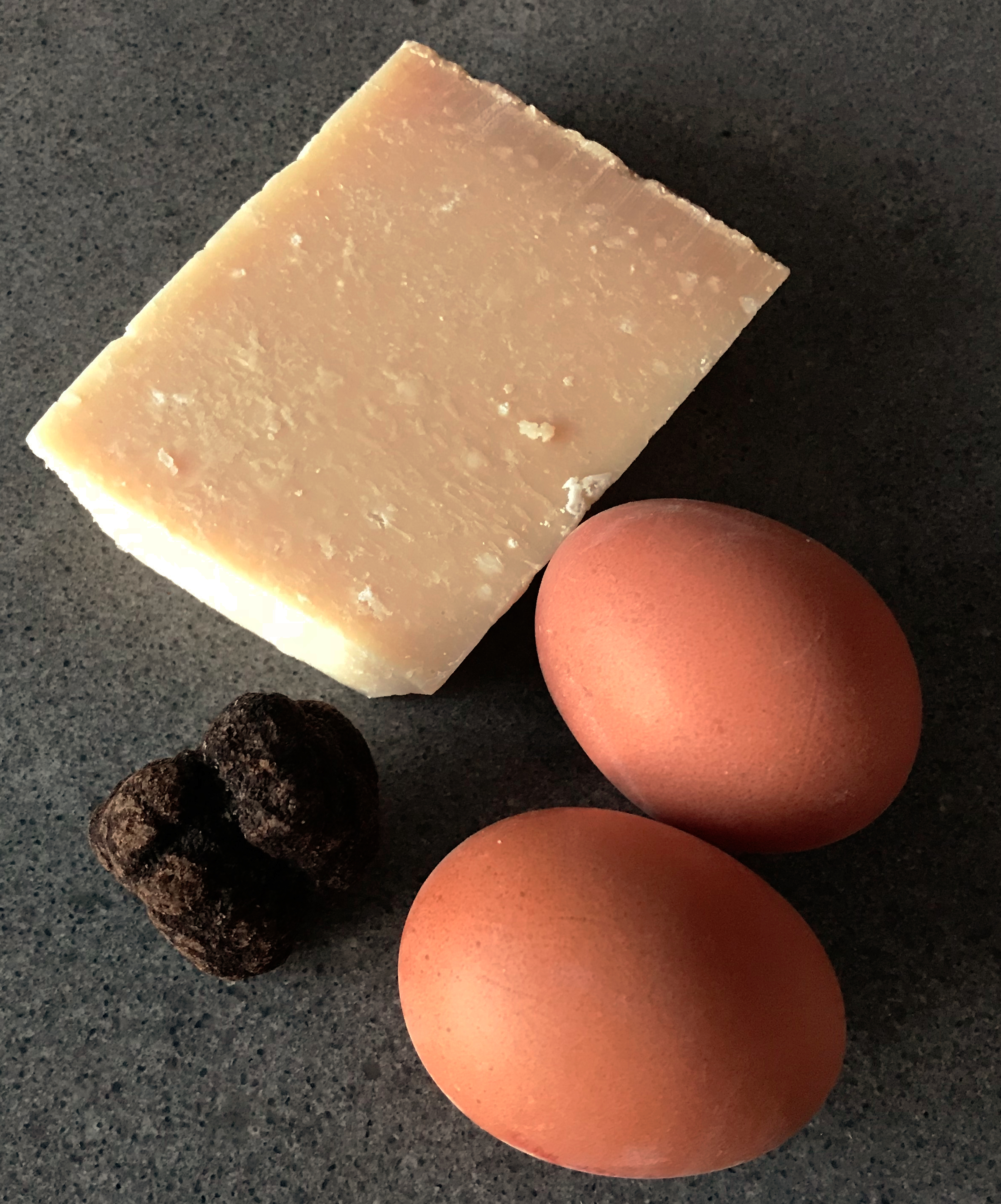
Black truffles combine really well with a warm purée of potatoes, with scallops, risotto and everything eggs. We used our truffle to make one of the simplest and tastiest truffle dishes ever: an omelet with truffle and Parmesan cheese.
If you store a black truffle for a day or so, then please store it in a small box with some rice and an egg. The rice will prevent the truffle of becoming wet and the egg will embrace the aromas of the truffle and become a treat in its own right.

Wine Pairing

A not too complex white wine goes very well with this omelet, best would be a classic Pinot Blanc or Riesling from the Alsace region (for instance produced by Kuentz-Bas). Think fruity aromas, floral characteristics, minerality and a touch of acidity and sweetness.

What You Need

  • 2 Eggs
  • Butter
  • Parmesan Cheese
  • 10 grams or (budget permitting) more Black Truffle
  • White Pepper

What You Do

Clean the truffle if necessary. Take a fairly small iron skillet and make sure the pan is warm through and through but not hot. Using a fork (a spoon is even better) whisk the two eggs together. Add butter to the pan and wait until it is melted. It should not change colour or sizzle. An omelet should not be fried; the bottom must remain yellow. Add the whisked egg to the pan and wait until the egg is beginning to set. Check the consistency with your fingers. There is no alternative to baveuse! Take your time.
Serve the omelet on a warm dish with some freshly grated Parmesan cheese, white pepper and grated black truffle.

Jerusalem Artichokes

So much to tell about this plant! It originates from North America (so nothing to do with Jerusalem), its flowers are beautiful and resemble sunflowers, its tuber contains inuline (hence the sweetness) and the taste does make you think of artichokes. Other names include earth apple, topinambour (such a mysterious name!) and sunroot. Once a popular, cheap, nutritious vegetable, now nearly forgotten.
Most people cook or steam the tuber and turn it into a mash. Works well, especially when you add some excellent olive oil or some crème fraiche. Jerusalem Artichokes only contain a very limited amount of starch, so you could use a blender, but we prefer using a fork and passing it through a sieve because the mash becomes glue easily. A better idea is to quarter the Jerusalem Artichokes and cook them gently in olive oil with nutmeg, onion and garlic. When nearly ready add a glass of white wine and some stock, reduce the liquid and serve as a stew.
Jerusalem Artichokes can be used in many ways, you can eat them raw, use them as a basis for a soup, combine them with other seasonal vegetables in the oven, et cetera. We treated them as potatoes and served them with excellent beef and Brussels sprouts.

Wine Pairing

Your choice of wine is of course much influenced by the way you prepare the tubers and what you serve with them. In our case we suggest a Valpolicella Ripasso: red fruit, cherries, not too much tannins, fresh and zesty. Works very well with the sweetness of the Jerusalem Artichokes and the slightly nutty taste of the Brussels sprouts. Or should we say the slightly nutty taste of the Jerusalem Artichokes and the sweetness of the Brussels sprouts?

What You Need

  • Jerusalem Artichokes
  • Olive Oil
  • Butter

What You do

Wash the tubers and steam them for 20 minutes or so, depending on the size. You could also cook them, but be careful since they overcook easily. Another option is to put them in the oven for an hour or so on 80° Celsius or 175° Fahrenheit (for instance when you are preparing Choucroute). Let cool. Peel and slice the tubers. Warm a non-stick pan, add olive oil and perhaps some butter. Fry the slices gently. Take your time and watch carefully, the fructose in the Jerusalem artichokes burns easily.

Jerusalem Artichokes ©cadwu

Chioggia Beet Salad

An elegant Starter

What better way to start a nice long dinner than a dish that is light, colourful, surprising and refreshing? A Consommé of Yellow Tomatoes for instance? Or Scallops with Winter Truffle? Or would you prefer a salad made with Bietola da orto tonda di Chioggia? Sounds exotic, but actually it’s a salad made with Chioggia beet: a delicious beet with deep pink and white spirals. It originates from Italy or, to be more precise, from the coastal town of Chioggia, not far from Venice. When cooking the beet its colours fade, creating an even more enticing dish.

Another forgotten vegetable that is worth remembering when you do your Christmas shopping.

Wine Pairing

The dressing comes with firm acidity, balanced by the sweetness of the beet and the spring onion. Wine pairing is a not straightforward because of this combination. Our suggestion would be a Sauvignon Blanc. We enjoyed a glass of Domaine La Tour Beaumont Haut-Poitou Sauvignon Blanc 2019. It has clear fruity and citrus notes and it is well balanced with a good combination of freshness and roundness.

What You Need

  • One Chioggia Beet
  • Excellent Olive Oil
  • White Wine Vinegar
  • Spring Onion (or Scallion)
  • White Pepper

What You Do

The day before wash the beetroot and wrap in aluminium foil. Leave in the oven on 180° Celsius or 355° Fahrenheit for 60+ minutes. Cool and store in the refrigerator.
The next day peel the beet and use a vegetable slicer (or mandoline) to make ridges. This will not only make the dish look more inviting, it will also enhance the taste given there is more coated surface and more air when chewing it. Make a simply, relatively acidic dressing with olive oil and vinegar. Thinly slice the spring onion; best to use the green part only. Test a small slice of beet with the dressing and adjust when necessary. Perhaps some fresh white pepper? If you’re happy with the combination, toss the slices with the dressing making sure everything is nicely coated. Plate up and sprinkle the sliced spring onion on top of it.

Salad of Chioggia Beet ©cadwu

Pears (Slow Cooked)

In 1850 the Gieser Wildeman pear was created by Mr. Gieser Wildeman. The pear is hard, full of tannins and its texture is granulated. Not nice at all. However when cooked slowly, the unappealing pear turns into a red and refined pear. Its taste is sweet with a touch of vanilla. A true Gieser Wildeman will become red (through and through) without any problem, provided it’s cooked slowly.
Belle Angevine, Virulam, Black Worcester, Certeau, Sarrasin, Martin Sec and Saint Rémy (amongst others) will also do the trick although some will turn light red or pink. And perhaps you will have to add some sugar or honey to enhance the flavour.

If a pear doesn’t turn red, then you need to add port, crème de cassis or red wine. The colour of the outside will be red; the colour of the centre a disappointing white. Some people add cloves, prunes and vanilla to give additional flavour to their pears in red wine. No need for this, just buy the right slow cooking pear.

What You Need
  • Pears
  • One Cinnamon Stick
  • Water
What You Do
  1. Peel the pear and leave the stalks on
  2. Add some water to a heavy pan, add the pears and the cinnamon stick
  3. Allow to cook on low heat for at least 6 hours
  4. We cooked ours for 8 hours
  5. Cool and serve, perhaps the next day, for instance with home-made vanilla ice cream

Cèpes à la Bordelaise

Porcino, Steinpilz, Eekhoorntjesbrood, Cèpe de Bordeaux, Penny Bun, Seta (de) Calabaza, Herrenpilz: a diverse range of beautiful names referring to one of the tastiest and most common mushrooms (in Europe): the Boletus Edulis.

The French name refers to the city of Bordeaux and is linked to the classic dish Cèpes à la Bordelaise. It brings out the texture and the flavours perfectly. The standard ingredients of the dish are cèpes, (fresh of course, the dried version can’t be compared to the real, fresh mushroom), olive oil, pepper, shallot and parsley. Some people add breadcrumbs (which doesn’t add any flavour so forget about it).

The interesting aspect of the Bordelaise is that the caps and stalks are separated. The caps are cooked for some 15 minutes; the chopped stalks for 5 minutes. This is a really clever approach because the caps become very tasteful and moist, while the chopped stalks add volume and texture. The downside (we think) is that the shape of the mushroom is gone. That’s why we prefer to slice the mushroom vertically in six parts. Two slices of the side of the cap, two centres (stalk with cap) and two slices of stalk (to make the stalk-with-cap slices more even). We chop the last two slices.

Originally Cèpes à la Bordelaise is a starter, but we prefer to combine it, for instance with an omelet as a starter or with beef or fillet of deer as a main course.

Wine Pairing

This very much depends on how you serve your Cèpes à la Bordelaise. If served as a starter we could imagine a glass of Bordeaux (quelle surprise!). In general a full bodied red wine with gently fruit and present tannins will be a great choice.
With our omelet we drank a glass of Bodegas Mocén Selección Especial made from verdejo grapes. This Spanish wine has big aromas, for instance ripe tropical fruit. In the mouth it is fresh, fruity, round and balanced. Not too complex.
With our beef we enjoyed a classic Medoc: Château Moulin de Taffard with aromas and flavours of red fruit. It is well balanced, with rich, smooth tannins.

What You Need

  • For the Cèpes à la Bordelaise
    • 200 gram Cèpes (or 300 gram if you serve it as a starter)
    • Olive Oil
    • One Shallot
    • Parsley
    • Black Pepper
  • For the omelet
    • Two eggs
    • Parmesan Cheese
    • Butter
  • For the Beef
    • 150 gram of excellent Beef (we served Rib Eye)
    • Olive Oil

What You Do (Cèpes à la Bordelaise)

Clean the mushrooms and slice. Chop the remainder of the stalks. Chop the shallot and the parsley. Add olive oil to a relatively hot heavy iron skillet. Reduce the heat and fry the caps and centre slices of the mushrooms for 5 minutes. Turn and fry for another 5 minutes. Add the chopped stalks and the shallot. Cook on medium heat for 5 minutes. Stir gently, making sure the chopped stalks are nicely coloured. Add chopped parsley, stir and add fresh black pepper. Serve on a warm plate.

What You Do (Omelet)

Whisk the two eggs and add a bit of fresh Parmesan Cheese. Warm a very small heavy iron pan (or a non stick pan if that’s what you prefer) add the mixture and let it set on low heat. This could easily take 10-15 minutes. The omelet must be moist (baveuse) and the bottom may not be colored.
Quarter the omelet and serve with the Cèpes à la Bordelaise.

What You Do (Beef)

Transfer the beef from the refrigerator a few hours (not 30 minutes, that’s too short) before you start cooking. It’s important that the meat is at room temperature. Heat a heavy iron skillet, add olive oil and fry quickly. Let rest. Slice the beef and serve on top of the Cèpes à la Bordelaise.

Tellines with Parsley

Many, far too many years ago, we were walking along the Mediterranean coast, enjoying the sea, the sun and the company of a dear friend. She asked us if we would like to eat tellines for dinner. “Yes of course”, we replied, “but what are tellines?” She smiled and said “I’ll show you”. She walked to the sea and kneeled down, just where the sand and the sea meet. All you needed to do was move your fingers through the sand, just under the surface and feel. She harvested a few tellines, opened them with her fingers, washed them in the sea and that’s how we enjoyed our very first tellines. Fresh from the sea: simple, tasty and good.
We harvested many more and went back to her house where we cooked the tellines in a hot skillet and enjoyed them with a beautiful local ro­sé.

Harvesting tellines is simple; knowing where you can do this is a challenge. Fortunately you can (occasionally) find them on the market.

It’s possible to use other small clams, but the fun of tellines is that they open quickly when in the pan, making sure they remain juicy. The meat of the tellines is soft and moist and they come with a nutty, savoury flavour.

Wine Pairing

Obviously a glass of Cô­tes de Pro­ven­ce ro­sé will be a great choice, for instance an Estandon from the Var region.

What You Need

  • 300 grams of Tellines
  • one Shallot
  • one Garlic Glove
  • Olive Oil
  • Parsley
  • White Wine
  • Black Pepper

What You Do

  1. Wash the tellines, preferably using salted water
  2. Discard ones with a small hole and ones that are broken
  3. Chop the shallot (you probably need half of it) and the garlic very fine
  4. Heat the skillet, add the oil, the shallot, the garlic and the tellines and cook until the tellines are open.
  5. You may want to add a splash of white wine during the cooking process
  6. Serve the tellines on a warm plate with black pepper
  7. Sprinkle with chopped parsley
  8. No cutlery needed!