Three Winter Soups

A few weeks ago, we enjoyed a delicious vegan dinner at Lokaal, a small restaurant in the centre of Gent, Belgium. Friendly service, relaxed atmosphere and nice music. One of the specialties of Lokaal is fermentation, for instance homemade Tempeh from Bulgur. Lots of umami and length. We loved it!
Our dinner at Lokaal started with a nice winter soup made with kale and kohlrabi. We’re not the biggest fans of kale, but in this case it worked very well. The kohlrabi gave a nice, uplifting touch to the soup.

It made us think of other winter soups, like parsnip and Jerusalem artichoke soup, and parsley root soup. Ah, those forgotten vegetables! They bring us new flavours and combinations.

We used vegetable stock for all three soups. It is made with Carrot, Onion, Leek, Celery and Black Pepper (and optional a bouquet garni). Easy to make and lots of flavour. It freezes well, which makes it an even more important asset.

What You Need (Kale and Kohlrabi soup)
  • 500 ml Vegetable Stock
  • 200 grams of Kohlrabi
  • 50 grams of Kale
  • French Mustard
What You Do
  1. Clean the vegetables
  2. Devein the kale
  3. Peel the kohlrabi
  4. Coarsely chop the vegetables
  5. Warm the stock
  6. Add the kohlrabi
  7. Leave to simmer for 10 minutes
  8. Add the kale
  9. Leave to simmer for 10 minutes
  10. Use a blender to make a relatively smooth soup
  11. Add mustard to taste
  12. Serve
  13. PS The soup doesn’t keep well, so not one for the refrigerator
What You Need (Parsnip and Jerusalem Artichoke soup)
  • 500 ml Vegetable Stock
  • 200 grams Parsnip
  • 200 grams Jerusalem Artichokes
  • White Pepper (optional)
What You Do
  1. Clean, peel and coarsely chop the vegetables
  2. Warm the stock
  3. Add the vegetables
  4. Leave to simmer for 15 minutes or until the vegetables are done
  5. Use a blender to make a smooth and creamy soup
  6. Depending on the Jerusalem Artichokes the soup can become fairly thick. Add some stock if so required
  7. Taste (optional: add some white pepper)
  8. Serve
  9. PS You can also enjoy the soup the next day, it keeps well in the refrigerator
What You Need (Parsley Root soup)
  • 500 ml of Vegetable Stock
  • 200 grams Parsley Root
  • 1 small Shallot
  • ½ Leek (white only)
  • 1 small clove Garlic
  • Butter
  • Parsley
What You Do
  1. Warm butter in a pan
  2. Peel and coarsely chop parsley root
  3. Coarsely chop leek and onion
  4. Glaze onion and leek in butter
  5. Add parsley root
  6. Add garlic
  7. Leave on low heat for 5 minutes
  8. Add stock
  9. Simmer for 20-30 minutes or until the parsley root is soft
  10. Blender
  11. Pass through a sieve
  12. Simmer for 10 minutes
  13. Cool
  14. Serve the next day
  15. Decorate with chopped parsley leaves
Kale and Kohlrabi Soup made with vegetable stock. An intriguing combination. The kohlrabi gives this winter soup an uplifting flavour. ©cadwu
Kale and Kohlrabi Soup ©cadwu

Easy Mushroom Pie

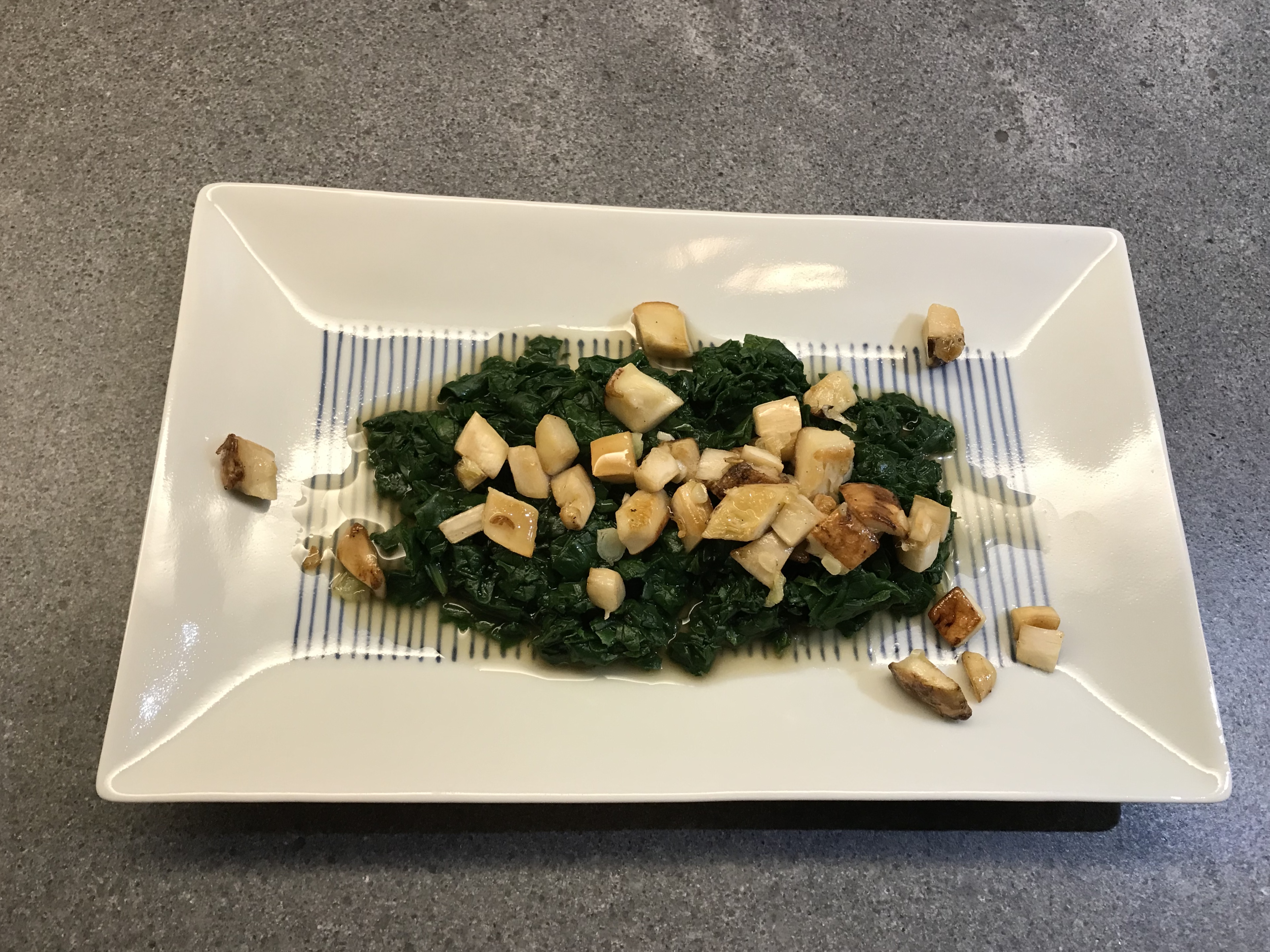
Hurray! The mushroom season has started! Last Friday we bought beautiful golden chanterelles (girolles) and white beech mushrooms (shimeji). It’s the time of year to enjoy wonderful dishes such as Cèpes à la Bordelaise or Salad with Mushrooms and Smoked Duck. Will there be bay boletes this year? Or the intriguing Japanese Matsutake? It’s been some time since we last saw these on the market, and we would really love to make Matsutake with Spinach and Ginger again.
We decided to celebrate the start of the season by making an easy Mushroom Pie, packed with rich flavours, nuttiness and a touch of autumn.

Wine Pairing

We treated ourselves to a bottle of Pinot Noir from the Elzas region, made by Sophie Schaal. She produces wine in France and South Africa. The grapes are handpicked and then naturally fermented before ageing in French oak barrels for 10 months. The result is a wine with a deep ruby colour. The aromas suggest black fruit and a touch of vanilla. The taste is well balanced with soft tannins and length.
In general, you’re looking for a wine with red fruit and refined tannins. Some earthiness will match very well with the mushrooms and the taleggio.

What You Need
  • For the Pastry
    • 100 grams of Flour
    • 50 grams of Water
    • 10 grams of Olive Oil
    • 1 gram of Salt
  • For the Filling
    • 250 grams of firm Mushrooms (shiitake, golden chanterelles, beech mushrooms, button mushrooms)
    • 1 Organic Egg
    • 50 grams of Taleggio
    • 50 ml Double Cream
    • Thyme
    • 1 small Garlic Clove
    • Black Pepper
    • Olive Oil
    • 2 slices of Bacon (optional)
What You Do
  1. Combine flour, salt, water and olive oil
  2. Kneed for a minute and store in the refrigerator for at least 30 minutes.
  3. Clean the mushrooms and slice if necessary
  4. (Optional) Fry the bacon, let dry on kitchen paper and crumble. Add to the egg mixture (step 11)
  5. Lightly fry the mushrooms in a heavy iron skillet
  6. Transfer the mushrooms to a plate and let cool
  7. After 30 minutes: preheat the oven to 180 ˚ C or 355 ˚ F
  8. Combine the egg with the cream
  9. Add lots of thyme and black pepper
  10. Add grated garlic
  11. Add the mushrooms
  12. Slice small cubes of taleggio
  13. Add the cheese to the mixture
  14. Roll out the dough with a rolling pin on a lightly floured surface.
  15. Coat a 22 cm or 9-inch round baking tin with oil or butter
  16. Place the dough in the baking tin
  17. Add the mixture and distribute evenly
  18. Transfer to the oven for 35-40 minutes or until nice and golden
  19. Allow to cool for a few minutes
  20. Remove from the tin and let cool on a wire rack
  21. Serve lukewarm
PS

It tastes even better the next day!

An easy to make mushroom pie with rich flavours
Mushroom Pie ©cadwu

Tartiflette, history and recipe

Perhaps we were thinking about Tartelette when we assumed Tartiflette was something sweet and small. But then we saw a cheese with ‘Fromage pour Tartiflette’ on its wrapping. We bought the cheese, looked for recipes and made Tartiflette. Two things for sure, it’s not sweet and not small.

In 1705 French chef François Massialot wrote Le Cuisinier Roïal et Bourgeois. According to wikipedia and others one of the recipes in this book is for Péla, a dish from the Savoie area. It’s a fairly simple dish with cheese, potatoes, bacon and onions. The dish is named after the pan in which it was prepared.
In the 1980’s too much of the local Savoie cheese Reblochon was produced and clever marketing people of the Syndicat Interprofessionnel du Reblochon created the Tartiflette, a Péla with Reblochon.

Obviously, we wanted to verify the story, so we looked for the recipe for Péla by François Massialot in the 1705 edition of Le Cuisinier Roïal et Bourgeois. No Péla. Well, people make mistakes,
Perhaps it was included in the first edition, published in 1691?
No, it wasn’t.
Maybe he added the recipe later?
We checked the index of the renewed 1728 edition: no Péla.

Did François Massialot write about Péla? Probably not.

Péla was (as is Tartiflette) a simple dish which makes it an unlikely candidate for royalty and bourgeois. Furthermore in those days potatoes had a bad reputation, they were seen as ‘coarse, insipid and the cause of flatulence’ (according to Barbara Ketcham Wheaton, in Savoring the Past). Not something you would happily serve to your king (and survive).

Back to the Tartiflette. It’s a tasty combination of bacon, onions, potatoes and reblochon, probably a modernized and commercialised version of an existing dish from the Savoie area, but nevertheless delicious.

Wine Pairing

An aromatic, white wine with clear acidity will go very well with the dish. It will add freshness to the combination. We decided to enjoy a red wine, one with supple tannins, medium bodied. Our choice was a glass of Château Margilliere Bastide, a wine from the Var region in France, made with grapes such as syrah, cabernet franc and grenache. A well-balanced red wine, with notes of cherries, gentle acidity and a touch of spiciness. Great with all ingredients of the tartiflette.

What You Need
  • 250 grams of firm, yellow, waxy Potatoes (Annabel, Charlotte, Ratte, Amandine)
  • 150 grams of diced (lightly smoked) Bacon
  • one large Onion
  • one Reblochon (or a piece of Morbier)
  • Olive Oil
  • Black Pepper
  • Nutmeg
What You Do
  1. Peel and slice the onion.
  2. Peel and dice the potatoes, same size as the diced bacon.
  3. On medium heat, fry bacon and onions for a few minutes.
  4. Add the diced potatoes.
  5. Preheat the oven to 200 °C or 390 °F.
  6. After 5 minutes the potatoes should be softer, but not yet ready. Duration depends on the type of potato.
  7. Transfer the mixture to a bowl and allow to cool somewhat.
  8. Halve the cheese.
  9. Coarsely chop one halve and add to the mixture. Combine. Add black pepper and nutmeg.
  10. Transfer the mixture to an oven dish.
  11. Halve the remaining cheese and put these two pieces on top of the mixture, skin side up.
  12. Leave in the oven for 20 minutes or until golden.
PS

François Massialot is well known for the introduction of Crème Brûlée.
True?
Yes! See page 219 of the 1693 edition.

Scallop Gratin

Scallops (or Coquilles Saint-Jacques) are a seasonal product. In France they are available from October 1st until May 15th. In Nantucket the season runs from November 1st through March. Perhaps your fishmonger sells scallops all year round. Most likely they were frozen which massively impacts the flavour and texture. Scallops must be fresh. If possible, buy them in their shell (opening them is not difficult, cleaning them can be a bit messy, this video explains more) or ask your fishmonger to do so.

Recently John Rieber and Dorothy’s New Vintage Kitchen published great recipes with Nantucket Bay Scallops. We bought French scallops from the Normandy region and prepared three dishes, one following Dorothy’s recipe, one classic gratin and one modern gratin.

Earlier we wrote about Vacherin Fribourgeois. This cheese originates from the region around the Swiss city Fribourg. It’s a semi-hard, creamy cheese made with raw cow milk. It matures for some ten weeks in a damp cellar. Its taste is aromatic, floral, full-bodied and lasting, with a touch of sweetness, bitterness and umami. Unfortunately, it’s difficult to get hold of. It can be replaced by a combination of Gruyere and Appenzeller. Emmentaler is not an option because when you melt it, it gets stringy.

Wine Pairing

We enjoyed a glass of white Macon with our Gratin de Coquilles Saint-Jacques. In general you’re looking for a fresh, round white wine, with notes of citrus and pepper, minerality and a touch sweetness.

What You Need (Modern Gratin)
  • Scallops
  • Leek
  • Vacherin Fribourgeois
  • Olive Oil
  • Black Pepper
What You Do

This is our preferred version. The dish is an interesting combination of sweetness, richness, aromas and textures. It’s fun to serve in a shell, but it makes for challenging eating. Better to serve in ramekin, which also allows you to serve three scallops per person!

  1. Thinly slice the white of a leek and leave it for 30+ minutes in a pan with olive oil on very low heat.
  2. Taste the leek, it should have just a little bite and it should still have the distinct flavour and aroma of leek.
  3. Add some black pepper.
  4. Preheat the oven to 220 °C or 430 °F.
  5. Heat a small non-stick pan and quickly colour the scallops.
  6. Add some of the leek mixture to the shell.
  7. Place the scallops on top.
  8. Add grated cheese.
  9. Transfer to the oven and serve when the cheese has melted, probably after three minutes.
What You Need (Classic Gratin)
  • Scallops
  • Shallot
  • Double Cream
  • Breadcrumbs
  • Butter
  • White Wine
  • All Purpose Flour
  • Black Pepper
What You Do

The idea is to make a sauce, combine the sauce with the scallops, top with breadcrumbs and grill until golden. Alternative ingredients include fish fumet, parsley, cheese and mushrooms. If you coarsely chop the scallops, then the scallops are more evenly spread in the sauce. 

  1. Fry the scallops quickly in a hot pan with olive oil, just to give them extra flavour and colour.
  2. Set the scallops aside, reduce heat, add finely chopped shallot to the pan and glaze.
  3. Add some butter and flour to the pan; make a roux.
  4. Add white wine, let reduce a bit, add cream.
  5. If the sauce is too thick then add some liquid.
  6. Add some black pepper.
  7. Place the scallop(s) in a shell, add sauce and top with breadcrumbs.
  8. Grill for three minutes or until golden.
PS

Yes, we serve our scallops with roe. Why discard it? The roe is flavourful and brings another texture to the combination.
Other very tasty recipes: scallops with cauliflower or with potatoes and truffle.

Parsnip

Parsley, fennel, parsnip and carrots are closely related. A purée made with for instance parsley root, fennel and olive oil is very tasty. On our local market we saw parsnip: a sweet, tasty carrot-like vegetable, already enjoyed in Roman times and native to many countries. Easy to prepare and not expensive. It combines very well with nutmeg, clove and even cinnamon.
Parsnip is rich in vitamins and minerals, particularly potassium. Parsnip is supposed to be healthy (various antioxidants and fibers).
It was one of the forgotten vegetables, but fortunately parsnip is becoming more available, also in supermarkets. It can be eaten cooked, grilled, fried and raw. How about a parsnip salad with potatoes and mackerel? (Watch Belgian chef Jeroen Meus prepare this dish, video in Dutch).
We decided to fry parsnip in olive oil. Doesn’t it look amazing?

Wine Pairing

We served our fried Parsnip with excellent beef. Thinking of the combination we decided to enjoy a glass of red wine from the Bordeaux region. In general, we suggest a red wine with aromas of dark fruit. A medium bodied, balanced wine with a fruity finish and soft tannins. Perhaps a touch of oak.

What You Need
  • Parsnip
  • Olive Oil
  • Black Pepper
What You Do
  1. Heat a pan, add olive oil, peel the parsnip, slice and fry in oil.
  2. The sugar in the vegetable will give the slices a golden colour within minutes, so keep your eye on the pan.
  3. Serve the parsnip with some black pepper.

Helianthus with Blue Cheese

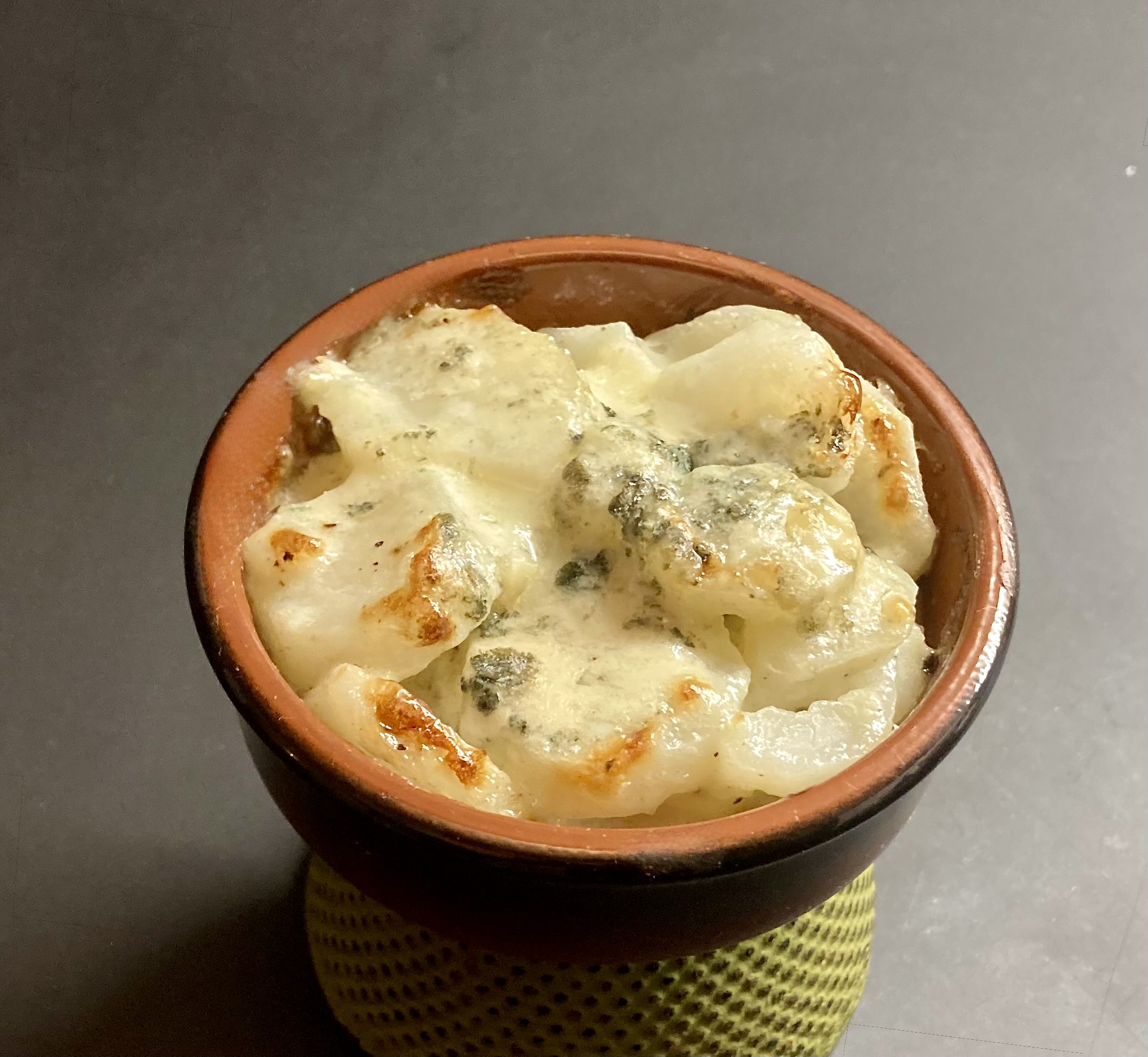
Always fun to shop at our organic supermarket and see what forgotten vegetables they have. This week they offered oca, Jerusalem artichoke (Helianthus Tuberoses), parsnip, black radish and helianthus, which was new to us. We bought a few of the helianthus roots and when at home we started thinking about ways to prepare them. Both Jerusalem artichoke and the helianthus roots are a touch sweet and nutty. A purée perhaps? We then noticed a recipe for a tartelette with blue cheese. Great idea, but not so sure about the combination with pastry. After a few minutes we came up with the recipe below. The helianthus roots are creamier than the Jerusalem artichokes and this worked very well in the combination with blue cheese and crème fraîche.The dish is rich with a touch of freshness.

Wine Pairing

In general, we suggest a full bodied, well balanced red wine, with aromas of black fruit, perhaps liquorice and with supple tannins. 

What You Need
  • Roots of the Helianthus Strumosus
  • Crème Fraîche
  • Roquefort
What You Do

Clean the roots and cook in boiling water for perhaps 5 minutes. They become soft very quickly. Drain and let cool. In parallel use a fork to combine equal parts of crème fraîche and Roquefort. Slice the roots and combine with the mixture. Place in ramekins and transfer to the oven at 200 °C or 390 °F for a few minutes, until hot and golden. You can also place them under the grill for a few minutes.

PS

Interested? Find out more about forgotten vegetables!

More PS

As Dorothy suggested (see below) it’s a great idea to fry or roast them with onions. We also added some garlic. Delicious!

Tuberous Chervil

Earlier we wrote about mashua and oca, two forgotten vegetables. This week we enjoyed tuberous chervil, another forgotten vegetable, also known as turnip chervil and bulbous chervil. Popular throughout continental Europe in the 19th century, but now hard to find. The tubers we bought had a length of approximately 4 cm and a thickness of 2 cm. They are white on the inside. The tuberous chervil is very tasty, easy to prepare, and its flavour will make you think of chestnuts, without a hint of bitterness.
As more often, these winter vegetables were replaced by potatoes: cheaper, easier to handle and easier to grow.
The ‘chervil’ in the name does not mean it’s the tuber of the chervil plant (like parsley and parsley root are related). It’s included because the leaves of tuberous chervil (see picture below) look like the leaves of chervil. The two are not at all related.
According to some sources tuberous chervil can be eaten raw. We tried it, of course, and yes, edible, but not great. We prefer to turn the tubers into a purée, with cream, butter and nutmeg. We combined the purée with lamb chops and with scallops. The second combination didn’t work, as if bringing the two together diminished the individual flavours. The first combination was delicious, the sweetness of the meat with the chestnut flavour, the freshness of the puree with the fatty lamb.

Wine Pairing

We enjoyed a glass of red wine from the Bordeaux region with our purée and lamb, produced by Château Picon. A very nice, affordable wine, with some dark fruit and acidity. In general, we suggest a not too complex red wine, made with for instance cabernet sauvignon and/or merlot grapes.

What You Need
  • 250 grams of Tuberous Chervil
  • Butter
  • Cream
  • Nutmeg
  • Black Pepper
What You Do

If the tuberous chervil are young and fresh, you don’t need to peel them. The ones we bought were a bit older, so we peeled them. Wash and cook for 5-10 minutes until soft. Drain. Mash using a fork, add butter and cream. Use a spoon to make the purée. The tubers love both, so you will probably need to add a bit more than expected. Keep warm on low heat, add black pepper and freshly grated nutmeg to taste. Quickly fry the lamb chops, add lots of herbes de Provence or a combination of thyme and oregano and serve with the purée.

Spicy Pumpkin Soup

It’s the time of year to enjoy simple, seasonal, rich and flavourful food, for instance spicy pumpkin soup. The trick in this case is in the coconut milk or cream. Coconut milk contains something like 15 grams of fat per 100ml. For this soup you need 25+ grams of fat per 100ml. The fat enhances the coconut flavour and it combines very well with the spicy and aromatic character of the soup (ginger, chili, djeroek poeroet).

What You Need (for 4)
  • Small Pumpkin
  • Large Shallot
  • 2 large Garlic Cloves
  • 4 cm Fresh Ginger
  • Chili Pepper
  • Olive Oil
  • 8 leaves of Djeroek Poeroet  
  • Coconut Cream
  • Cilantro
What You Do

Wash the pumpkin and chop. If the pumpkin is organic, then you don’t need to peel it. Peel and chop the shallot, garlic and the ginger. Ground dried chili pepper. Gently fry the shallot in olive oil. Add chilli pepper. Add ginger. Stir, mix and add pumpkin. Stir and add garlic. Now add the vegetable stock, the djeroek poeroet and allow to simmer for 30 minutes. If the pumpkin is soft, remove the djeroek poeroet and blender the mixture. Taste and adjust. Add 6 spoons of coconut cream, 1 by 1, mix and taste. When you’re happy with the flavours, leave the soup on low heat for 15 minutes. Serve with lots of chopped cilantro.

Spicy Pumpkin Soup ©cadwu

Burdock

Wintery weather in Amsterdam, cold and sunny. Time to enjoy some seasonal vegetables, such as beet root, fennel, leek, kale, turnips and Brussels sprouts. Our favourite vegetable and fruit stall on the market sells Burdock. We all know about forgotten vegetables (such as rutabaga, kohlrabi, parsnips and Jerusalem artichoke), but Burdock is not one of them. It’s an ignored vegetable.
According to chef Alan Bergo in his excellent book The Forager Chef’s Book of Flora, Burdock root is delicious with a mild and slightly nutty flavour. Native in Europe and Asia, and introduced worldwide. He offers six recipes with Burdock, using the flower stalks in summer and the root in winter. One of the recipes is for Kinpira Gobō, a common side dish in Japan in which Burdock is combined with carrots, lotus root, mirin and sesame seeds. All his Burdock-dishes look delicious. Which raises the question why we don’t eat Burdock more often. 
We prepare a Japanese dish called Ume Gobō (ごぼうの梅煮) which translates to Burdock with Plums, which is basically what it is.
We served our Ume Gobō with Tamagoyaki, which turned out to be a very tasty, uplifting combination.

Wine Pairing

We enjoyed a glass of Crémant d’Alsace, produced by Arthur Metz. A very pleasant dry sparkling wine, with hints of apple, almonds and peach. Excellent combination with the Ume Gobō and the Tamagoyaki. In general, we suggest a not too complex unoaked white wine.

What You Need
  • 250 ml of Dashi
  • 1 Burdock Root
  • 3 salted Plums
  • 2 teaspoons of Mirin
  • 2 teaspoons of light, reduced sodium Soy Sauce
What You Do

Wash the burdock to remove the dirt. If necessary use a knife. Trim off the ends. Warm the dashi and slice the root in 5 cm long chunks. Quarter these lengthwise. If the root is thick, slice again. Transfer the chunks immediately to the dashi to stop the root from discolouring. Remove the pits of the plums and add one plum to the dashi. Use a cartouche to cover the vegetables. Leave to simmer for approximately one hour. By then all the liquid should be evaporated and the vegetables relatively soft. You could cook it longer if you prefer them really soft. Keep an eye on the pan, you may have to add some extra dashi.
Finely chop the remaining plums and add the paste-like substance to a bowl with mirin and soy sauce. Mix. When the burdock is lukewarm, it’s time to add the chunks to the bowl and mix.

Burdock with Salted Plums ©cadwu

Authentic Dutch Pepernoten

Today, December 5th (actually December 6th), we celebrate the birthday (actually name day) of Sinterklaas or Sint Nicolas (270-343), patron saint of children (and Amsterdam), the Greek Bishop of Myra (now Demre), currently Turkey, but living in Madrid according to Dutch tradition and arriving end of November per steamboat. He rides a white horse over the rooftops at night and can be in different places at the same time. Very confusing but it makes perfect sense to children.

His assistants, (called Pieten), carry bags with sweets and presents. They used to be Zwarte Pieten (Black Pete) but thankfully that part of the tradition has now changed significantly making the Sinterklaas festivities more inclusive. Piet has become a Sooty Piet (they squeeze down and up sooty chimneys in order to deliver presents).

The celebration is not just about presents and sweets, it is about behaviour: Sinterklaas carries a big book with information about children: who has been good (sweets, presents) and who has been naughty (spanking with the birch rod that is used by Piet to sweep chimneys or being put in a now empty bag and taken back to Spain). Now you know why most Dutch and Belgian children become nervous and restless beginning of December!

Culinary

The culinary aspect of Sinterklaas is about sweets: chocolate letters (the first letter of your name), chocolate coins, marzipan figures, chocolate frogs (in a bathing suit, obviously) and mice (both stuffed with fondant), speculaas (spiced short crust), kruidnoten (as speculaas but slightly different) and pepernoten. Both kruidnoten en pepernoten were thrown through the room, for the children to look for.
The smaller sweets were part of a ritual: in the evening you would put a shoe in front of the fireplace (or a similar apparatus, as long as it was connected to a chimney, things became challenging with the introduction of central heating) and you would sing a traditional Sinterklaas song. If possible you would put a carrot in your shoe for Sinterklaas’ horse. The next morning the sweets would be waiting for you in your shoe. Wonderful memories!

Pepernoten

If you shop these days in the Netherlands, you will see lots and lots of pepernoten. One Dutch company specialises in pepernoten and produces them in over 50 flavours. These pepernoten are actually kruidnoten. In 1593 Carolus Battus mentions Peper-coecxkens. The recipe for the original pepernoot goes back to 1756 when Gerrit van den Brenk writes a book called Volmaakte onderrigtinge, ten dienste der koekbakkers of hunne leerlingen (which translates into something like Perfect lessons for cookie bakers and their pupils). The ingredients are honey, white rye flour, potash and grinded anise seed. Dutch pâtissier Cees Holtkamp modernized the recipe, enabling us to recreate pepernoten.

What You Need
  • 50 grams of Brown Caster Sugar
  • 75 grams of Honey
  • 150 grams of White Rye Flour
  • 2 grams of Salt
  • 20 grams of Water
  • 5 grams of Baking Powder
  • 6 grams of grinded Anise Seed
  • 10 grams of Water
  • Neutral Oil
  • No Pepper (despite the name!)
What You Do

Best option is to watch Cees Holtkamp preparing pepernoten with support from his granddaughter Stella. The video comes with English subtitles. An even better idea is to buy his book Dutch Pastry. It’s available via the usual channels or order it at your local bookstore. Price is approximately 20 – 25 euro or US dollar.
Combine sugar, honey and water in a pan. Heat the mixture without boiling. Remove from heat. Immediately add flour and salt. Use a kitchen aid with hooks to make the dough. It will be very sticky and odd. Allow to rest for a few hours.
Add baking powder, anise seed and water. Kneed, cover with plastic foil and allow to rest until the next day.
Preheat your oven to 180 °C or 355 °F traditional. Make small cubes and use your hands to turn these into balls. Generously coat a baking tin with oil. We used a spring baking tin, which is not what we should have done. It is better to use a seamless baking tin. Wet your hands with oil, coat every ball with oil and add to the tin. The tin must be completely filled, so the balls must touch each other. This way you get the typical rounded-cube-shape of pepernoten. If not, add some aluminium foil to the tin. Transfer to the oven and leave for 20 minutes. Detach the pepernoten as soon as possible.

PS

We could only find whole grain rye flour, which is not suitable for this recipe. Instead, we used all-purpose flour.