Always a pleasure to serve a tartelette, with lemon, with blackberries, with raspberries or in this case with pear. The challenge is to capture the delicate flavour of the pears. Making the filling is simple and quick. Making the pastry requires much more time. Feel free to use ready-made pastry!
What You Need
Filling
Pears
Butter
Lemon Juice
Pâte Sucrée
50 grams of Unsalted Butter
40 grams of Caster Sugar
125 grams of All Purpose Flour
1 gram of Salt
1 organic egg
Water (optional)
What You Do (Filling)
Peel and core the pears
Chop coarsely
Melt the butter
Add some water
Slowly cook the pears until soft
Taste and perhaps add a drop of lemon juice
Pass gently through a sieve, without applying pressure. You want as much liquid as possible without damaging the texture of the pears
Set the pears aside and allow to cool.
Reduce the liquid until it becomes thick
What You Do (Pastry Case)
Combine sugar, flour and salt
Dice butter, add to the mixture and combine. Use a hand mixer with kneading hooks
Beat the egg and add
Use your hands to make the dough. It should not be sticky, so it must be easy to make a ball. If too dry, add just a bit of water. If too wet, add some flour
When done, remove from the bowl and wrap in kitchen foil. Store in the refrigerator for at least two hours. It can be stored for a few days.
Flour your work surface and roll out the pastry to a circle a larger than the top of the tartelette forms. The dough should be approximately 2 or 3 mm thick
Coat the forms with butter
Line the forms with the pastry. Press the pastry well into the sides and bottom. Use a knife to remove the excess dough
Cover and let rest for 30 minutes in the refrigerator
Preheat the oven to 190 °C or 375 °F
Use a fork to prick small holes in the pastry
Line the forms with greaseproof paper or aluminium foil, add baking beans and bake blind for 10 minutes
Remove the paper and the baking beans
Reduce the oven temperature to 160 °C or 320 °F
Transfer back to the oven for 5 minutes or until golden
Transfer to a wire rack and let cool
Assembling the Tartelette
When the pastry cases are completely cool, add the pears
Use a spoon to drizzle the pear-syrop on top of the pears
Juicy, sweet ripe pears, frangipane and a crunchy crust, what more can you ask for! This very tasty pear pie is not difficult to make. The only challenge is finding ripe pears. The juicer the better!
Frangipane is a classic from the French pâtisserie and was first mentioned in 1652 by François Pierre (de) La Varenne. His recipe for Tourte de Franchipanne describes a crust made with puff pastry and a filling with what we would call crème pâtissière, enriched with crushed pistachios and almonds. In her book Tarte Tatin, Ginette Mathiot includes a recipe for Strawberry Frangipane. Same approach, but with crushed almonds only.
The current Larousse Gastronomique takes a different approach by beating sugar and butter until creamy (beurre pommade in French), then adding the eggs, one at a time, and the almond flour. No cooking required. Our approach is fairly similar, we combine soft butter, sugar and almond flour and then add the beaten egg.
Obviously, the recipe provided by Varenne is for a rich sauce whereas the second method is about making a paste, which is very suitable for a Pear Pie.
What You Need
For the Crust
50 grams of White Caster Sugar
100 grams of soft Unsalted Butter
½ Egg (beaten)
1 gram of Salt
150 grams of All Purpose Flour
Cold Water (optinal)
For the Frangipane
50 grams of Almond Flour
40 grams of Sugar
40 grams of Unsalted Butter (room temperature)
One Egg
Lemon Zest (optional)
For the Filling
4 Ripe Pears (Williams, Bartlett, Conference)
For the Coating
Apricot Jam
Water
What You Do
Start by making the dough
Combine sugar and butter. Use a hand mixer with kneading hooks
When mixed, add halve of the beaten egg
Combine salt and flour
Pass through a sieve and add to the mixture
(optional) add some baking powder if you want a crispier crust)
Use the kneading hooks to mix
If the dough is too dry, add some cold water
It’s ready when the pastry comes together in a ball that doesn’t stick to the surface
When done, remove from the bowl and wrap in foil. Store in the refrigerator for at least two hours. The dough freezes well, so it’s a great idea to make a bit extra
Now make the frangipane
Combine almond flour, sugar and butter. Beat until fluffy
Add the beaten egg
Mix
(optional) Add lemon zest
Transfer to the refrigerator
Preheat the oven to 180 °C or 355 °F
Roll out the dough on a lightly floured surface and use it to line a 16 cm (6 in) tin. Best is 2 millimetres
Transfer to the refrigerator and leave for 30 minutes
Prick the pastry with a fork, to prevent air bubbles forming during baking
Add the frangipane to the pastry case and spread evenly
Peel and slice the pears, add on top of the frangipane
Transfer to the oven for 30 – 40 minutes or until golden
Use a fork to combine apricot jam and water, ratio 4:1
Warm the apricot mixture
When the pie is still warm, coat with the apricot mixture
PS
We made the crust with pâte sucrée, or sweet shortcrust pastry. The result is a flaky, crumbly crust. You could also use (ready-made) puff pastry or pate sablée. Adding a few grams of baking powder is an option when you want a lighter, crispier crust.
When we first saw a recipe for frangipane with pistachios, we wondered if that would be a good idea. Now that we have read the 1652 recipe, we will definitely give it a try.
Earlier we wrote about Tarte au Citron, or Lemon Pie. This is a recipe for a Tartelette au Citron, a small but very different pie. The filling is lemon curd, which you add to the pastry case just before serving. You can easily make both components a day ahead. The crunchy, slightly sweet pastry case and the soft, rich, tart filling go together very well. You could decorate the tartelette with meringue or chocolate sprinkles, but we prefer them as they are. Great with a strong cup of coffee.
What You Need
Pâte Sucrée
50 grams of Unsalted Butter
40 grams of Caster Sugar
125 grams of All Purpose Flour
1 gram of Salt
1 Organic Egg
Water (optional)
Curd
65 ml of Lemon Juice
65 grams of Unsalted Butter
80 grams of Fine Sugar
One Organic Egg
What You Do (Curd)
Beat the egg
Melt the butter
Combine all ingredients.
Cook Au Bain Marie until you have the right consistency.
Or transfer to your microwave, put it on 50% or 70% power (depending on your microwave) and heat with intervals of 20-30 seconds. Mix between the intervals. This is a very precise way of heating the mixture and it gives you full control over the process. Towards the end of the process, you may want to reduce the power or shorten the intervals. The percentage and the duration of the intervals depend on your microwave and the bowl you use.
Set aside and allow to cool.
Transfer the curd to the refrigerator. It will keep for a few days.
What You Do (Pastry Case)
Combine sugar, flour and salt.
Dice butter, add to the mixture and combine. Use a hand mixer with kneading hooks.
Beat the egg and add.
Use your hands to make the dough. It should not be sticky, so it must be easy to make a ball. If too dry, add just a bit of water. If too wet, add some flour.
When done, remove from the bowl and wrap in kitchen foil. Store in the refrigerator for at least two hours. It can be stored for a few days.
Flour your work surface and roll out the pastry to a circle a larger than the top of the tartelette forms. We used 8 cm or 3 inch (quiche-) forms. The dough should be approximately 2 or 3 mm (0.1 inch) thick.
Coat the forms with butter.
Line the forms with the pastry. Press the pastry well into the sides and bottom. Use a knife to remove the excess dough.
Cover and let rest for 30 minutes in the refrigerator.
Preheat the oven to 190 °C or 375 °F.
Use a fork to prick small holes in the pastry.
Line the forms with greaseproof paper or aluminum foil, add baking beans and bake blind for 10 minutes.
Remove the paper and the baking beans.
Reduce the oven temperature to 160 °C or 320 °F.
Transfer back to the oven for 5 minutes or until golden
Transfer to a wire rack and let cool.
When the pastry cases are completely cool, add the curd and serve
Today April 26th, we celebrate the birthday of the King Willem-Alexander of the Netherlands. Well actually, his birthday is tomorrow, but you can’t have a party on a Sunday, can you? The Dutch royal family is also known as ‘de Oranjes’, which is reflected in the use of the colour orange when referring to Dutch royalty. There is no real link between the royal family and the colour. The ‘orange’ in their name refers to the French city of Orange, a Principality one of his ancestors inherited in 1544. Over the years we prepared Orange Sabayon, Queen’s Soup, Orange and Almond Cake, Bouchée à la Reine, Orange Flan, Canard à l’Orange and Baba au Mandarine Napoléon on this day.
Today we finally have nice weather in the Netherlands, so let’s prepare something very special: a parfait of orange. The recipe we followed was published by Jeroen Meus, a well-known Belgian chef. He was inspired by Bernard Pacaud, a French chef who owns restaurant l’Ambroisie in Paris, awarded with three Michelin Stars.
Perfect
A (French) parfait is an ice cream made without churning, so no need for an ice cream maker. In this case the mixture is poured into an empty orange and frozen. One of the components of a parfait is the combination of egg yolks and sugar, beaten until ruban. This means that the mixture has become pale yellow and soft. It should resemble Greek yoghurt. The beaten egg whites will add lightness, as they do in mousse au chocolate. Then it’s a matter of richness (cream), flavour (coffee, orange, mango, passion fruit et cetera) and sugar. Making a parfait requires a number of parallel actions, but with the right mise-en-place it’s not difficult (although, to be fair, our kitchen was a bit of a mess).
Orange Parfait
The orange parfait as prepared by Jeroen Meus is a combination of:
Whipped Cream
Cooked Cream flavoured with Orange Peel
Whipped Egg White
Orange Juice
Mandarine Napoléon
Egg yolks and Sugar (beaten until ruban)
Gelatine
A salad of Oranges and Blood Grapefruit
Details can be found on the website of Jeroen Meus, including a helpful video (in Dutch).
There is so much fun and creativity in baking! Just think about the aromas in your kitchen when you bake an apple pie, the positive vibes when you transfer it to a plate, the joy when sharing and eating it. Baking can also be challenging, just think about techniques as tempering chocolate, but this apple pie is really simple. No spectacular ingredients and no complex skills required. Serve it with a cup of tea or coffee or as a dessert, perhaps with vanilla ice cream.
What You Need
The quantities depend on the size of your baking tin.
(tart) Apples
Cinnamon
Butter
Sugar
Puff Pastry
What You Do
Place butter in a pan and melt
Peel, core and chop apples.
Add apples, cinnamon and sugar to the pan
Cook for 20 – 30 minutes, stirring from time to time
The compote should not be runny, perhaps you need to reduce
Allow for the compote to cool (room temperature is fine)
Preheat oven to 200 °C or 390 °F
Line a baking tin with puff pastry.
Use a fork to poke holes in the pastry
Peel, core and slice apples
Add compote to the baking tin, covering the bottom
Add the sliced apples
Bake until golden
PS
Best is to use apples such as gala, granny smith, jonagold or braeburn. It may take a bit longer to make a compote with these apples, but they remain nice and firm when baking the pie. Don’t use vanilla as ingredient of the compote. We feel it deteriorates the flavour of the apple. Cinnamon and sugar will be perfect. If buying readymade (frozen) puff pastry, make sure it’s made with flour, butter, water and salt only.
A sweet pie with vegetables, Parmesan cheese and black pepper? It does sound a bit odd but actually the pie is very tasty and the savoury ingredients support the sweet character of the pie. The pie is made with Blette, also known as SwissChard, LeafBeet, SilverBeet, SpinachBeet, Bietola (Italy), Bléa (France), Acelga (Spain), Krautsteil (Germany, Switzerland) and Snijbiet (the Netherlands). Once a popular vegetable, it can be hard to find or expensive. When preparing a savoury Tourte de Blettes we used Water Spinach (also known as Kang Koen or Ong Choy) which is a very popular vegetable in Asia. The leaves have lots of structure and the (hollow) stems are tasty and crunchy.
As you would expect with a classic pie like this, recipes vary, Very often the tourte is made with sweet shortcrust pastry (butter, eggs, sugar and sometimes orange blossom water). The filling contains chard, Parmesan cheese, sugar, eau de vie, raisins, eggs, apples and pine nuts. We’re not keen on using pine nuts, so we didn’t add these to our filling. We thought it would be nice to add the orange blossom aroma to the filling, not to the pastry.
What You Need (Pastry)
50 grams of White Caster Sugar
100 grams of soft Unsalted Butter
½ Egg (beaten)
1 gram of Salt
150 grams of All Purpose Flour
Cold Water (if the pastry is dry)
What You Do
Adding egg to the dough makes its flavour richer and easier to handle when lining the baking tin. Start by combining the sugar and the butter. Use a hand mixer with kneading hooks. When mixed, add halve of the beaten egg. Combine salt and flour. Pass through a sieve and add to the mixture. Use the kneading hooks to mix. When done, remove from the bowl and wrap in foil. Store in the refrigerator for at least two hours. The dough freezes well, so it’s a great idea to make a bit extra.
What You Need (Filling)
500 grams of Chard
Handful of Raisins
25 grams of Parmesan Cheese
50 grams of Sugar
1 or 2 teaspoons of Orange Blossom Water
Black Pepper
1 Egg
Olive Oil
½ Sour Apple (Bramley, Goudrenet)
What You Do
Wash the chard, remove and discard the stems.
Coarsely slice the leaves.
Whisk the egg.
Soak the raisins for 15 minutes in water (or rum). Pat dry.
Peel and slice the apple into small cubes.
Combine chard, raisins, grated cheese, sugar, orange blossom water, black pepper and a splash of olive oil. Be generous with the black pepper and the cheese. Mix.
Add the beaten egg and mix.
Divide the pastry in two.
Line a baking tin with the pastry, prick holes in the pastry using a fork (docking).
Add the filling, sprinkle with apple cubes, top with the remaining pastry and close.
Prick holes in the pastry. Or apply the method of Cornish pasty, as we did.
Bake in the oven at 180 °C or 355 °F for 30 minutes.
Allow to rest on an oven rack.
Best to be enjoyed the next day, so you must be a little patient.
Dust with icing sugar.
PS
We must admit we took a short cut by using readymade Pâte Brisée. This is shortcrust pastry, without sugar. Perhaps it’s a good idea to reduce the amount of sugar in the pastry or skip it all together!
The cookbook review project hosted by Bernadette has come to an end, unfortunately! It was inspiring to read cookbooks from chefs that were new to us, like Patricia Wells and Nagi Maehahi. It was fun preparing dishes for our esteemed panel and sharing their views with you. Thank you so much Bernadette, for running the project!
Our suggestion to the cookbook review team was a book mentioned by Sheree: José Pizarro’s book Basque: Spanish Recipes from San Sebastián & Beyond, published in 2016. It’s a beautifully designed and edited book with a range of diverse dishes, for instance Veal Chops with Black-Eyed Peas, Pan Fried Cèpes with Egg Yolk and Cream Cheese Ice Cream with Blackcurrant and Camomile Syrup. The book is recommended by Claudia Roden (‘José Pizarro is an amazing cook who has brought us the best of Spanish food’) and Rick Stein (‘José’s recipes take us to the very heart of the best Spanish cooking’).
José Pizarro was born in the Extremadura region in Spain. Currently he owns seven restaurants in the UK and one in Abu Dhabi. He published six Spanish cookery books, received various awards and is often credited with making Spanish food popular in the UK.
We decided to make two dishes from the book, Grilled Octopus with Peppers and Aubergine and Roasted Lavender Peaches with Baked Custard. As a main dish we served Pork Belly with Sherry, Chickpeas and Chestnuts, following a recipe published in the Guardian. Our panellist Jan and Anton were happy to provide their feedback.
The starter: Anton mentioned the octopus was tasty, with the right texture and nicely grilled. Jan was also pleasantly surprised by the octopus and its flavours. We all felt the dish as a whole could do with a bit more flavour and some acidity. We also expected the parsley oil to bring the various components together, but that didn’t really happen.
We enjoyed our starter with a glass of Portuguese Vinho Verde, made by Cazas Novas. It comes with floral and fruity notes, has some acidity and a medium body with a good texture and a fresh aftertaste. In general, you’re looking for a wine with freshness, minerality and some acidity.
The dish with the pork belly strips was nice. Jan would have preferred the pork to be crispy. Perhaps prepare the stew and the pork separately? Anton enjoyed the chickpeas in the rich combination with sherry, onions, spinach and thyme. Surprisingly flavourful.
The recipe suggests leaving the pot in the oven for 30 to 40 minutes. The next day we decided leaving the leftovers in a warm oven for a few hours. The result was a very nicely integrated stew; a tribute to all ingredients. Next time we will prepare the vegetables a day ahead with some of the pork, perhaps allow for more time in the oven and serve with crispy fried pork. We enjoyed the dish with a glass of Portuguese red wine, produced by Vidigal. The wine is made with aragonez, castelão and cabernet grapes. The wine has a nice red colour and aromas of fruit and herbs. Its taste is light, with some tannins and a touch of oak. In general, you’re looking for a smooth, easy to drink red wine with character.
Time for dessert. Peaches with Lavender? Four peaches and a tablespoon of lavender? Served with custard? We were intrigued. We looked at the list of ingredients and noticed Patxaran, a sloe flavoured liqueur from the Basque country, normally served as a digestif. Even more intriguing.
The combination of peaches, lavender, patxaran and custard was a winner. One night we served it with vanilla ice cream, which was a nice and tasty combination. We served our panel the peaches with home-made custard, following the recipe of José Pizarro. It’s a delicious combination. Rich, smooth, silky custard with uplifting, sweet and aromatic peaches. The sauce is a mixture of honey, patxaran and peach juice. Like us you would probably expect the lavender to be over the top, but it worked brilliantly. A winner! Our panel was very pleased and enjoyed the combination. “Lovely custard, great way to prepare peaches, interesting how the lavender is supporting the fruit, present, never overwhelming, could I have another glass of patxaran?” Of course you can!
Bernadette final review-question was: should this book be on your shelf? Our answer would be yes, because of the inspirational recipes, the use of ingredients and the beautiful pictures of food and the Basque country.
Basque: Spanish Recipes from San Sebastián & Beyond is available via your local bookshop or the usual channels for 15 euro or 40 US dollar. You can also enjoy the recipes José Pizarro publishes on a monthly basis in the Guardian.
Far Breton is a delicious dessert from the French region Bretagne. Originally there are two versions of Far: a savoury one with buckwheat, butter, milk, eggs, salt and lard (to be served as a side dish) and a sweet one with wheat flour, butter, milk, eggs, sugar and (optional) raisins. The savoury version is a component of the traditional dish Kig ha Farz (meaning ‘meat with far’). The sweet version is better known and nowadays made with prunes, preferably Pruneaux d’Agen. Easy to make and always a pleasure to serve.
Mirabelle (plums) are a speciality from the French region Alsace-Lorraine. The fruit is relatively small, sweet and full of flavour. Often used to make jam or eaux-de-vie. The season is fairly short (a few weeks in August and September only). When you see Mirabelle plums at your greengrocers, then don’t hesitate and buy them. Enjoy them as they are or turn them into Far Aux Mirabelles!
What You Need
80 grams of Plain Flour
2 organic Eggs
50 grams of Sugar
350 ml Milk
15 grams of Butter
500 grams of Mirabelle Plums
15 ml Eaux-de-Vie de Mirabelle (optional)
Butter to coat dish
What You Do
Set the oven to 170 °C or 340 °F traditional. Wash, dry and halve the Mirabelle plums. Discard the pits. Add butter to the milk and heat until lukewarm and butter dissolved. Combine flour and sugar. Add one beaten egg and mix. Add the second beaten egg and mix. Add the milk and whisk until you have a smooth batter. Coat the baking dish with butter, add the halved Mirabelle plums and the batter. After 40 minutes increase the heat to 190 °C or 375 °F and fan forced for 5 minutes. We prefer the far to be beautiful golden brown even though it seems that a Far Breton is supposed to be much more browned. Enjoy the far lukewarm as a dessert or the next day cold with a cup of coffee. No need to dust with icing sugar.
PS
Perhaps you recognize the combination of ingredients. The Far Breton is indeed similar to Clafoutis and Flaugnarde. Far is supposed to be denser than Clafoutis, originates from Bretagne and is made with prunes, whereas Clafoutis originates from the Limousin and is made with cherries. And Flaugnarde? With apricots? Oh well, let’s simple enjoy these easy to make and delicious desserts.
On April 27th, we celebrate the birthday of the King Willem-Alexander of the Netherlands. The Dutch royal family is also known as ‘de Oranjes’, which is reflected in the use of the colour orange when referring to Dutch royalty. Actually, there is no link between the royal family and the colour. The ‘orange’ in their name refers to the French city of Orange, a Principality one of his ancestors inherited in 1544.
Over the years we prepared Orange Sabayon, Queen’s Soup, Orange and Almond Cake, Bouchée à la Reine, Orange Flan and Canard à l’Orange on this day. What better way to celebrate a birthday than baking a Baba, a flavourful and moist cake? Traditionally a Baba au Rhum (preferably with raisins or currents) is served with a syrup based on brown rum. Today we use a delicious Belgian liqueur: Mandarine Napoléon. It’s a unique mandarin liqueur, made from macerated Sicilian mandarins and cognac. It was originally created in 1892 by Napoleon’s physician. Rich, long, intense en delicious!
What You Need
10 large Baba’s
4 grams of dried Yeast
100 ml Milk
15 grams of Sugar
200 grams All Purpose Flour
2 Egg Yolks
2 Eggs
100 grams of Butter
80 grams of chopped Candied Orange Peel
2 grams of Salt
Butter to coat the moulds
Finely chopped Candied Orange Peel
Syrup
500 ml of Water
200 grams of Sugar
200 ml Mandarine Napoléon
What You Do
The milk should be lukewarm and the butter melted but not hot. Start by combining milk, yeast and sugar. Mix well. Add the sieved flour and mix. Now it’s time to add the eggs and the egg yolks. Use kneading hooks to mix very, very well. This may take 10 minutes. The result should be an elastic, sticky dough. Add the butter, mix and then add the salt. The dough is now even stickier. Coat the moulds with butter. Add the dough to the moulds and let rise for approximately 2 hours. They should double in size. Preheat your oven to 200 °C or 400 °F and bake for 15 minutes depending on the size. Keep an eye on the baba’s, you may want to reduce the heat after 10 minutes. In the meantime add water and sugar to a pan. Warm the mixture until nearly boiling. Stir and make sure the sugar is completely dissolved. Now add Mandarine Napoléon to taste. Leave to cool. Add an extra splash of Mandarine Napoléon to give the syrup an extra push. Allow the baba’s to cool somewhat, remove from the mould and let them soak in the syrup for a few hours, or longer. A day or two will be perfect, Sprinkle with finely chopped candied orange peel and serve at room temperature.
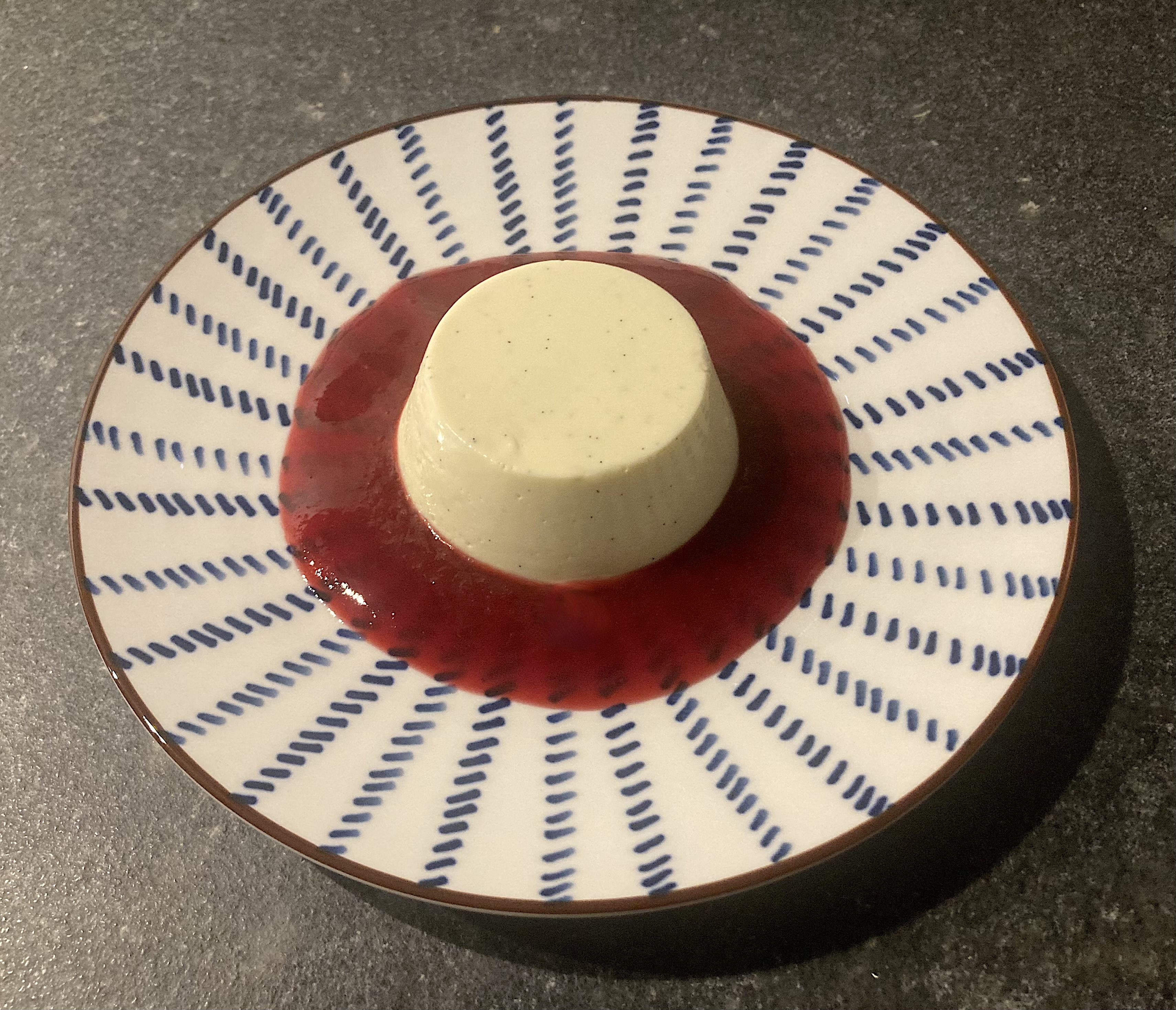
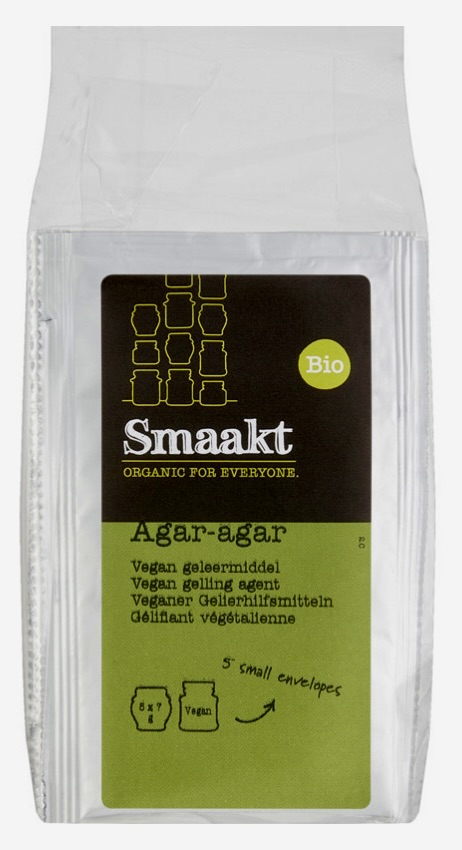
A few days ago Suzanne’s Mom wrote about Piper McAloon. At 17 she became Pastry Chef at Foglia, an award-winning plant-based restaurant located in Bristol, Rhode Island. A truly inspiring story! When asked what she is making right now, she mentionedPanna Cotta. At Foglia she makes a gluten-free version with agar. Which was something we wanted to do for a long time. We love Panna Cotta, but using gelatine (made from animals from the meat industry) is far from ideal. Agar is made from the cell walls of red algae. Popular throughout Asia and fortunately also available where we live. We served our Panna Cotta with a coulis of red berries. Very tasty, but was it a real Panna Cotta? It didn’t seem as creamy as the version with gelatine. The texture was certainly different. The version with gelatine was smoother and firmer; more how we think panna cotta should feel in your mouth. We were happy with the result, but we’re not sure if we will use agar next time we’re preparing Panna Cotta. To be continued!
What You Need (for 4)
500 ml fresh Cream
1,5 grams of Agar (powder)
1 Vanilla Bean
30 grams of Sugar
What You Do
Add the agar, the seeds of the vanilla bean and the sugar to the cream
Mix very well, the agar must to be completely dissolved
Bring to the boil on slow/medium heat
Stir frequently
Keep close to boiling for 1 or 2 minutes
Continue stirring
Transfer to a water bath with cold water
Cool the liquid somewhat before filling the forms. This is where you need to be careful. Gelatine gels at a lower temperature than agar. You need to transfer the mixture when it’s relatively warm
Use silicone molds; they work very well panna cotta
Let cool and then store in the refrigerator
Don’t forget to seal with cling foil, otherwise your panna cotta will absorb aromas from other food in the refrigerator.
PS
Cook the red berries in some water for perhaps 5 to 10 minutes
Transfer to a sieve and use the back of a spoon to squeeze out the liquid
Add sugar and lemon juice to taste
Reduce the liquid somewhat
Let cool
Alternatively you could also start by blending the berries. This makes squeezing out the liquid easier plus you will get a richer taste and some bitterness.


 Cook and Drink