Roasted Bell Peppers

The recipe of Peperoni alla Piemontese goes back to 1954 when Elizabeth David published it in her (third) book Italian Food. The dish is a true classic. Super simple, tasty, uplifting and a tribute to summer.  The recipe as published by Elizabeth David was popularised by Delia Smith in her TV series and her book Summer Collection, published in 1993. A helpful video is available via her website.
Bell peppers are popular in Piemonte and it seems they were originally prepared with anchovies and parsley only. It was probably Elizabeth David who came up with the idea to add tomatoes. Later others added tuna, which we think takes away the lightness of the dish. Another option is to replace the anchovies with black olives, making it a vegetarian dish.
We prefer using sweet long bell peppers. They combine very well with the flavour of the tomatoes and the juices. Delia Smith uses quartered, peeled tomatoes which helps to brings the flavours and textures together. Our alternative is a bit more work: we use tomato confit. The tomatoes are very tasty with hints of garlic, rosemary and thyme.

Wine Pairing

Enjoy the roasted peppers with a crisp white wine or rosé. If you want to spend some money, then buy a bottle of white Piemonte wine, made with the arneis grape. The wine is made in the Roero area close to the village of Canale. A wine with a bright, intense yellow colour, present aromas of ripe fruit (especially apples), very fragrant. The taste is delicate and fruity with good acidity and a long finish.

What You Need
  • 2 Sweet Bell Peppers
  • 8 Tomato Confit
  • 4 Anchovies
  • 1 Clove of Garlic
  • Black Pepper (optional)
  • Olive Oil
What You Do

Preheat your oven to 180 °C or 350 °F. Halve the bell peppers lengthwise. Slice the garlic. Chop the anchovies. Use a shallow baking dish. Add 2 tomatoes, some garlic, some anchovies and a generous amount of olive oil (and/or cooking juices of the confit) to each halved bell pepper. Transfer to the oven. The peppers will be ready in 30+ minutes. Enjoy with crusted bread. No need to serve with basil!

Miso Sauce and Asparagus

Miso is made by combining soybeans, salt and koji, a fungus that is cultivated on rice. The fermentation process may take months. Additional ingredients include (brown) rice, barley or wheat. Originally from Japan, it is now used in many other countries. In general miso is intense, salty and deep. Expect lots of umami!
In this recipe we use white miso, because of its mildness, its delicacy and because it has some sweetness. Ideal for a sauce, marinade or dressing. Red miso combines well with oily fish and hearty vegetables.
More information about miso, the manufacturing process and how to use it (including recipes by chef Nobu Matsuhisa) on the website of Hikari Miso.
When buying miso we suggest to focus on organic miso and if possible a miso with less salt. Normally miso contains 12% salt.
A starter with miso and asparagus was not on our radar until we saw the menu of Restaurant Green in Amsterdam. One of their dishes combines white asparagus with miso, wild garlic, hazelnuts and yuzu. We planned to enjoy the very last white asparagus of the season in a classic way, but why not end the season with something completely new? Unfortunately, the season for wild garlic finished a few weeks ago, so we replaced this flavourful component with chives.

Wine Pairing

A Pinot Grigio will be perfect with this dish. Light, crisp, citrus and apple. We opened a bottle of Pinot grigio produced by Zenato. An affordable wine that combined very well with both the asparagus and the sauce.

What You Need
  • White Asparagus
  • Crushed Hazelnuts
  • Chives
  • For the Sauce
    • White Miso
    • Yuzu
    • Mirin
    • Light Soy Sauce (we used Tsuyu)
    • (optional) Rice Vinegar
    • (optional) Water
    • Potato Starch
What You Do

Clean and peel the asparagus. Steam them for 10-20 minutes, depending on the size. We use our Russel and Hobbs food steamer. An essential kitchen aid for only 50 euro or US dollar. Combine 2 teaspoons of white miso with a tablespoon of mirin, a tablespoon of tsuyu and a teaspoon of Yuzu. Gently warm the sauce and thicken with some potato starch until it is silky. Now it’s a matter of tasting and adjusting. Probably add more tsuyu; perhaps add some water and/or rice vinegar. Also taste the combination with the asparagus before serving. The asparagus make the sauce milder. Serve the asparagus with the sauce. Add crushed hazelnuts. Add chopped chives.

Miso Sauce and Asparagus ©cadwu

Salad with Truffle and Asparagus

Sometimes a dish is all about seasonal products, for instance the combination of white asparagus, morels and wild garlic. Sometimes it’s about a winning combination, for instance truffle and potato, or truffle and egg. This dish has a bit of both aspects because this year the end of the Dutch white asparagus season coincides with the beginning of the summer truffle season. And since both combine very well with egg, why not make an extravagant salad?

Wine Pairing

The salad has a velvety, rich mouthfeel. You will taste subtle truffle, some bitterness and sweetness of the asparagus and a hint of acidity thanks to the mayonnaise. The salad will combine very well with a Chardonnay with subtle oak. We enjoyed our salad with a glass of Mâcon-Bussières, produced by Thierry Drouin. The white wine is made from 100% chardonnay grapes and comes with a touch of oak, aromas of apple and citrus and a rich flavour with hints of toast and butter. An excellent wine and a perfect accompaniment of the salad.

What You Need
  • 3 Eggs
  • 12 Asparagus (tips only)
  • (home-made) Mayonnaise
  • 30 grams of Summer Truffle
  • 1 or 2 teaspoons of Excellent White Truffle Oil
  • White Pepper
What You Do

Cook or steam the eggs until slightly runny. We steamed the eggs for 9 minutes. Peel and leave to cool. Steam the tips of the asparagus for 9 minutes. No need to peel them. Leave to cool. Mix two tablespoons of mayonnaise with one or two teaspoons of truffle oil. Roughly chop the eggs and crunch the truffle. Gently combine the asparagus tips, the truffle, the eggs and some white pepper with the mayonnaise. Transfer to the refrigerator for one or two hours.

Salad with Truffle and Asparagus ©cadwu

End of the Asparagus Season

Only a few days left before the end of the asparagus season on June 24th! So dash off to your greengrocer and buy some lovely asparagus, white, green, purple, it’s all fine and great, as long as they are locally farmed and fresh.

Last year our favorite way to prepare them was with scrambled eggs and shrimps. A delicious combination. This year our favorite was with Truffle Butter and Egg. A combination that very much relies on the quality of the truffle butter. Other favorites this year were steamed asparagus with kimizu (the beautiful, light, golden Japanese sauce made with egg yolks and rice vinegar), à la Flamande (mimosa of egg, butter, parsley and nutmeg), as a salad and of course as a Charlotte.

Truffle Butter

Products with truffle (oil, tapenade, purée) can be very disappointing. The vast majority is based on oil that has been artificially flavoured using a synthetic agent such as 2,4-dithiapentane. Not a truffle in sight. In case of truffle purée or tapenade the mixture is often dominated by (button) mushrooms, dried cèpes, salt, garlic and again, synthetical flavored oil.
In this recipe we use white truffle oil. The two main white truffles are Bianchetti (Tuber Borchii Vitt) and Alba (Tuber Magnatum Pico). Bianchetti is a powerful and remarkable truffle (we use it in combination with oysters) but it is not as expensive and special as an Alba truffle. A Bianchetti truffle will cost you 10 euro per 10 grams whereas an Alba truffle will be priced at 70 euro per 10 grams. When buying a truffle product, make sure you read the label and check which truffle is used.

Asparagus with Truffle Butter ©cadwu

A dear friend gave us a jar of white truffle butter and a small bottle of white truffle oil, both produced by Il Mondo Del Tartufo. The butter was fantastic and so was the oil. Both are made with Alba truffle. Later we combined normal butter with truffle oil (and perhaps a pinch of salt) to recreate the truffle butter.

Wine Pairing

The obvious choice is a glass of Pinot Blanc, although we actually prefer a dry Muscat in combination with a classic preparation such as à la Flamande. Depending on the dish it could also be a Verdicchio, an Albariño or perhaps even a Portuguese Vinho Verde.
We combined our Asparagus with Truffle Butter with a Dutch wine, produced by Hoeve Nekum. The winery was founded in 1988 but the history of the actual farm (hoeve in Dutch) goes back to the 14th century. We enjoyed their Rivaner, a white wine with a light color, a floral aroma and a fresh delicate taste with some acidity. The combination with the rich, buttery slightly bitter asparagus was excellent. In general you’re looking for a fresh, gentle wine, not too complex and one that you would also enjoy as an aperitif.

What You Need
  • 14 White Asparagus
  • 1 Egg
  • some Butter
  • White Truffle Oil
  • White Pepper
What You Do

We use our Russel and Hobbs food steamer to prepare the asparagus. An essential kitchen aid for only 50 euro or US dollar. 
Towards the end of the season the asparagus can be fairly thin, hence the 14. Clean and peel the asparagus. Put butter in a cup. Start by steaming the egg. After 2 minutes add the asparagus. 3 Minutes later turn the egg upside down and place the cup in the steamer basket. Another 5 minutes later everything is ready. Peel the egg and mash with a fork, creating a ‘mimosa’ of egg. Add two or three teaspoons of truffle oil (depending on your taste and the quantity of butter) to the butter and mix. Add some white pepper to the mimosa. Spoon the butter over of the asparagus and decorate with mimosa.
PS If you make this dish earlier in the season, then steam the asparagus for 20 minutes, the egg for 5+5 minutes and the butter for 5 minutes.

Asparagus with Chervil

One of the classic ways of serving asparagus is à la Flamande (Op Vlaamse wijze) with melted butter, boiled eggs, parsley and nutmeg. The mixture of melted butter and egg is like a sauce, delicious with the asparagus. In this case we add lots of chopped chervil to the mixture of melted butter and eggs, making it a light combination of bitter, crunchy and sweet (the asparagus) and velvety, anise-flavoured and savory (the mixture).

Wine Pairing

Serve the asparagus with a dry, white wine, for instance a glass of Silvaner produced by the German Winery Thörle. The wine comes with freshness, some acidity, minerality and fruit (pear, green apples). Excellent with our asparagus. A dry muscat will also be perfect.
We decided to take a different approach and balance the lightness in the dish with a Portuguese white wine, made from chardonnay grapes and aged for 4 months in oak barrels. It is produced by Casa Ermelinda, a winery some 20 kilometers south of Lisbon in the Setúbal region with over 550 hectares of vineyards and 29 different grape varieties. The barrel aged chardonnay is Intense and comes with a complex bouquet of exotic fruits. The wine is balanced, fresh, elegant and long..

What You Need

  • 4 Asparagus per person
  • 2 Eggs
  • Chervil
  • Butter
  • White Pepper

What You Do

We use our Russel and Hobbs food steamer to prepare the asparagus. An essential kitchen aid for only 50 euro or US dollar. 
Clean and peel the asparagus. Put butter in a cup. Steam them for 10+5+5 minutes. After 10 minutes add the eggs to the steamer basket. After 5 minutes, turn the eggs upside down and place the cup in the steamer basket. Another 5 minutes later everything is ready. Chop the chervil. Peel the egg and mash with a fork, creating a ‘mimosa’ of egg. Combine mimosa and chervil. Add some white pepper. Add the butter to the mixture and combine. Spoon the egg mixture on top of the asparagus.

Asparagus a la Flamande ©cadwu
Asparagus with Chervil ©cadwu

Charlotte Aux Asperges

May is our peak season for white asparagus: great quality and reasonable prices. Which is very helpful because for this relatively small Charlotte you need lots of very tasty asparagus. Our Charlotte has a 16-centimetre diameter, and it requires 18 asparagus. The Charlotte has four components: the bottom made from potatoes and seasoned with nutmeg, the filling made from an asparagus mousse with ham, the side, made from halved asparagus tips and the decoration. The combination of fried potatoes, asparagus (soft in the mousse and with a gentle crunch in the tips) and egg is delicious. 

Wine Pairing

We enjoyed a glass of Pinot Blanc from the German Mosel region made by Dr. Loosen. The wine is dry and fresh with some acidity and minerality. Notes of pear, apple and citrus. It worked very well with the Charlotte. In general you’re looking for a subtle white wine, given the delicate flavors of the Charlotte.

What You Need
  • For the Filling
    • 50 grams Cream
    • 50 grams Ham
    • 13 grams of Gelatine
    • 18 asparagus
  • For the Bottom
    • 1 large Potato
    • Nutmeg
    • Butter
    • Salt
  • For the Decoration
    • Two eggs
    • Parsley
    • Black Pepper
What You Do

The recipe is for a springform with a diameter of 16 cm. The bottom of the Charlotte is a Paillasson de Pomme de Terre. See our post about Alain Passard. Peel and grate the potato. Add salt and nutmeg. Bake in a heavy iron skillet with lots of butter for 15+10 minutes until golden. From time to time you may need to add extra butter. Do this by slipping small dots of butter down the sides of the pan. In parallel peel the asparagus and cut of the tips. Steam the tips for 10 minutes. Steam the eggs for 12 minutes. Allow the tips to cool. Peel the eggs and set aside. Quarter the remainder of the asparagus and cook in water for at least 20 minutes or until very well done. Blender the asparagus chunks with some of the cooking liquid until very smooth. You will need approximately 400 grams of this mixture. Use the back of a spoon to pass the asparagus mixture through a sieve. Transfer the potato to the bottom of the springform. Coat the side of the form with neutral oil. Halve the tips and add these to the form, with the cut to the outside. See picture. Follow the instructions of the gelatine. Whip the cream until thick. Finely chop the ham. Heat some of the asparagus liquid, when warm, add the gelatine. Now it’s time to combine cream, ham and asparagus mixture. Cool the mixture and add gently to the springform. Allow to cool for at least 2 hours. Just before serving make mimosa with parsley and black pepper.

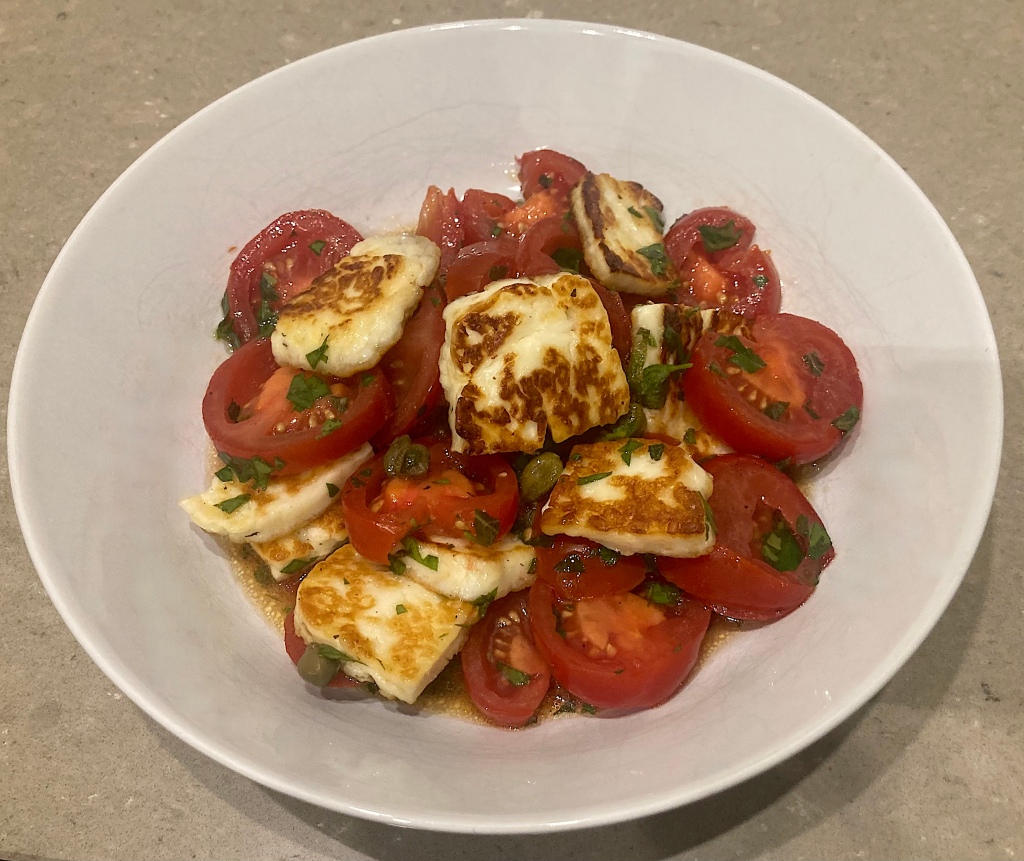
Tomato and Halloumi Salad

A simple and lovely salad, one that works very well as a starter with some crusted bread. Tomatoes, a touch of mint, parsley and warm halloumi. One of the first times we made this we used homegrown, ripe and tasty tomatoes. We also prepared the dish using tomatoes that were rather bland. That wasn’t much of a success.
The history of halloumi goes back centuries. Nowadays it’s a cheese made of goat’s and sheep’s milk. Sometimes cow’s milk is added to the mixture. In the EU it’s a protected product and must be produced in Cyprus. Because of its high melting point it’s ideal to grill or fry, although it can remain a bit firm and chewy. During the final phase of the production process the cheese is salted and sprinkled with chopped spearmint leaves.
Mint is also an essential ingredient of the salad. We tend to use it only occasionally because mint can be overpowering. It works very well in combination with the cheese and the tomatoes. It gives a boost to the flavours without being overly present.

Wine Pairing

A glass of rosé, a simple unoaked white wine or a beer will be great with the salad. When looking for a wine to go with a salad, make sure to think about the acidity. In general a more acidic salad requires a more acidic wine. The combination will make the wine fruiter and the salad softer. In this case the tomatoes, the dressing and the capers bring acidity. However, marinating the tomatoes makes the salad softer and emphasises the sweetness of the tomatoes. 

What You Need

  • Six excellent, tasty, ripe Tomatoes
  • 6 leaves of Mint
  • Parsley
  • Olive Oil
  • Vinegar
  • Teaspoon of Capers (in brine)
  • Black Pepper
  • Halloumi

What you Do

Core and slice the tomatoes. Chop the parsley and the mint. Combine oil and vinegar, add tomatoes, mix and add the herbs. Transfer to the refrigerator for a few hours. Mix every hour.
Slice the halloumi and fry on medium heat in olive oil. Turn regularly. Add the capers to the salad, mix, top with the fried halloumi and serve immediately with crusted bread.

Tomato and Halloumi Salad ©cadwu

Summer Truffle and Egg

Only a few weeks to go before the end of the summer truffle season. A truffle with mild flavours and aromas but nevertheless great when used in cold dishes, such as truffle mayonnaise or a salad with chicory. We decided to go for a luxurious appetizer with an excellent glass of white wine. We bought 25 grams of truffle (and paid € 12,50) and enjoyed every minute of it.

Wine Pairing

A lightly oaked chardonnay with lots of character will be great with the summer truffle and egg. We opened a bottle of Casa da Passarella Dão A Descoberta Branco. An elegant Portuguese wine with lots of character. Fresh, aromatic, lasting. 

What You Need

  • 3 Eggs
  • Mayonnaise
  • 25 grams of Summer Truffle
  • (optional) White Pepper

What You Do

Boil the eggs until nearly hard. Peel and allow to cool. Slice in halve, remove the egg yolk and use a fork to create mimosa. Grate half of the summer truffle, combine this with the mimosa and add some mayonnaise, just to get the right consistency. Perhaps some white pepper. Stuff the eggs, cover with cling foil and transfer to the refrigerator. After 2 hours decorate the eggs with thinly sliced summer truffle. Time to sit back, relax and enjoy summer.

Apricot Chutney

It’s the time of the year to benefit from summer fruit, such as peaches, watermelon, raspberries, nectarines, strawberries and of course apricots. With a bit of patience (and sugar, lemon and perhaps nutmeg) you can turn apricots into a delicious jam. But why not make apricot chutney? Great to enjoy with grilled lamb chops or something nice, simple and vegetarian, for instance with rice, lentils and cilantro.
Chutney is a balance of sweet (fresh fruit, onion, garlic, cinnamon), sour (vinegar), bitter (the skin of the apricot or tomato), spiciness (ginger, red chilli, garlic) and depth (cardamom, nutmeg, cumin). Too much sugar will only disturb the balance. Chutney needs to integrate, much more than jam or marmalade. So cook it for an hour or so and leave it in a jar for at least a week before using it.

What You Need

  • 1 kilo stoned Apricots (meaning 1,25 kilo of Apricots)
  • 2 Shallots
  • Olive Oil
  • 4 gloves Garlic
  • 1 Red Chilli
  • 100 ml Vinegar
  • 100 ml Water
  • 100 grams of Sugar
  • Fresh Ginger
  • Spices such as
    • Cardamom
    • Mustard Seed
    • Coriander (Cilantro)
    • Cinnamon
    • Nutmeg
    • Cumin
    • Clove

What You Do

Stone and quarter the apricots. Cut the shallots in 4 and slice (not too thin). Slice the fresh garlic. Same with the seeded red chilli. Cut let’s say 5 cm of ginger in small bits. Start by glazing the shallots for 10 minutes in olive oil, making sure they will enhance the sweetness of the chutney. Then add all other ingredients to the pan, mix, add the grated ginger, the spices of your choice, mix and bring slowly to a simmer. We used vinegar and water given the acidity of our apricots. If your apricots are really sweet and ripe use 200 ml of vinegar. Spice-wise we prefer using cardamom, cinnamon, and a touch of cumin and nutmeg. Leave to simmer for at least one hour. Stir occasionally but gently. After an hour increase the heat and transfer to very, very clean glass jars. Close the jars, leave them to cool a bit, then put in cold water and later on transfer to the refrigerator.

Slide show Apricot Chutney

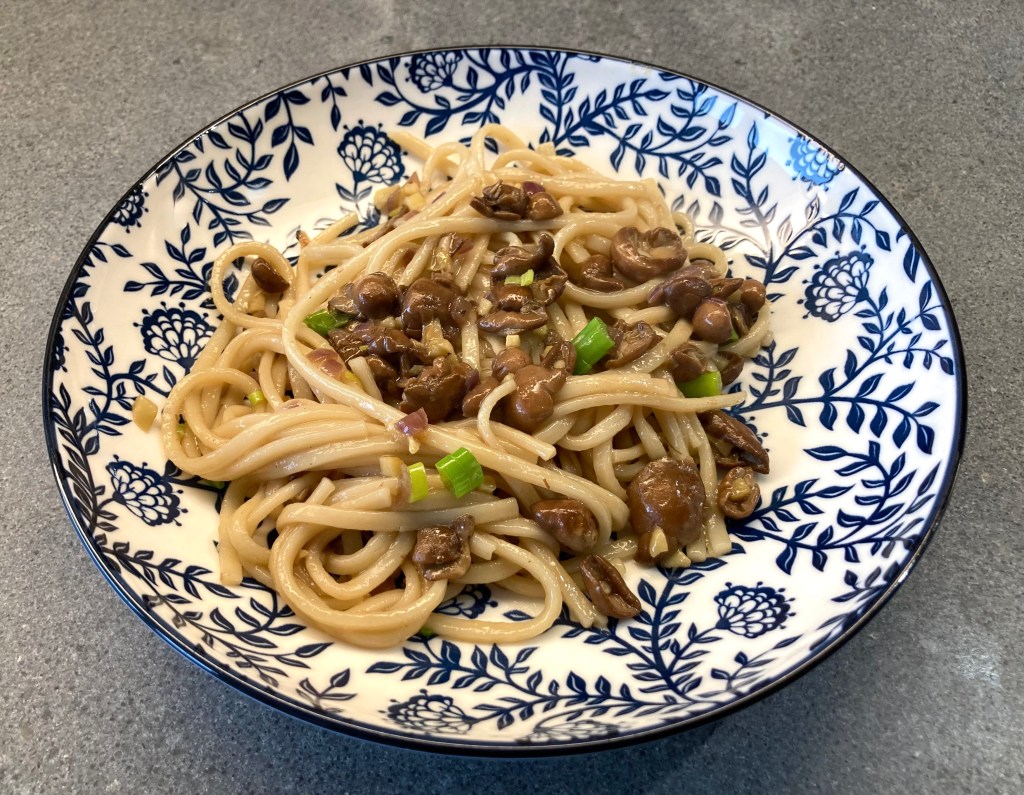
Fairy Ring Mushroom with Udon

Spring brings us several edible or even delicious mushrooms, such as the Fairy Ring Mushroom, Morels and the Mushroom of Saint George.
The Fairy Ring mushroom is a very common mushroom in many countries. The name is not very helpful since many mushrooms grow in the pattern of a ring. The German and Dutch names (Rasen-Schwindling and Weidekringzwam) are more helpful; these refer to the fact that the mushroom grows in meadows and lawns.
It’s a small, very edible mushroom, available from early spring until late autumn. Its taste is a bit sweet and perhaps that’s why some people suggest using them to make sweet mushroom cookies. Hm, we think you can do better than that! Earlier we combined the mushroom with pork chops. Today we use the sweetness as a starting point of a vegetarian dish with udon, our favourite noodle.

Drink Pairing

Given the sweetness of the dish, the depth of the udon and the hint of spiciness (fresh ginger), we suggest a medium bodied, dry white wine. Could be a Riesling or perhaps a Grüner Veltliner. A well balanced, round sake will also be great with the dish.

What You Need

  • 100 gram of Fairy Ring mushroom
  • 2 Scallions
  • Soy Sauce
  • Sesame Oil
  • Ginger
  • Oyster Sauce or Mirin
  • Vegetable Stock
  • Olive Oil
  • Udon

What You Do

Start by cleaning the mushrooms with kitchen paper. Remove the stems. Slice the scallions thinly, separate the white and the green. Add the udon to boiling water. The noodles will take some 10 minutes, which gives you sufficient time to prepare the mushrooms. Fry the caps in olive oil. After a few minutes, add the white of the scallions. Fry for a minute or so. Reduce heat. Add some grated ginger, soy sauce and sesame oil. To enhance the sweetness of the mushroom, add some oyster sauce or mirin. Add a teaspoon to start with. Taste and adjust. Perhaps a second one? Be careful not to overpower the delicate flavor of the mushroom. When ready, add the udon straight from the pan to the mushrooms. Combine. Leave for a minute or two. Add a bit of stock. You’re looking for generous coated udon with shining mushrooms. Just before serving add some freshly grated ginger, a dash of sesame oil and the green of the scallions.

PS

In some countries the mushroom is known as Mousseron, which sounds French, however in France the Fairy Ring mushroom is called Faux-Mousseron, to distinguish it from the real Mousseron, the mushroom we know as the Mushroom of Saint George. At least both are edible!

Fairy Ring Mushroom with Udon ©cadwu