Tataki

Over the years tataki has become increasingly popular: beef, tuna, salmon, trout and even veal and deer tataki. But what is tataki actually? And what is tataki sauce?

Tataki originates from the Kōchi prefecture in Japan. The original dish is called katsuo-no-tataki. Katsuo (also known as Oceanic Bonito or Skipjack Tuna) is an important ingredient in the Japanese kitchen, for instance raw as sashimi and dried as katsuobushi (the flakes you need when making dashi).

The fish is seared very briefly in a huge rice straw fire. This way the fish becomes nicely coloured, the centre remains raw, and the flavour will be enhanced with smokiness. It is then sliced and served with a garlic, lemon (ponzu), soy and onion sauce, making Katsuo-no-tataki very different from other sashimi.

Unfortunately, most of us don’t have a straw fire at home, so you need a very hot pan to sear the fish. Bonito is not widely available where we live, but tuna is a great alternative. Beef is a good idea, salmon is a possibility, veal and trout are definitely not good alternatives.

What You Need

  • Bonito (or Tuna or Beef Tenderloin)
  • Light Soy Sauce (Tsuyu)
  • Mirin
  • Rice Vinegar
  • Lemon
  • ½ Garlic Clove
  • Sesame Seeds
  • Spring Onion
  • Olive Oil

What You Do

  1. We added lightly roasted sesame seeds to the dish, they are not included in the original katsuo-no-tataki so feel free to leave them out
  2. Combine light soy sauce, mirin and rice vinegar (ratio 3:1:1)
  3. Add some lemon juice and the grated garlic
  4. The garlic must be grated; it should nearly dissolve in the sauce
  5. Quickly sear the bonito (tuna, beef) in a hot non-stick pan with just a touch of oil
  6. When ready transfer to an ice bath
  7. Wait for a minute or so
  8. Remove from the water and use kitchen paper to dry the fish or beef
  9. Slice, serve on a plate, drizzle with the dressing
  10. Add thinly sliced white spring onion
  11. Drizzle with sesame seeds (if using)
  12. Finish with some dressing.

PS

And the answers are: tataki is a method to sear katsuo (or in general fish or beef) in a straw fire (or over a grill or in a hot pan). Tataki Sauce doesn’t actually exist; it may refer to the sauce that is served with katsuo-no-tataki.

Tataki (Tuna) ©cadwu


Pasta with Tomato Balls

Recently we reviewed Oh She Glows for Dinner by Angela Liddon as part of the great cookbook review project by Bernadette. Angela Liddons aim is to create tasty, colourful, nutritious, vegan, simple, healthy, easy to make food that you can prepare in just a few minutes. Unfortunately, her book shows that this is nearly impossible. Nevertheless, we liked her idea for a burger with tomato-based patties. We changed the recipe and turned the dish into Pasta with Tomato Balls. It’s certainly a tasty, healthy and colourful dish, but not one you can make in a few minutes.

Wine Pairing

Tomatoes come with acidity, an aspect to keep in mind when choosing your wine. Cooking the tomatoes reduces the acidity and enhances the sweetness and depth of the tomatoes. In this case you could go for a non-oaky white wine (Pinot Grigio, Soave Classico) or for a red wine with soft tannins (Chianti, Sangiovese). A glass of crisp rosé will also be fine, so the choice is yours, as long it’s not an oaky chardonnay or a tannic red wine.

What You Need

  • Tomato Balls
    • 30 grams Brown Lentils
    • Vegetarian Stock
    • Bouquet Garni (Thyme, Parsley, Bay Leaf, Chives)
    • 1 small Red Onion
    • 1 Garlic Clove
    • 40 grams of roasted Cashews
    • 40 grams of roasted Hazelnuts
    • 5 grams (or more) of dried Oregano
    • 25 grams Sun Dried Tomatoes
    • Teaspoon Tomato Paste 
    • Teaspoon Lemon Juice
    • Red Pepper Flakes (to taste)
    • Salt
    • Black Pepper
    • Breadcrumbs
    • Olive Oil
  • Tomato Sauce
  • Orecchiette or Farfalle
  • Parmesan Cheese
  • Basil Leaves

What You Do

Start by washing the lentils. Cook in vegetarian stock with a bouquet garni. Set aside and let cool. Prepare the dried tomatoes: if they are salted, then wash them thoroughly. If they are oil-packed, drain them. Chop the red onion, the garlic clove and the dried tomatoes coarsely. Glaze the onion and the garlic in olive oil. Use a food processor to make a coarse mixture of the cashews, hazelnuts and oregano. Add the chopped tomatoes, the onion, the garlic, the tomato paste, the lentils, the lemon juice and the red pepper flakes (if using). Pulse a few times. Taste and decide if you want to add salt, pepper or lemon juice. Now it’s time to check the consistency. Is it possible to turn the mixture into balls? A bit soggy probably? Add breadcrumbs. Leave the mixture for 15 minutes. Divide the mixture in smaller portions and make balls, using your hands. Bake for a few minutes in a non-stick pan with some olive oil.
In parallel cook the orecchiette or farfalle according to the instruction on the package. Warm a tomato sauce. When all components are ready, add the pasta straight from the pan to the sauce. Add the balls and mix gently.  Finish by adding some freshly grated Parmesan cheese and basil.

Pasta with Tomato Balls ©cadwu

Asparagus Soup (Blended)

Earlier we wrote about the traditional way of making asparagus soup. It starts by using the skin and woody ends of the asparagus with leek or shallot to make a stock. Then extra flavour is added (the tips of the asparagus, cream or salmon and dill) and the consistency of the soup improved, for instance by making a roux. This way you will get a nice, thickened soup with a velvety mouthfeel. It’s still a bit one dimensional so if you want a more complex soup, you need to replace the water by chicken or vegetable stock.

Another way of thickening the soup is by blending the asparagus. Unfortunately, this doesn’t help a lot since asparagus do not contain starch, so yes, the soup is tastier, a touch more structured but its consistence remains watery. What to do? Egg yolk? Corn starch? A potato? Cream? More white asparagus? A roux after all?

What You Need

  • 300 grams of White Asparagus
  • 1 small Shallot
  • Butter
  • 350 ml Chicken or Vegetable Stock
  • Bouquet Garni (Parsley, Bay Leaf, Chives)
  • Cream
  • White Pepper

What You Do

First decide how you want to thicken the soup. A roux is not preferred because it will flatten, reduce the flavour plus we want a try a different approach. You could use a small starchy potato (not preferred because it will bring the typical potato flavour to the soup which is great in combination with leek but not with the subtle bitterness of asparagus), corn starch (great thickener but one that reduces flavours), egg yolk (classic, but we haven’t tried it yet with this soup) or potato starch (flavourless, simple, no impact flavour wise, only colour wise).

Peel the asparagus and cut of the woody ends. Peel and slice the shallot. Add butter to a pan, glaze the shallot. Now add the skin and woody ends of the asparagus, coat with the shallot and butter mixture and add the stock. Allow to simmer for 30 – 45 minutes. If you cook the stock too long, then it will become bitter. Pass the liquid through a sieve. Squeeze to capture all the lovely asparagus juices. Keep on low heat. Chop the asparagus, add the slices to the soup and keep the tips. After 20 minutes blender the soup. Add some cream, slice the tips lengthwise and add these to the soup. 10 more minutes later the soup is ready.

And The Winner Is…

We prefer the blended version to the roux version. The stock and the other ingredients support the asparagus flavour, making it into a tasty, light yet rich soup.

Asparagus Soup (Blended) ©cadwu

Asparagus Soup (Traditional)

Preparing Asparagus soup starts by using the skin and woody ends of the asparagus with leek or shallot to make a stock. Since the stock is fairly bland and watery, you need to add additional flavour (the tips of the asparagus, cream, salmon and dill) and improve the consistency of the final result. The traditional way of doing this is by making a roux. You will get a nice, thickened soup with a velvety mouthfeel. It’s still a bit one dimensional so if you want a more complex soup, we suggest replacing the water by chicken or vegetable stock.

Another way of improving the consistency and enhancing the flavour is by adding asparagus to the soup and blending the result. In this post we will prepare the traditional version.

What You Need

  • The skin and woody ends of lots of White Asparagus
  • Shallot
  • Butter
  • Water (Chicken or Vegetable Stock preferred)
  • Five White Asparagus
  • 30 grams of All Purpose Flour
  • 30 grams of Butter
  • Cream
  • White Pepper
  • Pinch of Salt

What You Do

Peel and slice the shallot. Peel the five asparagus and cut of the woody ends. Add butter to a pan, glaze the shallot. Now add the skin and woody ends of the asparagus, coat with the shallot and butter mixture and add cold water. Allow to simmer for 30 – 45 minutes. If you cook the stock too long, then it will become bitter. Pass the liquid through a sieve. Squeeze to capture all the lovely asparagus juices. With the stock ready it’s time to make the (white) roux. Warm the butter in the pan, add the flour and stir. Keep on medium heat until you just begin to smell cookies. Now start adding the warm liquid, slowly at first, keep stirring and adding until you have used all the liquid. Taste, add some white pepper and a pinch of salt. Keep on low heat. Slice the five asparagus, add the slices to the soup and keep the tips. Stir every 5 minutes. After 20 minutes add some cream, slice the five tips lengthwise and add these to the soup. 5 more minutes and the soup is ready.

Asparagus Soup (Traditional) ©cadwu

Fairy Ring Mushroom with Udon

Spring brings us several edible or even delicious mushrooms, such as the Fairy Ring Mushroom, Morels and the Mushroom of Saint George.
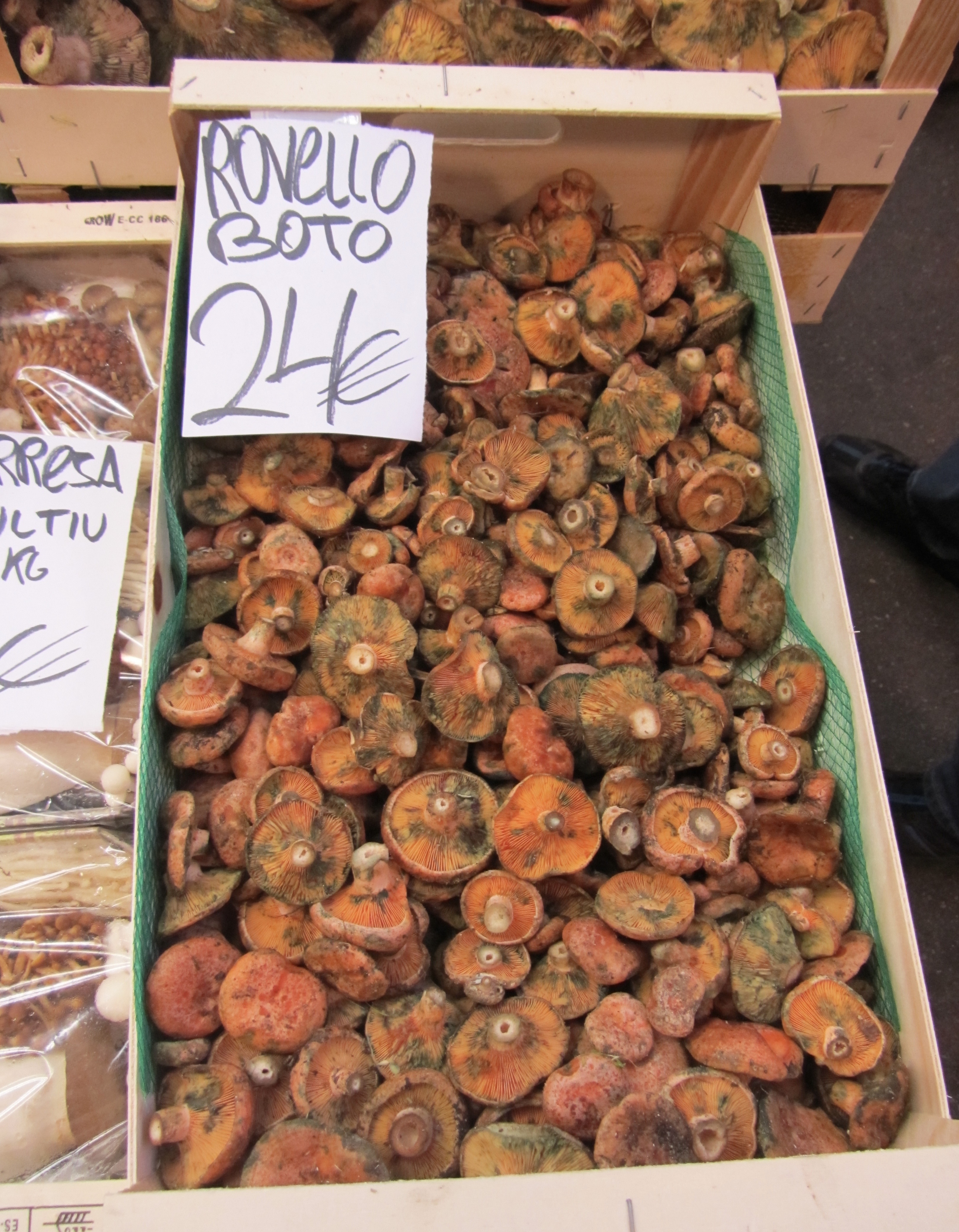
The Fairy Ring mushroom is a very common mushroom in many countries. The name is not very helpful since many mushrooms grow in the pattern of a ring. The German and Dutch names (Rasen-Schwindling and Weidekringzwam) are more helpful; these refer to the fact that the mushroom grows in meadows and lawns.
It’s a small, very edible mushroom, available from early spring until late autumn. Its taste is a bit sweet and perhaps that’s why some people suggest using them to make sweet mushroom cookies. Hm, we think you can do better than that! Earlier we combined the mushroom with pork chops. Today we use the sweetness as a starting point of a vegetarian dish with udon, our favourite noodle.

Drink Pairing

Given the sweetness of the dish, the depth of the udon and the hint of spiciness (fresh ginger), we suggest a medium bodied, dry white wine. Could be a Riesling or perhaps a Grüner Veltliner. A well balanced, round sake will also be great with the dish.

What You Need

  • 100 gram of Fairy Ring mushroom
  • 2 Scallions
  • Soy Sauce
  • Sesame Oil
  • Ginger
  • Oyster Sauce or Mirin
  • Vegetable Stock
  • Olive Oil
  • Udon

What You Do

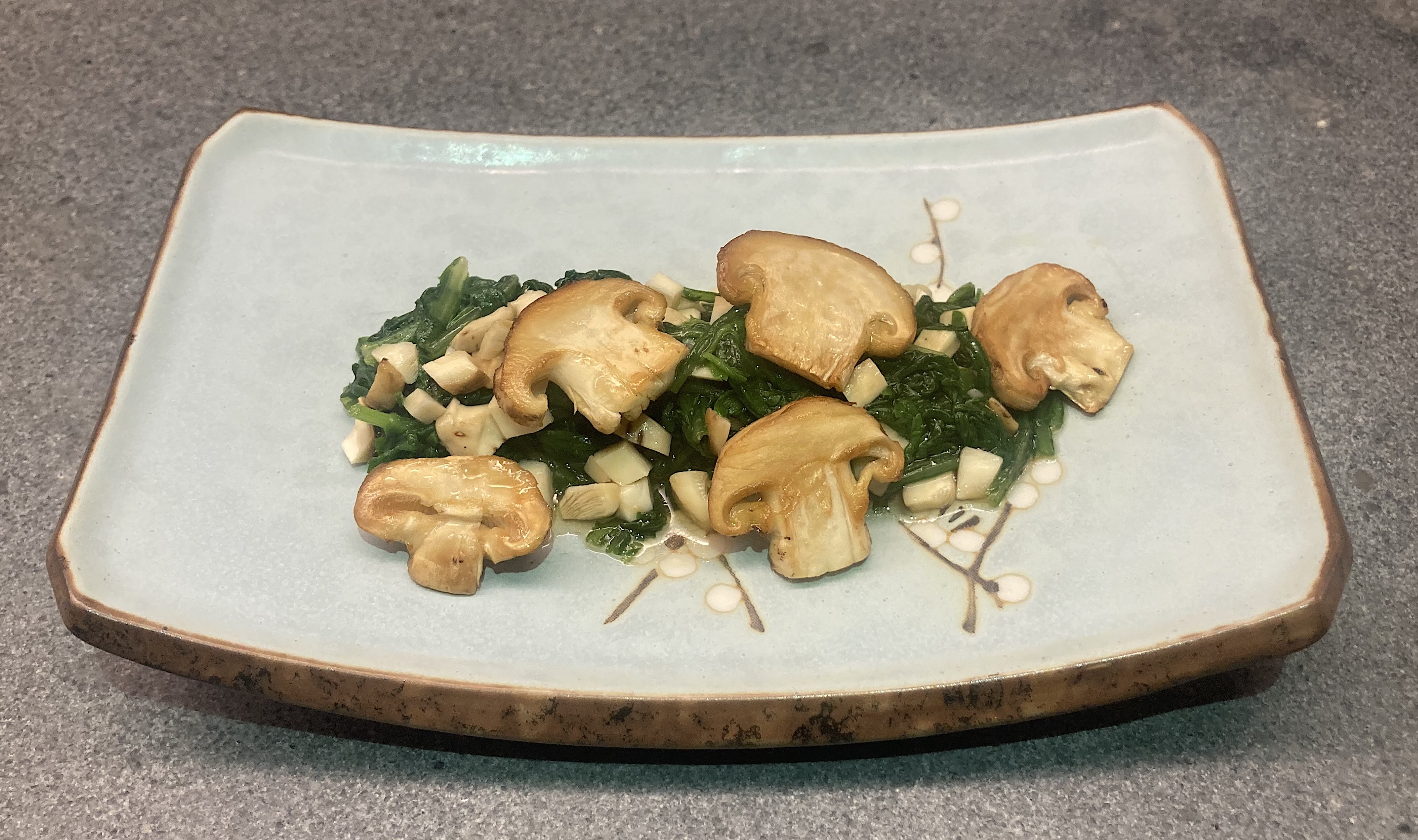
Start by cleaning the mushrooms with kitchen paper. Remove the stems. Slice the scallions thinly, separate the white and the green. Add the udon to boiling water. The noodles will take some 10 minutes, which gives you sufficient time to prepare the mushrooms. Fry the caps in olive oil. After a few minutes, add the white of the scallions. Fry for a minute or so. Reduce heat. Add some grated ginger, soy sauce and sesame oil. To enhance the sweetness of the mushroom, add some oyster sauce or mirin. Add a teaspoon to start with. Taste and adjust. Perhaps a second one? Be careful not to overpower the delicate flavor of the mushroom. When ready, add the udon straight from the pan to the mushrooms. Combine. Leave for a minute or two. Add a bit of stock. You’re looking for generous coated udon with shining mushrooms. Just before serving add some freshly grated ginger, a dash of sesame oil and the green of the scallions.

PS

In some countries the mushroom is known as Mousseron, which sounds French, however in France the Fairy Ring mushroom is called Faux-Mousseron, to distinguish it from the real Mousseron, the mushroom we know as the Mushroom of Saint George. At least both are edible!

Fairy Ring Mushroom with Udon ©cadwu

Petits Farcis

Not only do they look delicious, but they also taste delicious: Légumes Farcis or Petits Farcis. Easy to make and always a pleasure to serve. Perhaps you can buy them ready made from your delicatessen or butcher, but why would you? Prepare them at home the way you personally prefer them, perhaps with some extra shallot, herbs or garlic.

Let’s talk a bit about the farce, the stuffing of the vegetables. It should fill the vegetable, obviously, and remain connected to the vegetable, also when cooked. Its texture must be loosely. This is where most recipes go wrong when they tell you to add panko or breadcrumbs to the farce. Follow this instruction and you will notice that during the cooking process the filling will become smaller and firmer. There you are: a meatball in a tomato. That’s not what you want. Not at all! Lesson learned, no panko, no breadcrumbs.

The meat should be nicely fat, not too finely minced and preferably a combination of porc and veal. Tasty, sufficiently fat and elegant. You could also use sausage meat. When in doubt, ask your butcher.

Wine Pairing

Keep it simple! A dry white wine, a rosé or a nice beer will be perfect. Serve what you think is best with this tasty, juicy and heart-warming food.

What You Need

  • Vegetables such as Tomatoes, Courgette, Red Bell Pepper
  • Minced Meat or Sausage Meat
  • Shallot
  • Parsley
  • Garlic
  • Black Pepper

What You Do

  1. Finely chop the shallot, the garlic and the parsley. Additionally you could use thyme, rosemary or oregano
  2. Combine the meat with the shallot, the garlic, the herbs and black pepper
  3. Cut off the top of the tomato and use a knife and a teaspoon to hollow out the tomato. Keep the pulp and the seeds
  4. Slice the bell pepper lengthwise and remove the seeds and the ribs. Discard
  5. Cut off the top of the courgette and use a teaspoon to hollow out the courgette. Keep the pulp
  6. Add the farce to the vegetables
  7. Close the tomatoes and the courgettes with the caps
  8. Transfer to a baking dish, add some olive oil, the pulp and the seeds of the tomatoes and the courgette to the dish
  9. You could add some extra shallot.
  10. Cook in the oven for 45 minutes (depending on the size) on 180 °C or 355 °F.
  11. Enjoy hot or lukewarm (with some of the cooking liquid), perhaps with a simple green salad or rice.
Petits Farcis ©cadwu

The Art of Sauces: Beurre Blanc

We love the classic ways of eating white asparagus, served with a nice white wine from the Alsace region in France (Pinot Blanc, perhaps a dry Muscat). We were talking about different ways of preparing them. We browsed through various recipes and found a combination new to us: white asparagus with scallops (Coquilles Saint Jacques). Some add a tomato and tarragon sauce, others mayonnaise or (even) a tapenade. Not combinations we would like to see on our plate. Why not serve with a sauce that supports the subtle sweetness of both the asparagus and the scallops? Could be Hollandaise or Kimizu, but these are probably too rich for the scallops.

Beurre Blanc is an interesting sauce: it’s basically a reduction of white wine, vinegar and herbs, thickened with very cold butter.  The more butter you add, the thicker the consistency, although it will remain thinner than an emulsified sauce. The benefit of beurre blanc is that it comes with that lovely velvety mouthfeel without being too rich. And the acidity works beautifully with the asparagus and the scallops.

What You Need

  • 4 tablespoons Dry White Wine
  • 2 tablespoons White Wine Vinegar 
  • 4 tablespoons of Water
  • 1 Shallot
  • Thyme
  • Bay Leaf
  • Black Pepper
  • Double Cream
  • 75 (or more) grams very cold Butter

What You Do

Chop the shallot and crush the black pepper corns. Add the wine, the vinegar and the water to a pan. Add the shallot, the black pepper, thyme and one bay leaf to the pan. Allow to reduce to 1/3. Pass through a sieve. In total you should have 3 or 4 tablespoons of reduction. Warm the reduction. Add a splash of cream and reduce to 1/2 or 1/3. Whisk regularly. Remove the creamy reduction from the heat and start adding small cubes of ice cold butter, one by one, whisking constantly. Keep adding butter until you have the taste and the consistency you want.

Asparagus and Scallops

We served the Beurre Blanc with steamed white asparagus and scallops sautéed in butter. We opened a bottle of Mâcon-Vinzelles ‘En Paradis’ 2021, produced by Château Vitallis. The wine, made from 100% Chardonnay grapes, is vinified in stainless steel tanks. It has just the right level of citrusy acidity, it is fresh with floral aromas, and comes with minerality and a touch of butter. In general, you’re looking for an unoaked chardonnay, with freshness and some acidity.

Asparagus, Scallops and Beurre Blanc ©cadwu

Coronation Quiche

The coronation of King Charles is a wonderful combination of tradition, religion and mystery, a ceremony loved by many, for its pageantry, the celebrations, the concerts and of course the coronation food. Just think about a lovely Victorian Sponge Cake with raspberry jam and buttercream or a Coronation Chicken (Poulet Reine Elizabeth) with carrots, green peas, rice and a creamy curry sauce.

King Charles’s coronation quiche is supposed to somehow reflect his vision regarding the monarchy and its role in modern society. The quiche is tasty, healthy, nutritious, not expensive and relatively easy to make. Plus, when you replace the lard in the original recipe with butter (as we do), then it’s a nice vegetarian dish. Great to share with friends.

The quiche combines spinach with broad beans, tarragon and cheddar cheese. We suggest baking it one day ahead and serving it at room temperature.

We read the recipe, watched a few videos (this one is good fun, it also shows how to make a Victorian Sponge cake) and decided to prepare a Coronation Quiche, topped with a Crown!

What You Need (for a 15 cm tin)

  • For the Pastry
    • 125 grams All Purpose Flour
    • Pinch of Salt
    • 50 grams Cold Butter
    • 2 tablespoons Water
  • For the Filling
    • 200 ml Double Cream
    • 2 Eggs
    • 1 tablespoon chopped Fresh Tarragon
    • 100 grams grated Cheddar Cheese
    • 400 grams fresh Spinach
    • 450 grams fresh Broad Beans (or Fava Beans)

What You Do

Start by making the shortcrust pastry. Dice the butter. Sieve the flour, add a pinch of salt and combine. Add the butter and mix using your fingertips until is has a crumble-like texture. Add the water and turn the mixture into a dough. Cover and allow to rest in the refrigerator for one hour.

Now it’s time to prepare the vegetables. Wash and cook the spinach. Let cool. Drain and squeeze to remove as much liquid as possible. Chop finely. Remove the beans from the shell. Cook for 2 minutes. Let cool and double pod.
Flour your work surface and roll out the pastry to a circle a little larger than the top of the form. The dough should be approximately 4 mm thick. Coat the form with butter. Line the form with the pastry. Use a knife to remove the excess dough. Cover and let rest for 30 minutes in the refrigerator.

Preheat the oven to 190 °C or 375 °F. Use a fork to make small holes in the pastry. Line the pastry with greaseproof paper, add baking beans and bake blind for 15 minutes. Remove the paper and the baking beans. If you think the pastry is a bit wet, then transfer back to the oven for 2 or 3 minutes.
Reduce the oven temperature to 160 °C or 320 °F.
Beat the eggs and keep some of the egg apart. You need it later to give some extra colour to the crown. Beat together cream, eggs, herbs and fresh black pepper. Scatter half of the grated cheese in the blind-baked base, top with the chopped spinach and then the beans, and finally pour over the mixture with cream, eggs, herbs and pepper. Finish by sprinkling the remaining cheese.

Use the remainder of the dough to make a crown. Coat with the egg mixture. You could apply an extra coating halfway the baking process.

Place the quiche and the crown into the oven and bake for 30 – 35 minutes until set and lightly golden. The crown is ready after some 10 – 15 minutes.

Wild Garlic Soup

Only a few days to go before the end of the Wild Garlic season. The season starts early February when the first leaves appear. Mid-April the star shaped white flowers appear, beautiful and also edible. When the flowers go to seed it’s the end of the season and the leaves become bitter and chewy.

Wild Garlic can be used to make pesto, it can be added to a dish with white asparagus and morels and it’s delicious when combined with fennel and potato. Preparing Wild Garlic soup is also a good idea. The first time we tasted it, at Zum Fliegenden Holländer in Potsdam, Germany, we expected the soup to be a bit simple, probably we would taste onion, touch of garlic and potatoes. We were wrong, the soup was much more complicated and sophisticated than expected. The flavour was mild, we could clearly taste the Wild Garlic, but very gentle, with some sweetness. The overall taste was pleasant and lasting. Perhaps the potato was too present, but that was a minor detail. Bärlauchsuppe proofed to be delicious, refreshing and very much a tribute to spring.

What You Need

  • 150 grams of Wild Garlic Leaves
  • 500 ml of Stock
  • 1 Shallot
  • ½ Garlic Clove
  • Potato Starch
  • Cream
  • Olive Oil
  • Black Pepper
  • Nutmeg

What You Do

Wash and dry the leaves. Chop the shallot and the garlic. We were lucky, our bunch of leaves also contained a few flower buds. We chopped these as well. Warm a pan, add some olive oil and glaze the onions and the garlic (and the flower buds). After a few minutes add the stock. We used homemade quail stock, which brought additional sweetness to the soup. Leave to simmer for a few minutes. Coarsely chop the leaves, add these to the pan and leave for perhaps one minute. Be careful, you don’t want to discolour the leaves. Use a blender to make a smooth liquid. Pass the liquid through a sieve. Add one to two teaspoons of potato starch and mix very well. Add cream and leave for a few minutes. Just before serving add some excellent olive oil and black pepper, blender for 1 or 2 seconds and serve with some freshly grated nutmeg.

PS

We use potato starch to remain close to the basic idea of the Bärlauchsuppe in Potsdam. Potato Starch has a neutral taste and a high binding strength. If you use a (starchy) potato, then peel and cube it and add it to the stock. Remove the potato cubes when they are ready, add the chopped leaves, leave to simmer and then blender. Mash the potato cubes, combine with some of the liquid, add the mash to the soup and whisk well. If you blender the liquid with the potato, you risk ending up with a gluey, sticky soup.

Bucatini All’Amatriciana

Let’s prepare a delicious and simple Italian dish, packed with flavours. The challenge when making Bucatini All’Amatriciana is with getting the right ingredients. You must have Guanciale, Bucatini, San Marzano tomatoes, dried Spanish pepper and Pecorino Romano. Five challenges actually…

Bucatini is an interesting pasta. It looks like thick spaghetti but has a hole running though the centre. Indeed, a dried tube. When cooked it’s different from spaghetti, thicker of course and you need to chew longer, making the dish more filling and the taste longer lasting, without the paste itself being chewy. Could you replace bucatini with spaghetti? Probably yes, although the dish will become simpler.

How about Guanciale (cured pork cheek)? It is the key ingredient of Spaghetti Carbonara. Could you replace it with Pancetta? Probably yes, even Antonio Carluccio uses pancetta when preparing Bucatini All’Amatriciana with Gennaro Contaldo in this video.

Parmesan Cheese? That’s a no-go. We tried the dish with both Parmesan and Pecorino. The version with Parmesan cheese (made from cow milk) was okay, the one made with Pecorino (made from sheep milk) was delicious. The cheese combined very well with the spiciness and sweetness of the sauce.

San Marzano tomatoes have lots of flesh, just a few seeds and the taste is sweet and not very acidic. They are often used for canned tomatoes. If you can’t find San Marzano, then ask your greengrocer for similar tomatoes.

Shopping for the ingredients of Bucatini All’Amatriciana may be a challenge, preparing it is simple. Just keep an eye on the pan and the pasta. Within 30 minutes you can enjoy a classic Italian dish.

Wine Pairing

A red Italian wine is the obvious choice. We opened a bottle of Villa Castello Terre di Chieti Sangiovese 2022. The wine is made with 100% Sangiovese grapes. A touch of oak, not too much alcohol, full bodied, smooth, and with aromas of dark fruit. We loved it with our Bucatini All’Amatriciana. In general, an (Italian) wine made with Sangiovese grapes will be a great choice.

What You Need

  • 150 grams of Guanciale
  • 300 grams San Marzano tomatoes
  • 1 small Yellow Onion
  • 1 dried Spanish Pepper
  • White Wine
  • Bucatini
  • Pecorino Romano

What You Do

  1. Remove the outer layer of the guanciale and dice
  2. Coarsely chop the onion
  3. Wash and dry the tomatoes
  4. Chop the tomatoes, also coarsely
  5. Finely chop the Spanish pepper. Depending on your taste you could use the seeds
  6. Heat a large pan, add the guanciale and fry gently, making sure you get some nice fat without frying the meat crispy
  7. Add the onion and some of the Spanish pepper *depending on your taste and its spiciness)
  8. Glaze the onion
  9. Add some white wine and reduce the heat
  10. Add the chopped tomatoes and leave to simmer
  11. Taste and perhaps add some more pepper
  12. In parallel cook the bucatini al dente, this will probably take some 10 minutes
  13. When ready transfer the bucatini straight from the water to the sauce, combine and leave for a minute or two
  14. Taste and if necessary, adjust by adding pepper
  15. Serve the Bucatini All’Amatriciana with some freshly grated Pecorino Romano.