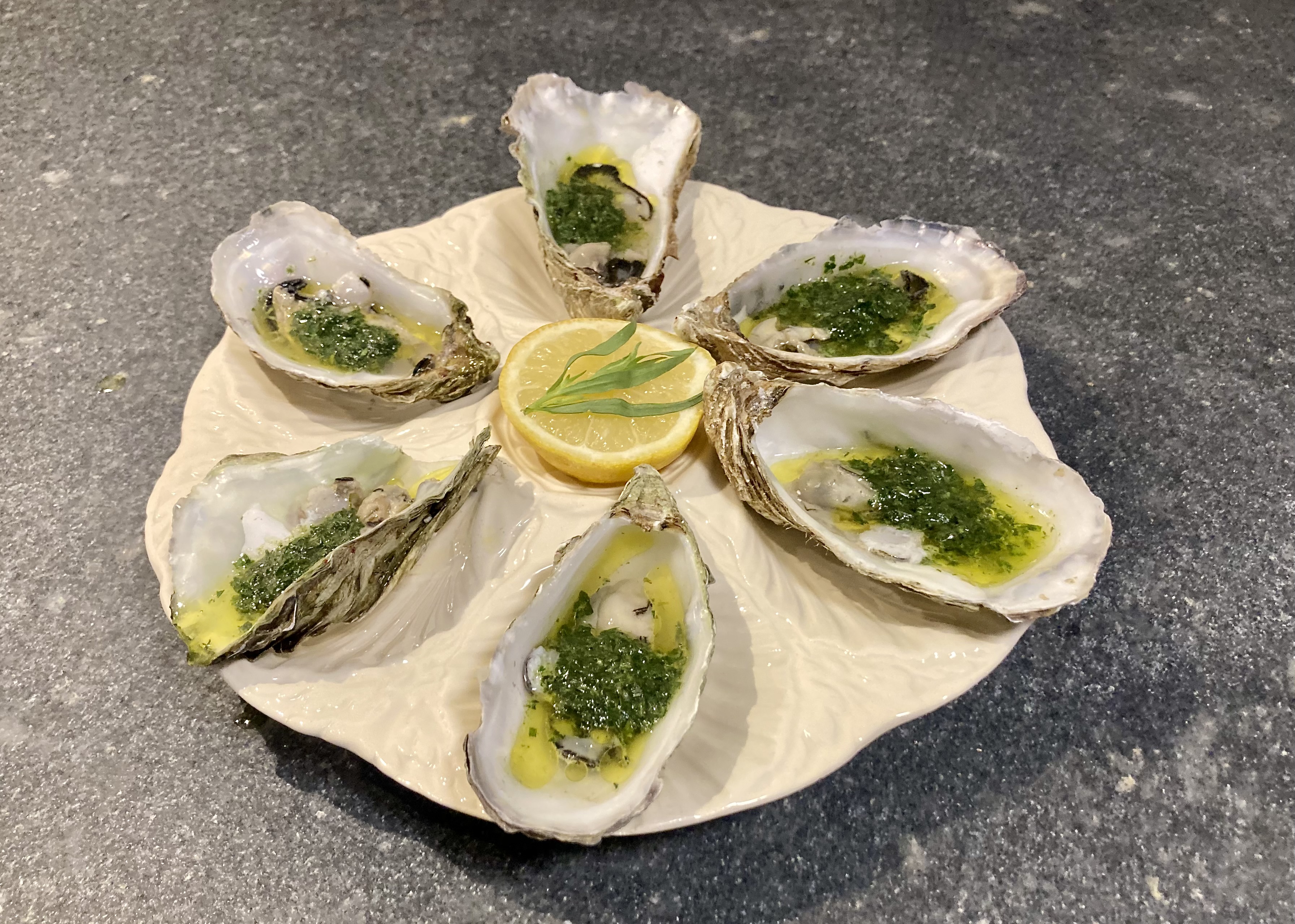
Oysters With Tarragon

Enjoying oyster begins by deciding which oysters to buy. Should they be small or large, should the taste be creamy and sweet or lean and juicy? If an oyster looks creamy (opaque) then it will taste creamy.

Next decision: raw or cooked? We think the best way to eat an oyster is to eat it raw. You will taste the saltiness, the texture and all of its flavours. The usual way to counter the saltiness is by adding a bit of lemon or mignonette but you could also go for something spicy like Tabasco, horseradish or perhaps wasabi. Don’t add something sweet because the oyster has its own sweetness.
In most cases cooked or steamed oysters are covered with lots of overwhelming ingredients, in an attempt to hide the taste of the oyster. Most likely the oyster will be overcooked and its structure rubbery and nasty. If you trust the chef, go for Steamed Oysters with Black Bean Sauce or for Oysters Rockefeller. Or even better: prepare our quick and easy Oysters with Tarragon, a delicious combination of warm (but not cooked) oyster and velvety anise flavours.

And finally: how to eat an oyster? Eating means chewing and tasting. Please don’t “drink” an oyster. If you do, you will only taste sea water.

Wine Pairing

When eating oysters, your wine must have some minerality. Think Chablis, Picpoul de Pinet, Sancerre or Sylvaner. We enjoyed a glass of Pommery Royal Brut champagne. The wine is elegant and uplifting, it comes with subtle notes of brioche and apple, a fine mousse and the perfect acidity with the oysters. Its freshness works very well after the intense taste of the oyster and the tarragon.

What You Need
  • 6 or 12 Oysters
  • Butter
  • Lots of Tarragon
  • White Pepper
  • Lemon Juice
What You Do
  1. Buy lean (not creamy) oysters, for instance the ones from the Île de Ré
  2. Combine butter and finely chopped tarragon with some white pepper
  3. Taste and add more tarragon
  4. Store in the refrigerator
  5. Scrub each oyster under cold, running water
  6. Open the oyster
  7. Use your knife or a spoon to detach the muscle underneath the oyster from the bottom shell
  8. Remove any small bits of broken shell or sediment
  9. Remove some of the liquid
  10. Add one or two drops of lemon juice to every oyster
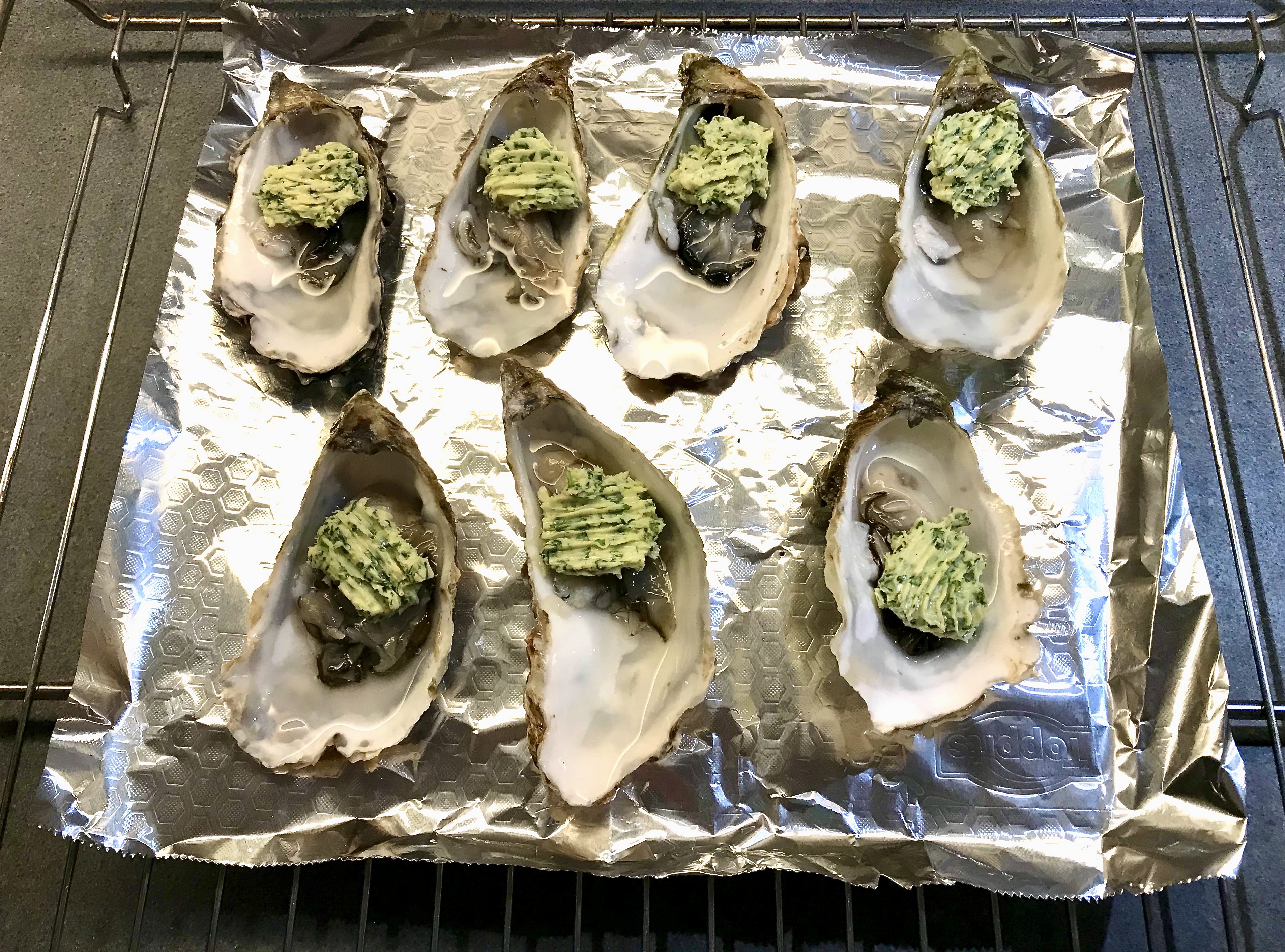
  11. Top with a teaspoon of tarragon butter
  12. Make sure you have everything ready (plate, tongs, wine, guests)
  13. Transfer the oysters to the oven and place as close to the grill as possible
  14. Set your oven to grill or broil and leave the oysters for 3 or 4 minutes in the oven
  15. Transfer the oysters to a plate and serve immediately
  16. 🥂Happy New Year!🥂


Tortang Talong

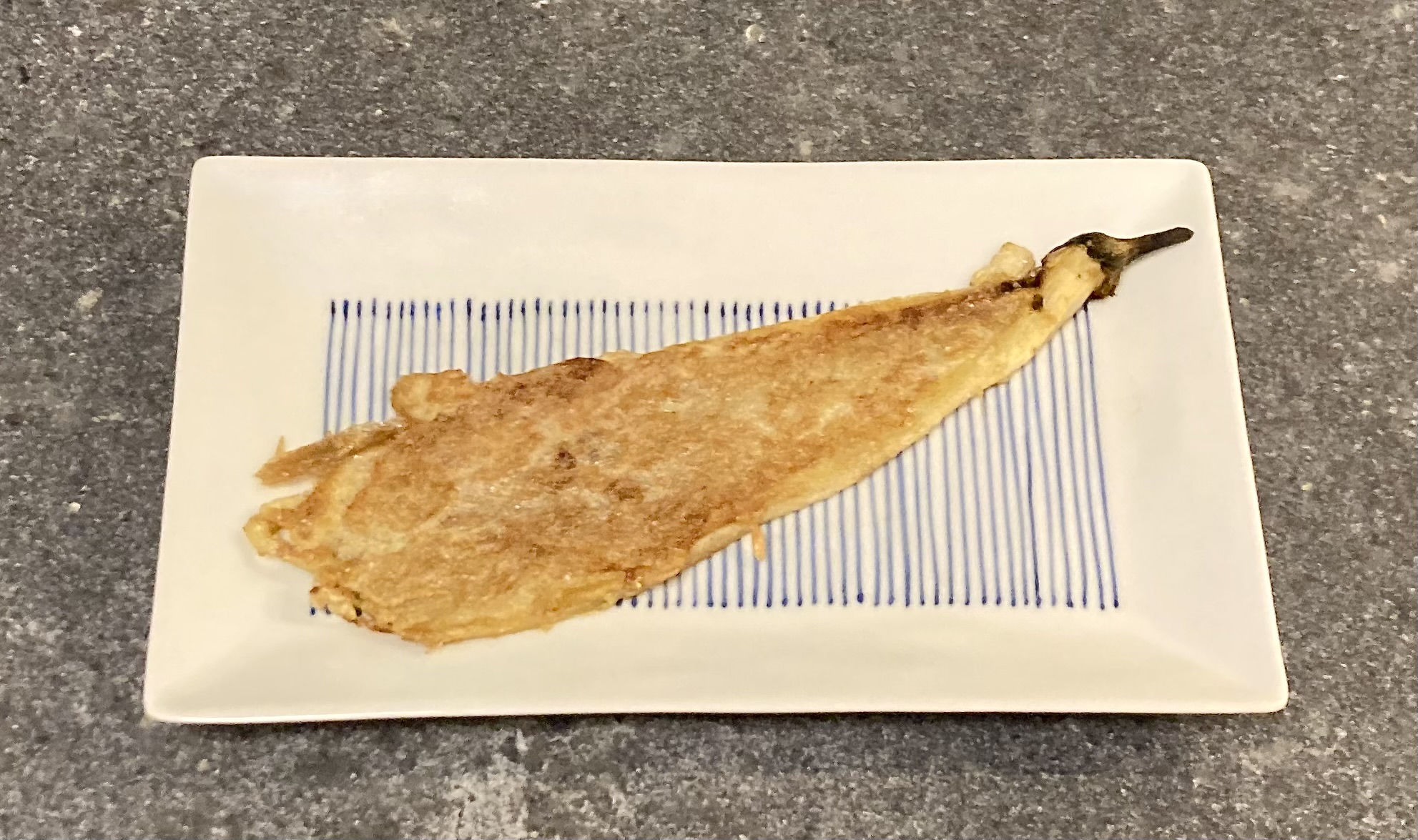
Perhaps you wonder what kind of fish we prepared for this post. Well, actually, it’s Tortang Talong, a Philippine dish made with charred eggplant. Earlier this year we made banana ketchup and the idea was to serve it with Tortang Talong, but we couldn’t find the right eggplants. For Tortang Talong you need long, purple, slender eggplants, known as Chinese or Japanse eggplants. They not only look different from the oblong eggplant, their taste is slightly sweeter and softer. The shape is key to a moist and homogenous result.

Thanks Monch Weller for introducing us to the delectable sauce and the very tasty Tortang Talong!

Food Pairing

Serve Tortang Talong with banana ketchup as a starter. We could also imagine it as a side dish with fried vegetables, rice and perhaps chicken.

What You Need
  • 2 Chinese or Japanese Eggplants
  • 1 Egg
  • Black Pepper
  • (optional) Salt
  • Oil
What You Do
  1. Grill the eggplants for 5-10 minutes using the wire rack, following the instructions of your oven
  2. Flip and grill for another 5-10 minutes or until charred
  3. Let cool
  4. Peel of the skin
  5. Use a fork to flatten the eggplants
  6. Combine egg, salt (if using) and pepper
  7. Beat the mixture well
  8. Heat a heavy iron skillet
  9. Add oil to the skillet
  10. Dip the eggplant in the mixture
  11. Fry the eggplant
  12. Flip and use a brush to coat the top with the egg mixture
  13. Repeat step 12, two or three times

Three Winter Soups

A few weeks ago, we enjoyed a delicious vegan dinner at Lokaal, a small restaurant in the centre of Gent, Belgium. Friendly service, relaxed atmosphere and nice music. One of the specialties of Lokaal is fermentation, for instance homemade Tempeh from Bulgur. Lots of umami and length. We loved it!
Our dinner at Lokaal started with a nice winter soup made with kale and kohlrabi. We’re not the biggest fans of kale, but in this case it worked very well. The kohlrabi gave a nice, uplifting touch to the soup.

It made us think of other winter soups, like parsnip and Jerusalem artichoke soup, and parsley root soup. Ah, those forgotten vegetables! They bring us new flavours and combinations.

We used vegetable stock for all three soups. It is made with Carrot, Onion, Leek, Celery and Black Pepper (and optional a bouquet garni). Easy to make and lots of flavour. It freezes well, which makes it an even more important asset.

What You Need (Kale and Kohlrabi soup)
  • 500 ml Vegetable Stock
  • 200 grams of Kohlrabi
  • 50 grams of Kale
  • French Mustard
What You Do
  1. Clean the vegetables
  2. Devein the kale
  3. Peel the kohlrabi
  4. Coarsely chop the vegetables
  5. Warm the stock
  6. Add the kohlrabi
  7. Leave to simmer for 10 minutes
  8. Add the kale
  9. Leave to simmer for 10 minutes
  10. Use a blender to make a relatively smooth soup
  11. Add mustard to taste
  12. Serve
  13. PS The soup doesn’t keep well, so not one for the refrigerator
What You Need (Parsnip and Jerusalem Artichoke soup)
  • 500 ml Vegetable Stock
  • 200 grams Parsnip
  • 200 grams Jerusalem Artichokes
  • White Pepper (optional)
What You Do
  1. Clean, peel and coarsely chop the vegetables
  2. Warm the stock
  3. Add the vegetables
  4. Leave to simmer for 15 minutes or until the vegetables are done
  5. Use a blender to make a smooth and creamy soup
  6. Depending on the Jerusalem Artichokes the soup can become fairly thick. Add some stock if so required
  7. Taste (optional: add some white pepper)
  8. Serve
  9. PS You can also enjoy the soup the next day, it keeps well in the refrigerator
What You Need (Parsley Root soup)
  • 500 ml of Vegetable Stock
  • 200 grams Parsley Root
  • 1 small Shallot
  • ½ Leek (white only)
  • 1 small clove Garlic
  • Butter
  • Parsley
What You Do
  1. Warm butter in a pan
  2. Peel and coarsely chop parsley root
  3. Coarsely chop leek and onion
  4. Glaze onion and leek in butter
  5. Add parsley root
  6. Add garlic
  7. Leave on low heat for 5 minutes
  8. Add stock
  9. Simmer for 20-30 minutes or until the parsley root is soft
  10. Blender
  11. Pass through a sieve
  12. Simmer for 10 minutes
  13. Cool
  14. Serve the next day
  15. Decorate with chopped parsley leaves
Kale and Kohlrabi Soup made with vegetable stock. An intriguing combination. The kohlrabi gives this winter soup an uplifting flavour. ©cadwu
Kale and Kohlrabi Soup ©cadwu

Black Pearl

Remember the Black Pearl, the ship captained by Jack Sparrow, portrayed by Jonny Depp? The ship had black sails and it was faster than the infamous Flying Dutchman. Films such as the Curse of the Black Pearl and At World’s End, characters such as Davy Jones and captain Barbossa, all good. We lost track when watching the third film and, in the end, we gave up on the series, despite the hilarious eccentricity of Jack Sparrow.

When shopping at our favourite mushroom stall, we noticed a cultivated mushroom, one we hadn’t seen before, called Black Pearl
The background of the Black Pearl mushroom (or Shimofuri) is as confusing as the story line of the Pirates-movies. According to some it’s a Japanese hybrid between King Trumpet and Black Oyster Mushrooms, others claim it’s a hybrid between a European and an Asian Oyster Mushroom and some say it’s a combination with Pearl Oyster mushrooms. Or perhaps a Marbled Oyster Mushroom? In all cases the Latin name seems to be Pleurotus Ostreatus, which is the name of the common oyster mushroom. 

Let’s forget about the background and enjoy its earthy, sweet, slightly peppery flavour and its firm texture. We combined the mushroom with an omelette, inspired by Tamagoyaki, the rolled Japanese omelette. We added Kashimiri pepper to the mushrooms, to emphasize their spiciness.

Drink Pairing

We enjoyed a glass of our favourite sake: Junmai Taru Sake as produced by Kiku-Masamune. The sake matured in barrels made of the finest Yoshino cedar, which is reflected in its aroma and flavour.
An aromatic, fresh and fruity white wine, with aromas of citrus and apple will also pair very well. The wine should be uplifting and juicy with a light character.

What You Need
  • 100 grams Black Pearl
  • 1 scallion, white only
  • 1/3 Kashmiri Pepper
  • 2 Eggs
  • ½ teaspoon Dashi Powder
  • teaspoon Mirin
  • teaspoon Soy Sauce
  • Olive Oil
What You Do
  1. Serve the omelette with the mushrooms on a warm plate
  2. Clean the mushrooms and cut in 2 or 4
  3. Thinly slice the white of the scallion
  4. Combine egg, dashi, mirin and soy sauce
  5. Warm a small heavy iron skillet
  6. Add some olive oil
  7. Add the egg mixture to the pan and bake a bavuese omelette
  8. In parallel: heat a small heavy iron skillet
  9. Crush pepper
  10. Add olive oil to the pan and fry the pepper, for a minute or so
  11. Reduce heat
  12. Add mushrooms to the pan
  13. Just before serving add the scallion
  14. Slice the omelette in two
Black Pearl Mushrooms served with an omelette. the omelette is flavored with dashi, soy suace and mirin. we also added crushed Kashmiri pepper ©cadwu
Black Pearl Mushrooms ©cadwu

Artichoke Pie

A few weeks ago, we were shopping at the Albert Cuyp market in Amsterdam. We saw excellent, very large artichokes. We simply had to buy them. They were far too big to be served as a starter. What to do? Let’s make an artichoke pie! Other ingredients? Egg? Crème Fraîche? Parmesan Cheese? Pancetta? Herbs, of course, parsley, thyme or perhaps fresh oregano?

Wine Pairing

It’s not straightforward to pair artichokes with wine, due to cynarin, a chemical especially found in the leaves of the artichoke. When the wine and the cynarin meet in your mouth, the natural sweetness of the wine is enhanced, making it taste too sweet. Pair freshly cooked or steamed artichokes with a bone-dry, crisp, unoaked white wine with clear, present acidity. For instance Sauvignon Blanc, Grüner Veltliner or Albariño. 
Cynarin and wine are not a match made in heaven but the good news is that cynarin seems to protect your liver and even helps it regenerate.
We enjoyed a glass of white Rioja made by Vivanco. This is a bright, intense white wine with aromas of citrus fruit and green apples. Fresh, tasty and a great match with the Artichoke Pie.

What You Need
  • For the Dough
    • 100 grams of Flour
    • 50 grams of Water
    • 10 grams of Olive Oil
    • 1 gram of Salt
  • For the Filling
    • 2 large Artichokes
    • 1 shallot
    • Olive Oil
    • 1 Egg
    • Crème Fraîche
    • Fresh Thyme
    • Freshly Grated Parmesan Cheese
    • Black Pepper
What You Do
  1. Combine flour, salt, water and olive oil
  2. Make the dough, kneed for a minute or so and store in the refrigerator for at least 30 minutes
  3. Clean the artichokes
  4. Steam the artichokes for 45+ minutes depending on the size and let cool
  5. Chop the shallot
  6. Warm a heavy skillet, add olive oil and gently fry the shallot
  7. Transfer to a plate and let cool
  8. Use a spoon remove the ‘meat’ from the leaves (bracts) of the artichokes
  9. Remove the centre choke (the hairs)
  10. Chop the hearts
  11. Strip a generous amount of thyme
  12. Whisk the egg and combine with the artichoke, the shallot, the crème fraîche, the thyme and some freshly grated Parmesan cheese
  13. Add black pepper
  14. Taste and adjust
  15. Coat a 15 cm or 6 inch round baking form with oil (or use a sheet of baking paper)
  16. Roll out the dough with a rolling pin on a lightly floured surface
  17. Place the dough in the baking form and add the filling
  18. Transfer to the oven for 40 minutes on 180˚ – 200˚ Celsius or 355˚ – 390˚ Fahrenheit
  19. Remove the pie from the oven
  20. Brush the outside with olive oil. This will intensify the colour of the pastry
  21. Let cool and enjoy luke warm
A delicious vegetarian Artichoke Pie ©cadwu with lots and lots of steamed artichoke, egg, creme fraiche and thyme.
Artichoke Pie ©cadwu

Risotto with Porcini

Risotto is amongst our favourite dishes, especially risotto with mushrooms. Preparing risotto is not difficult, as long as you pay attention to the cooking process and use the right ingredients.
It’s nearly the end of the porcini-season. We enjoyed them several times this year, but not yet in a risotto. Time to start cooking!

Wine Pairing

We enjoyed a nicely oaked, buttery South African chardonnay with our risotto with porcini. A full-bodied white wine with aromas of tropical fruit and toast. A wine that paired very well with the earthiness of the risotto and its rich flavours.

What You Need
  • 90 grams of Carnaroli or Arborio rice
  • 1 Shallot
  • Olive Oil
  • 150 grams of fresh Porcini
  • Chicken or Vegetable Stock
  • Parmesan Cheese
  • Butter
  • Black Pepper
What You Do
  1. Peel and chop the shallot
  2. Clean the porcini
  3. Slice the porcini; cube smaller parts
  4. Warm the stock
  5. Add olive oil to a pan and glaze the shallot
  6. Add the smaller parts of the porcini
  7. Add the rice to the pan and coat for 2 minutes
  8. Keep the pan on medium heat; be patient
  9. Start adding stock, spoon by spoon and stir frequently
  10. Heat a heavy iron skillet and fry the sliced porcini in butter and oil
  11. In total it may take 15 – 18 minutes before the rice is al dente
  12. 5 Minutes before the risotto is al dente, coarsely cut some of the fried porcini, making sure you have a few nice slices for decoration
  13. Add the coarsely cut and fried porcini to the risotto
  14. When the risotto is ready, transfer the pan to the kitchen countertop and leave to rest for 2 minutes.
  15. Add grated Parmesan cheese and combine
  16. Add butter and combine
  17. Add some black pepper, taste, add more Parmesan cheese and/or butter if so required.
  18. Decorate with slices of porcini
  19. Serve immediately.
PS

We have four other risotto recipes, with squid, with beetroot, with mushrooms and with peas.

Risotto with Porcini is a delicious combination of creamy, rich rice and nutty, umami flavours. Risotto is not difficult to make if you use the right ingredienst and follow the instruction.
Risotto with Porcini ©cadwu

Horn of Plenty with Sole and a Lemon Sauce

In 1989 Antonio Carluccio published A Passion for Mushrooms. The book describes various mushrooms, discusses their habitat and edibility and of course offers a range of mushroom recipes. A Passion for Mushrooms includes some wonderful recipes and combinations we didn’t expect, for instance Truite aux Pied Blues and Ragout de Crevettes Rose et de Morilles. The book also includes a chapter on conservation techniques.
Earlier we prepared two dishes from the book, Sandwiched Parasol Mushrooms and Halibut with Saffron Milk Cap.
A Passion for Mushrooms is a must have for mushroom-lovers. The book is available via the usual channels and perhaps at your local second-hand bookstore. Prices will vary.

Trompette de la Mort

Horn of Plenty is a black chanterelle, also known as Trompette de la Mort, Black Trumpet, or Trumpet of the Dead. A very tasty mushroom, with just one downside: removing all the sand, small leaves and unappetizing bits is a lot of work.
Carluccio poaches sole fillets and combines these with a combination of mushrooms, butter and lemon. Inspired by his recipe we prepared Horn of Plenty with Sole and a Lemon Sauce. 

Wine Pairing

We enjoyed a glass of white Rioja with our Trompette de la Mort. The wine is made by Vivanco with three Spanish grapes: Viura, Tempranillo Blanco (a grape discovered in 1988) and Maturana Blanca (a grape that goes back to 1622). The result is a bright, intense white wine with aromas of citrus fruit and green apples. Fresh, tasty and a great match with the flavours of the mushrooms, the sole and the acidity of the sauce.
In general, we suggest a non-oaked, fresh, dry white wine, with clear acidity. 

What You Need
  • For the Poached Sole
    • 4 fillets of Small Sole
    • 5 cm of Carrot
    • 5 cm of Celery Stalk
    • 1 Bay Leave
    • Crushed black pepper
  • For the Mushrooms
    • 100 grams horn of plenty
    • ¼ Red Bell Pepper
    • Olive Oil
    • Black Pepper
  • For the Sauce
    • 1 Egg Yolk
    • 20 ml Lemon Juice
    • 10 ml Water
    • 1 Teaspoon of Mirin
    • White Pepper
What You Do
  1. Clean the mushrooms
  2. Finely cube the red bell pepper
  3. Warm a pan of water until just simmering. It’s crucial not to overheat the water. The internal temperature of fish should be between 70 °C and 75 °C (or 160 °F and 165 °F).
  4. Add sliced carrot, sliced celery, bay leave and crushed black pepper
  5. Leave on this temperature for 10 minutes or so
  6. Heat a heavy iron skillet and add some olive oil
  7. Reduce heat and add cubed bell pepper
  8. Role up the fillet: skin side on the outside and start with the smaller part of the fillet
  9. Use a simple wooden cocktail stick to fix the role
  10. Poach the sole until done, depending on the size, 4 minutes
  11. Keep the sole warm in an oven at 65 °C or 150 °F
  12. Add the mushrooms to the pan with the bell pepper
  13. Fry gently
  14. Add some black pepper to taste
  15. Keep an eye on the mushrooms
  16. Combine egg yolk, lemon juice and mirin
  17. Make the sauce au bain marie or in the microwave
  18. Add some white pepper to the sauce
  19. Serve the sole on top of the mushrooms
  20. Add the lemon sauce
  21. Serve immediately on a warm plate
PS
  • The sauce is based on Japanese Kimizu. In this recipe we explain how to use a microwave.
  • You could also use grilled and peeled red bell pepper. That will give some smokiness to the dish, which is nice, but not necessary.

Beetroot Pie

Let’s enjoy the last fresh beetroots of this season by making a pie with lots of beetroot, cheese and thyme. The pie combines sweetness with savoury and slightly tangy flavours. Best to prepare a day in advance, allowing for the flavours to integrate. We top the pie with Chioggia beetroot because of their beautiful colour and pattern.

Wine Pairing

Caruso e Minini Terre Siciliane Bibbo Zibibbo, doesn’t that sound like a wonderful wine? The wine is produced by the Sicilian company Caruso e Minini, which explains the first part of the name. How about Bibbo Zibibbo? The grape used to make this wine is the Muscat of Alexandria, known as Zibibbo in Sicily. The wine is aromatic with fruity notes (think apricot, hints of almond and orange blossom). You will taste a gentle, dry wine with flavours of dried fruit. The wine has a long and present finish.
In general, we suggest a light, dry white wine with floral and fruity notes. It must have some sweetness to balance the taste of the beetroots.

What You Need
  • For the Dough
    • 100 grams of All Purpose Flour
    • 50 grams of Water
    • 10 grams of Olive Oil
    • 1 gram of Salt
  • For the Filling
    • One Red Beetroot
    • One Chioggia Beetroot
    • Firm Goat Cheese
    • One Red Onion
    • Thyme
    • Black Pepper
What You Do
  1. Clean the beetroots and wrap seperatly in aluminium foil
  2. Transfer to the oven at 180 ˚C or 355 ˚F and cook for 45-60 minutes, depending on the size
  3. Let cool
  4. Combine flour, salt, water and olive oil and make the dough
  5. Kneed for a minute or so and store in the refrigerator for at least 30 minutes
  6. Slice and quarter the onion
  7. Fry the onion on low heat in olive oil until soft
  8. Peel and slice the beetroots
  9. Roll out the dough using a rolling pin on a lightly floured surface. Coat a 15 cm or 6 inch round baking form with oil
  10. Cover the form with the dough
  11. Build the pie, first a layer of red beetroot, followed by grated cheese, onion, lots of thyme and black pepper
  12. Repeat
  13. Top with gioggia beetroot
  14. Brush the top with olive oil
  15. Transfer to the oven for 40-50 minutes on 180-200 ˚C or 355-390 ˚F
  16. Immediately after having removed the pie from the oven, brush the top with olive oil. This will intensify the colour of the crust
  17. Let cool and enjoy the next day; warm is best (preferably 65 ˚C or 150 ˚F)
PS

We didn’t explain Bibbo as part of name Caruso e Minini Terre Siciliane Bibbo Zibibbo . We believe it’s the pet name of Zibibbo.

Beetroot Pie ©cadwu made with fresh beetroots, goat cheese and lots of thyme
Beetroot Pie ©cadwu

Saffron Milk Cap with Octopus and Tomatoes

Saffron Milk Cap with Chorizo and roasted Bell Pepper is one of our favourites. More recently we followed a recipe by Antonio Carluccio for a combination with Halibut. Another great combination. They can also be combined with Squid, with gamba and with Potatoes and Eggplant.
Saffron Milk Caps (Rovelló de Botó) are very popular in Spain. The picture below shows fresh Saffron Milk Caps on the Mercado Central in Valencia. Thinking about Spain we came up with the idea of combining the mushroom with octopus.

Wine Pairing

We opened a bottle of Domaine Font-Mars Picpoul de Pinet. Picpoul de Pinet (Son terroir c’est la mer) is a white wine from the South of France between Narbonne and Montpellier. The terroir (think calcareous soil) is influenced by the sea, which is reflected in the mineral taste of the wine. The story is that Picpoul could be read as pique poul which translates into something like ‘stings the lip’; a nice reflection of the high acidity of the grapes. This acidity guarantees a refreshing white wine, which is exceptional given the warm climate. The wine is bright yellow with a very subtle touch of green. It’s aromatic, floral and fruity. The taste has notes of citrus and apple.
In general we suggest drinking a refreshing, unoaked white wine that goes well with seafood.

What You Need

  • For the Sauce
    • 4 Tomatoes
    • 1 Shallot
    • 1 Garlic Clove
    • Red Wine
    • Thyme
    • Olive Oil
  • 150 grams of Saffron Milk Cap
  • 200 grams of pre-cooked Octopus Tentacles
  • Parsley
  • Cayenne Pepper
  • Olive Oil

What You Do

  1. Peel, seed and dice the tomatoes.
  2. Don’t discard the skin and the seeds: use a strainer to get as much tomato juice as possible
  3. Chop the shallot
  4. Chop the garlic finely
  5. Heat a skillet, add olive oil and add the shallot.
  6. Fry for a few minutes
  7. Add garlic and tomatoes
  8. Reduce heat
  9. After a few minutes add the tomato juice, half a glass of red wine and thyme
  10. Leave to simmer on low heat for 2 hours or until the sauce is ready both in flavour and texture
  11. Cool and transfer to the refrigerator
  12. The next day clean the mushrooms and slice (not too thin)
  13. Chop the parsley
  14. Heat a skillet, add olive oil
  15. Add the sliced mushroom
  16. Fry for one minute
  17. Reduce heat
  18. In parallel grill the pre-cooked octopus tentacles (4-6 minutes)
  19. Add the tomato mixture to the pan with mushrooms and cook for a few minutes
  20. Taste and add cayenne pepper. You’re looking for a fairly sharp, spicy taste
  21. Add parsley to the mixture and combine
  22. Slice the octopus
  23. After a few minutes add octopus to the mixture without combining,

Saffron Milk Cap and Halibut

Earlier we wrote about Antonio Carluccio’s A Passion for Mushrooms, published in 1989. The book includes some wonderful recipes and intriguing combinations. The book also includes a chapter on conservation techniques. We prepared two dishes from the book, Sandwiched Parasol Mushrooms and Halibut with Saffron Milk Cap.
A Passion for Mushrooms is a must have for mushroom-lovers. The book is available via the usual channels and perhaps at your local second-hand bookstore. Prices will vary.

Halibut with Saffron Milk Cap

We were keen to read his chapter on mushrooms and fish because the combination is both challenging and surprising. We spotted a recipe with saffron milk cap, a popular mushroom in Spain, Portugal, Turkey, Scotland, Poland, Russia and many other European countries. Earlier we combined it with chorizo, with squid and we prepared a stew with eggplant and potatoes. Carluccio used the mushrooms to create a rich, creamy mushroom sauce which he combined with poached halibut. The fish is supported by the flavours and texture of the mushrooms and vice versa. Is it about saffron milk cap or about halibut? Absolutely delicious.

Wine Pairing

We opened a bottle of Rosenstock Grüner Veltliner, produced by Markus Huber in the Traisental region in Austria. Markus Huber is a young, internationally successful winemaker. The vineyards and the winery are organic and sustainable. He made a fresh, dry, fruity and aromatic white wine. Great accompaniment of the fish and the light character of the wine worked also very well with the rich mushroom sauce.
In general we suggest a light, refreshing, aromatic white wine.

What You Need
  • Filet of Halibut (skin on)
  • Butter
  • For the sauce
    • Saffron Milk Cap
    • Shallot
    • All Purpose Flour
    • Butter
    • Fish Stock
    • Vegetable Stock
    • Double Cream
    • Parsley
    • Dill
    • Mint
    • Mustard
    • Black Pepper
  • Crusted Bread
What You Do

Details of the recipe can be found in A Passion for Mushrooms. Buy the book and enjoy this dish and many more!

  1. Clean the mushrooms and slice.
  2. Chop the shallot finely.
  3. Chop and combine equal quantities of parsley, mint and dill.
  4. Add olive oil to a heavy iron skillet and fry the shallot.
  5. After a few minutes add the mushrooms. Reduce heat and fry for 5-10 minutes.
  6. Remove the shallot and the mushrooms from the pan.
  7. Use flour, butter and stock to make a basic sauce.
  8. Allow to integrate for a few minutes.
  9. The sauce should have a clear but not overpowering fish flavour.
  10. Add cream and mustard to the sauce. Mix.
  11. Add half of the herbs to the sauce. Mix.
  12. Add the mushrooms to the sauce.
  13. If necessary, add more stock to the sauce. Taste.
  14. In parallel, add butter to a non-stick pan and fry the halibut, skin down.
  15. When nearly done, turn the fish, colour the meat side, remove the skin and turn again.
  16. The sauce should be ready by now, so add the remainder of the herbs and some black pepper.
  17. Serve the fish on top of the sauce.
  18. Serve with crusted bread or steamed new potatoes.
Saffron Milk Cap and Halibut ©cadwu