White Asparagus with Wild Garlic (Ramson) and Morels

Ramson, Wild Garlic, Daslook, Bear Leek, Ail des Ours, Bärlauch: so many names for this great plant: Allium ursinum is one of the highlights of spring. Powerful, pure and tasty. Some say you should only eat the leaves before the plant starts to bloom. But then you can’t combine the leaves and the tasty white flowers in your dish, so we suggest ignoring that idea. The flowers are (if you’re lucky) just a touch sweet because of the nectar. It can be harvested from the wild, but some garden centers also sell ramson.
The taste is a combination of onion and garlic, but much greener, longer lasting and with a touch of bitterness at the end. You can turn the leaves into a strong pesto, but better use it as herb with for instance potatoes or gnocchi. See our recipe for Farfalle with Ramson (or Wild Garlic) and Parmesan Cheese.

Johnny Acton and Nick Sandler included two recipes in their classic book Mushrooms (published by Kyle Books and still available via for instance Amazon and other channels). One is a combination of Cod, Trompette des Morts (Black Trumpet) and Ramson. The other one is an intriguing combination of white Asparagus, Morels and Ramson.

Wine pairing

We suggest a full-bodied white wine with a fine acidity. For instance Herdade São Miguel, Colheita Seleccionada. The wine comes with distinctive minerals, along with excellent harmony and a long and well-balanced finish. It works well with the slight bitterness and sweetness of the asparagus; the gently onion and garlic taste of the ramson and the pancake-like taste of the morels.

What You Need

  • 6 White Asparagus
  • Morels (but even dried porcini will work)
  • Ramson
  • Chicken Stock
  • Crème Fraîche
  • Garlic
  • Butter
  • Shallot
  • Mushrooms by Johnny Acton and Nick Sandler


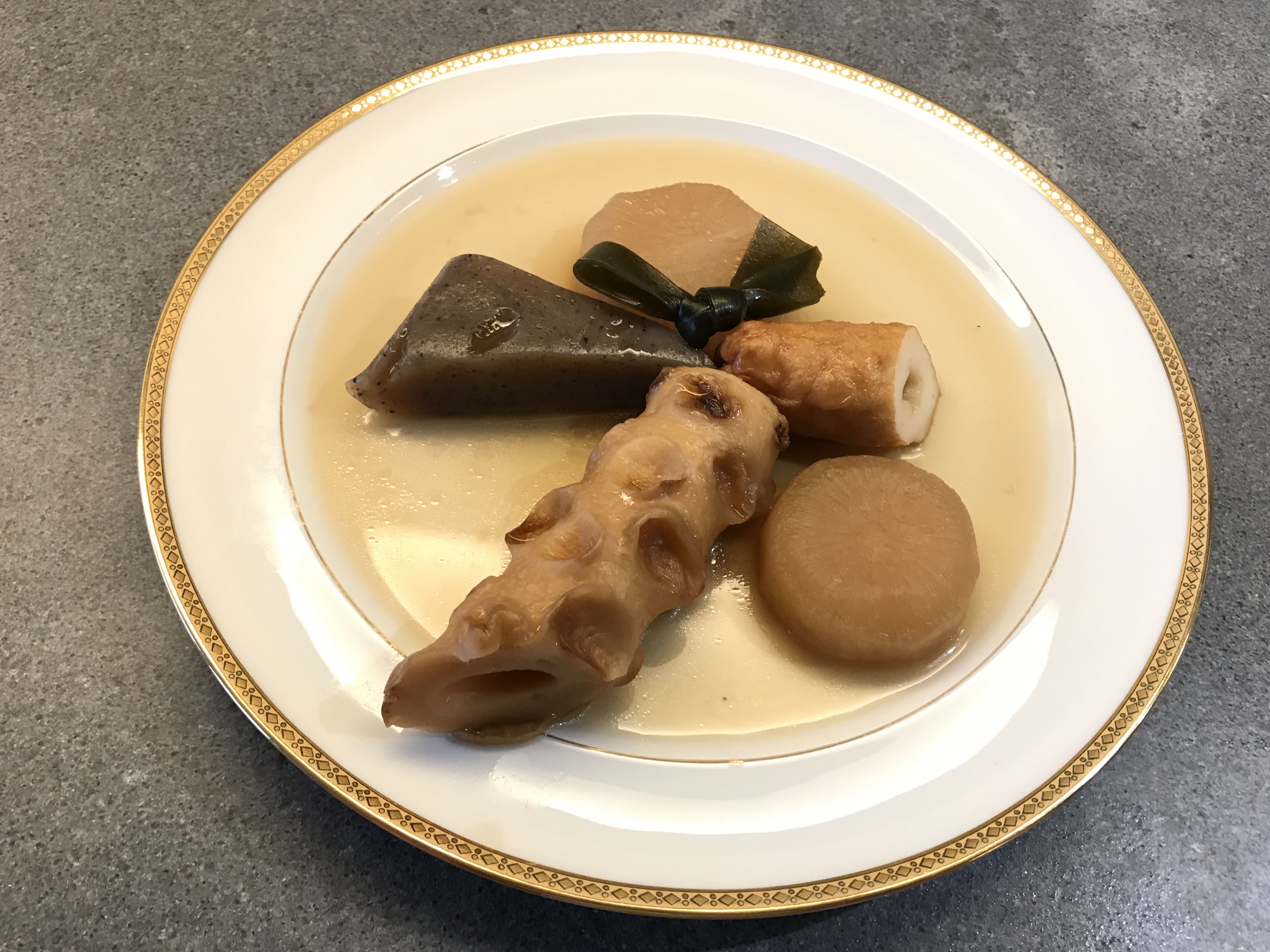
Oden

A Traditional Japanese Dish

If we say ‘Japanese food’, you will probably think ‘sushi’, ‘sashimi’, ‘yakitori’, perhaps ‘udon’. But Oden? Probably not. Such a shame because Oden is a really wonderful dish. Oden for lunch or as a course in a typical Japanese menu: tasty, light and full of surprises. Oden is a stew that requires a bit more work than you would expect and of course time. It also requires some shopping, given some of the ingredients are not easy to find.
We are not from Japan so we humbly present our version of this (wintery) classic. We hope it inspires you to cook Oden and enjoy it as much as we did.

Wine and Sake pairing

We preferred a glass of Chardonnay with the Oden during our dinner; others preferred a glass of cold sake. The stew is rich in flavours, umami of course, but not spicy, so we would not suggest a Gewurztraminer of a Sauvignon Blanc. A Chardonnay (with a touch of oak perhaps) will be a good choice.

What You Need

  • For the Dashi
    • 20 grams of Dashi Kombu (Rishiri Kombu)
    • 25 grams of Katsuobushi (Bonito Flakes)
  • For the Stew
    • One Daikon
    • Chikuwa Fish Cakes
    • One Pack Konnyaku
    • One Pack of Gobo Maki Burdockroot Fish Cakes
    • 1 sheet of Hayani Kombu
    • 2 boiled eggs
    • Abura Age Fried Tofu
    • Mochi (Sticky Rice Cake)
    • Soy Sauce (preferably one with less salt)
    • Mirin
  • Karashi

What You Do

Start by making one litre of dashi. This seems simple but requires precision. Clean the kombu with a wet cloth and put into one litre of cold water. Gently raise the temperature to 80° Celsius or 176° Fahrenheit. Remove and discard the kombu. Bring the liquid to a boil, add the katsuobushi, bring to a boil and immediately set heat to zero. Wait 5 minutes or so. The katsuobushi will sink to the bottom of the pan. Now very gently pass the liquid through a wet towel. Do not squeeze, just give it time. The result will be a great, clean dashi. Cool and set aside.
Next step is to peel the daikon and slice it (2 centimeters is best). Now use a sharp knife to plane of the edge of the daikon. This improves the presentation and it is supposed to stop the daikon from falling apart. Cook the daikon for one hour in water. Drain and set aside.
Step three is to cut the konnyaku in triangles and cook these in water for 15 minutes. Konnyaku is made from the konjac plant and is specific for the Japanese cuisine.
Step four is to cook the sheet of Hayani Kombu for 5 minutes. This is young kombu and edible, different for the one you used when preparing dashi. Let cool a bit, slice and knot ribbons. Not sure why, but is looks great when you serve it.
Now it’s time to add the dashi to the pan (should be a clay pot, but we stick to our Le Creuset), add one tablespoon of mirin, one (or two, depending on your taste) of soy sauce, add the daikon, the konnyaku and the fish cakes.
We served our oden as a course during dinner, so we limited the number of ingredients. If served for lunch add boiled eggs, fried tofu and mochi. The last two ingredients have to be combined by putting the mochi into the tofu.
Allow to simmer for at least 2 hours. Best is, as always, to serve it the next day.
Serve with some karashi (Japanese mustard, which is different from wasabi by the way).

Oden © cadwu
Oden © cadwu

Asparagus with Hollandaise

A Three Course Meal in One Thousand seconds

Many years ago Belgium television broadcasted a program called Duizend Seconden. In this show Herwig Van Hove, Chef and professor in chemistry) would create a three-course meal in 1000 seconds (or less). The show was hosted by Felice (Dré Steemans) who also assisted the Chef when necessary. During the show Herwig van Hove would not only show how things had to be done, but he would also explain why. He came up with the great yet simple idea to create Hollandaise using a microwave.

We all know that sauces like Hollandaise, Béarnaise and many more rely on raising the temperature in a controlled and slow way. That’s why we learn to use a bowl, a pan with gently simmering water, carefully avoiding direct contact between the bowl and the water, whisk, and whisk some more. Some add the butter gradually; others start with the complete mixture. Some add mustard (which is always a great way of creating smoothness and enhancing consistency) and others add corn starch (strictly forbidden). Others dash of to the supermarket and buy some hideous powder (you wouldn’t do that of course).
Back to Herwig van Hove: the crucial part is to add warmth to the mixture in a controlled and slow way. So why not use a microwave? It gives you all the control you need for a perfect Hollandaise.
We would love to add a link to YouTube, but alas, none of their many shows is on the channel.

Wine Pairing

We enjoyed our Asparagus and Hollandaise with a glass of Petit Sois, 2015, (produced by Bodegas Costers del Sio, Spain) which is a blend of Viognier, Chardonnay and Muscat. The Viognier brings a touch of freshness to the dish, which works well with the lemon in the Hollandaise. Combining white asparagus with Muscat is a classic. The Chardonnay is a bridge to the buttery aspect of the sauce. So the wine in your glass has multiple links to what’s on your plate, which makes it a truly wonderful dish.

What You Need

  • One Egg Yolk
  • 50 grams of Butter
  • 1 tablespoon of Water
  • ½ tablespoon of Lemon Juice
  • White Pepper
  • 4 Asparagus

What You Do

Melt the butter in the microwave on low power (10-30% of the power of your microwave, depending on the specifics of your oven). Make sure the butter is luke warm. Now whisk the yolk a bit, add the water and the lemon juice and whisk some more. Add this mixture to the butter and whisk some more. Now transfer to the microwave and give it let’s say 10 seconds of 30%. Remove from oven and whisk. Repeat. You will now feel the consistency changing. If not, don’t worry, just repeat the step. Towards the end of the cooking move to steps of 5 seconds on 10% power. Whisk, play and feel free to find your own way (it also depends on the amount of water in the butter, the temperature of the egg et cetera). When the Hollandaise is ready take it out of the oven, continue whisking gently and cool slightly in a bath of cold water.
In parallel steam the asparagus (depending on the size 25 or 30 minutes; they should be well done for this dish). Serve the asparagus with just a bit of white pepper and a generous helping of Hollandaise.


Veal Rib Eye with Morels

Morels or Not?

In January 2019 one person died and over 30 people became ill after having eaten at Riff, the one Michelin star restaurant in Valencia. Media were quick in their analysis and decided that it was caused by the morels in one of the dishes. Today (April 4th) it’s not yet clear what caused the catastrophe.

Most sources mention that Morels contain some kind of toxin, one that can be destroyed by heating the morels. So lesson one with morels is not to eat them raw; they must be sautéed for a few minutes. Luckily the taste improves when sautéing them a bit longer, let’s say 10 minutes, so the toxin should be gone by then. However… some people report an upset stomach after having eaten morels and drinking alcohol. If you’re not used to eating morels, it could be wise to eat just a few and see how you react.

Look-A-Likes

A clear risk with morels is the fact that some other mushrooms are true look-a-likes. For example the highly toxic early morel or wrinkled thimble-cap and other ‘false’ morels. So picking them yourself is not a good idea unless you are an experienced morel-hunter. If you buy them (like we do), then buy them fresh or dried from a reliable source.

China

Some media mentioned that the morels used at Riff were brought in from China. Is that a problem? Yes from a sustainability point of view and No from a morel point of view. Morels are found in abundance in North America, Australia, China, Poland, France, India, Pakistan and many other countries, so why distrust them when they originate from China?

Back to Riff

Our humble view is that morels are in the mushroom top three together with Cèpes and Truffle. We are perfectly happy to eat them, for instance combined with Veal. And we look forward to having dinner at Riff when we are in Valencia later this year.

Wine Pairing

We prefer a full-bodied red wine, for instance a Nero d’Avola. We enjoyed a glass of Vanitá Nero d’Avola Organico Terre Siciliane I.G.T. 2016. It goes very well with the rich flavours of the veal and the morels. The wine comes with raspberries, red fruits and just a touch of vanilla. It has medium sweetness and a hint of herbs and spices, almost cinnamon. A long aftertaste and light tannins.

What You Need

  • Rib Eye of Veal
  • Butter
  • Olive Oil
  • Morels
  • Veal stock
  • Spinach

What You Do

Fry the Rib Eye in a heavy iron skillet for a few minutes until (very) pink. Wrap in aluminium foil and allow to rest. Reduce the heat and if necessary add some extra butter to the pan. Add the cleaned and halved morels and sauté gently. Add some veal stock and juices from the rib eye. In a small pan heat some olive oil, add the dry spinach and stir constantly. Serve the rib eye with the sauce, the morels and the spinach. Spring on your plate!

Antonio Carluccio’s Oysters with Zabaglione and White Truffle

Carluccio’s Caffè

This year we celebrate 20 years of Carluccio’s Caffè. Over 80 restaurants in the UK to enjoy breakfast, lunch or dinner and enjoy the food that Antonio Carluccio loved. With their integrated food shop the Caffè’s make the Italian gastronomy available to all. Antonio Carluccio was chef, author and ambassador of Italian Food. His many books will continue to be an inspiration.

Luxury Item

He once mentioned that white truffles were his luxury item. In The Complete Mushroom Book (published in 2001) he included a wonderful recipe for Oysters with Zabaglione and White Truffle. The oysters are served with a zabaglione made from butter, white wine, egg yolks and truffle oil with thinly sliced white truffle on top of the sauce. The dish is a true miracle because of the umami, the saltiness and the earthiness; its exquisiteness and mouthcoating feel in combination with the dryness of the oysters.

We prepared the dish with fresh Bianchetti truffles. A bit more outspoken than the white Alba truffle, but very, very nice in this dish. We used our favourite île de Ré oysters because they are lean and fresh (not creamy).

Remember Bianchetti truffles are harvested and sold between January 15th and April 30th, so don’t wait too long!


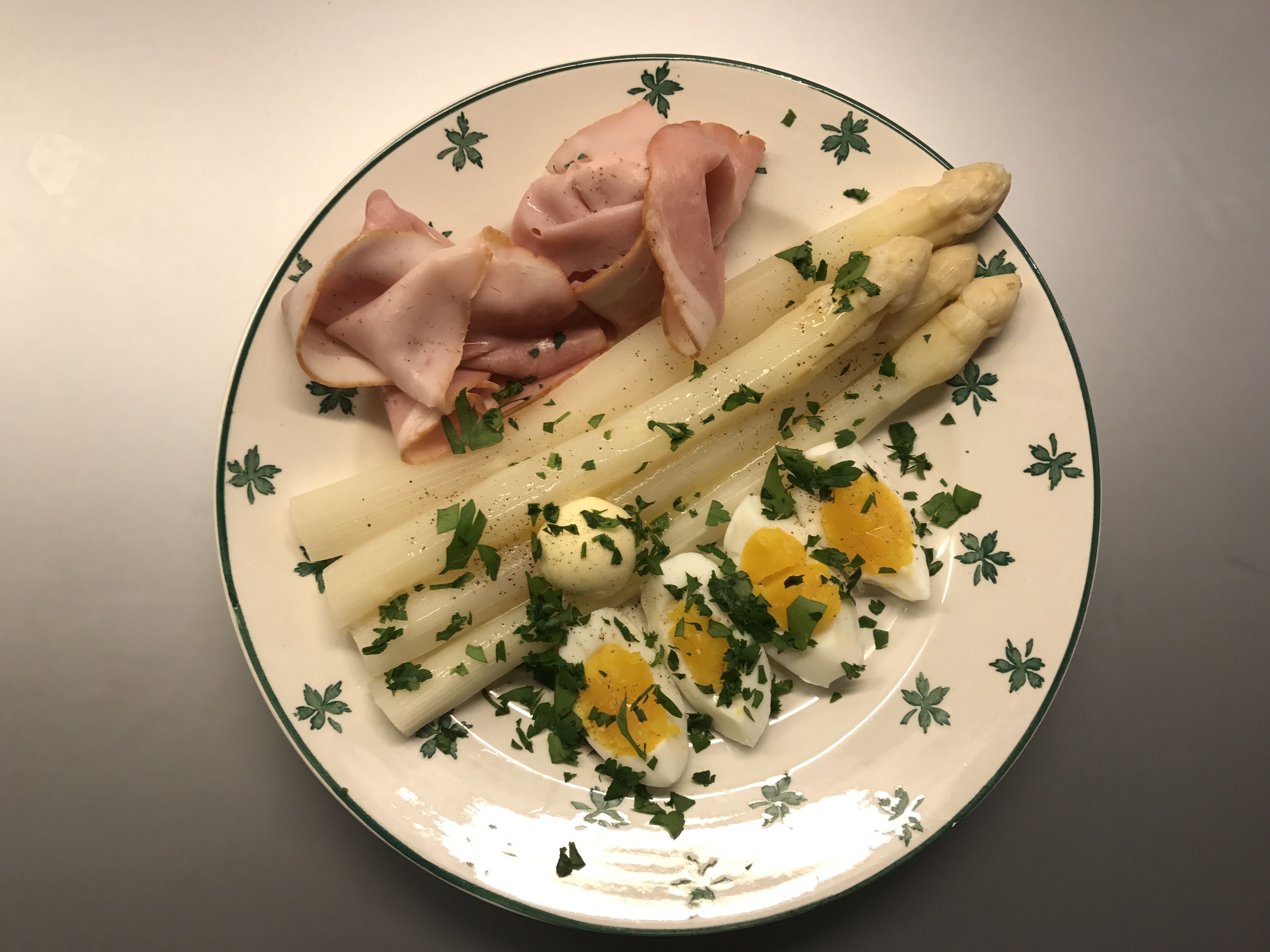
White asparagus with Egg, Ham, Parsley and Butter

A Classic

White asparagus is such a great vegetable! In this recipe we describe the classic way of serving asparagus: A la Flamande. This way you will be able to taste the slight bitterness and sweetness of the asparagus. The butter and egg bring a feeling of velvet to your palate, which is ideal to taste the asparagus. The parsley and white pepper give a touch of sharpness to the dish.

Wine Pairing

Serve the white asparagus with a dry Muscat from the Elzas. The delicate, slightly sweet but dry taste, the hint of bitterness and the rich aromas work very well with white asparagus. Muscat to us means the smell of fresh fruit. When drinking it is if you’re tasting the original grape. Wonderful wine and wonderful combination.
We recently combined the asparagus with a Riesling (2015, Trocken, Meulenhof) from the German Mosel region. Worked very well.

What You Need

  • 3 or 5 White Asparagus per person
  • 2 Eggs
  • 100 gram Ham
  • Parsley
  • Butter
  • White Pepper

What You Do

Steam the white asparagus and cook or steam the eggs medium, making sure the yolk is not set but also not running. Peel the egg and cut in four. Chop the parsley. Serve the asparagus and eggs warm on a plate. Dress the plate with ham (please make sure it has a bit of fat) and butter; sprinkle the parsley over the plate. Add some white pepper.
As an alternative warm the butter and pour it gently over the asparagus.

White Asparagus with Egg, Ham and Parsley

Grilled Asparagus with Parmesan Cheese

We enjoyed this dish as a starter when in Milan, on a beautiful evening, eating al fresco and enjoying the wonderful combination of the sweetness and bitterness of the asparagus, the slightly caramelised sugars as a result of grilling the asparagus and the salty and sweet cheese. A glass of Pinot Grigio was all we wanted. In Milan they served us green asparagus, but it works even better with white asparagus.
This is typically a dish you would make when the asparagus season is at its high and outside temperatures feel like summer. You could drink a Pinot Grigio, a Muscat from the Alsace region or a Rose with character. Remember the wine needs to combine with a range of very diverse flavours in the dish.

Here is what you need:

  • 2 Asparagus per person
  • Olive Oil
  • Parmesan Cheese
  • Black Pepper

Peel the asparagus and cook or steam until slightly tender. Depending on the size we would say 10-15 minutes in the Russel Hobss steamer. Leave and let cool. Take a plate, add some oil to the plate and use it to cover the asparagus in oil. Heat the pan and grill the asparagus for 4*1 minute, making sure you have a lovely brown (not too dark) pattern. Serve on a plate, add some grated Parmesan cheese and pepper. Add a generous drizzle of very good olive oil.


White Asparagus with Summer Truffle

From Spring to Summer

Time to celebrate! Summer has just begun and the Asparagus season has come to a close. So let’s bring the two together in this slightly extravagant dish. It is earthy, slightly bitter and sweet, velvety and complete.
The Summer Truffle (Tuber Aestivum) is not as intense and overwhelming as the Winter Truffle. It should be used immediately and preferably grated. It loses its taste when heated, so don’t use it for your Tournedos Rossini. This dish should be luke warm, so an excellent environment for a Summer Truffle. Take your time to appreciate the delicate combination in your plate.

Wine Pairing

We drank a glass of Italian Gewürztraminer with our Asparagus with Summer Truffle. This wine has a distinctive fruity flavour with hints of aromatic herbs. The area where the grapes are grown (Alto Adige) is relatively cool and sunny. As a result of this the Gewürztraminer grapes ripe well without losing their freshness. So the wine brings fruit, freshness, warmth and aromatic herbs, which works well with the earthy, aromatic truffle and the sweetness and bitterness of the asparagus. Parsley is essential because it brings freshness to the dish; nicely balanced with the velvety taste of the egg and butter. And butter is the ideal bridge between egg, asparagus and truffle.
In general a glass of Gewürztraminer is ideal with this dish, provided it has a touch of sweetness only. Sometimes Gewürztraminer is simply too sweet. This will not only ruin the hints of aromatic herbs in the wine; it will also ruin the delicate combination of asparagus with truffle.

What You Need

  • 4 Asparagus
  • 2 Eggs
  • 25 grams of Butter
  • 25 grams of Summer Truffle
  • Parsley
  • Black Pepper

What You Do

Cook or steam the asparagus. Make sure they are just done. Cook the eggs for 8-9 minutes. The yolk should not be completely firm. Cool the eggs in cold water, peel and mash with a fork. Add the finely chopped parsley and some black pepper. Taste. Melt the butter.
Put two asparagus per person on the plate, pour the warm butter over the asparagus, making sure they are fully covered, add the egg and finish by sprinkling the grated truffle. Poor a glass of excellent Gewürztraminer and enjoy the start of summer by eating the very last of this years asparagus.


Curry with Shrimps, Cardamom, Coriander and Ginger

A simple but very tasty main dish. Serve it with some rice and you will have a lovely and rich dish.

We enjoyed our curry with a glass of Spanish gewürztraminer. The white wine needs to be aromatic and herbal. The gewürztraminer should come with a touch of sweetness which links nicely to the coconut and the cardamom.

Here is what you need:

  • One small Red Onion or a bigger Shallot
  • Chilly Pepper (a quarter or a half, depending on the spiciness)
  • Garlic (both fresh and prepared)
  • Cardamom
  • Coriander (seeds and fresh leaves)
  • Ginger (fresh, 5 centimetres)
  • Nutmeg
  • 1 or 2 Djeroek Poeroet leaves (these are the leaves of the Makrut or Thai Lime (Citrus Hystrix); if fresh use 1 leave
  • Curry Powder
  • 6 – 10 fresh Shrimps
  • Coconut Milk (150 ml)
  • Olive Oil
  • Black Pepper

Clean the shrimps and remove the parts you don’t want to eat, especially the dark vein. This is actually the shrimp’s gastrointestinal tract, so not something you want to eat. Once cleaned, set aside. Cut the onion in four and then slice. Remove the seeds from the chilly pepper and cut the pepper in small bits. Fry the onion gently in a skillet with olive oil. Use a mortar to crush the coriander and cardamom seeds. Add the curry powder, the cardamom, the coriander, the grated nutmeg and the chilly pepper to the pan. Fry a bit more, making sure you get all the tastes. Now add one clove of fresh garlic, one prepared and the grated ginger. Fry and stir. Start adding the coconut milk and keep stirring. Add the djeroek poeroet. When the sauce starts to thicken, check if you have sufficient sauce for the shrimps. If not, add some more coconut milk. When thickened, add the shrimps and let cook for 4 minutes, maximum, depending on size. Cut the fresh coriander leaves. Just before serving add three quarters of the fresh coriander leaves to the curry and mix. Check if some black pepper is required. Sprinkle some more fresh coriander just before serving the dish.
Serve it with rice, preferably Camargue red rice because it offers such a wealth of taste. Indian Basmati will also do the trick of course.