A few years ago we created an overview of recipes per season, simply because it’s such a good idea to enjoy what is available in the season. Nice to eat strawberries in Winter, but isn’t it a much better idea to enjoy seasonal slow cooked pears?
We then introduced overviews per course, ranging from side dish to lunch. The categories didn’t always make sense, so we added a few more, making our admin more complicated, especially when we updated a recipe or a picture.
The obvious thing happened: we lost track of recipes, noticed some links were broken and the overviews became incomplete.
So how to organise this blog?
After much debate and intense workshops (not really) we’re pleased to present to you an old fashioned, up to date and very easy to use (and maintain) index of All Our Recipes For You!
End of June means end-of-season for asparagus, morels and ramson (wild garlic). But let’s not be sad! It’s also the beginning of Summer; time to dine al fresco and serve vibrant, light flavours. We combine the very last white asparagus with green asparagus, black olives and basil. Feel free to use green asparagus only. The dish will lose some of its bitterness and complexity but it’s still a great combination of flavours and aromas.
Wine Pairing
Best to enjoy with a full bodied and elegant red wine. Flavour-wise you’re looking for lots of fruit, mild tannins and a touch of wood. We enjoyed our asparagus with a glass of Cantine Due Palme Salento Il Passo Nero 2019. This wine from Puglia (Italy) is made from late harvested negroamaro grapes. Dark berry fruit, medium full tannins and a beautiful deep colour.
What You Need
Asparagus
Equal Amount of White and Green Asparagus
Basil
Black Olives (preferably Cailletier or Taggiasca)
Olive oil
Lamb Chops
Olive Oil
Thyme
Garlic
Black Pepper
What You Do
Peel the white asparagus and cut of the end. Wash the green asparagus and cut of the end. Slice the asparagus in nice chunks (4 centimetres or so). Combine the asparagus with olive oil and a nice amount of black olives. Transfer to the refrigerator. When ready for your al fresco dinner, heat your oven to 190˚- 200˚ Celsius (or 375˚- 390˚ Fahrenheit). Mix after 10 minutes and again after 20 minutes. The asparagus should now be ready (if not, another 10 minutes should do the trick). Add half of the basil leaves.
If you serve the asparagus with lamb chops: leave the chops to marinate in olive oil, crushed garlic and thyme for 24 hours in the refrigerator. Remove thyme. Heat a heavy iron skillet and fry the chops in olive oil (4 minutes depending on the size). When ready keep the chops warm in aluminium foil. Fry the thyme in the remaining oil. In parallel add more basil leaves to the asparagus and mix.
In the old days new mothers and their visitors were served Caudle, a combination of white wine, eggs, sugar, cloves, raisins, nutmeg and cinnamon. The idea was to strengthen the new mother and of course to celebrate the occasion. Dutch master Jan Steen painted De Kandeelmakers (The Caudle Makers) around 1665. Note the nutmeg grater!
The ingredients are not too dissimilar to those of Eggnog. Basically this is custard infused with various spices, such as vanilla, nutmeg, cinnamon and cloves. The custard is enriched with whole cream, rum/brandy/whisky/cognac and whipped egg white. Our Eggnog was very tasty, creamy and soft with the right push from the cognac. The spices worked really well, especially the nutmeg. We suggest not adding cream because it actually doesn’t bring much other than a fatty feeling in your mouth.
A less complex version is Ajerkoniakfrom Poland. It combines egg yolks with non-sweetened condensed milk, sugar and vodka (or plain alcohol). The result is a strong, smooth and sweet drink. The vodka worked very well with the eggs but we thought the condensed milk was a bit too present.
Making Caudle, Ajerkoniak or Eggnog begins with whisking sugar and egg yolks until it’s smooth, pale and creamy. This is called whisking the eggsruban and may take 10 minutes. Interestingly the result is a dish in its own right called Kogel Mogel.
We also prepared Advocaat from the Netherlands. It is a combination of eggs, alcohol and sugar (so no milk, cream or spices). It can be enjoyed as a drink (but our grandmother used a small spoon, probably because she didn’t want to be heard slurping). Our version is a bit thicker, making it ideal as a dessert.
What You Need
2 Egg Yolks
25 grams of Sugar
50 ml of Brandy, Gin or Vodka
Whole Cream
What You Do
Mix the egg yolks and the sugar well. It doesn’t need to become ruban but some increase in volume is needed
Now gently add brandy, gin or vodka
Transfer to the microwave and very gently heat the mixture. We used one interval of 10 seconds to start with and continued with intervals of 5 seconds. In total only 55 seconds on 30% power
Stir well after every interval until it becomes thick
The consistency must be similar to a thick pastry cream (crème pâtissière)
Cool quickly and store in the refrigerator
Serve with some whipped cream
PS Obviously you need fresh eggs when making Ajerkoniak, Eggnog, Kogel Mogel, Advocaat, Mayonnaise, Sabayon, Béarnaise, Kimizu et cetera. We don’t think eating fresh, organic eggs is a problem. Eating all kinds of additives, chemicals such as E102 – Tartrazineto make commercial Advocaat look as yellow as real Advocaat, unclear syrops, modified milk ingredients, guar gum, monoglycerides etcetera, that’s a problem.
In 2010 James Tanner published his inspiring book Takes 5: Delicious Dishes Using Just 5 Ingredients. Short shopping lists, easy recipes and tasty results: what more can you ask for! He could have included Onion Confit in his book, but he didn’t. Five ingredients: onions, olive oil, time and perhaps bay leaf and some water are all you need to create a condiment that is perfect with roasted meats and foie gras. It comes with subtle, natural sweetness and lots of umami.
Let’s first discuss the name: it is confit because it is cooked slowly, in fat, over a long period of time. It’s not chutney for the simple reason that it does not originate from India or Pakistan plus there is no need to add various herbs and spices. It’s also not marmalade because we don’t use the peel of the onion.
Onions contain a chemical substance called inulin (also to be found in for instance bananas and Jerusalem artichokes) and given time and warmth it will breakdown into fructose: fruit sugar. Vinegar stimulates this process. So it’s yes to adding vinegar and no to adding sugar.
So how to turn white onions into a deep brown confit? Obviously we don’t add brown caster sugar (as unfortunately so many recipes suggest). Perhaps use balsamic vinegar? Nice try, but no. The only thing you need to do is to cook the onions on very low heat for 8 hours or so.
Wine Pairing
We served our Onion Confit with Terrine de Foie Gras on toast and a glass of Coteaux du Layon produced by Château de la Roulerie. This is a slightly sweet, golden white wine, made from Chenin Blanc grapes. In general a late harvested, not too sweet wine will be an excellent choice but you could also go for a glass of Champagne or Gewurztraminer.
What You Need
4 White (or Spanish) Onions
Olive Oil
1 tablespoon of Vinegar
Optional
Bay Leaf
Water
What You Do
Peel, slice and quarter the onions. Warm a heavy enamelled iron pan, add olive oil and add the onions. Allow to simmer on very low heat for 30 minutes. Add the vinegar and allow to simmer for an additional 8 hours. Check every hour, give a gentle stir and if needed add some water. Let cool and store in the refrigerator. It will last for a week.
So much to tell about this plant! It originates from North America (so nothing to do with Jerusalem), its flowers are beautiful and resemble sunflowers, its tuber contains inuline (hence the sweetness) and the taste does make you think of artichokes. Other names include earth apple, topinambour (such a mysterious name!) and sunroot. Once a popular, cheap, nutritious vegetable, now nearly forgotten. Most people cook or steam the tuber and turn it into a mash. Works well, especially when you add some excellent olive oil or some crème fraiche. Jerusalem Artichokes only contain a very limited amount of starch, so you could use a blender, but we prefer using a fork and passing it through a sieve because the mash becomes glue easily. A better idea is to quarter the Jerusalem Artichokes and cook them gently in olive oil with nutmeg, onion and garlic. When nearly ready add a glass of white wine and some stock, reduce the liquid and serve as a stew. Jerusalem Artichokes can be used in many ways, you can eat them raw, use them as a basis for a soup, combine them with other seasonal vegetables in the oven, et cetera. We treated them as potatoes and served them with excellent beef and Brussels sprouts.
Wine Pairing
Your choice of wine is of course much influenced by the way you prepare the tubers and what you serve with them. In our case we suggest a Valpolicella Ripasso: red fruit, cherries, not too much tannins, fresh and zesty. Works very well with the sweetness of the Jerusalem Artichokes and the slightly nutty taste of the Brussels sprouts. Or should we say the slightly nutty taste of the Jerusalem Artichokes and the sweetness of the Brussels sprouts?
What You Need
Jerusalem Artichokes
Olive Oil
Butter
What You do
Wash the tubers and steam them for 20 minutes or so, depending on the size. You could also cook them, but be careful since they overcook easily. Another option is to put them in the oven for an hour or so on 80° Celsius or 175° Fahrenheit (for instance when you are preparing Choucroute). Let cool. Peel and slice the tubers. Warm a non-stick pan, add olive oil and perhaps some butter. Fry the slices gently. Take your time and watch carefully, the fructose in the Jerusalem artichokes burns easily.
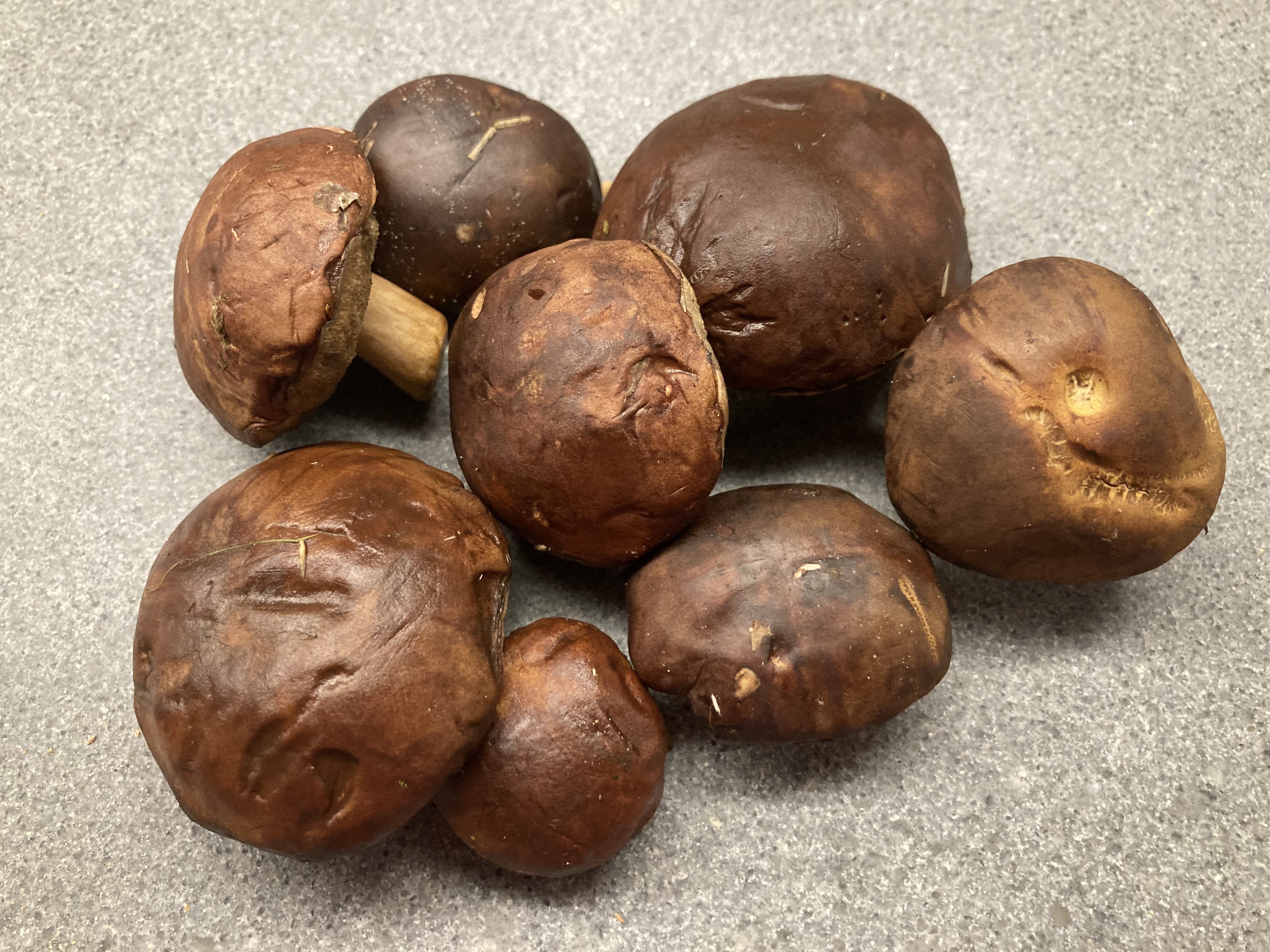
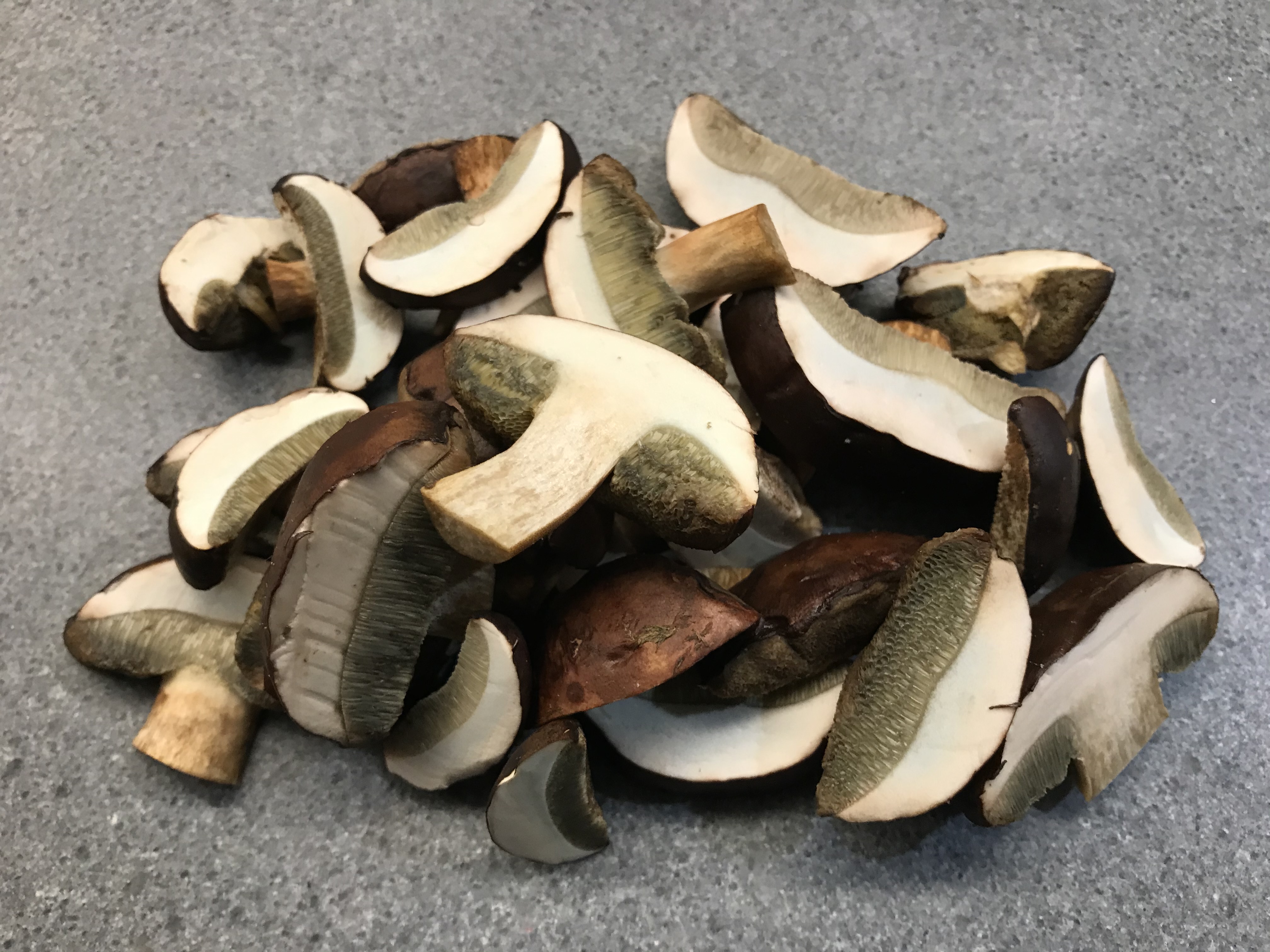
We are all familiar with the white (button) mushroom, also known as Champignon de Paris. The Chestnut Mushroom is the same mushroom, just with a light brown, chestnut coloured cap. Its taste and texture are more intense compared to the classic white mushroom. A Chestnut Bolete is a different kind of mushroom. It is small, chestnut coloured when young and beige when older. The German name of the Chestnut Bolete refers to rabbits, the Dutch name to cinnamon and the French name to chestnuts. The overall colour of a Bay Bolete is brown and its cap is bay, the reddish brown colour of many horses. Or is it chestnut? In German and Dutch the name of the Bay Bolete refers to chestnuts; in French it refers to bay. The official name of the Bay Bolete is Imleria badia, but also Boletus Badius because it’s related to Boletus Edulis, also known as cèpes or Porcini.
Let’s talk about flavours and aromas, that’s probably more interesting. Bay Boletes are as tasty as cèpes. The texture is a bit softer and the mushroom itself more moist. It’s actually a very common mushroom in Europe, China, Mexico and North America. Sadly, this very tasty, not expensive bolete is hard to find in shops and on markets. So if you see them, buy them immediately. Following the recipe for Cèpes à la Bordelaise is a good idea.
Wine Pairing
Enjoy with a glass of medium bodied red wine with aromas like berries and plums, for instance a Beaujolais Côte de Brouilly. It’s such a pity that the appreciation of Beaujolais wine is dominated by the (faded) popularity of Beaujolais Primeur and the idea that Beaujolais is a simple and light wine. It’s not. When you have the opportunity, taste a glass of Régnié, Morgon or one of the other 10 crus of the Beaujolais. Welcome to the divers and exciting world of Beaujolais wines!
What You Need
200 gram of Bay Boletes
Shallot
Red Meat (Deer in our case)
Jerusalem Artichokes
Chicken Stock
Olive Oil
White and Black Pepper
Excellent Olive Oil
What You Do
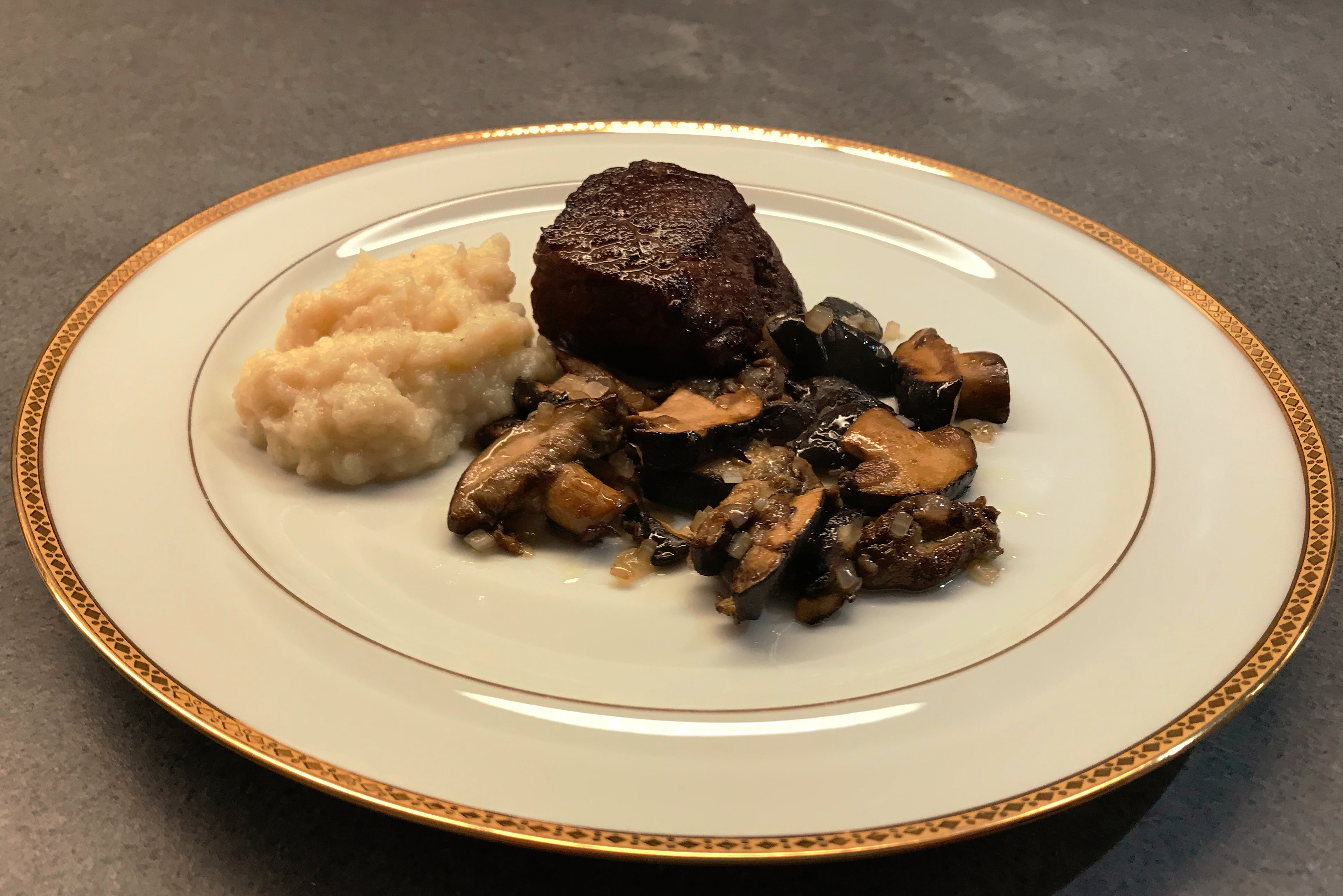
Clean the Jerusalem artichokes and cook them for 10 minutes or so until tender. Mash with a fork or spoon and pass through a sieve. Don’t use a blender, unless you enjoy eating starch. Cool and set aside. Clean the bay boletes with kitchen paper and slice them (not too thin). Chop the shallot. Add olive oil to a relatively hot heavy iron skillet. Reduce the heat and fry the boletes for 10 minutes. Add the chopped shallot. Cook on medium heat for 5 minutes. Stir and add fresh black pepper. In parallel fry the meat very quickly in a hot skillet and let rest for 10 minutes. Warm the purée of Jerusalem artichoke, add a tablespoon of chicken stock, some white pepper and a drizzle of excellent olive oil. Mix with a spoon. Serve on a hot plate.
Porcino, Steinpilz, Eekhoorntjesbrood, Cèpe de Bordeaux, Penny Bun, Seta (de) Calabaza, Herrenpilz: a diverse range of beautiful names referring to one of the tastiest and most common mushrooms (in Europe): the Boletus Edulis.
The French name refers to the city of Bordeaux and is linked to the classic dish Cèpes à la Bordelaise. It brings out the texture and the flavours perfectly. The standard ingredients of the dish are cèpes, (fresh of course, the dried version can’t be compared to the real, fresh mushroom), olive oil, pepper, shallot and parsley. Some people add breadcrumbs (which doesn’t add any flavour so forget about it).
The interesting aspect of the Bordelaise is that the caps and stalks are separated. The caps are cooked for some 15 minutes; the chopped stalks for 5 minutes. This is a really clever approach because the caps become very tasteful and moist, while the chopped stalks add volume and texture. The downside (we think) is that the shape of the mushroom is gone. That’s why we prefer to slice the mushroom vertically in six parts. Two slices of the side of the cap, two centres (stalk with cap) and two slices of stalk (to make the stalk-with-cap slices more even). We chop the last two slices.
Originally Cèpes à la Bordelaise is a starter, but we prefer to combine it, for instance with an omelet as a starter or with beef or fillet of deer as a main course.
Wine Pairing
This very much depends on how you serve your Cèpes à la Bordelaise. If served as a starter we could imagine a glass of Bordeaux (quelle surprise!). In general a full bodied red wine with gently fruit and present tannins will be a great choice. With our omelet we drank a glass of Bodegas Mocén Selección Especial made from verdejo grapes. This Spanish wine hasbig aromas, for instance ripe tropical fruit. In the mouth it is fresh, fruity, round and balanced. Not too complex. With our beef we enjoyed a classic Medoc: Château Moulin de Taffard with aromas and flavours of red fruit. It is well balanced, with rich, smooth tannins.
What You Need
For the Cèpes à la Bordelaise
200 gram Cèpes (or 300 gram if you serve it as a starter)
Olive Oil
One Shallot
Parsley
Black Pepper
For the omelet
Two eggs
Parmesan Cheese
Butter
For the Beef
150 gram of excellent Beef (we served Rib Eye)
Olive Oil
What You Do (Cèpes à la Bordelaise)
Clean the mushrooms and slice. Chop the remainder of the stalks. Chop the shallot and the parsley. Add olive oil to a relatively hot heavy iron skillet. Reduce the heat and fry the caps and centre slices of the mushrooms for 5 minutes. Turn and fry for another 5 minutes. Add the chopped stalks and the shallot. Cook on medium heat for 5 minutes. Stir gently, making sure the chopped stalks are nicely coloured. Add chopped parsley, stir and add fresh black pepper. Serve on a warm plate.
What You Do (Omelet)
Whisk the two eggs and add a bit of fresh Parmesan Cheese. Warm a very small heavy iron pan (or a non stick pan if that’s what you prefer) add the mixture and let it set on low heat. This could easily take 10-15 minutes. The omelet must be moist (baveuse) and the bottom may not be colored. Quarter the omelet and serve with the Cèpes à la Bordelaise.
What You Do (Beef)
Transfer the beef from the refrigerator a few hours (not 30 minutes, that’s too short) before you start cooking. It’s important that the meat is at room temperature. Heat a heavy iron skillet, add olive oil and fry quickly. Let rest. Slice the beef and serve on top of the Cèpes à la Bordelaise.
A beautiful flower and an intriguing ingredient. A large artichoke with some mayonnaise, mustard and vinegar makes for a wonderful, relaxing starter. The smaller ones are great when turned into a salad or when served with tagliatelle as a starter. Steaming is the ideal way to prepare artichokes. The flavour remains intact and the leaves will become soft yet firm. Don’t be tempted to buy preserved artichokes hearts. In most cases these are only about marinade, vinegar, sugar and unidentified spices. Whereas artichokes should be about taste and especially texture. It’s a thistle you’re eating and not something white and fluffy from a jar. Key to this salad is the combination of artichokes and thyme. Lots of thyme! Enjoy the light, earthy and slightly bitter flavour of the artichokes in combination with the aromatic thyme.
Wine Pairing
You can serve this salad to accompany an aperitif, or with some bread as a starter.
What You Need
6 small Artichokes
Olive Oil
(White Wine) Vinegar
Mustard
Thyme
Black Pepper
What You Do
Remove the stem of the artichokes and steam the artichokes for 30 – 45 minutes, depending on the size. Remove and let cool. Peel of the first layers of the outer leaves. Make the dressing by combining the oil and vinegar and then adding the mustard. Cut the artichokes in 6 or 8 parts. Add the dressing to the artichokes, mix well, making sure all artichokes are coated. Sprinkle lots of thyme and carefully mix again. Put in the refrigerator for at least 3 hours. Mix again, taste, add black pepper and perhaps some more thyme and serve!
Fennel and radishes go together very well. Radishes come with a spicy, piquant flavour; fennel comes with the flavour of anise. Both have a touch of sweetness and a lovely crunchy texture. Combine with a simple dressing of oil and vinegar and you’ll have a tasty salad. But, yes, agreed, something is missing. What to add? Search the Internet and you’ll find additions such as lemon (zest and juice), cucumber, apple, Parmesan cheese et cetera. All very nice, but we think the not-very-obvious third ingredient is tarragon. It supports the anise flavour and unites the fennel and the radishes, especially after two of more hours in the refrigerator.
When on the Internet you will also see that most chefs put the vegetables in ice-cold water to make them extra crispy and that using a mandoline slicer is required. We much prefer coarsely dicing the ingredients in order to create one, flavourful, refreshing salad. By dicing the ingredients and letting the salad rest, the flavours will be much better distributed. Take your time to chew, allow the salad to linger in your mouth and enjoy the development of the flavour.
Food Pairing
Fennel and tarragon point in the direction of fish, which is indeed a good idea, provided the fish is one with lots of flavours. Think monkfish, skate, mackerel, red gurnard et cetera. You could also think of a home-made burger with first class beef, mustard, spring onion, a splash of soy sauce, Worcestershire sauce, garlic, black pepper, capers and dill.
What You Need
One small Fennel
Ten Radishes
Three sprigs of Tarragon
Olive Oil
White Wine or Cider Vinegar
What You Do
Cut the fennel and radishes into small cubes. Cut a large amount of tarragon leaves; similar size. Make a dressing with olive oil and vinegar. Don’t make the dressing very oily and don’t make too much dressing, it should only coat the ingredients. Combine in a bowl, mix well and store in the refrigerator for at least two hours. Just before serving taste the salad. You may want to add some vinegar.
Today April 27th we celebrate the King’s Birthday in the Netherlands. Hip hip hurrah! The Dutch Royal Family is known as the House of Orange-Nassau, hence the link to anything orange (oranje in Dutch), including a liqueur called Oranje Bitter. It’s not many people’s favourite; most people prefer another traditional drink: lots of beer.
There are many recipes for Oranje Bitter; most of them with too much sugar and undefined herbs. We prefer the more classic version produced by Van Wees and De Ooievaar. Their Oranje Bitter is made with Pomerans (Citrus Aurantium, the bitter orange) and Curaçao peel.
Our grandmother wasn’t a big fan of Oranje Bitter, but she felt she had to serve it on the (then) Queens Birthday. She combined one tradition with another: she made Dutch Advocaat using Oranje Bitter. Basically Advocaat (similar to Eggnog) is a sabayon-like drink made with egg yolks, sugar, vanilla and a strong alcohol (brandewijn, gin, vodka or grappa), served in a nice glass with a small spoon and possibly topped with whipped cream (but no need for that).
Grandmother cooked her advocaat Au Bain Marie; we prepare our Royal Sabayon using a microwave oven.
What You Need
3 Egg Yolks
30 grams of Sugar
80 ml of Oranje Bitter
What You Do
Mix the egg yolks and the sugar well. Make sure the sugar is dissolved before adding the liquid. Transfer to the microwave and very gently heat the mixture. We used intervals of 10 seconds to start with and intervals of 5 seconds to finish. In total only 75 seconds on 30% power. Duration depends on the power of your microwave. Stir well (or whisk, but not too much) after every interval until it becomes thick. The consistency must be similar to a thick pastry cream (crème pâtissière). Cool quickly and store in the refrigerator.
PS Obviously you need fresh eggs when making a sabayon, mayonnaise, béarnaise et cetera. We don’t think eating fresh, organic eggs is a problem. Eating all kinds of additives, unclear syrops, modified milk ingredients, guar gum, monoglycerides et cetera, that’s a problem.