Fennel

The bulb, the seeds, the leaves: fennel is such a generous plant! The bulb (the swollen base of the stem) can be cooked, grilled, stewed, used in salads or steamed. The leaves are great for decoration or in a salad and the crushed seeds can be used on their own or in a combination like five-spice powder. Overall fennel has an anise-flavoured, warm, sweet taste. 

We slow cook the bulb, capturing all the lovely flavours and creating a soft, fibrous texture. You could add star anise or some orange peel to the stew. We prefer adding a splash of pastis, because it adds depth to the fennel. We recommend pastis as produced by Henri Bardouin, because of its excellent, delicate taste.

We prepare the fennel using a cartouche. This way you get the tastiest moist fennel ever.

What You Need

  • Fennel Bulb
  • Pastis
  • Butter

What You Do

Use baking paper to make a cartouche. Remove the outer leave(s) of the fennel if so required. Slice the fennel in 4, from top to bottom. Slice every quarter in 3 to 6 segments, from top to bottom. The idea is that every segment looks a bit like a fan. Trim of parts that don’t look nice, but don’t remove the bottom. If you do remove it, the fan will fall apart.

Warm a heavy pan, add a very generous amount of butter, a splash of pastis and the sliced fennel. Cover tightly with the cartouche and leave on low heat for an hour or so, perhaps longer. Feel free to stir gently every 15 minutes. The fennel should be soft, sweet, anise-flavoured and rich. When serving, poor the remaining liquid over the fennel.
We served our fennel with Confit de Canard and enjoyed it with a glass of Bardolino.

Asparagus!

Only a few days left before the end of the asparagus season on June 24th! So dash off to your greengrocer and buy some lovely asparagus, white, green, purple, it’s all fine and great, as long as they are locally farmed and fresh.

The classic way of preparing asparagus is to cook (or better: steam) them. You can pair the steamed asparagus with kimizu (the beautiful, light, golden Japanese sauce made with egg yolks and rice vinegar) Hollandaise, morels or scrambled eggs with shrimps. Classic way to serve them is à la Flamande (mimosa of egg, butter, parsley and nutmeg). You could add boiled eggs, ham and new potatoes to have a nice dinner. Or if you want to spent more money, then you serve them with summer truffle or with Sauce Périgueux.

Grilling the asparagus is also possible, simply serve them with excellent olive oil and grated Parmesan cheese.

Parhaps as a salad on a summers evening? Of course, with a delicious dressing made of white wine vinegar, olive oil, a touch of honey and lots of chervil.

A more exotic way of is to fry the asparagus with black olives and basil. Goes very well with lamb.

Wine Pairing

The obvious choice is a glass of Pinot Blanc, although we actually prefer a dry Muscat in combination with a classic preparation such as à la Flamande. Depending on the dish it could also be a Verdicchio, an Albariño or perhaps even a Portuguese Vinho Verde. Feel free to experiment; yesterday we enjoyed our asparagus with a glass of wine made of muscat and picpoul grapes. Delicious combination! The wine comes from the Pont Du Gard region (near Nimes, France) and is produced by Château Mourgues du Grès.
A more serious rosé is a perfect choice when you grill the asparagus, for instance a glass of Domaine Vico Corse Le Bois du Cerf Rosé 2021. This exceptional rosé from Corsica is made of grenache and sciacarello grapes. It is medium bodied and fresh with aromas of red fruit with a complex, long and fruity taste.
A pinot noir or grenache based wine is great when you fry the asparagus, depending on the preparation of the meat.

Asparagus ©cadwu
Asparagus ©cadwu

Mushroom Caponata

There must be hundreds of recipes for Caponata. The dish originates from Sicily and should contain (at least, we think so) eggplant (aubergine), celery and vinegar. Sugar is often added to enhance the sweetness and intensity. Nowadays it’s often a combination with tomatoes, shallot, capers, olives and perhaps raisins, pine nuts, oregano and basil.
The flavour of caponata should be slightly bitter (the eggplant) with a touch of sweetness (sugar, onion), acidity and saltiness (celery). The texture should be moist, but not sauce-like.
We love to enhance the flavours by adding mushrooms. And since we’re not keen on using sugar, we make sure the onions bring sufficient sweetness.

Enjoy your caponata as an appetizer, for instance with some crusted bread or bruschetta. A nice glass of white wine or rosé will be perfect with it. It’s also great as a side dish, with fish or even merguez.

Whatever the combination, caponata must be made one day ahead.

What You Need

  • 1 Aubergine
  • 200 grams of Mushrooms (preferably a mix with Shiitake)
  • 1 Red Onion
  • 1 Garlic Clove
  • 1 cm Red Chilli Pepper
  • Parsley
  • Celery
  • 2 tablespoons of White Wine Vinegar
  • Olive Oil
  • Fine Salt

What You Do

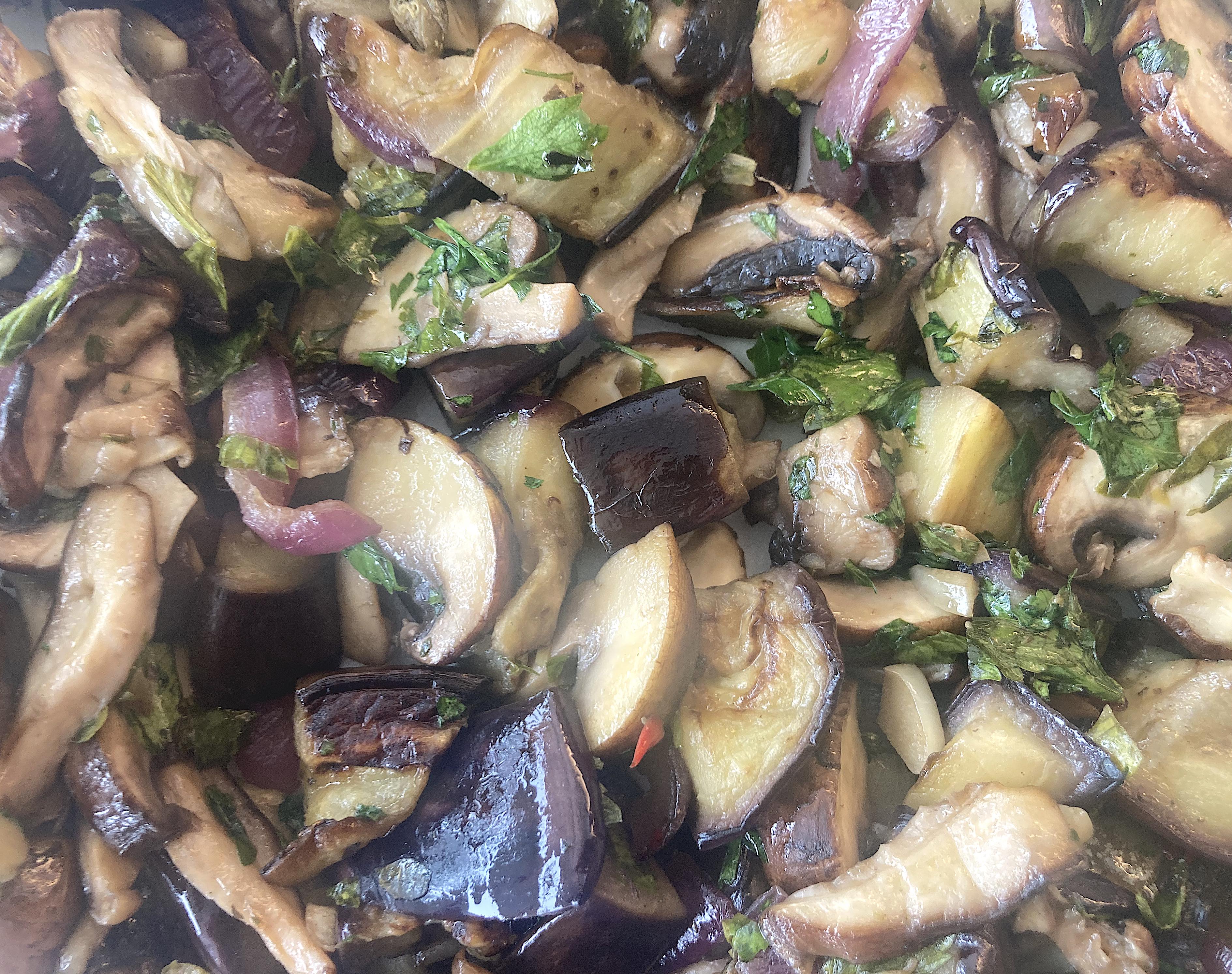
Wash the eggplant and slice. We slice the eggplant lengthwise in 8 and then we slice these strips. Salt them generously, transfer to a sieve and allow to drain for one or two hours. The more liquid they lose, the better! Rinse the eggplant with cold water and dry them with a kitchen cloth. Fry the aubergine in a heavy iron skillet until nicely golden brown. Set aside. Slice the red onion, clean and chop the mushrooms. Chop the garlic and the chilli pepper finely. Add some olive oil to the pan and fry the onion. Remove and set aside. Now fry the mushrooms. After 5 minutes or so add the garlic and the chilli pepper. After a few minutes add the mushrooms and the eggplant to the pan. Add chopped parsley and celery. Mix well. Add two spoons of white wine vinegar and leave on low heat for 10 minutes. Add black pepper to taste. Transfer to a plate and let cool. Keep in the refrigerator for the next day.

Takes 5

You can’t have enough cookbooks. Some make you think back of a holiday, others are written by chefs you admire, and some are technical or about specific ingredients. There is always room for just one extra cookbook.

Once in a while, when you’re looking for inspiration, you browse through a number of books, look at the pictures, read recipes and you think: ‘far too many ingredients, far too complicated’ for a not very inspired evening.

James Tanner

Fortunately, you remember one very special cookbook: James Tanner Takes 5: Delicious Dishes Using Just 5 Ingredients with over 90 recipes, ranging from Roasted Red Bell Peppers with Anchovies to Scones. Short shopping lists, easy recipes and tasty results: what more can you ask for! Isn’t it great, Chocolate MousseFigs with Honey or Toad-in-the-hole

James Tanner (1976) is a British chef and author. Together with his brother Chris he runs a restaurant in Kent, The Kentish Hare. He appeared as a tv-chef on shows like Ready Steady Cook (remember The Quickie BagGreen Pepper and Red Tomato?).

Favourite

Our personal favourite is a small chicken (preferably a coquelet, a young rooster) with a paste made of red peppers, pure creamed coconut (santan), lime and cilantro. It’s easy to make and the result is very tasty. Serve it with some bok choy in oyster sauce and you have a lovely meal. He enjoys it with a cold beer, we prefer a glass of rosé, for instance Chiaretto di Bardolino DOC made by Monte del Frà from Italy. A pale, pink wine with floral and fruity aromas. Dry with medium acidity, limited tannins and delicate flavours. Excellent with the chicken and the coconut.

Takes 5: Delicious Dishes Using Just 5 Ingredients was published in 2010 and is available (probably second hand) via the well-known channels for something like 20 US dollar or Euro.

Mushroom Tapenade

Years ago our favourite green grocer was the shop of Joop and Trudi Petersen, close to Amsterdam’s China Town. Not only did they sell the tastiest vegetables, fruit and mushrooms, but they also sold homemade mash (the one made with potatoes and rapini (or broccoli rabe) was wonderful), desserts, ravioli with pumpkin and Trudi’s mushroom tapenade. When Joop turned 65 in 2008 they retired and closed the shop. Obviously, we asked for the tapenade recipe, but alas, all we got was a nice, friendly smile.

In our post about the Mushroom Book by Michael McLaughlin and Dorothy Reinhardt (Illustrator) we mentioned that the recipe for Mushroom Tapenade is amongst our favourites. His tapenade is a combination of mushrooms, garlic, various herbs, red wine, anchovies, black olives and capers. Very nice, tasty and powerful, but not as delicious as Trudi’s version.

Mushroom tapenade comes with lots of umami, thanks to the mushrooms and the olives. Thinking back of Trudi’s tapenade, we’re pretty sure she enhanced the umami flavor, probably by adding some oyster sauce from the toko next door. We think that the recipe below is very close to what she created.

What You Need

  • Fresh Button Mushrooms and Shiitake (ratio 2:1)
  • 2 Garlic Cloves
  • Olive Oil
  • Thyme and Rosemary
  • White Wine
  • Black Olives
  • Excellent Olive Oil
  • Black Pepper
  • Half a teaspoon of (Thai) Oyster Sauce

What You Do

Don’t use dried mushrooms. In general they have a nasty, bitter taste, not even close to the flavor, aromas and textures of fresh mushrooms.

  1. Clean and chop the mushrooms.
  2. Finely chop the rosemary, the thyme and the garlic.
  3. Fry the mushroom in olive oil in a heavy iron skillet.
  4. Reduce heat, add herbs and garlic.
  5. After 10 minutes add a splash of white wine.
  6. Continue on low heat and wait until the wine and juices have evaporated. No rush.
  7. Transfer the mushroom mix to a plate, let cool
  8. Chop a few black olives and add these to the mix.
  9. Transfer to a kitchen aid and on low-speed start adding excellent olive oil. The result should be a tapenade, so not smooth and not oily.
  10. Add black pepper to taste.
  11. Add a small amount (1/4 teaspoon to begin with) of (Thai) Oyster Sauce. Be very careful, it should only enhance the umami.
  12. Store in the refrigerator for at least one day before using.

Season’s Greetings

Perhaps you’re looking for some extra inspiration menu-wise for the Holiday Season? Let us help you with a few suggestions.

Apéretif

It’s of course great to serve a glass of Champagne, but why not start with a glass of Crémant de Bourgogne or Alsace? Or a Spanish Cava? The fun is that you can buy a slightly more expensive Crémant or Cava and enjoy a refined sparkling wine. Serve with Terrine de Foie Gras on toast or with a small prawn cocktail, served in a peeled tomato.

Starter

Scallops with fluffy cauliflower purée is a wonderful combination of flavours. The practical advantage is that you can prepare the purée a day ahead and grilling the pancetta is also something you can do in advance. Serve with a glass of Sauvignon Blanc. Dry, some acidity, touch of fruit.

Main Course

Canard à l’Orange, served with steamed Brussels sprouts and potatoes fried in butter: a dish that supports the festive character of your evening: sweetness, a touch of bitterness and crispy, rich potatoes. Enjoy with a beautiful Bordeaux. In general you’re looking for a powerful red wine, with aromas of berries and a touch of oak. The flavour must be round and long with subtle tannins.

Cheese

We tend to go for the classic combination of Stilton and Port. Spend some money and buy a Late Bottled Vintage Port.

Dessert

Continue the British tradition and enjoy a slice of Christmas Pudding with a coffee and a glass of Cognac or Calvados. No need to serve the pudding with brandy butter.

Season’s Greetings 2021 ©cadwu

The Art of Sauces: Classic Tomato Sauce

This recipe goes back to the days of Antonina Latini who published a recipe for a tomato sauce in his Lo Scalco alla Moderna (The Modern Steward, or The Art of Preparing Banquets Well) in 1692. Marie-Antoine Carême wrote about Latini’s recipes and Auguste Escoffier positioned the sauce as a leading (mother) sauce.

The sauce is different from a modern, vegetarian tomato sauce, for instance because one of the ingredients is salted pork, which obviously brings saltiness and depth to the sauce, in a very natural way. 
The sweetness of the tomato is supported by carrots, onions and various herbs, making it a much more complex sauce. The flavours and aromas of the tomatoes benefit from the rich and tasteful context. This also supports the concept of a leading sauce: you can use it as a starting point for other sauces.
The texture of the sauce (it’s not smooth) in combination with the fat creates a very pleasant mouthfeel.

Sauce Tomate has many derivatives, such as Sauce PortugueseSauce Marinara and even Ketchup. In one of our next posts we will describe how to make Sauce Provençal and Oeuf à la Provençal (eggs poached in tomato sauce).

What You Need

  • 200 grams of Salted Organic Pork (not smoked)
  • ½ Leek
  • 1 Carrot
  • 1 Celery Stalk
  • 1 Shallot
  • 2 gloves of Garlic
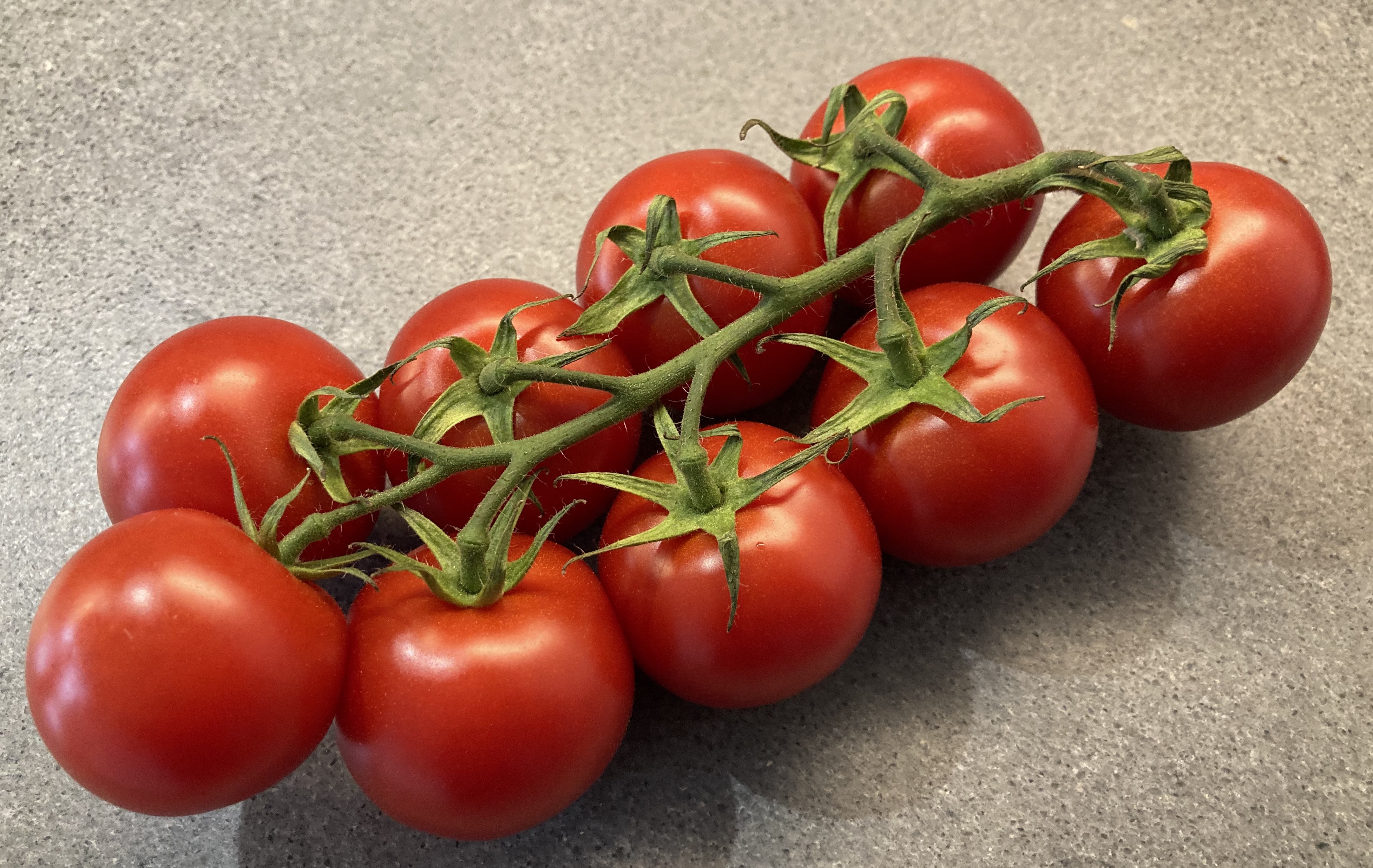
  • 4 – 6 Excellent Ripe Tomatoes
  • White Stock (Veal preferably)
  • Bouquet Garni (Parsley, Thyme, Bay Leaf, Rosemary)

What You Do

  1. Start by cleaning and chopping the vegetables
  2. Wash, dry and dice the salted pork
  3. Render the pork meat on medium heat in a Dutch oven
  4. Once lightly coloured add the leek, carrot, celery and shallot
  5. Allow to cook for 5 to 10 minutes
  6. You’re looking for a bit of colour, but not too much
  7. Add the tomatoes and the garlic
  8. Once warm, wait for a few minutes before adding some white stock
  9. This is a tricky part: if you add too much stock your sauce will be thin. Therefore some recipes suggest adding flour. We decided against it because we want a natural consistency
  10. Now it’s a matter of simmering, either in the oven or on low heat
  11. Allow to simmer for 90 minutes.
  12. Remove the pork meat from the sauce
  13. Pass the sauce through a sieve, making sure you capture all those lovely juices
  14. It’s hard work, but the remainder in your sieve should be as dry as possible.

The Art of Sauces: Modern Tomato Sauce

We love a good sauce: it supports the flavours, it adds complexity to the dish and it brings components together. Orange sauce with duck, Béarnaise with beef, Sauce Mornay on a Croque Monsieur: the sauce is the key to the dish.

Marie-Antoine Carême (1784 – 1833) was the first chef to analyse sauces and create a classification. He identified four leading (mother) sauces and described how other sauces could be derived from these four. His four leading sauces are Espagnole (made with brown roux, roasted bones and brown stock), Velouté (white roux and light (veal) stock), Béchamel and Allemande (light roux with veal stock and thickened with egg yolks and cream). If for instance you want to make a Pepper Sauce, then you start by making a Sauce Espagnole.

Auguste Escoffier (1846 – 1935) refined the classification and replaced Sauce Allemande with Sauce Tomate as leading sauce. Later Hollandaise and Mayonnaise were added to the list of main sauces.

Sauce Tomate as prepared by Carême and Escoffier is very different from the sauce we use on pizza’s and pasta’s. It’s made with salted pork, veal stock, bones, various aromatic vegetables and of course tomatoes. Among the derived sauces are Sauce Portuguese and Sauce Provençal.
Next week we will share the Classic way of cooking Sauce Tomate in detail; today we share our modern (vegetarian) recipe.
The sauce freezes very well, so ideal to make a nice quantity.

What You Need
  • 4 – 6 Excellent Ripe Tomatoes (depending on the size)
  • 1 Red Bell Pepper (preferably grilled and peeled)
  • ½ Chilli
  • 1 Onion
  • 1 Garlic Clove
  • Olive oil
  • 1 Glass of Red Wine
  • Bouquet Garni (Parsley, Thyme, Rosemary, Bay Leaf)
What You Do
  1. Wash the tomatoes and slice in chunks
  2. Peel the onion and chop
  3. Add olive oil to the pan and glaze the onion for 10 minutes or so
  4. Stir and add the sliced bell pepper and the sliced and seeded chilli
  5. Let cook on medium heat for 5 minutes or so
  6. Reduce heat
  7. Add the chopped garlic clove
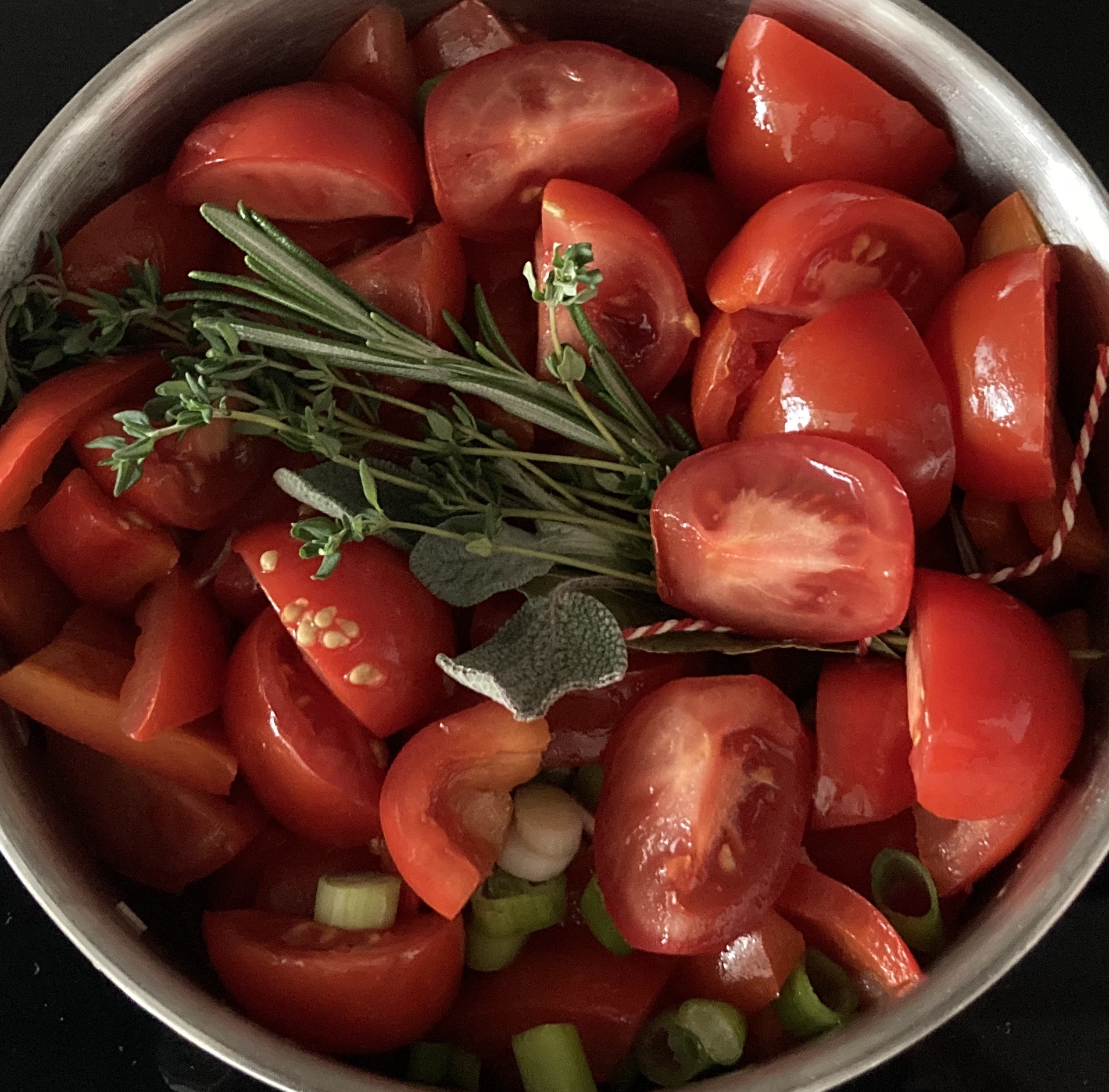
  8. After 5 minutes or so add the sliced tomatoes, the red wine and the bouquet garni
  9. Leave for 2 hours minimum to simmer
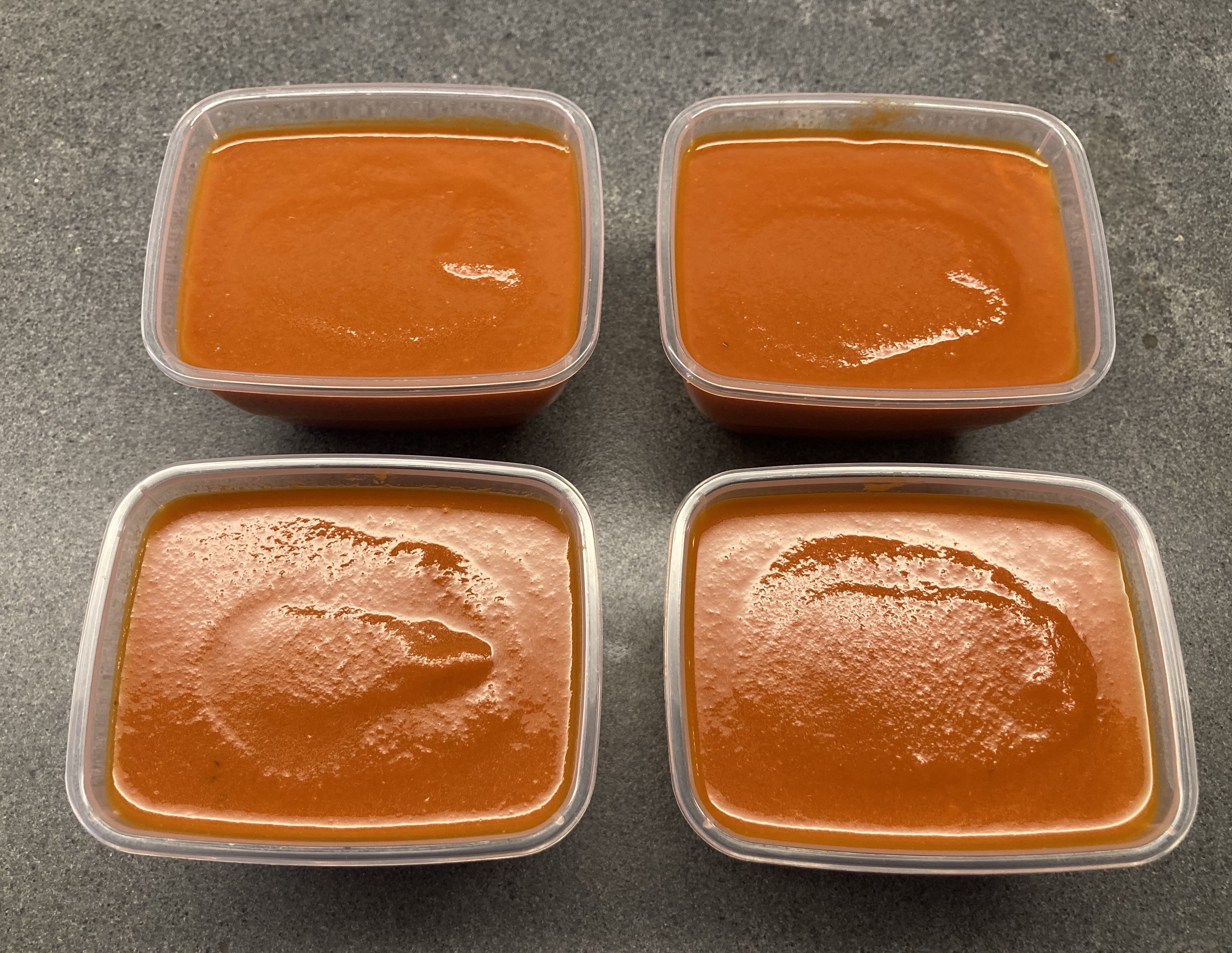
  10. Remove the bouquet garni and blender the mixture
  11. Pass through a sieve and leave to simmer for another 2 hours
  12. Cool and transfer to the refrigerator or freezer.
PS Grilling a Bell Pepper
  1. slice the pepper in large slices
  2. Set your oven to grill or broil, put a sheet of aluminium foil on the baking tray, put the slices on the foil, skin up and transfer to the oven, as close to the grill as possible
  3. Wait for 10 minutes or until the skin is seriously burned
  4. Transfer the slices to a plastic container and close the lid.
  5. Wait for an hour
  6. Use your fingers and perhaps a knife to peel of the skin
  7. Store the bell pepper and the juices in the refrigerator
  8. The taste is deeper and sweeter compared to raw bell pepper.

Raspberry Vinegar

Many years ago, we had the pleasure of being regular guests at the Auberge des Seigneurs in Vence, France. In those days the restaurant offered a wide range of beautiful dishes from the days of King François I, such as blue trout, roasted chicken, quail with Pruneaux d’Agen and tender lamb cooked on a spit before an open fire in the dining room.
Ah, Madame Rodi, we treasure these evenings, the beautiful food, the local wine, your dog (known to regular guests as monsieur Tim) and your infinite hospitality. We also remember your wonderful Coca Cola Light, which you would serve after dinner. It came in a huge Biot bottle and to the surprise, astonishment, shock of most of your new guests it was everything but light. It was a strong grappa with Boutons de Fleur d’Oranger (orange blossom buds). We can still see the broad smile on your face when yet another guest would take too big a sip of your powerful concoction.

Adding fruit can be a disastrous idea (just think about strawberry tea or sole Picasso) but the touch of acidity of raspberries makes them ideal to combine with vinegar. We follow Madame Rodi’s approach when making raspberry vinegar: simply combine the two and enjoy.

Use the raspberry vinegar wisely, for instance combine it with strong flavours, preferably umami. We use it in our favourite autumn salad with Porcini and Smoked Duck. The colour, the aromas, the taste: the vinegar and the raspberries integrate perfectly.

What You Need

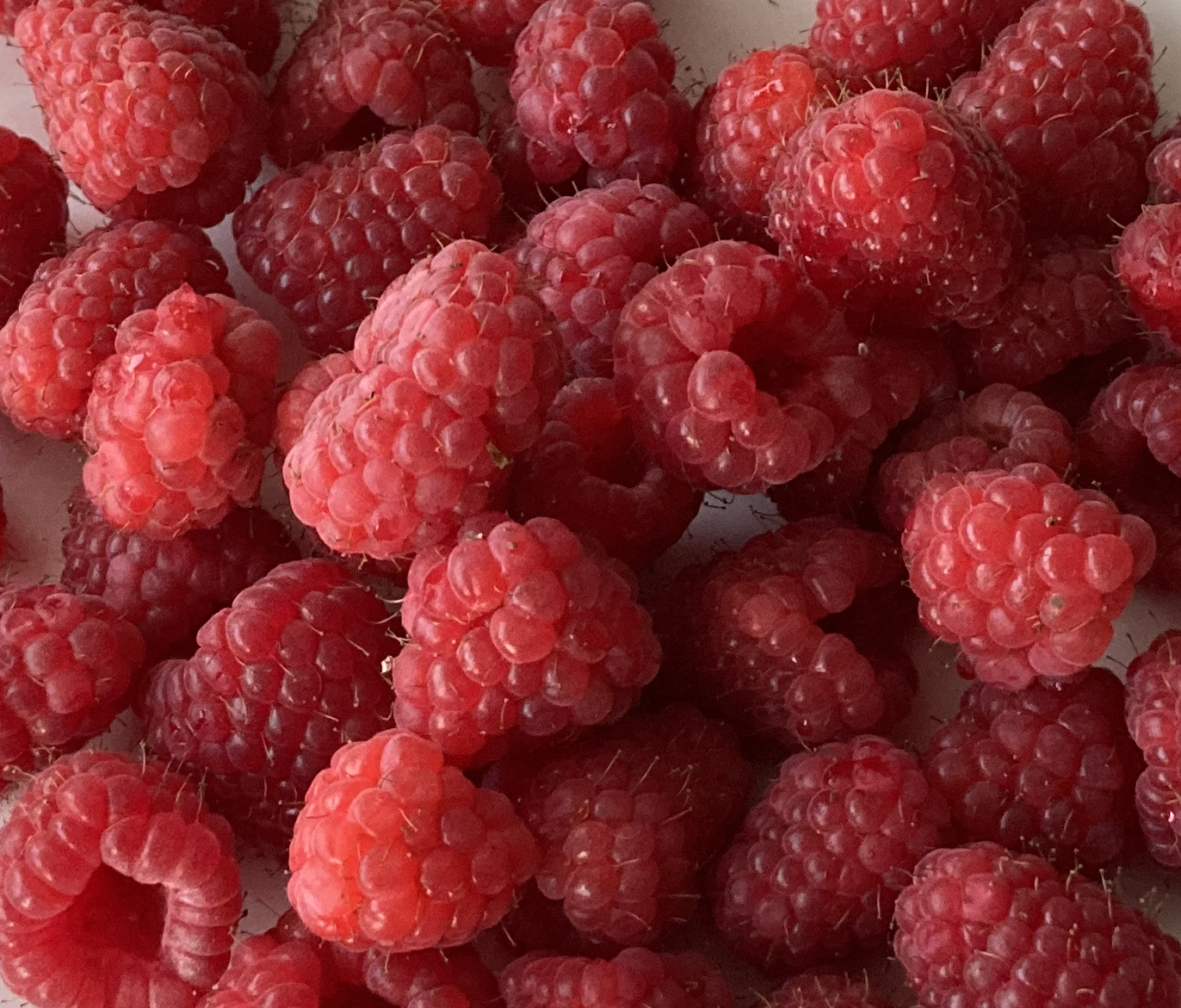
  • 250 grams of Excellent Organic Raspberries
  • 250 ml White Vinegar

What You Do

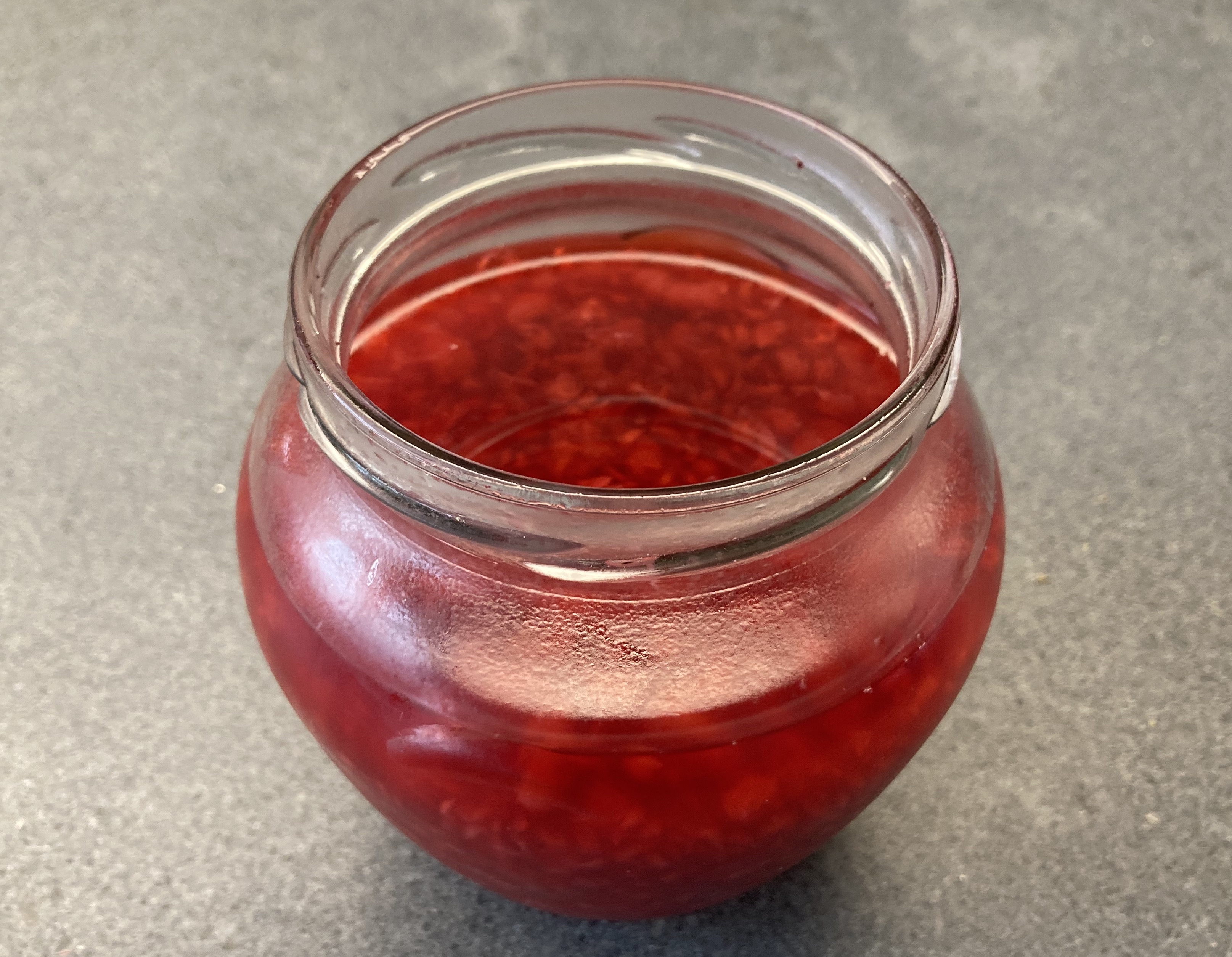
Clean the raspberries, crush them with a fork and combine with the vinegar. Put in a jar and transfer to the refrigerator for one week, making sure to stir at least once a day.
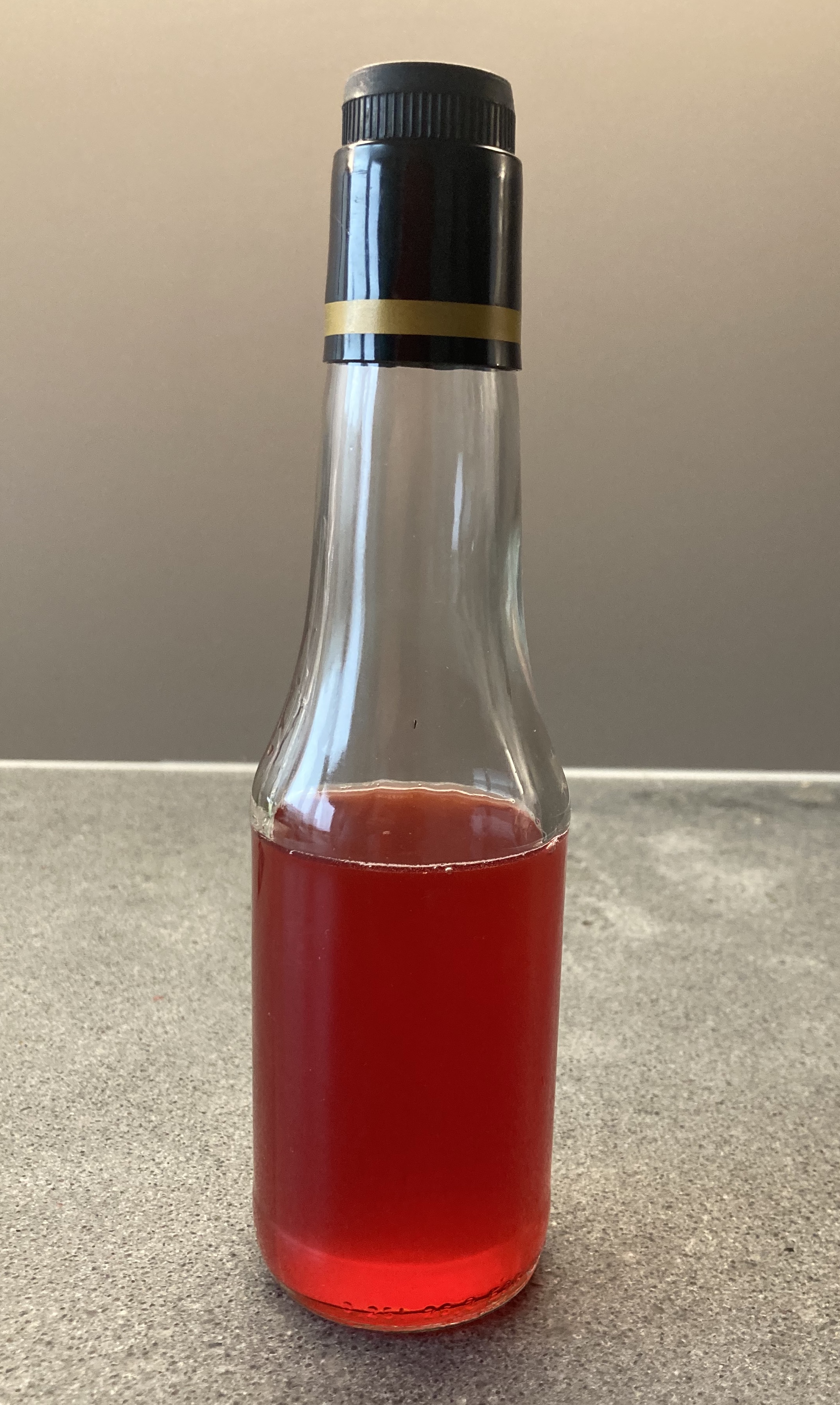
Pass the mixture through a sieve, applying light pressure only. Pass the vinegar through a white cloth, squeeze very gentle. The result is probably a bit cloudy, so leave for a few days before using.

Tomato Confit

A few years ago it was the obvious garnish to nearly every dish: oven roasted cherry tomatoes, preferably on the vine. It looks and tastes nice plus it is easy to make. Just heat your oven to 180 °C or 350 °F, add the tomatoes to a baking dish, sprinkle with salt, olive oil and 30 minutes later they’re ready to serve. When cold you can add them to a salad or a sandwich with soft cheese (mozzarella, burrata, ricotta). An alternative is to halve the tomatoes, sprinkle with salt and quickly roast and dry them in the oven. Another tasty result.

We prefer a slow alternative: Tomato Confit. The idea is that the skin doesn’t crack, so the tomatoes remain intact, and at the same time they absorb the flavours of the oil, herbs and garlic. The result is not just a great sweet and juicy tomato, it’s a taste explosion!

We use Tomato Confit to brighten up a simple pasta or salad, or a more complex dish like Lobster Mushroom with Udon.

What You Need

  • Excellent Cherry Tomatoes
  • Olive Oil
  • Rosemary
  • Thyme
  • 2 Garlic Gloves

What You Do

Wash and dry the tomatoes and add these to a baking dish. Chop the garlic. Add herbs, garlic and a generous amount of olive oil to the dish. No salt, honey or sugar required. Put in the oven for something like 2 hours on 90 °C or 200 °F. You could baste the tomatoes once or twice. Don’t forget to use the cooking liquid as well, it’s another pack of flavours!

  • Tomato Confit ©cadwu
  • Fresh Tomatoes ©cadwu