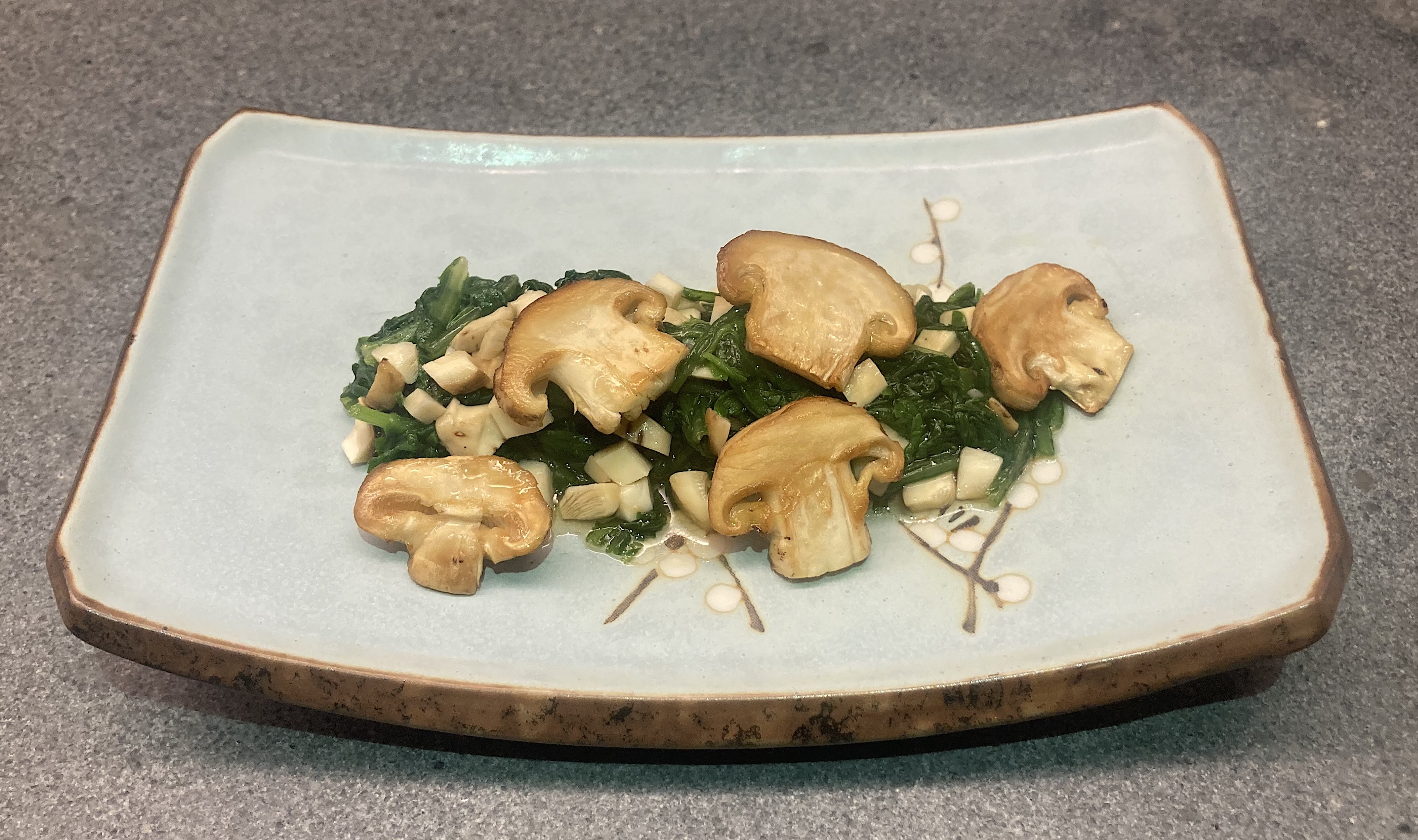
Enoki with Eggs and Soy Sauce

Enoki is one of the most popular mushrooms. It’s been cultivated for many years (or better: centuries) and it is available in Asian supermarkets as enokitake. The cultivated enoki grows in the dark, hence it being white, and needle shaped with a small cap. Wild enoki benefits from the exposure to light and becomes brown and its shape is more mushroom-like. The golden enoki we use is also cultivated. 

Enoki has a pleasant texture and aroma. Its flavour is mild, a bit sweet and fruity. You can use it raw in a salad, in a soup or combine it with soba noodles. Combining it with pork is also a great idea. We decided to prepare an omelette with a light soy sauce. The result is a lovely sweet, rich and intriguing omelette.
We’re not sure if it’s an appetizer in its own right or that is should be served alongside other dishes. Suggestions welcome!

Wine Pairing

We enjoyed our golden enoki with a very special wine: Sint Catharinadal Norbertus 2022. The wine is made in the Netherlands by the sisters of the Norbetine convent, founded in 1271. For centuries the sisters used the grounds for cattle and corn. Since 2017 they also produce wine, with the help of many volunteers and experts. Their motto is I am the true vine, and my Father is the vinedresser.  Amongst the grapes are Chardonnay, Pinot Gris, Pinot Blanc, Pinot Noir, Auxerrois and Gamay. We would suggest opening a bottle of their white wine. It has subtle aromas (apple, pear, melon), some acidity and its taste is very pleasant (fruit, touch of almonds).
More information (in Dutch only) on their website. The wine can be bought via Les Généreux.

What You Need

  • 100 grams of (Golden) Enoki
  • 2 Eggs
  • Light Soy Sauce (we used Tsuyu)
  • 3 cloves of Garlic
  • ½ red Chilli Pepper
  • 2 Spring Onions (Scallions)
  • Olive Oil

What You Do

Remove the stem (bottom) of the enoki. Blanch the mushrooms for 60 seconds in very hot water. Remove and pat dry using kitchen paper. Start making a sauce with soy sauce, garlic, pepper and spring onions. Reduce. Fry the mushrooms in oil, just to remove excess water. Reduce temperature. Beat the eggs and add the mixture to the pan. Allow to become a moist omelette on very low heat. Remember not to fry it! The egg should set and become baveuse. Transfer the omelette to a plate, use a spoon to cover the omelette with the liquid and decorate with a mixture of garlic, spring onion and chilli pepper.

An invitation to Indian Cooking

Recently we reviewed An invitation to Indian Cooking (published in 1973) by Madhur Jaffrey as part of the ongoing cookbook review project by Bernadette. When we leaved through the book we were looking for something special, something new and exciting to prepare. Dal soup (the classic Indian soup made with red lentils, onion, various spices and perhaps ginger or orange) was not on our radar, until we read her recipe. Interesting! Yellow Split Peas? Cloves? Croutons? Let’s start cooking!
The soup was very tasty and uplifting. The split peas brought structure to the soup, making this soup different compared to lentil-based dal soup. The combination of peas and cloves is one to remember. 

Dal Soup ©cadwu
Dal Soup ©cadwu

Asafoetida

We’re always interested in new ways to prepare mushrooms, so when we spotted a recipe with cumin and asafoetida (asafetida) we immediately knew we wanted to prepare this dish. But what is actually asafoetida and where to buy it?
The first thing to know about asafoetida is that it has an extremely powerful aroma. Its taste and smell are a combination of onion and garlic. We bought 25 grams at Jacob Hooy which is Amsterdam’s premium shop for spices. The Dutch name is Duivels Drek and the German name Stinkasant. Both names are a clear indication of its pungent smell.
Mushrooms, tomatoes, various spices and asafoetida: we didn’t know what to expect of the dish. The result was delicious, aromatic (in a subtle way) and a tribute to the tomatoes and mushrooms, with a long-lasting taste. We loved it. Mrs. Jaffrey suggest serving the mushrooms with chapatis or pooris. Recipes are included in her book, obviously!

Mushrooms with Cumin and Asafetida ©cadwu

The Book

An invitation to Indian Cooking by Madhur Jaffrey is a comprehensive introduction to the Indian kitchen, one with reliable, easy to follow, tasty recipes and useful background information. The book includes chapters on meat, chicken, fish, dal, soups, vegetables, chutneys, breads and desserts. Which reminds us of our plan to make Kulfi (ice cream with milk and cardamon pods).
An invitation to Indian Cooking by Madhur Jaffrey is available via your local bookstore or the usual channels for 15 euro or 18 US$.

Recipes can be found on Bernadette’s website.

Mushroom Season

So far this year’s mushroom season has been great with lots of delicious Cèpes, Bay Boletes, Birch Boletes and Chanterelles. This Saturday we bought a very tasty autumn Truffle and a day earlier we treated ourselves to Matsu Take. Such a special mushroom. We’re waiting for the Saffron Milk Cap, Spain’s favourite mushroom, and the Caesar’s mushroom, a mushroom much appreciated in Italy. 

Since it’s a great year for the Bay Bolete, we thought it would be nice to share some recipes with this mushroom. Its taste is similar to that of the Cèpes or Penny Bun. Perhaps more intense?

Pâté with Mushrooms ©cadwu

Pâté en Croûte

A few years ago we celebrated the mushroom season by preparing a Pâté with bay boletes. The combination of a crispy crust, a structured, colourful filling and various flavours is always a pleasure. It’s good fun to think about the ingredients, work on the construction and enjoy the wonderful aromas from your oven while baking the pâté. And the joy when slicing it: is the pâté as beautiful as you expected it to be?

A red, medium bodied wine will be a great accompaniment of this Pâté en Croûte. In general you’re looking for a red wine with aromas of black fruit, floral notes and delicate wood. The tannins should be soft or well-integrated. We enjoyed a glass of Pinot Noir from La Cour Des Dames

Bay Boletes with Veal and Sage ©cadwu

Sauce

Earlier this year we prepared a rich sauce with bay boletes, sage, mustard en crème fraîche. We served the sauce with excelltn veal rib eye and turnip cabbage. The turnip brings frsshness and lightness to the dish, creating a lovely balance.
A fruity, slightly chilled red wine will be great with the dish. We opened a bottle of German Spätburgunder from the Pfalz area. Some dark fruit, strawberries, touch of earthiness, not too complex. One that supported the flavours and aromas of the dish very well.

Guineafowl and Bay Bolete ©cadwu

Guineafowl

Bay boletes combine very well with guineafowl. The meat is leaner, somewhat darker and more flavourful compared to chicken. It is not difficult to prepare, but due to the low-fat content you must be careful not to overcook. In this recipe we use guineafowl supreme (the breast fillet with the skin on plus the wing bone), rosemary, thyme, pancetta and garlic.
Enjoy with a glass of Chiroubles, a cru from the Beaujolais, produced by Domaine Montangeron. The wine has floral notes, aromas of cherries and strawberries. Its colour is pale ruby. Rich, elegant and long. It brings freshness and fruitiness to the dish and is sufficiently complex to remain present when enjoying the guineafowl and the bay bolete.
In general you’re looking for a red wine with freshness, fruity aromas and complexity. Perhaps a Pinot Noir?

More recipes on our website dedicated to mushrooms.

Cauliflower with Mint and Cilantro

Dutch cuisine and cauliflower? Nice, but not sensational. Normally the cauliflower will be broken into florets, cooked in water (and in the old days this meant cooking until the cauliflower was more than well done), drained and served with a béchamel sauce and nutmeg. That is, if you’re lucky, it can also be a thin sauce made with the cooking liquid and corn starch.
A pity because cauliflower is such a delicious and versatile vegetable. As curry, korma, gratin, casserole (with potatoes, thyme and garlic), in a pickled sauce, as vada (a snack from South-India), steamed or fried, all very yummy!
We combine our cauliflower with grilled lamb chops and a mint and cilantro sauce. Lots of flavours, colours and aromas!

Wine Pairing

Given the various spices we would suggest a white wine or a rosé. A glass of Verdejo will be a great choice if you decide to drink a glass of white wine. We opened a bottle of Monteabellón Rueda. The wine comes with the right acidity, bringing freshness to the dish. It has floral aromas typical for the Verdejo grape. You may recognize the aromas of banana and exotic fruit. A glass of Provence rosé will also be nice. Or our favorite rosé: Chiaretto di Bardolino, produced by Monte del Frà from Italy.

What You Need (Cauliflower)

  • One small Cauliflower
  • Turmeric
  • Fresh ginger
  • Garam Marsala
  • Red Onion
  • One clove of Garlic
  • Fresh Cilantro (optional)
  • Olive Oil

What You Do (Cauliflower)

Clean the cauliflower and break into florets. Peel and slice the fresh ginger, match size. Peel and slice the onion (rings). Chop the garlic. Add olive oil to the pan and fry the turmeric (curcuma) and the garam marsala on medium heat. After a few minutes add the florets. Make sure the florets are nicely coated with the spices. Now add the fresh ginger and the garlic. Reduce the heat somewhat. A few minutes begore serving add the sliced onion. You could add some cilantro, to bring the cauliflower and the sauce together.

What You Need (Sauce)

  • Three Mint Leaves
  • Lots of Cilantro
  • Teaspoon Cumin Seeds
  • One clove of Garlic
  • Ginger
  • ½ Green Chili Pepper (depending on the taste)
  • Olive Oil
  • Lemon Juice
  • Black Pepper

What You Do (Sauce)

Crush the cumin seeds in a mortar. Chop the garlic, some ginger and the green chili pepper. Combine everything and use a blender to make a smooth paste. Add lemon juice to taste. Transfer to a bowl. Drizzle some olive oil into the mixture and stir using a spoon. Happy with the consistency? Add black pepper and perhaps some extra lemon juice.

Cauliflower with Mint and Cilantro ©cadwu

Grilled Vegetable Salad

A great example of a delicious dish, simple to prepare and nothing fancy required. Excellent vegetables, tasty olive oil, fresh rosemary and a bottle of rosé and crusted bread as accompaniment. Wonderful when enjoyed al fresco on a summer’s evening!
You can make the salad a few hours in advance, which is helpful if you have guests.

Wine Pairing

Combining wine and salad is not straightforward because in general acidity is an important aspect of the dressing and therefore of the salad. In this salad the acidity is not key to the overall flavour, it’s very much about the individual vegetables, brought together by the rosemary, the sweetness of the caramalised vegetables sugars, the subtle smokiness and the olive oil.

A rosé will be a good choice (a Bardolino 2022, produced by Monte del Frà from Italy or a rosé from the Provence region) but you could also combine the salad with a more present white wine, for instance a glass of Albariño Rias Baixas produced by Bodegas Bouza do Rei, made from 100% Albariño grapes. 

What You Need

  • 1 Zucchini
  • 1 red Bell Pepper
  • 1 Eggplant
  • Finely chopped fresh Rosemary
  • Olive Oil
  • White Wine Vinegar

What You Do

Wash the vegetables, quarter the bell pepper and slice the zucchini and eggplant. Heat your contact grill and grill the bell pepper 2 times 3 minutes until nicely charred. Dry the slices of egg plant and zucchini. Add olive oil to a plate and coat the slices of zucchini with olive oil, using a brush. Grill for 2 times 2 minutes. Same for the eggplant. Allow for the vegetables to cool. In the meantime, combine olive oil with a little vinegar and the finely chopped rosemary. Once cool, add the vegetables to the dressing and mix. Be careful, the eggplant is fairly brittle. Store the salad in the refrigerator and mix every hour or so. Serve with crusted bread.

Grilled Vegetable Salad ©cadwu

Asparagus

Both White and Green Asparagus are seasonal products. Waiting for the season to begin is part of the fun of enjoying asparagus.

Green Asparagus

Preparing Green Asparagus is simple. Wash them and cut off 1 or 2 centimetres or so from the bottom. You could steam or cook them but you risk getting soggy asparagus. Better to prepare them in a skillet or in the oven. They will only take 10-15 minutes. Great to combine with basil and black olives. You could also grill them, see below.

White Asparagus

Buying and preparing White Asparagus requires a bit more work, but once you know what to do, it’s not difficult at all.

Fresh

Make sure the white asparagus are fresh. Just look at the bottom, where they have been cut off. If the cut looks dry, wrinkly or even moldy, then don’t buy them. If you want to be sure they are super fresh, then rub two asparagus together. If you hear a squeaking sound, then they’re super fresh.

Peeling

Peel White Asparagus, using a peeler, as you would potatoes. In the old days White Asparagus would be peeled twice, but nowadays we like a bit of texture.
Cut off 1 or 2 centimetres from the bottom. If your White Asparagus are fresh, it’s just a matter of removing the original cut.

Cooking

The most popular approach is to cook White Asparagus. Add the asparagus to a pan with plenty of cold water. Wait for the water to just begin boiling, keep it simmering for 1 minute, then transfer the pan to the work top. Wait for 10 minutes before removing the asparagus from the water. If you prefer them a bit softer, then leave them in the hot water for 5 more minutes.
Many add butter, sugar, salt, lemon and/or the skin of the asparagus to the water. We could imagine adding the skin. Adding sugar is a big NO for us.
You could use a special asparagus pan when cooking the asparagus, but actually there is no need for it. As long as the pan can accommodate the asparagus, you’re fine.

Steaming

We prefer steaming White Asparagus for 20 minutes in our Russell Hobbs. The taste of the asparagus will be more intense and richer.

Wine Pairing

In general a Pinot Blanc, Riesling or Dry Muscat from the Elzas will be very nice with your asparagus.

Recipes

Over the years we have prepared asparagus in many ways. Bon Appétit!

PS

You’re probably aware of the side effect of eating asparagus, the typical smell when peeing. It doesn’t happen to everyone, and it also depends on the type of asparagus. The sulphurous by-products (the result of your body digesting the asparagus) that cause the smell, will disappear within a few hours. Could take a bit longer, but nothing to worry about, it’s perfectly harmless.

Potato, Fennel and Wild Garlic

So many names for this great plant: Ramson(s), Wild Garlic, Bear Leek, DaslookAil des OursBärlauchRamsløgAglio Orsino, Allium ursinum, it is one of the highlights of spring. Powerful, pure and tasty. It can be harvested from the wild, but fortunately some green grocers also sell Wild Garlic. The taste is a combination of onion and garlic, but much greener, longer lasting and with a touch of bitterness at the end. You can turn the leaves into a strong pesto, but better use it as herb with for instance potatoes or gnocchi. It is also great when used in a dish with white asparagus and morels. The flowers are also edible and are a great decoration for savory dishes and salads.

We combine Wild Garlic with potatoes and fresh fennel. The anise-taste and the light crunchiness of the fennel go very well with this rich, lightly onion flavoured potato mash.

What You Need

  • Potato
  • Butter
  • Cream
  • Fennel
  • Wild Garlic
  • Black Pepper
  • Salt (optional)

What You Do

Dice the peeled potatoes and cook until ready to mash. Very finely dice some fennel, let’s say one tablespoon per one large potato. Add cream, butter and diced fennel to the mashed potato, mix and leave on very low heat. Remove the veins from the wild garlic leaves and tear the leaves, as you would do with basil. Add some of them to the mash, add black pepper and perhaps a pinch of salt. Leave for a few minutes, add more butter or cream if so required and more leaves. If you’re happy with the consistency and the taste, it’s time to add some more torn leaves to the mash. Serve immediately.

PS

Other elements on the plate are Saucisse de Morteau, Frankfurter and petit farci. More about the latter in one of our next posts!

Carrot Salad with Fennel Seeds

Inspired by the Portuguese and Moroccan cuisine we make a very tasty, quick and easy carrot salad. Ideal to accompany fish or a rich stew. The salad is full of flavours: fennel and carrot obviously, but you could also taste chervil and perhaps tarragon. Light, refreshing and the texture of the carrot is inviting.

We prefer preparing the salad with winter carrots because they seem to have more flavour and structure than the regular ones.
We use fennel seeds in this recipe. Alternatively, you could use cumin (always great with carrots) or coriander (cilantro) seeds.

What You Need

  • One Winter Carrot
  • Olive Oil
  • White Wine Vinegar
  • One Garlic Clove
  • Fennell Seeds
  • Parsley
  • Black Pepper

What You Do

Prepare 24 hours before serving.
Clean and thinly peel the carrot. Cook for 5-10 minutes until al dente. Let cool. Quarter lengthwise and slice. Make a dressing by combing olive oil and vinegar (ratio 2:1 or 3:1). Peel the garlic clove and finely chop. Take ¼ teaspoon of fennel seeds and use a mortar to crush the seeds until you have powder. Add the fennel seed powder and the garlic to the dressing and combine. Taste and adjust. Chop a nice amount of parsley. Add the carrots and the parsley to the dressing and combine. Use cling film to seal the bowl and transfer to the refrigerator. Gently mix the salad every 2-4 hours.
Just before serving add some fresh black pepper.

Artichokes Roasted In the Oven

We love artichokes, as a salad, stuffed, with pasta, always a treat. We saw young, small, purple artichokes on the market and decided to take a different approach. Let’s roast them in the oven with lots of fresh thyme, rosemary and bay leaf.
The bitter, nutty taste of the artichokes was clearly present, and it was delicious in combination with the mouthfeel (the olive oil) and the aromatic herbs. Compared to steamed artichokes the roasted ones come with stronger but not too strong flavours.

The artichokes were clearly young because there was no centre choke (the hairy part), which meant that we could eat most of the artichoke, including the stem.

Wine Pairing

Normally pairing artichokes and wine is a real challenge. According to various researchers this is due to cynarin, a chemical especially found in the leaves of the artichoke. When the wine and the cynarin meet in your mouth, the natural sweetness of the wine is enhanced, making it taste too sweet. Meaning you must pair artichokes with a bone-dry, crisp, unoaked white wine with clear, present acidity. Roasting the artichokes in the oven seems to reduce the impact of the cynarin. We suggest serving the artichokes with a medium bodied, dry red wine, not too complex. Could be Merlot, perhaps Malbec or Carménère.

What You Need

  • Young, Small Artichokes
  • One Garlic Clove
  • Fresh Thyme, Rosemary and Bay Leaf
  • One Lemon
  • Olive Oil

What You Do

Heat your oven to 150 °C or 300 °F. Press the lemon and add the juice to a bowl of cold water. Slice the artichokes lengthwise in two. Add them to the water. Check if they have a centre choke. If so, try to remove. Let the artichokes soak for a few minutes. In the meantime peel the garlic and chop, coarsely. Add a generous amount of olive oil to your baking dish, dry the artichokes somewhat, add them to the dish, add the garlic, the sprigs of thyme and rosemary, the bay leaf. Mix. Sprinkle with more olive oil. Cover with aluminium foil and transfer to the oven for 15 minutes. After 15 minutes increase the temperature to 180 °C or 355 °F. Leave for 30 minutes. Check if the artichokes are ready. The trick is simple. If you can remove a leave without too much trouble, they are ready, if not, give them 5 more minutes. You could also check the stem, it should be soft. Remove the foil and leave in the oven for another 5-10 minutes. In parallel fry some merguez sausages.

PS

Artichokes require eating with your hands. Given the olive oil you may need an extra napkin or two.

Sand Carrots

We were chatting to our favourite greengrocer. Anything special this week? Yes, absolutely, we’ve got Carottes des Sables, also known as sand carrots. The carrots grow in sand in the French Normandy region. The sand has been fertilized with seaweed for many years. The carrots grow slowly and don’t develop a fibrous core, as other carrots do. Furthermore, they are not stored in cool warehouses. Immediately after the harvest they are transported to the greengrocer or the kitchen, covered with sand, to keep them fresh and aromatic. A culinary treat, appreciated by Michelin star chefs.

The carrots are simply delicious and look wonderful. The colour is vibrant orange. We tasted carrot as carrot should taste, crunchy, a touch sweet and fresh.

You could braise the carrots in stock with star anise and finish with butter. We decided to keep it simple and give all credits to the carrot. We served them with a pork medallion with apricots and prunes. A combination that worked very well.

Wine Pairing

The sweetness of the carrots is leading. We opened a bottle of St. Amour, one of the ten crus of the Beaujolais, produced by Maison Jean Loron. An elegant red wine with aromas of strawberries, cassis and chocolate. The tannins are soft and pleasant. The taste is a wonderful balance of strawberries, raspberries and blueberries.

In general you’re looking for a light or medium bodied wine, with character and fruity aromas. Could be a Malbec, perhaps a blend of Syrah and Grenache?

What You Need

  • Sand Carrots
  • Butter

What You Do

Wash the carrots carefully, slice, add to a pan with a bit of water and butter. Cook until you’re happy with the firmness of the carrot. By then the water should have evaporated. You could serve them with fresh parsley, cilantro, cinnamon or black pepper. We were perfectly happy with this simple preparation.