Duck with Figs

Preparing Duck is always a pleasure, whether with Green Pepper Corn, with Sichuan, with Mirin and Soy Sauce or as Canard A l’Orange: the result is always tasty and your guests will be happy.
Today we combine duck with figs. Not the most obvious combination because the figs are relatively dry and perhaps not as sweet as the combination requires. We clearly need a bridge between the meat and the fruit. The first idea was to use port, perhaps with some veal or chicken stock. Great idea because of the sweetness and light acidity of the port, but perhaps a bit too much for the figs. Aceto Balsamico comes with acidity and sweetness, so we decided to use it as the base of the sauce, in combination with some stock. While preparing it we noticed that it needed more sweetness, so what to do? Sugar, honey? But couldn’t we add something that would bring sweetness, fruitiness and even tartness? Of course! Good old Cointreau, great idea!

Aceto Balsamico

We probably need to say a few words about Aceto Balsamico. You may think it’s overrated and overpriced, this sweet, sugary, dark and mild vinegar. But if you taste original Aceto Balsamico, the one made from grape must and aged for many (25!) years in wooden barrels, then you will be surprised by the intense, concentrated flavour and the dark colour. Always look for I.G.P. (Indicazione Geografica Protetta) or D.O.P. (Denominazione di Origine Protetta). If this is not mentioned on the bottle, don’t buy it.

Wine Pairing

A red, medium bodied wine will be a great accompaniment of your Breast of Duck with Figs. In general you’re looking for a red wine with aromas of berries, floral notes and delicate wood. The tannins should be soft or well-integrated. We enjoyed a glass of Pinot Noir from La Cour Des Dames

What You Need

  • Breast of Duck (preferably organic)
  • Lots of Thyme
  • 3 Figs
  • Stock (Chicken or Veal)
  • Aceto Balsamico
  • Cointreau
  • Butter
  • Black Pepper
  • Fresh Green Peas

What You Do

Check the breast of duck for remainders of feathers. Remove the vein on the meat side of the breast (and the odd membrane you don’t like). Put on a dish, cover and transfer to the fridge. Leave in the fridge for a few hours, making sure it’s nice, firm and cold.
Fry the duck in a hot, non-stick skillet for 10-12 minutes on the skin side, straight from the refrigerator. Reduce the heat after a few minutes. You don’t need oil or butter, the duck fat will do the trick. Now fry for 2-3 minute on the meat side and remove. Cover with aluminium foil is such a way that the crispy skin is not covered. The foil should only cover meat. This way the skin remains crispy.
Wash the figs and cut in half. Remove some of the fat and fry the figs until lightly caramelised. When ready, remove from the pan, transfer to a plate and keep warm in the oven. Add stock, thyme, Aceto Balsamico and Cointreau. Probably two spoons of Aceto Balsamico and three spoons of Cointreau. Taste and adjust. You may want to add some butter to push the flavours and create a lovely velvety mouthfeel. Add duck’s liquid. Reduce the heat, add black pepper, taste, adjust, add the figs, coat them with the sauce and plate up. We served the duck with fresh green peas because they have this lovely light sweet flavour that combines very well with the other ingredients.

  • Breast of Duck with Figs ©cadwu
  • Fresh Figs ©cadwu

Lobster Mushroom with Pasta

The Lobster Mushroom is, obviously, bright reddish orange like the shell of cooked lobster. Not obvious is the fact that it’s actually a parasite that grows on certain mushrooms, making the host completely invisible and even changing its structure and taste. If you slice a lobster mushroom, you’ll see a beautiful red skin, as if the host mushroom is sprayed.
The taste of the Lobster Mushroom depends on the host. The ones we bought tasted fairly bland, but nevertheless the pasta turned out to be very tasteful and uplifting, partly due to the homemade tomato confit.

Wine Pairing

Enjoy a glass of white wine with your Lobster Mushrooms. We drank a Portuguese Vinho Verde, made by Cazas Novas. It comes with floral and fruit notes, has some acidity and a medium body with a good texture and a fresh aftertaste. In general you’re looking for a wine with freshness, minerality and some acidity. A wine that will go well with the intense flavors of the tomato confit and the creamy mushroom pasta.

What You Need

  • 100 grams of Lobster Mushroom
  • Shallot
  • Garlic
  • Thyme
  • 1 Bunch of Udon
  • 10 Small Tomatoes (confit or roasted)
  • Stock (Chicken, Veal or Vegetable)
  • Parmesan Cheese
  • Olive Oil
  • Black Pepper

What You Do

Clean the Lobster Mushroom. This is a bit time consuming due to the structure of the mushroom. Slice the shallot and the garlic. Strip the leaves of the thyme. In a large iron skillet gently fry the shallot in olive oil until soft. Add the garlic. After a few minutes add the sliced lobster mushroom (chunks). Add the thyme. Leave on low heat. In parallel cook the udon for 10 minutes or until ready. Drain the udon but keep some of the cooking liquid. Add stock, just to have more liquid in the pan. Add the tomatoes, mix gently. Now add the udon to the pan, mix, making sure the tomatoes remain intact. Add cooking liquid to get the right consistency. Finish with a splash of excellent olive oil, black pepper and finely grated Parmesan Cheese.

  • Lobster Mushroom with Pasta ©cadwu
  • Lobster Mushroom ©cadwu

Horn of Plenty with Cumin and Pork Fillet

The name Horn of Plenty refers to the shape (very much like a funnel without a stem) of the mushroom and to the mythical goat Amaltheia, whose horn would be filled with everything you whished for. It’s also called Black Chantarelle, which is very appropriate because it’s a chantarelle and truly black when cooked. The more morbid name is Trompette de la Mort, as if the buried use the mushrooms to play the Marche Funèbre.

More importantly to us: they are very edible with a pleasant fibrous and chewy texture. The only downside is that they quickly become soggy and smelly, so make sure you buy (or harvest) dry ones and use them the same day or the next.

For some reason Horn of Plenty simply loves cumin. We also added coriander and fennel seed to give some additional lightness and freshness to the combination.
And as always, only use the very best organic pork.

Wine Pairing

A medium bodied, not too complex, red wine will be perfect. Think Merlot, Tempranillo, Grenache, Cabernet Franc, Carménère.

What You Need

  • 150 grams Horn of Plenty
  • One Red Onion
  • Cumin, Coriander and Fennel (seeds)
  • Black pepper
  • Olive Oil
  • Pork Fillet

What You Do

Clean the mushrooms thoroughly. This can be time consuming. Slice the pork fillet to create 6 medallions. Heat a heavy iron skillet and fry the medallions in olive oil until just underdone. Wrap in aluminium foil and leave to rest. Slice the red onion, add some olive oil to the pan and fry the onion. Grind cumin, coriander and fennel seeds and fry the spices. Lower the heat, perhaps add some more olive oil and fry the mushrooms for 5-10 minutes. Taste, adjust and add some black pepper. Add the juices from the pork to the pan, deglaze and serve.

  • Horn of Plenty with Cumin and Pork Fillet ©cadwu
  • Horn of Plenty ©cadwu

All Our Recipes For You

A few years ago we created an overview of recipes per season, simply because it’s such a good idea to enjoy what is available in the season. Nice to eat strawberries in Winter, but isn’t it a much better idea to enjoy seasonal slow cooked pears?

We then introduced overviews per course, ranging from side dish to lunch. The categories didn’t always make sense, so we added a few more, making our admin more complicated, especially when we updated a recipe or a picture.

The obvious thing happened: we lost track of recipes, noticed some links were broken and the overviews became incomplete.

So how to organise this blog?

After much debate and intense workshops (not really) we’re pleased to present to you an old fashioned, up to date and very easy to use (and maintain) index of All Our Recipes For You!

All Our Recipes For You ©cadwu

Fairy Ring Mushroom with Pork Chops

Spring brings us several edible or even delicious mushrooms, such as the Fairy Ring Mushroom, Morels and the Mushroom of Saint George.

The Fairy Ring Mushroom is a very common mushroom in many countries. The name is not very helpful since many mushrooms grow in the pattern of a ring. The German and Dutch names (Rasen-Schwindling and Weidekringzwam) are more helpful; these refer to the fact that they grow in meadows and lawns.

In France the Mushroom of Saint George is called mousseron and the Fairy Ring Mushroom faux mousseron. But because of the limited availability of the Mushroom of Saint George the faux (false) is dropped in the second name and the Fairy Ring Mushroom is often referred to and sold as mousseron.

It’s a small, very edible mushroom, available from early spring until late autumn. Its taste is a bit sweet and perhaps that’s why some people suggest using them to make sweet cookies. Hm, we think you can do better than that!

We combine the Fairy Ring Mushroom with excellent organic pork (also a touch of sweetness), cream, white wine, fresh sage and a splash of cognac to give the dish a nutty component.

Wine Pairing

We enjoyed our Fairy Ring Mushrooms and pork with a glass of Austrian Zweigelt, produced by Weingut Prechtl. This red wine is fruity and elegant with notes of blackberry and cherry. The tannins are well structured but not overly present. In general you’re looking for a full bodied red wine with fruit and not too much acidity.

What You Need

  • 2 Organic Pork Chops with lots of nice fat (Sirloin or Shoulder)
  • 100 gram of Fairy Ring Mushroom
  • Half a glass of Dry White Wine
  • Fresh Sage
  • Chicken Stock
  • Crème Fraîche
  • Splash of Cognac
  • Olive Oil

What You Do

Start by cleaning the mushrooms with kitchen paper. Remove the stems. Fry the caps in olive oil. When the liquid has evaporated, add some dry white wine and two finely chopped leaves of sage. Allow to simmer for 5 minutes or so. Add some crème fraîche and a few moments later a splash of cognac. Stir and leave to simmer for another 5 minutes. In parallel fry the pork chops until brown and leave to rest in aluminium foil. Remove the pork fat from the pan and deglaze with chicken stock. Reduce. Now add the liquid from the pan to the mushrooms, add more finely chopped sage and some black pepper.

  • Fairy Ring Mushrooms with Pork ©cadwu
  • Fairy Ring Mushrooms ©cadwu
  • Zweigelt made by Weingut Prechtl

Langoustine

Such a delicious starter! Perhaps it makes you think of Italy or France. A Plateau de Fruit de Mer, with oysters, shrimps, lobster, clams, periwinkles and langoustines.  The name sounds French, so perhaps the langoustine is local to the Mediterranean Sea? Not really.
Its Latin name (Nephrops norvegicus) is a nice indication of its habitat. Langoustines live in the North-Eastern Atlantic Ocean and the North Sea from Norway to Portugal. The langoustine-catch is very important for the Scottish fishing industry.

So why is it that so few people in countries around the North Sea enjoy langoustines? Difficult to prepare? Difficult to eat?

Let’s start with how to eat a langoustine. You begin by pulling away the head and claws, then you squeeze the belly to crack the shell. Start from the belly side and peel away the shell. Then de-vein by running a sharp knife along the back and remove the black vein (the intestinal tract). With a lobster cracker and a lobster curette you remove the meat from the claws. A bit of extra work, but it’s truly delicious.

So they’re easy to eat and, see below, very easy to prepare.

Wine pairing

We enjoyed a glass of Château Pajzos Tokaj Furmint 2019. This dry, white wine made from the well-known Hungarian Furmint grape is fresh, clean and slightly floral. It supports the langoustine beautifully.
In general we would suggest a white, clean, dry wine. It could be a German Riesling, a Sauvignon Blanc (a French Sancerre for instance) or an unoaked Chardonnay.

What You Need

  • 6 Langoustines (preferably fresh)
  • Mixed Salad
  • Olive Oil and Vinegar
  • (home-made) Mayonnaise

What You Do

Bring a large pan of water to the boil. Some chefs add salt or lemon. No need for this. Add the langoustines and cook for 3 to 4 minutes. Make sure you don’t overcook them. Smaller ones (like the ones we bought) require no more than 3 minutes. Remove from the pan and use a colander to drain them. We like to cool them quickly with a splash of cold water, to stop the cooking process. The meat must be moist and soft, not firm and rubbery. Leave the langoustines on a plate with kitchen paper while making a simple dressing. Toss some salad with the dressing.  Serve the warm langoustines with the salad and a generous helping of mayonnaise.

Langoustine ©cadwu
Langoustine ©cadwu

Jerusalem Artichokes

So much to tell about this plant! It originates from North America (so nothing to do with Jerusalem), its flowers are beautiful and resemble sunflowers, its tuber contains inuline (hence the sweetness) and the taste does make you think of artichokes. Other names include earth apple, topinambour (such a mysterious name!) and sunroot. Once a popular, cheap, nutritious vegetable, now nearly forgotten.
Most people cook or steam the tuber and turn it into a mash. Works well, especially when you add some excellent olive oil or some crème fraiche. Jerusalem Artichokes only contain a very limited amount of starch, so you could use a blender, but we prefer using a fork and passing it through a sieve because the mash becomes glue easily. A better idea is to quarter the Jerusalem Artichokes and cook them gently in olive oil with nutmeg, onion and garlic. When nearly ready add a glass of white wine and some stock, reduce the liquid and serve as a stew.
Jerusalem Artichokes can be used in many ways, you can eat them raw, use them as a basis for a soup, combine them with other seasonal vegetables in the oven, et cetera. We treated them as potatoes and served them with excellent beef and Brussels sprouts.

Wine Pairing

Your choice of wine is of course much influenced by the way you prepare the tubers and what you serve with them. In our case we suggest a Valpolicella Ripasso: red fruit, cherries, not too much tannins, fresh and zesty. Works very well with the sweetness of the Jerusalem Artichokes and the slightly nutty taste of the Brussels sprouts. Or should we say the slightly nutty taste of the Jerusalem Artichokes and the sweetness of the Brussels sprouts?

What You Need

  • Jerusalem Artichokes
  • Olive Oil
  • Butter

What You do

Wash the tubers and steam them for 20 minutes or so, depending on the size. You could also cook them, but be careful since they overcook easily. Another option is to put them in the oven for an hour or so on 80° Celsius or 175° Fahrenheit (for instance when you are preparing Choucroute). Let cool. Peel and slice the tubers. Warm a non-stick pan, add olive oil and perhaps some butter. Fry the slices gently. Take your time and watch carefully, the fructose in the Jerusalem artichokes burns easily.

Jerusalem Artichokes ©cadwu

Chioggia Beet Salad

An elegant Starter

What better way to start a nice long dinner than a dish that is light, colourful, surprising and refreshing? A Consommé of Yellow Tomatoes for instance? Or Scallops with Winter Truffle? Or would you prefer a salad made with Bietola da orto tonda di Chioggia? Sounds exotic, but actually it’s a salad made with Chioggia beet: a delicious beet with deep pink and white spirals. It originates from Italy or, to be more precise, from the coastal town of Chioggia, not far from Venice. When cooking the beet its colours fade, creating an even more enticing dish.

Another forgotten vegetable that is worth remembering when you do your Christmas shopping.

Wine Pairing

The dressing comes with firm acidity, balanced by the sweetness of the beet and the spring onion. Wine pairing is a not straightforward because of this combination. Our suggestion would be a Sauvignon Blanc. We enjoyed a glass of Domaine La Tour Beaumont Haut-Poitou Sauvignon Blanc 2019. It has clear fruity and citrus notes and it is well balanced with a good combination of freshness and roundness.

What You Need

  • One Chioggia Beet
  • Excellent Olive Oil
  • White Wine Vinegar
  • Spring Onion (or Scallion)
  • White Pepper

What You Do

The day before wash the beetroot and wrap in aluminium foil. Leave in the oven on 180° Celsius or 355° Fahrenheit for 60+ minutes. Cool and store in the refrigerator.
The next day peel the beet and use a vegetable slicer (or mandoline) to make ridges. This will not only make the dish look more inviting, it will also enhance the taste given there is more coated surface and more air when chewing it. Make a simply, relatively acidic dressing with olive oil and vinegar. Thinly slice the spring onion; best to use the green part only. Test a small slice of beet with the dressing and adjust when necessary. Perhaps some fresh white pepper? If you’re happy with the combination, toss the slices with the dressing making sure everything is nicely coated. Plate up and sprinkle the sliced spring onion on top of it.

Salad of Chioggia Beet ©cadwu

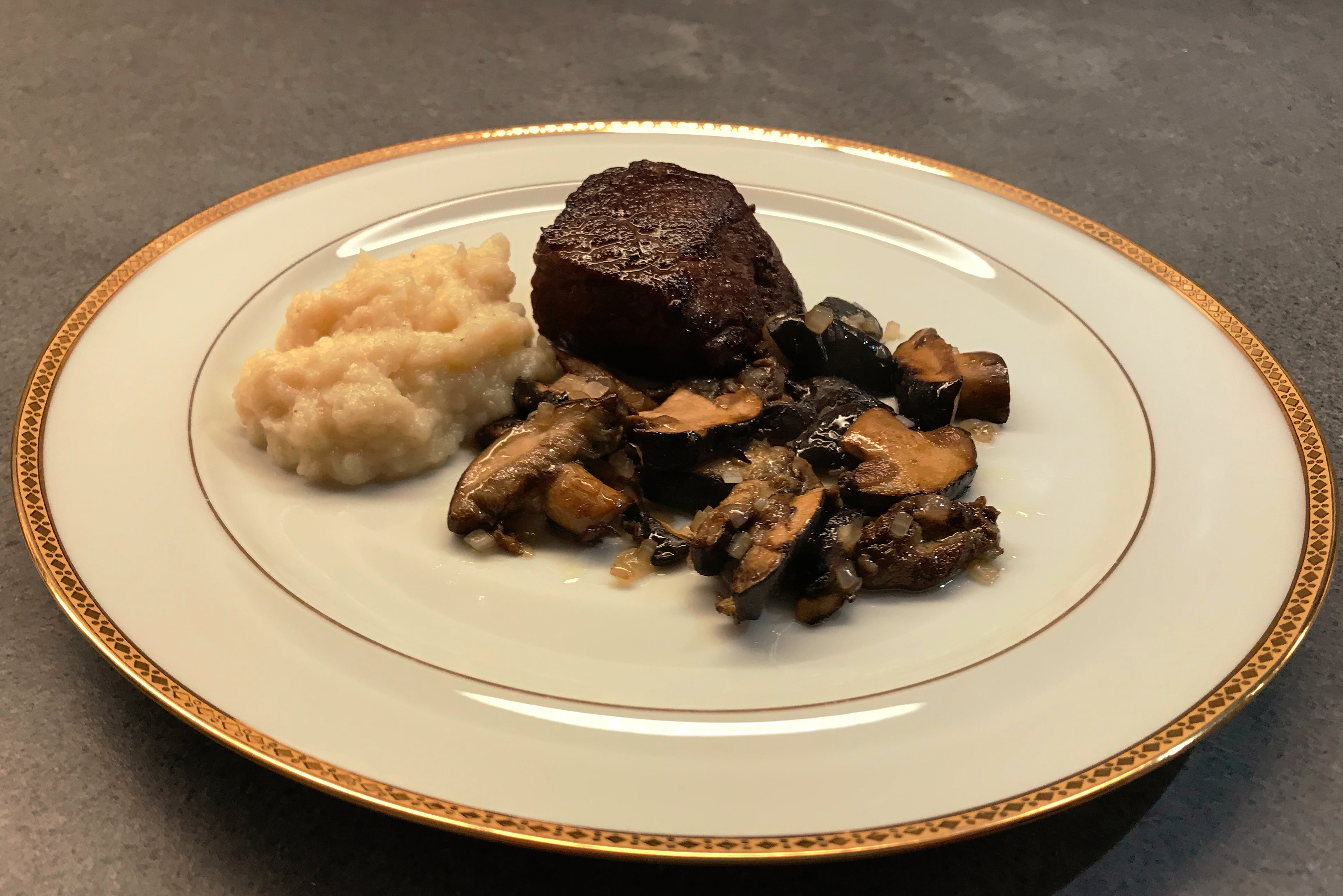
Bay Bolete

What’s In A Name?

We are all familiar with the white (button) mushroom, also known as Champignon de Paris. The Chestnut Mushroom is the same mushroom, just with a light brown, chestnut coloured cap. Its taste and texture are more intense compared to the classic white mushroom.
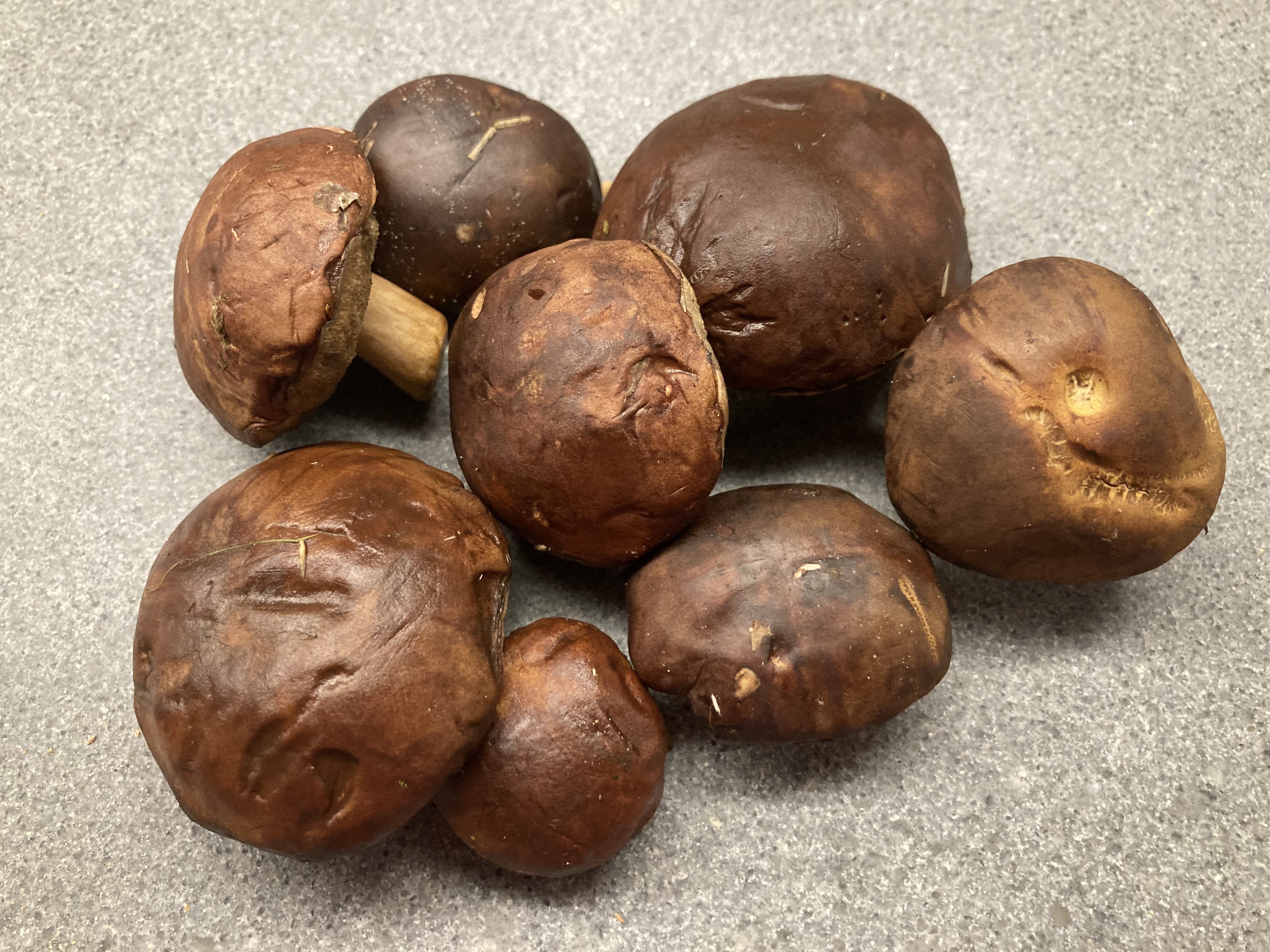
A Chestnut Bolete is a different kind of mushroom. It is small, chestnut coloured when young and beige when older. The German name of the Chestnut Bolete refers to rabbits, the Dutch name to cinnamon and the French name to chestnuts.
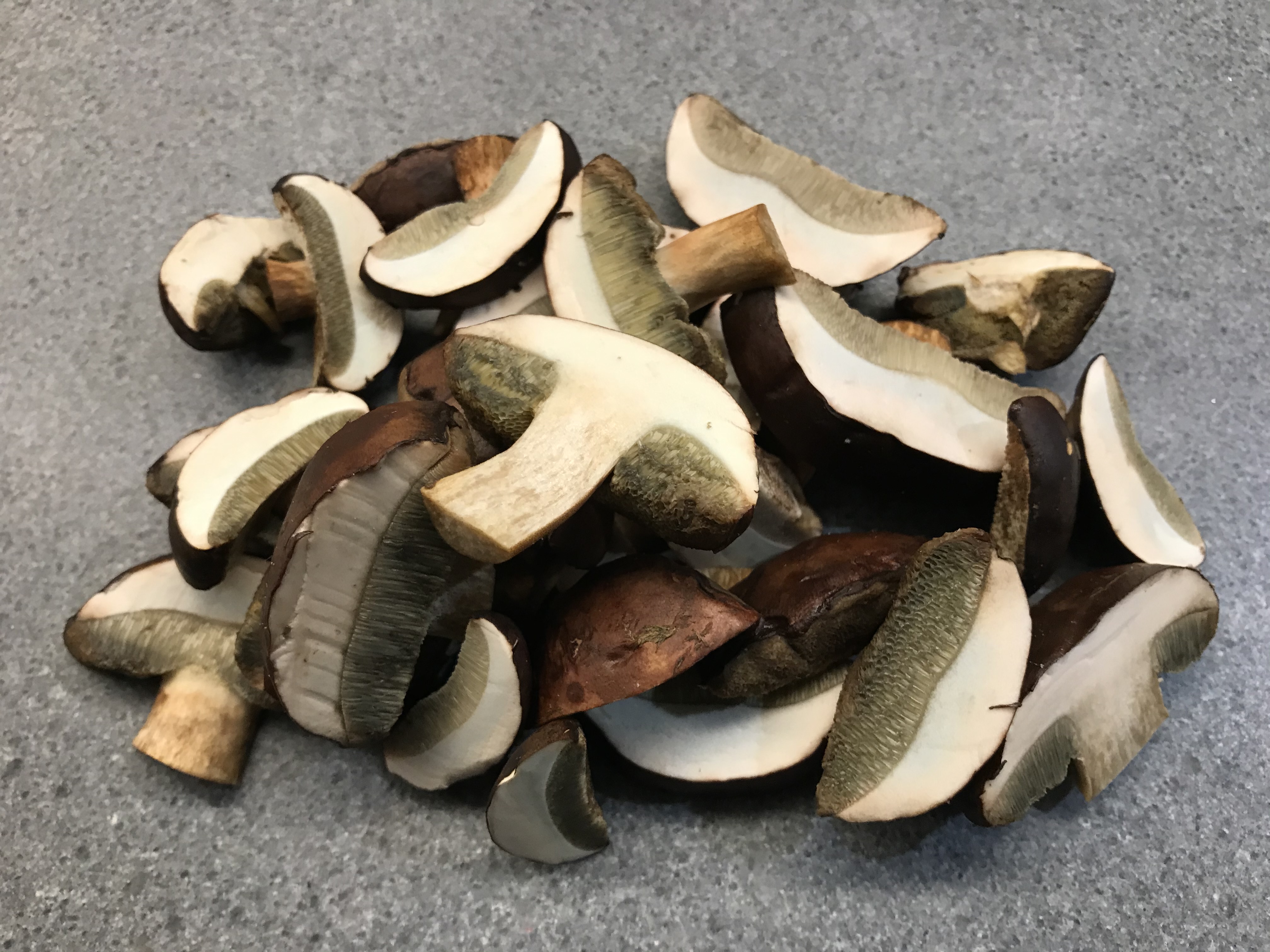
The overall colour of a Bay Bolete is brown and its cap is bay, the reddish brown colour of many horses. Or is it chestnut? In German and Dutch the name of the Bay Bolete refers to chestnuts; in French it refers to bay. The official name of the Bay Bolete is Imleria badia, but also Boletus Badius because it’s related to Boletus Edulis, also known as cèpes or Porcini.

Let’s talk about flavours and aromas, that’s probably more interesting. Bay Boletes are as tasty as cèpes. The texture is a bit softer and the mushroom itself more moist. It’s actually a very common mushroom in Europe, China, Mexico and North America. Sadly, this very tasty, not expensive bolete is hard to find in shops and on markets. So if you see them, buy them immediately.
Following the recipe for Cèpes à la Bordelaise is a good idea.

Wine Pairing

Enjoy with a glass of medium bodied red wine with aromas like berries and plums, for instance a Beaujolais Côte de Brouilly. It’s such a pity that the appreciation of Beaujolais wine is dominated by the (faded) popularity of Beaujolais Primeur and the idea that Beaujolais is a simple and light wine. It’s not. When you have the opportunity, taste a glass of Régnié, Morgon or one of the other 10 crus of the Beaujolais. Welcome to the divers and exciting world of Beaujolais wines!

What You Need

  • 200 gram of Bay Boletes
  • Shallot
  • Red Meat (Deer in our case)
  • Jerusalem Artichokes
  • Chicken Stock
  • Olive Oil
  • White and Black Pepper
  • Excellent Olive Oil

What You Do

Clean the Jerusalem artichokes and cook them for 10 minutes or so until tender. Mash with a fork or spoon and pass through a sieve. Don’t use a blender, unless you enjoy eating starch. Cool and set aside.
Clean the bay boletes with kitchen paper and slice them (not too thin). Chop the shallot. Add olive oil to a relatively hot heavy iron skillet. Reduce the heat and fry the boletes for 10 minutes. Add the chopped shallot. Cook on medium heat for 5 minutes. Stir and add fresh black pepper.
In parallel fry the meat very quickly in a hot skillet and let rest for 10 minutes. Warm the purée of Jerusalem artichoke, add a tablespoon of chicken stock, some white pepper and a drizzle of excellent olive oil. Mix with a spoon. Serve on a hot plate.

Pears (Slow Cooked)

In 1850 the Gieser Wildeman pear was created by Mr. Gieser Wildeman. The pear is hard, full of tannins and its texture is granulated. Not nice at all. However when cooked slowly, the unappealing pear turns into a red and refined pear. Its taste is sweet with a touch of vanilla. A true Gieser Wildeman will become red (through and through) without any problem, provided it’s cooked slowly.
Belle Angevine, Virulam, Black Worcester, Certeau, Sarrasin, Martin Sec and Saint Rémy (amongst others) will also do the trick although some will turn light red or pink. And perhaps you will have to add some sugar or honey to enhance the flavour.

If a pear doesn’t turn red, then you need to add port, crème de cassis or red wine. The colour of the outside will be red; the colour of the centre a disappointing white. Some people add cloves, prunes and vanilla to give additional flavour to their pears in red wine. No need for this, just buy the right slow cooking pear.

What You Need
  • Pears
  • One Cinnamon Stick
  • Water
What You Do
  1. Peel the pear and leave the stalks on
  2. Add some water to a heavy pan, add the pears and the cinnamon stick
  3. Allow to cook on low heat for at least 6 hours
  4. We cooked ours for 8 hours
  5. Cool and serve, perhaps the next day, for instance with home-made vanilla ice cream