An invitation to Indian Cooking

Recently we reviewed An invitation to Indian Cooking (published in 1973) by Madhur Jaffrey as part of the ongoing cookbook review project by Bernadette. When we leaved through the book we were looking for something special, something new and exciting to prepare. Dal soup (the classic Indian soup made with red lentils, onion, various spices and perhaps ginger or orange) was not on our radar, until we read her recipe. Interesting! Yellow Split Peas? Cloves? Croutons? Let’s start cooking!
The soup was very tasty and uplifting. The split peas brought structure to the soup, making this soup different compared to lentil-based dal soup. The combination of peas and cloves is one to remember. 

Dal Soup ©cadwu
Dal Soup ©cadwu

Asafoetida

We’re always interested in new ways to prepare mushrooms, so when we spotted a recipe with cumin and asafoetida (asafetida) we immediately knew we wanted to prepare this dish. But what is actually asafoetida and where to buy it?
The first thing to know about asafoetida is that it has an extremely powerful aroma. Its taste and smell are a combination of onion and garlic. We bought 25 grams at Jacob Hooy which is Amsterdam’s premium shop for spices. The Dutch name is Duivels Drek and the German name Stinkasant. Both names are a clear indication of its pungent smell.
Mushrooms, tomatoes, various spices and asafoetida: we didn’t know what to expect of the dish. The result was delicious, aromatic (in a subtle way) and a tribute to the tomatoes and mushrooms, with a long-lasting taste. We loved it. Mrs. Jaffrey suggest serving the mushrooms with chapatis or pooris. Recipes are included in her book, obviously!

Mushrooms with Cumin and Asafetida ©cadwu

The Book

An invitation to Indian Cooking by Madhur Jaffrey is a comprehensive introduction to the Indian kitchen, one with reliable, easy to follow, tasty recipes and useful background information. The book includes chapters on meat, chicken, fish, dal, soups, vegetables, chutneys, breads and desserts. Which reminds us of our plan to make Kulfi (ice cream with milk and cardamon pods).
An invitation to Indian Cooking by Madhur Jaffrey is available via your local bookstore or the usual channels for 15 euro or 18 US$.

Recipes can be found on Bernadette’s website.

Bistro Cooking

Recently we reviewed Bistro Cooking by Patricia Wells as part of the ongoing cookbook review project by Bernadette. The book made us think about a lunch we enjoyed years ago in Paris. It was a nice small bistro in a small street, off centre, 15th arrondissement, nothing fancy and not a Michelin star in sight. We entered the restaurant and ordered today’s dish, the plat du jour. It turned out to be a generous helping of lentils with two fried sausages, mashed potatoes and mustard. A beer worked beautifully with it. After having enjoyed our lunch, we talked about the joy of good food, French mustard and the beauty of lentils. Time for coffee.

It’s the kind of dish you would expect in a book called Bistro Cooking by. In the book we found two recipes with lentils, one salad and one soup with smoked sausages, the delicious Montbéliard.

Salad

When going through the index we spotted a recipe for a salad with squid, tomatoes, thyme and red wine vinegar. Unfortunately, our fish monger is on holiday, so we had to use pre-cooked octopus as an alternative. The salad is colourful, tasty and uplifting. A great starter, especially when enjoyed with a glass of rosé.

Salad with Octopus ©cadwu
Flo

For many years Brasserie Flo was not only the name of an excellent brasserie in Paris, it was also a chain of restaurants in Nice, Metz, Barcelona and of course Paris (JulienTerminus NordLa Coupole and many more). In 2018 the original Brasserie Flo was renamed Floderer, after one of its founders.

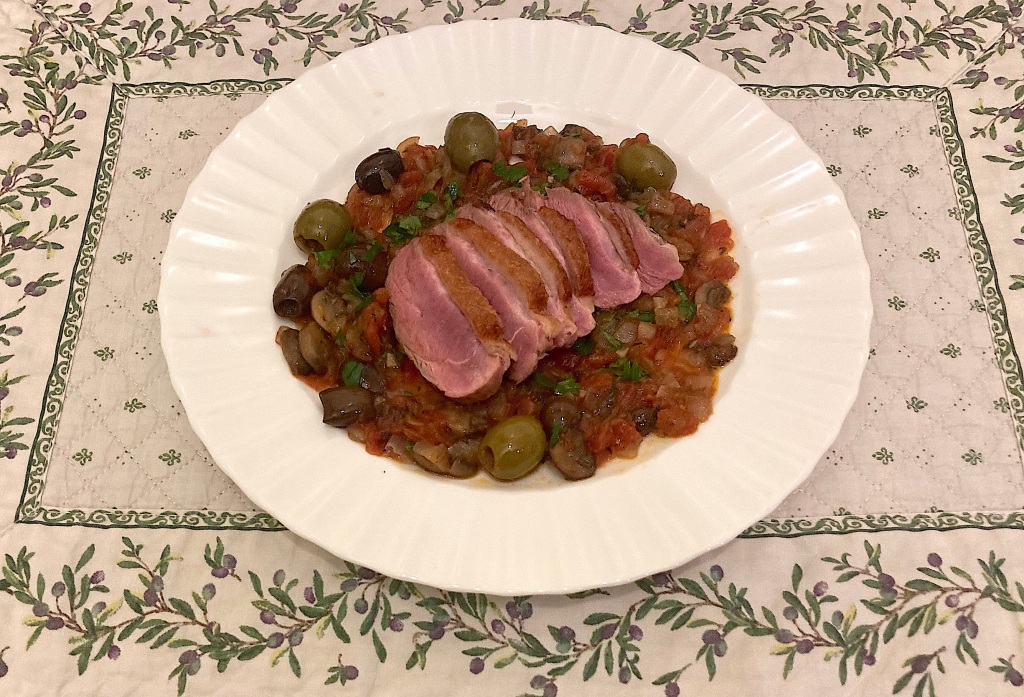
One of the recipes in Bistro Cooking is called Brasserie Flo’s Roast Duck. The name caught our attention and we decided to prepare it. The main ingredient is a whole duck, roasted in the oven. A bit too much for the two of us so we decided to combine the vegetable sauce with pan fried breast of duck. We expected the sauce to be fairly simple (tomatoes, mushrooms, onions, Herbes de Provence) but the result was delicious and a great accompaniment of the duck.

Patricia Wells serves her duck with a glass of Julienas, a cru from the Beaujolais. Very good choice. We opened a bottle of Gamay made by Domaine La Tour Beaumont from the Loire region.

Brasserie Flo’s Duck ©cadwu

The Book

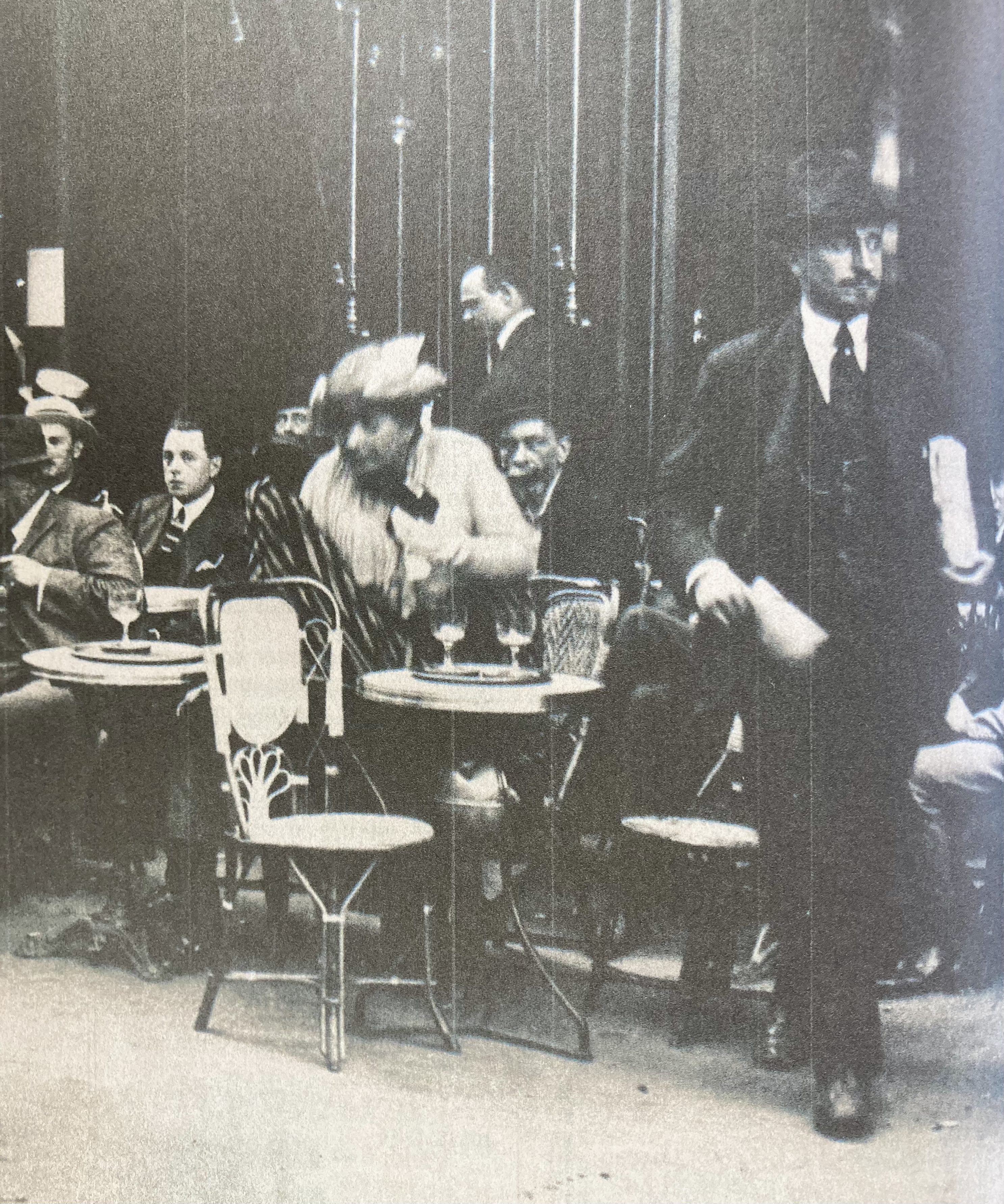
Bistro Cooking includes pictures of typical Bistro scenes showing waiters serving food, people reading their paper and enjoying a small coffee or guests sitting on a small terrace drinking an aperitif while chatting with friends. The pictures illustrate the typical bistro atmosphere and show France like it was and sometimes, if you’re lucky, still is. 
All recipes benefit from a nice introduction, discussing the origin of the recipe or one of the ingredients.

Both recipes can be found on Bernadette’s New Classic Recipe.

Bistro cooking is available via your local bookstore or the usual channels for 25 Euro or US dollar.


Herring Salad

In 1910 Mrs. Wannée published her Amsterdams Kookboek. A book dedicated to nutritious, easy to prepare and inexpensive food. She was teacher and director of the Amsterdam Huishoudschool, which was a school for domestic skills, aimed at training future maids and housewives. The book is currently in its 32nd edition and has sold over one million copies. It continues to be a popular cookbook because every new edition reflects the current culinary trends. We own a copy of the 14th edition (published around 1955?) and it clearly reflects the post second world war Dutch cuisine: very limited use of spices and herbs combined with cooking vegetables and meat for hours. We prepared Leek à la Wannée and decided it was perhaps edible in 1955 but certainly not today.

Recently we were reading the 7th edition of the book, published around 1935. The recipes are interesting and showcase a very different Dutch cuisine. We decided to prepare a Herring Salad inspired by the 1935 recipe of Mrs. Wannée.

Wine Pairing

A nice cold beer will be great with the salad. You could also go for a white wine from the Alsace or Mosel region. Nice acidity, perhaps a touch sweet, floral and aromatic.

What You Need

  • 1 Dutch Herring
  • ½ Apple
  • ½ Cooked Beetroot
  • 1 Boiled Egg
  • Small Pickled Onions
  • Cornichons
  • (Olive) Oil
  • Vinegar
  • Mayonnaise
  • Chives
  • Black Pepper
  • Corn Salad (Lamb Lettuce, Mâche)

What You Do

Peel the apple and the beet root. Chop herring, apple, beetroot, onions, cornichons and a generous amount of chives. Chop the white of the egg, crumble the yolk. Quickly combine the ingredients, add a teaspoon of mayonnaise, black pepper, small tablespoon of vinegar and the same quantity of olive oil, mix and serve immediately on top of the lettuce. Decorate with chives.

PS

Being Dutch we love our herring. Sometimes Dutch herring is called ‘raw’ because it’s not cooked. Actually, it’s placed in lightly salted brine for 5 days so it’s fermented and not raw at all. Herring is not to be compared with sashimi.

Great Bloggers’ Bake Off

A few weeks ago we joined the 2023 Great Bloggers’ Bake Off. An online competition open to anyone on WordPress. Bread, pies and cakes, savoury or sweet, all home baked by many talented bloggers.  This year the theme was Express Yourself. Our submission was a Pear and Almond Pie.
Joining the competition turned out to be great fun. We saw some exceptional bakes and intriguing combinations. All these great bakes can be found on Mel’s blog. The result of the Bake Off is available on A Jeanne in the Kitchen.

Our Favourites
  • Irene Arita’s Zucchini Squares, made with cinnamon, nutmeg, ginger and vanilla. Beautifully decorated with zucchini flowers made with marzipan. The pictures in the post will help you recreate the flowers.
  • The Spicy Veggie Strudel made by Kevin looks very tempting and the combination of ingredients (mushrooms, celery, cumin, coriander, tomatoes, kidney beans) sounds great. One we will definitely try.
  • And, obviously, the winner of the 2023 Great Bloggers’ Bake Off: a beautiful classic French Fraisier, made by Sheree. Very nicely piped Crème Mousseline, the strawberries halved and the decoration lovely.
PS

We are very happy to win the award in the Pie category! Baking is not something we do on a daily basis, so winning the award encourages us to focus more on baking.

Scones

A few weeks ago, our local supermarket promoted original, traditional English clotted cream, scones and strawberry jam, obviously. We bought a jar but couldn’t find the scones. The clotted cream ended up in the refrigerator and we forgot about the scones. Fortunately, clotted cream keeps very well so when we spotted the jar some two weeks later, we decided to open it and taste the cream. Yummy! So, all we needed for our Cream Tea were scones. And since we couldn’t find them, we baked them ourselves.

What You Need

  • 250 grams of Self Raising Flour
  • 2/3 teaspoon Baking Powder
  • 75 grams of Butter (room temperature)
  • 30 grams of Sugar
  • 120 grams of fresh Whole Milk
  • 125 grams of Raisins
  • One egg
  • Pinch of Salt

What You Do

Start by soaking the raisins for 10 minutes in hot water. Drain and squeeze gently. This way the raisins will be tasty and moist. Lightly beat the egg, just enough to combine the white and the yolk. Now combine self raising flour, baking powder, butter and sugar until you have a crumbly pastry. Best is to use a hand mixer with kneading hooks. This may take some time. When well mixed, add half the egg and the milk. Make a smooth dough. Fold in the raisins and store the result in the refrigerator for one hour. Preheat your oven to 210 °C or 410 °F. Roll out the dough. We used a 7-centimetre (cookie) cutter. Coat the top of the scones with beaten egg. Allow to rest for 15 minutes. Coat the scones for the second time. Bake the scones for some 10 minutes. Keep an eye on your oven because the scones will bake very quickly!

Serve with a generous amount of English clotted cream and strawberry jam. The best way is to split the scone in two, cover each half with clotted cream and put the strawberry jam on top.

PS

If you want to see how our favourite Dutch Pâtissier Cees Holtkamp makes scones (in his home kitchen, supported by his granddaughter), then this video will help. It’s in Dutch (with YouTube provided subtitles). Please note that his list of ingredients is slightly different.

Scones ©cadwu
Scones ©cadwu

Nothing Fancy!

Recently we reviewed Nothing Fancy by Alison Roman as part of the inspiring cookbook review project by Bernadette. The subtitle of Nothing Fancy is ‘Unfussy food for having people over’, and it contains ‘low-stress and high impact’ recipes. A book that promises to help you serve colourful plates, casually roasted meat and desserts, even when you’re struggling timewise. An interesting idea, having guests over for dinner or lunch, serving tasty food, remaining relaxed and enjoying every minute of it.

We prepared three dishes and asked our panel (Carolien, Hans and Joke) for their thoughts.

Tomato Salad

The first dish we prepared was a Tomato Salad with Anchovies and Fennel Seeds, a combination of ripe and tasty tomatoes with fennel flavoured oil and anchovies. Our panel was very happy with the salad. The combination of tomatoes and fennel is a trouvaille and the salty, umami flavour of the anchovy gives the salad an extra dimension. It’s great to serve as a salad on its own. It will also combine very well with swordfish or skate.

Green Pea Salad

The second dish (a Salad with Green Peas, Black Olives and Burrata) was very easy to make and absolutely delicious. We added some extra grated lemon and mint. Our panel was pleasantly surprised by the refreshing flavour, the aroma and the velvety, juicy mouthfeel.

Roasted Chicken

The third dish was casually Roasted Citrus Chicken with Herbs. The recipe suggests setting your oven to 230 °C or 450 °F. Isn’t that a bit too hot, we thought? But okay, let’s do as suggested and follow the recipe. We transferred the chicken to the hot oven. Five minutes later we were busy turning off the smoke alarm. Our panel had a good laugh (although we couldn’t hear them very well because of the noise). So far for remaining relaxed!

The chicken is marinated for a number of hours in a mix of lime and lemon juice, orange juice, soy sauce, olive oil, sambal and garlic cloves. Then fried in the oven on 180 °C or 355 °F and served with some cooking liquid, caramelised lemon and orange slices and a generous amount of herbs (Cilantro, Parsley, Rosemary, Thyme and Oregano)

We served the citrus chicken with a glass of red wine made by Domaine La Tour Beaumont in the French Loire region. It is made using Gamay grapes, well known from the Beaujolais region. A very fruity, juicy wine that should be served slightly chilled. We also served a glass of zero alcohol rosé produced by Domaine de L’Arjolle, made with Cabernet Franc and Syrah grapes. The wine is dry, aromatic and has long lasting taste (raspberry, strawberry). Beautiful colour, not sweet (as many other zero alcohol wines) and light. Both worked beautifully with the chicken and the herbs thanks to the lightness and the fruity flavours.

(Y) our Shelf

Should this book be on (y)our shelf? Definitely yes if you’re looking for tasty food that doesn’t require too much work. If you want to remain relaxed while cooking and entertaining, be sure to test the recipes before having people over, because some aspects of the recipes may need adjusting.

Nothing Fancy by Alison Roman is available via your local bookstore or the usual channels for US$ 20.00 or € 30,00.

Belgian Cuisine

Belgian Cuisine is so much more than just beer, waffles and chocolate, it’s about enjoying excellent food with great dishes such as Waterzooi, Moules Meunière, Asparagus with Crevettes Grises and many more.

The five Belgo restaurants in London (from 1992 until 2020) were very successful promoters of Belgian cuisine. The chain, founded by Denis Blaise and Andre Plisnier, celebrated Belgian cuisine and the joy of eating simple, tasty, original food. Fortunately, in 1997 they published a cookbook, allowing us to enjoy their food even after the closure of the chain.

The book includes 20 recipes for mussels (ranging from the classic Mussels with White Wine to Mussels with Roquefort), a chapter on Fries, on Beer and cooking with Beer and a range of traditional Belgian dishes (Shrimp Croquettes with deep fried Parsley, Paling in het Groen (Eel in Green, a stew with eel, potatoes, beer, fish stock, watercress, dill, chives and cream) and of course Filet Americain).

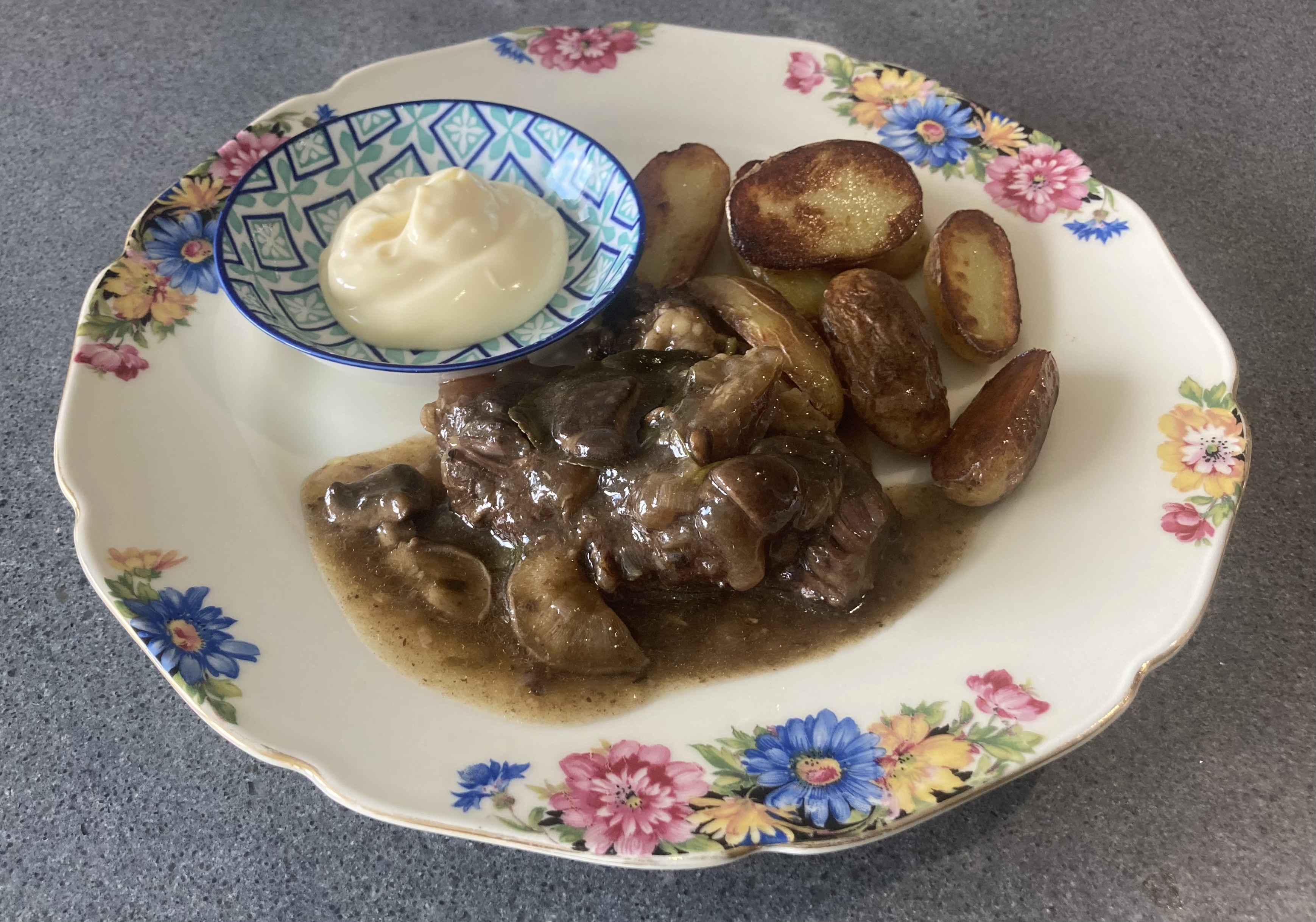
Amongst our favourites from the Belgian kitchen are Asparagus à la Flamande, Tomatoes with Shrimps, Beef stew with Brown Beer and their Chicory and Belgian White Beer Soup. The soup combines the bitter flavours of the chicory and the beer (hops, cilantro, orange peel) with cream, nutmeg and chicken stock. Delicious!

The Belgo Cookbook by Denis Blaise and Andre Plisnier (available in Dutch and English) is available via the well-known channels, perhaps second hand, for 20 US$ or €.

Tomato Burger

Recently we reviewed Oh She Glows for Dinner by Angela Liddon as part of the Cookbook project by Bernadette. A well designed book with lots of colourful pictures of tempting plant based food. Unfortunately we think the food is not always as tasty as Angela Liddon claims it to be, which is unfortunate if you want to enjoy vegan cooking. We made Vegetarian Pasta with Black Beans (not a dish we would recommend) and Bruschetta Veggie Burgers topped with avocado and Perfect Basil Pesto.
The Veggie Burger was colourful and absolutely nutritious, perhaps a bit too sweet for our taste. The original recipe suggests using basil and canned lentils for the patties. The basil didn’t add much flavour and canned lentils are a no-go for us. Based on our experience we changed the recipe, focussing on the tomatoes.

Oh She Glows for Dinner by Angela Liddon is available via your bookstore or the usual channels for € 35,00 or US$20.00.

What You Need

  • 30 grams Green or Brown Lentils
  • Vegetarian Stock
  • Bouquet Garni (optional)
  • 25 grams Sun Dried Tomatoes
  • 1 small Red Onion
  • 1 Garlic Clove
  • 60 grams Roasted Cashews
  • Fresh of Dried Oregano
  • Teaspoon Lemon Juice
  • Black Pepper
  • Breadcrumbs
  • Olive Oil

What You Do

Start by washing and cooking the lentils in vegetarian stock, perhaps with a bouquet garni. Set aside and let cool. Prepare the dried tomatoes: if they are salted, then wash them thoroughly. If they are oil-packed, drain them. Chop the red onion, the garlic clove and the dried tomatoes coarsely. Glaze the onion and the garlic in olive oil. Use a food processor to make a coarse mixture of the cashews and oregano. Add the chopped tomatoes, the onion, the garlic, the lentils and the lemon juice. Pulse a few times. Taste and decide if you want to add pepper or lemon juice. Now it’s time to check the consistency. Is it possible to turn the mixture into patties? A bit soggy probably? Add breadcrumbs. Leave the mixture for 10 minutes. Divide the mixture in 4 (or 2) portions and make patties, using your hands. Bake the patties in a non-stick pan with some olive oil until they are ready and golden.Serve with a nice bun, some salad, sliced tomato, avocado and pesto.

Moosewood

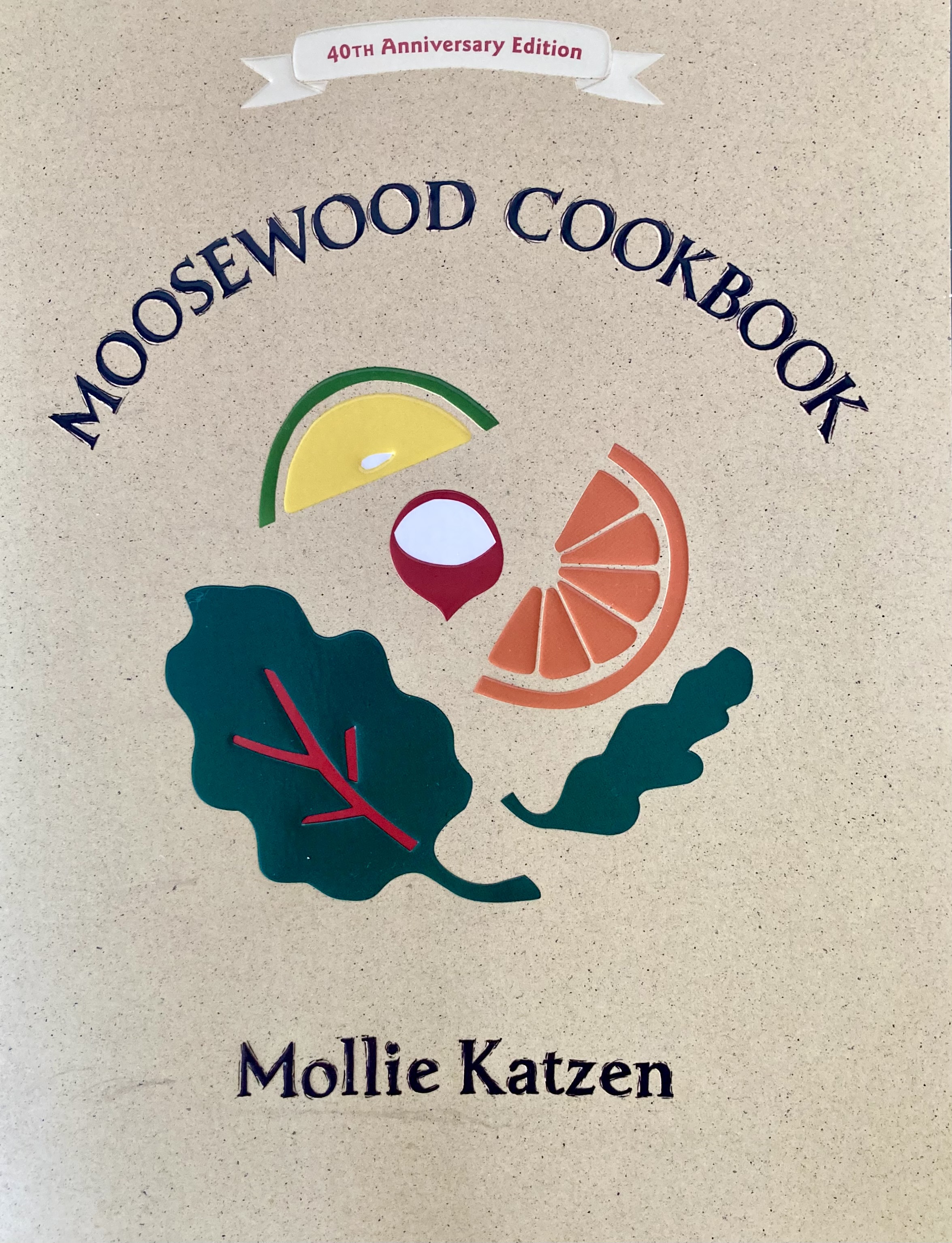
A new cookbook is always welcome. We read it, try a recipe, adjust it, tweak it and look for inspiration. When we opened Mollie Katzen’s cookbook Moosewood we were very pleasantly surprised. The lay out is great, the font clear, the drawings good fun, the index comprehensive and above all, the recipes look tempting. Let’s start cooking!

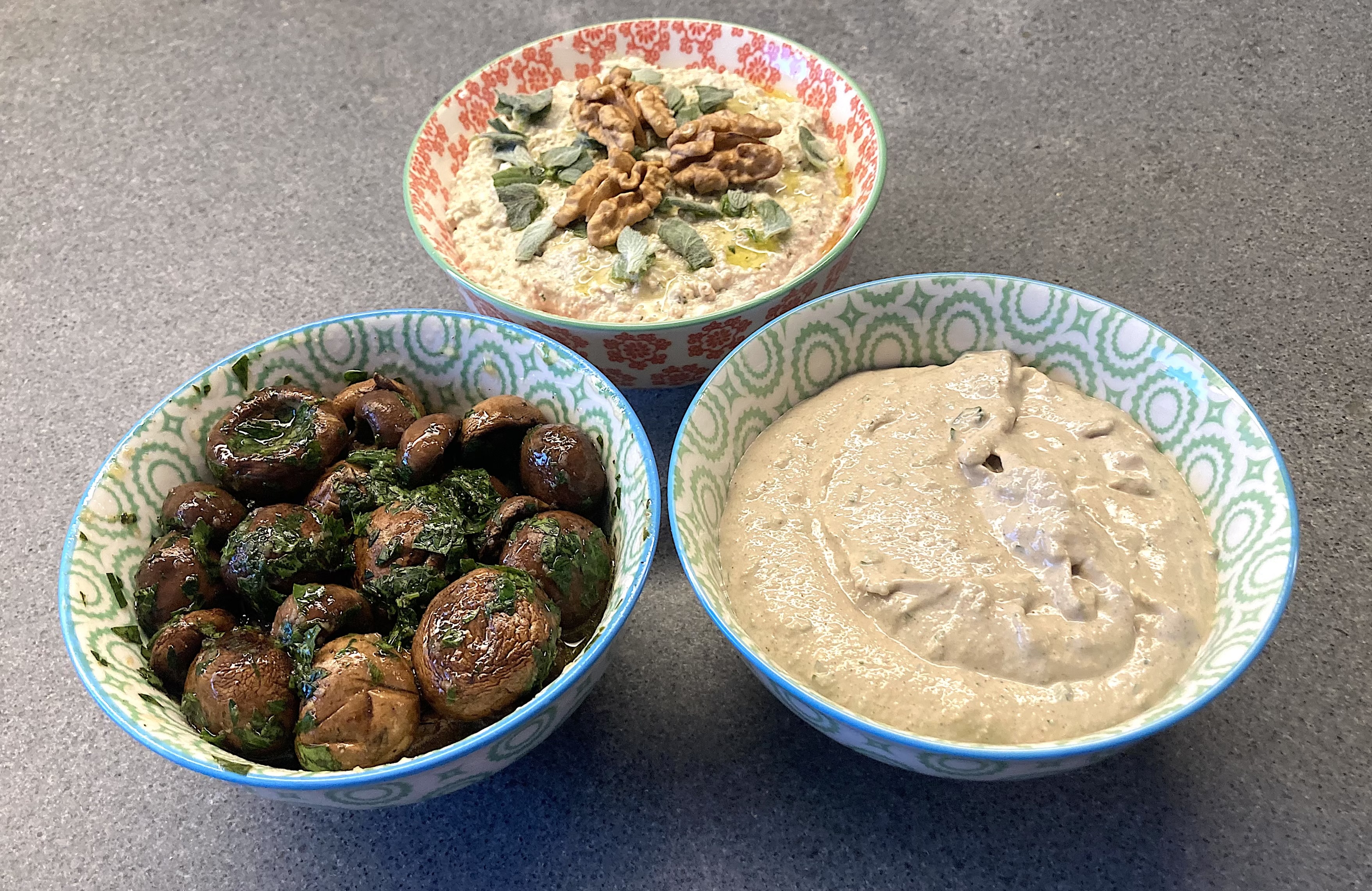
We prepared three antipasti: Feta-Walnut Dip, Tahini-Lemon Sauce and Marinated Mushrooms. Mollie Katzen suggests serving the Feta-Walnut Dip on sesame crackers or roasted Pita Bread, so we baked Pita Bread and bought some sesame crackers.

Tahini-Lemon

The Tahini-Lemon Dip is a combination of ¾ cup of tahini and 5 tablespoons of lemon juice. We opened a jar of tahini made with hulled sesame seeds, stirred it and decided it was too thin. Its taste was astringent and we didn’t think mixing it with lemon juice was a good idea. We bought another jar of tahini, this one made with roasted, unhulled sesame seeds. Much better taste, some bitterness and a great consistency.

Feta-Walnut

The recipe for the Feta-Walnut Dip contains a fair amount of Feta, which is not our favourite cheese. In most cases it’s rubbery and the taste bland and salty. Since 2002 Feta is a Protected Designation of Origin in Europe. When a product has the PDO status you can be sure of the quality, the authenticity, the ingredients used and the production methods. When you buy Feta cheese, make sure it comes with an PDO label.

The Panel

Our test panel (Carine, Marion and Rutger) welcomed the idea of vegetarian antipasti. We served a glass of Crémant d’Alsace, produced by Fernand Engel. This sparkling white wine is made of Chardonnay grapes and has fruity aromas, freshness, gentle acidity and typical Alsace sweetness.

The Results

The Panel started with the Marinated Mushroom: lovely flavours, fresh, intense, umami, mushrooms surprisingly firm.
The Tahini-Lemon Dip: fresh, nice with the acidity of the lemon, light, makes you think of peanut butter, but not too much. It tasted very well when served on a sesame cracker. The panel thought the dip was lacking something, perhaps some za’atar (a spice mixture with sesame seeds, sumac, oregano, thyme, cumin and more)?
The Feta-Walnut Dip was simply delicious. New unexcepted flavour, fresh, long lasting. The panel was unanimous, the Feta-Walnut Dip was their favourite.

Recipe Feta-Walnut Dip

It is made by combining 1 cup of chopped walnuts with a nice amount of parsley and 1 cup of feta cheese. The walnuts and the parsley are blended until fairly smooth, then the cheese, some water, a teaspoon of paprika powder and some cayenne pepper is added. Just before serving sprinkle with excellent olive oil and decorate with fresh oregano and three halved walnuts. We could imagine chopping the oregano and adding it to the dip.
The Feta-Walnut Dip doesn’t keep well, but that should not be a problem because it doesn’t take more than 10 minutes to prepare.

Moosewood by Mollie Katzen clearly deserves a space on (y)our shelf. It is a great and reliable resource when you’re looking for tasty, healthy vegetarian food and snacks. It is available via the usual channels and your local bookstore for something like € 20,00 or US$ 30.00.

PS This review was published earlier on Bernadette’s website. Follow her blog and read inspiring and creative recipes and stories.

Bucatini All’Amatriciana

Let’s prepare a delicious and simple Italian dish, packed with flavours. The challenge when making Bucatini All’Amatriciana is with getting the right ingredients. You must have Guanciale, Bucatini, San Marzano tomatoes, dried Spanish pepper and Pecorino Romano. Five challenges actually…

Bucatini is an interesting pasta. It looks like thick spaghetti but has a hole running though the centre. Indeed, a dried tube. When cooked it’s different from spaghetti, thicker of course and you need to chew longer, making the dish more filling and the taste longer lasting, without the paste itself being chewy. Could you replace bucatini with spaghetti? Probably yes, although the dish will become simpler.

How about Guanciale (cured pork cheek)? It is the key ingredient of Spaghetti Carbonara. Could you replace it with Pancetta? Probably yes, even Antonio Carluccio uses pancetta when preparing Bucatini All’Amatriciana with Gennaro Contaldo in this video.

Parmesan Cheese? That’s a no-go. We tried the dish with both Parmesan and Pecorino. The version with Parmesan cheese (made from cow milk) was okay, the one made with Pecorino (made from sheep milk) was delicious. The cheese combined very well with the spiciness and sweetness of the sauce.

San Marzano tomatoes have lots of flesh, just a few seeds and the taste is sweet and not very acidic. They are often used for canned tomatoes. If you can’t find San Marzano, then ask your greengrocer for similar tomatoes.

Shopping for the ingredients of Bucatini All’Amatriciana may be a challenge, preparing it is simple. Just keep an eye on the pan and the pasta. Within 30 minutes you can enjoy a classic Italian dish.

Wine Pairing

A red Italian wine is the obvious choice. We opened a bottle of Villa Castello Terre di Chieti Sangiovese 2022. The wine is made with 100% Sangiovese grapes. A touch of oak, not too much alcohol, full bodied, smooth, and with aromas of dark fruit. We loved it with our Bucatini All’Amatriciana. In general, an (Italian) wine made with Sangiovese grapes will be a great choice.

What You Need

  • 150 grams of Guanciale
  • 300 grams San Marzano tomatoes
  • 1 small Yellow Onion
  • 1 dried Spanish Pepper
  • White Wine
  • Bucatini
  • Pecorino Romano

What You Do

  1. Remove the outer layer of the guanciale and dice
  2. Coarsely chop the onion
  3. Wash and dry the tomatoes
  4. Chop the tomatoes, also coarsely
  5. Finely chop the Spanish pepper. Depending on your taste you could use the seeds
  6. Heat a large pan, add the guanciale and fry gently, making sure you get some nice fat without frying the meat crispy
  7. Add the onion and some of the Spanish pepper *depending on your taste and its spiciness)
  8. Glaze the onion
  9. Add some white wine and reduce the heat
  10. Add the chopped tomatoes and leave to simmer
  11. Taste and perhaps add some more pepper
  12. In parallel cook the bucatini al dente, this will probably take some 10 minutes
  13. When ready transfer the bucatini straight from the water to the sauce, combine and leave for a minute or two
  14. Taste and if necessary, adjust by adding pepper
  15. Serve the Bucatini All’Amatriciana with some freshly grated Pecorino Romano.