Farfalle with Fennel and Zucchini

It was our last evening in Paris and we wondered what to do? Book a table at a nice local restaurant? Or enjoy drinks and dinner in our lovely apartment? Obviously, we decided to stay in. We looked in our refrigerator, did some shopping and sat down with a nice glass of Pinot Blanc and some shrimps. The plan was to make a rich, creamy pasta dish with fennel, zucchini and pancetta.
Thanks to the mild aniseed flavour of the fennel, the dish has a surprisingly uplifting taste. The (peeled) zucchini also benefits from the aniseed flavour and remains tasty and present.

Wine Pairing

Being in France we opened a bottle of Côtes du Rhône produced by Maison M. Chapoutier. This is a red wine made with Grenache, Mourvèdre and Syrah grapes. The wine has some fruit, a touch of pepper and mild tannins. A traditional French red wine.

If you prefer an Italian wine with the pasta, then we would suggest a glass of Bardolino, for instance the one produced by Monte del Frà. The wine has a beautiful deep red colour, and the aromas made us think of red fruit and perhaps pepper. The wine is medium bodied with some acidity. It will combine very well with both the lightness in the dish and the creaminess.
In general, you’re looking for a fruity red wine with a touch of acidity, for example Chianti Classico, Montepulciano or Barbera.

What You Need

  • 1 small Fennel
  • 1 small Zucchini (Courgette)
  • 1 Shallot
  • 80 grams of organic Pancetta
  • 1 Garlic Clove
  • 1 Bay Leaf
  • Piment Doux
  • Cream
  • Parmesan Cheese
  • Black Pepper
  • Olive Oil
  • Farfalle

What You Do

  1. Finely chop the shallot and the fennel
  2. Add olive oil to a warm skillet and gently fry the shallot and the fennel
  3. Peel the zucchini, slice and quarter
  4. Dice the pancetta
  5. Chop the garlic
  6. Now add the zucchini and the pancetta to the pan
  7. Increase the heat and fry for one or two minutes, just to add colour
  8. Reduce the heat, add the garlic, the bay leaf and the piment doux
  9. Add the farfalle to the boiling water and cook according to the instruction on the package
  10. Leave the pan on low heat for a few minutes
  11. Now add the cream and the Parmesan cheese
  12. Stir and taste
  13. When the farfalle is ready, add it to the pan
  14. Combine and add some cooking liquid to the sauce if needed
  15. Remove the bay leaf, add some fresh black pepper and serve
  16. We decorated the dish with a slice of grilled pancetta
Farfalle with Fennel and Zucchini ©cadwu

Pike Perch with Shrimps and Dill

Pike Perch (zandersnoekbaarssandre) is one of the tastiest, flavour-packed freshwater fish. The flesh is white, firm and lean and the taste is delicate, mild and perhaps a touch sweet. It combines very well, for instance with this delicious shrimp-based sauce with dill. It seems to be a bit of work, but when you prepare the bisque-like sauce in advance, then it’s actually a very quick recipe.

Wine Pairing

We opened a bottle of Domaine Font-Mars Picpoul de Pinet. This is a white wine from the South of France between Narbonne and Montpellier. The terroir (think calcareous soil, clay, quartz) is influenced by the sea, which is reflected in the mineral taste of the wine.
If you feel like spending more money, then we suggest a glass of Chablis. In general you’re looking for a refreshing, unoaked white wine with minerality and fresh acidity.

What You Need
  • Pike Perch fillets
  • Butter
  • For the Bisque
    • 300 grams of unpeeled small Grey Shrimps
    • Tomato Paste
    • 1 small Shallot
    • 1 Garlic Clove
    • Dill
    • Olive oil
    • pinch of Saffron
    • Cognac
    • pinch of Salt
    • Butter
What You Do
  1. Start by peeling the shrimps. It’s a very simple, mindfulness exercise
  2. Remove the heads and discard
  3. Use the shells for the bisque and transfer the bodies of the shrimps to the refrigerator
  4. Chop the shallot and the garlic
  5. Gently glaze the shallot for 10 minutes or so in olive oil
  6. Add the shells and the garlic
  7. Increase the heat for a few seconds
  8. Add some water and stir
  9. Add tomato paste, dill and saffron
  10. Add a splash of cognac and a pinch of salt
  11. Allow to simmer for 20 minutes
  12. Pass the liquid through a fine sieve. Make sure you get all the lovely juices
  13. Reduce the liquid until it’s powerful
  14. Cool and set aside.
  15. Transfer the shrimps from the refrigerator some 15 minutes before serving
  16. In a non-stick pan heat some butter and fry the pike-perch
  17. In parallel warm the bisque
  18. Use ice cold butter to make the sauce thicker and richer
  19. Plate up by creating a pool of sauce
  20. Place the fried fish somewhat in the middle of the sauce
  21. Add the shrimps and finish with some fresh dill
Pike Perch with Shrimps and Dill ©cadwu

Orecchiette alla Barese

A traditional dish from the city of Bari in Puglia, Italy. The main ingredients are orecchiette and rapini.
Orecchiette is an ear shaped pasta, typical for this region. Its surface is a bit rough, and the centre (the dent) is thinner than the edge. Its shape makes it ideal for a sauce with structure.
Rapini (Cime di rapa) will no doubt make you think of broccoli, which is not our favourite vegetable. Rapini has more bitterness and character. It is completely edible, including the stem and the leaves. If broccoli is about the florets, rapini is about the stem. If your greengrocer doesn’t sell rapini, then feel free to go for bimi or broccoli and make sure to add bitterness (we added one anchovy to the sauce).
As more often with traditional dishes, it’s not completely clear what the other ingredients are. Anchovies? Italian Sausage? Breadcrumbs? Peccorini? Tomatoes? Garlic?

Wine Pairing

A wine from Puglia will of course combine very well with this dish. Red wines in this region are made from the primitivo grape (also known as zinfandel). In general the wines are fuller bodied, with some acidity, good structure and lots of sunny flavours (blackberries, perhaps chocolate).

What You Need
  • 200 grams of Rapini
  • 150 grams of Italian Sausage
  • ¼ teaspoon Chilli Flakes
  • Orecchiette
  • One Anchovy
  • Parmesan Cheese
  • Olive Oil
What You Do
  1. Steam or blanch the rapini
  2. Drain and chop (1 centimeter or inch pieces is fine)
  3. Heat a pan, add some olive oil and the sausage meat
  4. Fry until nicely brown
  5. Remove the meat from the pan
  6. Add some oil and the anchovy
  7. Cook on low heat until the anchovy dissolves (a fork may be useful)
  8. Add the orecchiette to a pan with boiling water and cook until al dente
  9. In parallel prepare the sauce by adding the meat, the chilli flakes, and the vegetables to the pan with the anchovy. Mix
  10. Happy with the sauce?
  11. Remove the pasta from the water and transfer to the sauce. Combine. You may need to add some cooking liquid to the pan.
  12. We served our orecchiette with some freshly grated Parmesan cheese (optional) on warm plates.
Orecchiette alla Barese ©cadwu

Bistro Cooking

Recently we reviewed Bistro Cooking by Patricia Wells as part of the ongoing cookbook review project by Bernadette. The book made us think about a lunch we enjoyed years ago in Paris. It was a nice small bistro in a small street, off centre, 15th arrondissement, nothing fancy and not a Michelin star in sight. We entered the restaurant and ordered today’s dish, the plat du jour. It turned out to be a generous helping of lentils with two fried sausages, mashed potatoes and mustard. A beer worked beautifully with it. After having enjoyed our lunch, we talked about the joy of good food, French mustard and the beauty of lentils. Time for coffee.

It’s the kind of dish you would expect in a book called Bistro Cooking by. In the book we found two recipes with lentils, one salad and one soup with smoked sausages, the delicious Montbéliard.

Salad

When going through the index we spotted a recipe for a salad with squid, tomatoes, thyme and red wine vinegar. Unfortunately, our fish monger is on holiday, so we had to use pre-cooked octopus as an alternative. The salad is colourful, tasty and uplifting. A great starter, especially when enjoyed with a glass of rosé.

Salad with Octopus ©cadwu
Flo

For many years Brasserie Flo was not only the name of an excellent brasserie in Paris, it was also a chain of restaurants in Nice, Metz, Barcelona and of course Paris (JulienTerminus NordLa Coupole and many more). In 2018 the original Brasserie Flo was renamed Floderer, after one of its founders.

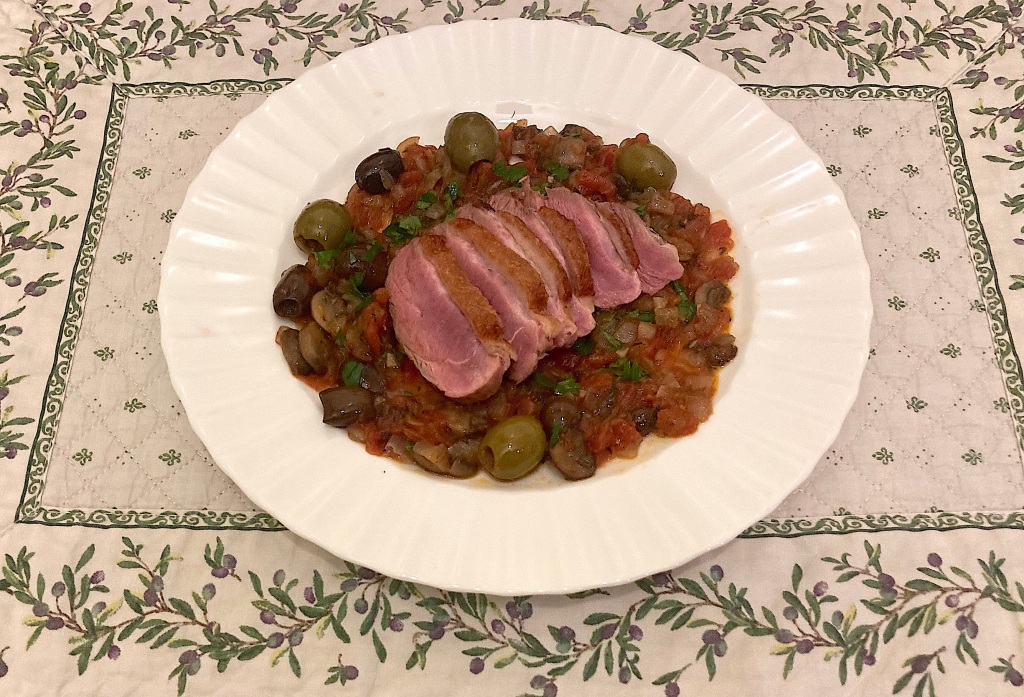
One of the recipes in Bistro Cooking is called Brasserie Flo’s Roast Duck. The name caught our attention and we decided to prepare it. The main ingredient is a whole duck, roasted in the oven. A bit too much for the two of us so we decided to combine the vegetable sauce with pan fried breast of duck. We expected the sauce to be fairly simple (tomatoes, mushrooms, onions, Herbes de Provence) but the result was delicious and a great accompaniment of the duck.

Patricia Wells serves her duck with a glass of Julienas, a cru from the Beaujolais. Very good choice. We opened a bottle of Gamay made by Domaine La Tour Beaumont from the Loire region.

Brasserie Flo’s Duck ©cadwu

The Book

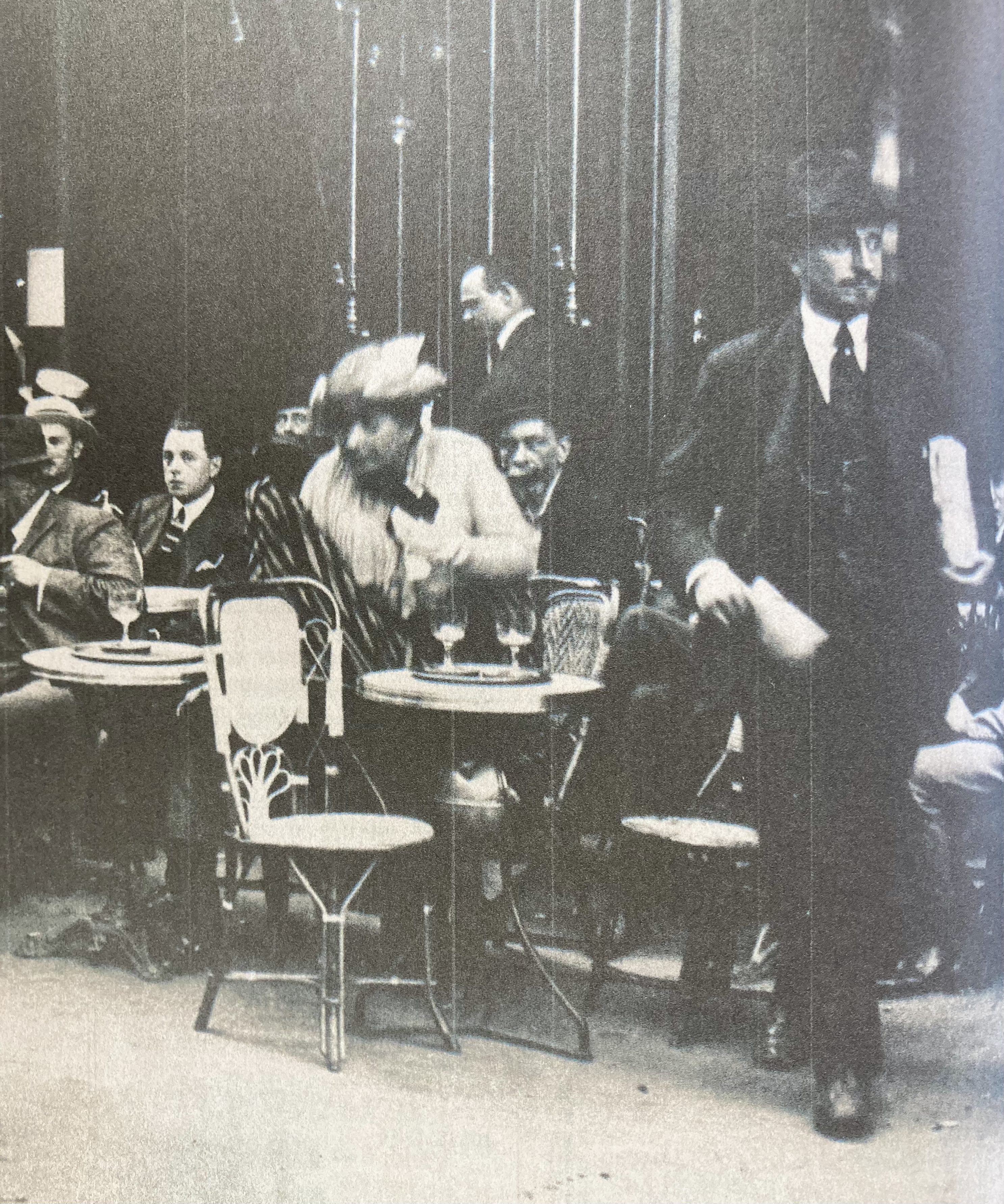
Bistro Cooking includes pictures of typical Bistro scenes showing waiters serving food, people reading their paper and enjoying a small coffee or guests sitting on a small terrace drinking an aperitif while chatting with friends. The pictures illustrate the typical bistro atmosphere and show France like it was and sometimes, if you’re lucky, still is. 
All recipes benefit from a nice introduction, discussing the origin of the recipe or one of the ingredients.

Both recipes can be found on Bernadette’s New Classic Recipe.

Bistro cooking is available via your local bookstore or the usual channels for 25 Euro or US dollar.


Herring Salad

In 1910 Mrs. Wannée published her Amsterdams Kookboek. A book dedicated to nutritious, easy to prepare and inexpensive food. She was teacher and director of the Amsterdam Huishoudschool, which was a school for domestic skills, aimed at training future maids and housewives. The book is currently in its 32nd edition and has sold over one million copies. It continues to be a popular cookbook because every new edition reflects the current culinary trends. We own a copy of the 14th edition (published around 1955?) and it clearly reflects the post second world war Dutch cuisine: very limited use of spices and herbs combined with cooking vegetables and meat for hours. We prepared Leek à la Wannée and decided it was perhaps edible in 1955 but certainly not today.

Recently we were reading the 7th edition of the book, published around 1935. The recipes are interesting and showcase a very different Dutch cuisine. We decided to prepare a Herring Salad inspired by the 1935 recipe of Mrs. Wannée.

Wine Pairing

A nice cold beer will be great with the salad. You could also go for a white wine from the Alsace or Mosel region. Nice acidity, perhaps a touch sweet, floral and aromatic.

What You Need

  • 1 Dutch Herring
  • ½ Apple
  • ½ Cooked Beetroot
  • 1 Boiled Egg
  • Small Pickled Onions
  • Cornichons
  • (Olive) Oil
  • Vinegar
  • Mayonnaise
  • Chives
  • Black Pepper
  • Corn Salad (Lamb Lettuce, Mâche)

What You Do

Peel the apple and the beet root. Chop herring, apple, beetroot, onions, cornichons and a generous amount of chives. Chop the white of the egg, crumble the yolk. Quickly combine the ingredients, add a teaspoon of mayonnaise, black pepper, small tablespoon of vinegar and the same quantity of olive oil, mix and serve immediately on top of the lettuce. Decorate with chives.

PS

Being Dutch we love our herring. Sometimes Dutch herring is called ‘raw’ because it’s not cooked. Actually, it’s placed in lightly salted brine for 5 days so it’s fermented and not raw at all. Herring is not to be compared with sashimi.

Great Bloggers’ Bake Off

A few weeks ago we joined the 2023 Great Bloggers’ Bake Off. An online competition open to anyone on WordPress. Bread, pies and cakes, savoury or sweet, all home baked by many talented bloggers.  This year the theme was Express Yourself. Our submission was a Pear and Almond Pie.
Joining the competition turned out to be great fun. We saw some exceptional bakes and intriguing combinations. All these great bakes can be found on Mel’s blog. The result of the Bake Off is available on A Jeanne in the Kitchen.

Our Favourites
  • Irene Arita’s Zucchini Squares, made with cinnamon, nutmeg, ginger and vanilla. Beautifully decorated with zucchini flowers made with marzipan. The pictures in the post will help you recreate the flowers.
  • The Spicy Veggie Strudel made by Kevin looks very tempting and the combination of ingredients (mushrooms, celery, cumin, coriander, tomatoes, kidney beans) sounds great. One we will definitely try.
  • And, obviously, the winner of the 2023 Great Bloggers’ Bake Off: a beautiful classic French Fraisier, made by Sheree. Very nicely piped Crème Mousseline, the strawberries halved and the decoration lovely.
PS

We are very happy to win the award in the Pie category! Baking is not something we do on a daily basis, so winning the award encourages us to focus more on baking.

Pear and Almond Pie

Only a few weeks to go before we can enjoy fresh, new pears and apples. Time to start thinking about a traditional Dutch apple pie, about stuffed apples with raisins and cinnamon, about a chocolate-pear pie and of course about this classic pear and almond pie. Rich in taste with a crunchy crust and a soft, light, creamy filling. A very taste dessert but also great with a cup of tea in the afternoon.

We begin by making the dough. It freezes well, so it’s a great idea to make a bit extra.

What You Need
  • 50 grams of White Caster Sugar
  • 100 grams of soft Unsalted Butter
  • Egg (beaten)
  • ½ teaspoon of Lemon Zest
  • 1 gram of Salt
  • 3 grams of Baking Powder
  • 150 grams of All Purpose Flour
What You Do

Adding an egg to the dough makes its flavour richer and the dough will be easier to handle when lining the baking tin. The lemon in the crust will work very well in combination with the pear and the sweetness of the filling. Start by combining the sugar and the butter. Use a hand mixer with kneading hooks. When mixed, add halve of the beaten egg, then add the lemon zest. Combine salt, baking powder and flour. Pass through a sieve and add to the mixture. Use the kneading hooks to mix. When done, remove from the bowl and wrap in foil. Store in the refrigerator for at least two hours.

The filling is a combination of almond paste, crème fraîche and pear. We used Conference, but you could also use the very aromatic Doyenne du Comice. 

What You Need
  • 50 grams of Almond Paste
  • ½ egg
  • 100 grams of Crème Fraîche
  • 10 grams of Calvados
  • 2 or 3 pears
What You Do

Preheat your oven to 200 °C or 390 °F. Roll out the dough, it should be 4-5 mm (0,15-0,20 inch). Coat your pie tin with butter (we used a 15 cm, 6 inch tin). Line the tin with the dough. Don’t worry if the dough breaks; it’s easy to repair. Remove the excess dough. Peel the pears and slice in nice chunks. Combine the almond paste, the egg, the crème fraîche and the calvados until the mixture is smooth. Add the mixture to the tin, Add the pear. Transfer to the oven for in total 40 minutes. After 20 minutes reduce the heat to 160 °C or 320 °F. Allow to cool and then remove from the tin.

PS

In case you want to make your own almond paste, then combine 250 grams of almond flour with 225 grams of sugar. Add one beaten egg and (optional) lemon zest. Mix until you have a paste. Keeps well in the refrigerator for a week and in the freezer for months.
You could also use 250 grams of white almonds. Grind these and continue as if almond flour.

Tartelette aux Myrtilles

We love seasonal products and although blueberries seem to be available all year round, however, we think they are best during summer. We use them to make a tartelette. Works very well as dessert, but also nice with a cup of afternoon tea.
Earlier we baked the tartelette shell ourselves, based on a recipe of Dutch patissier Cees Holtkamp. You could of course also rely on a French classic, for instance Tarte Tatin by Ginette Mathiot. You could also buy the shell and focus on the filling.

What You Need (Filling)

  • 500 grams of Blueberries
  • Gelatine
  • Sugar
  • Lemon Juice
  • Cream Cheese
  • Double Cream

What You Do (Filling)

Wash the blueberries. Keep a handful apart (to be used as decoration). Cook the blueberries with a touch of water and sugar for let’s say 5 minutes. Blender and keep on low heat. Add lemon juice to taste. Follow the instruction on the package of the gelatine. The idea is to thicken the blueberry mixture somewhat, but not to create a gummy layer. Add the gelatine, stir, transfer to the refrigerator and allow to set.
Whip the double cream and the add some cream cheese. We used Philadelphia Original Soft Cheese but you could also use Mascarpone for a fresher result. Taste and perhaps add more cream cheese or some lemon juice.

What You Need (Pâte Sucrée)

  • 50 grams of Butter
  • 125 grams of All Purpose Flour
  • 40 grams of Sugar
  • 1 Egg
  • Pinch of Salt

What You Do (Crust)

We use tartelette moulds with a diameter of approximately 7 centimetres (2,75 inches). The butter must be soft but not warm (18 °C or 65 °F). Beat the egg. Combine flour, sugar and salt. Dice the butter and knead with the mixture. You could use a hand mixer with kneading hooks. When well mixed, add the egg and knead until you have a nice dough. Leave to rest in the refrigerator for at least two hours.
Coat the moulds with butter. Remove the pastry from the refrigerator. Place it on a floured surface and roll it out with a rolling pin. Perhaps dust the dough with flour. Divide the dough into 6 portions and make small circles. Press the pastry onto the bottom and to the sides. Cut of overhanging dough. Transfer to the refrigerator for at least 30 minutes.
Preheat the oven to 175 °C or 350 °F.
Line with parchment paper and use dry beans to fill the moulds. Blind bake for 10 minutes. Remove the paper and the beans. Bake for another 10 minutes. When golden brown, remove the tartelette from the mould and let cool on a grid.

Assemble

When cool and ready to serve, add the blueberry jam, the cream cheese mixture and decorate with remaining blueberries. The tartelette keeps well in the refrigerator for an hour or two. If you store them longer, then the blue of the berries will blur the cream cheese mixture.

Tartelette aux Myrtilles ©cadwu

Cauliflower with Mint and Cilantro

Dutch cuisine and cauliflower? Nice, but not sensational. Normally the cauliflower will be broken into florets, cooked in water (and in the old days this meant cooking until the cauliflower was more than well done), drained and served with a béchamel sauce and nutmeg. That is, if you’re lucky, it can also be a thin sauce made with the cooking liquid and corn starch.
A pity because cauliflower is such a delicious and versatile vegetable. As curry, korma, gratin, casserole (with potatoes, thyme and garlic), in a pickled sauce, as vada (a snack from South-India), steamed or fried, all very yummy!
We combine our cauliflower with grilled lamb chops and a mint and cilantro sauce. Lots of flavours, colours and aromas!

Wine Pairing

Given the various spices we would suggest a white wine or a rosé. A glass of Verdejo will be a great choice if you decide to drink a glass of white wine. We opened a bottle of Monteabellón Rueda. The wine comes with the right acidity, bringing freshness to the dish. It has floral aromas typical for the Verdejo grape. You may recognize the aromas of banana and exotic fruit. A glass of Provence rosé will also be nice. Or our favorite rosé: Chiaretto di Bardolino, produced by Monte del Frà from Italy.

What You Need (Cauliflower)

  • One small Cauliflower
  • Turmeric
  • Fresh ginger
  • Garam Marsala
  • Red Onion
  • One clove of Garlic
  • Fresh Cilantro (optional)
  • Olive Oil

What You Do (Cauliflower)

Clean the cauliflower and break into florets. Peel and slice the fresh ginger, match size. Peel and slice the onion (rings). Chop the garlic. Add olive oil to the pan and fry the turmeric (curcuma) and the garam marsala on medium heat. After a few minutes add the florets. Make sure the florets are nicely coated with the spices. Now add the fresh ginger and the garlic. Reduce the heat somewhat. A few minutes begore serving add the sliced onion. You could add some cilantro, to bring the cauliflower and the sauce together.

What You Need (Sauce)

  • Three Mint Leaves
  • Lots of Cilantro
  • Teaspoon Cumin Seeds
  • One clove of Garlic
  • Ginger
  • ½ Green Chili Pepper (depending on the taste)
  • Olive Oil
  • Lemon Juice
  • Black Pepper

What You Do (Sauce)

Crush the cumin seeds in a mortar. Chop the garlic, some ginger and the green chili pepper. Combine everything and use a blender to make a smooth paste. Add lemon juice to taste. Transfer to a bowl. Drizzle some olive oil into the mixture and stir using a spoon. Happy with the consistency? Add black pepper and perhaps some extra lemon juice.

Cauliflower with Mint and Cilantro ©cadwu

Classic Dutch Apple Pie

Let’s enjoy some real Dutch comfort food, let’s make a classic Dutch Apple Pie, one that is rich and full of flavours. Could be eaten warm, could be served with whipped cream, as long as you use lots of apples, just the right amount of cinnamon and don’t forget to add some lemon zest to the dough.

Apple-wise you’re looking for a tart apple, one that will keep its structure when cooked. If the apple is very high in acid content (for instance the Belle de Boskoop, another Dutch classic, also known as Goudrenet) then you risk having compote in your pie. We prefer using Jonagold. Widely available, tasty, just the right firmness and not expensive.

Making a classic Dutch apple pie is a bit of work, especially when everything is homemade: the dough (shortcrust), the almond paste and the pie itself. Just keep thinking of the delicious result!

What You Need (Dough)

  • 50 grams of White Caster Sugar
  • 100 grams of soft Unsalted Butter
  • ½ Egg (beaten)
  • ½ teaspoon of Lemon Zest
  • 1 gram of Salt
  • 3 grams of Baking Powder
  • 150 grams of All Purpose Flour

What You Do

Adding an egg to the dough makes its flavour richer and the dough will be easier to handle when lining the baking tin. The lemon in the crust will work very well in combination with the cinnamon and the sweetness of the filling. Start by combining the sugar and the butter. Use a hand mixer with kneading hooks. When mixed, add halve of the beaten egg, then add the lemon zest. Combine salt, baking powder and flour. Pass through a sieve and add to the mixture. Use the kneading hooks to mix. When done, remove from the bowl and wrap in foil. Store in the refrigerator for at least two hours. The dough freezes well, so it’s a great idea to make a bit extra.

What You Need (Almond Paste)

  • 250 grams of Almond Flour
  • 225 grams of Sugar
  • 1 beaten Egg
  • (optional) Lemon Zest

What You Do

You could also use 250 grams of White Almonds. Grind these and continue as if Almond Flour.
Combine the flour and the sugar. Add the beaten egg and lemon zest. Mix until you have a paste. Keeps well in the refrigerator for a week and in the freezer for months.

What You Need (Classic Dutch Apple Pie)

  • 300 grams of Shortcrust Dough
  • 60 grams of Almond Paste
  • 700 grams of Jonagold
  • 30 grams of Sugar
  • Cinnamon
  • 30 grams of Raisins
  • 30 grams of Currents
  • Butter
  • 1 beaten Egg

What You Do

Start by soaking the raisins and currents for 10 minutes in hot water. Drain and squeeze gently. This way the raisins will be tasty and moist. Preheat your oven to 200 °C or 390 °F. Peel the apples, remove the core and chop coarsely. Combine with the raisins, currents, sugar and cinnamon. Roll out the dough, it should be 4-5 mm (0,15-0,20 inch). Coat your pie tin with butter (we used a 15 cm, 6 inch tin). Line the tin with the dough. Don’t worry if the dough breaks; it’s easy to repair. Remove the excess dough. Roll out the almond paste and cover the bottom of the pie with it. Now add the apple mixture, make sure it’s a bit compact. Make strips from the remaining dough and use them to make a criss cross pattern (lattice) on top of the pie.

Transfer to the oven for in total 40-50 minutes. After 20 minutes reduce the heat to 160 °C or 320 °F and brush the strips with beaten egg. Allow to cool and then remove from the tin.