We love mushrooms and are always keen to explore new recipes and ideas. This recipe for a salad is very much about the nutty flavour and the moist texture of the shiitake. An easy to make and delicious, aromatic salad with lots of umami and citrus. We used Grains of Paradise (also known as Maniguette or Awisa). This West African spice was introduced in Europe in the 14th or 15th century as a substitute for black pepper. We like its peppery, citrusy flavour.
Wine Pairing
The fish sauce brings briny, caramel-like flavours with obviously some fishiness. The cilantro is very present with notes of citrus and pepper. The result is an aromatic, umami rich salad, best enjoyed with a glass of Pinot Blanc. We decided to open a bottle produced by Dr. Loosen. The winery was founded over 200 years ago and is well known for its Riesling and other excellent wines from the German Mosel region. In general, you’re looking for a white wine that is fruity and easy to drink, with gently acidity and some minerality.
What You Need
150 grams of Shiitake
2 cloves of Garlic
Olive Oil
Rice Vinegar
Thai Fish Sauce
Grains Of Paradise (Maniguette) or Black Pepper and Lemon Juice
Cilantro (Coriander)
Smoked Breast of Duck
What You Do
Remove the stems of the shiitake (they are chewy and fibrous). If necessary, clean the caps with kitchen paper. Slice. Finely chop the garlic. Warm a heave iron skillet, add olive oil and gently fry the shiitake. After a few minutes add the garlic. Keep on medium/low heat for a few minutes. Combine olive oil, rice vinegar and fish sauce. Ground grains of paradise and add to the dressing. The grains of paradise can be replaced with freshly grounded black pepper and a few drops of lemon juice. Taste the dressing and adjust. Add the shiitake to the dressing and mix. Allow to cool somewhat. Add a generous amount of chopped cilantro. Mix again. Garnish with slices of smoked duck breast.
“Perhaps you would like to try ling? It’s similar to cod, perhaps more delicate.” We’re always happy to try something new, so we said “yes” to our fishmonger and bought a nice slice of ling. It’s an impressive fish with a length of 200 cm and its weight can be 30 kg. There is no data available on the size of the population per region because it’s a solitary, deep water species, which makes it a ‘fish to avoid’. We prepared the ling and unfortunately it wasn’t our most successful kitchen experiment. Taste and texture were very good, the combination with blue cheese didn’t work and frying ling turned out to be a mistake. Next time we will stew ling in a green sauce, like Paling in ‘t Groen (Eel in Green or Anguilles au vert) we decided. A few days later. “We would like to have some ling please.” “Sorry, no ling today.” “Ah, pity! What would you suggest as an alternative?” “Cod!”, our fishmonger said, smiling. Since eel is critically endangered, we decided to make Cod in Green.
Wine Pairing
Lots of fresh, aromatic flavours in this dish, making it light and uplifting. We would suggest a glass of Chardonnay, perhaps one with a touch of oak. We decided to open a bottle of Coteaux Varois en Provence rosé, produced by Estandon and made with grenache, cinsault en syrah grapes. Fruity, a touch spice and with a great finish.
What You Need
For the Sauce
Watercress
Parsley
Chervil
Dill
50 ml Double Cream
100 ml Fish Fond
65 ml Noilly Prat
For the Fish
200 grams of Cod
Butter
What You Do
Combine cream, fond and Noilly Prat
Stir well and reduce until it thickens. This may take 15 minutes or more
In parallel remove the stems of a generous amount of watercress and chervil. Be less generous with the parsley. Add some dill
Poach this for 20 seconds in boiling water
Remove and transfer to an ice bath
Drain and blender until you have a smooth, green mixture
When the sauce starts to thicken, fry the cod in butter until it’s nicely browned and opaque
Four minutes before the cod is ready, add the green mixture to the reduced sauce and warm through and through
Do not boil
Add the sauce to a deep plate and serve the fish on top of the sauce. Garnish with chervil
An easy to make and delicious vegetarian starter with only five ingredients! We combine oyster mushrooms with Parmesan cheese, nutmeg, black pepper and olive oil. The oyster mushroom is a common, edible and often cultivated mushroom. Its texture is firm, meaty and moist, its taste mild, nutty and slightly creamy. Some website mention flavours like anise and seafood, flavours we don’t recognize.
The other main ingredient is nutmeg. Its sweetness and spiciness combine very well with Parmesan cheese and the oyster mushroom. The dish looks simple and we were tempted to add some greens, but the result is intense, tasty and uplifting.
Wine Pairing
We enjoyed our mushrooms with a glass of white wine made with Verdejo and Sauvignon grapes byPiqueras Almansa. This is a dry white wine with lots of aroma and a slightly spicy, fruity aroma. A balanced wine that goes very well with the various flavours in this dish. In general, we would suggest a white wine with clear aromas, not too much acidity and present flavours.
What You Need
200 grams of Oyster Mushrooms
Olive Oil
Freshly grated Parmesan Cheese
Freshly grated Nutmeg
Black Pepper
What You Do
Grate a generous amount of Parmesan cheese, add some black pepper and nutmeg. Combine and taste. The nutmeg should be clearly present. Add the olive oil to a heavy iron skillet, quickly fry the mushrooms, sprinkle with cheese and transfer the skillet to the oven. Allow to grill for 8 – 10 minutes. Divide in two and serve on a hot plate. You could serve it with some crusted bread.
Other Recipes
Our favorite with oyster mushrooms is Alla Milanese. Another tasty recipe is this salad.
This is the first of two recipes with black garlic, which is made by fermenting fresh garlic in a controlled environment (humidity, temperature) for 6 to 12 weeks. The flavour and aroma of black garlic differ from fresh garlic. Black garlic has notes of liquorice and caramel. Its taste is long, intense and rich in umami. The consistency is paste-like which makes it easy to use in sauces and dressings. Black garlic is also supposed to be very healthy thanks to the amount of antioxidants it contains. Black garlic is becoming more popular, so your greengrocer or health food store should have it. If not, you can also order it online via the usual channels. We combine excellent beef with a mixture of black olives, shallot, thyme, rosemary, tomato purée and black garlic. A very powerful and intense combination, with sweetness, bitterness, umami and lots of aroma thanks to the herbs.
Wine Pairing
To balance the intense sauce, we suggest drinking a glass of dry red wine, one with some earthy notes, aromas of black fruit, limited tannins and clear acidity. We enjoyed a glass of Pinot Noir from La Cour Des Dames. A very nice pinot noir with sufficient earthiness and dark fruit.
The beef must be at room temperature. Halve the olives. Slice the scallion in 1-cm or 1-inch chunks. Finely chop the thyme and the rosemary. Coarsely chop the shallot. Heat a heavy iron skillet and quickly fry the meat. Transfer and keep warm. Reduce heat and gently fry the shallot. Add scallion, thyme, rosemary and black garlic. Add some vegetable stock. Combine with tomato purée and mustard until it’s a velvety sauce. The black garlic should be dissolved. Add more stock if necessary. Add liquid from the meat. Thinly slice the beef, add some black pepper and serve with the sauce.
Recently we reviewed RecipeTin Eats Cookbook: Dinner by Nagi Maehashi as part of the cookbook review project by Bernadette. It is a beautifully designed book with lots of great pictures. It is also a very positive and inviting book. In 2023 it was awarded Australian Book of the Year and it made the New York Times Best Sellers list. Nagi’s very popular website offers over three hundred recipes and videos. She has over one million followers on Instagram. Her philosophy on food and cooking is based on four principles: fast, creative, clever and fresh. And cost conscious as well!
Nagi also runs a food bank, RecipeTin Meals, where she and her team (including three full time chefs) make homemade meals which are donated to the vulnerable.
RecipeTin Eats Cookbook: Dinner contains not only over 150 recipes, but also recipes for basic sauces, stock, bread, a glossary and a table with internal cooked temperatures. All very helpful. Not so helpful are the indexes (don’t expect the obvious table of content) and the way the recipes are grouped in the book. The recipe index for instance comes with categories such as everyday food and what I do with a piece of…. Perhaps a bit too creative?
Every recipe in the book has a QR-code. Scan it and you have a helpful video guiding you through the recipe.
RecipeTin Eats Cookbook is a cookbook with lots of international dishes such as Beef Wellington, Mussels in White Wine, Sauce Bolognese and Chilli Con Carne; no recipes with kangaroo or ostrich. We decided to make three dishes from the book, a salad with an Asian touch, a Moroccan dish with chicken and a blueberry tart with an almond filling. Our esteemed panel (André, Carolien, Hans, Joke, Martine and Rutger) was happy to join us on a sunny evening in May and talk about the three dishes. And the wine, of course!
We decided to make a Prawn Salad with Coconut Lime dressing because of the dressing. We expected the combination of Chinese Cabbage (or wombok in Australia), coconut, mint, cilantro and prawns to be tasty and refreshing.We served the dish with a glass of Pinot Grigio produced by Corte Vittorio.
A fresh and easy to drink wine with aromas of citrus and green apple. In general, you’re looking for a light white wine with pleasant acidity and fresh aromas. The panel was unanimous: refreshing, lots of flavours that go together very well, great colours, new flavours, love the way the apple combines with the cabbage, great on a summer evening, would like to make this myself, could I have the recipe?
The One Tray Moroccan Baked Chicken with Chickpeas comes with lots of flavours, baharat being one of them. A spice blend unknown to us. Fortunately, we could find it at our Turkish supermarket. Think cinnamon, cumin, nutmeg, ginger. The chicken is marinated for 24 hours in a mixture of lemon juice, oil and baharat.
It is then fried in the oven with chickpeas (coated with ginger and turmeric), fennel and tomatoes. We served the Moroccan chicken with excellent crusted bread and a glass of full-bodied Italian red wine, produced by Stefano Accordini. The wine is made from 90% Corvina Veronese and 10% Merlot grapes. It aged for four months in oak barrels, which adds to the warmth and flavours of the wine. A very affordable wine with aromas of blackberry, plum and chocolate. In general, you’re looking for a full bodied, rich red wine that goes very well with flavours like nutmeg, cumin and cinnamon.
The panel liked the presentation, the colours, the aromas and the preparation of the chickpeas in the oven. The flavours were nice, but a bit bland. It could have done with more spices. Although the chicken marinated in the refrigerator for 24 hours, the flavours of the baharat were not really present in the meat.
Dessert was Blueberry Tart with Almond Filling. The heading of the recipe says prep time 45 minutes, 4 hours of cooling and chilling, 1 hour cook time. Sounds doable? In reality it’s a bit more work. The dough needs to be made, cooled, fitted in the tin, transferred to the freezer, in to the oven, baked blind,
cooled and then filled with an almond cream that must be mixed, cooled, added to the tin, topped with blueberries, baked, topped with more blueberries and baked for another 20 to 25 minutes. Still there? The idea of freezing the dough in the tin was great because it allowed us to do this step a few days earlier.
The panel liked the tart, the moist filling, well balanced, not too sweet, great crust and the combination of almond and blueberry was very tasty.
All three recipes required some adjustment: when we tasted the salad before serving it, we found the dressing needed extra mint and fish sauce. We also added more berries to the tart.
Should this book be on your shelf? The panel feels it’s a great, colourful, well-designed cookbook but that the number of recipes that are new or bring something specific (like the salad and the chicken we prepared) is rather limited. We would have liked to see more of Nagi, and perhaps of Australia, in the choice of recipes. One member of the panel decided to buy RecipeTin Eats Cookbook: Dinner, given the idea that if you would prepare one of Nagi’s recipes per week you would be sure to have at least one fast, tasty, colourful and creative meal per week. Very true!
RecipeTin Eats Cookbook: Dinner by Nagi Maehashi is available via your local bookstore or the well-known channels for approximately 30 euros or 30 US$. Prices may differ.
Last Friday Restaurant Betty’s in Amsterdam closed its doors after more than 35 years. Betty’s was the place to go if you wanted to enjoy delicious vegetarian food and excellent Vin Nature. The restaurant served a three course surprise meal. Each course was a culinary journey around the world and existed of five or more dishes, each one tasteful and interesting, eloquently introduced by Gido. In 1988 he and his mother Rifka started the restaurant. Rifka specialised in vegan cakes and Gido focused on savoury dishes. Later Gido and Lien transformed Betty’s into a petit bistro. A place where you could enjoy delicious food. The music and ambience were peaceful and relaxing. No rush, take your time, talk about the food and wine with Gido, have a chat with Lien about the spices from Olivier Roellinger, about their choice of organic, local ingredients, their self imported Greek olive oil. We enjoyed so many delicious dishes, for instance:
guacamole made with yoghurt, lime juice and roasted bell pepper
date caramelised in salted butter with chili peppers
borek with spinach, potato and garam masala
slow cooked ratatouille
saffron milk caps with artichoke and reduced tomatoes
potatoes fried in mustard seed oil with chili peppers, fennel seed and dill, and of course their
warm sticky toffee pudding
chocolate-chocolate cake and the superb
raspberry and white chocolate cake.
Everything homemade and super fresh, always served with love and attention. Thank you, Gido and Lien, for so many wonderful evenings!
A classic French dish and one of our favorites. Warm, rich and full of flavors. Obviously the dish is about two ingredients: chicken and wine. Use (organic) chicken, preferably with the bone, so a whole chicken, legs or drumsticks. A classic Coq au Vin is made with Bourgogne (Burgundy), a relatively expensive red wine from France made from Pinot Noir grapes. According to some people the wine you use for the stew must also accompany the dish. Which would mean that some of your beautiful Bourgogne ends up in the stew. Not the best idea! We think that the background of this ‘rule’ is about the quality of the wine you use for the stew: in this case you’re looking for a nice, medium bodied red wine with aromas of dark fruit; one you would be perfectly happy to drink. So not some left over red wine, or a wine you didn’t like. A perfect stew requires quality ingredients, that’s all. Earlier we thickened the sauce using mushrooms; in this version we use Beurre Manié, the combination of butter and flour, which gives the sauce a rich, velvety feel.
Wine Pairing
We decided to open a bottle of Merlot, produced by Le Fat Bastard. An easy to drink red wine with the right aromas and a hint of wood. Worked beautifully with the richness of the sauce, the depth of the mushrooms and obviously the chicken!
Cube the strip of pancetta or bacon in, peel the onions, slice and quarter the carrot, peel and finely chop the garlic. Add olive oil to a warm heavy pan. Begin by frying the pancetta or bacon until crispy. Remove from the pan and let drain on kitchen paper. Add (whole) pearl onions and carrot to the pan and fry until golden. Remove from the pan and let drain on kitchen paper. Add chicken to the pan and fry until golden. When golden add the garlic and fry for 3 minutes on medium heat. Add pancetta, carrot and onions back to the pan. Add chicken stock and red wine. The chicken should be nearly covered. Add bouquet garni and leave to simmer on low heat for 45-60 minutes, depending on the size of the chicken. Clean the mushrooms with kitchen paper and fry them gently in a skillet. Remove chicken and bouquet garni from the pan. Transfer the chicken to an oven at 60 °C or 140 °F. Discard the bouquet. Reduce the liquid. Use a fork to combine 20 grams of butter with 20 grams of flour (or more of both, depending on the amount of liquid). Add the Beurre Manié to the liquid, stir and allow to simmer and thicken for some 15 minutes. Return the chicken to the sauce, add the fried mushrooms, black pepper and allow to integrate for 5 minutes. Serve with a fresh green salad (a vinaigrette of olive oil, white wine vinegar and Dijon mustard will be great) and crusted bread.
A Thursday afternoon, we were chatting to our fish monger when he pointed us at something new and would we like to try it? He pointed at Purple Dye Murex or Spiny Dye Murex. In Dutch these sea snails are called Brandhoren of Stekelhoren, in German Herkuleskeule or Brandhorn, in French Murex Épineux or Murex Tinctorial, in Spanish Cañaílla and in Catalan Corn Amb Pues. The name is intriguing. The French ‘tinctorial’ and the English ‘purple dye’ clearly refer to the milky secretion of the snails. When exposed to air it turns into a powerful and lasting dye, which was used in ancient times to produce purple. You would need lots and lots of snails to get a decent amount of dye, hence the fact that purple is still associated with royalty, dignity and being expensive. The German name Herkuleskeule refers to Hercules. One day our hero was walking his dog on the beach when the dog bit on a sea snail. The dog’s mouth turned purple and that’s how purple dye was discovered. We love stories like this! A painting by Peter Paul Rubens shows this scene on the beach, although the snail in the painting looks more like an escargot.
Back to our culinary world. The sea snail is popular in Spain and Catalonia, so we think it’s best to combine a portion of snails with other food (for instance smoked almonds, chorizo, olives, manchego, pimientos de padrón) and serve as tapas. Another option is to add the snails to a stew but then you wouldn’t see the impressive shells. We decided to combine the sea snails with a vinaigrette. A tasty, simple combination. Next time we will combine the Purple Dye Murex with aioli because we think the snails can do with a more velvety sauce.
Wine Pairing
A glass of Cava, a cold beer or a glass of Vinho Verde will be wonderful. The wine shouldn’t be too complex, and it should bring sufficient acidity to the dish.
What You Need
For the snails
200 grams of Purple Dye Murex
Small shallot
Thyme
One Garlic Clove
White wine
One bay leaf
For the dressing
Excellent Olive Oil
White Wine Vinegar
Lemon Juice
French Mustard
Red Onion
What You Do
Ask your fish monger if the snails are clean
If not, you will have to soak them a number of times for a few hours in salty water
Heat a pan with water and add chopped shallot, thyme, chopped garlic, bay leaf and wine
After 15 minutes add the snails
Allow to simmer for between 10 to 30 minutes. We cooked our snails for 20 minutes, but that was perhaps too long. Ask your fish monger for advice
In the meantime, finely chop the small red onion and make a vinaigrette
Allow the snails to cool until lukewarm or at room temperature
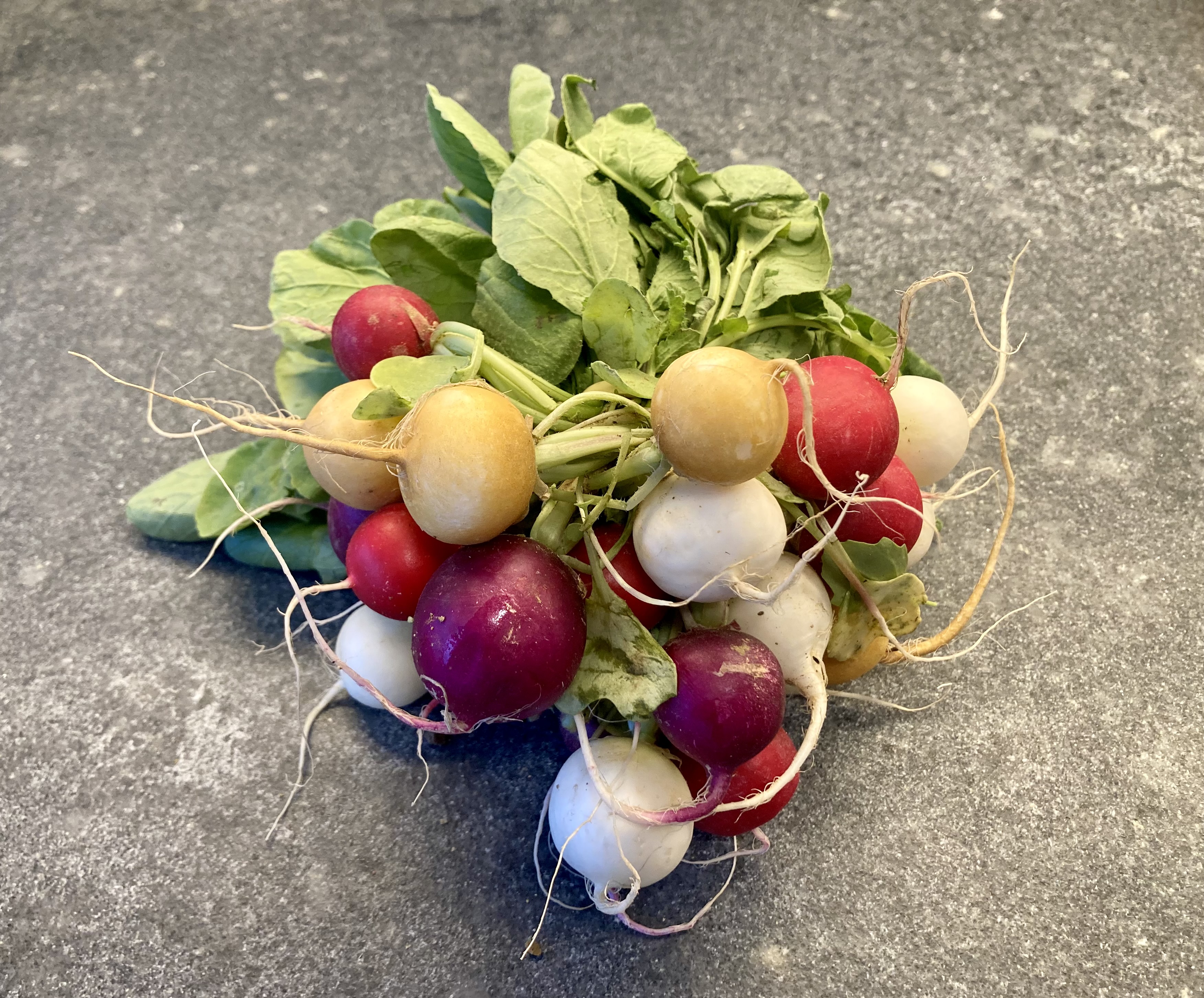
A few weeks ago, we posted a recipe for a salad with fried and marinated white button mushrooms. A rich, velvety salad with some acidity and lots of umami. This mushroom salad combines raw oyster mushrooms with radishes, sesame oil, mirin and cilantro. It’s both colourful and flavourful! In general eating raw mushrooms is not a good idea. Some mushrooms contain mycotoxin that could be carcinogenic to humans. If you want to be 100% sure, it’s best to cook your mushrooms (and forget about this delicious salad!). The variety we used is the Golden Oyster Mushroom (Pleurotus Citrinopileatus) and its colour makes the salad even more vibrant. This mushroom is native to China, Japan and Russia. The ones we bought are cultivated. Compared to the more common grey oyster mushroom the caps are smaller in size and their taste is sweeter. Another colourful oyster mushroom is pink (Pleurotus Djamor). Its taste is somewhat bitter. Perhaps not the best choice for a salad. If cooked well, it is supposed to taste like bacon, but by then it has lost all its colour. Cultivated oyster mushrooms can be eaten raw. If you’re not sure, ask your greengrocer.
Wine Pairing
The salad comes with a range of flavours and obviously some acidity, which is important when choosing your wine. Perhaps a white wine with even more acidity? Or a wine that adds flavours or aromas to the dish? We decided to drink a glass of Vinho Verde with our salad, produced by Adega De Monção. This Portuguese white wine is made from Alvarinho and Trajadura grapes. Some citrus, slightly tropical, with notes of apples and pear. Tasty, elegant and refreshing. In general, you’re looking for a refreshing, easy to drink wine that has some acidity and flavours that make you think of apple, apricot or peach.
What You Need
100 grams Golden Oyster Mushrooms
(Coloured) Radishes
For the Dressing
Excellent Olive Oil
Rice Vinegar
Mirin
Light Soy Sauce (we used Tsuyu)
Sesame Oil
Cilantro
What You Do
Wash the radishes and slice vertically in eight or six, depending on the size. Make the dressing. Add the sesame oil as the last ingredient because it’s very present. Combine the radishes with the dressing and the thinly sliced cilantro. Leave for a few minutes. Combine with the golden oyster mushrooms and serve immediately.
White Button Mushrooms and Cremini can be eaten raw, but we think they are tastier when fried or marinated, which is exactly what we do for this salad. A tasty accompaniment that will bring umami and depth to your dish. We combined the salad with carrots prepared in butter, lemon and lamb chops. The meat was fried in olive oil and seasoned with chopped thyme and black pepper. A delicious and light combination.
Wine Pairing
The salad comes with some acidity, but not too much. The main aspects in the dish are the sweetness and the velvety coating of the carrots, the aromatic lemon and thyme, the deepness of the salad and the richness of the lamb. We decided to open a bottle of Macon, a red wine from East-Central France. The region is well known for its white wines, Pouilly-Fuissé for instance. Most white wines in this region are made from Chardonnay grapes. This red wine is made from Gamay grapes. The wine has a beautiful ruby red colour, and it comes with aromas of black cherries and strawberries. A balanced wine with a touch of spiciness and nice tannins. Not too difficult and great with the various aspects of the dish. In general, we would suggest a red wine with fruit, freshness and character but not too complex.
What You Need
250 grams of Button Mushrooms or Cremini
Olive Oil
White Wine Vinegar
Parsley
Garlic Clove
Black Pepper
What You Do
Clean the mushrooms with kitchen paper
Slice the mushrooms, heat a heavy iron skillet and fry the mushrooms for a few minutes
Leave to cool
Combine excellent olive oil and white wine vinegar
Chop some parsley
Finely chop a garlic clove
Combine the mushrooms, the dressing, the parsley and the garlic
Add some black pepper
Leave in your refrigerator for 24 hours. Feel free to stir a few times.






 Cook and Drink
