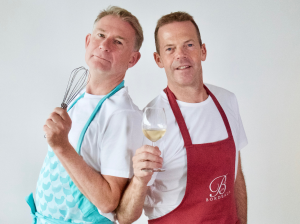
The joy of preparing food together, the joy of eating tasty and simple food, the joy of sharing. It’s one of the themes of Together: Our Community Kitchen, our suggestion for this year’s Christmas cookery book. It was written by a group of residents, gathering in the aftermath of the Grenfell Tower fire in London. They began cooking food for their families, friends and neighbours. Food that helped restore hope and provided a sense of home.
The recipe for this tasty salad is simple, quick and fun to make. It is rich, with warm flavours, a bold structure and of course lots of salmon. The egg yolks are set, but only just, adding to the great mouthfeel. Take some crusted bread, put the salad on top of it, perhaps a bit extra?, and enjoy!
Wine Pairing
A glass of dry sparkling wine will be great. A glass of Sauvignon Blanc or Chardonnay will also fine, as long as the wine is acidic enough to balance the fat from the fish and the egg. We enjoyed a glass of Sicilian white wine made by Baglio di Grìsi with the local grillo-grape. This full-bodied wine has the right level of acidity and minerality. Excellent with the salmon and the egg.
What you need
2 Organic (or Demeter) Eggs
100 grams organic Smoked Salmon
Chives
Mayonnaise
Crème Fraîche
Mustard
Lemon
Black pepper
What You Do
Boil the eggs until slightly set. Peel and let cool. Coarsely slice the salmon. Same with the eggs. Chop the chives. Combine one tablespoon of mayonnaise, 2 teaspoons of crème fraîche, 1 teaspoon of mustard, chives, a few drops of lemon and black pepper. Add the salmon and combine. Add the egg and gently combine. Now it’s a matter of tasting. Perhaps you want to add more mayonnaise, crème fraîche or lemon. Let cool and serve with crusted bread.
We wish you a wonderful 2025 with lots of culinary adventures! Mr. Cook and Mr. Drink
Food is much more than just food, it’s about culture, about being with friends, family, about learning from other cultures, about talking and sharing memories, about emotions, about special days and celebrations. It brings people together and enhances our understanding of others.
We take part in Jo Stacy’s BKD Cookbook Club and this month the focus is on Christmas recipes for us all to make and share. Our choice is a recipe for a Casserole from Together: Our Community Cookbook.
The book is written by a group of residents, gathering in the aftermath of the Grenfell Tower tragedy in London to cook food for their families, friends and neighbours. They began using the kitchen at the Al-Manaar Muslim Cultural Heritage Centre and used the kitchen for two days per week, preparing food and eating together. Gradually more local women began to join in, embracing the community and supporting their neighbours. This was the beginning of the Hubb Community Kitchen (‘hubb’ meaning ‘love’ in Arabic). In 2018 the group published Together: Our Community Cookbookwith 50 simple and tasty recipes from the Middle East, North Africa, Europe and other countries. Food that brings people together, food you prepare for your loved ones.
The book features mouthwatering recipes including Shakshouka (Algeria), Potato Fritters with Cilantro (India), Spicy Peanut Dip (Uganda), Green Rice (Iraq), Fennel and Orange Salad (Italy) and many more.
Food that helped restore hope and provided a sense of home.
Casserole
We decided to prepare Tepsi Baytinijan. To quote Intlak Alsaiegh, the author of this recipe: “Tepsi translates as ‘casserole’ and this is a traditional Persian dish of meatballs in tomato sauce with eggplant. It’s quite rich. You could make it with less oil, I suppose, but then it wouldn’t be so traditional—or taste so good.”
The dish is indeed a rich, tasty combination of small meat balls (ground beef, garlic, curry powder), fried egg plant, fried potatoes, onion, green pepper, tomatoes, tomato paste and tamarind paste, served with basmati rice or crusted bread. The detailed recipe can be found in Together: Our Community Cookbook or on Food52.
Together: Our Community Cookbook is dear to us, because it shows us that food can unite people. Preparing food from this book will bring you closer to the hope and strength of the Grenfell community.
The book is available via the usual channels and your local bookstore. A portion of the proceeds from the sales will help the Hubb Community Kitchen to strengthen lives and communities through cooking.
We wish you Happy Holidays and a Wonderful 2025! Mr. Cook and Mr. Drink
The obvious way to prepare lamb shanks is to fry them briefly in oil en butter and then cook them for hours in red wine with a bouguet garni of rosemary, thyme, parsley, sage and perhaps lavender. Maybe add a small tomato to help the sauce. We take a different approach by adding strong flavors like ginger, cilantro seeds, star anise, soy sauce and the leaves of the Makrut or Thai lime (also known as Djeroek Poeroet or Djeruk Purut). You will get a full, complex sauce in combination with tasty, juicy, tender and aromatic meat.
Wine Pairing
The obvious choice would be a glass of Pinot Blanc or Pinot Gris. We once enjoyed the dish with a glass of Gewurztraminer from the Alsace. A touch of spiciness and sweetness, which worked really well with the star anise and ginger. Combining the lamb shanks with red wine is more challenging. Our choice was a bottle of Cuvée Equinoxe produced by Domaine d’Arjolle, from the Languedoc region in France. The wine is made with 100% merlot grapes. It has an intense ruby color and aromas of red fruit. The flavour is soft and long, with a touch of sweetness and oak. A soft, not too complex Syrah could also be very nice with the lamb shanks.
What You Need
2 Lamb Shanks
Shallot
Olive oil
Fresh Ginger (4 cm, depending on your taste)
1/2 red Chili
2 Garlic Cloves
Noilly Prat
teaspoon of Cilantro Seeds
2 Star Anise
Low Salt Soy Sauce
6 leaves of Djeroek Poeroet
What You Do
Fry the meat in olive oil, giving it a nice colour. In the mean time cut the shallot, peel the ginger and slice, remove the seeds from the chili and cut the garlic clove (but not too fine). Remove the meat from the pan and glaze the shallot, chili, ginger and garlic. Add the Noilly Prat, crushed cilantro seeds, star anise, some low-salt soy sauce and the djeroek poeroet. Stir. Transfer the meat back to the pan and add some water, perhaps 3 cm. Leave to simmer for 4 – 6 hours in total. Check the pan every hour and add water if so required. After 6 hours remove the shanks from the sauce and cool. Reduce the sauce, let cool and transfer to the refrigerator. The following day remove as much of the fat from the sauce as possible. Warm the sauce together with the shanks, check taste and tenderness. Serve with steamedBok Choy tossed with sesame oil or with rice.
It’s Friday evening, friends are coming over for dinner, a nice bottle of crémant d’Alsace is waiting to be opened, you switch on your oven, slice the dough and transfer the slices to the oven. An hour or so later you serve a glass of crémant, accompanied by crispy, lukewarm, aromatic Palmiers au Fromage. Aren’t they lovely?
What You Need
Puff Pastry
50 grams of Butter
25 grams of very, very old cheese
(optional) Black Pepper and Mustard
What You Do
We used three sheets (12* 12 cm) of puff pastry. Combine the sheets into one by folding the dough. You want to keep the layered structure of the puff pastry. Transfer to the refrigerator for 30 minutes or so. In the meantime, combine 50 grams of very soft butter with 25 grams of finely grated very old cheese until it’s fluffy and creamy. This may take some time! Taste and decide if you want to add more cheese, mustard and/or black pepper. Dust your work top with flour, roll out the dough, size 12 by 36 cm. Used a brush to coat the dough with the butter mixture. Pick up the left short side of the dough and fold until halfway. Do the same with the right size. It should now be 12 by approximately 18 cm. Repeat. Probably you can’t repeat it after having folded the dough twice. If you think you can, please do so. Now brush halve the dough and fold. The result looks like a 12-cm-long sausage. Wrap in plastic foil, transfer to the refrigerator and let cool through and through. Preheat your oven to 200 °C or 390 °F. Use a sharp knife to slice the dough-sausage, 0.5 cm is perfect. Cover a baking tray with parchment (baking) paper and bake the Palmiers au Fromage for 10 – 15 minutes or until golden-brown.
Many years ago we were looking for a nice restaurant in Fréjus. It was our last evening in France before returning home and obviously we were looking for something special, something typical Provençal. The area of our hotel wasn’t very promising, so we were ready to settle for pizza until we saw a small restaurant with a very interesting menu. It offered Tisane de Romarin, Cailles et Escargots and many other exciting dishes we unfortunately forgot. We entered the restaurant and had a perfect evening. Combining quails and snails isn’t the most obvious idea, but rest assured, it works beautifully, also thanks to the very intriguing green sauce. It took us some time to recreate it, but after a few attempts we think this is the right version. The question remains why the two go together well. Is it about fat (quails leg) and no-fat (snail)? Because both are meaty and tender? Because both love the tarragon in the sauce? Of course, we made a note of the name of the restaurant and of course, we lost it. A pity, although preparing this dish brings us back to a lovely evening in Fréjus.
Wine Pairing
Enjoy your Green Sauce with Quails and Snails with a glass of Chardonnay with a touch of oak. The wine must be dry, mineral and medium bodied. We enjoyed a glass of Bourgogne Couvent des Jacobins as produced by Louis Jadot. The wine partly matured in stainless steel tanks and partly in oak barrels. The result is a wine that has citrus and apple aromas in combination with oak and vanilla. Great with the freshness of the herbs and the richness of the sauce. It balances very well with both the quails and the snails.
What You Need
6 Quail Legs
Butter
12 Snails (click here when you want to know which snail to buy)
Wash the snails with plenty of water. Set aside. Warm a heavy iron skillet, warm some chicken or quail stock in a pan and bring a pan with water to the boil. Set your oven to 60 °C or 140 °F. Now it’s time to make the Green Sauce: Blanch parsley and tarragon in boiling water for 30 seconds and cool immediately in ice water. Dry. Blender the herbs with some cold stock until you have a very smooth green liquid. Set your blender to turbo! Pass through a fine sieve and store the chlorophyll. It will remain stable for at least a day. Quickly fry the legs in butter. Warm the snails in some chicken stock. When both are ready, transfer the legs and the snails to the warm oven. Add chicken stock to the pan. Stir. Add cream to the pan. Let reduce for 5-10 minutes or until you’re happy with the consistency. Add chlorophyll until you have the right colour and taste. Be very careful, if you overheat the sauce it will lose its vibrant green colour. Perhaps you need to thicken the sauce with Beurre Manié or Potato Starch. Add black pepper and taste. Serve the legs and the snails in the sauce. Enjoy with crusted bread.
You could also use two quails. Remove the breasts and the legs. Use the remainder to make the stock you need for the sauce. To make the dish more refined, remove the main bone of the legs.
Bright orange mushrooms that look like spaetzle? Interesting. We pick one up and look carefully: a long stem but without a cap with spores. Odd. We ask if they are edible, and the obvious answer is “yes”. We buy 100 grams and decide to look for details and recipes in our mushroom cookery books when at home. Hm. No mention of Cordyceps. We visit the Forager Chef (Alan Bergo) and read about the background of the Cordyceps (or better: Ophiocordyceps). Parasite mushroom, infects insects, controls them, takes over, kills and then sprouts a fruiting body from their head. The fruit we just bought… Fortunately, the Cordyceps we bought are grown on substrates that are not made of insects, which make them less scary. Normally when we find a new mushroom on the market, we taste it raw, but not today. We quickly wash our hands and watch this BBC video as suggested by Chef Bergo. Interesting, but we prefer the culinary aspects of mushrooms.
Use
In traditional Chinese medicine dried and powdered cordyceps are used. Today it is considered to be superfood, supposedly boosting your vitality and endurance. Fresh cordyceps are used in Chinese soups and hot pots. Chef Bergo uses them in a dish with linguini. He writes: “The cordyceps weren’t mind blowing, but they definitely weren’t bad”. We decide to make an Asia-inspired salad, with stir fried cordyceps, obviously. The salad tasted great. It was nutty, mild, fresh and the texture of the mushrooms worked beautifully with the crunchy radishes.
Wine Pairing
Best to drink a white wine with a touch of oak, perhaps a chardonnay. We tried something different, a wine made with a grape called Bouquet 1359. The wine is produced by French winery Abbotts & Delaunay. The grape was developed by Alain Bouquet. It is somewhat similar to the chardonnay grape but more resistant and easier to use in an ecologic environment. It comes with aromas of brioche and yellow fruit; the taste is fresh, long and slightly nutty.
What You Need
100 grams Cordyceps
1 Scallion
Bok Choy
White Radishes or Daikon
Walnut Oil
Jerez Vinegar
Light Soy Sauce (we used Tsuyu)
French Mustard
Olive Oil
What You Do
Clean the mushrooms if necessary. Cook radishes or daikon for 4 minutes in boiling water. Let cool quickly and slice or quarter. Finely slice one or two bok choy stems, depending on the size. Heat a skillet, add some olive oil and fry the mushrooms. After 1 minute add the sliced bok choy and the pre-cooked radishes. Toss, leave for 1 or 2 minutes and allow to cool. Transfer to the refrigerator. When ready to serve, make a dressing by combining walnut oil, soy sauce, Jerez vinegar and a touch of mustard. The mustard will emulsify the dressing. Taste and adjust. Happy? Then add the dressing to the salad, mix and serve as a side dish or small appetizer.
Inspiration
If you’re into video games you will have recognised cordyceps as inspiration of the action-adventure game The Last of Us, which was the inspiration for the American post-apocalyptic drama television series with the same tittle and produced by HBO. The 2016 movie The Girl with All the Gifts was also inspired by cordyceps. Two Pokémon species are also based on Ophiocordyceps.
Nasty Details
A few days later we opened Merlin Sheldrake’s impressive book Entangled Life. He explains that the fungus doesn’t turn the insects into zombies but controls it like a puppeteer master. He describes how a specific species of Ophiocordyceps is focused on giant ants. The fungus infects the ant and from that moment on it controls the insect. In the end 40% of the body weight of the ant is mycelium (the network created by the fungus). Through the mycelium the fungus controls the ant. When the Ophiocordyceps is ready to propagate, it steers the ant to a height of approximately 25 cm, ideal for the fungus and its spores. The ant then bites into the main vein of a leaf and locks its jaws. The ant is now in an ideal position for the fungus. This is the moment the fungus kills the ant and the fruit begins to grow. Very pleased our cordyceps were grown on a substrate of grains!
Don’t we all love our cookies! With chocolate or with hazelnuts, perhaps a classic French Madeleine or a Dutch Stroopwafel: two crispy wafers held together by sweet syrup, baked perfectly golden brown and of course round. Unfortunately, not alle cookies are perfect, sometimes the Madeleines are too brown, or the chocolate chunks are on one side of the cookie only, or one of the wafers is broken or not perfectly round. Manufactures know these products will not be bought by consumers, so what to do? Destroy them? Feed them to pigs? Which is actually done in the Netherlands: discarded Stroopwafels, Wine Gums, Donuts, Pies and Cakes are fed to pigs. Anything goes. We feel it’s very wrong, poor pigs having to eat all these unhealthy left overs, sometimes passed their best-before-date, containing tons of sugar, food additives and modified, refined ingredients. Not to mention feeding pork pies to pigs.
Photographer and documentary maker Kadir van Lohuizen explored the world behind our global food production. He visited cow farms in the USA, he made videos in mega slaughterhouses where tens of thousands of chickens are slaughtered daily and in a factory with an overwhelming number of chicken incubators (also showing how sick or weak female chicks and all male chicks are separated from the healthy female chicks and destroyed).
One of the videos shows a dairy farm in Al Kawaneej, United Arab Emirates, where they cool 12.500 cows with mist and fogging nozzles (in the middle of the desert), producing some 260.000 liters of milk per day. He travelled to China and visited enormous distribution centers, delivering food, drinks and meals 24/7. In the Netherlands he visited the world’s leading centre of plant breeding and seed technology. The result of this impressive project is an exhibition called Food For Thought in the Dutch National Maritime Museum in Amsterdam. Food For Thought explores the origin of our food, and the role the Netherlands and the global shipping industry play in our food system. Food For Thought raises questions and dilemma’s; you will go from admiration to bewilderment and back again.
In an interview Kadir van Lohuizen mentioned he liked the idea of feeding left over stroopwafels to pigs. Normally the bakery would destroy the cookies. Isn’t it better to feed them to pigs and import less soy products (apparently that’s what pigs normally eat)?
Another dilemma: we are not keen on buying asparagus when they are not in season. Or strawberries, green beans, mangos et cetera. Even though the supermarket will offer them every day of the year. Most of these products are grown in Kenia. The country has a great climate for growing vegetables and fruit. Food For Thought shows how people in Kenia benefit from the export, socially and economically.
Why wouldn’t we buy products from Kenia? Because the carbon footprint of the transport? But how about all these lovely Dutch tomatoes and onions? The Netherlands is the second largest exporter in the world, after the United States, producing everything from potatoes to cheese, from seeds to flowers, from eggs to meat. We expect people to buy Dutch food, but we don’t buy avocados from Kenia?
Transport is clearly one of the key aspects of global food production. When pigs are slaughtered in the Netherlands, the spareribs are shipped to the US and the head, kidney, nose, heart and tail to China, because the Dutch consumer loves pork loin and chops but not the other parts. The Nile perch, introduced in Lake Victoria in the 1950s, completely changed the eco-system, disrupted the circumstances of local fishing communities, is fished commercially, forbidden to be eaten by locals and shipped globally.
Food For Thought shows the global food production, distribution and the enormous scale of every aspect. A farm in Hereford (Texas) with 250 thousand animals, a Dutch grower producing 80 million kilos of tomatoes per year (see picture), 100 million chickens living in the Netherlands.
Today 783 million people, meaning 10% of the world’s population, face chronic hunger.
Did we mention that 35% of all food is wasted?
Food For Thought made us think again about our food and how we can contribute to a healthier, better world, with less hunger. We think Ralph Dahlhaus, Chef of the National Maritime Museum, is very wise and helpful in his video statement, shown at Food For Thought: Your choice of food does not need to be perfect, but it must be responsible.
More information on the website of the National Maritime Museum. Food For Thoughts runs until January 5th, 2025.
PS
Male chicks are destroyed on day one by asphyxiation and/or maceration. For every chicken you eat, one is destroyed. Knowing this we only buy eggs that are organic and if we are sure the male chicks are given a decent life, A demeter egg will cost 65 eurocent compared to 20 cent for a free range egg. Big difference? Not really when you think of a soft, cuddly chicken ending up in a shredder.
Two or three times per week we enjoy the taste of fresh home-made no-knead bread. The crust, the flavours, the aromas! And how about the singing of the bread when it’s just out of the oven? Baking your own bread is such a pleasure.
Our recipe for no-knead bread is based on a recipe published by Jim Lahey, owner of Sullivan Street Bakery, New York. It was published in the New York Times in 2006 and can also be found in his excellent book My Bread. The process is time consuming (it’s 24 hours from start to finish) but not labour intensive. The recipe is based on slow-rise fermentation. With only 1 gram of instant yeast in combination with 18+3 hours of rest the yeast will do a wonderful job. The dough will be perfect. And kneading, as you would expect, is not required.
Normally we bake our bread with blue poppy seed and brown linseed. Today we bake a luxurious bread with hazelnuts, raisins and cinnamon.
What You Need
200 grams of Whole Grain Flour
230 grams of Plain White Flour
1 gram Instant Yeast
70 grams Hazelnuts (peeled and roasted)
130 grams Raisins
2,5 grams Cinnamon
4 grams Salt (this is less than usual, most recipes for bread would suggest 8 grams)
345 grams Water
Additional Flour
Bran
What You Do
Mix flour, yeast, cinnamon and salt. Add water and create one mixture. Let rest in a covered bowl for 18 hours. Soak the raisins for 10 minutes in warm water. Remove excess water. Cover your worktop with a generous amount of flour. Remove the dough from bowl and flatten somewhat. Cover the middle third with one quarter of the raisins and hazelnuts. Fold the lower third on top of the middle third. Cover with the second quarter. Fold the top third on top the the middle third. Cover the centre with a quarter of the raisins and hazelnuts. Fold the right part on top of the centre. Ad the last quarter of raisins and hazelnuts on top of the centre and fold the fold the left part on top of it. Dust with additional flour and let rest on a towel dusted with flour and bran for 3 hours. Check that the pot (and the handles!) can be used in a really hot oven. Transfer the pot to the oven and heat your oven to 235˚ Celsius or 450˚ Fahrenheit. Put the dough, seam side up, in the pot, close it and bake for 30 minutes. Remove the lid and bake for 15 minutes or until it is nicely browned. Let cool on a wire rack for at least an hour before slicing it. Enjoy with a generous amount of butter.
Watercress tastes fresh and somewhat peppery. In this soup we combine it with chervil and dill (hints of anise) making it an even more uplifting, delicious soup. Adding cream or olive oil is optional. Easy to make, quick and vegan!
Chop the shallot and the garlic. Peel and chop the potato. In a heavy iron pan heat the butter, glaze the shallot and later add the potato and garlic. Allow to simmer for a few minutes. In the meantime, remove the coarse stems of the watercress and the chervil. When the potato is done, remove some of the stock and blender this with the watercress, the dill and the chervil until very smooth. Transfer back to the pan and leave on low heat for a few minutes. Press the mixture through a sieve and continue on low heat for a few minutes. You could add some excellent olive oil or some double cream. If you add cream, make sure you give the soup a few more minutes, otherwise your soup will have the typical milky taste of cream.
PS
Many recipes for watercress soup suggest smoothing the mixture (including the potatoes) with a blender. Please don’t be tempted to do so! It will give the soup a gluey texture, not nice at all. Our method is perhaps a bit more work, but the result is much, much tastier.
We love mushrooms and are always keen to explore new recipes and ideas. This recipe for a salad is very much about the nutty flavour and the moist texture of the shiitake. An easy to make and delicious, aromatic salad with lots of umami and citrus. We used Grains of Paradise (also known as Maniguette or Awisa). This West African spice was introduced in Europe in the 14th or 15th century as a substitute for black pepper. We like its peppery, citrusy flavour.
Wine Pairing
The fish sauce brings briny, caramel-like flavours with obviously some fishiness. The cilantro is very present with notes of citrus and pepper. The result is an aromatic, umami rich salad, best enjoyed with a glass of Pinot Blanc. We decided to open a bottle produced by Dr. Loosen. The winery was founded over 200 years ago and is well known for its Riesling and other excellent wines from the German Mosel region. In general, you’re looking for a white wine that is fruity and easy to drink, with gently acidity and some minerality.
What You Need
150 grams of Shiitake
2 cloves of Garlic
Olive Oil
Rice Vinegar
Thai Fish Sauce
Grains Of Paradise (Maniguette) or Black Pepper and Lemon Juice
Cilantro (Coriander)
Smoked Breast of Duck
What You Do
Remove the stems of the shiitake (they are chewy and fibrous). If necessary, clean the caps with kitchen paper. Slice. Finely chop the garlic. Warm a heave iron skillet, add olive oil and gently fry the shiitake. After a few minutes add the garlic. Keep on medium/low heat for a few minutes. Combine olive oil, rice vinegar and fish sauce. Ground grains of paradise and add to the dressing. The grains of paradise can be replaced with freshly grounded black pepper and a few drops of lemon juice. Taste the dressing and adjust. Add the shiitake to the dressing and mix. Allow to cool somewhat. Add a generous amount of chopped cilantro. Mix again. Garnish with slices of smoked duck breast.