Duck with Ginger, Mirin, Soy Sauce and Yuzu

Obviously Breast of Duck is great when combined with an orange sauce (or even better, with Mandarine Napoléon). Or combined with a Green Pepper Sauce, or with hoisin, soy sauce and five-spice powder (as used for Peking Duck). We combine the duck with fresh ginger (a bit spicy, but since the ginger is cooked in the sauce it will be very mild), yuzu (citrus fruit originaly from Japan, Korea and China) and sweet mirin and soy sauce. The cabbage comes with tamari and sesame oil, so this dish is full of wonderful flavours. Have we mentioned the pickled cucumber?

Wine Pairing

You could combine the duck with white wine, provided it has lots of character, for instance a Gewürztraminer. A red wine is the more obvious choice: a rich, warm Carignan will do nicely. The wine needs to combine with the richness of the dish and of course the sweetness of the soy sauce and the mirin. Duck is somewhat sweet in its own right and the sauce amplifies this. The wine should be fruity (plum), spicy and definitely not too woody.

What You Need
  • 1 Breasts of Duck (250 grams)
  • Soy Sauce (we prefer the version with less salt)
  • Mirin
  • Yuzu
  • Ginger (fresh)
  • Water
What You Do
  1. Check the breast of duck for remainders of feathers
  2. Remove the vein on the meat side of the breast (and the odd membrane you don’t like)
  3. Put on a dish, cover and transfer to the refrigerator
  4. Leave in the refrigerator for a few hours, making sure it’s nice, firm and cold. We want crispy fat, so we need to fry the meat relatively long. In order to get the right cuisson, we start with cold meat (so not your normal room temperature).
  5. Fry the duck in a hot, non-sticky skillet for 12 minutes on the skin side
  6. Reduce the heat after a few minutes. You don’t need oil or butter, the duck fat will do the trick
  7. Flip and fry for 2-3 minutes on the other side
  8. Remove from the pan and cover the meat with aluminium foil in such a way that the crispy skin is not covered. The foil should only cover meat
  9. You may want to remove some fat from the pan
  10. Add water (2 tablespoons) and a generous amount of grated ginger (let’s say 3-4 centimeter), stir, add mirin (2 teaspoons) and soy sauce (1 tablespoon)
  11. Keep warm
  12. Add liquid from the duck to the sauce
  13. After 10 minutes or so the ginger should be soft and the flavours integrated. If not, just give it a few more minutes
  14. Remove the breast from the foil and slice
  15. Make sure that any liquid left is added to the sauce
  16. Quickly stir the sauce, add a bit of Yuzu (1 teaspoon) to bring acidity to the sauce, heat a bit more, dress on a plate and put the slices of duck on top of it.
  17. PS quantities of soy sauce, yuzu and mirin may vary depending on the brand, sweetness, saltiness and the quality of the meat
Serve with…
  • Vegetables
    • Oxheart or Chinese Cabbage
    • Olive Oil
    • Tamari
    • Sesame Oil
  • Rice
    • Whole Grain Rice
    • Pickled cucumber

Grate the cabbage. Fry in a warm skillet in some olive oil. Add some tamari. Taste and adjust if necessary. Before serving add some excellent sesame oil. In parallel cook the rice and add some chopped pickled cucumbers to the rice.
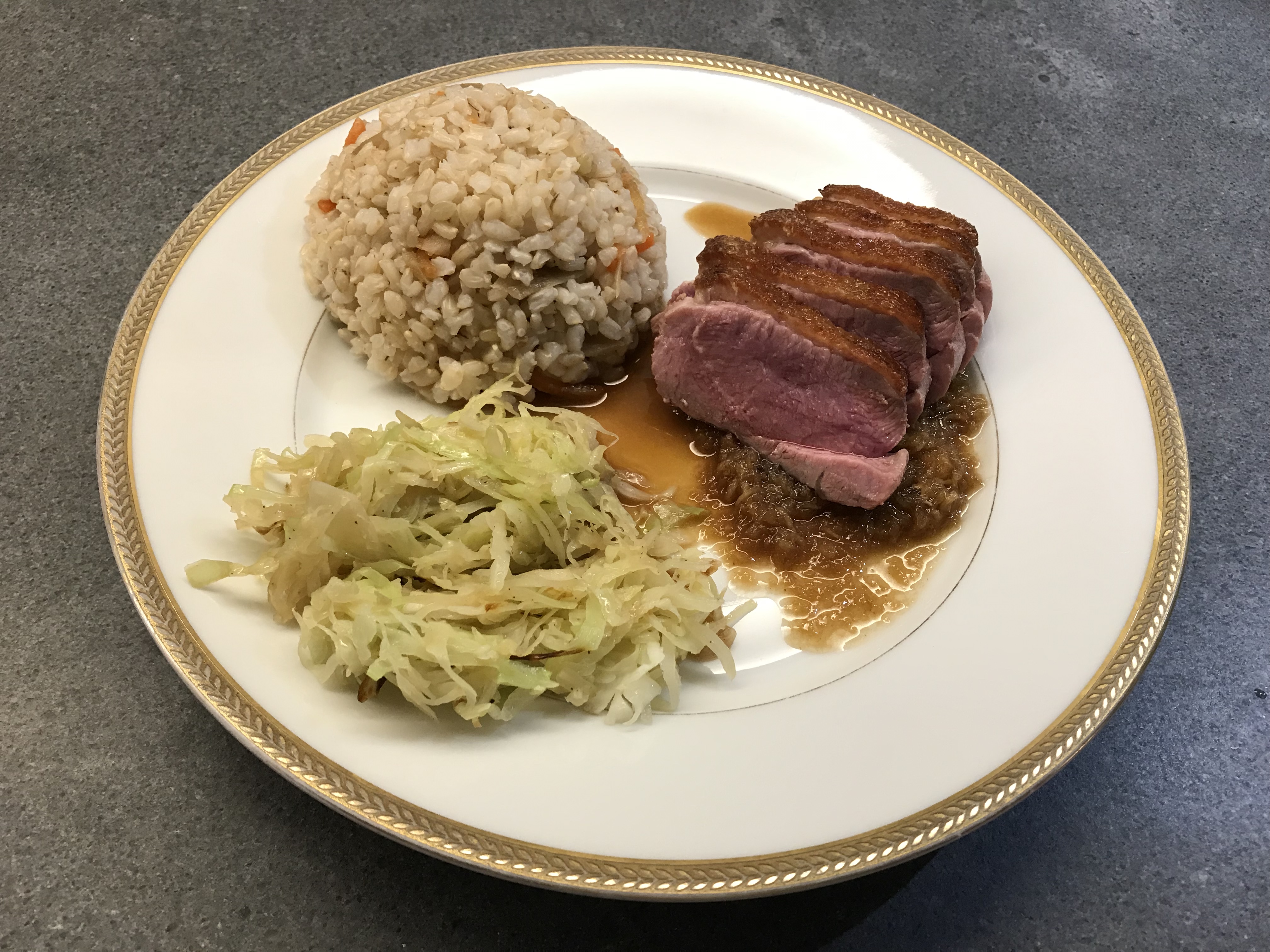
Duck with Ginger, Mirin and Soy Sauce © cadwu


No-Knead Bread – UPDATE

Slow Rise Fermentation

A few months ago we shared a recipe of no-knead bread, based on the recipe courtesy of Jim Lahey, owner of Sullivan Street Bakery, New York. It was published in the New York Times in 2006 and can also be found in his book My Bread. It takes a bit of planning but preparing no-knead bread is simple and straightforward with a great result. We truly love it.
The recipe is based on slow rise fermentation. With only one gram of yeast in combination with 18+2 hours of rest, the yeast will do a wonderful job. The dough will be perfect. And kneading, as you would expect, is not required.

UPDATE – Talmière

Recently when enjoying the luxury of having a classic French bakery around the corner of our holiday apartment, we explored a range of beautiful French bread. One of these was the Talmière. It is enriched with various seeds, such as poppy seed, linseed, sunflower seeds and sesame seeds. Sometimes honey is added. The Talmière came with a beautiful crust and a rich taste. The bread is a bit compact compared to the usual Baguette or Tradition, probably as a result of the seeds in the dough.
We combined our ingredients with blue poppy seed and brown linseed.
Our best bread ever?

What You Need

  • 430 gram of Flour (we use 200 gram of Whole Grain Flour and 230 gram of Plain White Flour of French T65 Flour)
  • 25 gram Blue Poppy Seed
  • 30 gram Brown Linseed
  • 1 gram Instant Yeast
  • 4 gram Salt
  • 355 grams Water
  • Additional All Purpose Flour
  • Bran

What You Do

The easiest way is to read and follow the recipe and video as provided by the New York Times.
Or if you feel confident: mix flour, seeds, yeast and salt. Add water and create one mixture. Let rest in a bowl covered with foil for 18 hours. Dust your worktop with a generous amount of additional flour. Remove dough from bowl and fold 4 times. Let rest on a towel also generously dusted with flour and bran for 2 hours. Heat your oven to 230˚ Celsius or 450˚ Fahrenheit. Make sure the pot is also hot. We used a 20 cm Le Creuset Cast Iron Round Casserole. Put the dough, seam side up, in the pot, close it and bake for 30 minutes. Remove the lid and bake for 15 minutes until it is nicely browned. Let cool on a wire rack for at least an hour before slicing you no-knead with blue poppy seeds and brown linseed.

Monkfish Spanish Style

Rape a la Marinera

In October 2016 Jamie Oliver was criticised for making paella the wrong way. He dared adding chorizo to one of the most Spanish dishes ever. Paella should be made with rabbit, snails, chicken, beans, saffron and rice. How dare he insult all of Spain by adding chorizo to his Paella? Naked chef or not, ambassador of healthy food or not, no one touches Paella.

Rape a la Marinera is among our favourites because it’s all about monkfish, which is such a tasty fish. The monkfish is presented with a generous tomato sauce, large shrimps, vongole and bread. What better way to enjoy life!

In this recipe we will probably do a few things very wrong, but never mind, simply don’t tell your Spanish friends.

Wine Pairing

We very much enjoyed a glass of Spanish Verdejo. In our case a bottle of Monteabellon Rueda. In general wines made from the Verdejo grape combine very well with fish. The wine comes with the right acidity, giving freshness to the wine. It has floral aromas typical for the Verdejo grape. You may recognize the aromas of banana and exotic fruit.

What You Need

  • Monkfish
  • Olive Oil
  • Optional
    • Bay Leaf
    • Saffron
  • 4 Large Shrimps
  • Vongole (clams, Vongola Veraci)
  • White wine
  • Bouquet Garni

What You Do

The day before serving Rape a la Marinera make the tomato sauce.
Start by cleaning the monkfish and remove the skin where necessary. Clean the shrimps by removing the intestinal tract. Leave the head and the tail. Check the vongole and discard ones that are broken. In general vongole don’t need much cleaning. Vongola Verace are tasty, slightly sweet and juicy; great for Spaghetti Vongole and Rape a la Marinera.

In a large skillet fry the monkfish. When coloured add the sauce. Gently heat the sauce and cover the fish with it. Baste (arroser) and continue to do so. In parallel add some wine to a pan with a bouquet garni and let gently cook for 5 minutes.
Now it’s about timing! Add the raw shrimps to the pan with the monkfish, cover the shrimps with the sauce, continue basting both the fish and the shrimps. Add the vongole to the pan with the white wine. Cook quickly until open. Add some of the cooking juices of the vongole to the tomato sauce, mix, taste and add a touch of pepper. Serve the vongole on top of the monkfish and shrimps.
Serve with crusted bread.

Flan with Prawns, Blue Cheese, Spinach and Dill

Something on a Spoon

A glass of white wine, perhaps a glass of Crémant d’Alsace or maybe even a glass of Champagne; such a great way to start dinner (or lunch when you feel like treating yourself). You enjoy some bread with homemade Tapenade, or a few nice olives. All good. And then suddenly the chef presents you her or his Amuse-Bouche. Something very special and an indication of the chef’s talent. But in most cases it’s something on a spoon and not very special.

A bit of background: amuse-bouche is actually not a French term. Restaurateurs made it up because they think amuse-gueule (the correct term) is a bit harsh. ‘Gueule’ can refer to both humans and animals. And ‘ferme ta gueule’ is far from polite. So restaurateurs started using ‘bouche’, to eliminate the impression that they think their guests have a snout.

Some say the concept of the amuse was invented by the Nouvelle Cuisine in the 1960s. Not really. In 1946 Francis Ambrière, in his book Les Grandes vacances, writes … Une côtelette à midi. Quelques amuse-gueule à l’heure du goûter. Et le soir, ô splendeur, un gigot bien saignant, le premier gigot depuis l’an 40!

Today’s amuse-gueule is a dish in its own right that amuses the mouth, fools your appetite and makes you want to start on the first course. Small, tasty, full of flavours and maybe a bit out of the ordinary.

We use a traditional coddler for this amuse-gueule, but you could also use a small ramequin. No spoon, please.

Wine Pairing

Typically the amuse-gueule is combined with your aperitif. We combined this amuse gueule with a glass of German Sekt, to be more precise with a glass of Reichsrat von Buhl – Pfalz – Sekt – Spätburgunder Brut rosé 2016, which is a superb pale pink wine, made from 100% Pinot Noir and produced by one of the leading wineries in Germany. Think red berries, brioche, a delicate texture with a nice mousse, fresh acidity and a long-lasting aftertaste.

What You Need (for 4)

  • One Egg
  • Four Medium Sized Raw Prawns
  • 75 grams Spinach
  • ½ Shallot
  • A Generous Tablespoon of Crème Fraiche
  • Dill
  • Blue Cheese
  • Chives
  • 4 Edible flowers

What You Do

Start by cleaning the prawns, removing the head, the shell and the vein. We used Argentine red shrimps. The meat is fairly soft and they become beautifully red when cooked. Fry the shrimps is some olive oil for 3 minutes. Remove the shrimps from the pan, set aside and let cool. Gently fry the shallot in the same pan for 10 minutes until glazed. Remove from the pan and let cool. In a different pan quickly cook the (dry and clean) spinach in some olive oil. Keep stirring! Drain if so required, set aside and let cool.
Cut the prawns in smaller bits. Chop the spinach using a large knife. Whisk the egg until completely smooth. Now add the (cool) bits of prawn, the spinach and the shallot. Whisk with a spoon. Add the Crème Fraiche. Add some chopped dill (depending on your taste), a bit of blue cheese (not too much, just to add a dimension to the dish) and a generous amount of chives. Mix. Coat the coddlers or ramequins with butter. Add the mixture to the coddlers or ramequins. Heat your oven to 170° Celsius (or 340° Fahrenheit). Place the coddlers or ramequins in a shallow dish. Add boiling water up to 2/3 of the height of the coddler or ramequin. Close the oven and reduce the temperature to 120° Celsius (or 250° Fahrenheit). After 30 minutes au bain marie your amuse-gueule should be ready. Test with a needle. Let cool.
If using a coddler, remove and dry the lid, add the flower and close.

Amuse-Gueule © cadwu


Grilled Octopus Tentacles

Portugal

The Portuguese kitchen is not known for its subtleness or refinement. But that should not stop you from enjoying it! Portuguese cuisine comes with powerful flavours, lots of fish of course, bacalhau, Caldo Verde, octopus, cuttlefish, and the well known chicken piri-piri and pastel de nata. Same for Portuguese wine: perhaps not the most subtle wine (apart from Madeiras and Port wines), but how about an excellent Vinho Verde, a red wine from the Dão region made with Touriga Nacional or a red wine from Alentejo? We love flavors and we very much enjoy the bold dishes from Portugal.

Recently when in Brussels we booked a table at Chez Luis, a Portuguese Bar à vin and Restaurant. Tasty dishes like Pasteis de bacalhau, Cassolette de palourdes and Polvo lagareiro. Served with Portuguese wine, of course. And Chez Luis has an excellent choice! So we drank a vibrant espumante and a refreshing Vinho Verde (Longos Vales Alvarinho 2016). The Polvo made us think of one of our favorites: Octopus with summer vegetables. And since one octopus is way too much for two people, we simply bought two cooked tentacles. Feel free to buy a whole octopus, clean it, cook it, braise it and then follow the recipe below.

Wine Pairing

A Portuguese white wine will be a excellent choice, for instance a Vinho Verde like we enjoyed at Chez Luis. You could also go for a Spanish Verdejo from Rueda. Look for characteristics like fresh, fruity, clear acidity, subtle bitterness and full bodied.

What You Need

  • 2 Octopus Tentacles (cooked)
  • 1 Tomato
  • 1 Red Bell Pepper
  • 2 gloves of fresh Garlic
  • 1 Spring Onion
  • Jerez Vinegar
  • Black pepper
  • (Optional) Parsley
  • Lemon
  • Olive oil

What You do

Clean the red bell pepper and slice in 4 to 6 chunks. Grill it in your oven until nicely burned. Transfer to a plastic container and close the lid. Wait a few hours before peeling the bell pepper. Slice it into cubes (not too small). Remove the pits from the tomato. Slice in similar cubes. Slice the garlic (again, not too small). Slice the spring onion. Mix the vegetables and fry gently in a hot pan with olive oil. Set to low heat. In parallel heat your grill pan. Remove the gelatinous substance from the tentacles, dry them, coat with olive oil and grill for 4*2 minutes, creating a nice brown criss-cross pattern. It will not be very visible, but it will be crunchy. Just before serving the dish, add some Jerez vinegar to the vegetables, turning it into something like a salsa. Perhaps some parsley and black pepper. Serve the hot tentacle on the vegetables and add a slice of lemon.

grilled octopus tentacles

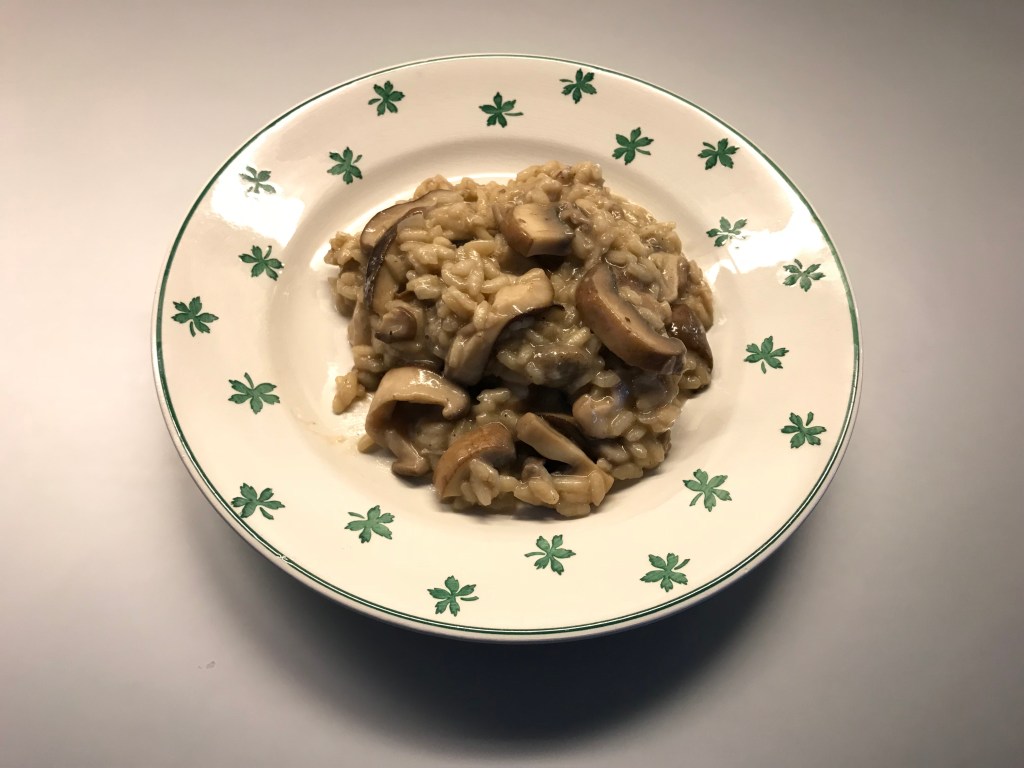
Risotto with Mushrooms

And on the 8th day he remembered he had forgotten to create food. So he quickly created something so simple, so tasty, so fulfilling that he knew people would still enjoy it, many, many years later. He called it Risotto.

Five Challenges When Making Risotto
  1. We’re always too busy! We are tempted to buy risotto rice that cooks quickly and can be served in under 10 minutes. Never rush a risotto!
    And by the way, what is so important that you don’t have 34 minutes to cook your own lovely, genuine, risotto? Why would quick be more important than tasty?
  2. And since we are too busy: why look for fresh cèpes if you can buy a pack of risotto rice with cèpes. Second mistake. You will not taste cèpes but a series of nasty E numbers and salt. Just look at the package! It will probably contain 0,01% of cèpes.
  3. We think risotto is too basic, so we’ve decided to prepare a luxurious version. Let’s add tomatoes, or salmon, or spinach and pumpkin, or chicken, or saffron, shrimps and peas. Please don’t. It will only ruin the lovely combination of rice, butter, stock and Parmesan cheese.
  4. Risotto is too heavy, too rich. Let’s use crème fraîche or Mozzarella and not Parmesan and not butter, let’s simply skip the butter. Fourth mistake: butter and Parmesan cheese are essential, for the taste, the mouthfeel and the consistency.
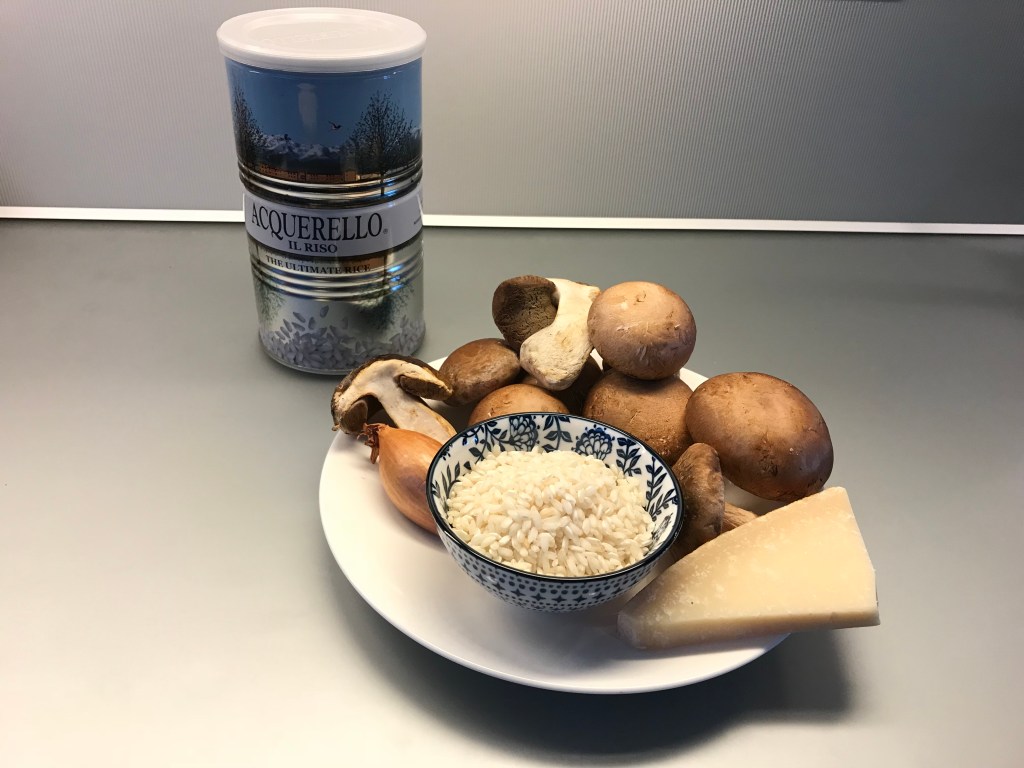
  5. Buy risotto-rice without checking if it’s the right rice. We use beautiful Carnaroli rice, superfine quality, produced by Acquerello. It doesn’t come cheap (we pay € 11,95 per kilo) but why would you not treat yourself to the best risotto rice? It has all the right qualities and the taste is outstanding.
Wine Pairing

We enjoyed our Risotto with a glass of Soave. Some acidity, touch of bitterness, nicely balanced with the butter and the cheese. It’s light and fruity; it elevates the risotto.

What You Need
  • 70 grams of Acquerello rice
  • 1 Shallot
  • Butter
  • Olive Oil
  • 100 gram of Shiitake
  • 200 gram of mushrooms, for instance Chestnut Mushrooms
  • optional: 100 gram of Cèpes
  • Chicken Stock
  • Parmesan Cheese
What You Do
  1. Peel and chop the shallot
  2. Add butter and olive oil to the pan and glaze the shallot
  3. In parallel clean and slice the various mushrooms. Feel free to use other mushrooms as well. We think the Shiitake is an important one because it adds depth to the taste
  4. Bring the stock to a boil
  5. After 5 minutes add the mushrooms to the pan and fry gently for 5 minutes
  6. Add the rice to the pan and coat the rice for 2 minutes
  7. Start adding the stock, spoon by spoon and stir the rice frequently
  8. When using Acquerello rice it takes 18 minutes
  9. Check the rice
  10. When okay, transfer the pan to the kitchen counter top and leave to rest for 2 minutes.
  11. Add chunks of butter, stir, add a bit more butter and the grated Parmesan cheese
  12. Stir, a bit of black pepper, add more butter or Parmesan cheese if so required
  13. Serve immediately.

Amuse-Gueule

Something on a Spoon

A glass of white wine, perhaps a glass of Crémant d’Alsace or maybe even a glass of Champagne; such a great way to start dinner (or lunch when you feel like treating yourself). You enjoy some bread with homemade Tapenade, or a few nice olives. All good. And then suddenly the chef presents you her or his Amuse-Bouche. Something very special and an indication of the chef’s talent. But in most cases it’s something on a spoon and not very special.

A bit of background: amuse-bouche is actually not a French term. Restaurateurs made it up because they think amuse-gueule (the correct term) is a bit harsh. ‘Gueule’ can refer to both humans and animals. And ‘ferme ta gueule’ is far from polite. So restaurateurs started using ‘bouche’, to eliminate the impression that they think their guests have a snout.

So the correct French term is amuse-gueule. Some say the concept of the amuse was invented by the Nouvelle Cuisine in the 1960s. Not really. In 1946 Francis Ambrière, in his book Les Grandes vacances, writes … Une côtelette à midi. Quelques amuse-gueule à l’heure du goûter. Et le soir, ô splendeur, un gigot bien saignant, le premier gigot depuis l’an 40!

Today’s amuse-gueule is a dish in its own right that amuses the mouth, fools your appetite and makes you want to start on the first course. Small, tasty, full of flavours and maybe a bit out of the ordinary.

We use a traditional coddler for this amuse-gueule, but you could also use a small ramequin. No spoon, please.

Wine Pairing

Typically the amuse-gueule is combined with your aperitif. We combined this amuse gueule with a glass of German Sekt, to be more precise with a glass of Reichsrat von Buhl – Pfalz – Sekt – Spätburgunder Brut rosé 2016, which is a superb pale pink wine, made from 100% Pinot Noir and produced by one of the leading wineries in Germany. Think red berries, brioche, a delicate texture with a nice mousse, fresh acidity and a long-lasting aftertaste.

What You Need (for 4)

  • One Egg
  • Four Medium Sized Raw Prawns
  • 75 grams Spinach
  • ½ Shallot
  • A Generous Tablespoon of Crème Fraiche
  • Dill
  • Blue Cheese
  • Chives
  • 4 Edible flowers

What You Do

Start by cleaning the prawns, removing the head, the shell and the vein. We used Argentine red shrimps. The meat is fairly soft and they become beautifully red when cooked. Fry the shrimps is some olive oil for 3 minutes. Remove the shrimps from the pan, set aside and let cool. Gently fry the shallot in the same pan for 10 minutes until glazed. Remove from the pan and let cool. In a different pan quickly cook the (dry and clean) spinach in some olive oil. Keep stirring! Drain if so required, set aside and let cool.
Cut the prawns in smaller bits. Chop the spinach using a large knife. Whisk the egg until completely smooth. Now add the (cool) bits of prawn, the spinach and the shallot. Whisk with a spoon. Add the Crème Fraiche. Add some chopped dill (depending on your taste), a bit of blue cheese (not too much, just to add a dimension to the dish) and a generous amount of chives. Mix. Coat the coddlers or ramequins with butter. Add the mixture to the coddlers or ramequins. Heat your oven to 170° Celsius (or 340° Fahrenheit). Place the coddlers or ramequins in a shallow dish. Add boiling water up to 2/3 of the height of the coddler or ramequin. Close the oven and reduce the temperature to 120° Celsius (or 250° Fahrenheit). After 30 minutes au bain marie your amuse-gueule should be ready. Test with a needle. Let cool.
If using a coddler, remove and dry the lid, add the flower and close.

Amuse-Gueule © cadwu


Skate with Capers

When you Google for skate with capers you will find many recipes with capers and brown butter. We think you can do better!
The trick in this recipe is to clarify butter and then deep-fry the capers in the clarified butter. The result is a crunchy and salty caper with clear acidity from the brine. This works brilliantly with the meaty, fatty skate.

Clarification

Butter is an emulsion of butterfat, water and proteins. The process of clarification means breaking down the emulsion. The goal is to have pure butterfat, which will not burn and which allows for deep-frying.
The water will simply go when you warm the butter.
How to remove the proteins? Option one is to start by melting the butter and to wait until you see white foam and until the water is gone. Now pour the fat into a jar or cup, carefully keeping the foam in the pan.
Option two is to continue warming the butter until the white foam becomes brown. Be careful not to burn it, this will ruin your butter. The now brown foam will sink to the bottom, which makes it easier to pour the butterfat in a jar or cup. If you want to be even more sure of the quality, use a cheesecloth when pouring. The idea is that using the second option will give the clarified butter a more nutty taste.

Wine Pairing

Skate goes really well with a glass of classic Chardonnay with a touch of oak. The chardonnay comes with a velvety taste which is great with the skate and its consistency. The touch of oak combines very well with the fried capers.

What You Need

  • Skate Wing (let’s say 200 grams for 2 persons)
  • Butter
  • Olive Oil
  • Black Pepper
  • Capers (in brine)
  • 75 grams of Butter (to be clarified)

What You Do

Clarify the butter and set aside. Fry the skate in a non-sticky pan for 5-10 minutes or so, depending on the size and shape. Please notice that there is more meat on one side then on the other side, so it’s not 10=5+5. Transfer the skate to a warm plate. Heat the clarified butter to frying temperature and in parallel wash the capers and dry them with kitchen paper. Fry the capers until crispy. Serve the skate with some black pepper and sprinkle the capers on top of the skate.

Sweetbread with Madeira and Truffle

A Starter to Remember

A culinary treat that is delicate, balanced and overwhelming yet subtle. In a restaurant you will probably get Sweetbread (Ris de Veau, Kalfszwezerik, Kalbsbries, Molleja de Ternera, Animelle di Vitello) dusted with flour (okayish) or breaded (awful idea, it’s not a Wiener Schnitzel). In some countries Sweetbread is grilled, which is an interesting idea. We stick to a very traditional approach that works extremely well because it’s all about the taste of the Sweetbread in combination with Madeira and Truffle.
Sweetbread should of course be hot and soft on the inside and golden and crispy on the outside. Use your non-sticky skillet and a bit of butter for a beautiful result.
Sweetbread should be between rosé and well done. It requires a bit of attention, but it’s hard to overcook Sweetbread. Although some restaurants are very capable of creating rubber.
It is essential to clean Sweetbread. For some the process of removing the membrane from Sweetbread is intimidating, but don’t be put off. Just watch the video!

Wine Pairing

First the Madeira: don’t be tempted to buy so called ‘cooking Madeira’. This is some horrible, sweet liquid that is not even close to Madeira. One for the bin. We bought a bottle of Santa Maria Fine, Medium Dry, Vinho Madeira. It is perfectly suited for this recipe. The story behind Madeira is complex so if you get the chance to buy one that is 10 or 15 years old, please give it a try. Just sip and enjoy.

We’re looking for a wine that will be supporting the delicate taste and the sweetness, earthiness and the slight nuttiness of the sauce. If you want to drink a glass of white wine, then it should be a full-bodied Chardonnay, although not too oaky. Chablis will be a good choice. If you go for red, then we recommend a Beaujolais Cru (St. Amour or Fleurie) or a Bourgogne. It’s about soft tannins, aromas like dark cherries and licorice and on the palate a lean texture and dry.

What You Need

  • 200 grams of Sweetbread
  • Two leaves of Bay Leaf
  • Crushed black pepper
  • Butter
  • Shallot
  • Veal Stock
  • Madeira
  • Preserved Truffle (preferably without additional flavours)
  • Jus de Truffes

What You Do

Start by filling a big pan with water. Add the crunched pepper and the bay leaf. Bring to a boil. Now add the sweetbread and make sure the water remains close to boiling. Blanch the sweetbread for let’s say 5 minutes, depending on the size and shape of the sweetbread.
Transfer the sweetbread to a large bowl with ice-cold water and cool the meat as quickly as possible.
Now it’s time to clean the sweetbread. Remove the bits of fat, the fleeces, any membrane, the veins and anything else you don’t like. Best way to do this is with your hands and a very sharp small knife. Once your sweetbread is clean, you will be able to see how to slice it later on. But first put it on a flat plate, seal it with plastic foil, put a similar flat plate on top of it and put something heavy on top of the plate. Transfer to the fridge and leave it for a few hours. The idea is twofold: on the one hand the sweetbread will be firm and easy to partition. And it will lose some liquid because of the weight.
With the sweetbread in the refrigerator it’s time to think about your sauce. Cut the shallot in small bits and glaze in butter. Aftre a few minutes add the veal stock and the Madeira. Mix and reduce. Add one preserved truffle. Blender the liquid after five minutes. Pass through a small sieve and warm what is the beginning of your sauce. Add Jus de Truffes. This is an essential ingredient because it brings volume and depth to the sauce. It’s not to be confused with Truffle Oil, which in most cases is some kind of horrendous chemical invention. Taste and perhaps add some more Madeira or stock. A pinch of pepper may also be helpful. Keep warm for 5 minutes, stirring regularly. You will notice that the sauce becomes more intense and mature, which is exactly what you want.
In parallel cut 2-3 cm thick slices of sweetbread. Fry them for 5 minutes or so in a very warm (but not hot), non-sticky skillet with butter. It’s simple: when the sweetbread is golden and beautiful they are ready to be served. If in doubt: there is bound to be a small slice, one that you can use to test. Remember it’s offal, so you don’t want to take a risk.
Take two warm plates, add sauce and carefully put the slices of sweetbread on the plate. You could add slices of (fresh) truffle on top.

Video


Vitello Tonnato

Fish and Meat

Who came up with the idea to combine veal, tuna, anchovy, mayonnaise and capers?
The story goes that in the 19th century veal was prepared as if it was tuna. Sounds a bit far fetched, but tuna wasn’t eaten raw (at least not in Europe) but cooked in water with various herbs and then stored in brine or oil. Tha approach to prepare veal as if it is tuna was described in 1836 by the French Monsieur Burnet in his recipe Manière de donner au veau l’apparence et le goût du thon mariné.
In 1862 (according to Luca Cesari) a medical doctor from Milan was the first to combine tuna and veal.

Anchovy

Not a remarkable ingredient at all!
(Salted) anchovy has been used as a flavour booster in meat dishes and sauces for many centuries. For instance in the combination of leg of lamb with anchovy and garlic it will bring depths, umami and saltiness. When making a remoulade sauce you should not forget to add anchovy. And why not prepare a wonderful French Anchoiade? Or dip your vegetables in Bagna Cauda? And let’s not forget the joy of crusted bread with Tapénade (black olives, capers, garlic, anchovy and olive oil). What would a classic Caesar salad or a salade Niçoise taste like without the anchovies in the dressing? Such a useful fish!

Wine Pairing

The obvious choice is to drink a glass of Italian white or rosé wine with the vitello tonnato. A fresh wine, with a touch of acidity and not too complex, for instance a Bardolino Chiaretto or a Soave.

What You Do (Classic approach)

Given the origin of Vitello Tonnato the meat should be cooked in water with carrots, onion, leek, clove, bay leaf, thyme and pepper. The trick is not to cook it too long; you want a touch of pink in the meat when it is served. Keep some of the cooking juices to add to the sauce later on.
Create the mayonnaise by mixing egg yolks, lemon and a neutral oil (peanut or grape seed oil).

What You Need

  • 150 gram of Veal (top side or silver side)
  • Butter
  • Olive Oil
  • Mayonnaise
  • 75 gram of canned Tuna (in brine)
  • 1 Anchovy fillet (or 2 depending on your preference)
  • Lemon
  • Capers (in brine)

What You Do

We prefer to fry the meat, even if it’s historically and culinary incorrect. We think frying is quicker and gives you more control over the cuisson. Plus we feel that cooking the meat means losing flavours.
Fry the meat in a heavy iron skillet in some butter and olive oil. Not too hot! Sear the meat, lower the temperature and fry the meat until nicely rosé. Transfer the meat to a sheet of aluminium foil and let rest until lukewarm or cool. Wrap the foil around the meat, let cool and transfer to the refrigerator.
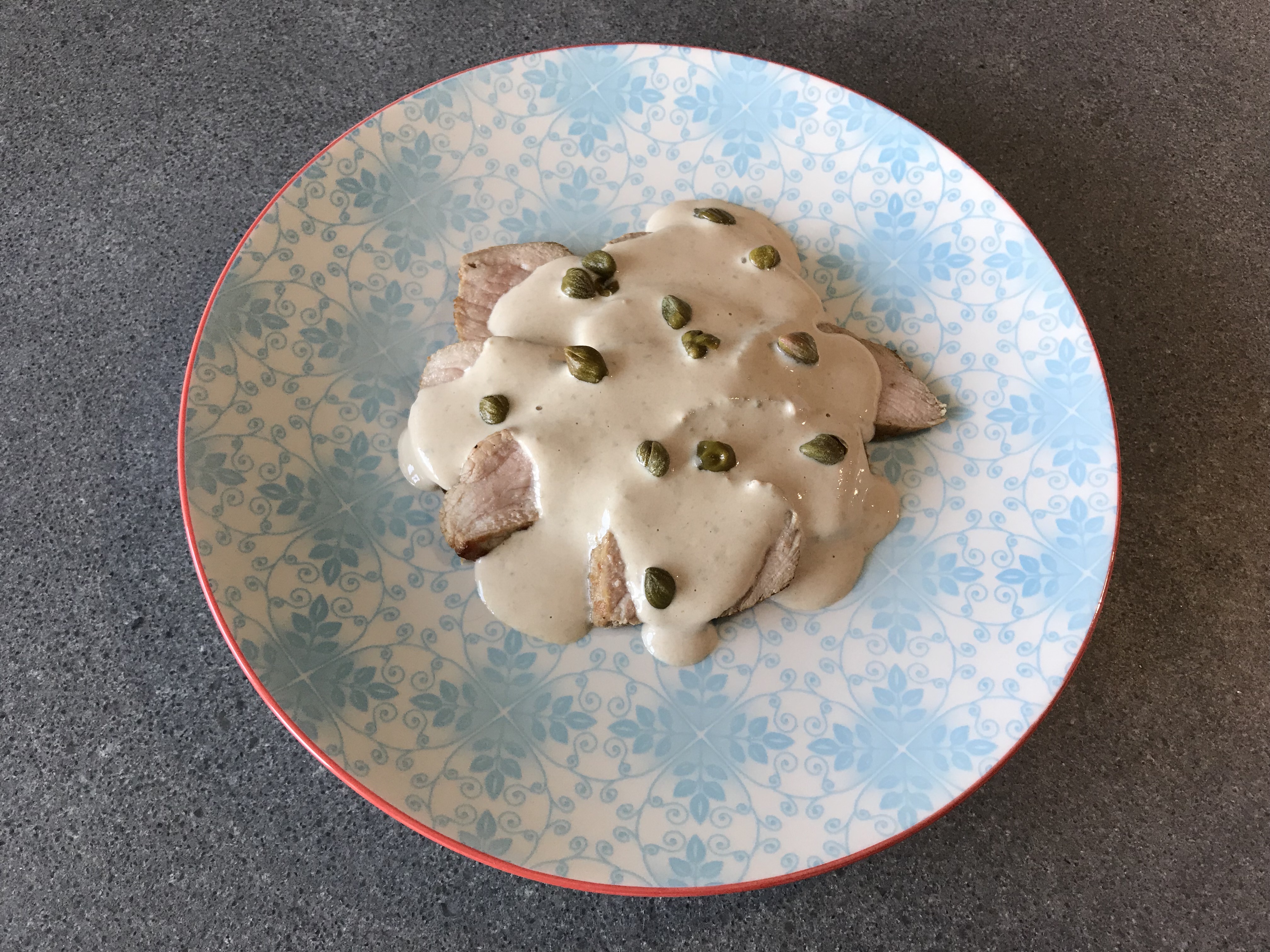
Just before serving, blender the tuna, the anchovy, a few capers, the juices from the meat (in the foil) and some lemon juice until completely smooth. Add some mayonnaise to a bowl, add a spoonful of the mixture and taste. Continue until you have the right balance. Thinly slice the veal, serve on a plate and top with the sauce. Make sure some of the meat is still visible. Decorate with the capers.

Vitello Tonnato © cadwu