Mirepoix

A combination of three ingredients that is essential when preparing stocks, stews and sauces: onion, carrot and celery (ratio 2:1:1). It’s intriguing that this combination works so well. All three bring sweetness when cooked, the combination is balanced and it brings depth to the result.

The celery could be a bit confusing: should it be celeriac, the root (knob) or celery, the fibrous stalks? Some suggest using the root in winter and the stalks in summer. We suggest using the stalks in all cases. They are very aromatic and they come with a touch of saltiness, very different from the root.

When for instance you want to make a beef stew, then first sear the beef, remove it from the pan, perhaps add some oil or butter and then add the mirepoix. Leave to simmer on low heat for 15 minutes or so or until soft. It’s all about creating flavours and aromas. Make sure you don’t brown the mirepoix. 

Another approach is to add it to (cold) water. This works well when making a white stock. And of course, when you want to make a powerful, tasty vegetable stock.

What You Need

  • 1 Large Onion
  • 3 Celery Stalks
  • 1 Carrot
  • 1 Leek
  • 1 Small Tomato
  • 2 Garlic Cloves
  • 1 Bouquet Garni (Parsley, Bay Leaf, Thyme)

What You Do

In the Netherlands an extended version of Mirepoix is fairly standard: onion, carrot, celery and leek (ratio 1:1:1:1) , also known as WUPS (Wortel, Ui, Prei en Selder). We prefer this version because the leek seems to bring extra flavours. Or perhaps because we’re Dutch?
Clean and dice the celery, the carrot, the leek and the tomato. Peel and chop the onion and the garlic. Add all ingredients and the bouquet garni to a pan with cold water and allow to simmer for one hour or so. Pass through a sieve and decide if you want to reduce the liquid. It freezes very well, so ideal to make ice cubes for use in sauces.

Mirepoix ©cadwu
Mirepoix plus extra ingredients for vegetable stock ©cadwu

Fish Cakes by Jean Beddington

Jean Beddington: a culinary, passionate creative! She was chef at five restaurants, owned her own successful restaurant, and still is an inspiration to many. One of her motto’s is ‘seemingly simple’, not with the intention to impress but with the intention to surprise and enhance the sensation when enjoying her food and the way it is presented.

Background

In her book Absolutely Jean Beddington she writes about her background, her youth in England, her eagerness to cook, the holidays with her father when they would stay at budget hotels and eat at Michelin Star restaurants, her travels, her years in Japan and her education (she studied Arts and Chemistry). When she moved to the Netherlands, she decided to become a chef, which is the obvious choice for someone with such a talent. She was one of the first to bring new ingredients to the classic French cuisine. For instance, she began using cilantro and yuzu. She was also inspired by the Japanese way of presenting food: beautifully designed and served on a variety of plates. She began doing this when most guests still expected bread and garlic butter at the beginning of their lunch or dinner.

Books

She published several books. One is dedicated to stock: the basis of soups, sauces and dishes. She explains how to make stock and how to create delicious food, for instance green vegetables in stock with couscous, yogurt and harissa sauce. 

Her book Absolutely Jean Beddington is very dear to us. It has three main chapters: the first one is called Glossy with beautifully presented food, the second one is called Real Time with food as you could expect to eat at her restaurant (which is closed, unfortunately) and our favourite chapter is called Daily. Indeed, recipes that are easy to follow and help prepare tasty, wonderful food, every day.

Fish Cakes

We prepared her fish cakes with a beetroot, ginger, apple and onion chutney. The fish cakes are intriguing and the chutney is the perfect accompaniment. Yummy!

Coq au Vin

One of our favourites for a grey, wintery evening. Warm, rich and full of flavours.
Let’s first talk about the chicken: we prefer using chicken thighs, organic, obviously. Great texture, layered and a bit of fat. You could also use chicken legs, but then we suggest removing the main bone; you don’t want to struggle while eating.

The second main ingredient is the red wine. A classic Coq au Vin is made with Bourgogne, a relatively expensive red wine from France made from Pinot Noir grapes. According to some people the wine you use for the stew must be the same that accompanies the dish. Which would mean that part of your beautiful Bourgogne ends up in the stew. Hm. We think that the background of this ‘rule’ is about the quality of the wine you use for the stew: it must be a nice, dry, red wine; one you would be perfectly happy to drink. So not some left over red wine, or a wine you didn’t like. A perfect stew requires quality ingredients, that’s all.

The third main ingredient is the pearl onion, that lovely small, silver onion. Great to pickle, but for a Coq au Vin you need fresh ones.

Wine Pairing

We enjoyed our Coq au Vin with a glass of Révélation Pays d’Oc Syrah-Viognier produced by Badet Clément. It’s a full-bodied wine with flavours of blackberry and spices. Touch of oak as well. The 15% Viognier gives the wine a nice, light touch. Great wine for a very reasonable price.

What You Need

  • 2 Chicken Thighs
  • 4 strips of Pancetta or Bacon
  • 14 Pearl Onions
  • 100 grams Mushrooms
  • 2 Garlic Gloves
  • Chicken Stock
  • Red Wine
  • Water
  • Bouquet Garni (Bay Leaf, Parsley, Thyme, Rosemary)
  • Black Pepper
  • Chopped Parsley
  • Olive Oil
  • Snow Peas (Mangetout)
  • Nutmeg

What You Do

Clean and quarter the mushroom, slice the strips of pancetta or bacon in four, peel the onions, slice the thighs in two or three, peel the garlic and chop. Add olive oil to a warm heavy pan. Begin by frying the pancetta or bacon until crispy. Remove from the pan and let drain on kitchen paper. Add (whole) pearl onions to the pan and fry until golden. Remove from the pan and let drain on kitchen paper. Add mushrooms to the pan and fry until golden. Remove from the pan and let drain on kitchen paper. Add chicken thighs to the pan and fry until golden. When golden add the garlic and fry for 3 minutes on medium heat. Add pancetta, mushrooms and onions to the pan. Add chicken stock, red wine and perhaps some water. The chicken should be nearly covered. Add bouquet garni and leave to simmer on low heat for 30-45 minutes, depending on the size of the chicken. 

Remove chicken, mushroom, pancetta, garlic and bouquet garni from the pan. Discard the bouquet. Return one or two mushroom to the liquid. Transfer the remaining ingredients to an oven at 60 °C or 140 °F. Blender the liquid for one minute. Reduce the liquid until it has reached the right consistency. The fun is that a liquid thickened with blended mushrooms doesn’t split. Return the ingredients to the sauce and boil the snow peas. Combine the coq au vin with the parsley, add some black pepper. Steam or quickly cook the peas, coat with excellent olive oil and add some freshly grated nutmeg.

Coq Au Vin ©cadwu
Coq Au Vin ©cadwu

Quails and Snails in a Green Sauce

Many years ago we were looking for a place to eat in Fréjus. It was our last evening in France before returning home and obviously we were looking for something special, something typical Provençal. The area of our hotel wasn’t very promising, so we were ready to settle for pizza until we saw a small restaurant with a very interesting menu. It offered Tisane de RomarinCailles et Escargots and many other exciting dishes we unfortunately can’t remember. We entered the restaurant and had a perfect evening.

Combining quails and snails isn’t the most obvious idea, but rest assured, it works beautifully, also thanks to the very intriguing green sauce. It took us some time to make the sauce as it should be, but after a few attempts we think this is the right bridge between the quails and the snails.

Of course, we made a note of the name of the restaurant and of course, we lost it. A pity, although preparing this dish brings us back to a lovely evening in Fréjus.

Wine Pairing

Enjoy your Quails and Snails with a glass of Bourgogne: a chardonnay with a touch of oak. The wine must be dry, mineral and medium bodied. We enjoyed a glass of Bourgogne as produced by Louis Jadot. The wine partly matured in stainless steel tanks and partly in oak barrels. The result is a wine that has citrus and apple aromas in combination with oak and vanilla. Great with the freshness of the herbs and the richness of the sauce. It balances very well with both the quails and the snails. Two sides to everything in this dish!

What You Need

  • 2 Quails 
  • 6 Snails (click here when you want to know which snail to buy)
  • For the Sauce
    • 1 Bunch of Parsley
    • ½ Bunch of Tarragon
    • A few Leaves of Young Spinach
    • Cream
  • Vegetable Stock
  • Olive Oil
  • White Pepper

What You Do

Wash the snails with plenty of water. Set aside. Clean the quails. Best is to use the breasts only. (You could also serve the legs, provided you remove the main bone. It’s a bit of extra work, also for your guests.) Make sure you have a warm heavy iron skillet ready and a small pan with warm vegetable stock. Set your oven to 60 °C or 140 °F.

Blanch parsley, tarragon and spinach in boiling water and cool immediately in ice water. Blender parsley, tarragon and spinach with some ice water until you have a very smooth green liquid. Set your blender to turbo! Press using a sieve and store the green liquid. It will remain stable for at least an hour.

Fry the breasts quickly in olive oil. Warm the snails in the vegetable stock. Transfer the breasts to the warm oven. Clean the pan with kitchen paper, add cream and chicken stock. Let reduce for 5-10 minutes or until you’re happy with the consistency. Add liquid from the quails. Stir and taste. Perhaps some white pepper? Add green liquid until you have the right colour and taste. Be very careful, if you overheat the sauce it will lose its vibrant green colour. Serve the breasts and the snails in the sauce.

Quails and Snails in a Green Sauce ©cadwu

Escargots de Bourgogne

We noticed that more and more supermarkets and shops sell snails. Canned, frozen or with garlic butter ready to be cooked in the oven, all very tempting. Snails are high on protein, low on fat, high on minerals, low on calories. A glass of white wine and some crusted bread; what more do you need as a healthy starter?
But before buying snails it’s important to look at the label and find out what kind of snail you’re buying.

The snail used for the classic Escargots de Bourgogne is called Helix Pomatia. It’s protected in many countries. Farming of this snail is not profitable. Excellent taste, expensive and hard to find.
There are three alternatives: Helix Aspera (either the small one called Petit Gris or the large one called Gros Gris) and Helix Lucorum. The last one is considered to be less tasty than the other three, but when prepared well, it’s a very nice, affordable alternative. All three can be farmed.

It could also say Achatina on the label. This is a different kind of land snail, much larger than the first four. It’s taste and texture are okayish.

Sometimes it simply says ‘Escargots’ and ‘Gros’ on the tin. Sounds good, doesn’t it? Well, it may and it may not. Some companies cook larger (sea) snails, chop these, and sell the chunks as ‘Escargots’. The term ‘Gros’ is supposed to make you think of the Gros Gris. Don’t be fooled: they are rubbery, tasteless and a waste of money.

The classic Escargots de Bourgogne are prepared with butter, garlic and parsley. We like to add a bit of tarragon and a pinch of salt. Traditionally they are served in the shell and you need a tong and a special fork to eat them. The ones we use are from a can, so no special equipment required. 

Wine Pairing

The obvious choice is a glass of Bourgogne: a chardonnay with a touch of oak. The wine must be dry, mineral and medium bodied.

What You Need

  • 12 snails
  • Butter
  • Parsley
  • Garlic
  • Tarragon
  • Salt
  • 2 Snail Plates

What You Do

You could of course buy fresh snails (which makes us think of the amazing market in Valencia! So much choice, such excellent quality. Also various kinds of snails, fresh and alive, obviously, also the Caragolus, the snail that is required when you prepare a traditional Paella Valenciana) but otherwise buy them canned. Remove them from the can, wash carefully with lots of water and set aside.

Chop parsley, tarragon and garlic very fine. Using a fork, combine butter, herbs, garlic and a pinch of salt. Transfer six snails to a snail plate, add a chunk of butter to every snail, transfer the snail plate to an oven at 160 °C or 320 °F for 10 minutes or until boiling hot. Serve the snail plate on a cool plain white plate.

Escargots de Bourgogne ©cadwu

In the Kitchen with Alain Passard

It’s not often that we enjoy reading a cookbook from cover to cover. In the Kitchen with Alain Passard: Inside the World (and Mind) of a Master Chef is such an exception.
During a period of three years, illustrator Christophe Blain followed three-star Michelin chef Alain Passard through his kitchens and gardens. The result is a wonderful, funny, graphic cookbook that shows not only beautiful, colourful food and the way it’s prepared, but above all it shows the world and kitchen of a chef.

Vegetables

Around 1998 Alain Passard decided to focus on preparing and serving vegetables in his Parisian restaurant, L’Arpege. He set up two organic gardens, making sure he can cook with excellent, seasonal ingredients. Nowadays L’Arpege offers a inspiring menu with vegetables at the centre, but also room for lobster, chicken and duck. Take some time to browse his website and enjoy the wonderful pictures and combinations. Impressive, isn’t it?

Drawings

Unfortunately dining at L’Arpege is a well above our budget, so once in a while we open this wonderful book (published in 2013) and smile when reading the illustrated dialog between the Chef and the Illustrator. As if you can hear them talk about a dish that is being prepared by the Chef!
The drawings are simple, subtle, lively and colourful. They perfectly visualise the dining room, the reaction of the guests when tasting the dish, the movements of the Chef, his kitchen staff and the waiters.

Recipes

Then we start preparing one of the 15 recipes, for instance his Potato Paillasse with Sage and young Garlic or his combination of carrots, cinnamon and basil. We’re probably not even close to the dish as served at L’Arpege, but we’re enjoying it immensely.

Alain Passard speeches after having received the Johannes van Dam Prize 2019 © cadwu

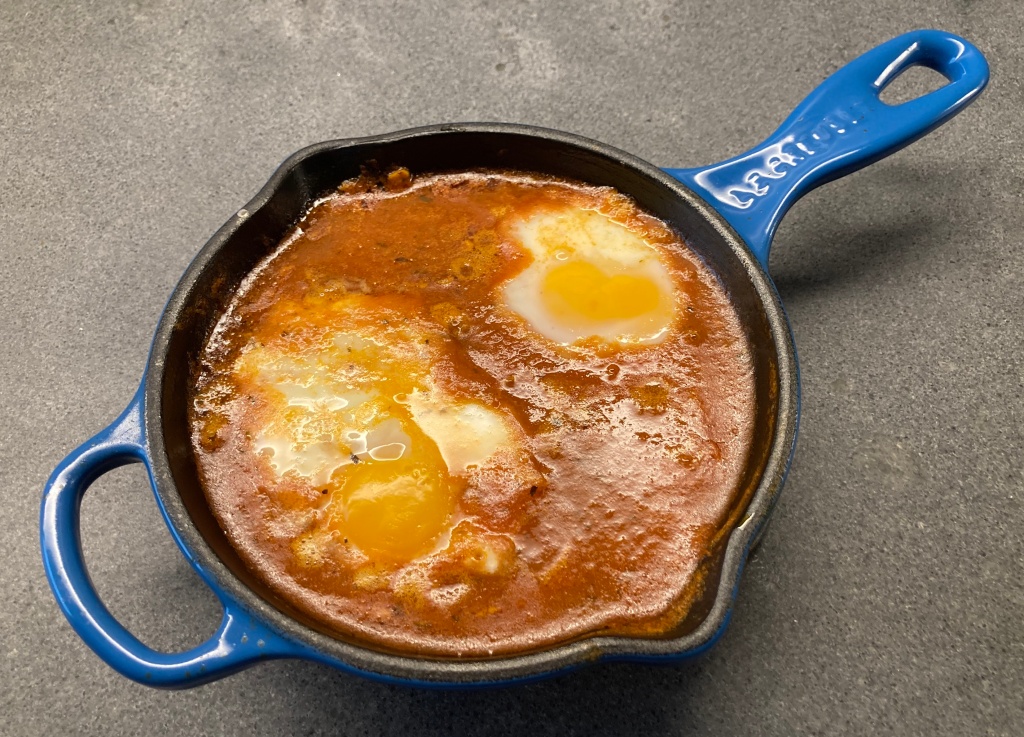
Eggs Poached in Tomato Sauce

Poaching eggs in water requires a bit of technique or a nice tool. Poaching eggs in tomato sauce is slightly different: you want to keep the white close to the yolk, but it should not envelope it: the yolk must remain visible.

The combination of tomato sauce and egg seems to be a bit odd, but the rich, runny egg in combination with the slightly acidic, aromatic tomato sauce is really nice. Great suggestion for lunch or a hearty breakfast. Feel free to create your own version of this dish, for instance by adding some parsley or cheese. Serve with crusted bread.

In most cases the result is shown in a pan. For good reasons: it does not look very attractive when served on a plate. The fun is definitely in the flavours and aromas.

What You Need

What You Do

Warm the tomato sauce and reduce. Increase the heat until the sauce is nearly boiling, gently add the eggs (as you would do when poaching eggs in water) and reduce heat. Using a small spoon make sure the white remains close to the yolk, without covering it. Wait until the white is set. Perhaps add some freshly grounded black pepper.

Eggs Poached in Tomato Sauce ©cadwu

Carpaccio

Carpaccio has evolved into an anything-goes combination of something sliced (beef, veal, (smoked) salmon, beetroot) with a dressing and garnished with for instance pine nuts, cheese, lettuce, capers, tomatoes, spring onion etcetera, which is a pity because the original Carpaccio is actually rather perfect.
We’re not culinary puritans but nevertheless we were slightly shocked when we found the next version of Carpaccio in our local supermarket: with wasabi mayonnaise, teriyaki glaze and roasted sesame seeds. Help?

Original Version

Let’s go back to the original Carpaccio as it was created (in 1950) by chef Giuseppe Cipriani of Harry’s Bar in Venice for one of his regular guests, the Contessa Amalia Nani Mocenigo. Her doctor had ordered her to eat uncooked food, especially raw, red meat. Most likely she suffered from anemia. The poor Contessa was used to excellent food, so something raw on a plate wasn’t very appealing. Chef Cipriani created a special dish for her, which he named after, indeed, the Venetian painter Vittore Carpaccio. Some say this was a tribute to the whites and reds as used by Carpaccio.

Sauce

The sauce is a very clever combination of mayonnaise, Worcester sauce, lemon juice, white pepper and milk. The velvety mayonnaise works very well with the lean meat, the acidity of the lemon is a perfect match for the sweetness of the beef and the Worcester sauce brings umami and depth. The milk gives the sauce the right consistency.

Next time when you think about preparing Carpaccio, why not try the original version and forget about all the extra’s.

Wine Pairing

We suggest enjoying your Carpaccio with a glass of Pinot Grigio or a Soave. It should be a fruity, not too powerful wine. Carpaccio is about the flavour of the meat. The sauce and the wine should simply support this. You could also go for a Pinot Noir, provided it has a light character.

What You Need

  • 50 grams of Excellent Tenderloin or Sirloin (per person) thinly sliced, cold but not frozen.
  • (Homemade) Mayonnaise
  • Worcester Sauce
  • Lemon
  • White Pepper
  • Milk

What You Do

Take one or two spoons of mayonnaise and add two teaspoons of Worcester sauce, one or two teaspoons of lemon juice and freshly ground white pepper. Taste and adjust until you have the perfect balance. Now add milk, creating a thinner sauce. Remove the meat from the refrigerator, flatten the meat if so required and transfer to a cold plate. Create a nice pattern with the sauce, using a sauce bottle. Serve immediately.

Mushroom Soup with Pancetta and Thyme

This morning when we looked outside, we saw a grey, foggy city. Knowing it would take hours for the fog to clear, we started thinking about something warm for lunch. Perhaps some soup with crusty bread? We opened our refrigerator. Various mushrooms, thyme, rosemary, cream, a carrot, some left over stock. Yes! We knew what we wanted to cook for lunch: Mushroom Soup with Pancetta. A hearty, rich soup, ideal for a cold, grey day. The combination of mushrooms, pancetta and cream works very well; the celery and leek add complexity and the thyme brings character.

Wine Pairing

It was much later that afternoon before the fog left the city, but since we also had some left over Chardonnay in the fridge, which we enjoyed with our soup, we didn’t mind that much.

What You Need

  • Pancetta
  • Shallot
  • Mushrooms (Best is a Mix of Champignons, Shiitake etcetera)
  • Celery
  • Leek
  • Carrot
  • Garlic
  • Stock (Chicken or Vegetable)
  • Bouquet Garni (Thyme, Rosemary and Bay Leaf)
  • Black pepper
  • Cream
  • Fresh Thyme
  • Olive Oil

What You Do

Keep two strips of pancetta apart (to be grilled just before serving). You probably need 4-6 strips in total. Slice the remaining pancetta and fry in olive oil on medium heat. Remove the pancetta from the pan, chop the shallot and glaze it in the fat and perhaps some extra olive oil. Clean and slice the mushrooms, slice half a stalk of celery, half a leek, a small carrot, chop two gloves of garlic and add this to the shallot. Gently fry for a few minutes. Add the pancetta, the stock and the bouquet garni. Allow to simmer for 30 minutes. Remove the bouquet garni. Blender the soup, pass through a sieve and leave on low heat for 10 minutes. The mushrooms will emulgate the soup, so no need to add a roux. Now it’s time to taste the soup and perhaps add some black pepper. Add cream and fresh thyme and leave for another 5-10 minutes. In the meantime grill the two strips of pancetta until brown and crispy. Cut the stripes in five pieces depending on the size. Serve the soup in a warm bowl with the pancetta on top of it.

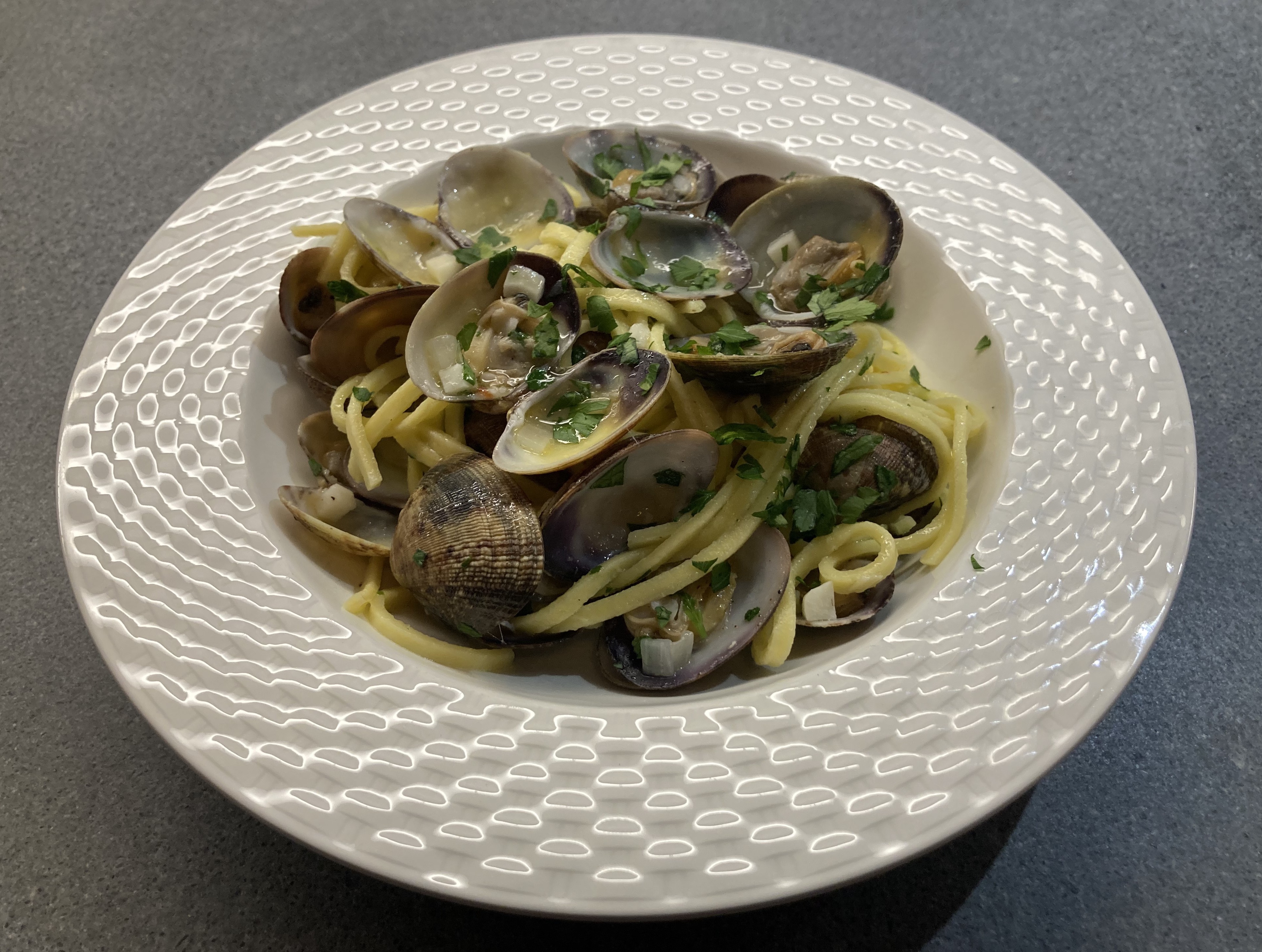
Pasta Alle Vongole

This is a truly delicious and simple starter, one that will only take a few minutes to prepare. The dish comes with two challenges: you need fresh, excellent vongole and you need to resist the temptation to add shallot, tomato, chilli, wine, lemon or butter.

Hey, we can hear you thinking, no wine? Indeed, no wine. We’re not fan of the acidity that comes with the wine plus we don’t want too much liquid. Basically we’re happy with the liquid as provided by the vongole. The idea is to steam the vongole in their own juices. This requires closely monitoring the cooking process. Next time you prepare Pasta Alle Vongole, please try to forget the wine.

Another ingredient to forget: salt. No need to cook the pasta with salt because the vongole will bring enough saltiness.

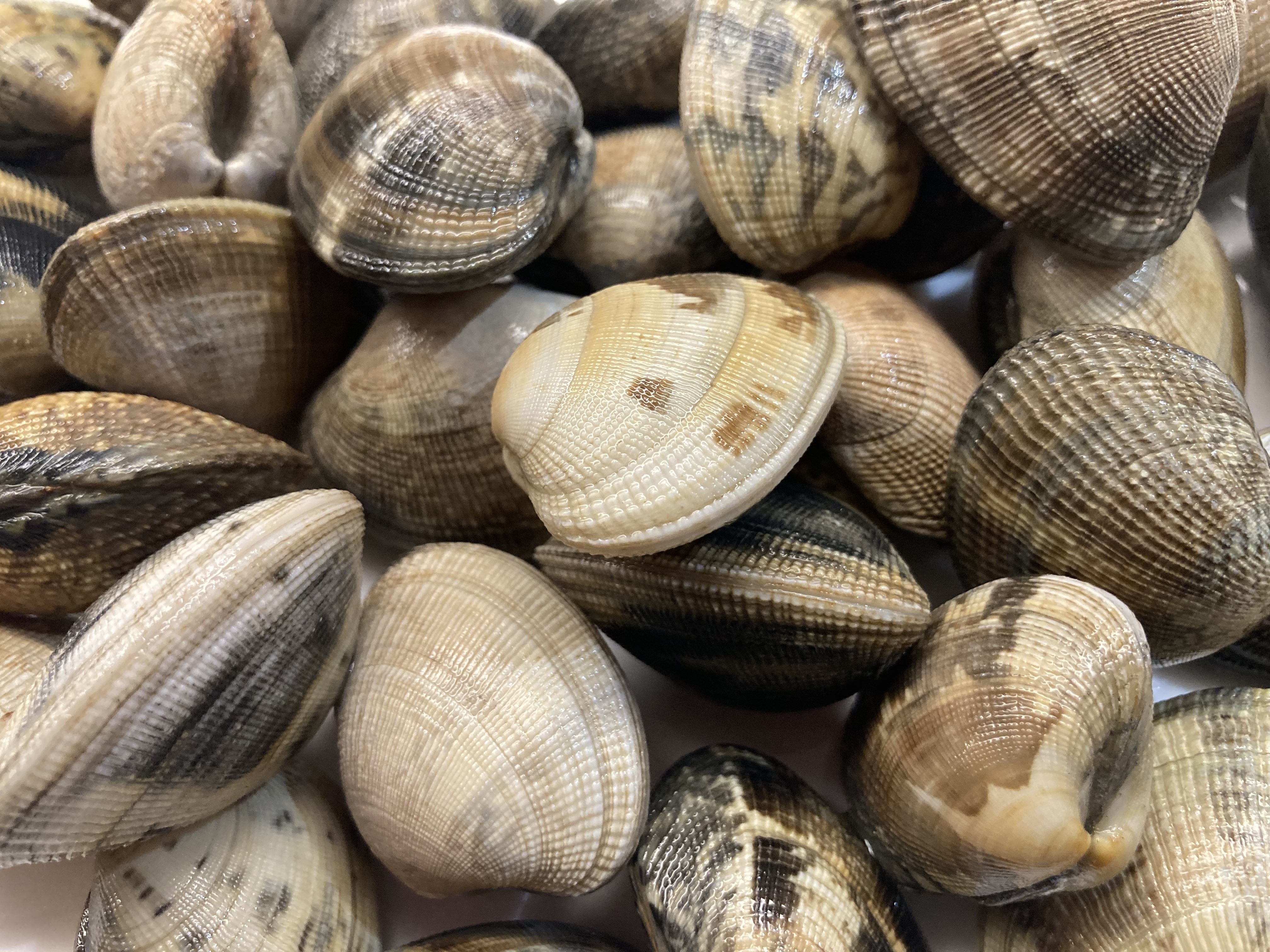
Obviously the vongole need to be clean, meaning without sand. Sometimes we’re lucky and our fishmonger offers washed vongole. If not lucky, we wash the vongole a few times with salted water.

Wine Pairing

Enjoy this classic Italian dish with a Soave: a beautiful, dry, crisp white wine from Italy. We opened a bottle of Cuvée XX, Soave Classico DOC, produced by Guerrieri Rizzardi. It proved to be ideal with the clams: refreshing and dry with floral and mineral notes.

What You Need

  • 500 grams of super fresh, washed Vongole
  • 2 Gloves of Garlic
  • Parsley
  • Spaghetti
  • Olive Oil
  • Black Pepper

What You Do

  1. Make sure you have everything ready: crushed garlic, chopped parsley, a pan with boiling water, a heavy pan (warm through and through), two warm plates
  2. Discard vongole that are broken or damaged
  3. Ready?
  4. Cook the pasta as mentioned on the package
  5. Increase heat, add a generous amount of olive oil to the heavy pan, add garlic, count 30 seconds, add vongole, close the pan and cook the vongole for 3-5 minutes in total
  6. After 1 minute (so 2-4 minutes to go) check if all is okay
  7. If too dry, then add extra olive oil or a splash of water
  8. When clams have opened, drain the pasta, remove the pan with the vongole from the heat, add pasta, chopped parsley and black pepper, mix and serve on two warm plates
  9. You could remove some, but not all, of the shells to make eating the dish a bit more elegant, although it’s fun eating the vongole with your hands
  10. Discard shells that have not opened
  11. PS Some recipes suggest cooking the vongole, preparing a sauce and then reheating the vongole with the pasta. If you do, the poor vongole will become rubbery, so not a good idea.