And The Winner Is…

The 2022 Johannes van Dam prize will be awarded to Belgian Chef Jeroen Meus during the Amsterdam Symposium on the History of Food on February 11th. Jeroen Meus is well known for his inspiring daily TV program Dagelijkse Kost (Daily Food). In this 15 minutes program he shares the fun of preparing food, for instance crumble pie with pears and raisins, monkfish with a mustard crust or penne with chorizo and red bell pepper. His aim is not to cook on Michelin Star level, his aim is to help everyone prepare tasty, good food, every day of the week. His books and website (in Dutch only) support this goal in a very helpful way.

He is a true TV-chef in the sense that he is in contact with his viewers. He is entertaining, professional, funny and never arrogant. He balances traditional Belgian food with changes in our culture (more focus on vegetables, more variation, different cultures). His food reflects these changes and inspires us to follow his friendly culinary adventures.

The prize is named after culinary writer and critic Johannes van Dam who was not only known for his reviews of restaurants but also for his massive collection of books on food and drinks. The prize is awarded to individuals who have made an outstanding contribution to the dissemination of the knowledge on international gastronomy. Jeroen Meus, through his tv programs, books and website, has clearly done so. His cooking brings people together and broadens our culinary scope.

Previous winners of this prestigious prize include Yotam Ottolenghi, John Halvemaan, Carlo Petrini, Alice Waters, Claudia Roden, Harold McGee and Alain Passard.

Jeroen Meeus Atribution: Arne Aelterman, CC BY-SA 4.0 , via Wikimedia Commons
Jeroen Meus – attribution: Arne Aelterman, CC BY-SA 4.0 , via Wikimedia Commons

Roulade of Turkey with Mushrooms and Chestnuts

We love to eat this very tasty, juicy, rich combination during winter. We use meat from the leg of the turkey (the thigh) because it has lots of flavours and a great texture.
You could of course make your own chestnut butter, crème or spread; we prefer using Clément Faugier’s Chestnut Spread. It’s nutty, sweet (but not too sweet) and earthy.

Wine Pairing

A medium bodied, red wine will be a great accompaniment of the roulade. In general you’re looking for a red wine with aromas of black fruit, floral notes and delicate wood. The tannins should be soft or well-integrated. We enjoyed a glass of Spätburgunder (Pinot Noir) as produced by Von der Mark-Walter. The winery is located in Baden, Germany, at the foothills of the Black Forest.

What You Need (Filling)
  • Shallot
  • Olive Oil
  • 150 grams of Mushrooms
  • Thyme
  • Chestnut Spread
  • Black Pepper

Chop the shallot and glaze in a pan with olive oil for 5 minutes. Clean the mushrooms and cut into smaller chunks. Add the mushrooms and allow to simmer for 10 minutes. Add a generous amount of thyme. Transfer from the pan and allow to cool. Once lukewarm, use a kitchen knife to create a lovely duxelles. Add a teaspoon of chestnut spread. Taste and adjust by adding more chestnut spread and black pepper.

What You Need (Roulade)
  • One Turkey Thigh
  • Pancetta or Bacon
  • Filling
  • Kitchen twine and needle
  • Butter
  • Olive Oil
  • Cream
  • Black Pepper
  • Brussels Sprouts
  • Nutmeg
What You Do
  1. Remove the bone (if any) and ‘unfold’ the meat by slicing the thicker part, making it longer
  2. Make a layer of pancetta from left to right, without covering the lower and upper part of the meat
  3. Put the filling on top of the pancetta and then spread it out, making sure the top and bottom remain not covered
  4. Put 4 or 6 strings of kitchen twine underneath the roulade and start rolling, not too tight
  5. Use one longer string of kitchen twine to close the sides (so the two strings are at right angles to each other)
  6. You may need a needle to close the roulade
  7. Wrap the roulade in plastic foil and keep in the refrigerator
  8. Fry the roulade in lots of butter and olive oil to give it a nice colour
  9. Transfer it to the oven at 160 ˚C or 320 ˚F
  10. It’s ready when the centre has reached a temperature of 70 ˚C or 160 ˚F
  11. Transfer from the oven and wrap in aluminium foil
  12. Leave to rest for 15 minutes
  13. Add some chicken stock to the pan and deglaze
  14. Transfer to the blender and create a smooth, thick sauce
  15. Transfer back to the pan and leave on low heat
  16. Add some cream, taste and leave for 10 minutes or so
  17. In the mean time steam the Brussels sprouts
  18. When ready coat with some olive oil
  19. Serve two or three slices of turkey roulade per person with the sauce and some Brussels sprouts
  20. Add black pepper to the turkey and some fresh nutmeg to the sprouts.

In the Kitchen with Alain Passard

It’s not often that we enjoy reading a cookbook from cover to cover. In the Kitchen with Alain Passard: Inside the World (and Mind) of a Master Chef is such an exception.
During a period of three years, illustrator Christophe Blain followed three-star Michelin chef Alain Passard through his kitchens and gardens. The result is a wonderful, funny, graphic cookbook that shows not only beautiful, colourful food and the way it’s prepared, but above all it shows the world and kitchen of a chef.

Vegetables

Around 1998 Alain Passard decided to focus on preparing and serving vegetables in his Parisian restaurant, L’Arpege. He set up two organic gardens, making sure he can cook with excellent, seasonal ingredients. Nowadays L’Arpege offers a inspiring menu with vegetables at the centre, but also room for lobster, chicken and duck. Take some time to browse his website and enjoy the wonderful pictures and combinations. Impressive, isn’t it?

Drawings

Unfortunately dining at L’Arpege is a well above our budget, so once in a while we open this wonderful book (published in 2013) and smile when reading the illustrated dialog between the Chef and the Illustrator. As if you can hear them talk about a dish that is being prepared by the Chef!
The drawings are simple, subtle, lively and colourful. They perfectly visualise the dining room, the reaction of the guests when tasting the dish, the movements of the Chef, his kitchen staff and the waiters.

Recipes

Then we start preparing one of the 15 recipes, for instance his Potato Paillasse with Sage and young Garlic or his combination of carrots, cinnamon and basil. We’re probably not even close to the dish as served at L’Arpege, but we’re enjoying it immensely.

Alain Passard speeches after having received the Johannes van Dam Prize 2019 © cadwu

Eggs Poached in Tomato Sauce

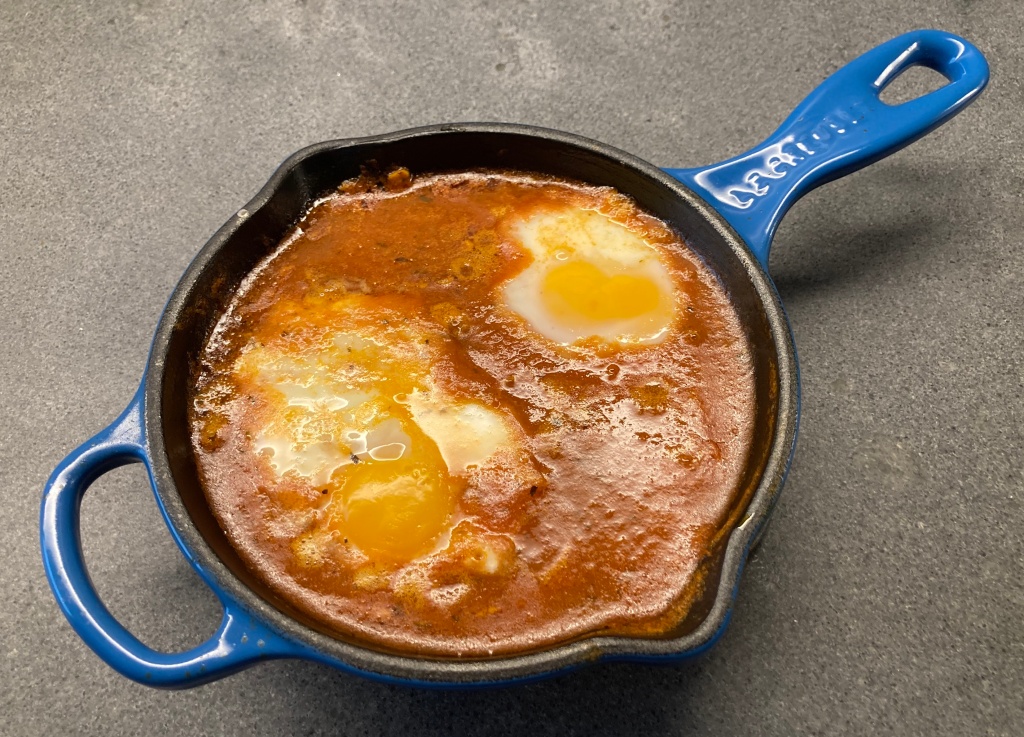
Poaching eggs in water requires a bit of technique or a nice tool. Poaching eggs in tomato sauce is slightly different: you want to keep the white close to the yolk, but it should not envelope it: the yolk must remain visible.

The combination of tomato sauce and egg seems to be a bit odd, but the rich, runny egg in combination with the slightly acidic, aromatic tomato sauce is really nice. Great suggestion for lunch or a hearty breakfast. Feel free to create your own version of this dish, for instance by adding some parsley or cheese. Serve with crusted bread.

In most cases the result is shown in a pan. For good reasons: it does not look very attractive when served on a plate. The fun is definitely in the flavours and aromas.

What You Need

What You Do

Warm the tomato sauce and reduce. Increase the heat until the sauce is nearly boiling, gently add the eggs (as you would do when poaching eggs in water) and reduce heat. Using a small spoon make sure the white remains close to the yolk, without covering it. Wait until the white is set. Perhaps add some freshly grounded black pepper.

Eggs Poached in Tomato Sauce ©cadwu

Carpaccio

Carpaccio has evolved into an anything-goes combination of something sliced (beef, veal, (smoked) salmon, beetroot) with a dressing and garnished with for instance pine nuts, cheese, lettuce, capers, tomatoes, spring onion etcetera, which is a pity because the original Carpaccio is actually rather perfect.
We’re not culinary puritans but nevertheless we were slightly shocked when we found the next version of Carpaccio in our local supermarket: with wasabi mayonnaise, teriyaki glaze and roasted sesame seeds. Help?

Original Version

Let’s go back to the original Carpaccio as it was created (in 1950) by chef Giuseppe Cipriani of Harry’s Bar in Venice for one of his regular guests, the Contessa Amalia Nani Mocenigo. Her doctor had ordered her to eat uncooked food, especially raw, red meat. Most likely she suffered from anemia. The poor Contessa was used to excellent food, so something raw on a plate wasn’t very appealing. Chef Cipriani created a special dish for her, which he named after, indeed, the Venetian painter Vittore Carpaccio. Some say this was a tribute to the whites and reds as used by Carpaccio.

Sauce

The sauce is a very clever combination of mayonnaise, Worcester sauce, lemon juice, white pepper and milk. The velvety mayonnaise works very well with the lean meat, the acidity of the lemon is a perfect match for the sweetness of the beef and the Worcester sauce brings umami and depth. The milk gives the sauce the right consistency.

Next time when you think about preparing Carpaccio, why not try the original version and forget about all the extra’s.

Wine Pairing

We suggest enjoying your Carpaccio with a glass of Pinot Grigio or a Soave. It should be a fruity, not too powerful wine. Carpaccio is about the flavour of the meat. The sauce and the wine should simply support this. You could also go for a Pinot Noir, provided it has a light character.

What You Need

  • 50 grams of Excellent Tenderloin or Sirloin (per person) thinly sliced, cold but not frozen.
  • (Homemade) Mayonnaise
  • Worcester Sauce
  • Lemon
  • White Pepper
  • Milk

What You Do

Take one or two spoons of mayonnaise and add two teaspoons of Worcester sauce, one or two teaspoons of lemon juice and freshly ground white pepper. Taste and adjust until you have the perfect balance. Now add milk, creating a thinner sauce. Remove the meat from the refrigerator, flatten the meat if so required and transfer to a cold plate. Create a nice pattern with the sauce, using a sauce bottle. Serve immediately.

Mushroom Soup with Pancetta and Thyme

This morning when we looked outside, we saw a grey, foggy city. Knowing it would take hours for the fog to clear, we started thinking about something warm for lunch. Perhaps some soup with crusty bread? We opened our refrigerator. Various mushrooms, thyme, rosemary, cream, a carrot, some left over stock. Yes! We knew what we wanted to cook for lunch: Mushroom Soup with Pancetta. A hearty, rich soup, ideal for a cold, grey day. The combination of mushrooms, pancetta and cream works very well; the celery and leek add complexity and the thyme brings character.

Wine Pairing

It was much later that afternoon before the fog left the city, but since we also had some left over Chardonnay in the fridge, which we enjoyed with our soup, we didn’t mind that much.

What You Need

  • Pancetta
  • Shallot
  • Mushrooms (Best is a Mix of Champignons, Shiitake etcetera)
  • Celery
  • Leek
  • Carrot
  • Garlic
  • Stock (Chicken or Vegetable)
  • Bouquet Garni (Thyme, Rosemary and Bay Leaf)
  • Black pepper
  • Cream
  • Fresh Thyme
  • Olive Oil

What You Do

Keep two strips of pancetta apart (to be grilled just before serving). You probably need 4-6 strips in total. Slice the remaining pancetta and fry in olive oil on medium heat. Remove the pancetta from the pan, chop the shallot and glaze it in the fat and perhaps some extra olive oil. Clean and slice the mushrooms, slice half a stalk of celery, half a leek, a small carrot, chop two gloves of garlic and add this to the shallot. Gently fry for a few minutes. Add the pancetta, the stock and the bouquet garni. Allow to simmer for 30 minutes. Remove the bouquet garni. Blender the soup, pass through a sieve and leave on low heat for 10 minutes. The mushrooms will emulgate the soup, so no need to add a roux. Now it’s time to taste the soup and perhaps add some black pepper. Add cream and fresh thyme and leave for another 5-10 minutes. In the meantime grill the two strips of pancetta until brown and crispy. Cut the stripes in five pieces depending on the size. Serve the soup in a warm bowl with the pancetta on top of it.

Culinary Trends

Suppose we would publish a recipe that would include instructions such as “Coat cubes of pork meat with curry and microwave these for 2 minutes”, and “Combine oil, chilli, garlic and onion, heat for 1 minute on 100% power, add chicken stock, soy sauce and corn starch, stir and heat for 2 minutes on 50%”, you would of course think you are back in the 1980’s.

It’s fascinating that what we buy, the way we prepare it, and even how we serve and eat it, is constantly changing. Just look at the pictures in a 1950’s cookbook and try not to smile. Impossible.

Knowing that our culinary habits are constantly changing is one thing, understanding why they change is much more complex. 

Influence

A great example of a supplier influencing their customers is a magazine called Allerhande, published by leading Dutch supermarket Albert Heijn. The magazine, first published in 1954, is not your ordinary flyer with an overview of discounted articles, it’s a reflection of culinary trends (linked of course to what’s available in the supermarket) and trends in society with a focus on the individual.

Dutch author Klaartje Scheepers was brave enough to read all issues since 1954 and in her excellent book Van Aardappel tot Avocado (available in Dutch only) she describes how closely food is linked to our daily life and the world we live in. She writes about the 1950’s housewife struggling to keep her family happy and well-fed, about the introduction of the tv-dinner, about nutrition, the need to have a refrigerator, a blender, a microwave, an electric tin opener, about how we started to embrace dishes from other countries, including something odd called pizza, about diets and of course, about how supermarkets are closely monitoring these developments.
Reading Van Aardappel tot Avocado is a pleasure, not only because of the interesting insights, but also because it helps you recognize today’s trends. And of course it’s also a fun trip down memory lane. Highly recommended!

Your Menu

Why not sit back, take a sip of wine and wonder how your Seasonal menu is influenced by your local supermarket, by well-known chefs, culinary influencers and blogs. What made you decide? Availability? Recipe on the internet? Price? Friends? As seen on Youtube?
Interesting, isn’t it?

Klaartje Scheepers - Van Aardappel tot Avocado
Klaartje Scheepers – Van Aardappel tot Avocado

Pasta Alle Vongole

This is a truly delicious and simple starter, one that will only take a few minutes to prepare. The dish comes with two challenges: you need fresh, excellent vongole and you need to resist the temptation to add shallot, tomato, chilli, wine, lemon or butter.

Hey, we can hear you thinking, no wine? Indeed, no wine. We’re not fan of the acidity that comes with the wine plus we don’t want too much liquid. Basically we’re happy with the liquid as provided by the vongole. The idea is to steam the vongole in their own juices. This requires closely monitoring the cooking process. Next time you prepare Pasta Alle Vongole, please try to forget the wine.

Another ingredient to forget: salt. No need to cook the pasta with salt because the vongole will bring enough saltiness.

Obviously the vongole need to be clean, meaning without sand. Sometimes we’re lucky and our fishmonger offers washed vongole. If not lucky, we wash the vongole a few times with salted water.

Wine Pairing

Enjoy this classic Italian dish with a Soave: a beautiful, dry, crisp white wine from Italy. We opened a bottle of Cuvée XX, Soave Classico DOC, produced by Guerrieri Rizzardi. It proved to be ideal with the clams: refreshing and dry with floral and mineral notes.

What You Need

  • 500 grams of super fresh, washed Vongole
  • 2 Gloves of Garlic
  • Parsley
  • Spaghetti
  • Olive Oil
  • Black Pepper

What You Do

  1. Make sure you have everything ready: crushed garlic, chopped parsley, a pan with boiling water, a heavy pan (warm through and through), two warm plates
  2. Discard vongole that are broken or damaged
  3. Ready?
  4. Cook the pasta as mentioned on the package
  5. Increase heat, add a generous amount of olive oil to the heavy pan, add garlic, count 30 seconds, add vongole, close the pan and cook the vongole for 3-5 minutes in total
  6. After 1 minute (so 2-4 minutes to go) check if all is okay
  7. If too dry, then add extra olive oil or a splash of water
  8. When clams have opened, drain the pasta, remove the pan with the vongole from the heat, add pasta, chopped parsley and black pepper, mix and serve on two warm plates
  9. You could remove some, but not all, of the shells to make eating the dish a bit more elegant, although it’s fun eating the vongole with your hands
  10. Discard shells that have not opened
  11. PS Some recipes suggest cooking the vongole, preparing a sauce and then reheating the vongole with the pasta. If you do, the poor vongole will become rubbery, so not a good idea.

Season’s Greetings

Perhaps you’re looking for some extra inspiration menu-wise for the Holiday Season? Let us help you with a few suggestions.

Apéretif

It’s of course great to serve a glass of Champagne, but why not start with a glass of Crémant de Bourgogne or Alsace? Or a Spanish Cava? The fun is that you can buy a slightly more expensive Crémant or Cava and enjoy a refined sparkling wine. Serve with Terrine de Foie Gras on toast or with a small prawn cocktail, served in a peeled tomato.

Starter

Scallops with fluffy cauliflower purée is a wonderful combination of flavours. The practical advantage is that you can prepare the purée a day ahead and grilling the pancetta is also something you can do in advance. Serve with a glass of Sauvignon Blanc. Dry, some acidity, touch of fruit.

Main Course

Canard à l’Orange, served with steamed Brussels sprouts and potatoes fried in butter: a dish that supports the festive character of your evening: sweetness, a touch of bitterness and crispy, rich potatoes. Enjoy with a beautiful Bordeaux. In general you’re looking for a powerful red wine, with aromas of berries and a touch of oak. The flavour must be round and long with subtle tannins.

Cheese

We tend to go for the classic combination of Stilton and Port. Spend some money and buy a Late Bottled Vintage Port.

Dessert

Continue the British tradition and enjoy a slice of Christmas Pudding with a coffee and a glass of Cognac or Calvados. No need to serve the pudding with brandy butter.

Season’s Greetings 2021 ©cadwu

Sauce Provençale

Based on one of the leading (mother) sauces this is a quick, tasty and uplifting sauce with olives, capers and Herbes de Provence. The success of this sauce depends on the use of the intense, flavorful classic tomato sauce. Sauce Provençal has a good structure and comes with a variety of flavors, making it very much an accompaniment for grilled chicken or fish. If you use modern tomato sauce, then the result will be nice, but not as spectacular.

Herbes de Provence is a mixture of dried herbs such as oregano, thyme, rosemary, savory and perhaps sage and lavender. Feel free to create your own mixture. If you buy a ready-made mixture, make sure it has character, aromas and structure.

What You Need
  • Classic Tomato Sauce
  • One shallot
  • Two Tomatoes
  • One Glove of Garlic
  • Teaspoon of Herbes de Provence
  • Capers
  • Black Olives
  • Olive Oil
  • Black Pepper
What You Do
  1. Peel the tomatoes, remove the seeds and cut in small cubes
  2. Finely chop the shallot
  3. Wash and drain the capers
  4. Crush the garlic
  5. Slice the olives in two
  6. Heat a heavy iron skillet and gently glaze the shallot
  7. Add tomatoes, garlic and herbes de Provence
  8. Leave on low heat for 5 minutes
  9. Add the classic tomato sauce, the capers and the olives
  10. Leave for 5-10 minutes
  11. Stir the mixture gently
  12. You want to keep the structure of the tomatoes
  13. Taste and perhaps add some black pepper
Sauce Provençal with Grilled Chicken ©cadwu