Dashi with Matsutake and Shrimps

Celebrate Autumn

This year seems to be an exceptionally good year for Matsutake. Antonio Carluccio once described it is a much-overrated mushroom but we dare to disagree. Just smell it! Pine, pine, pine. A unique mushroom. We tried making this soup with shiitake, but the result is not as refined, delicate and well-balanced. The key elements are of course the (home-made) dashi, the matsutake and the shrimps. Kamaboko (made from processed seafood) and Mitsuba (Japanese parsley) add colour (and some extra flavour) to the dish.

What You Need

  • Dashi
    • 0,5 l of Water
    • 10 gram of Konbu
    • 10 gram of Katsuobushi
  • 75 gram of Matsutake
  • 2 Shrimps
  • Taru Sake
  • Light Soy Sauce
  • Yuzu
  • Kamaboko
  • (Mitsuba)

Sake Pairing

If you want to serve a drink with the soup, then serve taru sake. This is a dry sake characterized by its refreshing taste and the wooden aroma of Yoshino cedar. A wonderful link to the matsutake. And if you bought a bottle of taru sake, then please use this sake for marinating the shrimps.

What You Do

With a damp cloth clean the matsutake. Be careful not to remove the skin. The root should be cut like a pencil. Clean the shrimps and cut lengthwise in two. Let marinade in two tablespoons of sake and transfer to the refrigerator for an hour. Gently warm the dashi, add a small tablespoon of sake and a similar quantity (or less) of soy sauce. Cut the matsutake in 8 similar slices and add to the soup. After a few minutes (depending on the size of the matsutake) add four slices of kamaboko and the shrimps. Taste and add some more soy sauce and or yuzu if needed. Serve immediately when the shrimps are ready. If available add some mitsuba.

Partridge with Courgette and Thyme

Delicate

Partridge is perhaps the most delicate of game birds. They come in two sorts: the red-legged and the grey-legged. The grey-legged ones are more expensive and in general they may be hunted for a few days per year only. In all cases it is best to buy them early in the year (September until mid November). The season is short, so don’t wait too long!

The meat of a partridge is lean and tends to become very dry when preparing it. So what to do? Of course! Put a strip of bacon on each breast and transfer the poor bird to a hot oven.
Not really. The bacon will impact the characteristic taste of the partridge which is of course not something you want to do. And placing such a small, lean bird in a hot oven is a massive risk. Just a few minutes too long (simply because something else you are preparing takes a bit longer than expected) and the meat is bone dry. Stuffing the bird doesn’t help, the filling will be moist but the meat will be dry anyway.

The key to an excellent partridge is to be brave enough to use an oven on a really low temperature, meaning the temperature the meat should have when you serve it. Restaurant owner and celebrated Chef Peter Lute introduced this method in the Netherlands.

Another interesting aspect is that, different from many other birds, the legs of the partridge are not that special. They are fairly small and have lots of tendons.
So, no bacon, no hot oven and focus on the breast.

Partridge combines very well with a range of vegetables and herbs. The classic combination is with choucroute (Alsace style). We wanted to link our partridge to late summer by combing it with a thyme-courgette cake. Easy to make and full of flavours.

Wine Pairing

A red wine is preferred, one that is not overpowering, with hints of red fruit, a touch of oak and soft tannins. Our choice was a 2016 Shiraz from Australia: the River Retreat Murray Darling Shiraz. Great value for the price.

What You Need

  • For the partridge
    • One Partridge
    • Two Garlic Gloves
    • Bay Leaf
    • Butter
    • Olive Oil
  • For the thyme-courgette cake
    • One Courgette
    • One Egg
    • Thyme
    • Parmesan Cheese
    • Olive Oil
  • Black pepper

What You Do

Start with preparing the partridge. This means carefully cutting of the two legs and removing the lower part of the back of the bird (the tail bone area, see picture). Warm a heavy iron pan and add butter. Add bay leaf and halved garlic gloves. Coat the bird with butter, making sure you get a very light brown colour. Put the legs on a plate and cover with foil. Now transfer the pan and the plate to a warm oven: 70° Celsius or 160° Fahrenheit. Leave in the oven for 50 – 60 minutes. Since the oven is on the ideal temperature for the meat, it doesn’t really mater if you leave them in the oven for 70 minutes. Remove the two breasts from the bird. Remove the bigger bone from the leg. Coat the meat with the fat from the pan. Transfer to a plate and cover with plastic foil.

Grate the courgette, transfer to a bowl, add a teaspoon of salt, mix and transfer to a sieve. Let rest for at least two hours. Discard the liquid. Wash the courgette with cold water and put the grated courgette in a clean cloth. Squeeze out as much liquid as you can. Beat the egg slightly; mix with the courgette, the grated Parmesan cheese and a generous amount of thyme. Add olive oil to a fairly hot non-sticky pan and start frying the courgette mixture. This takes longer than expected! In the mean time make sure your heavy iron skillet is heated through and through. Flip the courgette cake and fry the other side. In parallel add olive oil to the skillet, and quickly brown the meat. Separate the tenderloin from the breast and remove the fleece before serving the breasts. If all is well you will see a beautiful pink colour, indicating your cuisson is perfect and your partridge as tasty and delicate as possible. Before serving add some black pepper and extra thyme.

Dashi

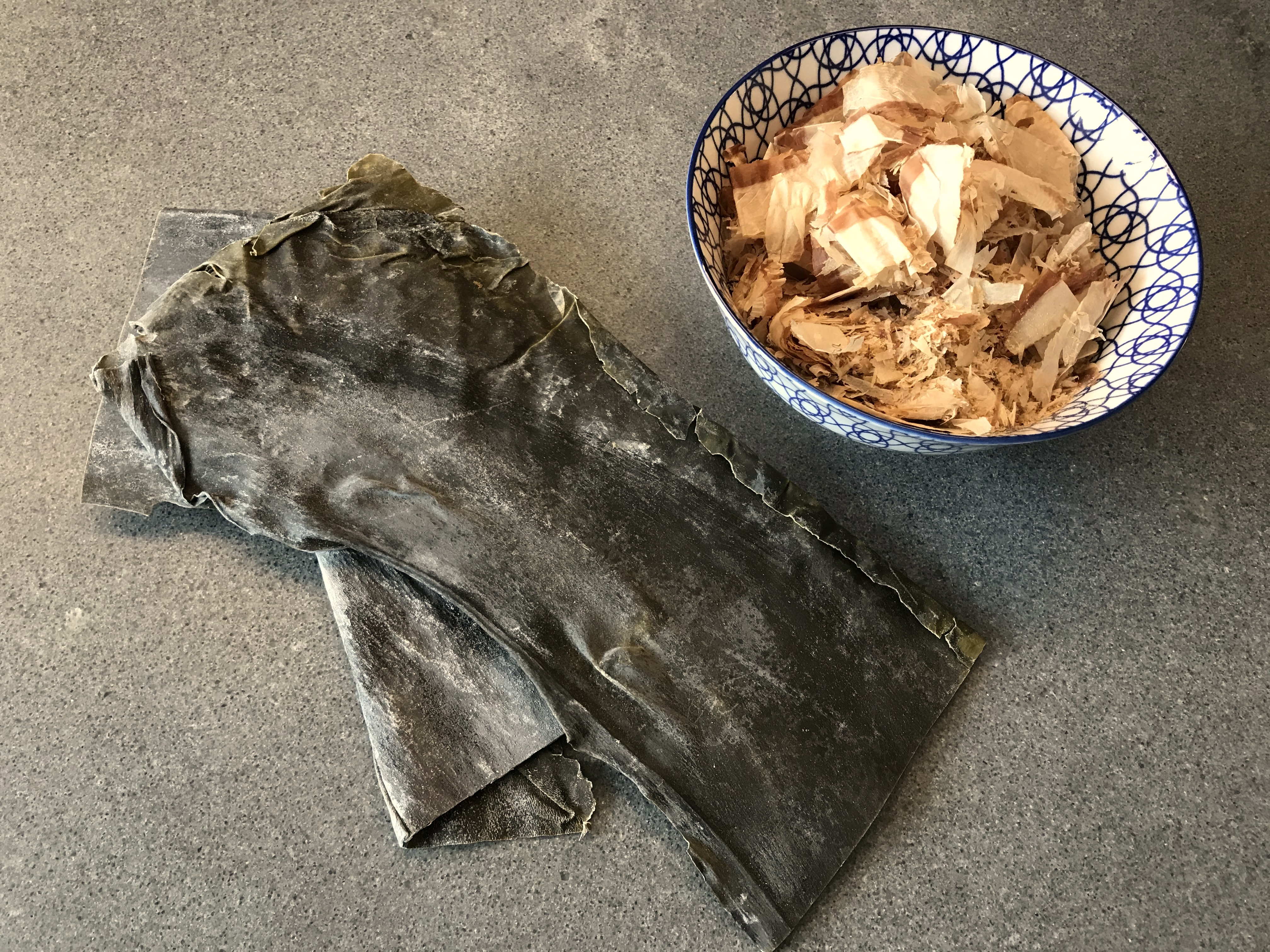
For most of us ‘stock’ begins with a combination of fish or meat with vegetables such as carrot, onion, leek and celery together with herbs like bay leaf, thyme and parsley. Dashi, the classic stock from the Japanese cuisine, is very different: it takes between one and four ingredients and takes only 30 minutes to prepare. The ingredients are kelp (kombu), dried small anchovies or sardines, dried shiitake and dried bonito flakes (katsuobushi). The simplest dashi is made from kombu only. Its taste is gentle with a touch of umami. Great vegetarian stock.
The best known is awase dashi and it’s made from kombu and katsuobushi. This one is the basis for Oden, miso soup and many other dishes. It’s also the basis of our Dashi with Matsutake and Shrimps and for Dashi with Nameko and Shrimps. If you add a splash of dashi and some Japanese mustard (karashi) to your mayonnaise you can make your own Japanese mayonnaise.

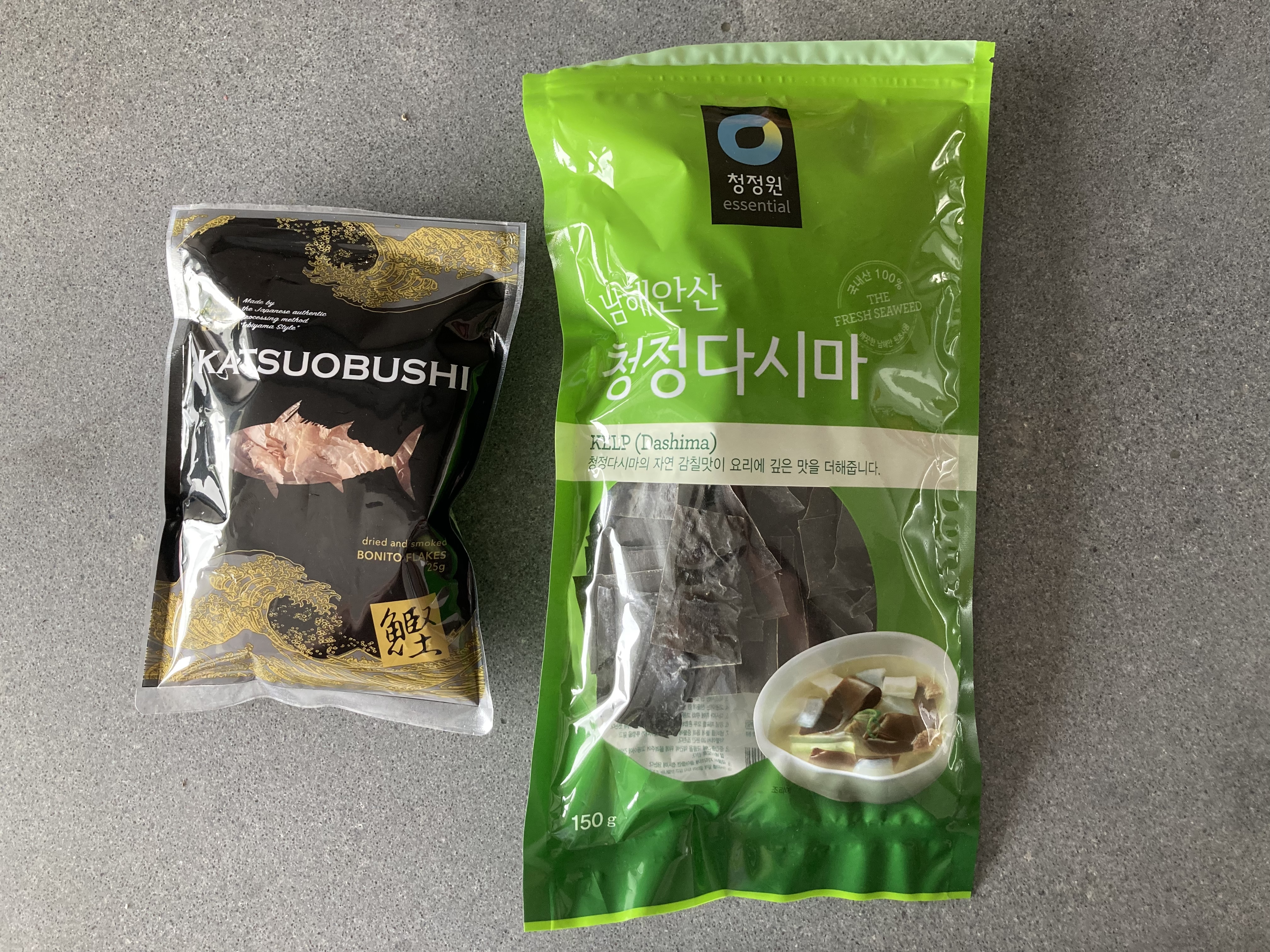
Katsuobushi is made from bonito or tuna. It’s a complex and time-consuming process, so don’t be surprised to pay between € 10,00 and € 15,00 per 100 gram. For one litre of dashi you only need 20 gram, so don’t worry too much about the costs. And you can make a ‘second’ dashi by repeating the process with the same kombu and katsuobushi.

A true Japanese chef will begin her or his day with shaving katsuobushi. We simply buy shaved katsuobushi. It comes in bags of 25 or 40 grams.

What You Need
  • 1 liter of Water
  • 20 gram of Kombu
  • 20 gram of Katsuobushi
What You Do
  1. With a wet cloth gently clean the kombu
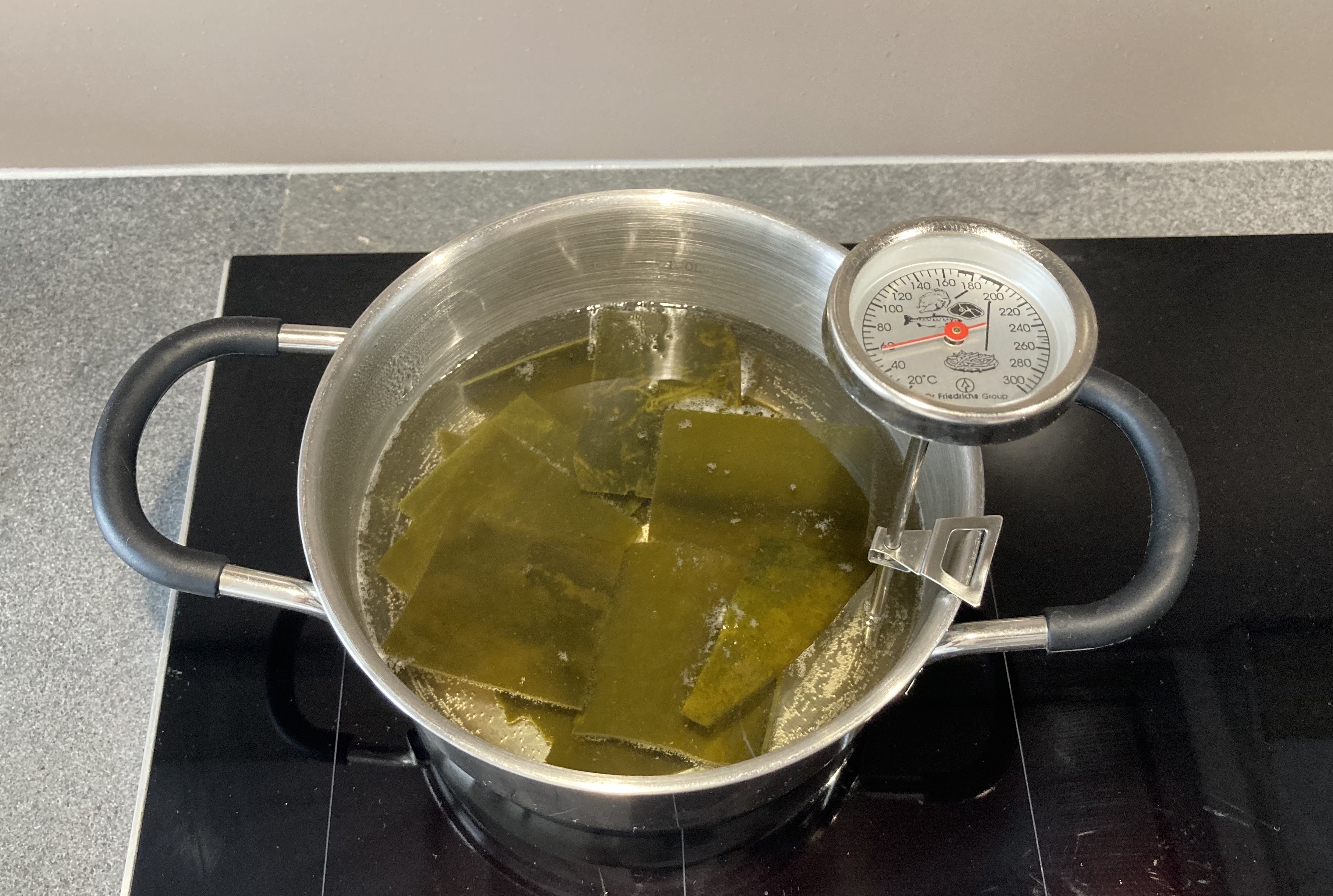
  2. Put the kombu in the cold water and heat slowly to 80° Celsius or 175° Fahrenheit
  3. Take you time!
  4. When the temperature has reached 80° Celsius or 175° Fahrenheit, remove the kombu (and store for using it for a second dashi)
  5. Bring the liquid to the boil
  6. Immediately reduce heat
  7. Add the katsuobushi
  8. Bring to a boil
  9. Immediately remove from heat
  10. Let sit for 10 minutes or so until the katsuobushi has sunk to the bottom
  11. Pass the liquid through a sieve
  12. You can also use a clean cloth, but don’t squeeze it. You want a clear broth
  13. The dashi can be used immediately, stored in your refrigerator for a few days or kept in the freezer for a few weeks (not preferred)

Seasonal Vegetables

Bring Autumn And Winter To Your Table

This year the University of Amsterdam will award the prestigious Johannes van Dam price to Alain Passard, the French chef who showed that vegetables can be the centrepiece of your meal.
In 1986 Alain Passard opened his restaurant Arpège in Paris and ten years later he obtained a third Michelin star. He published a number of great books, for instance In the Kitchen with Alain Passard (a graphic novel) and The Art of Cooking with Vegetables.

In this dish we simply combine a variety of seasonal vegetables into an inspiring side dish. Some of the vegetables are known as ‘forgotten’ vegetables. And although some are forgotten for a very good reason, you will find most forgotten vegetables very tasty and colourful. This dish will allow you to taste the individual and combined flavours. Don’t worry if you have some left over: it’s even better the next day.

Wine Pairing

A simple full-bodied red wine will work very well with the dish.

What You Need

  • Parsley Root
  • Turnip
  • Sweet potato
  • Truffle potato
  • Jerusalem Artichoke
  • Red and Yellow Beetroot
  • Black Carrot
  • Parsnip
  • Rosemary
  • Thyme
  • Olive Oil
  • Black Pepper

What You Do

You don’t need all of the above, but make sure you have a nice variety. Wash and clean the vegetables. Peel the vegetables if so required, but don’t peel the truffle potato. Slice it, this way you will be able to see the great pattern of the potato later on. Cut the other vegetables in chunks, making sure they are all of similar size. Sprinkle generously with olive oil, making sure everything is nicely covered. Add a bit more if in doubt. Add sprigs of thyme and rosemary.
Heat the oven to 180° Celsius. Put in the oven (upper half) for 60 minutes or longer. Mix after 15, 30 and 45 minutes. You may want to increase the heat to add a nice golden color to the vegetables. Remove sprigs and serve with black pepper.
Please note there is no need to add onions or garlic. The combination of vegetables, herbs and oil should do the trick.

Tuna with Sesame Seeds and Pickled Cucumber

Tataki

This starter is easy to prepare and simply delicious, provided you have the best quality ingredients: fresh tuna, tasty sesame seeds, sesame oil and pickles.
Japanese sesame oil is made from roasted sesame seeds. As with olive oil the best sesame oil is ‘extra vierge’ so the oil is extracted from the seeds using pressure only. We used oil produced by La Tourangelle, a company specialised in gourmet oils. Think Walnut oil, Hazelnut, Almond, Pistachio, but also Coconut and Avocado oil. As always, this sesame oil is more expensive than the usual sesame oil, but the difference in taste is impressive. A few drops of this wonderful sesame oil work perfectly with the tuna and the lightly toasted sesame seeds.
Pickled cucumber is a great addition to this dish; it comes with a bit of ginger, sesame seeds (!) and a light acidity. Not difficult to make, but buying it is fine too.

Sake Pairing

The world of sake is a complex one. We decided to drink a glass of Yamato Shizuku, Junmai Gingo. The production of sake is labour intensive and it very much depends on the quality of its four main ingredients (rice, koji, yeast and water) and the skills of the brewers. Junmai means that only these four ingredients were used and Ginjo means that the sake was made with carefully selected products and that more or less traditional techniques were used. In most cases sake is produced in Kobe; this one however is from the northern part of Honshu. This sake is light, yet it still has a bit of umami. The taste is refreshing, floral and mineral with a clear but pleasant presence of alcohol (15,5%). It works wonderful, with the fish, the sesame and the pickles.

What You Need

  • Small piece of Tuna (125 gram)
  • White Sesame seeds
  • Olive Oil
  • Sesame Oil
  • Pickled Cucumber

What You Do

We want the tuna to be red on the inside and the sesame seeds gently roasted. Best is to buy a fairly thick slice of tuna and make sure it’s cold. Dry the tuna with some kitchen paper, coat both sides with the sesame seeds and fry in oil in a hot non-sticky pan. Keep it moving. Monitor the side of the slice. Turn the tuna when you see the beginning of a crust. Ideally the sesame seeds are now light golden brown. When ready, quickly transfer to a cutting board and slice. Put on a warm plate, drizzle some excellent sesame oil over the tuna and garnish with pickled cucumber.